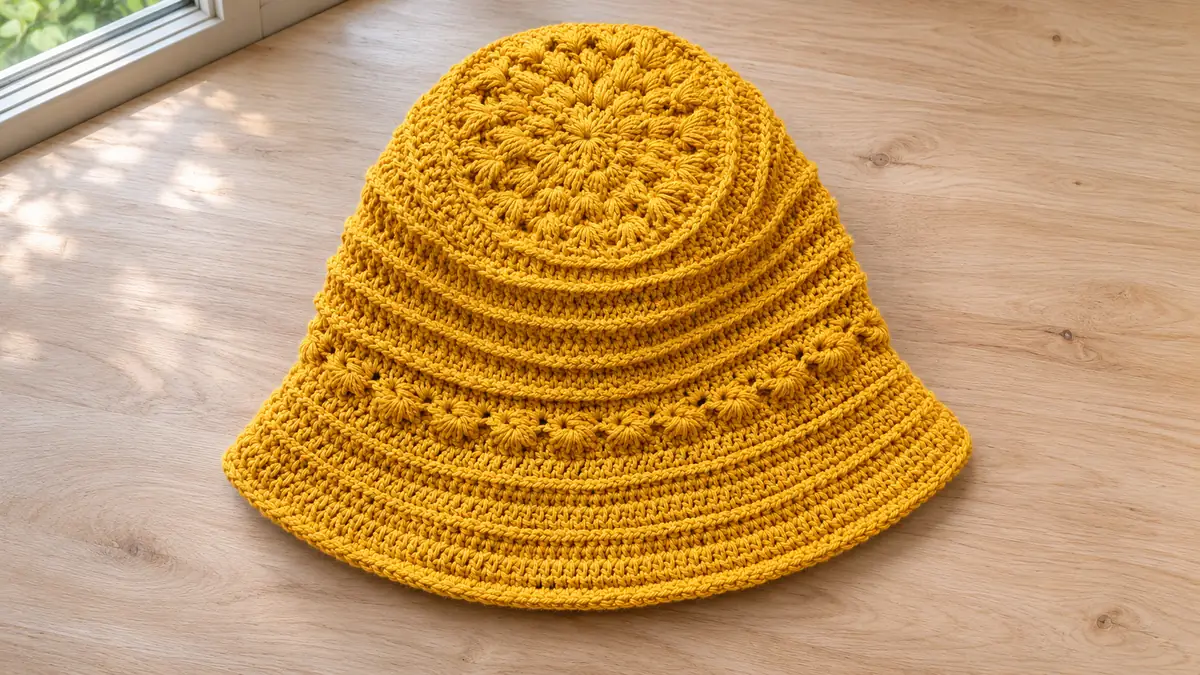
Basic double crochet hat in 7 sizes
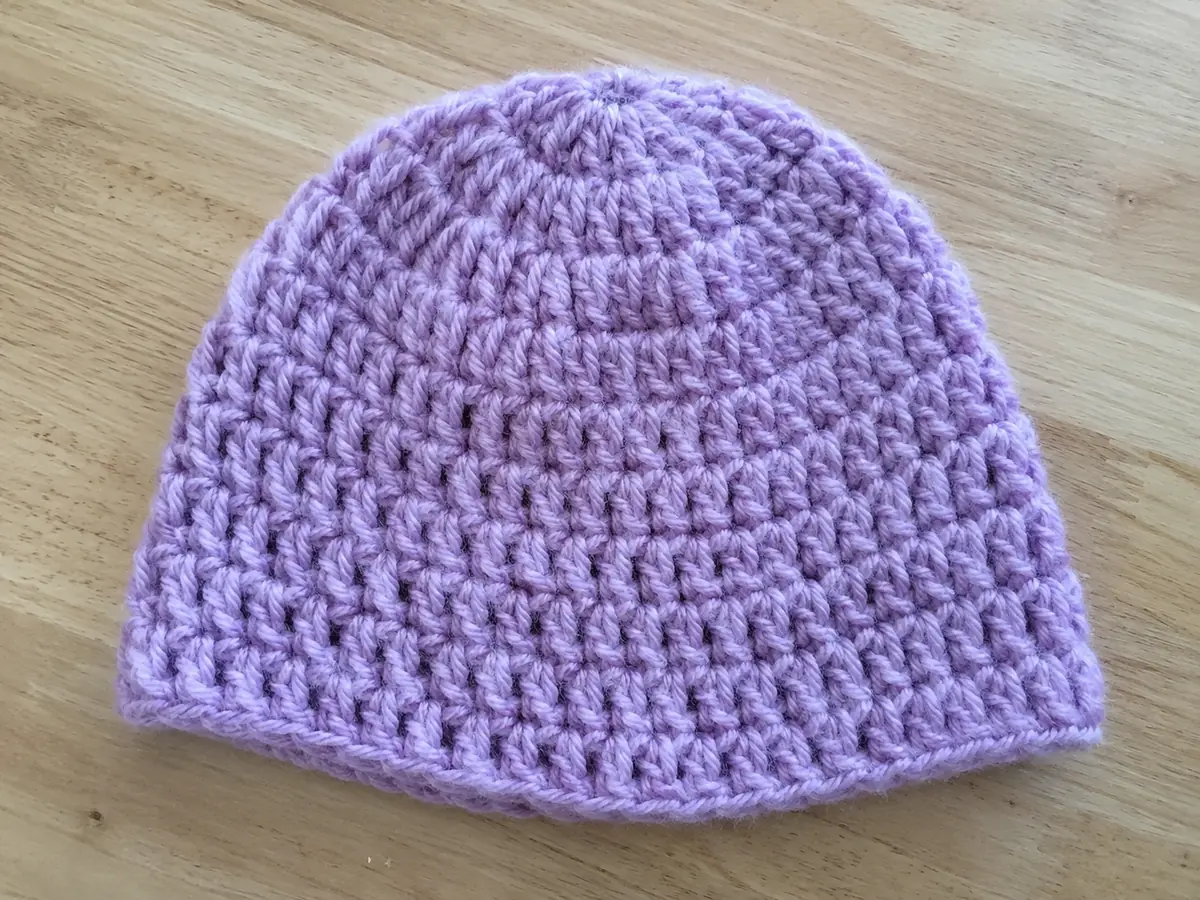
This basic hat starts at the crown and continues in joined rounds to the lower edge. The smaller sizes begin with 4–8 single crochet stitches, then change to double crochets. From the child size onwards, the crown follows a different increase progression. Choose the size before starting and keep

By Emma & EllaUpdated
Select the size, hook and tension
This basic hat starts at the crown and continues in joined rounds to the lower edge. The smaller sizes begin with 4–8 single crochet stitches, then change to double crochets. From the child size onwards, the crown follows a different increase progression. Choose the size before starting and keep its final round number visible while working the straight body.
Materials and hook choices
Use worsted-weight yarn, a yarn needle and a 5 mm crochet hook for the main size range. For the adult hat, use 5.5 mm throughout. For preterm heads below approximately 25.4 cm circumference, the source recommends 4.5 mm. These are the stated hook choices rather than a promise that a hook alone determines the final size.
The supplied tension is 3 double crochets over 2.54 cm and 5 double crochet rows over 10.16 cm. No yarn quantity or finished hat-depth chart is given. Keep the source’s head-circumference ranges separate from an unsupported finished circumference. The final-round column below gives the round on which each version ends, not a number of plain rounds to add after the crown.
| Size | Approximate head circumference | Round 1 | Round 2 | Round 3 | Round 4 | Final round |
|---|---|---|---|---|---|---|
| Preterm | up to 30.5 cm | 4 | 10 | 20 | 30 | 10 |
| 0–3 months | 30.5–35.6 cm | 5 | 12 | 24 | 36 | 11 |
| 3–6 months | 35.6–40.6 cm | 6 | 14 | 28 | 42 | 12 |
| 6–12 months | 40.6–45.7 cm | 7 | 16 | 32 | 48 | 13 |
| 1–3 years | 45.7–50.8 cm | 8 | 18 | 36 | 54 | 14 |
| Child/teenager | 50.8–55.9 cm | 9 | 20 | 30 | 40 | 14 |
| Adult | 55.9–61 cm | 9 | 20 | 30 | 40 | 15 |
US terminology and the joining convention
Ch means chain, sl st means slip stitch, sc means single crochet and dc means double crochet. US sc is US single crochet; US dc is US double crochet. The beginning 2 ch count as the first dc in double crochet rounds. Close each double crochet round with a sl st into the upper beginning chain and do not turn.
When the instructions refer to the first stitch or the same stitch, use the first actual worked double crochet of the previous round. The source’s joining convention and target totals must be read together. Do not add an extra worked stitch at the joining position merely because the beginning chains are beside it. In the increase rounds, the written position at the beginning may differ from an ordinary continuous spiral.
For a refresher on the basic stitches, see the crochet learning guide. Check the total at each completed crown round. The source gives exact counts, which are the control for deciding whether the joining position has been used correctly.
Work the smaller crowns and their straight rounds
Rounds 1–4 for preterm, baby and toddler sizes
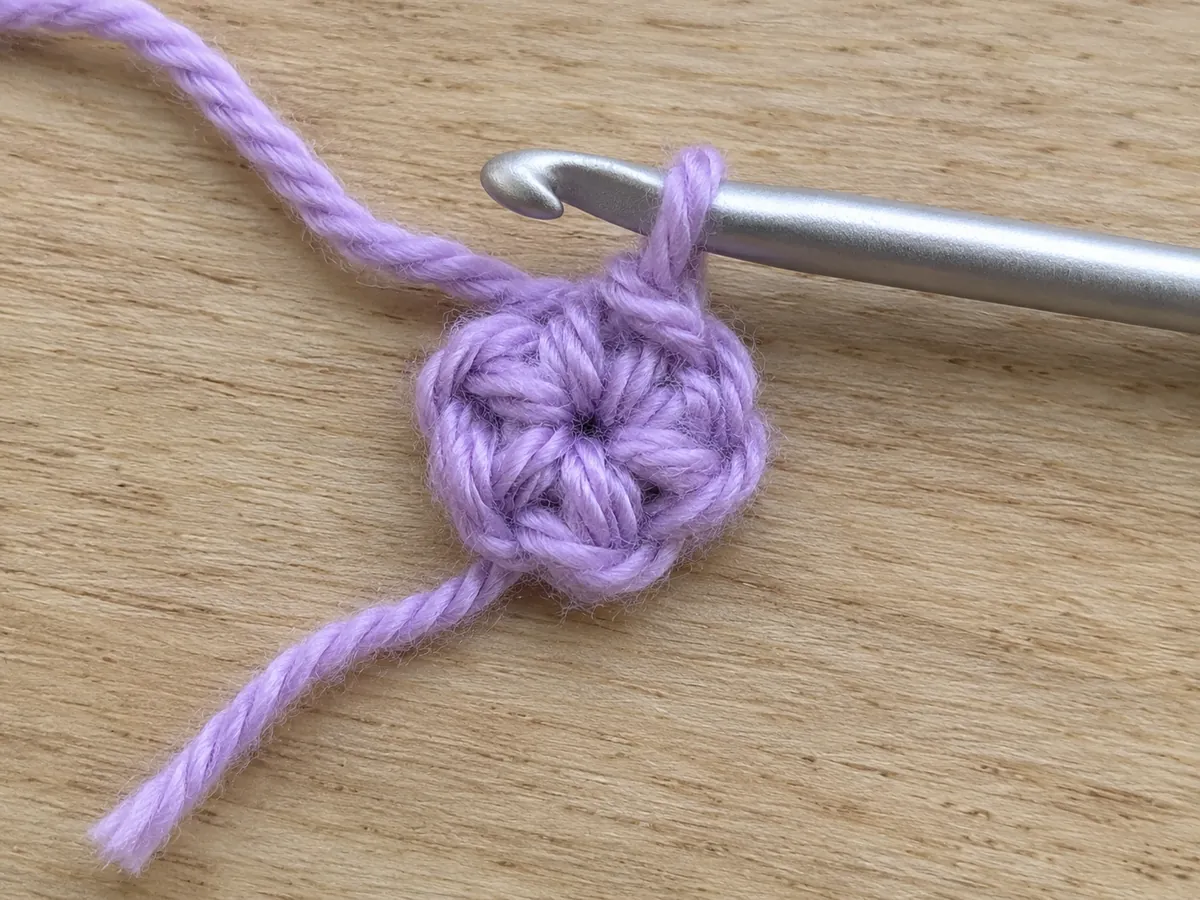
The values below are in this order: preterm, 0–3 months, 3–6 months, 6–12 months and 1–3 years. Select the matching number each time. Their first rounds contain 4, 5, 6, 7 or 8 sc respectively, while the later rounds use dc.
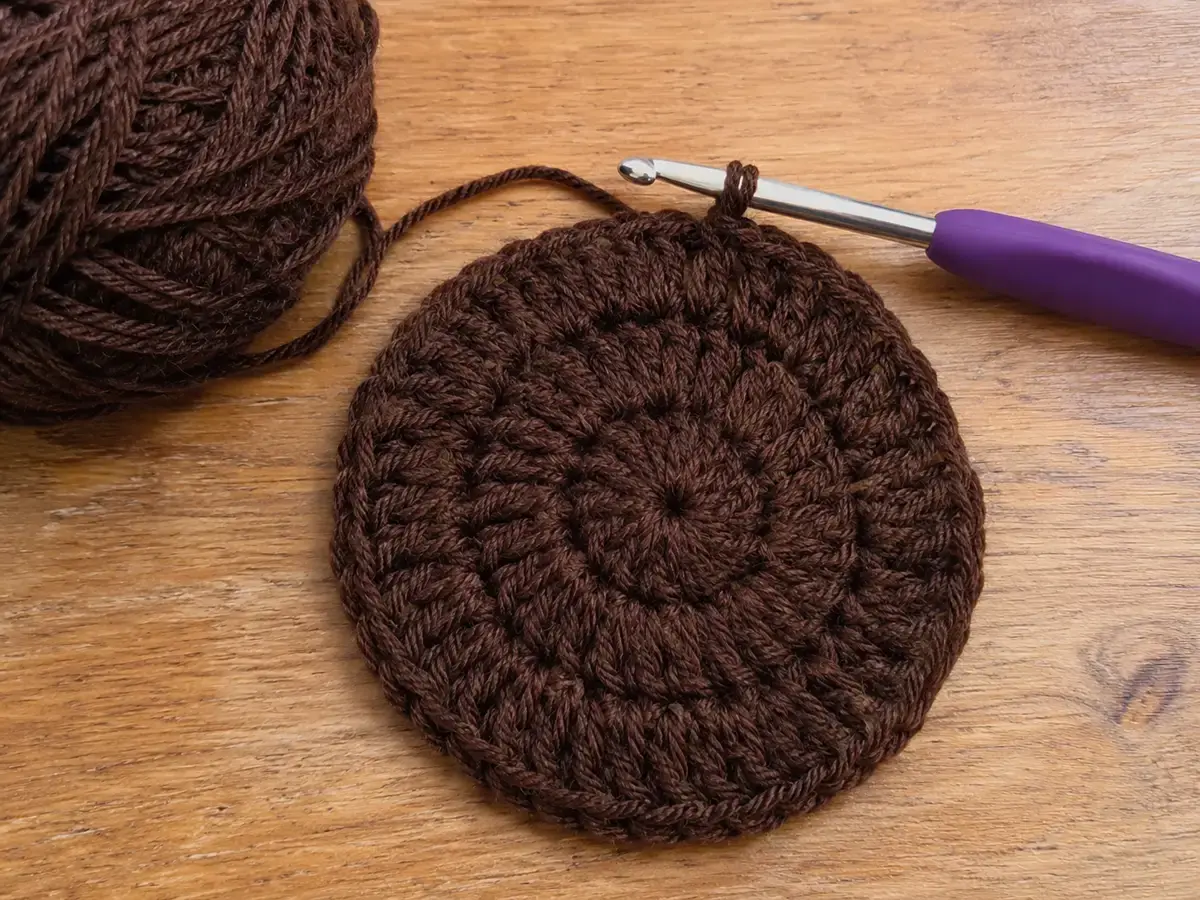
- Round 1: Work 2 ch. Into the 2nd chain from the hook, work 4 (5, 6, 7, 8) sc. Close with a sl st into that same starting chain.
- Round 2: Work 2 ch and 1 dc in the same position. Work 2 dc in each sc of the previous round. Close with a sl st. Including the beginning chains, the totals are 10 (12, 14, 16, 18) dc.
- Round 3: Work 2 ch and 1 dc in the same stitch. Work 2 dc in each following stitch. Do not work into the joining position again at the end. Close with a sl st. Totals: 20 (24, 28, 32, 36) dc.
- Round 4: Work 2 ch, then 2 dc in the next stitch. Continue alternating 1 dc and 2 dc in the next stitch around. Close with a sl st. Totals: 30 (36, 42, 48, 54) dc.
Round 2 intentionally has a beginning group in addition to the pairs worked into the initial sc ring. For example, the preterm version moves from 4 sc to 10 dc, not to 8. Preserve that supplied construction rather than replacing it with a different doubling formula. Round 3 explicitly avoids working the join again at the end.
From Round 5 onwards, make no further increases for these smaller versions. Begin with 2 ch and work 1 dc in the first actual dc and each further dc, using the stated joining convention while retaining the Round 4 count. The following separate lists show exactly where each version stops.
Preterm: straight Rounds 5–10
- Round 5: Begin with 2 ch, then work 1 dc in the first actual dc and each further dc as specified by the source’s joining convention. Close with a sl st. Retain 30 dc.
- Round 6: Begin with 2 ch, then work 1 dc in the first actual dc and each further dc as specified by the source’s joining convention. Close with a sl st. Retain 30 dc.
- Round 7: Begin with 2 ch, then work 1 dc in the first actual dc and each further dc as specified by the source’s joining convention. Close with a sl st. Retain 30 dc.
- Round 8: Begin with 2 ch, then work 1 dc in the first actual dc and each further dc as specified by the source’s joining convention. Close with a sl st. Retain 30 dc.
- Round 9: Begin with 2 ch, then work 1 dc in the first actual dc and each further dc as specified by the source’s joining convention. Close with a sl st. Retain 30 dc.
- Round 10: Begin with 2 ch, then work 1 dc in the first actual dc and each further dc as specified by the source’s joining convention. Close with a sl st. Retain 30 dc.
0–3 months: straight Rounds 5–11
- Round 5: Begin with 2 ch, then work 1 dc in the first actual dc and each further dc as specified by the source’s joining convention. Close with a sl st. Retain 36 dc.
- Round 6: Begin with 2 ch, then work 1 dc in the first actual dc and each further dc as specified by the source’s joining convention. Close with a sl st. Retain 36 dc.
- Round 7: Begin with 2 ch, then work 1 dc in the first actual dc and each further dc as specified by the source’s joining convention. Close with a sl st. Retain 36 dc.
- Round 8: Begin with 2 ch, then work 1 dc in the first actual dc and each further dc as specified by the source’s joining convention. Close with a sl st. Retain 36 dc.
- Round 9: Begin with 2 ch, then work 1 dc in the first actual dc and each further dc as specified by the source’s joining convention. Close with a sl st. Retain 36 dc.
- Round 10: Begin with 2 ch, then work 1 dc in the first actual dc and each further dc as specified by the source’s joining convention. Close with a sl st. Retain 36 dc.
- Round 11: Begin with 2 ch, then work 1 dc in the first actual dc and each further dc as specified by the source’s joining convention. Close with a sl st. Retain 36 dc.
3–6 months: straight Rounds 5–12
- Round 5: Begin with 2 ch, then work 1 dc in the first actual dc and each further dc as specified by the source’s joining convention. Close with a sl st. Retain 42 dc.
- Round 6: Begin with 2 ch, then work 1 dc in the first actual dc and each further dc as specified by the source’s joining convention. Close with a sl st. Retain 42 dc.
- Round 7: Begin with 2 ch, then work 1 dc in the first actual dc and each further dc as specified by the source’s joining convention. Close with a sl st. Retain 42 dc.
- Round 8: Begin with 2 ch, then work 1 dc in the first actual dc and each further dc as specified by the source’s joining convention. Close with a sl st. Retain 42 dc.
- Round 9: Begin with 2 ch, then work 1 dc in the first actual dc and each further dc as specified by the source’s joining convention. Close with a sl st. Retain 42 dc.
- Round 10: Begin with 2 ch, then work 1 dc in the first actual dc and each further dc as specified by the source’s joining convention. Close with a sl st. Retain 42 dc.
- Round 11: Begin with 2 ch, then work 1 dc in the first actual dc and each further dc as specified by the source’s joining convention. Close with a sl st. Retain 42 dc.
- Round 12: Begin with 2 ch, then work 1 dc in the first actual dc and each further dc as specified by the source’s joining convention. Close with a sl st. Retain 42 dc.
6–12 months: straight Rounds 5–13
- Round 5: Begin with 2 ch, then work 1 dc in the first actual dc and each further dc as specified by the source’s joining convention. Close with a sl st. Retain 48 dc.
- Round 6: Begin with 2 ch, then work 1 dc in the first actual dc and each further dc as specified by the source’s joining convention. Close with a sl st. Retain 48 dc.
- Round 7: Begin with 2 ch, then work 1 dc in the first actual dc and each further dc as specified by the source’s joining convention. Close with a sl st. Retain 48 dc.
- Round 8: Begin with 2 ch, then work 1 dc in the first actual dc and each further dc as specified by the source’s joining convention. Close with a sl st. Retain 48 dc.
- Round 9: Begin with 2 ch, then work 1 dc in the first actual dc and each further dc as specified by the source’s joining convention. Close with a sl st. Retain 48 dc.
- Round 10: Begin with 2 ch, then work 1 dc in the first actual dc and each further dc as specified by the source’s joining convention. Close with a sl st. Retain 48 dc.
- Round 11: Begin with 2 ch, then work 1 dc in the first actual dc and each further dc as specified by the source’s joining convention. Close with a sl st. Retain 48 dc.
- Round 12: Begin with 2 ch, then work 1 dc in the first actual dc and each further dc as specified by the source’s joining convention. Close with a sl st. Retain 48 dc.
- Round 13: Begin with 2 ch, then work 1 dc in the first actual dc and each further dc as specified by the source’s joining convention. Close with a sl st. Retain 48 dc.
1–3 years: straight Rounds 5–14
- Round 5: Begin with 2 ch, then work 1 dc in the first actual dc and each further dc as specified by the source’s joining convention. Close with a sl st. Retain 54 dc.
- Round 6: Begin with 2 ch, then work 1 dc in the first actual dc and each further dc as specified by the source’s joining convention. Close with a sl st. Retain 54 dc.
- Round 7: Begin with 2 ch, then work 1 dc in the first actual dc and each further dc as specified by the source’s joining convention. Close with a sl st. Retain 54 dc.
- Round 8: Begin with 2 ch, then work 1 dc in the first actual dc and each further dc as specified by the source’s joining convention. Close with a sl st. Retain 54 dc.
- Round 9: Begin with 2 ch, then work 1 dc in the first actual dc and each further dc as specified by the source’s joining convention. Close with a sl st. Retain 54 dc.
- Round 10: Begin with 2 ch, then work 1 dc in the first actual dc and each further dc as specified by the source’s joining convention. Close with a sl st. Retain 54 dc.
- Round 11: Begin with 2 ch, then work 1 dc in the first actual dc and each further dc as specified by the source’s joining convention. Close with a sl st. Retain 54 dc.
- Round 12: Begin with 2 ch, then work 1 dc in the first actual dc and each further dc as specified by the source’s joining convention. Close with a sl st. Retain 54 dc.
- Round 13: Begin with 2 ch, then work 1 dc in the first actual dc and each further dc as specified by the source’s joining convention. Close with a sl st. Retain 54 dc.
- Round 14: Begin with 2 ch, then work 1 dc in the first actual dc and each further dc as specified by the source’s joining convention. Close with a sl st. Retain 54 dc.
Do not continue the preterm version to the toddler’s final round simply because both use the same straight-round operation. The end point changes with size, while the retained count comes from that size’s Round 4. A written note of both values is useful if you pause during the body section.
Work the child, teenager and adult crown
Rounds 1–2
- Round 1: Work 2 ch and 9 sc into the 2nd chain from the hook. Close with a sl st into the starting chain.
- Round 2: Work the same beginning method as above, with 2 ch and 1 dc in the same position, then 2 dc in each initial sc. Close with a sl st. Total: 20 dc.
Use the 5.5 mm hook for the entire adult hat. The child/teenager version uses the main 5 mm hook. Both versions share the same stitch totals in the crown, but their hook choice and final body round differ.
Rounds 3–6
- Round 3: Work 2 ch and 2 dc in the next stitch. Then repeat 1 dc and 2 dc in the next stitch. Close with a sl st. Total: 30 dc.
- Round 4: Work 2 ch, 1 dc in the next stitch and 2 dc in the following stitch. Then repeat 1 dc in each of the next 2 stitches and 2 dc in the following stitch. Close with a sl st. Total: 40 dc.
- Round 5: Work 2 ch, 1 dc in each of the next 2 stitches and 2 dc in the following stitch. Then repeat 1 dc in each of the next 3 stitches and 2 dc in the following stitch. Close with a sl st. Total: 50 dc.
- Round 6: Work 2 ch, 1 dc in each of the next 3 stitches and 2 dc in the following stitch. Then repeat 1 dc in each of the next 4 stitches and 2 dc in the following stitch. Close with a sl st. Total: 60 dc.
The larger crown adds 10 stitches per round from Round 2 to Round 6. It does not follow the smaller versions’ immediate doubling to their final crown counts. Keep the appropriate crown list open when working; the 30 and 40 counts in the size table are intermediate points for the larger versions, not their final body counts.
Straight Rounds 7–14, child/teenager and adult
- Round 7: Work 2 ch and 1 dc in the first and each further dc, maintaining the source’s 60-stitch total. Join with a sl st.
- Round 8: Work 2 ch and 1 dc in the first and each further dc, maintaining the source’s 60-stitch total. Join with a sl st.
- Round 9: Work 2 ch and 1 dc in the first and each further dc, maintaining the source’s 60-stitch total. Join with a sl st.
- Round 10: Work 2 ch and 1 dc in the first and each further dc, maintaining the source’s 60-stitch total. Join with a sl st.
- Round 11: Work 2 ch and 1 dc in the first and each further dc, maintaining the source’s 60-stitch total. Join with a sl st.
- Round 12: Work 2 ch and 1 dc in the first and each further dc, maintaining the source’s 60-stitch total. Join with a sl st.
- Round 13: Work 2 ch and 1 dc in the first and each further dc, maintaining the source’s 60-stitch total. Join with a sl st.
- Round 14: Work 2 ch and 1 dc in the first and each further dc, maintaining the source’s 60-stitch total. Join with a sl st.
Adult-only Round 15
- Round 15: Work the same straight double crochet round, retaining 60 dc. Close with a sl st.
The child/teenager version ends after Round 14. The adult adds only the 1 further identical round shown. There is no separate ribbed brim or extra lower-edge round in this basic pattern. For a distinct post-stitch finish, see the double crochet hat with ribbed brim.
Change colors and finish the lower edge
Optional stripes
If making stripes, take the new color through the beginning chain and the working loop while completing the joining sl st of the last round in the old color. Begin the next round with the new color. The source supplies this color-change method without a compulsory stripe schedule or a required palette.
A color change does not alter the stitch count or make the beginning 2 ch stop counting as the first double crochet. Continue the same round convention after changing yarn. Check the first actual stitch and the upper beginning chain before joining, especially if the new color makes those positions look different from the previous round.
For a separately arranged contrast-stripe model, see the 2-color striped hat. Keep that model’s stripe arrangement separate from this pattern’s size-specific crown and final-round totals.
Fasten off
- Complete the final round for the selected size.
- Cut the working yarn.
- Pull it through the loop.
- Weave in all ends with the yarn needle.
Check the crown starting end as well as the final lower-edge end. If several colors were used, secure each loose working end rather than leaving the color-change tails unsecured inside the hat. Keep the surrounding stitches relaxed while weaving so the lower edge does not draw up at a single point.
Before putting away the pattern, note the size, hook and final round used. These details distinguish the 7 versions more clearly than color alone. The adult and child/teenager hats have the same final stitch count but differ in hook and height, while the smaller sizes have their own crown totals and end points. Retaining those distinctions is the basis of following the complete size range faithfully.
Emma & Ella
More crochet projects from The Cooking Twins Yarn.
More from Emma & Ella