
Thanksgiving Potluck Ideas: What to Bring and How to Pack It
Four Thanksgiving potluck ideas with a host-message template, space-based decision guide, packing checklist and safe serving handoff.

By Emma & Ella FrostUpdated November 5, 2026

5-Ingredient Dump & Go Crockpot Meals
101 effortless slow cooker recipes for busy families.
View on AmazonAvailable on AmazonThe best Thanksgiving potluck idea is a dish that fills a gap in the menu and works with the space available when you arrive. A chilled cranberry dip can be a good choice when the oven is full but the refrigerator has room. Cookies are easier to place than a cheesecake when fridge space is tight. A hot side needs an agreed way to keep it hot, not just a promise that someone will find a burner.
Start with the host's needs, then choose the recipe. The options below help you decide what to bring to Thanksgiving dinner or Friendsgiving, what to pack separately, and what to confirm before leaving home.
Ask these questions before choosing a dish
- What is missing? Ask whether the meal needs a vegetable side, appetizer, dessert, or something else. Another potato dish may be less useful than the one course nobody has offered.
- How many people should your contribution serve? Confirm whether everyone needs a portion or whether several guests are sharing that category. Use the chosen recipe's stated yield instead of assuming one pan feeds any crowd.
- What happens when you arrive? Ask about refrigerator space, any agreed reheating equipment, and the actual eating time. Arrival time and dinner time are not always the same.
- What ingredients need special attention? Ask about food allergies and dietary needs. Share the complete ingredient list and relevant packaging; do not promise an allergen-free dish just because you changed one ingredient.
Here is a useful message to send: "I can bring cranberry feta dip or cookies. Which would help the menu more? How many people should I plan for, and is there fridge space if I bring the dip? I'll bring the serving utensil and ingredient list too."
Side dishes deserve that coordination. In its 2026 State of the Sides report, Campbell's reports that 86% of respondents plan to serve at least four sides. The company commissioned the survey of 5,017 US adults who celebrate Thanksgiving. That is a snapshot of holiday preferences, not a rule for how much your group should cook.
Match the contribution to the available space
| Situation | What to bring and confirm |
|---|---|
| No spare oven, but room for chilled food | A cold appetizer or chilled dessert. Confirm the container fits in the refrigerator. |
| Very little refrigerator or reheating space | Consider plain cookies without a perishable filling, or a host-approved packaged item stored according to its label. |
| The meal needs something fresh | A salad with its components packed separately, plus an agreed assembly and cold-storage plan. |
| The host specifically requests a hot side | Choose it only after confirming transport, any reheating, and hot holding. An insulated bag is not a substitute for checking food temperature. |
Think of the refrigerator footprint as part of your contribution. Tell the host the actual container size, including the lid. A low rectangular box and a tall cake carrier create different problems even if they contain the same number of servings.
Four Thanksgiving potluck ideas to consider
Cranberry whipped feta for the appetizer table
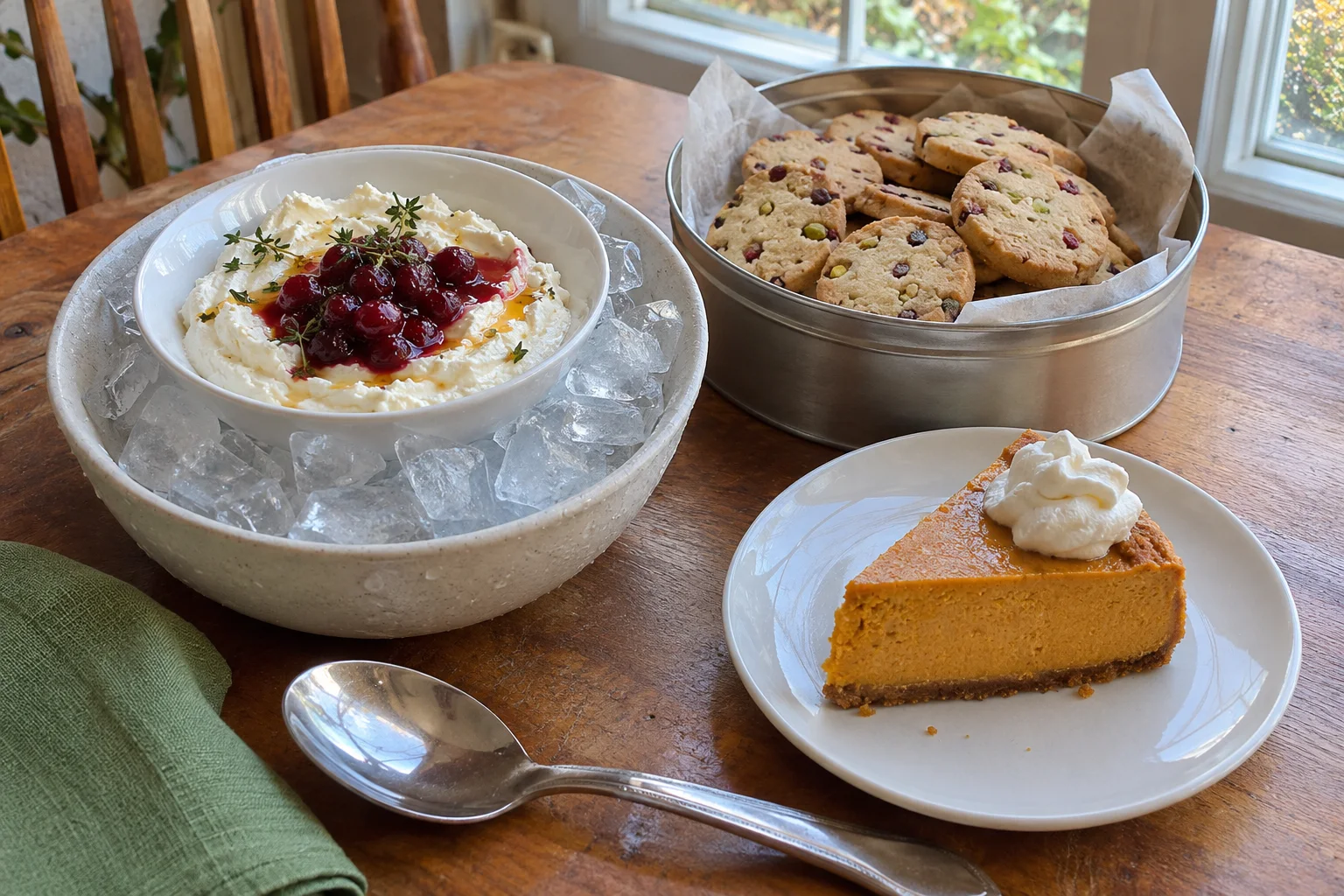
Cranberry whipped feta dip with hot honey combines a creamy cheese base with a tart cranberry topping. It suits a menu that needs a starter rather than another main-meal side. Transport it cold, with crackers in a separate dry container, and bring a serving spoon. Choose this option only when you can maintain cold storage through the trip and party.
Cranberry pistachio shortbread for the dessert tray
Cranberry pistachio shortbread cookies offer a small, individually portioned dessert when a whole pie would be awkward to serve. Their dried fruit and nuts also give the tray a holiday feel without needing a last-minute garnish. Use a rigid container with layers separated to protect the cookies. Flag the pistachios and share the full ingredient list; this is not a nut-free option.
Pumpkin cheesecake when a refrigerator spot is reserved
No-bake pumpkin cheesecake moves dessert preparation out of the oven, but it still needs the recipe's full chilling period and cold storage. Confirm space for its carrier before committing. Keep it level during transport and bring the tools needed to slice and serve it. This is a different logistical choice from a cookie tin, even though both can arrive ready to serve.
A beet and pear salad when the menu needs contrast
The roasted beet and pear salad pairs greens with cooked beets, pears, cheese, and pistachios. Its preparation includes roasting and stovetop work, so it is not a no-cook shortcut. Read the complete recipe before volunteering. Pack components separately as its storage guidance describes, arrange the finishing work with the host, and keep perishable components chilled rather than leaving an assembled bowl in the car.
Pack for the trip, not just the photo
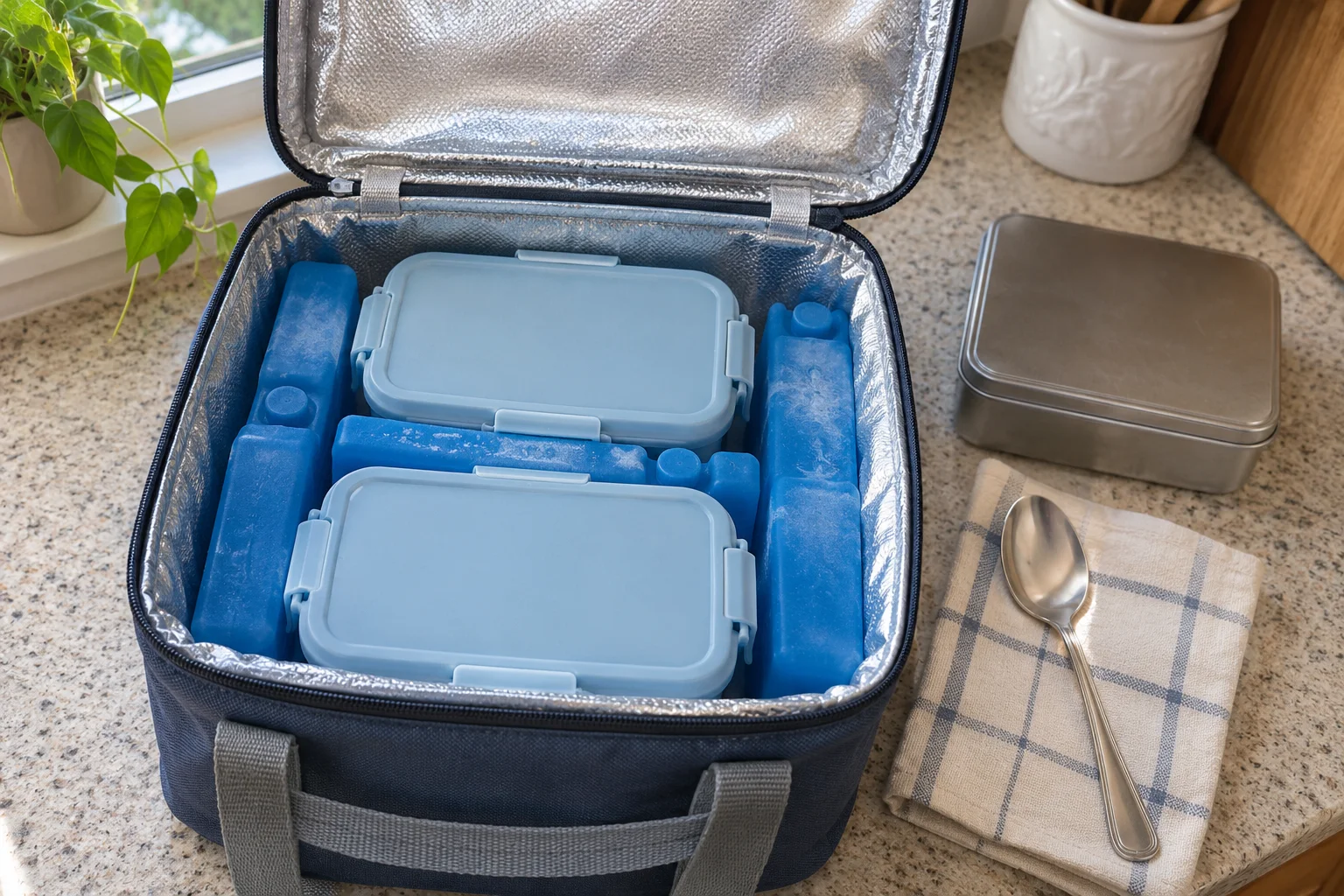
For cold perishable food, the FDA's food transport guidance recommends a cooler with ice or frozen gel packs that keeps the food at 40 F or below. Keep it closed as much as possible. Pack ready-to-eat dishes away from raw meat and its juices. The same guidance recommends an insulated container for hot food, which must stay at 140 F or above.
Before packing food, check that the empty containers fit and the cooler closes. Keep crackers, cookies, napkins, and serving tools in a separate dry bag. Secure lids and choose a stable position for the carrier. Bring your own spoon or tongs so the host does not have to stop preparing dinner to find them.
Do not assume a warm dish is safely hot or that a cool-looking container is cold enough. Use a food thermometer. If your transport and serving setup cannot maintain the required conditions, choose a different contribution.
Plan the handoff and the serving window
On arrival, tell the host where the dish belongs and what still needs doing. A useful handoff includes the dish name, ingredients, storage needs, and serving utensil. Keep the recipe available if anyone has a question. If a hot contribution needs a reserved oven slot, coordinate it with the host's Thanksgiving oven schedule before the day, not at the door.
The FDA's buffet guidance says to hold hot food at 140 F or warmer and cold food at 40 F or colder. Discard perishables left at room temperature for more than two hours, or more than one hour when the surrounding temperature exceeds 90 F. Time outside safe hot or cold holding includes travel and waiting; arrival does not restart the clock.
For a longer gathering, set out smaller portions and replace serving dishes with fresh ones rather than topping up an old platter. Keep reserve portions at the appropriate hot or cold temperature. Decide who will watch the serving time so that responsibility does not disappear between the kitchen and the table.
Plan leftover containers before the meal. FDA holiday guidance calls for prompt refrigeration of perishables, including pumpkin pie, within two hours. Only pack leftovers that have been handled safely; taking them home does not make food that exceeded the serving limits safe again.
Your final potluck checklist
- The host has agreed to the dish and expected number of portions.
- You have read the complete recipe, including chilling and storage instructions.
- The carrier fits, closes properly, and has a confirmed destination on arrival.
- Cold or hot transport and serving needs are covered.
- The ingredient list, serving tool, and any separate toppings are packed.
- Someone knows when the dish will be served and how leftovers will be handled.
A useful contribution does not have to be the most elaborate dish at the party. Choose one that adds something the menu needs, arrives with its own serving plan, and lets everyone enjoy the meal without an unexpected kitchen project.
Keep good recipes close
Add The Cooking Twins to your preferred sources on Google for more easy dinners, no-bake desserts and kitchen inspiration.
Emma & Ella Frost
A practical resource from The Cooking Twins.
More from Emma & Ella Frost


Comments
Leave a commentShare your question or planning tip below.