Crochet flower bookmark with a leaf and5 petals
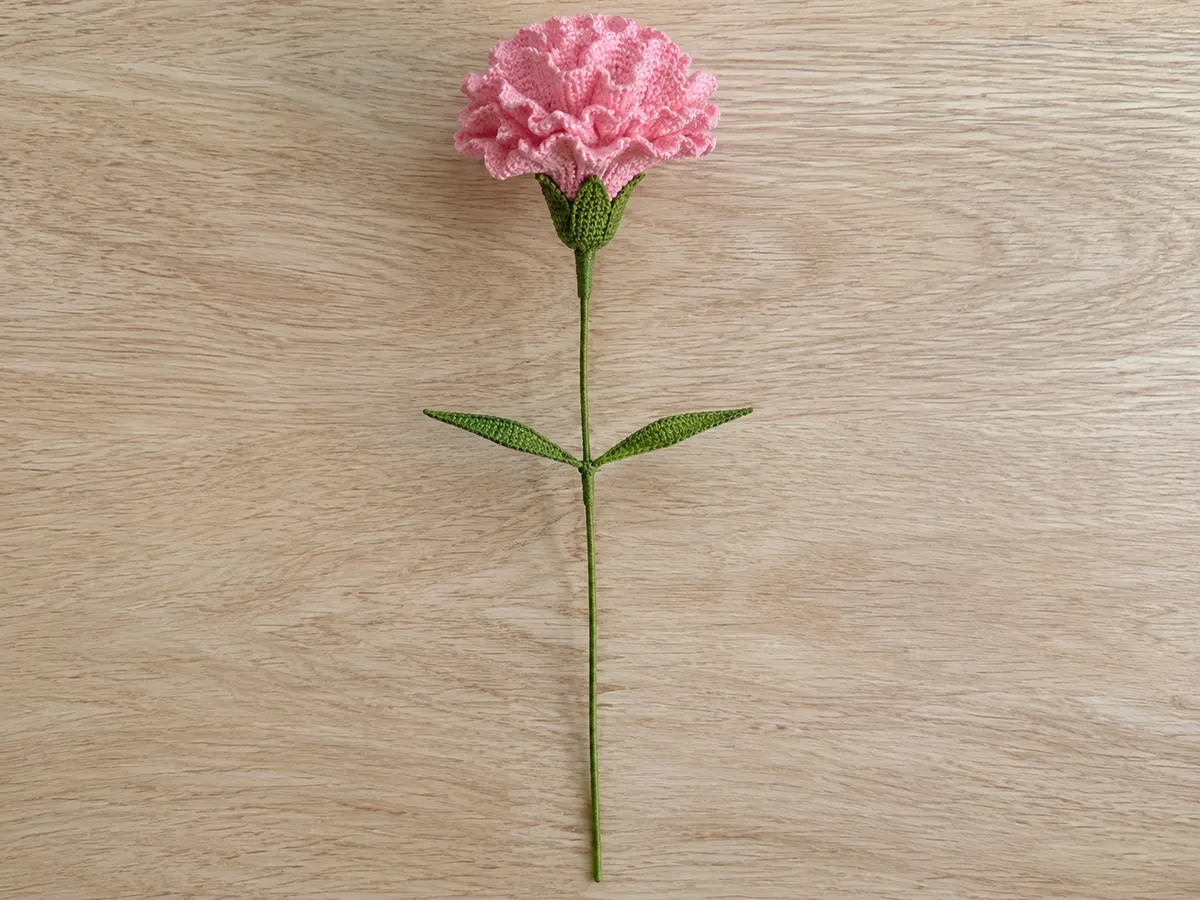
This crochet bookmark has a leaf at 1 end and a5-petal flower at the other. A narrow chain joins them and can be matched to the spine length of the intended book. A separate round center covers the join between the green chain and the flower. The finished structure is decorative at both ends while

By Emma & EllaUpdated
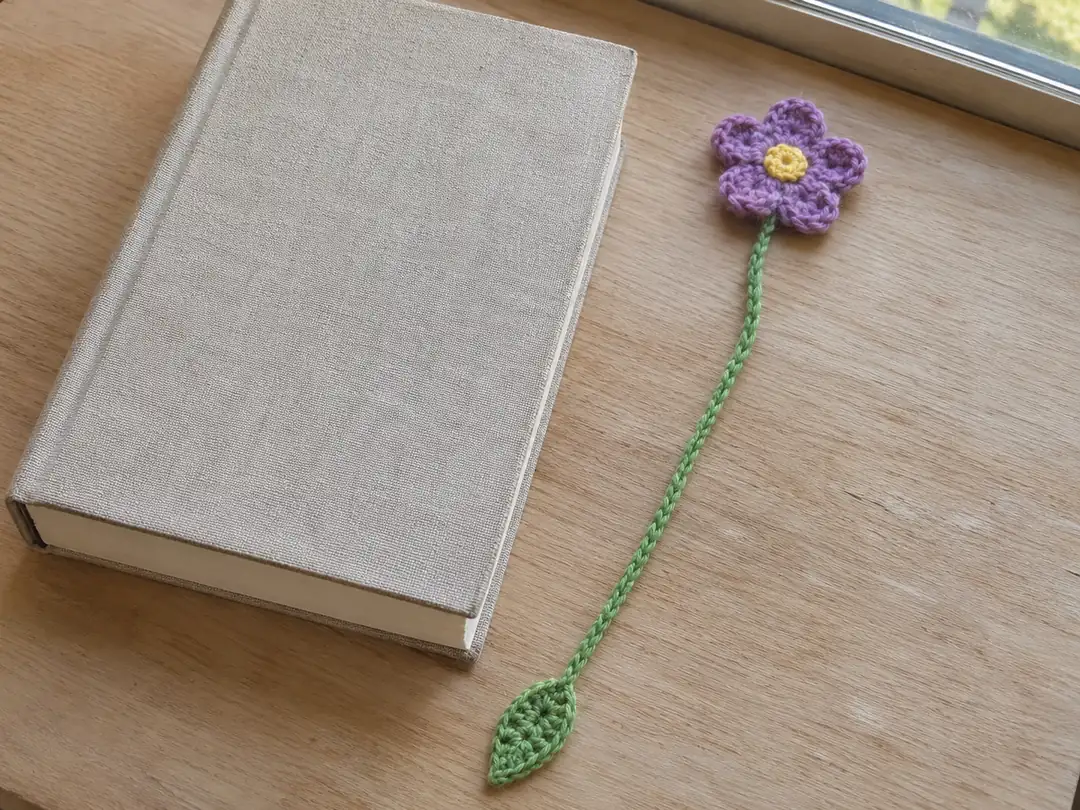
This crochet bookmark has a leaf at 1 end and a5-petal flower at the other. A narrow chain joins them and can be matched to the spine length of the intended book. A separate round center covers the join between the green chain and the flower. The finished structure is decorative at both ends while the chain lies between the pages.
The source example uses 3 colors of category 4 acrylic yarn, but gives no fixed hook size or finished dimensions. Choose a suitable hook for the yarn and measure the chain against the actual book. The 35-chain example is adjustable rather than a compulsory length for every book.
Prepare the 3 colors and crochet the leaf
Materials and US stitch glossary
Choose colors for the leaf and stem, petals and flower center. The leaf and stem share 1 color. Have scissors and a yarn needle ready. A hot-glue gun is an optional way to attach the separate center, but sewing is also explicitly described.
Ch means chain, sl st means slip stitch, sc means US single crochet, hdc means US half double crochet, dc means US double crochet and tr means US treble. US sc is US single crochet, dc is US double crochet and tr is US treble. The different heights produce the leaf's wider center and narrower ends.
A US treble begins with 2 yarn overs and is finished by drawing through 2 loops repeatedly. It is taller than the US double crochet beside it. Do not use the same stitch for every position simply because the leaf is small.
For the basic hook movements, the crochet learning section offers related guidance. Keep the country terminology clear when comparing patterns, especially the difference between US sc and US double crochet.
Leaf foundation and first side
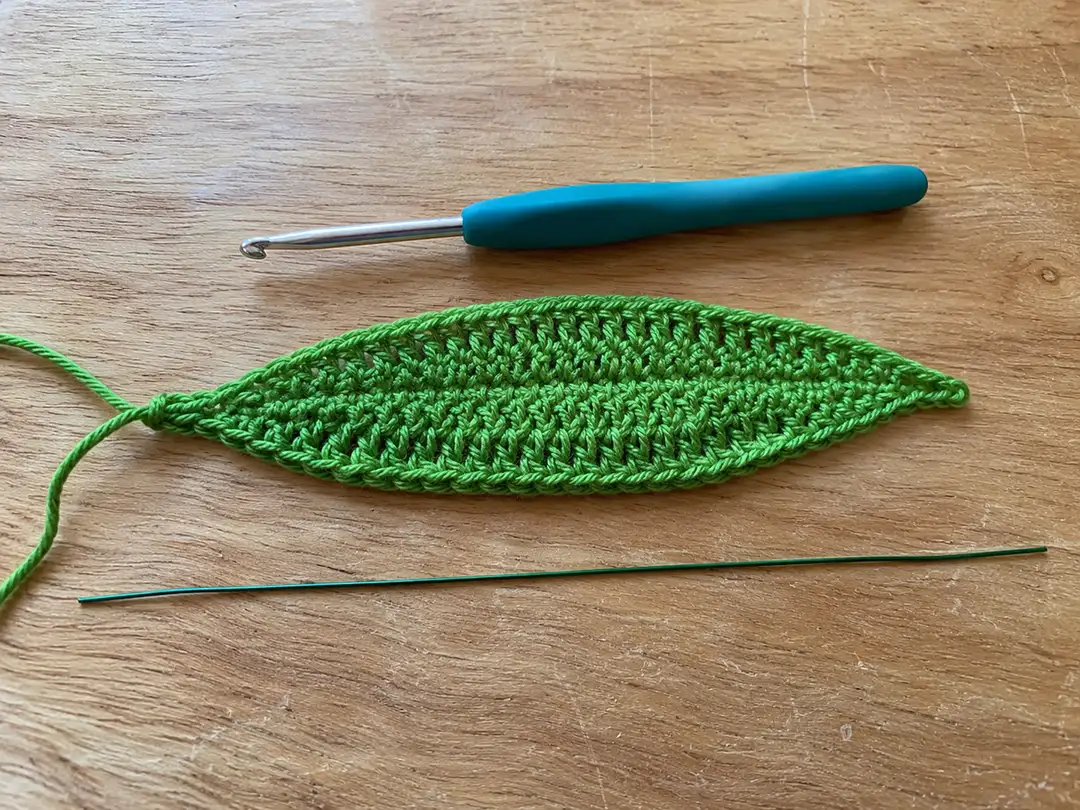
- In the leaf color, make 8 ch.
- Starting in the 2nd chain from the hook, work 1 sc, 1 hdc, 1 dc, 1 tr, 1 dc and 1 hdc in successive positions.
- Work 3 sc into the last chain.
The first 6 stitches each use a separate chain position. The 3 sc share the final chain at the tip. Do not put the whole height sequence into 1 chain as though it were a flower-petal group; the leaf needs those stitches spread along its foundation.
Return along the other side
- Rotate the leaf so that the opposite side of the foundation chain is accessible.
- Begin opposite the last hdc just worked.
- Work 1 hdc, 1 dc, 1 tr, 1 dc and 1 hdc into the next 5 chain positions.
- Work 2 sc into the final chain.
- Join with a sl st into the first sc of the leaf.
- Leave the green working yarn attached.
The opposite side mirrors the taller center while sharing the end positions of the original chain. Check that the foundation has not twisted while turning it. The source does not add another leaf edging round before making the stem.
Keep the green yarn attached because the chain stem begins directly from this completed leaf. Cutting it now would create an unnecessary new join absent from the source sequence.
Make the chain stem and 5-petal flower
Fit the chain to the book
From the leaf, crochet a chain matching the length of the book spine. If no particular book is selected, the source suggests 35 ch, or a number chosen for the intended length. Count completed chains without including the active loop on the hook.
Measure the chain relaxed rather than pulling it as far as possible. A chain that appears long enough only when stretched may sit differently between closed pages. The source leaves the length adjustable instead of giving a guaranteed book-height conversion.
Draw the petal color through the final stem chain. Cut the green yarn and knot its end with the starting tail of the flower color as described. These transition tails will later be secured and hidden beneath the round flower center.
Flower rounds 1–3
- Flower round 1:in the petal color, make 2 ch.Work 5 sc into the 2nd chain from the hook.Join with a sl st into the first sc and make 1 ch.
- Flower round 2:work 2 sc into each of the 5 stitches.Join with a sl st into the first sc and make 1 ch.Total 10 sc.
- Flower round 3:into 1 stitch work 1 hdc, 2 dc and 1 hdc; into the following stitch work 1 sl st.Repeat the entire sequence 4 further times, giving 5 petals.
- Cut the yarn and draw it through the final loop.
Each petal uses 2 base positions:1 holding the 4 taller stitches and 1 holding the slip stitch. Five repeats therefore use all 10 stitches of round 2. The hdc-and-dc group is worked into 1 position, unlike the individually distributed height sequence of the leaf.
Keep the 1-chain starts separate from the explicitly counted sc stitches. The first round has 5 actual sc and the second has 10. Do not add an extra sc because the joining chain looks like another stitch top.
Check the flower before covering the join
Count 5 petal groups and inspect the connection to the green chain. The center will hide the transition tails, but it should not hide an insecure color join or a missed petal. Correct those details while both sides remain visible.
A bookworm bookmark offers a simpler single-color alternative. It uses paired double crochets to make a spiral rather than this separate 5-petal end, so its foundation count should not replace the adjustable flower stem.
Crochet the separate round flower center
Center rounds 1–2
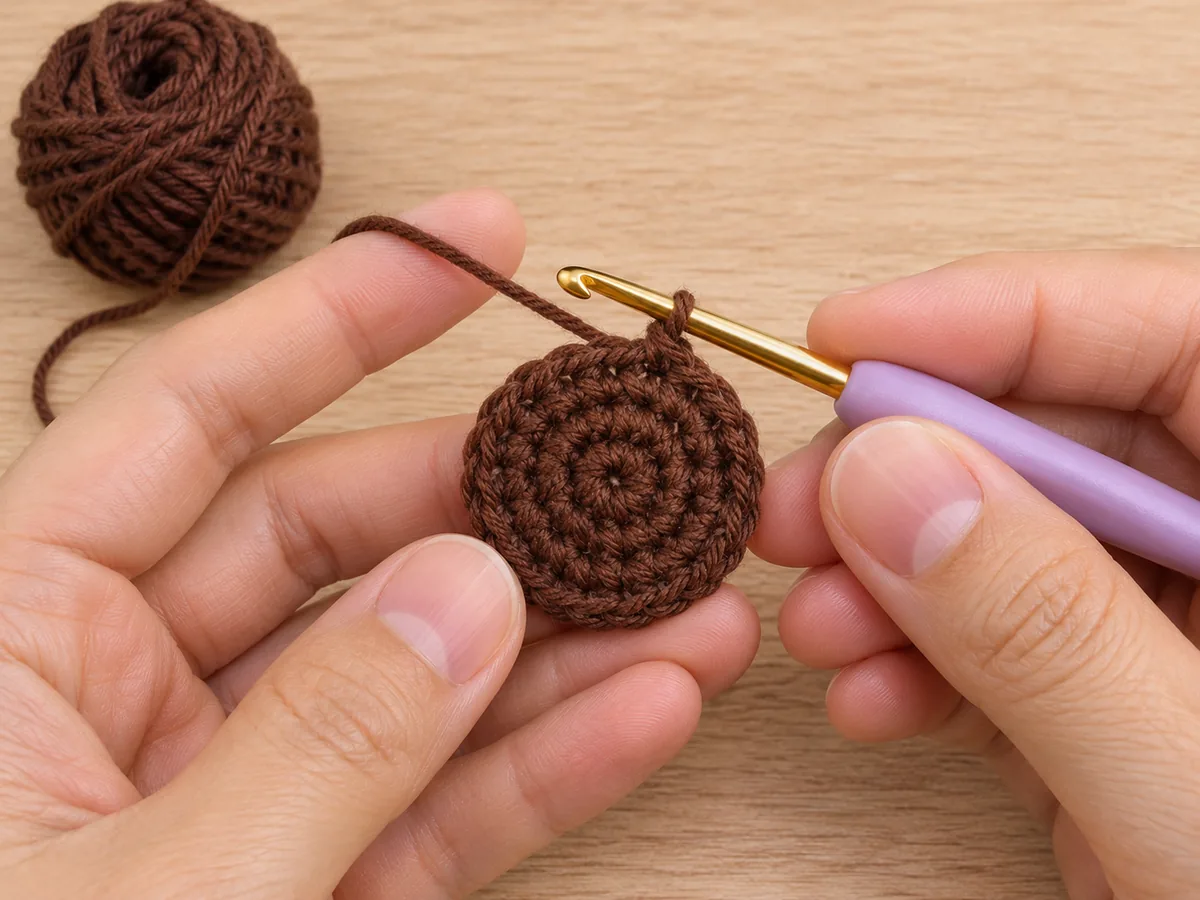
- In the center color, make 2 ch and work 5 sc into the 2nd chain from the hook; alternatively work 5 sc into a magic ring.
- Join with a sl st into the first sc and make 1 ch.
- Center round 2:work 2 sc into every stitch.Join with a sl st into the first sc.Total 10.
- Cut the yarn and draw it through, leaving enough for sewing if that is the chosen attachment.
Use only 1 of the starting alternatives. The center is a small flat circle, not a stuffed ball. Its 10-stitch outer round is independent of the flower's petal round even though both begin with the same 5-to 10 increase.
Keep the right side of the center oriented toward the visible front. The finishing method described below secures its reverse against the flower. Do not trim the sewing tail until you have decided whether to stitch or glue the piece.
Secure the leaf and transition tails
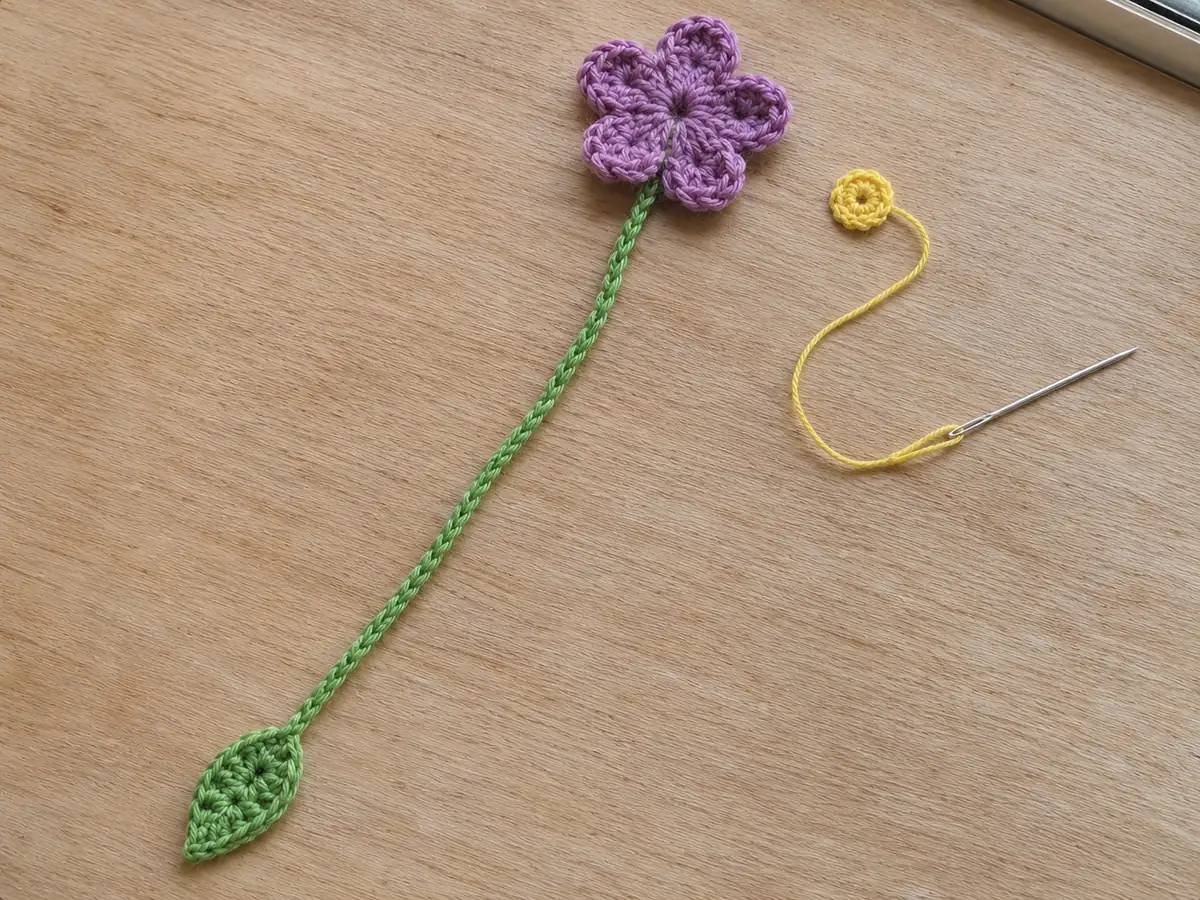
Weave in the end at the leaf. Bring the tails from the green-to-flower transition into the flower center area, knot them as described and shorten them after securing. They may be drawn to the front because the separate circular center covers that area.
The cover circle should conceal a properly finished join rather than serve as its only anchor. Check that tugging gently at the attachment area does not loosen the green chain before attaching the circle permanently.
Sewing option
Use the retained center tail to sew the circle to the flower's front. Catch suitable stitches around the center without drawing the petals into a tight gathered bundle. Inspect from the front as well as the reverse before securing the end.
The source does not specify an additional edging round through both layers. Sewing joins the completed pieces rather than crocheting a new counted border. Keep the 5 petals visible around the round center.
Choose the glued finish and check the bookmark
Optional hot-glue attachment
If gluing the center, first weave in and secure its ends on the reverse. Then glue that reverse to the flower's front. Follow the glue gun's instructions and keep fingers clear of hot adhesive.
Allow the glue to set fully before using the bookmark. Keep adhesive off the chain that will sit between pages and avoid placing a still-tacky flower against paper. Sewing remains a complete alternative if you prefer a thread-only attachment.
Inspect the 2 ends and connecting chain
Lay the bookmark flat and check the leaf, chain and flower together. The chain should emerge securely from both ends. Count the 5 petals and check the center's attachment before trimming any remaining yarn.
The source does not provide a fixed finished thickness or universal page fit. Category 4 yarn can produce a substantial decorative end, while the chain remains narrower. Test the actual finished piece in the intended book without forcing the cover shut over a bulky ornament.
Keep notes for another size
Record yarn, hook, stem-chain number and whether the center was sewn or glued. The adjustable chain makes another book length possible without changing the leaf and petal instructions. A different yarn thickness changes the whole piece and needs its own fit check.
Do not add a measured flower diameter from the photograph. The source leaves the hook and final dimensions open. Keeping the chosen material details is a more reliable way to reproduce a matching gift.
For a larger flower shape, the violet rolled-strip rose offers another construction. Keep its strip and sewing sequence separate from this bookmark's8-chain leaf, adjustable stem, 5-petal flower and separate 10-stitch center.
Keep the leaf and petal stitch placements distinct
For the leaf, each change in height moves to the next chain position. The short single crochet at the beginning leads into a half double crochet, then a double crochet and the taller treble before the sequence returns toward shorter stitches. That spread along the chain creates the tapered leaf. Only the3 single crochets at its far tip share1 foundation position.
For a flower petal, the half double crochet,2 double crochets and final half double crochet all share the same stitch. The next stitch receives the low slip stitch. These2 placement methods should not be exchanged simply because they use similar stitch names. Check the first completed group before repeating the whole outline.
A US half double crochet starts with1 yarn over and finishes through all3 loops at once. A US treble starts with2 yarn overs and is finished by drawing through2 loops repeatedly. Keeping those movements separate preserves the intended height changes. Record an unfamiliar abbreviation beside the project rather than guessing it from the finished photograph.
Before trimming the final yarn,check that the stem chain is not caught inside the center seam. The chain should remain free between the2 decorative ends. A hidden strand crossing it can shorten the usable bookmark length even when the original35-chain example was followed correctly.
Emma & Ella
More crochet projects from The Cooking Twins Yarn.
More from Emma & Ella