Ribbed half-double-crochet crochet scarf
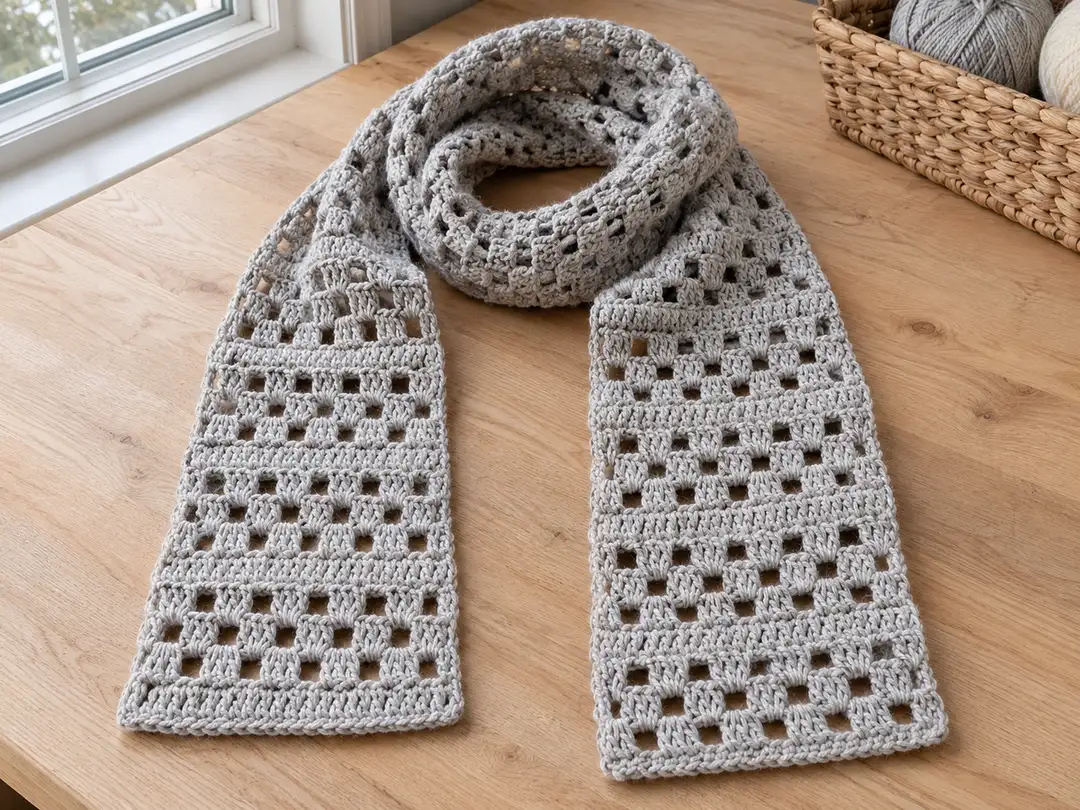
This ribbed crochet scarf is worked in long rows from one end of its length to the other. US half double crochets through the back loops form narrow lengthwise ribs, while stitches through both loops keep the short edges more stable. A single round of US single crochet finishes the rectangle.

By Emma & EllaUpdated
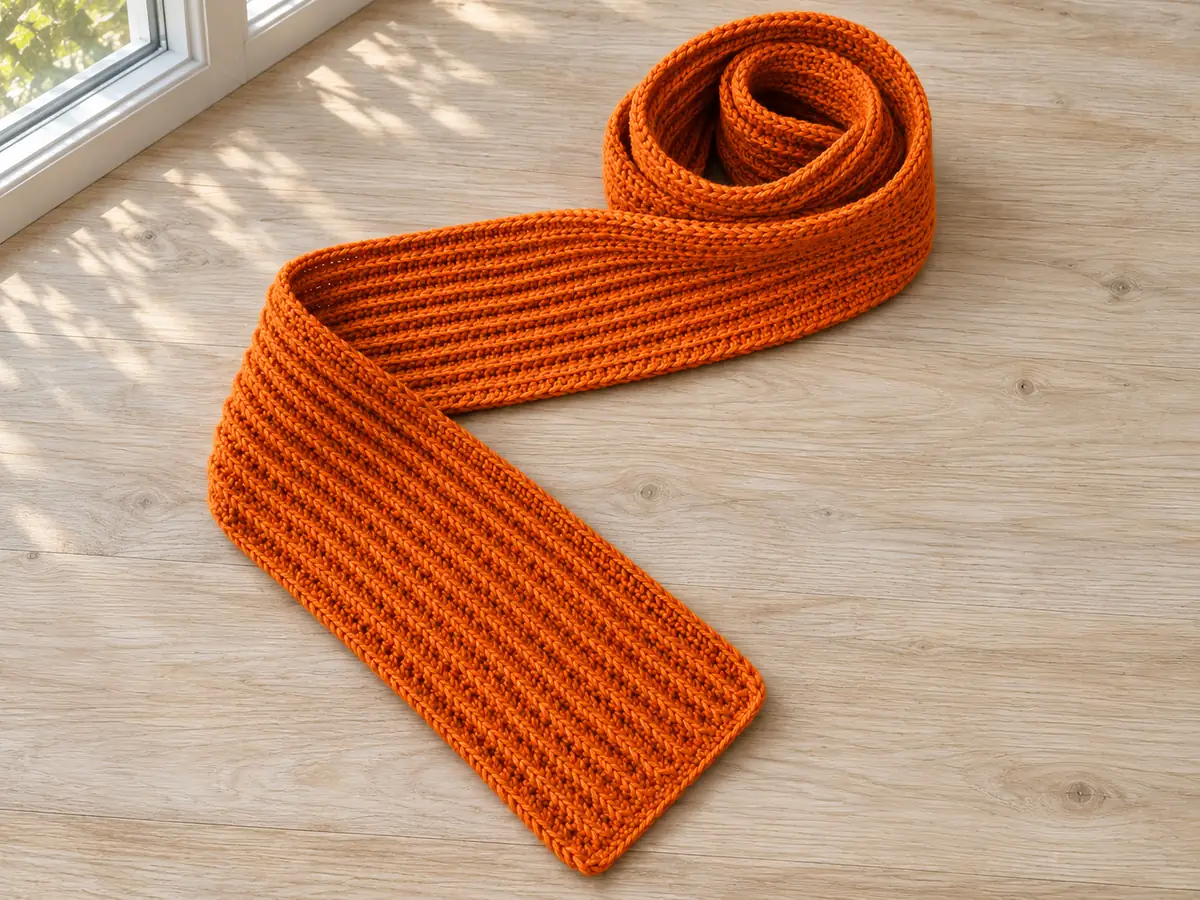
This ribbed crochet scarf is worked in long rows from one end of its length to the other. US half double crochets through the back loops form narrow lengthwise ribs, while stitches through both loops keep the short edges more stable. A single round of US single crochet finishes the rectangle.
The reference scarf measures approximately 182 × 19 cm after blocking. These instructions use US crochet terms. The 2 beginning chains do not count as a stitch in this model, so the first real half double crochet is worked into the first stitch rather than replacing it with the turning chain.
Prepare the Aran yarn and check the ribbed sample
Materials and reference tension
| Item | Reference |
|---|---|
| Yarn | Approximately 250 g Aran yarn, with 166 m per 100 g |
| Approximate yarn length | 415 m for the stated 250 g |
| Hook | 6 mm |
| Tools | Scissors, yarn needle and measuring tape |
| Tension | 13 hdc and 11 rows per 10 × 10 cm |
| Blocked dimensions | Approximately 182 × 19 cm |
The meter calculation describes the specified yarn allowance: 250 g is 2.5 times 100 g, and 2.5 × 166 m gives approximately 415 m. It is not a guarantee that 250 g of another yarn will provide the same length or fabric. Compare yarn thickness and metreage when choosing an alternative.
The long foundation sets most of the scarf's length near the beginning. Later rows add width rather than extending the scarf from one short end. Make the sample before committing to all 230 chains, particularly if you are substituting yarn or using a different hook.
US crochet glossary
Ch means chain, sl st means slip stitch, sc means US single crochet and hdc means US half double crochet. US sc corresponds to US single crochet; US hdc corresponds to US half double crochet. US dc, if comparing another pattern, corresponds to US double crochet. The main fabric here uses hdc and the border uses sc.
To make an hdc, yarn over, insert the hook, draw up a loop, then yarn over and pull through all 3 loops on the hook. Let the loops slide over the full hook shaft rather than tightening each one at the narrow throat. This helps the long rows remain even and flexible.
Sample the actual back-loop fabric
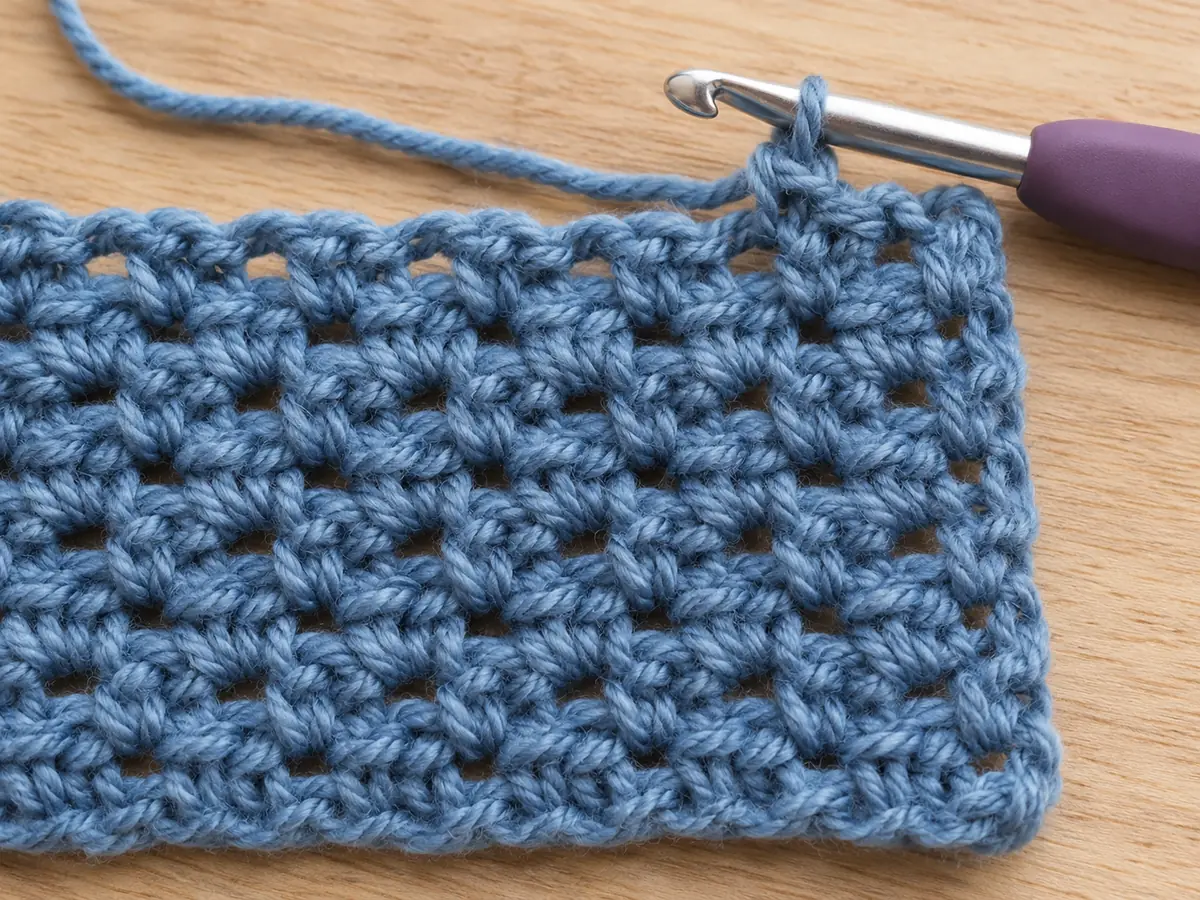
Work the sample in the described ribbed arrangement. A sample made entirely through both loops will not show the same relaxed rib width. After several rows, open the ribs gently and let them settle again. Measure the relaxed fabric rather than a section stretched wide between your hands.
Record whether you measured before or after washing or blocking. The finished dimensions are stated after blocking, so a fresh narrow strip may not yet match them. Check both stitch width and row height, and follow the yarn's care instructions when preparing the sample.
Mark the first real stitch of a row if you tend to mistake turning chains for a replacement stitch. The non-counting 2-chain start is a specific instruction for this scarf. Do not transfer the edge convention from another project automatically.
For a softer small project with another technique, compare the yarn-over slip-stitch scarf. Its tension must be checked separately.
Work the long foundation and first half-double-crochet row
Foundation: 230 chains
- Make 230 ch loosely.
- Count the chain in manageable sections.
- Do not include the working loop on the hook as another chain.
Temporary markers help divide a long chain into sections that you can count and add together. They are aids for checking, not additional pattern positions. The adjustable starting loop and the loose yarn tail are not extra working chains.
Row 1: 229 half double crochets
- Begin in the 2nd chain from the hook.
- Work 1 hdc into that chain.
- Work 1 hdc into every remaining chain.
- Finish with 229 hdc.
One of the 230 chains is skipped beside the hook, leaving 229 working positions. Follow that stated starting position even if you normally begin an hdc foundation in a different chain. Adding another skipped chain would reduce the count used for the rest of this scarf.
Count the completed row using the same manageable sections as the foundation. The tail at the far end is not another insertion point. Check that the total is 229 before starting the ribbed rows; a missing stitch is easier to locate now than after several long rows.
Check that the foundation is not too tight
Lay the first row on a table and compare its lower foundation edge with the upper hdc edge. A young, narrow strip may move or curl a little, but it should not be pulled into a strongly tensioned arc by a very short chain. If the foundation is clearly hard and tight, remake it more loosely before continuing.
The final length becomes easier to assess after a few rows. Do not assume a stretched foundation chain alone gives the blocked measurement. Allow the developing ribs to settle before taking the tape measure along the long edge.
For a different length, alter the foundation-chain count before row 1. This fabric has no multi-stitch repeat requiring a particular multiple. The number of hdc remains 1 less than the number of starting chains, and that new total must be retained in every later row.
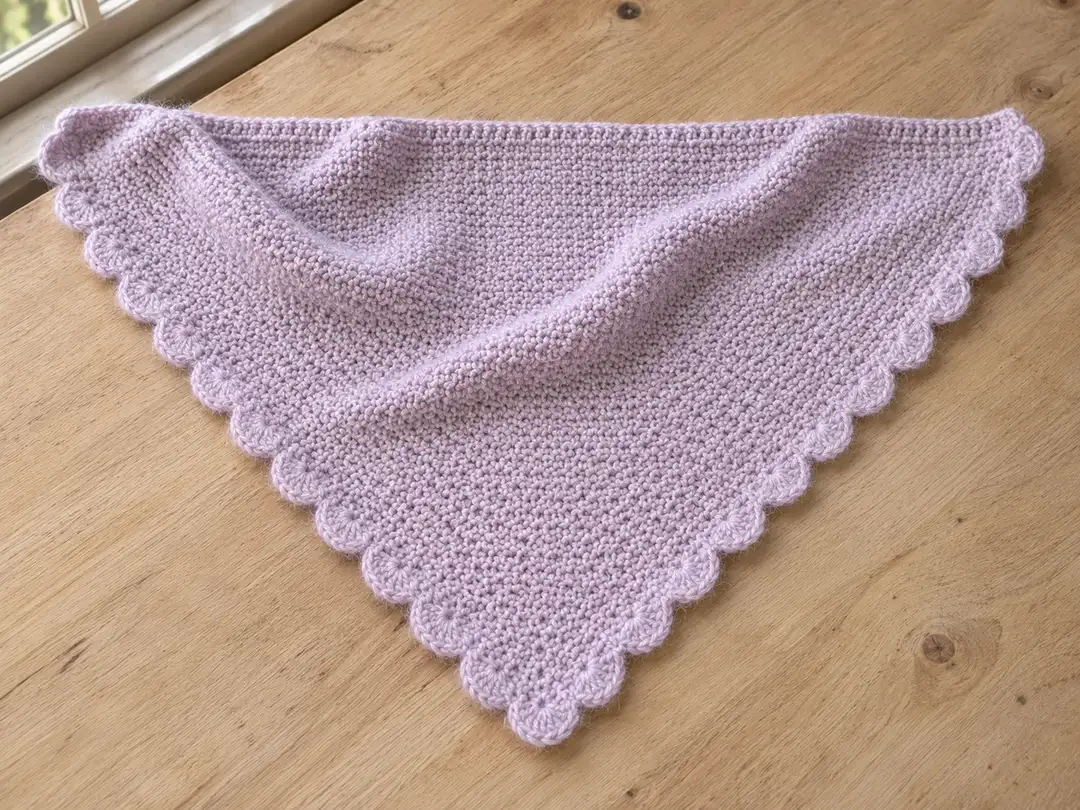
The triangular shawl with a shell border changes outline through shaping; this scarf maintains an unchanged rectangular width.
Repeat the back-loop rows to the chosen width
Row 2: stable edges and a ribbed center
- Make 2 ch and turn. These chains do not count.
- Work 1 hdc through both top loops of the first stitch.
- Work 1 hdc through the back loop only of each of the next 227 stitches.
- Work 1 hdc through both top loops of the last stitch.
- Total: 229 hdc.
The arithmetic is 1 edge stitch + 227 back-loop stitches + 1 edge stitch = 229. Keep both stabilising edge stitches in every repeated row. If the total becomes 228, check the row ends before assuming that a stitch was lost somewhere in the long center.
Rows 3–20 in the reference scarf
Repeat row 2 until the scarf reaches the required width. The example contains 20 rows altogether, including row 1. Rows 2 through 20 therefore use the same ribbed arrangement. After the last row, leave the yarn attached for the border.
For a wider scarf, add complete rows; for a narrower scarf, stop the repeat earlier. Measure the width at right angles to the long foundation. Reserve yarn for the edging before using the last of the ball, because even a narrow border travels along both long sides.
Recognize the correct back loop
The top of an hdc has 2 visible loops forming a V. The loop further from you is the back loop for the row you are currently working. Hdc also has another strand below the top V, but that lower strand is not the insertion point requested here.
Turning brings the former back of the fabric toward you. Continue using the loop that is now further away. Front and back refer to your current working view, not to one permanently named side of the scarf. Trying to catch the same strand on the same fabric face after every turn changes the construction.
The ribs open under tension and settle when released. A marled section or color change may make a rib look wider without any count change. Compare the 229 stitches and the insertion method before unpicking a row solely because its color looks different.
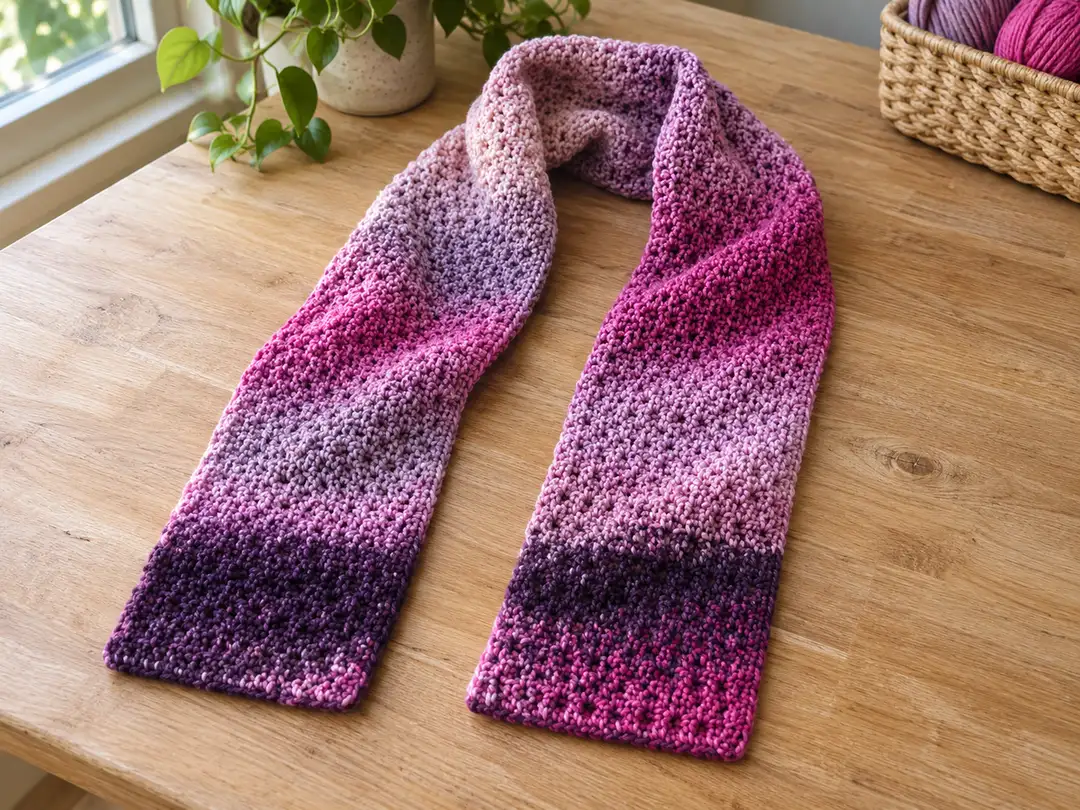
A related change of texture appears in the linen-stitch infinity scarf, which is worked across its narrow width and then joined.
Work the 502-stitch border and invisible finish
One border round for the unchanged example
- Orient the scarf so you begin along the final long row.
- Make 1 ch, which does not count.
- Work 229 sc along that long edge, 1 in every hdc.
- Work 22 sc evenly along the first short edge.
- Work 229 sc along the foundation edge.
- Work 22 sc evenly along the second short edge.
The border total is 229 + 22 + 229 + 22 = 502 sc. No separate extra multi-stitch corner unit is specified in this count. Keep the stated side totals rather than adding an assumed corner formula from another edging.
The short edges are worked into row ends rather than regular top V shapes. Spread their 22 sc across the whole edge. Marking the corners and midpoint can help distribute them as approximately 11 per half, without concentrating several stitches in one large opening.
The opposite long edge uses the available foundation-chain positions. Locate the free loops carefully and keep its 229 sc consistent with the first long edge. The 502 total applies only to the unchanged reference size; another foundation or row total needs its own even edging distribution.
Make the invisible join
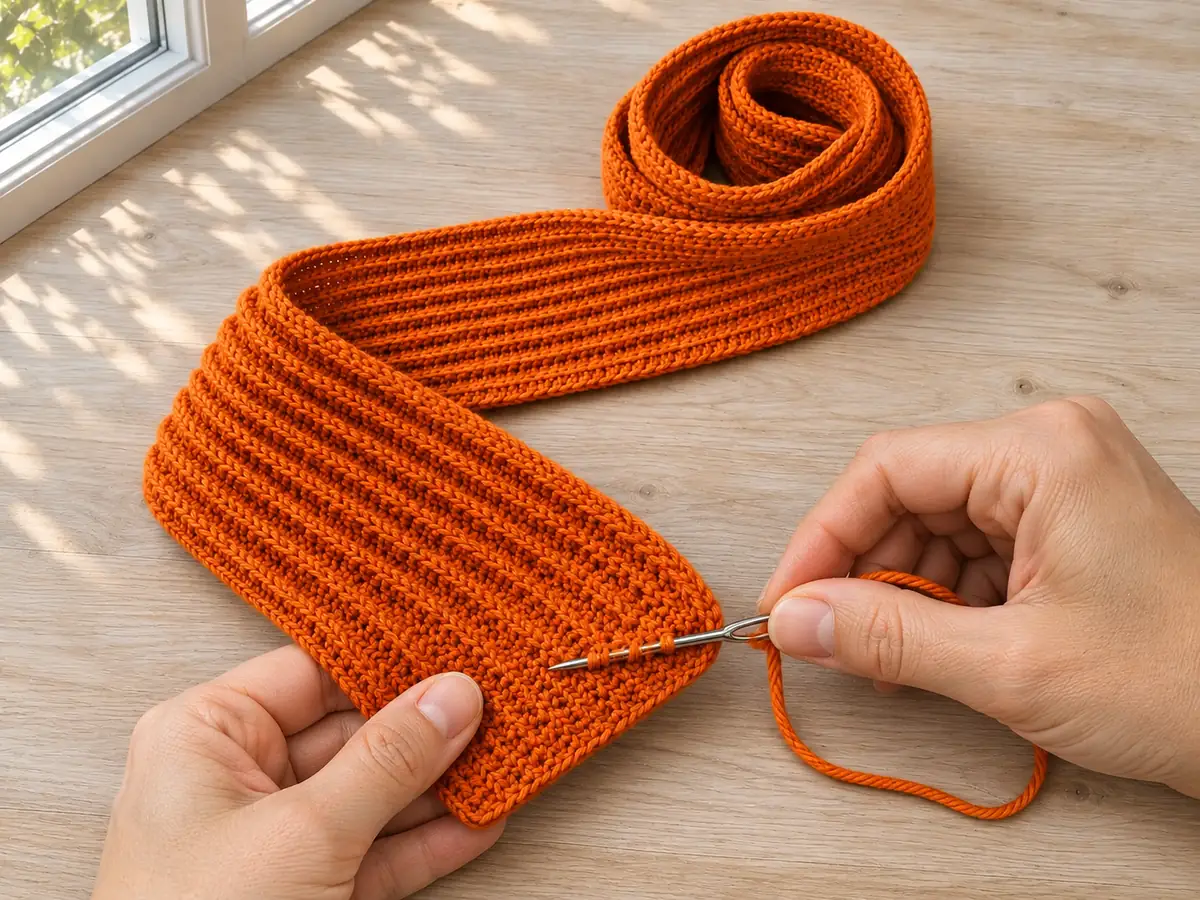
- Leave approximately 10 cm of yarn and pull the last working loop out completely.
- Thread the yarn needle.
- Pass beneath both top loops of the second border stitch.
- Insert the needle back through the center of the last worked stitch.
- Adjust the recreated stitch top to match its neighbors and secure the end.
This finish imitates a stitch top instead of adding a conspicuous closing slip stitch. Do not tighten it more firmly than the surrounding sc. Examine the whole border before cutting the end, checking that the long edges remain flat and the short edges are not gathered.
Block gently and record the result
Follow the yarn care label, dampen carefully if appropriate, lay the scarf flat and let it dry. The border can tidy small irregularities, but it should not be used to disguise a foundation that is too tight or a stitch lost from every row.
Record the relaxed blocked dimensions together with your yarn, hook and total rows. This makes another scarf easier to reproduce and keeps the reference measurements distinct from your own result. The stated dimensions and quantities do not claim a separate physical test of every substitution.
Emma & Ella
More crochet projects from The Cooking Twins Yarn.
More from Emma & Ella