Yarn-over slip-stitch crochet scarf: short and long
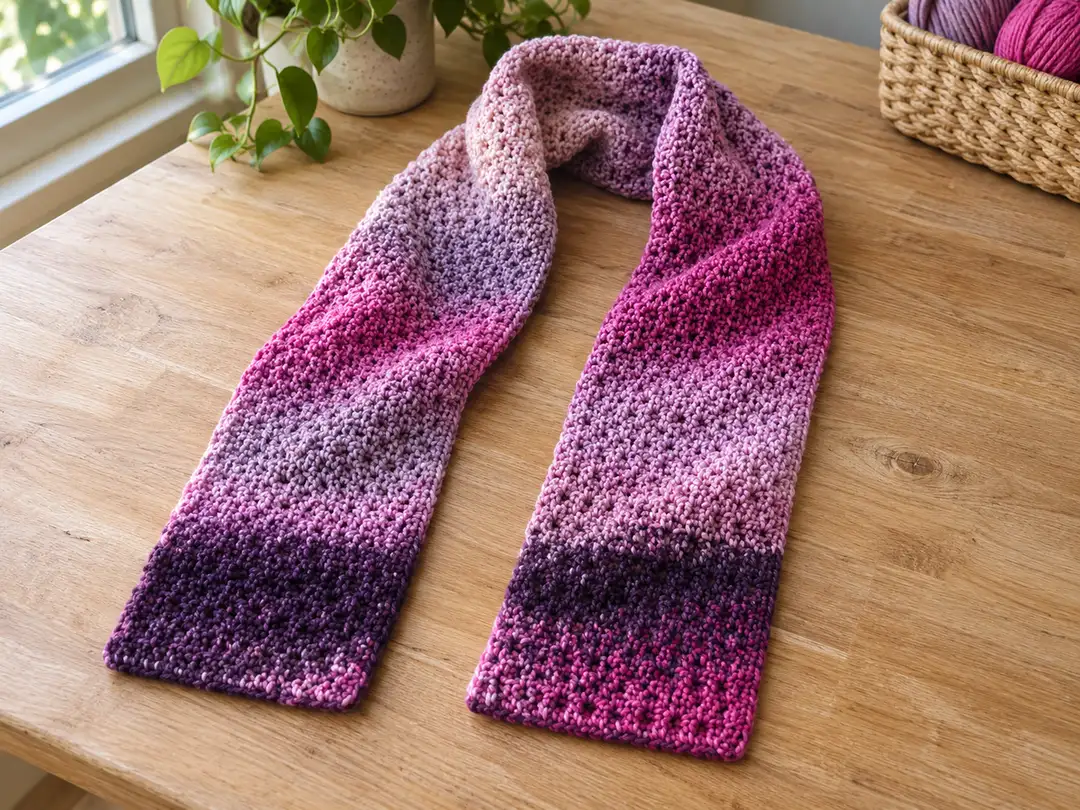
This narrow crochet scarf begins with 2 stitches, widens gradually to 17 and returns to a 2-stitch point. Its fine ribs come from yarn-over slip stitches worked through the back loops. Choose a short or long center section without changing the shared increasing half.
By Emma & EllaUpdated
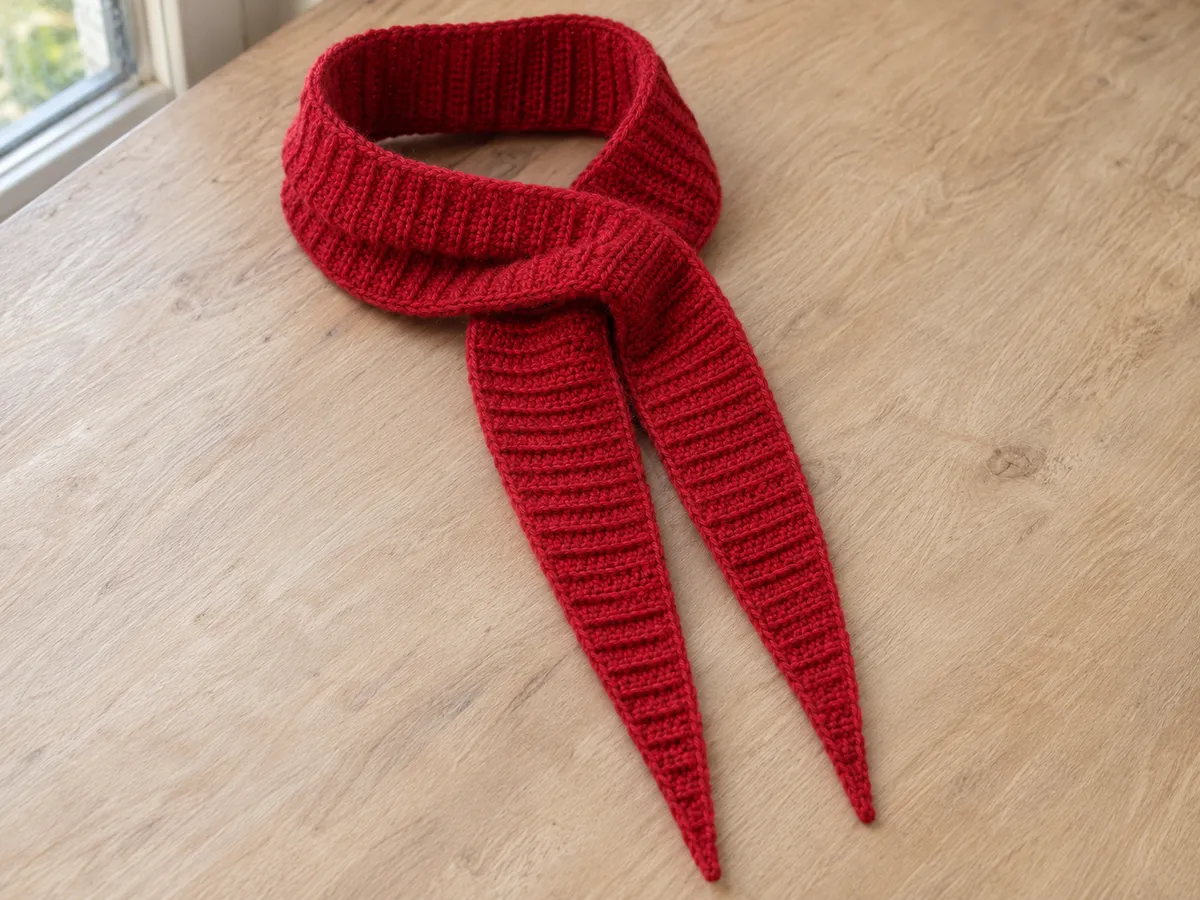
This narrow crochet scarf begins with 2 stitches, widens gradually to 17 and returns to a 2-stitch point. Its fine ribs come from yarn-over slip stitches worked through the back loops. Choose a short or long center section without changing the shared increasing half.
The instructions use US crochet terms. The shaping uses an increase every fourth row, followed later by decreases made by leaving the final stitch unworked. That decrease method is different from working 2 stitches together and must be kept distinct.
Select the yarn version and learn the yarn-over slip stitch
Materials, dimensions and tension
| Version | Yarn allowance | Reference dimensions | Tension per 10 × 10 cm |
|---|---|---|---|
| Short DK | Approximately 30 g / 114 m DK yarn | 80 × 8 cm | 19 stitches and 17 rows |
| Long DK | DK reference allowance: approximately 30 g / 114 m | 108 × 8 cm | 19 stitches and 17 rows |
| Long Aran | Approximately 50 g / 120 m Aran yarn | 114 × 9 cm | 16 stitches and 16 rows |
Both yarn weights use the suggested 4.5 mm hook for the main fabric. The source gives one DK allowance, not a separate detailed consumption table for each DK length. Check the yarn available for your chosen length rather than assuming identical consumption for both centers.
Keep the DK and Aran tension references separate. Using the same hook size does not make their fabric or final measurements identical. Work a sample in the actual yarn-over slip-stitch rib and measure it relaxed, not pulled flat until the ribs disappear.
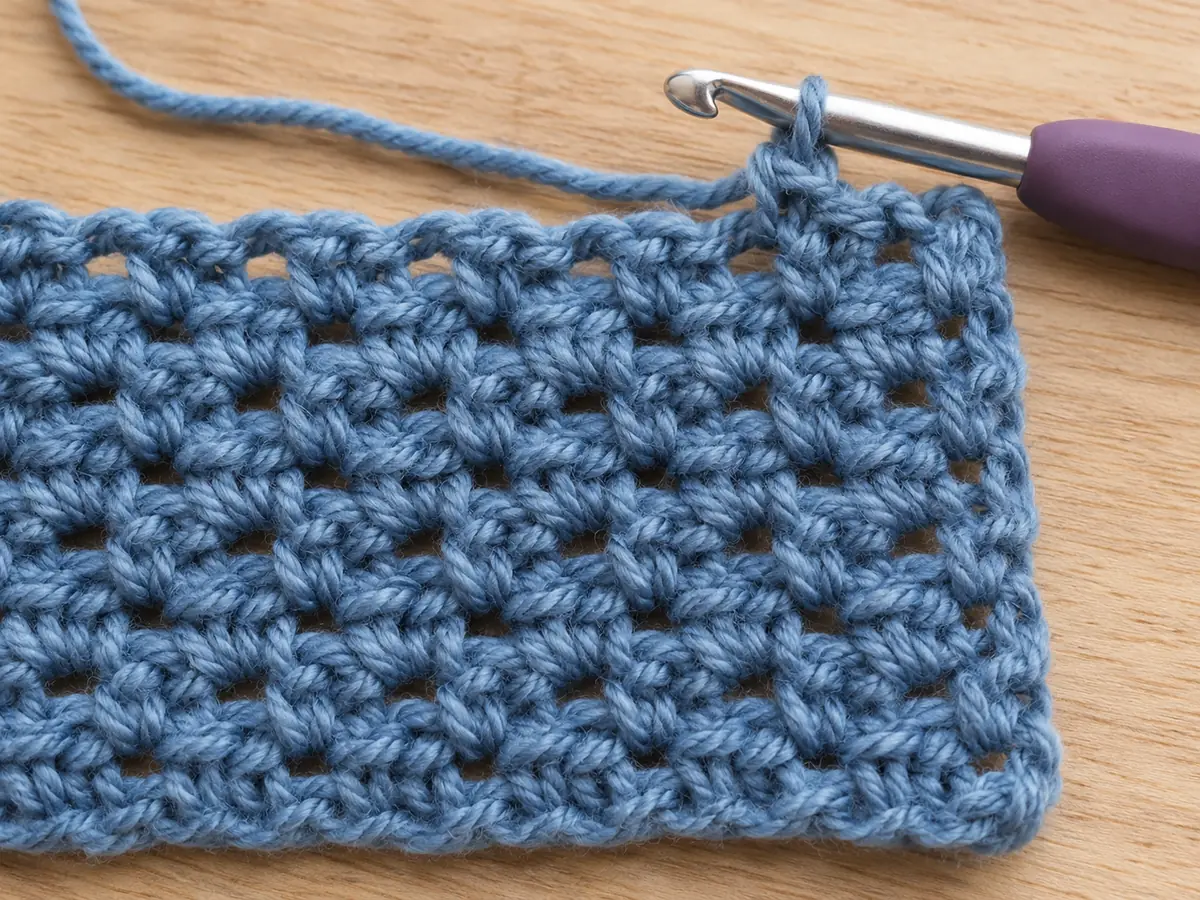
Make a yarn-over slip stitch, YOss
- Yarn over before inserting the hook.
- Insert into the required stitch, using its back loop from row 2 onwards.
- Catch the yarn and draw up a new loop.
- Pull that new loop directly through the remaining loops on the hook.
This stays lower than a half double crochet. Do not add the extra final yarn-over and draw-through used for an hdc. Here the newly drawn loop passes immediately through the other loops, creating the yarn-over slip stitch.
Let the loops glide over the straight hook shaft before settling them. Tightening every working loop makes the following row unnecessarily hard to enter and can produce a stiff scarf. The sample should show flexibility as well as a numerical tension.
Read the row conventions
Ch means chain, sl st means an ordinary slip stitch and BLO means back loop only. The single beginning chain never counts as a stitch. Turn after each completed main row. Row 1 is worked into the foundation chains; later YOss use the upper back loops.
Mark the shaping edge. The increasing rows all add at the same side, and the second half must reduce along that same geometric edge. A row tally is more reliable than counting visible ribs, which can group several rows visually.
For another ribbed construction, compare the half-double-crochet scarf. Its hdc stitches and non-counting 2-chain turns are different from this YOss pattern.
Work the shared first point through row 60
Foundation and first increase
Make 3 ch. Row 1 places a YOss into the 2nd and 3rd chains from the hook, giving 2 stitches. Rows 2 and 3 keep that count. Row 4 doubles the first stitch and works once into the second, giving 3.
Each later increase row adds exactly 1 stitch by working 2 YOss in the first old stitch. All remaining old stitches are worked once. Do not add another stitch at the opposite edge or count the beginning chain as an additional position.
All 60 shared rows
| Row | Instructions | Stitches |
|---|---|---|
| 1 | Make 3 ch; work YOss into the 2nd and 3rd chains; turn. | 2 |
| 2 | 1 ch; 1 YOss BLO in every stitch; turn. | 2 |
| 3 | 1 ch; 1 YOss BLO in every stitch; turn. | 2 |
| 4 | 1 ch; 2 YOss BLO in the first stitch, 1 YOss BLO in every remaining stitch; turn. | 3 |
| 5 | 1 ch; 1 YOss BLO in every stitch; turn. | 3 |
| 6 | 1 ch; 1 YOss BLO in every stitch; turn. | 3 |
| 7 | 1 ch; 1 YOss BLO in every stitch; turn. | 3 |
| 8 | 1 ch; 2 YOss BLO in the first stitch, 1 YOss BLO in every remaining stitch; turn. | 4 |
| 9 | 1 ch; 1 YOss BLO in every stitch; turn. | 4 |
| 10 | 1 ch; 1 YOss BLO in every stitch; turn. | 4 |
| 11 | 1 ch; 1 YOss BLO in every stitch; turn. | 4 |
| 12 | 1 ch; 2 YOss BLO in the first stitch, 1 YOss BLO in every remaining stitch; turn. | 5 |
| 13 | 1 ch; 1 YOss BLO in every stitch; turn. | 5 |
| 14 | 1 ch; 1 YOss BLO in every stitch; turn. | 5 |
| 15 | 1 ch; 1 YOss BLO in every stitch; turn. | 5 |
| 16 | 1 ch; 2 YOss BLO in the first stitch, 1 YOss BLO in every remaining stitch; turn. | 6 |
| 17 | 1 ch; 1 YOss BLO in every stitch; turn. | 6 |
| 18 | 1 ch; 1 YOss BLO in every stitch; turn. | 6 |
| 19 | 1 ch; 1 YOss BLO in every stitch; turn. | 6 |
| 20 | 1 ch; 2 YOss BLO in the first stitch, 1 YOss BLO in every remaining stitch; turn. | 7 |
| 21 | 1 ch; 1 YOss BLO in every stitch; turn. | 7 |
| 22 | 1 ch; 1 YOss BLO in every stitch; turn. | 7 |
| 23 | 1 ch; 1 YOss BLO in every stitch; turn. | 7 |
| 24 | 1 ch; 2 YOss BLO in the first stitch, 1 YOss BLO in every remaining stitch; turn. | 8 |
| 25 | 1 ch; 1 YOss BLO in every stitch; turn. | 8 |
| 26 | 1 ch; 1 YOss BLO in every stitch; turn. | 8 |
| 27 | 1 ch; 1 YOss BLO in every stitch; turn. | 8 |
| 28 | 1 ch; 2 YOss BLO in the first stitch, 1 YOss BLO in every remaining stitch; turn. | 9 |
| 29 | 1 ch; 1 YOss BLO in every stitch; turn. | 9 |
| 30 | 1 ch; 1 YOss BLO in every stitch; turn. | 9 |
| 31 | 1 ch; 1 YOss BLO in every stitch; turn. | 9 |
| 32 | 1 ch; 2 YOss BLO in the first stitch, 1 YOss BLO in every remaining stitch; turn. | 10 |
| 33 | 1 ch; 1 YOss BLO in every stitch; turn. | 10 |
| 34 | 1 ch; 1 YOss BLO in every stitch; turn. | 10 |
| 35 | 1 ch; 1 YOss BLO in every stitch; turn. | 10 |
| 36 | 1 ch; 2 YOss BLO in the first stitch, 1 YOss BLO in every remaining stitch; turn. | 11 |
| 37 | 1 ch; 1 YOss BLO in every stitch; turn. | 11 |
| 38 | 1 ch; 1 YOss BLO in every stitch; turn. | 11 |
| 39 | 1 ch; 1 YOss BLO in every stitch; turn. | 11 |
| 40 | 1 ch; 2 YOss BLO in the first stitch, 1 YOss BLO in every remaining stitch; turn. | 12 |
| 41 | 1 ch; 1 YOss BLO in every stitch; turn. | 12 |
| 42 | 1 ch; 1 YOss BLO in every stitch; turn. | 12 |
| 43 | 1 ch; 1 YOss BLO in every stitch; turn. | 12 |
| 44 | 1 ch; 2 YOss BLO in the first stitch, 1 YOss BLO in every remaining stitch; turn. | 13 |
| 45 | 1 ch; 1 YOss BLO in every stitch; turn. | 13 |
| 46 | 1 ch; 1 YOss BLO in every stitch; turn. | 13 |
| 47 | 1 ch; 1 YOss BLO in every stitch; turn. | 13 |
| 48 | 1 ch; 2 YOss BLO in the first stitch, 1 YOss BLO in every remaining stitch; turn. | 14 |
| 49 | 1 ch; 1 YOss BLO in every stitch; turn. | 14 |
| 50 | 1 ch; 1 YOss BLO in every stitch; turn. | 14 |
| 51 | 1 ch; 1 YOss BLO in every stitch; turn. | 14 |
| 52 | 1 ch; 2 YOss BLO in the first stitch, 1 YOss BLO in every remaining stitch; turn. | 15 |
| 53 | 1 ch; 1 YOss BLO in every stitch; turn. | 15 |
| 54 | 1 ch; 1 YOss BLO in every stitch; turn. | 15 |
| 55 | 1 ch; 1 YOss BLO in every stitch; turn. | 15 |
| 56 | 1 ch; 2 YOss BLO in the first stitch, 1 YOss BLO in every remaining stitch; turn. | 16 |
| 57 | 1 ch; 1 YOss BLO in every stitch; turn. | 16 |
| 58 | 1 ch; 1 YOss BLO in every stitch; turn. | 16 |
| 59 | 1 ch; 1 YOss BLO in every stitch; turn. | 16 |
| 60 | 1 ch; 2 YOss BLO in the first stitch, 1 YOss BLO in every remaining stitch; turn. | 17 |
The increases occur in rows 4, 8, 12, 16, 20, 24, 28, 32, 36, 40, 44, 48, 52, 56 and 60. The first 2 increase rows give 3 and 4 stitches; the later ones give 5 through 17. Three straight rows separate consecutive increase rows.
Check the back-loop insertion as well as the count. Accidentally using both loops may leave the total unchanged while interrupting the fine ribs. After turning, identify the upper loop now further from you rather than trying to follow one permanently named fabric side.
At row 60, stop and count all 17 stitches. The next row belongs to the straight center and contains no further increase. Keep the shaping marker in place through that center so that the reducing half can be aligned later.
A different outline is used in the triangular shawl with a shell border. Do not transfer its increases to this narrow scarf.
Choose the short or long center and complete its matching point
Understand the 2 row sequences
The short center contains 6 straight rows, numbered 61–66, each with 17 stitches. Its first decrease is row 67. The long center contains 52 straight rows, 61–112, again with 17 stitches; its first decrease is row 113.
Until row 60 the versions are identical. Choose one table below and follow it through its own final row. Mixing the long center with the short version's later row numbers makes the decrease record difficult to use.
How a decrease row works
Begin with 1 ch and work YOss BLO across, but leave the final old stitch unworked before turning. This removes 1 position from the next row. Do not substitute a two-stitch-together decrease: the supplied method is to omit the last stitch.
After each decrease, work 3 straight rows before the next decrease. The final decrease is followed by only 2 straight finishing rows. Both versions reduce from 17 to 2 through 15 decreases and do not narrow further to a single stitch.
Short version: rows 61–125
| Row | Instructions | Stitches |
|---|---|---|
| 61 | 1 ch; YOss BLO in every stitch; turn. | 17 |
| 62 | 1 ch; YOss BLO in every stitch; turn. | 17 |
| 63 | 1 ch; YOss BLO in every stitch; turn. | 17 |
| 64 | 1 ch; YOss BLO in every stitch; turn. | 17 |
| 65 | 1 ch; YOss BLO in every stitch; turn. | 17 |
| 66 | 1 ch; YOss BLO in every stitch; turn. | 17 |
| 67 | 1 ch; YOss BLO to the penultimate stitch, leave the last stitch unworked; turn. | 16 |
| 68 | 1 ch; YOss BLO in every stitch; turn. | 16 |
| 69 | 1 ch; YOss BLO in every stitch; turn. | 16 |
| 70 | 1 ch; YOss BLO in every stitch; turn. | 16 |
| 71 | 1 ch; YOss BLO to the penultimate stitch, leave the last stitch unworked; turn. | 15 |
| 72 | 1 ch; YOss BLO in every stitch; turn. | 15 |
| 73 | 1 ch; YOss BLO in every stitch; turn. | 15 |
| 74 | 1 ch; YOss BLO in every stitch; turn. | 15 |
| 75 | 1 ch; YOss BLO to the penultimate stitch, leave the last stitch unworked; turn. | 14 |
| 76 | 1 ch; YOss BLO in every stitch; turn. | 14 |
| 77 | 1 ch; YOss BLO in every stitch; turn. | 14 |
| 78 | 1 ch; YOss BLO in every stitch; turn. | 14 |
| 79 | 1 ch; YOss BLO to the penultimate stitch, leave the last stitch unworked; turn. | 13 |
| 80 | 1 ch; YOss BLO in every stitch; turn. | 13 |
| 81 | 1 ch; YOss BLO in every stitch; turn. | 13 |
| 82 | 1 ch; YOss BLO in every stitch; turn. | 13 |
| 83 | 1 ch; YOss BLO to the penultimate stitch, leave the last stitch unworked; turn. | 12 |
| 84 | 1 ch; YOss BLO in every stitch; turn. | 12 |
| 85 | 1 ch; YOss BLO in every stitch; turn. | 12 |
| 86 | 1 ch; YOss BLO in every stitch; turn. | 12 |
| 87 | 1 ch; YOss BLO to the penultimate stitch, leave the last stitch unworked; turn. | 11 |
| 88 | 1 ch; YOss BLO in every stitch; turn. | 11 |
| 89 | 1 ch; YOss BLO in every stitch; turn. | 11 |
| 90 | 1 ch; YOss BLO in every stitch; turn. | 11 |
| 91 | 1 ch; YOss BLO to the penultimate stitch, leave the last stitch unworked; turn. | 10 |
| 92 | 1 ch; YOss BLO in every stitch; turn. | 10 |
| 93 | 1 ch; YOss BLO in every stitch; turn. | 10 |
| 94 | 1 ch; YOss BLO in every stitch; turn. | 10 |
| 95 | 1 ch; YOss BLO to the penultimate stitch, leave the last stitch unworked; turn. | 9 |
| 96 | 1 ch; YOss BLO in every stitch; turn. | 9 |
| 97 | 1 ch; YOss BLO in every stitch; turn. | 9 |
| 98 | 1 ch; YOss BLO in every stitch; turn. | 9 |
| 99 | 1 ch; YOss BLO to the penultimate stitch, leave the last stitch unworked; turn. | 8 |
| 100 | 1 ch; YOss BLO in every stitch; turn. | 8 |
| 101 | 1 ch; YOss BLO in every stitch; turn. | 8 |
| 102 | 1 ch; YOss BLO in every stitch; turn. | 8 |
| 103 | 1 ch; YOss BLO to the penultimate stitch, leave the last stitch unworked; turn. | 7 |
| 104 | 1 ch; YOss BLO in every stitch; turn. | 7 |
| 105 | 1 ch; YOss BLO in every stitch; turn. | 7 |
| 106 | 1 ch; YOss BLO in every stitch; turn. | 7 |
| 107 | 1 ch; YOss BLO to the penultimate stitch, leave the last stitch unworked; turn. | 6 |
| 108 | 1 ch; YOss BLO in every stitch; turn. | 6 |
| 109 | 1 ch; YOss BLO in every stitch; turn. | 6 |
| 110 | 1 ch; YOss BLO in every stitch; turn. | 6 |
| 111 | 1 ch; YOss BLO to the penultimate stitch, leave the last stitch unworked; turn. | 5 |
| 112 | 1 ch; YOss BLO in every stitch; turn. | 5 |
| 113 | 1 ch; YOss BLO in every stitch; turn. | 5 |
| 114 | 1 ch; YOss BLO in every stitch; turn. | 5 |
| 115 | 1 ch; YOss BLO to the penultimate stitch, leave the last stitch unworked; turn. | 4 |
| 116 | 1 ch; YOss BLO in every stitch; turn. | 4 |
| 117 | 1 ch; YOss BLO in every stitch; turn. | 4 |
| 118 | 1 ch; YOss BLO in every stitch; turn. | 4 |
| 119 | 1 ch; YOss BLO to the penultimate stitch, leave the last stitch unworked; turn. | 3 |
| 120 | 1 ch; YOss BLO in every stitch; turn. | 3 |
| 121 | 1 ch; YOss BLO in every stitch; turn. | 3 |
| 122 | 1 ch; YOss BLO in every stitch; turn. | 3 |
| 123 | 1 ch; YOss BLO to the penultimate stitch, leave the last stitch unworked; turn. | 2 |
| 124 | 1 ch; YOss BLO in every stitch; turn. | 2 |
| 125 | 1 ch; YOss BLO in every stitch; turn. | 2 |
The short decrease rows are 67, 71, 75, 79, 83, 87, 91, 95, 99, 103, 107, 111, 115, 119 and 123. Row 123 leaves 2 stitches, followed by straight rows 124 and 125.
Long version: rows 61–171
| Row | Instructions | Stitches |
|---|---|---|
| 61 | 1 ch; YOss BLO in every stitch; turn. | 17 |
| 62 | 1 ch; YOss BLO in every stitch; turn. | 17 |
| 63 | 1 ch; YOss BLO in every stitch; turn. | 17 |
| 64 | 1 ch; YOss BLO in every stitch; turn. | 17 |
| 65 | 1 ch; YOss BLO in every stitch; turn. | 17 |
| 66 | 1 ch; YOss BLO in every stitch; turn. | 17 |
| 67 | 1 ch; YOss BLO in every stitch; turn. | 17 |
| 68 | 1 ch; YOss BLO in every stitch; turn. | 17 |
| 69 | 1 ch; YOss BLO in every stitch; turn. | 17 |
| 70 | 1 ch; YOss BLO in every stitch; turn. | 17 |
| 71 | 1 ch; YOss BLO in every stitch; turn. | 17 |
| 72 | 1 ch; YOss BLO in every stitch; turn. | 17 |
| 73 | 1 ch; YOss BLO in every stitch; turn. | 17 |
| 74 | 1 ch; YOss BLO in every stitch; turn. | 17 |
| 75 | 1 ch; YOss BLO in every stitch; turn. | 17 |
| 76 | 1 ch; YOss BLO in every stitch; turn. | 17 |
| 77 | 1 ch; YOss BLO in every stitch; turn. | 17 |
| 78 | 1 ch; YOss BLO in every stitch; turn. | 17 |
| 79 | 1 ch; YOss BLO in every stitch; turn. | 17 |
| 80 | 1 ch; YOss BLO in every stitch; turn. | 17 |
| 81 | 1 ch; YOss BLO in every stitch; turn. | 17 |
| 82 | 1 ch; YOss BLO in every stitch; turn. | 17 |
| 83 | 1 ch; YOss BLO in every stitch; turn. | 17 |
| 84 | 1 ch; YOss BLO in every stitch; turn. | 17 |
| 85 | 1 ch; YOss BLO in every stitch; turn. | 17 |
| 86 | 1 ch; YOss BLO in every stitch; turn. | 17 |
| 87 | 1 ch; YOss BLO in every stitch; turn. | 17 |
| 88 | 1 ch; YOss BLO in every stitch; turn. | 17 |
| 89 | 1 ch; YOss BLO in every stitch; turn. | 17 |
| 90 | 1 ch; YOss BLO in every stitch; turn. | 17 |
| 91 | 1 ch; YOss BLO in every stitch; turn. | 17 |
| 92 | 1 ch; YOss BLO in every stitch; turn. | 17 |
| 93 | 1 ch; YOss BLO in every stitch; turn. | 17 |
| 94 | 1 ch; YOss BLO in every stitch; turn. | 17 |
| 95 | 1 ch; YOss BLO in every stitch; turn. | 17 |
| 96 | 1 ch; YOss BLO in every stitch; turn. | 17 |
| 97 | 1 ch; YOss BLO in every stitch; turn. | 17 |
| 98 | 1 ch; YOss BLO in every stitch; turn. | 17 |
| 99 | 1 ch; YOss BLO in every stitch; turn. | 17 |
| 100 | 1 ch; YOss BLO in every stitch; turn. | 17 |
| 101 | 1 ch; YOss BLO in every stitch; turn. | 17 |
| 102 | 1 ch; YOss BLO in every stitch; turn. | 17 |
| 103 | 1 ch; YOss BLO in every stitch; turn. | 17 |
| 104 | 1 ch; YOss BLO in every stitch; turn. | 17 |
| 105 | 1 ch; YOss BLO in every stitch; turn. | 17 |
| 106 | 1 ch; YOss BLO in every stitch; turn. | 17 |
| 107 | 1 ch; YOss BLO in every stitch; turn. | 17 |
| 108 | 1 ch; YOss BLO in every stitch; turn. | 17 |
| 109 | 1 ch; YOss BLO in every stitch; turn. | 17 |
| 110 | 1 ch; YOss BLO in every stitch; turn. | 17 |
| 111 | 1 ch; YOss BLO in every stitch; turn. | 17 |
| 112 | 1 ch; YOss BLO in every stitch; turn. | 17 |
| 113 | 1 ch; YOss BLO to the penultimate stitch, leave the last stitch unworked; turn. | 16 |
| 114 | 1 ch; YOss BLO in every stitch; turn. | 16 |
| 115 | 1 ch; YOss BLO in every stitch; turn. | 16 |
| 116 | 1 ch; YOss BLO in every stitch; turn. | 16 |
| 117 | 1 ch; YOss BLO to the penultimate stitch, leave the last stitch unworked; turn. | 15 |
| 118 | 1 ch; YOss BLO in every stitch; turn. | 15 |
| 119 | 1 ch; YOss BLO in every stitch; turn. | 15 |
| 120 | 1 ch; YOss BLO in every stitch; turn. | 15 |
| 121 | 1 ch; YOss BLO to the penultimate stitch, leave the last stitch unworked; turn. | 14 |
| 122 | 1 ch; YOss BLO in every stitch; turn. | 14 |
| 123 | 1 ch; YOss BLO in every stitch; turn. | 14 |
| 124 | 1 ch; YOss BLO in every stitch; turn. | 14 |
| 125 | 1 ch; YOss BLO to the penultimate stitch, leave the last stitch unworked; turn. | 13 |
| 126 | 1 ch; YOss BLO in every stitch; turn. | 13 |
| 127 | 1 ch; YOss BLO in every stitch; turn. | 13 |
| 128 | 1 ch; YOss BLO in every stitch; turn. | 13 |
| 129 | 1 ch; YOss BLO to the penultimate stitch, leave the last stitch unworked; turn. | 12 |
| 130 | 1 ch; YOss BLO in every stitch; turn. | 12 |
| 131 | 1 ch; YOss BLO in every stitch; turn. | 12 |
| 132 | 1 ch; YOss BLO in every stitch; turn. | 12 |
| 133 | 1 ch; YOss BLO to the penultimate stitch, leave the last stitch unworked; turn. | 11 |
| 134 | 1 ch; YOss BLO in every stitch; turn. | 11 |
| 135 | 1 ch; YOss BLO in every stitch; turn. | 11 |
| 136 | 1 ch; YOss BLO in every stitch; turn. | 11 |
| 137 | 1 ch; YOss BLO to the penultimate stitch, leave the last stitch unworked; turn. | 10 |
| 138 | 1 ch; YOss BLO in every stitch; turn. | 10 |
| 139 | 1 ch; YOss BLO in every stitch; turn. | 10 |
| 140 | 1 ch; YOss BLO in every stitch; turn. | 10 |
| 141 | 1 ch; YOss BLO to the penultimate stitch, leave the last stitch unworked; turn. | 9 |
| 142 | 1 ch; YOss BLO in every stitch; turn. | 9 |
| 143 | 1 ch; YOss BLO in every stitch; turn. | 9 |
| 144 | 1 ch; YOss BLO in every stitch; turn. | 9 |
| 145 | 1 ch; YOss BLO to the penultimate stitch, leave the last stitch unworked; turn. | 8 |
| 146 | 1 ch; YOss BLO in every stitch; turn. | 8 |
| 147 | 1 ch; YOss BLO in every stitch; turn. | 8 |
| 148 | 1 ch; YOss BLO in every stitch; turn. | 8 |
| 149 | 1 ch; YOss BLO to the penultimate stitch, leave the last stitch unworked; turn. | 7 |
| 150 | 1 ch; YOss BLO in every stitch; turn. | 7 |
| 151 | 1 ch; YOss BLO in every stitch; turn. | 7 |
| 152 | 1 ch; YOss BLO in every stitch; turn. | 7 |
| 153 | 1 ch; YOss BLO to the penultimate stitch, leave the last stitch unworked; turn. | 6 |
| 154 | 1 ch; YOss BLO in every stitch; turn. | 6 |
| 155 | 1 ch; YOss BLO in every stitch; turn. | 6 |
| 156 | 1 ch; YOss BLO in every stitch; turn. | 6 |
| 157 | 1 ch; YOss BLO to the penultimate stitch, leave the last stitch unworked; turn. | 5 |
| 158 | 1 ch; YOss BLO in every stitch; turn. | 5 |
| 159 | 1 ch; YOss BLO in every stitch; turn. | 5 |
| 160 | 1 ch; YOss BLO in every stitch; turn. | 5 |
| 161 | 1 ch; YOss BLO to the penultimate stitch, leave the last stitch unworked; turn. | 4 |
| 162 | 1 ch; YOss BLO in every stitch; turn. | 4 |
| 163 | 1 ch; YOss BLO in every stitch; turn. | 4 |
| 164 | 1 ch; YOss BLO in every stitch; turn. | 4 |
| 165 | 1 ch; YOss BLO to the penultimate stitch, leave the last stitch unworked; turn. | 3 |
| 166 | 1 ch; YOss BLO in every stitch; turn. | 3 |
| 167 | 1 ch; YOss BLO in every stitch; turn. | 3 |
| 168 | 1 ch; YOss BLO in every stitch; turn. | 3 |
| 169 | 1 ch; YOss BLO to the penultimate stitch, leave the last stitch unworked; turn. | 2 |
| 170 | 1 ch; YOss BLO in every stitch; turn. | 2 |
| 171 | 1 ch; YOss BLO in every stitch; turn. | 2 |
The long decrease rows are 113, 117, 121, 125, 129, 133, 137, 141, 145, 149, 153, 157, 161, 165 and 169. Rows 170 and 171 retain the final 2 stitches.
The source's repeated mention of row 116 in its prose is resolved by its row table. The explicit schedules above keep each row number unique. This is a numbering clarification, not an additional decrease or another center section.
If you pause during the long center, record the completed row number. The raised ribs alone may not distinguish every individual row. A temporary marker at a known full row can help you resume without guessing when the decrease half begins.
Work the ordinary slip-stitch edge and block gently
Use a larger hook for the edging
Leave the yarn attached after the selected final row. Use a hook one size larger than the main hook. The source specifies a size step rather than an exact new diameter, so no fixed replacement millimeter size is added here.
The border uses ordinary sl st, not the YOss of the main fabric. The larger hook helps prevent that low edging from drawing the narrow scarf inward. Keep each loop relaxed enough to match the flexibility of the ribs.
Follow the outline without a new corner formula
- Continue around the corner from the final row.
- Work evenly around the scarf, approximately 1 sl st for each row end or stitch as appropriate to the edge.
- Join with an sl st into the first edging stitch.
- Fasten off and weave in the ends.
Along the long sides, distribute the edge stitches through the row ends. At the short points, use the actual remaining stitch positions. The source gives no additional rigid corner formula, so do not build a large tight bundle at each tip.
Compare a short edged section with the still-unworked fabric. It should lie beside it without strong gathering. A tight slip-stitch border can create a hard outline even when the main ribbing was made at the correct tension.
Finish the pointed ends neatly
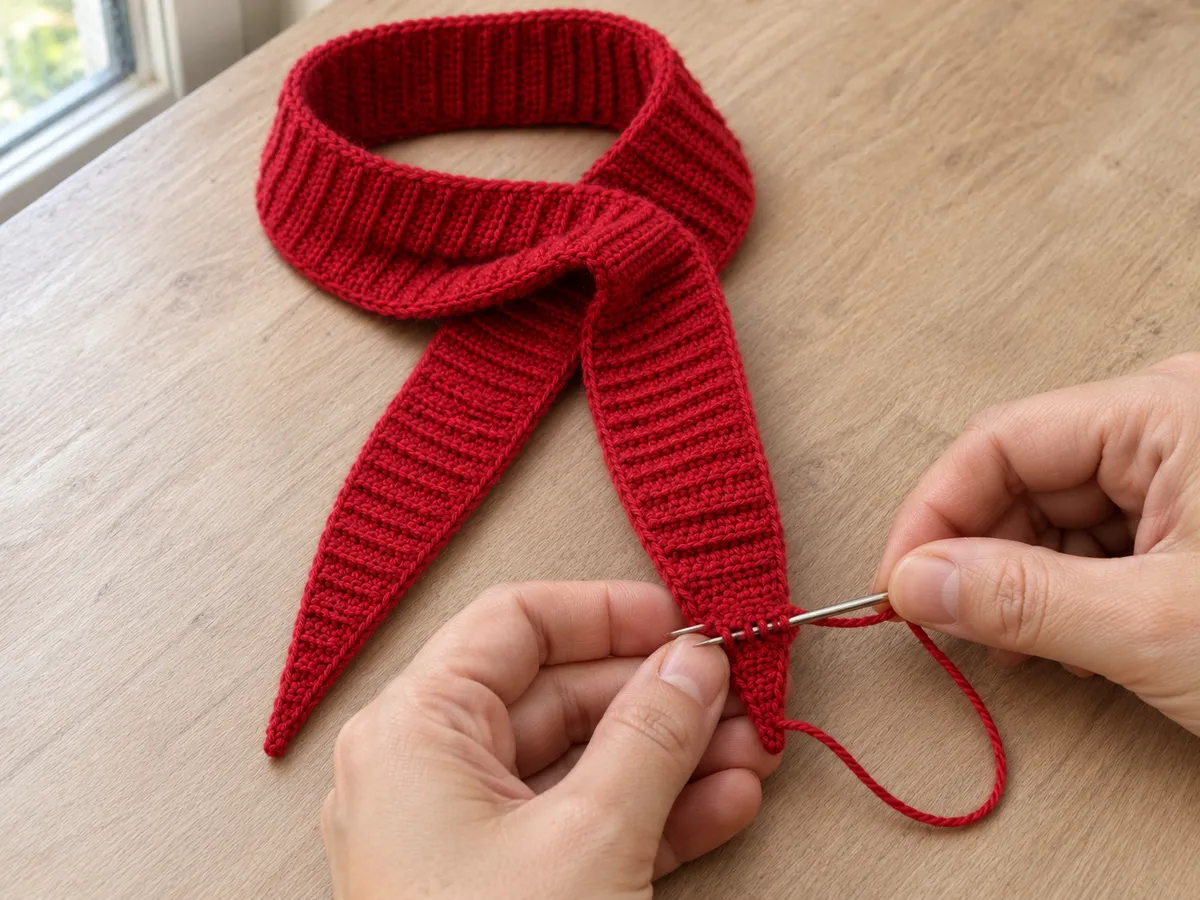
Weave the beginning and finishing tails through several stitches on the wrong side, keeping the paths inside the ribs where possible. Do not pull them tight enough to pinch the narrow points. Inspect both ends together after securing the yarn.
Dampen and block according to the yarn's care instructions. Press excess water out gently and lay the scarf in its natural shape. Allow the ribs to open softly without stretching them until the texture disappears.
Judge the final length only after drying. Record the yarn, tension and selected 6-row or 52-row center for another version. For a joined alternative, see the linen-stitch infinity scarf. The source dimensions do not establish a separate physical test of every substitution.
Emma & Ella
More crochet projects from The Cooking Twins Yarn.
More from Emma & Ella