Tunisian simple-stitch scarf from point to point
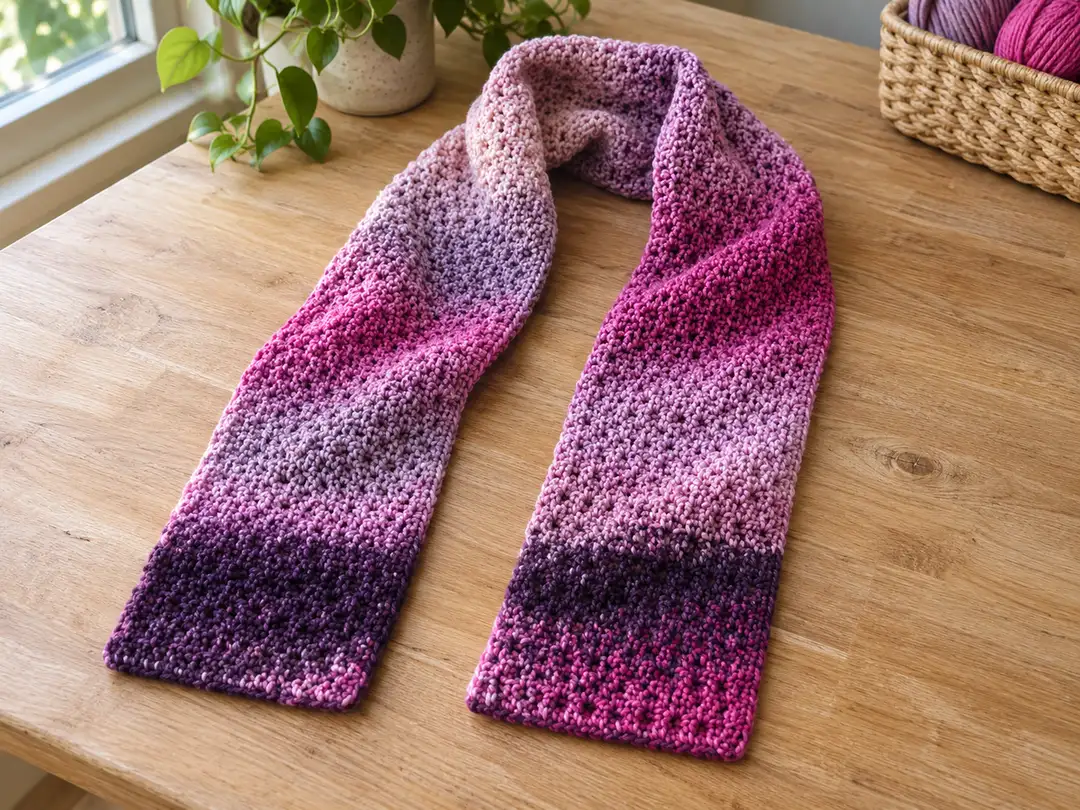
This point-to-point scarf introduces Tunisian simple stitch through a gradually shaped fabric. The first half increases by 1 stitch every second row, and the second half mirrors it with decreases. The source example measures approximately 107 cm long and around 20 cm wide at the center.

By Emma & EllaUpdated
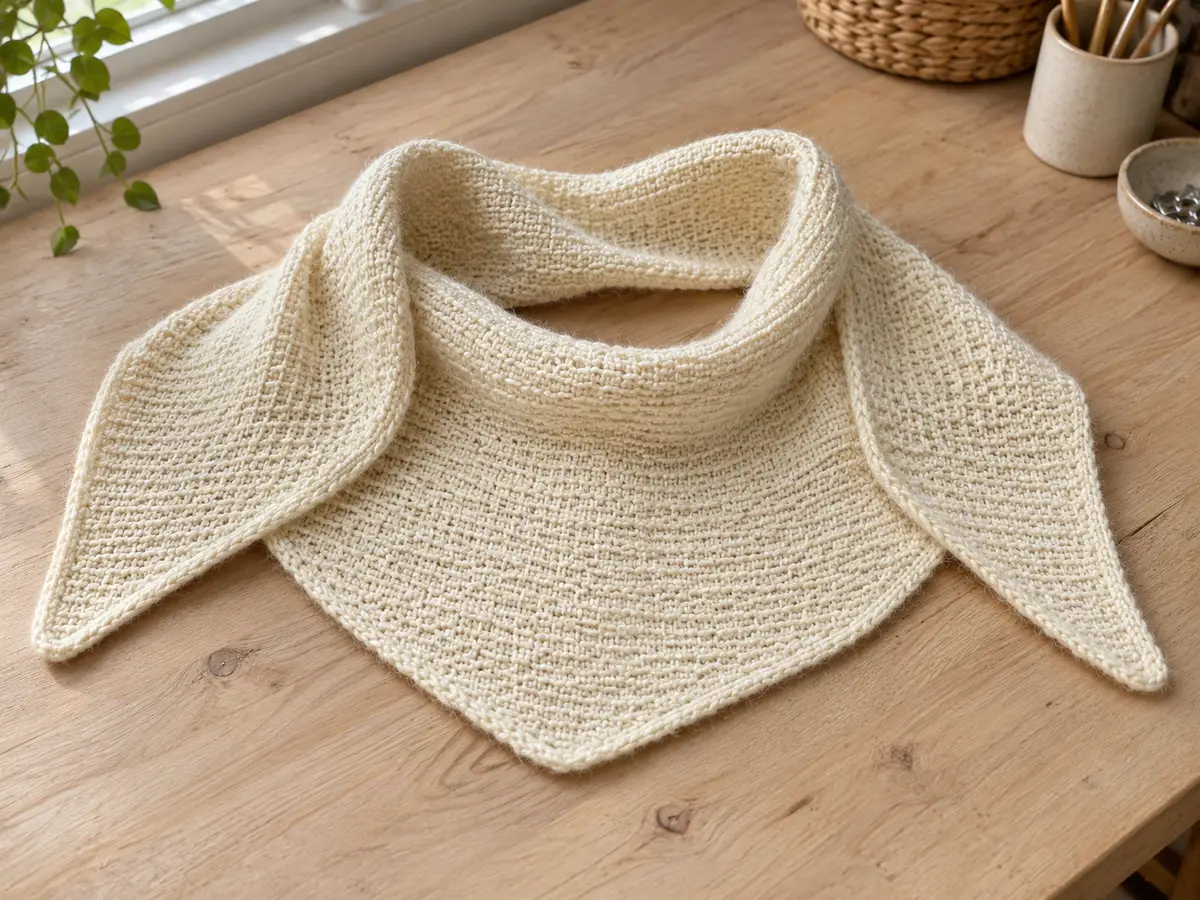
This point-to-point scarf introduces Tunisian simple stitch through a gradually shaped fabric. The first half increases by 1 stitch every second row, and the second half mirrors it with decreases. The source example measures approximately 107 cm long and around 20 cm wide at the center.
A Tunisian row has a forward pass and a return pass. Both passes together count as one full row in the schedules below. Keep the same face toward you throughout the main fabric rather than turning as you would for ordinary crochet rows.
Prepare the hooks and understand a complete Tunisian row
Materials and reference tension
| Item | Specification |
|---|---|
| Yarn | 1 ball of merino wool, 100 g / approximately 192 m |
| Example remainder | Approximately 18 g left over |
| Tunisian hook | 8 mm, with enough cable capacity for 35 loops |
| Ordinary edging hook | 8.5–9 mm |
| Other tools | Markers, scissors and yarn needle |
| Blocked tension | 12 stitches and 18 full rows per 10 × 10 cm in Tunisian simple stitch |
The leftover 18 g is a reference from the example, not a guaranteed remainder with another tension. Prepare the stated ball and allow for the border. The source's cable-length detail is unclear; the practical requirement is enough room to hold all 35 loops comfortably without crowding them off the hook.
The edging hook is larger than the Tunisian hook so that the low slip-stitch border can lie without gathering the fabric. Check that behavior while working. Matching the main-fabric tension does not automatically prove that your edging tension is suitable.
Forward pass: collect the loops
TSS means Tunisian simple stitch. For a right-handed crocheter, work from right to left behind the front vertical bar of the next stitch and draw up a loop. Leave each collected loop on the hook. Left-handed crocheters mirror the direction.
The first loop is already on the hook and counts as the first stitch. Do not pick up another loop through that first position. At the final edge, insert beneath both vertical edge bars and draw up the last loop.
Return pass: reduce to one working loop
- Make the initial chain by yarning over and pulling through 1 loop.
- Yarn over and pull through 2 loops.
- Continue pulling through 2 loops at a time until only 1 loop remains.
That remaining loop starts the next forward pass. Do not turn between the passes. A table count of 35 refers to the stitch positions collected for the row, even though the completed return pass leaves only 1 working loop on the hook.
Measure a sample in the actual Tunisian stitch after blocking, counting vertical bars and completed rows. A half-finished forward pass is not a completed extra row. Record a row only after its return pass is finished.
For another soft fabric, compare the yarn-over slip-stitch scarf. Its ordinary turned rows use a different counting system.
Increase from 3 stitches to the marked center
Rows 1–3
For row 1, make 3 ch and pick up a loop through the back bump of the 2nd and 3rd chains from the hook. Together with the existing working loop, there are 3 loops. Complete the return pass.
For row 2, place a yarn-over after the first existing loop as the increase. Pick up the next TSS and the final edge stitch beneath both bars, then complete the return pass. The row has 4 stitches.
Row 3 is a plain TSS row with no increase, retaining 4 stitches. Continue treating the last edge under both vertical bars. The increase is a yarn-over, not 2 loops picked up from one old vertical bar.
Complete increasing schedule: rows 1–65
| Row | Forward and return work | Stitches in the row |
|---|---|---|
| 1 | 3 ch; pick up loops in the back bumps of the 2nd and 3rd chains; complete the return pass. | 3 |
| 2 | After the existing first loop, YO to increase; TSS across, last edge under both bars; return pass. | 4 |
| 3 | TSS without increase; last edge under both bars; return pass. | 4 |
| 4 | After the existing first loop, YO to increase; TSS across, last edge under both bars; return pass. | 5 |
| 5 | TSS without increase; last edge under both bars; return pass. | 5 |
| 6 | After the existing first loop, YO to increase; TSS across, last edge under both bars; return pass. | 6 |
| 7 | TSS without increase; last edge under both bars; return pass. | 6 |
| 8 | After the existing first loop, YO to increase; TSS across, last edge under both bars; return pass. | 7 |
| 9 | TSS without increase; last edge under both bars; return pass. | 7 |
| 10 | After the existing first loop, YO to increase; TSS across, last edge under both bars; return pass. | 8 |
| 11 | TSS without increase; last edge under both bars; return pass. | 8 |
| 12 | After the existing first loop, YO to increase; TSS across, last edge under both bars; return pass. | 9 |
| 13 | TSS without increase; last edge under both bars; return pass. | 9 |
| 14 | After the existing first loop, YO to increase; TSS across, last edge under both bars; return pass. | 10 |
| 15 | TSS without increase; last edge under both bars; return pass. | 10 |
| 16 | After the existing first loop, YO to increase; TSS across, last edge under both bars; return pass. | 11 |
| 17 | TSS without increase; last edge under both bars; return pass. | 11 |
| 18 | After the existing first loop, YO to increase; TSS across, last edge under both bars; return pass. | 12 |
| 19 | TSS without increase; last edge under both bars; return pass. | 12 |
| 20 | After the existing first loop, YO to increase; TSS across, last edge under both bars; return pass. | 13 |
| 21 | TSS without increase; last edge under both bars; return pass. | 13 |
| 22 | After the existing first loop, YO to increase; TSS across, last edge under both bars; return pass. | 14 |
| 23 | TSS without increase; last edge under both bars; return pass. | 14 |
| 24 | After the existing first loop, YO to increase; TSS across, last edge under both bars; return pass. | 15 |
| 25 | TSS without increase; last edge under both bars; return pass. | 15 |
| 26 | After the existing first loop, YO to increase; TSS across, last edge under both bars; return pass. | 16 |
| 27 | TSS without increase; last edge under both bars; return pass. | 16 |
| 28 | After the existing first loop, YO to increase; TSS across, last edge under both bars; return pass. | 17 |
| 29 | TSS without increase; last edge under both bars; return pass. | 17 |
| 30 | After the existing first loop, YO to increase; TSS across, last edge under both bars; return pass. | 18 |
| 31 | TSS without increase; last edge under both bars; return pass. | 18 |
| 32 | After the existing first loop, YO to increase; TSS across, last edge under both bars; return pass. | 19 |
| 33 | TSS without increase; last edge under both bars; return pass. | 19 |
| 34 | After the existing first loop, YO to increase; TSS across, last edge under both bars; return pass. | 20 |
| 35 | TSS without increase; last edge under both bars; return pass. | 20 |
| 36 | After the existing first loop, YO to increase; TSS across, last edge under both bars; return pass. | 21 |
| 37 | TSS without increase; last edge under both bars; return pass. | 21 |
| 38 | After the existing first loop, YO to increase; TSS across, last edge under both bars; return pass. | 22 |
| 39 | TSS without increase; last edge under both bars; return pass. | 22 |
| 40 | After the existing first loop, YO to increase; TSS across, last edge under both bars; return pass. | 23 |
| 41 | TSS without increase; last edge under both bars; return pass. | 23 |
| 42 | After the existing first loop, YO to increase; TSS across, last edge under both bars; return pass. | 24 |
| 43 | TSS without increase; last edge under both bars; return pass. | 24 |
| 44 | After the existing first loop, YO to increase; TSS across, last edge under both bars; return pass. | 25 |
| 45 | TSS without increase; last edge under both bars; return pass. | 25 |
| 46 | After the existing first loop, YO to increase; TSS across, last edge under both bars; return pass. | 26 |
| 47 | TSS without increase; last edge under both bars; return pass. | 26 |
| 48 | After the existing first loop, YO to increase; TSS across, last edge under both bars; return pass. | 27 |
| 49 | TSS without increase; last edge under both bars; return pass. | 27 |
| 50 | After the existing first loop, YO to increase; TSS across, last edge under both bars; return pass. | 28 |
| 51 | TSS without increase; last edge under both bars; return pass. | 28 |
| 52 | After the existing first loop, YO to increase; TSS across, last edge under both bars; return pass. | 29 |
| 53 | TSS without increase; last edge under both bars; return pass. | 29 |
| 54 | After the existing first loop, YO to increase; TSS across, last edge under both bars; return pass. | 30 |
| 55 | TSS without increase; last edge under both bars; return pass. | 30 |
| 56 | After the existing first loop, YO to increase; TSS across, last edge under both bars; return pass. | 31 |
| 57 | TSS without increase; last edge under both bars; return pass. | 31 |
| 58 | After the existing first loop, YO to increase; TSS across, last edge under both bars; return pass. | 32 |
| 59 | TSS without increase; last edge under both bars; return pass. | 32 |
| 60 | After the existing first loop, YO to increase; TSS across, last edge under both bars; return pass. | 33 |
| 61 | TSS without increase; last edge under both bars; return pass. | 33 |
| 62 | After the existing first loop, YO to increase; TSS across, last edge under both bars; return pass. | 34 |
| 63 | TSS without increase; last edge under both bars; return pass. | 34 |
| 64 | After the existing first loop, YO to increase; TSS across, last edge under both bars; return pass. | 35 |
| 65 | TSS without increase; last edge under both bars; return pass. Mark this row for the border midpoint. | 35 |
Even rows 2, 4, 6 and so on through 64 add one stitch after the first loop. There are 32 increases, taking the starting 3 stitches to 35. Row 65 is plain, not another increase row.
Mark row 65 for the later edging point and keep that marker in place. If the count is not 35, review the increase rows before starting the decreasing half. An extra loop picked up at the beginning can look like an increase while being in the wrong position.
Keep the edge stable
The final stitch beneath both vertical edge bars creates a clearer outer edge. Find both bars before drawing up the loop, rather than entering only a loose outside strand. This edge is also important when the scarf is rotated for the border.
Keep the yarn-over increase distinguishable from the TSS loops beside it. It is an added counted position on the forward pass, while the return pass is worked normally. Adding another increase while returning would change the stated count.
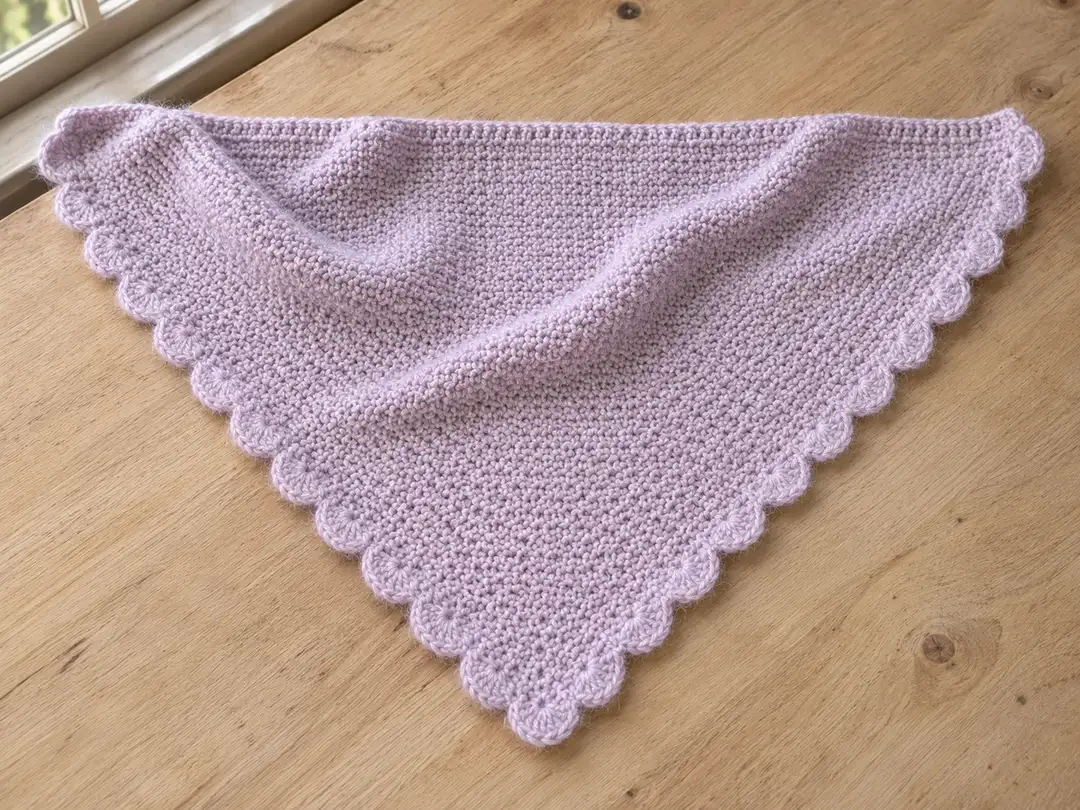
A different shaped project is the triangular shawl with a shell edging. Its ordinary crochet shaping does not replace the Tunisian passes here.
Mirror the decreases and bind off in row 130
First decrease and plain row
In row 66, retain the existing first loop and skip the next stitch that would normally be picked up. Continue TSS to the final edge, working that edge under both bars. Complete the normal return pass. There are 34 stitches.
Row 67 has no further decrease and retains 34. The skipped position belongs immediately after the first loop; do not remove the first working loop itself or skip a random stitch elsewhere.
Complete decreasing schedule: rows 66–129
| Row | Forward and return work | Stitches in the row |
|---|---|---|
| 66 | Keep the first loop, skip the next stitch, TSS across; last edge under both bars; return pass. | 34 |
| 67 | TSS without decrease; last edge under both bars; return pass. | 34 |
| 68 | Keep the first loop, skip the next stitch, TSS across; last edge under both bars; return pass. | 33 |
| 69 | TSS without decrease; last edge under both bars; return pass. | 33 |
| 70 | Keep the first loop, skip the next stitch, TSS across; last edge under both bars; return pass. | 32 |
| 71 | TSS without decrease; last edge under both bars; return pass. | 32 |
| 72 | Keep the first loop, skip the next stitch, TSS across; last edge under both bars; return pass. | 31 |
| 73 | TSS without decrease; last edge under both bars; return pass. | 31 |
| 74 | Keep the first loop, skip the next stitch, TSS across; last edge under both bars; return pass. | 30 |
| 75 | TSS without decrease; last edge under both bars; return pass. | 30 |
| 76 | Keep the first loop, skip the next stitch, TSS across; last edge under both bars; return pass. | 29 |
| 77 | TSS without decrease; last edge under both bars; return pass. | 29 |
| 78 | Keep the first loop, skip the next stitch, TSS across; last edge under both bars; return pass. | 28 |
| 79 | TSS without decrease; last edge under both bars; return pass. | 28 |
| 80 | Keep the first loop, skip the next stitch, TSS across; last edge under both bars; return pass. | 27 |
| 81 | TSS without decrease; last edge under both bars; return pass. | 27 |
| 82 | Keep the first loop, skip the next stitch, TSS across; last edge under both bars; return pass. | 26 |
| 83 | TSS without decrease; last edge under both bars; return pass. | 26 |
| 84 | Keep the first loop, skip the next stitch, TSS across; last edge under both bars; return pass. | 25 |
| 85 | TSS without decrease; last edge under both bars; return pass. | 25 |
| 86 | Keep the first loop, skip the next stitch, TSS across; last edge under both bars; return pass. | 24 |
| 87 | TSS without decrease; last edge under both bars; return pass. | 24 |
| 88 | Keep the first loop, skip the next stitch, TSS across; last edge under both bars; return pass. | 23 |
| 89 | TSS without decrease; last edge under both bars; return pass. | 23 |
| 90 | Keep the first loop, skip the next stitch, TSS across; last edge under both bars; return pass. | 22 |
| 91 | TSS without decrease; last edge under both bars; return pass. | 22 |
| 92 | Keep the first loop, skip the next stitch, TSS across; last edge under both bars; return pass. | 21 |
| 93 | TSS without decrease; last edge under both bars; return pass. | 21 |
| 94 | Keep the first loop, skip the next stitch, TSS across; last edge under both bars; return pass. | 20 |
| 95 | TSS without decrease; last edge under both bars; return pass. | 20 |
| 96 | Keep the first loop, skip the next stitch, TSS across; last edge under both bars; return pass. | 19 |
| 97 | TSS without decrease; last edge under both bars; return pass. | 19 |
| 98 | Keep the first loop, skip the next stitch, TSS across; last edge under both bars; return pass. | 18 |
| 99 | TSS without decrease; last edge under both bars; return pass. | 18 |
| 100 | Keep the first loop, skip the next stitch, TSS across; last edge under both bars; return pass. | 17 |
| 101 | TSS without decrease; last edge under both bars; return pass. | 17 |
| 102 | Keep the first loop, skip the next stitch, TSS across; last edge under both bars; return pass. | 16 |
| 103 | TSS without decrease; last edge under both bars; return pass. | 16 |
| 104 | Keep the first loop, skip the next stitch, TSS across; last edge under both bars; return pass. | 15 |
| 105 | TSS without decrease; last edge under both bars; return pass. | 15 |
| 106 | Keep the first loop, skip the next stitch, TSS across; last edge under both bars; return pass. | 14 |
| 107 | TSS without decrease; last edge under both bars; return pass. | 14 |
| 108 | Keep the first loop, skip the next stitch, TSS across; last edge under both bars; return pass. | 13 |
| 109 | TSS without decrease; last edge under both bars; return pass. | 13 |
| 110 | Keep the first loop, skip the next stitch, TSS across; last edge under both bars; return pass. | 12 |
| 111 | TSS without decrease; last edge under both bars; return pass. | 12 |
| 112 | Keep the first loop, skip the next stitch, TSS across; last edge under both bars; return pass. | 11 |
| 113 | TSS without decrease; last edge under both bars; return pass. | 11 |
| 114 | Keep the first loop, skip the next stitch, TSS across; last edge under both bars; return pass. | 10 |
| 115 | TSS without decrease; last edge under both bars; return pass. | 10 |
| 116 | Keep the first loop, skip the next stitch, TSS across; last edge under both bars; return pass. | 9 |
| 117 | TSS without decrease; last edge under both bars; return pass. | 9 |
| 118 | Keep the first loop, skip the next stitch, TSS across; last edge under both bars; return pass. | 8 |
| 119 | TSS without decrease; last edge under both bars; return pass. | 8 |
| 120 | Keep the first loop, skip the next stitch, TSS across; last edge under both bars; return pass. | 7 |
| 121 | TSS without decrease; last edge under both bars; return pass. | 7 |
| 122 | Keep the first loop, skip the next stitch, TSS across; last edge under both bars; return pass. | 6 |
| 123 | TSS without decrease; last edge under both bars; return pass. | 6 |
| 124 | Keep the first loop, skip the next stitch, TSS across; last edge under both bars; return pass. | 5 |
| 125 | TSS without decrease; last edge under both bars; return pass. | 5 |
| 126 | Keep the first loop, skip the next stitch, TSS across; last edge under both bars; return pass. | 4 |
| 127 | TSS without decrease; last edge under both bars; return pass. | 4 |
| 128 | Keep the first loop, skip the next stitch, TSS across; last edge under both bars; return pass. | 3 |
| 129 | TSS without decrease; last edge under both bars; return pass. | 3 |
Even rows 66 through 128 contain 32 decreases, mirroring the 32 earlier increases. Odd rows are plain. After row 129, the row has returned to 3 stitches.
A tally of shaping rows helps if you pause. Many loops on the hook indicate a forward pass or an unfinished return pass. Finish returning to a single loop before recording another completed row and beginning the next scheduled row.
Row 130: Tunisian slip-stitch bind-off
- Keep the first working loop already on the hook.
- Insert behind the next front vertical bar, catch the yarn and draw it straight through the working loop.
- Repeat for the final edge position, inserting beneath both edge bars.
- Leave the yarn attached for the border.
There are 2 remaining positions after the existing first loop, so this bind-off makes 2 sl st. It is not another full row of collected loops followed by a return pass. Each new loop is pulled through immediately.
Compare the two narrow ends before edging. The main fabric began with 3 positions and returns to 3 before binding off. Do not add a further decrease to one position simply because a pointed scarf might look as though it should finish that way.
Work the 2 slip-stitch border rounds and finish
Border round 1 and the marked midpoint
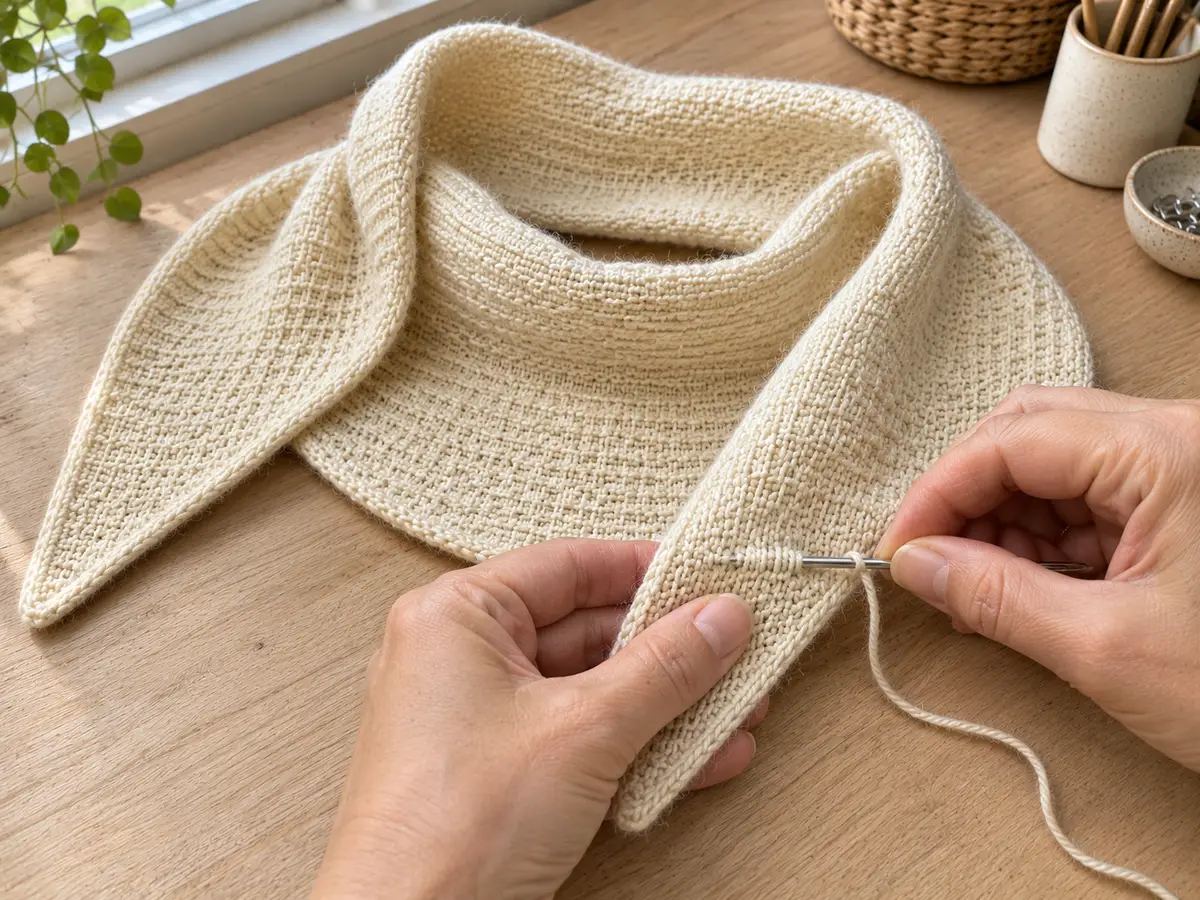
Change to the larger ordinary hook and rotate the scarf through 90 degrees so that the edge containing the final Tunisian edge stitches lies above. Begin with 1 ch and work sl st into the existing edge positions around the shape.
At the marked widest point from row 65, work [sl st, 1 ch, sl st] into the same position. The small chain allows the direction change without creating a large additional corner. Continue around the rest of the scarf and join with an sl st into the beginning chain.
Along the other areas, distribute the sl st through the existing edge positions. Do not pull them tightly against the hook tip. Check a short section laid flat so that the border does not drag the Tunisian fabric inward.
Border round 2
Begin with 1 ch. Work an sl st through the back loop only of every border stitch. Join with an sl st into the first chain, then cut the yarn and secure the ends.
Find the small top V of each edge stitch and use the upper loop further from you. This adds a narrow line to the border. The source does not specify another repeated corner formula in this second round, so do not add extra chains at every point.
Shape gently after care
Follow the merino yarn's care instructions, dampen as appropriate and dry the scarf flat. Tunisian fabric can curl before edging and blocking. Do not pull strongly on one edge to make it immediately flat, or press away the stitch grid.
Judge the final shape only after drying completely. The relaxed border and finishing help settle the fabric, but they cannot correct a misplaced increase or a return pass recorded as another full row.
For another construction, see the linen-stitch infinity scarf. The source dimensions and remainder are reference values, not a claim that every yarn substitution has been physically tested.
Emma & Ella
More crochet projects from The Cooking Twins Yarn.
More from Emma & Ella