
Christmas Table Place Card Ideas: Three Styles With Room for the Name
Plan readable Christmas place cards with folded borders, a flat ribbon accent or reusable holders, plus a simple guest-list and setup check.

By Emma & Ella FrostUpdated November 17, 2026

5-Ingredient Dump & Go Crockpot Meals
101 effortless slow cooker recipes for busy families.
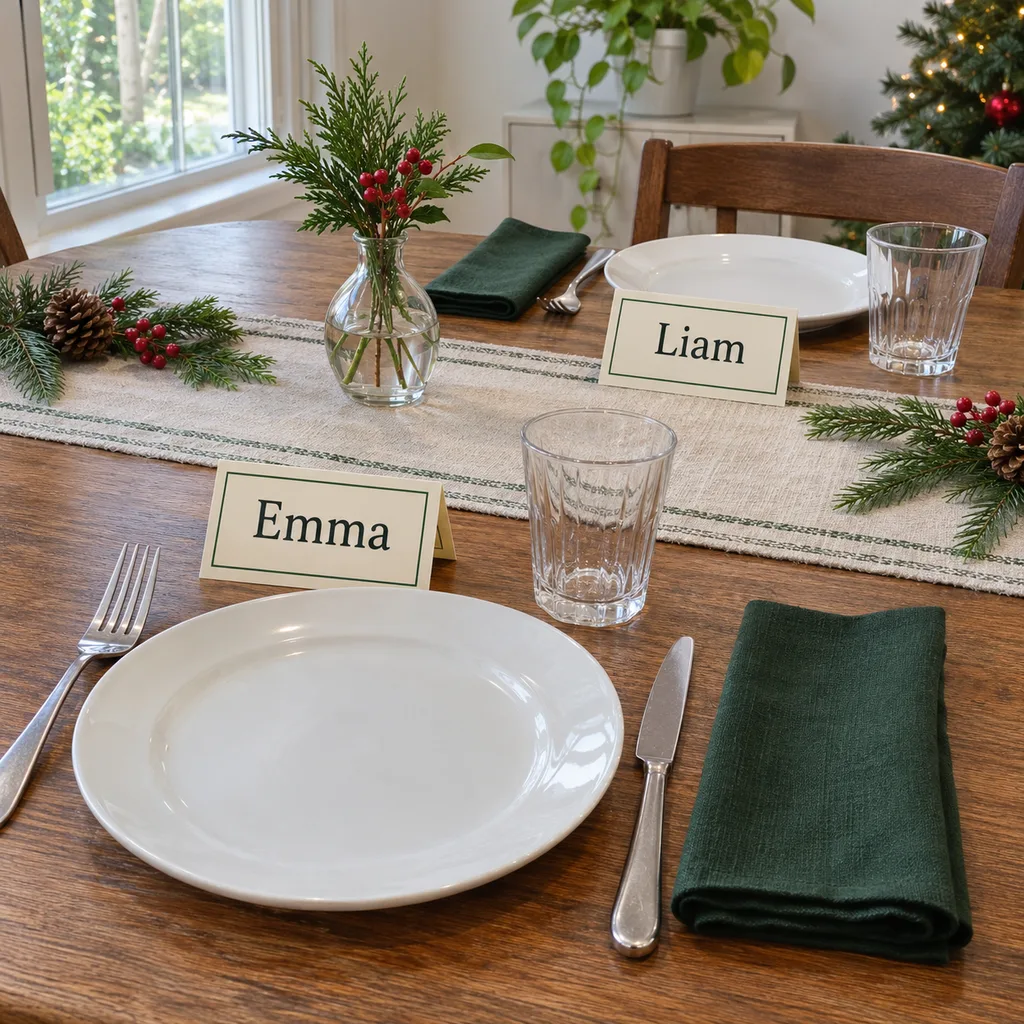
View on AmazonAvailable on AmazonChristmas table place cards work best when guests can find their names and still use the table comfortably. Choose a clear name area first, then add a small festive detail. A border, a ribbon on a separate card or an existing suitable holder can carry the theme without covering the lettering.
Start with the actual guest list and one complete place setting. These are styling ideas, not a downloadable stationery set or a precise cutting-and-folding pattern. Use materials and tools appropriate to your chosen format, and make one sample before repeating it.
Confirm the names before designing the card
Check the spelling and the form of name each guest uses. If two people share a first name, choose an agreed way to distinguish them without making either person guess. Keep the card's job simple: identify a place, not display a household's private guest notes.
Decide whether places are assigned at all. A gathering with open seating might need only a table label or no cards. Do not make personal name cards simply because an inspiration photograph includes them.
Keep a current master list so changes can be checked against the physical cards. If you move a setting or a guest cannot attend, update both the arrangement and the list before guests arrive.
Try a plain folded card with a narrow border
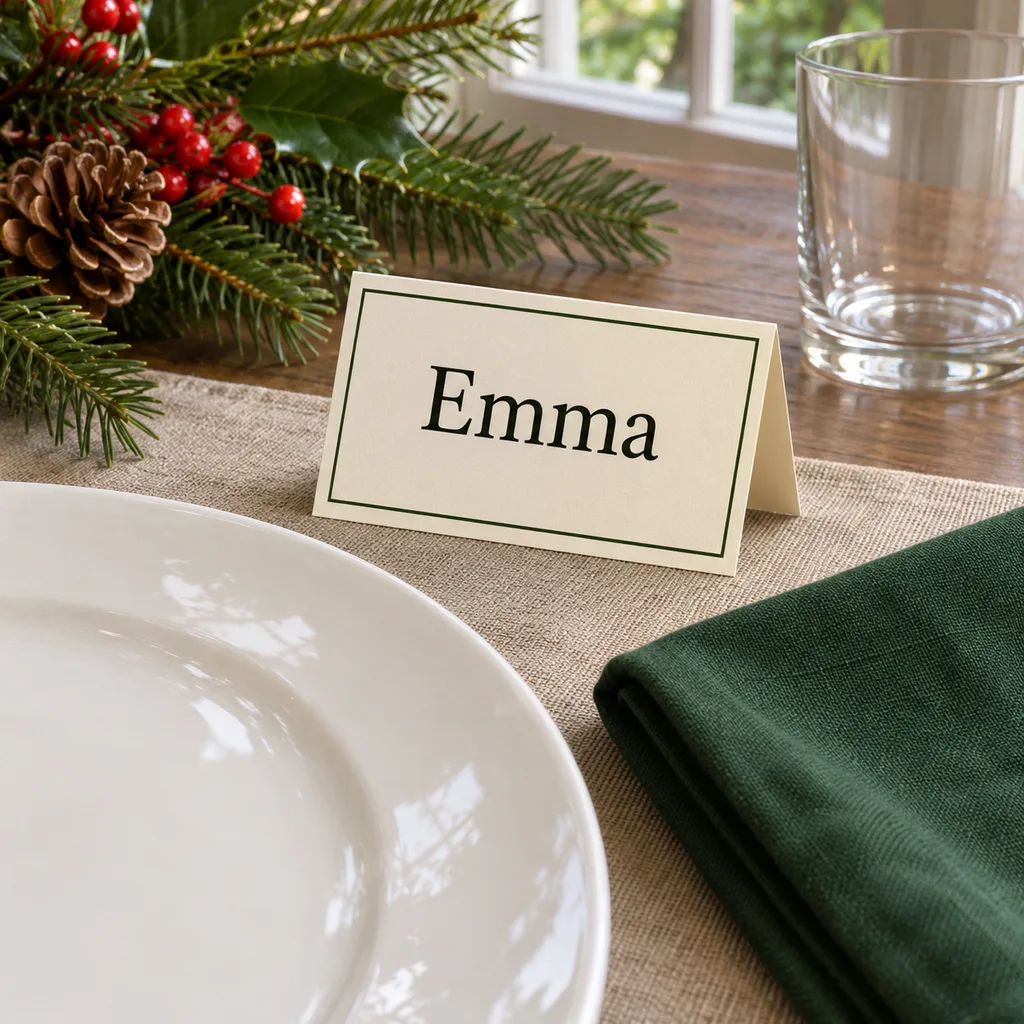
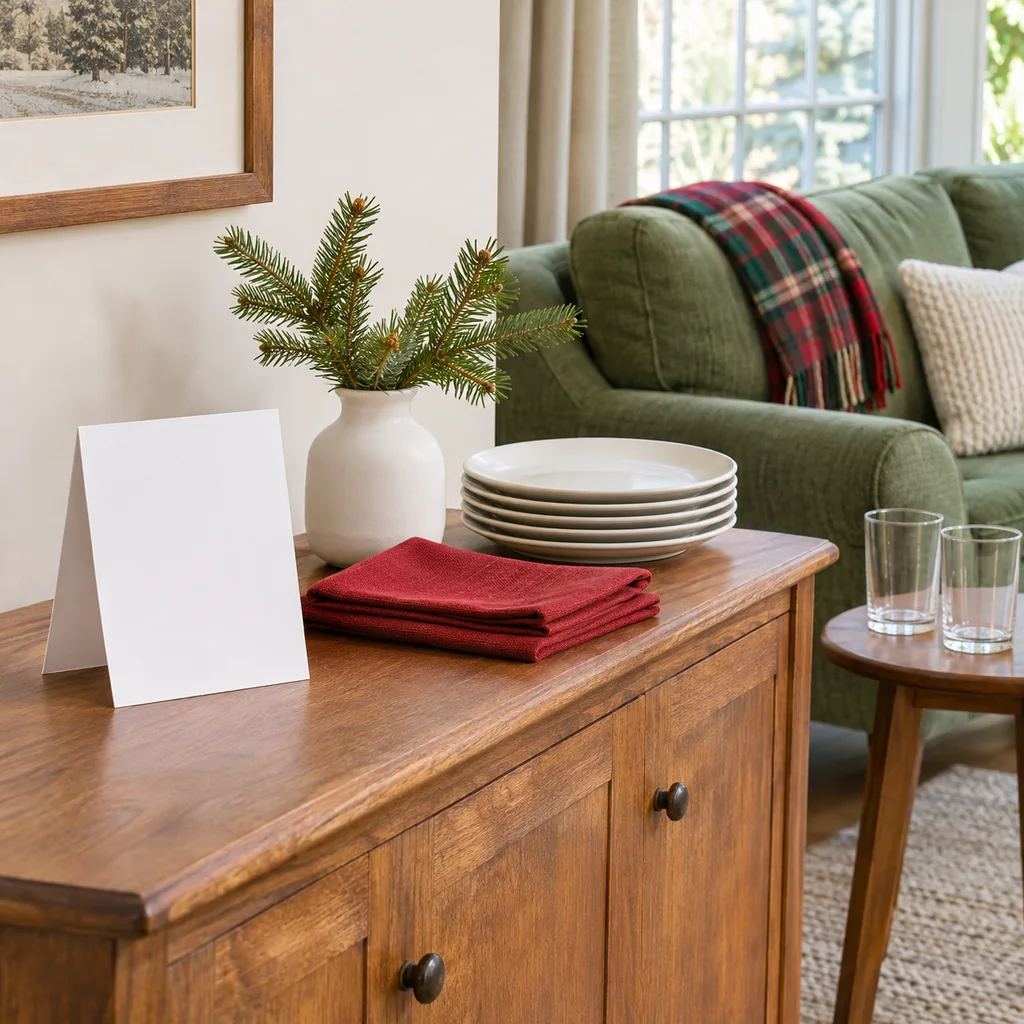
A simple standing card with a small green or red border leaves most of the surface for the name. Keep decorative marks away from the lettering and compare the sample under the room's actual lighting. A plain dark name on a light background is a useful starting direction, not a reason to print several layers of decoration.
Choose paper suitable for the intended format and any printer you use. Follow the paper and printer instructions rather than forcing an unfamiliar material through the machine. If you write by hand, try the actual pen on a spare piece before making every card.
Place the sample where a guest approaching the chair can see it. Check that a glass, napkin or serving dish does not hide the name. The card needs an appropriate stable position, not a prominent place on a plate that will immediately be used for food.
Put a removable ribbon on a separate flat card
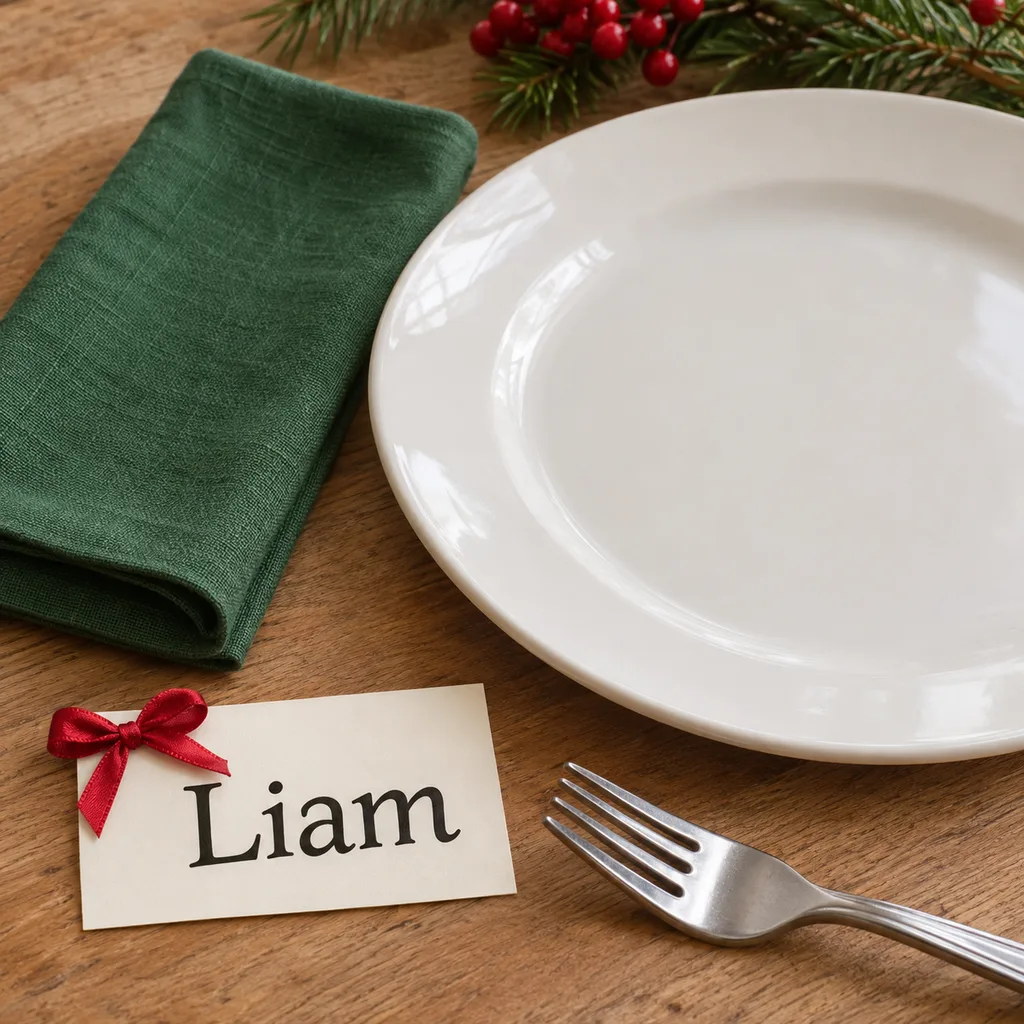
A flat card with one small ribbon detail can echo the table linens without tying the dining napkin. Keep the ribbon to a side or corner that leaves the name visible. Contain loose ends on the card rather than trailing them across utensils or into the next place.
Make a sample with the actual ribbon before choosing the final card format. If the bow dominates the name or makes the card awkward to set down, simplify it. The festive accent should not become another object the guest has to dismantle before dinner.
Keep decorative ribbon, adhesives and paper separate from food and drinking surfaces. A color match does not establish that a material is suitable for those uses. Set the card beside the place rather than fastening it to a glass rim or putting it among unwrapped food.
Reuse an appropriate holder with a replaceable name insert
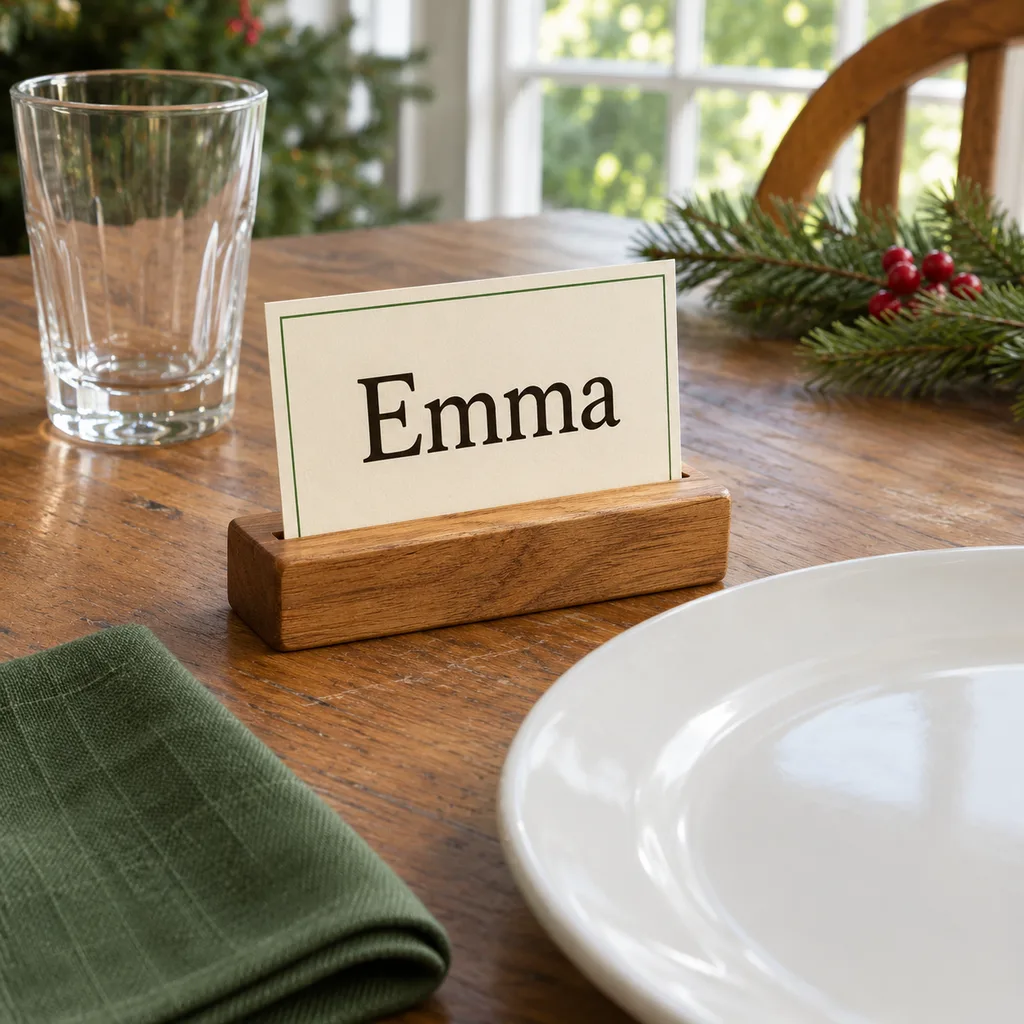
An existing tabletop holder can work when it supports the actual card and stands appropriately on the chosen surface. Check both pieces together before assuming a similar-looking holder will grip the paper. Keep the arrangement low enough that it does not compete with conversation or the meal.
Use an insert you can replace when a name changes. That is simpler than attaching several permanent decorative pieces to each card. Count the holders separately from the inserts so that a missing support is discovered before setup.
Do not improvise unstable supports from stacked ornaments, sharp implements or fragile objects. A plain folded card remains an option when the holder is unsuitable. The goal is a readable name, not a display technique that requires special handling.
Check the card with the rest of the setting
Set out the actual plate, napkin, glass and cutlery, then add the name card. Sit down, lift the glass and unfold the napkin. Notice whether the card is covered, caught by the fabric or left without a clear place once the meal begins.
Keep the center of the table available for the service plan. Our simple Christmas centerpiece guide addresses that separate shared-space decision. The repeated place cards can supply part of the holiday detail without another row of ornaments.
Leave open flames out of this paper-and-ribbon arrangement. The U.S. Fire Administration suggests flameless candles as an alternative. Lighting is optional, and the actual product instructions and household needs still control its use.
Count, pack and keep a way to make changes
Check the completed names against the current guest list and pack the cards in a clear setup order. Keep a few suitable blank pieces if you want an easy way to accommodate a change; the quantity is a planning choice for your gathering, not a fixed rule.
After dinner, separate reusable holders and trims from cards containing personal names. Ask before treating someone's card as a keepsake or sharing a photograph of it. Save the final material combination if you want to repeat the style, while keeping the next guest list a new decision.
Keep good recipes close
Add The Cooking Twins to your preferred sources on Google for more easy dinners, no-bake desserts and kitchen inspiration.
Emma & Ella Frost
A practical resource from The Cooking Twins.
More from Emma & Ella Frost
Comments
Leave a commentShare your question or planning tip below.