
Grocery Shopping for Small Kitchens: Give Each Purchase a Suitable Home
Plan grocery shopping for a small kitchen around actual storage space, package shapes, meal quantities and sensible substitutions rather than a fuller cart.

By Emma & Ella FrostUpdated November 17, 2026

5-Ingredient Dump & Go Crockpot Meals
101 effortless slow cooker recipes for busy families.
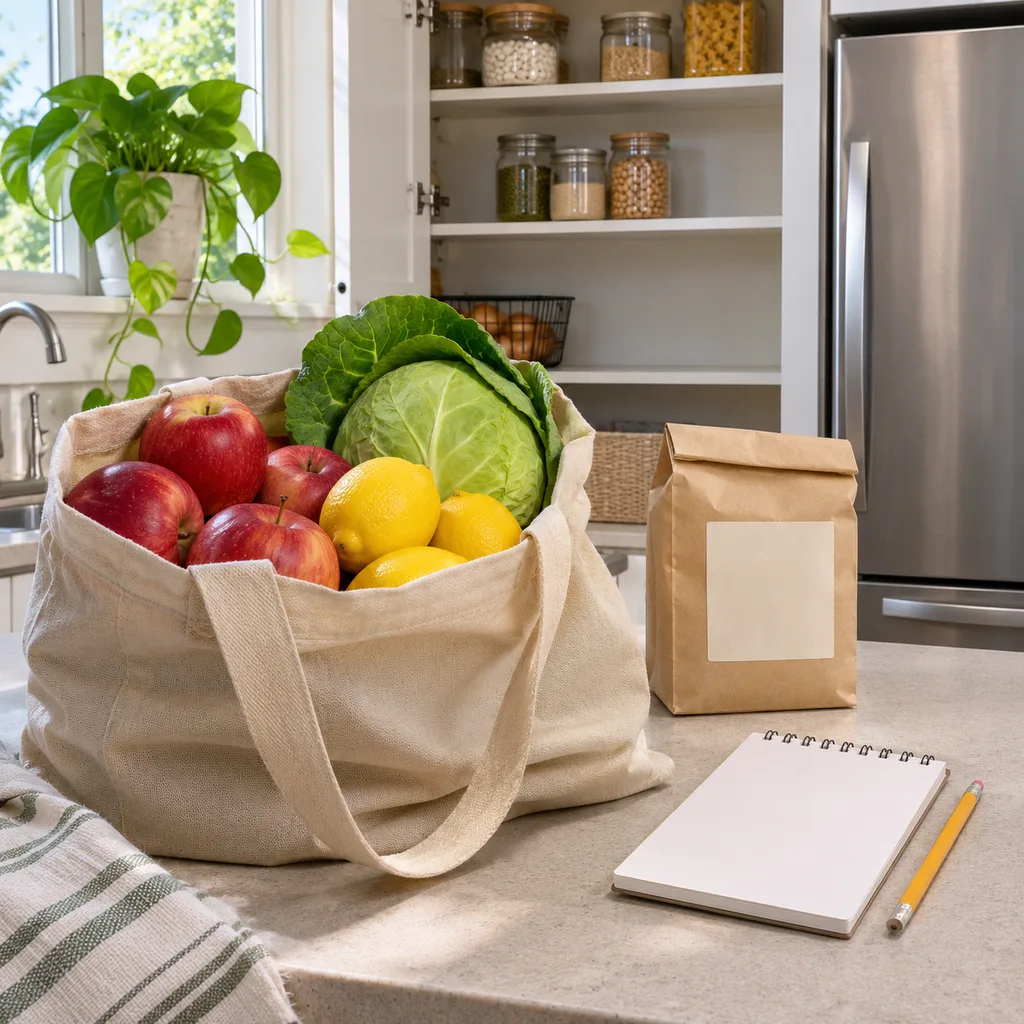
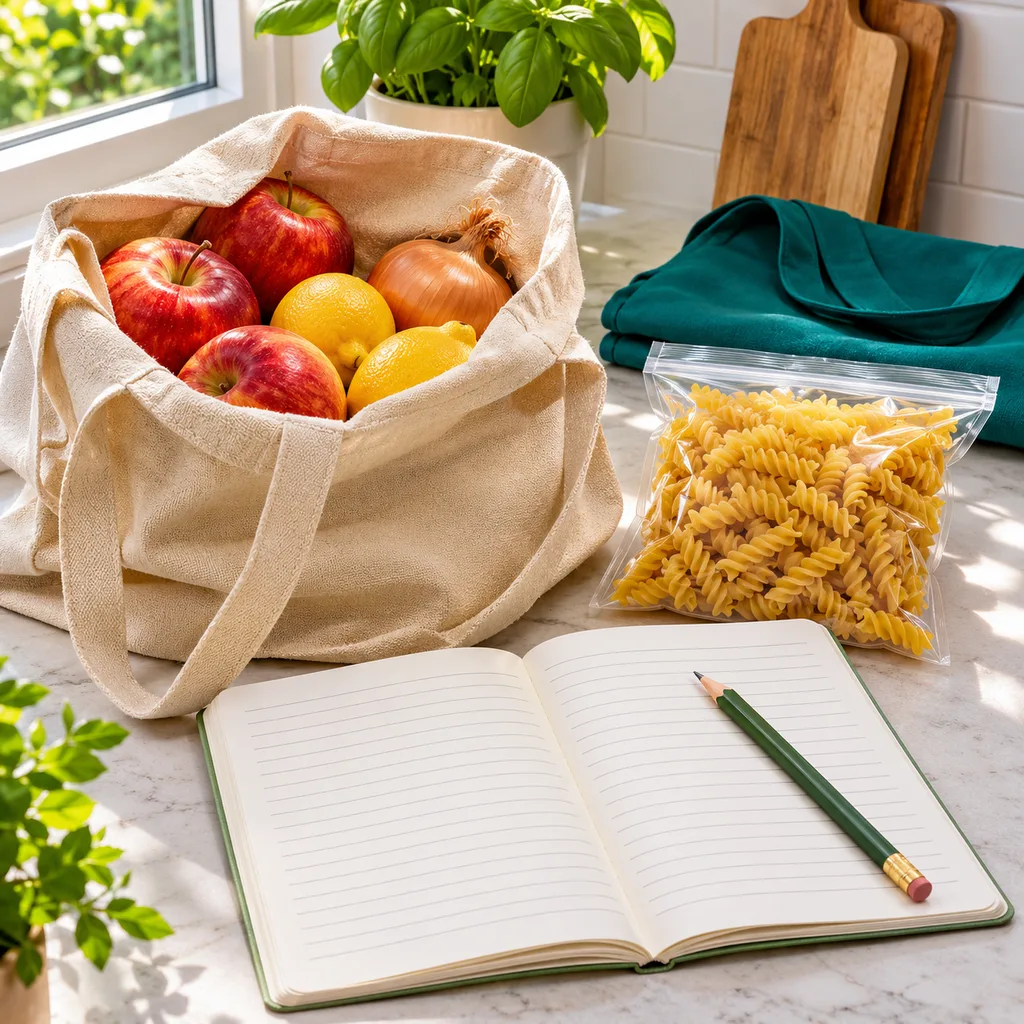
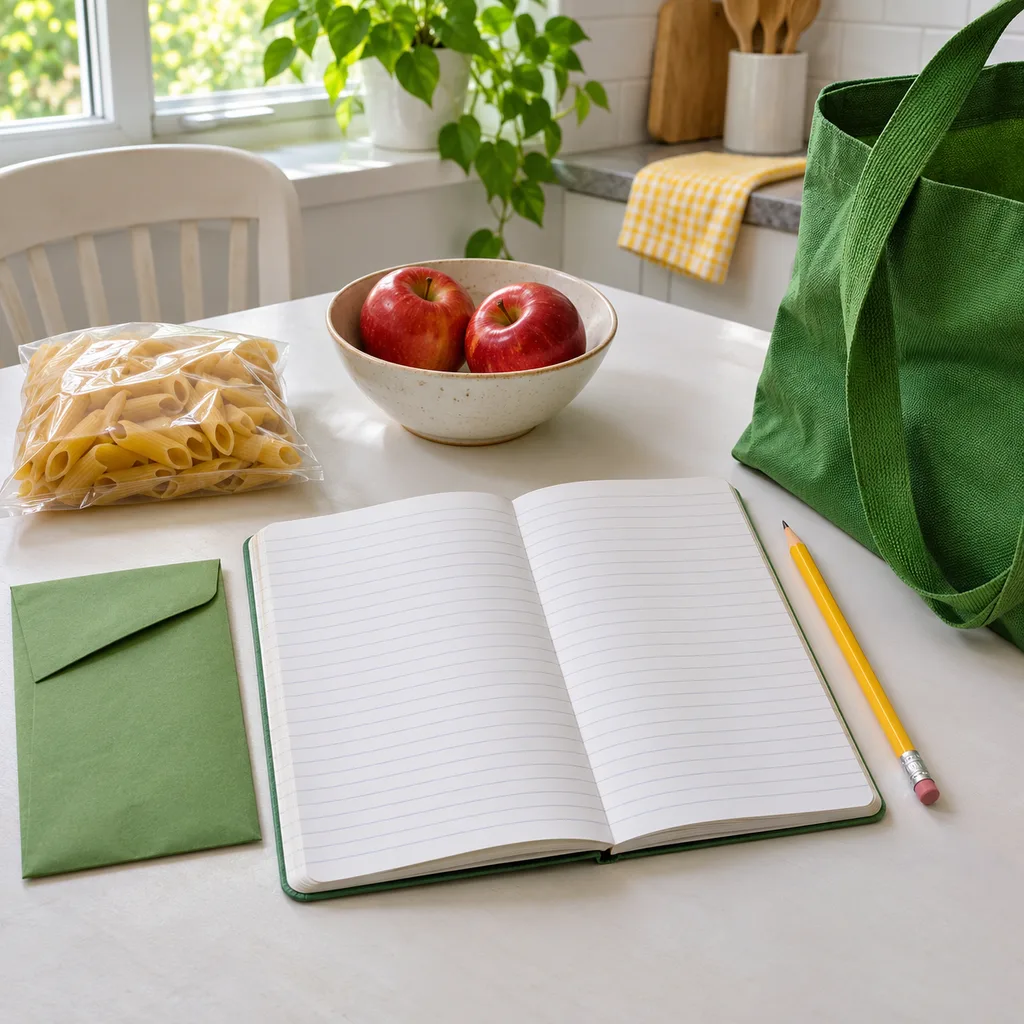
View on AmazonAvailable on AmazonGrocery shopping for a small kitchen works better when the list includes a destination for each purchase, not just a price and a meal idea. Check the food you already have, identify the space suitable for the missing items and buy quantities you can realistically use and store.
A compact kitchen does not require a particular diet or a fixed number of shopping trips. The useful adjustment is to treat storage capacity as part of the shopping decision. A large package is not a bargain for your household if there is no appropriate place for it or no clear plan to use it.
Check three storage areas before choosing package sizes
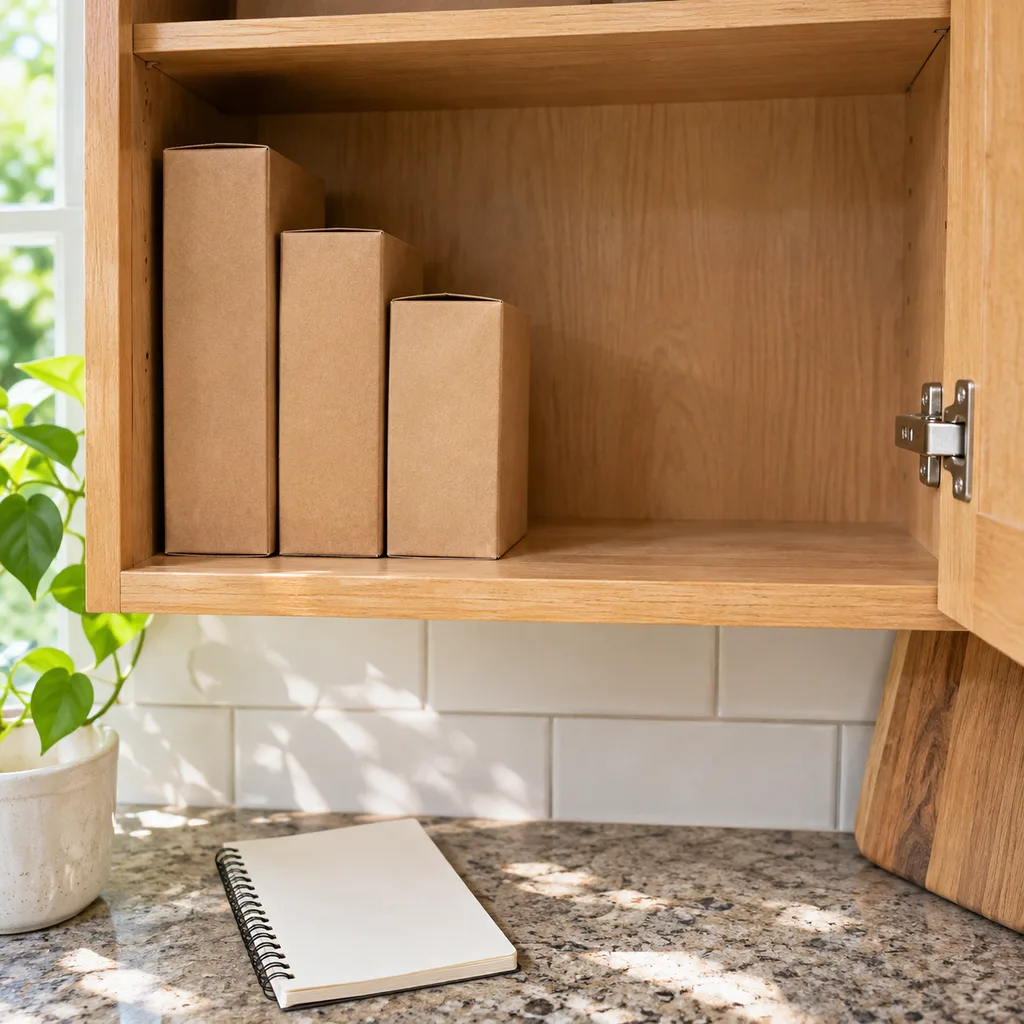
Look at the pantry, refrigerator and freezer separately. Note what is actually available after the existing food is accounted for. An empty-looking gap may be needed for access, airflow or the movement of a drawer, so do not treat every space as another package destination.
Keep food in storage conditions appropriate to the actual product. Do not plan to put a refrigerated item in a cabinet because the refrigerator is crowded. If the missing ingredient cannot be stored appropriately, change the purchase timing or meal plan rather than improvising another location.
Record the particular obstruction: a tall bottle will not fit the intended shelf, a deep carton blocks other packages or a large bag has no suitable destination. Those details are more useful at the store than the vague instruction buy less.
Build the list from the meals you expect to make
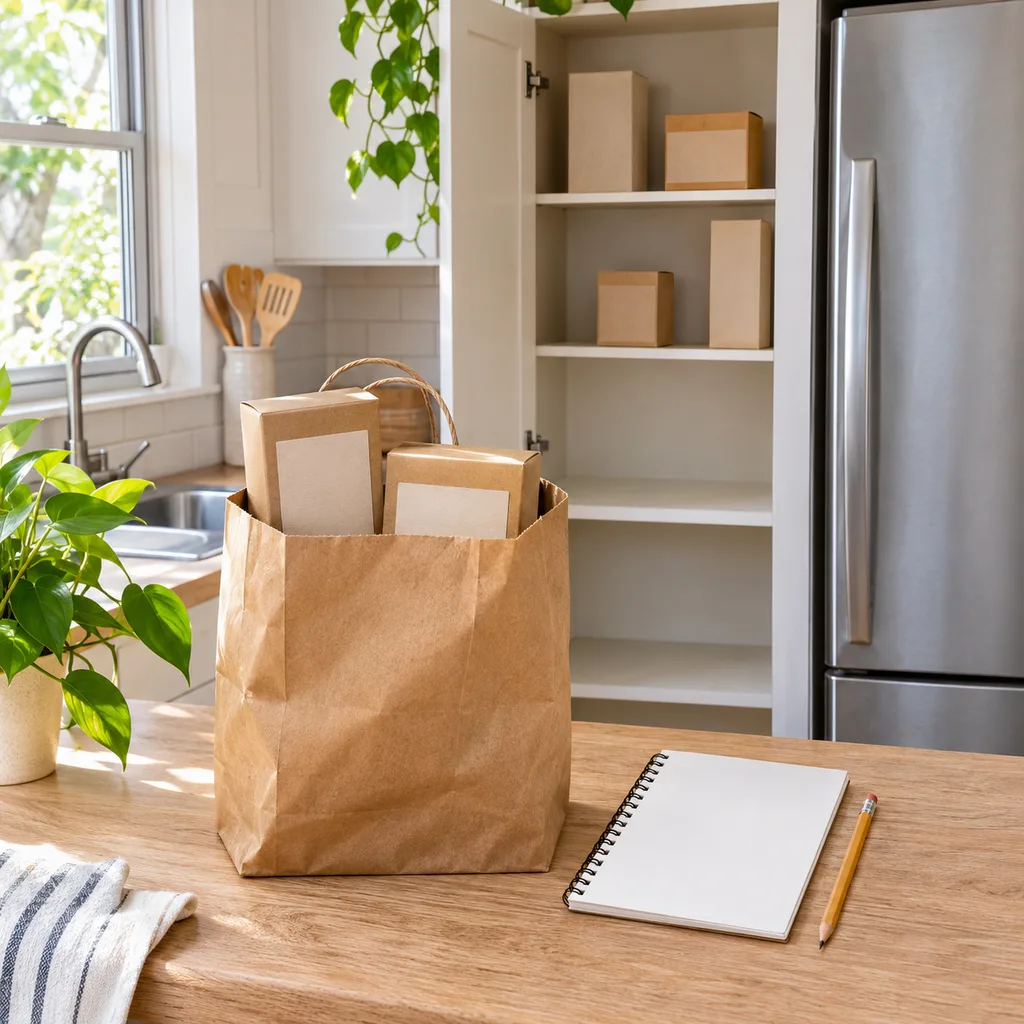
Choose the meals the household actually plans to eat at home, then check their real ingredient requirements. Account for existing usable stock before adding a purchase. Do not count the same remaining package as a complete supply for several different meals.
The EPA's planning and shopping guidance recommends checking the refrigerator, freezer and pantry, planning around expected meals and including quantities to avoid overbuying. Use that principle alongside the kitchen's capacity rather than treating a full cart as the goal.
Keep any uncertain ingredient marked check first. A partly filled jar is not a measurement, and an unidentified frozen container is not a confirmed ingredient. Resolve those questions before subtracting them from the shopping requirement.
Add a destination note to awkward purchases
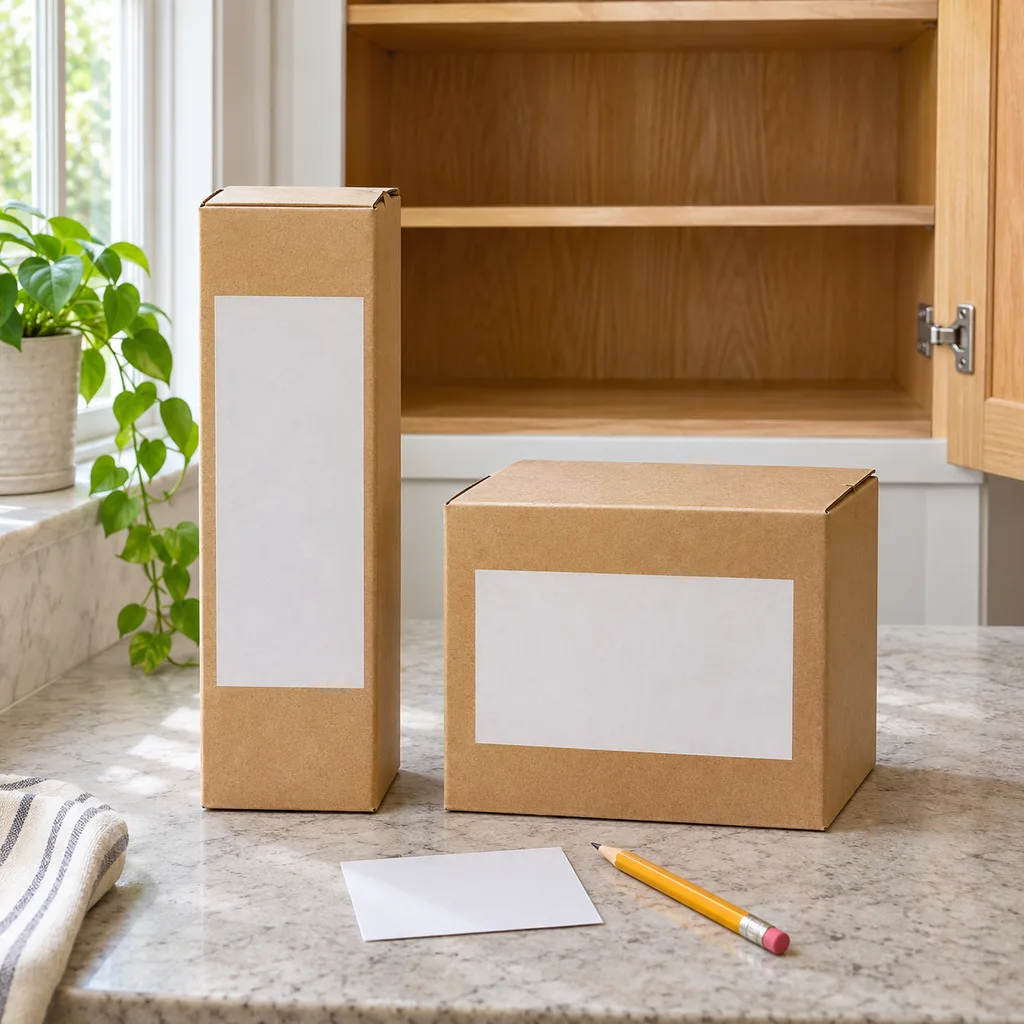
For the few items most likely to cause a space problem, add a short note beside the quantity. A note might identify the shelf where the unopened package belongs or flag that its height needs checking. You do not need a complete cabinet map for every small item.
At the store, compare the actual package with the destination you identified. Include the shape and closure, not just the amount of food. A wide carton and a tall bottle can create different fit problems even when their contents serve the same recipe.
Do not assume decanting will solve every oversized purchase. A replacement container needs to be suitable for the food and its storage, while important product information remains available. Buy the package that works with the real plan instead of assigning yourself an unverified storage project.
Compare the usable purchase, not only the larger size
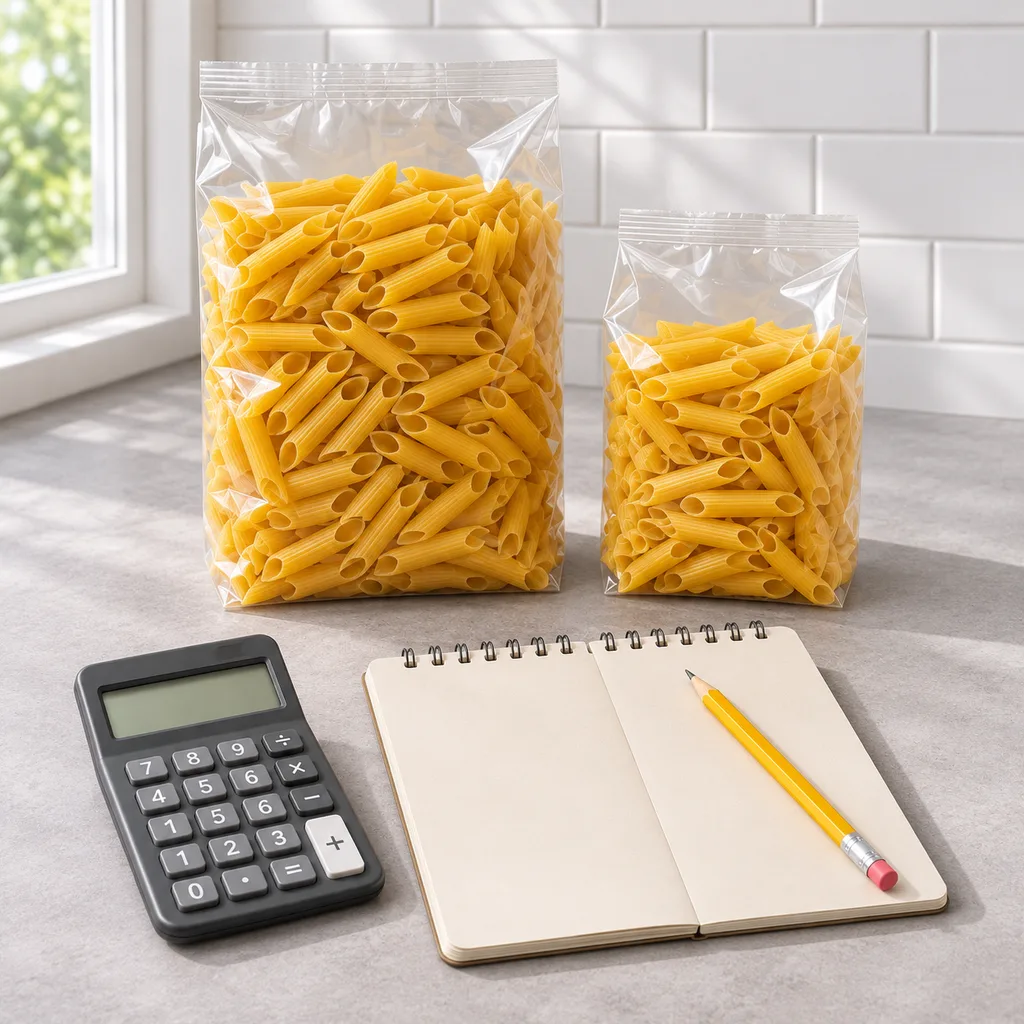
Use comparable units when checking prices, but keep the amount you will use and the storage it requires in the decision. Our grocery unit-price guide covers that calculation separately. A lower price per unit does not automatically make the largest package the most useful choice.
For a multipack, count all the packages that need a destination. Do not plan from the space occupied by a single item while buying several. If a larger purchase would displace food already needed for the week, reconsider it before paying.
A promotion can stay off the list when the quantity has no clear use. That is a household planning choice, not a claim that small packages are always cheaper. Compare the actual options available and keep the decision connected to your meals and space.
Give substitutions the same fit check
If the planned item is unavailable, check the replacement's ingredient form, amount and directions before assuming it serves the same purpose. A different package can change both the recipe requirement and the storage destination.
For delivery or pickup, use the service's actual substitution controls where available and review the resulting order. Do not assume a shopper can infer your shelf dimensions. A note about a preferred size may help, but it does not establish that every replacement will fit.
Keep the option to defer a nonessential purchase. A changed meal plan can be easier to manage than an additional oversized package with nowhere suitable to go. Do not solve the substitution problem by crowding the appliance beyond its instructions.
Unpack in a way that checks the plan
Put food into its appropriate storage promptly, following the product's requirements. Do not leave perishable purchases waiting while arranging a restock display. Then compare the actual packages with the destination notes and record any fit issue that affected the purchase.
Before the next trip, change one recurring problem: a package size, a quantity, an uncertain stock estimate or a purchase with no planned meal. A small-kitchen grocery list succeeds when the food has a suitable home and a realistic use, not when every shelf is packed for a photograph.
Keep good recipes close
Add The Cooking Twins to your preferred sources on Google for more easy dinners, no-bake desserts and kitchen inspiration.
Emma & Ella Frost
A practical resource from The Cooking Twins.
More from Emma & Ella Frost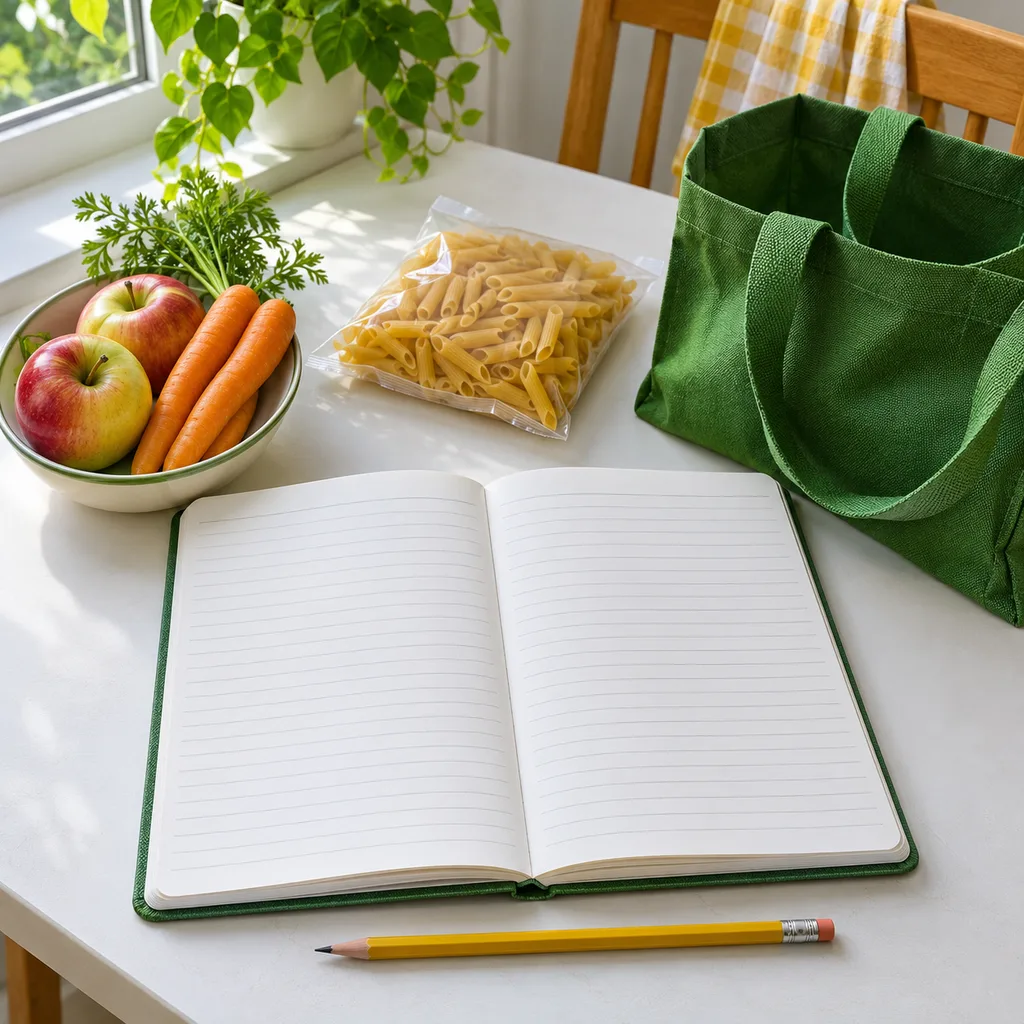
Comments
Leave a commentShare your question or planning tip below.