
How to Build a Two-Week Grocery Shopping List Without Buying Everything at Once
Build a two-week grocery list around real meals and existing supplies, then separate first-trip purchases from later reviews and unresolved items.

By Emma & Ella FrostUpdated November 16, 2026


5-Ingredient Dump & Go Crockpot Meals
101 effortless slow cooker recipes for busy families.
View on AmazonAvailable on AmazonA two-week grocery list is a plan for the meals ahead, not an instruction to buy every ingredient in one trip. Build the full plan first, check what you already have, then separate purchases you can make now from items that need a later decision or shopping trip.
The distinction matters: a fourteen-day planning window does not give food a fourteen-day storage life. Use actual recipes, product directions and appropriate food-safety guidance when deciding what to buy and when. This guide supplies a shopping workflow, not a storage-duration chart or a prescribed household diet.
Mark the meals you actually need to cover
Start with the household calendar for the coming two weeks. Mark meals expected at home, known plans elsewhere and occasions that are still uncertain. Include the people expected to eat rather than treating every calendar space as the same-size meal.
Choose familiar meals with complete recipes for the confirmed slots. Leave uncertain slots identified instead of purchasing ingredients for a plan nobody has agreed to. A flexible plan can include a later decision without pretending that every evening is settled.
The EPA's planning guidance recommends considering the meals you will eat at home, checking existing food and basing purchases on what you expect to use. Apply that principle across the longer calendar, rather than automatically doubling a weekly list.
Turn each chosen meal into ingredient requirements
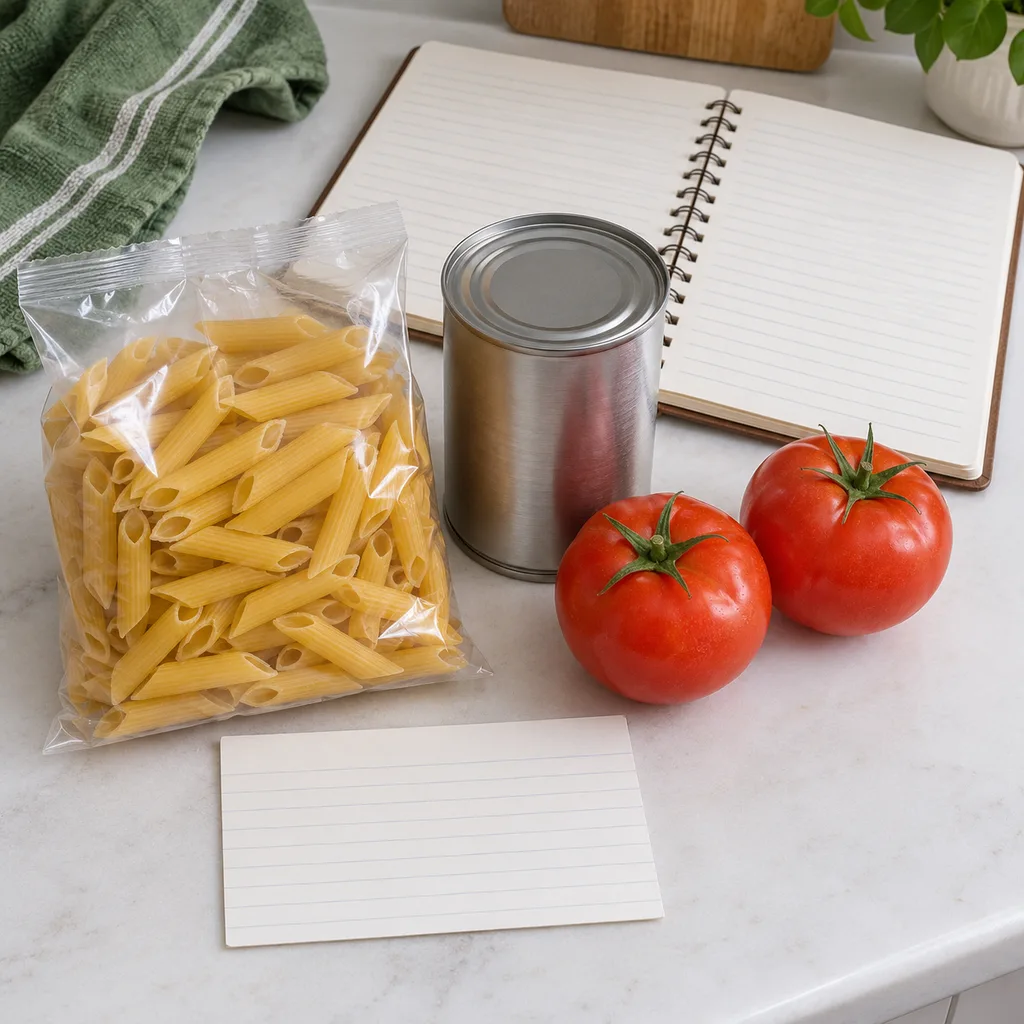
Use the recipe's actual yield and ingredient amounts. Record the form needed as well as the name: a whole ingredient, a drained ingredient and a prepared mixture are not the same purchase just because they share a broad category.
Keep the meal connection visible until quantities are combined. An ingredient appearing in several recipes may require one shared purchase, but only after you add the real requirements in compatible units. Do not count the same package as fully available for several meals at once.
If a recipe needs scaling, resolve that with a suitable method before shopping. This planning guide does not validate an enlarged recipe, a cooking-time change or an assumed number of portions.
Subtract usable stock without guessing what is left
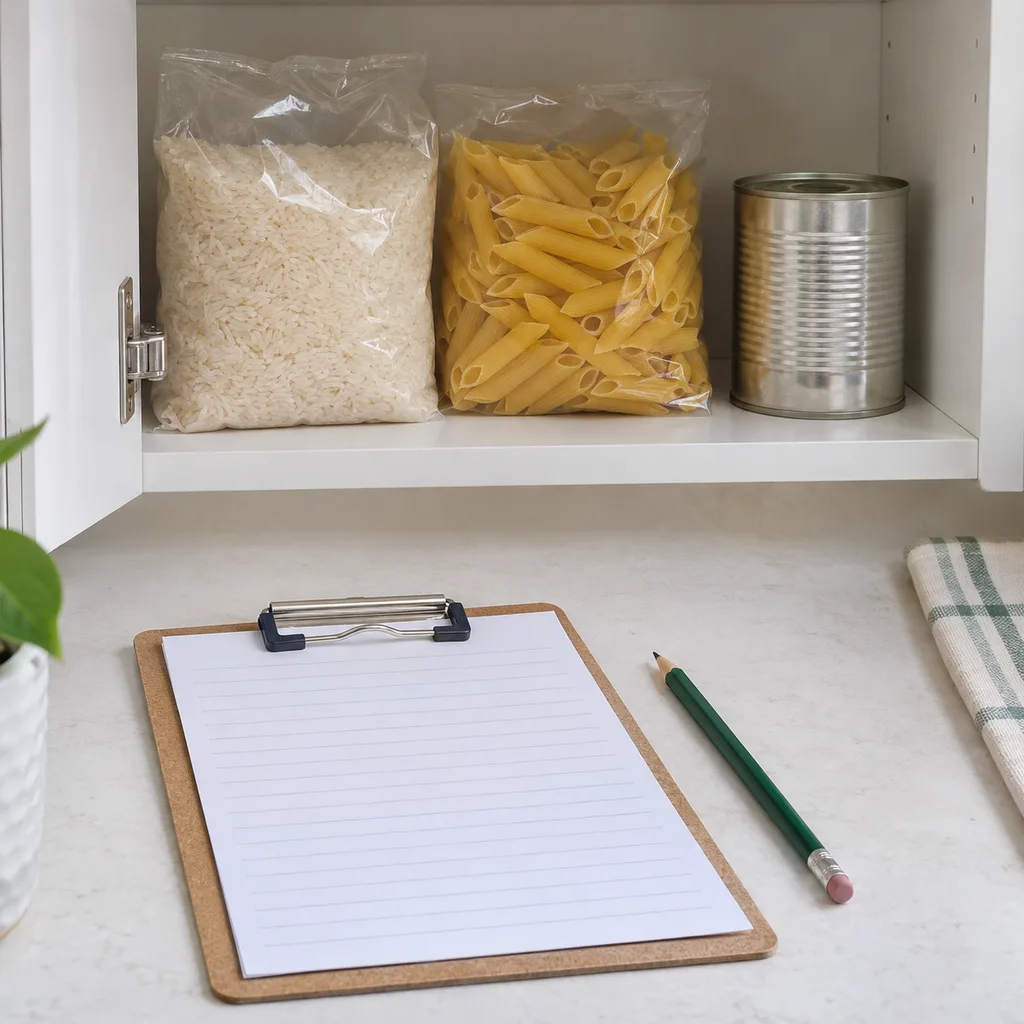
Check the refrigerator, freezer and pantry against the selected meals. Identify the actual product and amount before deciding it covers a requirement. A container that looks partly full is a reason to check, not a measurement.
The pantry inventory checklist provides a separate observation record. Bring confirmed information from that record into the shopping plan; do not turn every inventory category into a purchase.
Keep an unresolved item marked verify first. If you cannot identify a product, quantity or appropriate use, do not quietly subtract it from the shopping requirement or assume it will be suitable when the meal arrives.
Give each missing item a purchase decision
Use three decisions: buy on the first trip, review for a later trip or verify before buying. The meal date matters, but so do the actual product's directions, available storage and the household's realistic plans.
For example, an unopened dry ingredient needed by a confirmed recipe may belong on the first trip after its requirements are checked. A different item intended for a later meal may belong on the review list until its appropriate purchase and storage plan is established. These are decision examples, not a claim that a particular food lasts for the full planning window.
Do not create freezer space on paper that you do not have in the kitchen. If freezing is part of the plan, use an appropriate food-specific method and record it clearly. This guide does not assign a freezing, thawing or reheating procedure.
Keep one master record and a shorter trip list

The master record preserves the full two-week picture. A useful entry answers these questions:
- Which meal needs this ingredient, and when is that meal planned?
- What exact form and amount does the recipe require?
- How much suitable stock is confirmed at home?
- What amount is missing?
- Is the decision buy now, review later or verify first?
- What information or action must be resolved before purchase?
Copy only confirmed first-trip purchases onto the list you take to the store. The store-section grocery template organizes those purchases for the trip; the master record keeps their connection to the meals and later decisions.
Review the second week before making the next trip
Revisit the later meals before shopping again. Confirm that the household plans still apply, check what remains and update missing amounts. A meal moved or canceled should change the purchases, not leave the original order untouched.
Do not count planned leftovers as an unlimited supply. Any reuse needs the actual food's appropriate handling and storage plan. The FDA's storage guidance explains why product directions and safe conditions matter beyond the shopping calendar.
Keep notes about what changed because they can improve the next plan. An ingredient bought without a clear use, an uncertain meal or a forgotten stock check is useful feedback. A two-week list succeeds when it supports the meals you actually make, not when it proves you can avoid another store visit at any cost.
Keep good recipes close
Add The Cooking Twins to your preferred sources on Google for more easy dinners, no-bake desserts and kitchen inspiration.
Emma & Ella Frost
A practical resource from The Cooking Twins.
More from Emma & Ella Frost
Comments
Leave a commentShare your question or planning tip below.