
Essential Pantry Staples Shopping List: Buy for Meals You Actually Cook
Essential Pantry Staples Shopping List: Buy for Meals You Actually Cook. Practical planning ideas for your own household and table.

By Emma & Ella FrostUpdated November 16, 2026
5-Ingredient Dump & Go Crockpot Meals
101 effortless slow cooker recipes for busy families.
View on AmazonAvailable on AmazonAn essential pantry list should describe the meals you cook, not somebody else's ideal cupboard. Start with a few dishes your household already enjoys, then choose the shelf-stable ingredients that give those meals a useful starting point.
You do not need every item below. Treat the categories as a menu-planning prompt, then buy only the forms and quantities your actual recipes require. Dietary needs, package instructions and available storage take priority over completing a checklist.
Choose meals before choosing packages
Write a short list of familiar meals with their actual recipes. Identify which ingredients are shelf-stable before opening and which need refrigeration or freezing. A pantry list does not make a refrigerated product suitable for cupboard storage.
The EPA's planning guidance recommends checking supplies at home and buying around meals you expect to eat. Use that principle to decide what belongs on your personal staples list, without treating a promotion as a reason to buy extra.
The pantry inventory checklist answers what is already there. This list answers the next question: which recurring ingredients are worth replenishing for the meals you actually plan?
Pick a grain or pasta you regularly use
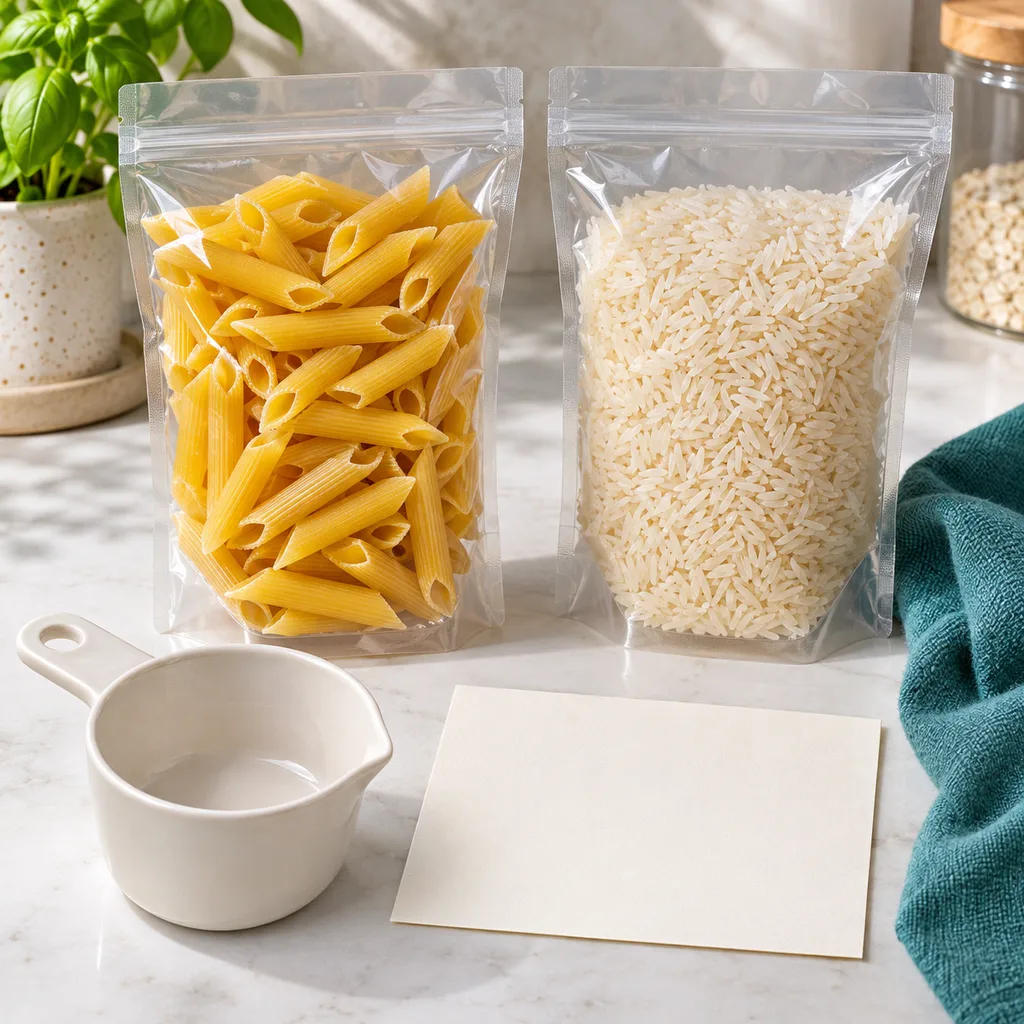
Choose the kind of rice, pasta or other dry grain used in your selected recipes. Long-grain rice, risotto rice and a seasoned rice mix are not interchangeable simply because they occupy the same aisle.
If pasta dinners are common, one familiar shape may be a more useful start than several specialty shapes. If rice is rarely cooked at home, do not add a large bag merely because it appears on a standard pantry list.
Record the specific form and package size that works for your meals and storage space. Check the amount required before purchase; this guide does not prescribe a household serving size or cooking method.
Choose canned or packaged meal components deliberately
Canned beans, tomatoes or a suitable packaged broth can be useful when named in recipes you already use. Choose the variety and form required: crushed tomatoes are not automatically the same purchase as a seasoned pasta sauce, and different beans may need different recipe treatment.
Read ingredients, dietary information and storage directions on the actual product. A label such as pantry staple is not an allergen, nutrition or suitability guarantee. Keep the package information available after opening or transferring contents.
Write a planned use beside each category. If you cannot name one, leave that item off the first shopping trip. You can expand the list when a real cooking habit creates a need.
Buy the cooking basics your recipes call for
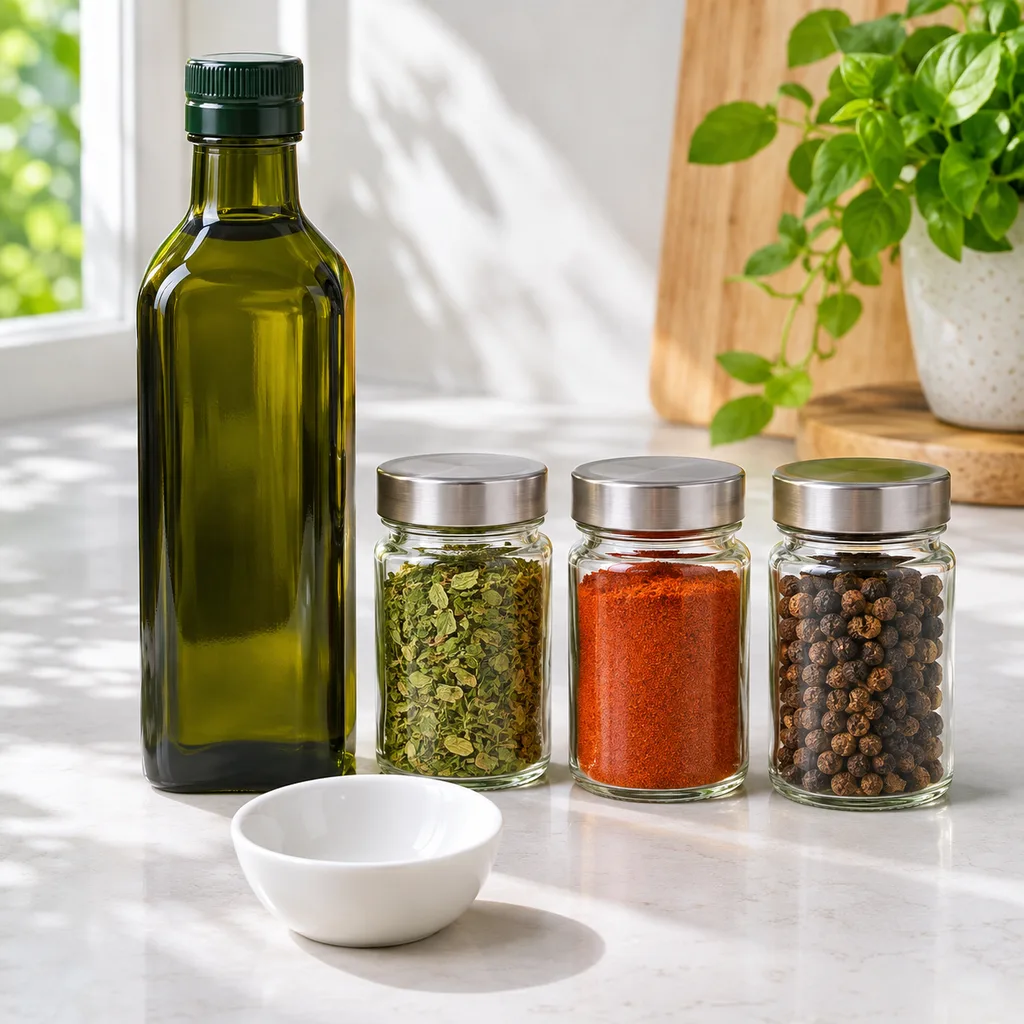
Consider a cooking oil, seasoning and other recurring ingredients only after checking the recipes and product directions. One familiar oil and a few frequently used seasonings can be a starting point; a shelf of specialized bottles is not required.
Keep ingredient differences visible. Garlic powder and garlic salt are different products, as are plain flour and a baking mix. Do not use a broad category name to hide a distinction that matters to the recipe.
For baking, start with the ingredients used by your chosen recipes rather than buying every flour, sweetener and leavener together. Adding a missing item later is more useful than keeping a large unfamiliar collection with no planned use.
Build the first shopping list in three decisions
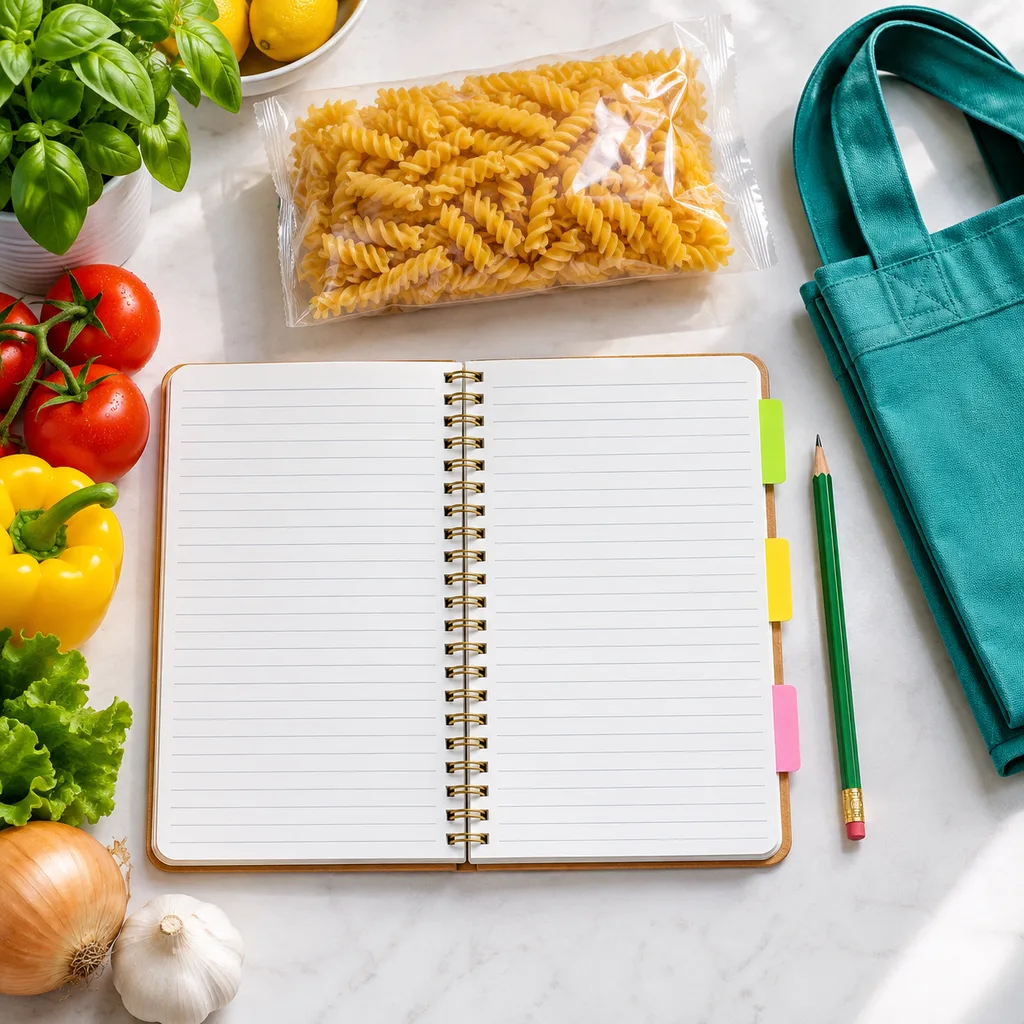
For each candidate staple, record the recipe or recurring use, the amount already available and the amount actually missing. The decision is then buy, verify first or do not buy. Do not automatically turn every item on the master list into a purchase.
A fictional example might be dry penne for a chosen pasta recipe: check the open package against that recipe's amount, then buy only if the plan needs more. This is a decision example, not a complete meal or a tested ingredient quantity.
Combine confirmed purchases only after checking the total needed across meals. Use the store-section grocery template to organize the final purchases for shopping, rather than carrying the entire pantry wish list to the store.
Make replenishment a cooking decision
Keep a short buy-next note for staples you expect to use again. A partly empty container is not necessarily a shortage; compare what remains with the next planned meals. Likewise, an unopened package is not useful if it is the wrong form for the recipe.
Before buying a larger pack, check whether you can use and store it appropriately. A lower unit price does not establish that the complete purchase is worthwhile for your household. The unit-price guide explains that separate comparison.
Review the list after ordinary meals. Keep ingredients that earn a recurring place, remove purchases with no clear use and add new categories only when your cooking changes. A useful pantry is a flexible starting point, not a collection you have to finish buying.
Keep good recipes close
Add The Cooking Twins to your preferred sources on Google for more easy dinners, no-bake desserts and kitchen inspiration.
Emma & Ella Frost
A practical resource from The Cooking Twins.
More from Emma & Ella Frost
Comments
Leave a commentShare your question or planning tip below.