
Elegant Thanksgiving Tablescape Ideas: Build One Repeatable Place Setting
Build an elegant Thanksgiving tablescape from existing dishes with three reference settings, repeated linen details and a centerpiece that can move.

By Emma & Ella FrostUpdated November 17, 2026

5-Ingredient Dump & Go Crockpot Meals
101 effortless slow cooker recipes for busy families.
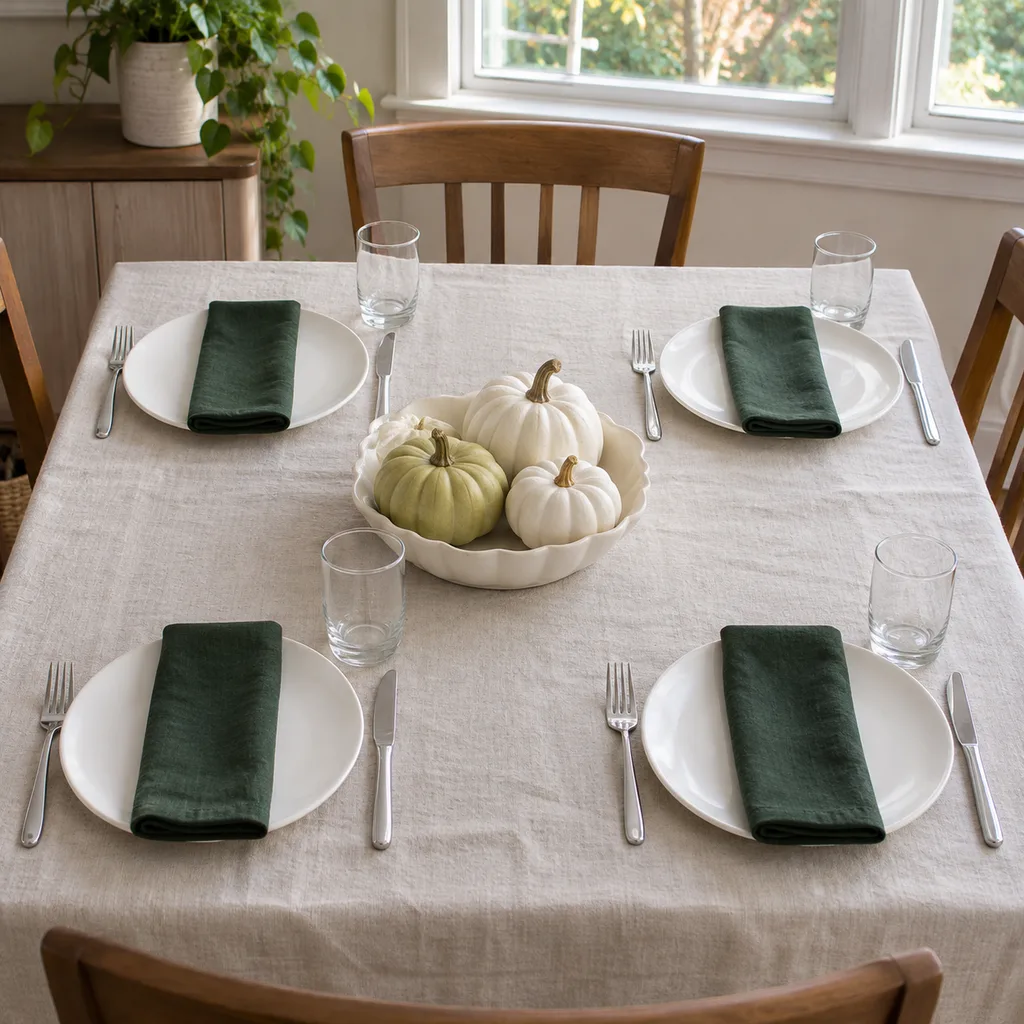
View on AmazonAvailable on AmazonAn elegant Thanksgiving tablescape can come from repeating a few deliberate choices, not buying a special dinnerware set. Start with one plate, one napkin and one drinking glass. Make that small arrangement work, then repeat its strongest detail around the table.
The approach below is designed for real cupboards: mixed plates, borrowed serving pieces and linens that may not all match. Choose one of the three combinations as a starting point, then adapt it to what you already own. These are styling suggestions, not a shopping requirement or a formal etiquette rule.
Build one reference setting from the pieces you have
Gather the plates you intend to use and put them where you can see their differences. Notice which feature repeats: a plain white surface, a narrow border, a round shape or a similar scale. Choose that as the link rather than trying to disguise every mismatch under another layer.
Make one reference setting with the actual napkin and glass. Change only one piece at a time while comparing alternatives. If you change the cloth, plate, napkin and glass together, it becomes difficult to see which change made the combination feel calmer.
Keep the pieces useful as well as attractive. Use tableware intended for its actual food or drink role, and follow the item's care instructions. A decorative vintage-looking plate or metallic accessory is not automatically appropriate for serving dinner.
Try white plates with deep green linen and clear glass
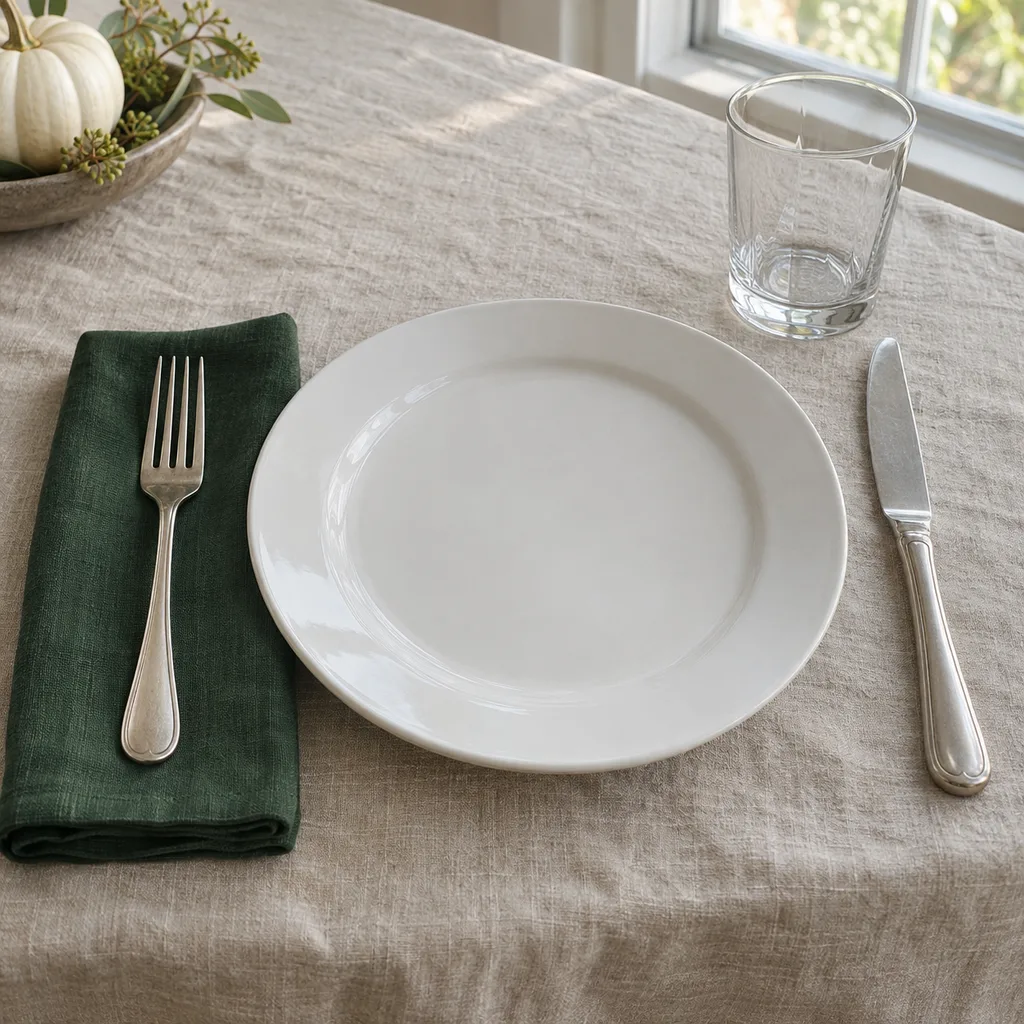
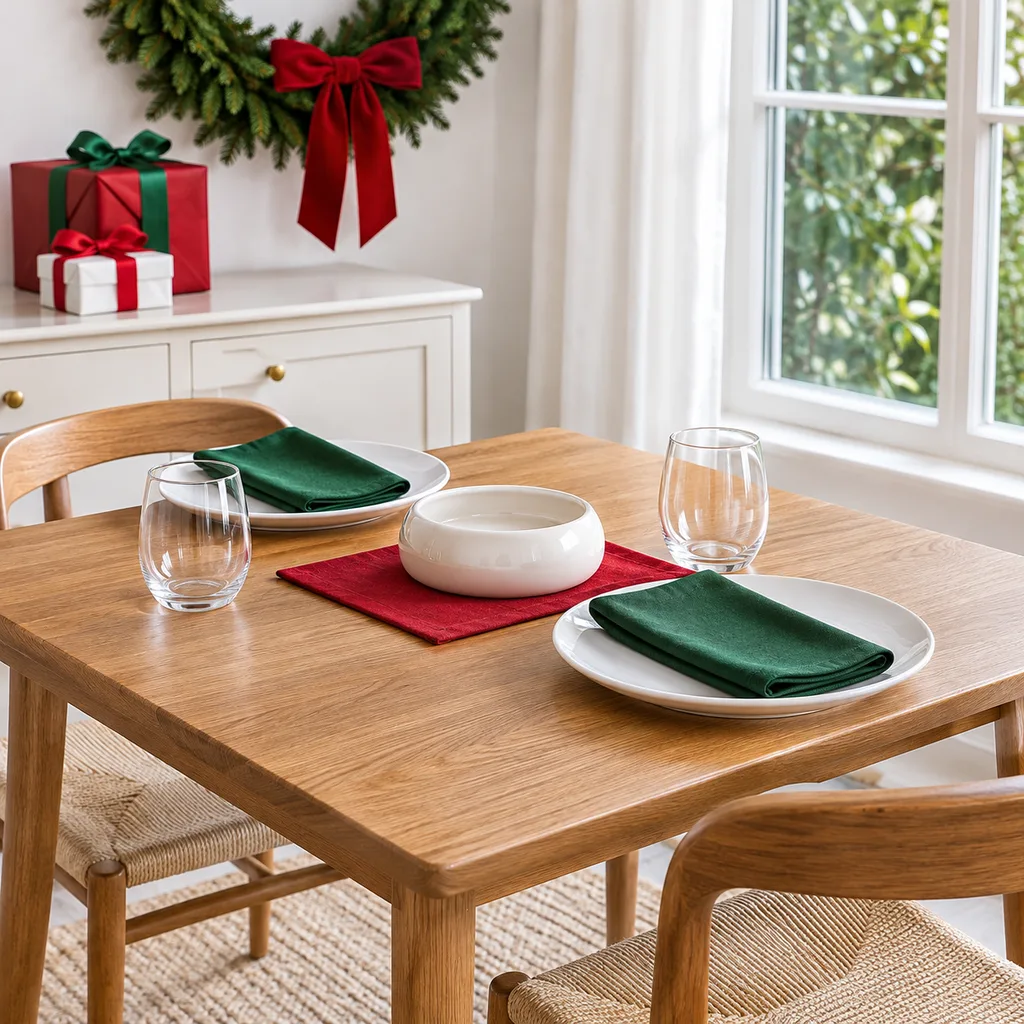
This combination gives plain white dinner plates a strong outline without introducing a printed Thanksgiving motif. Use a deep green napkin as the repeated accent and keep the drinking glasses clear. A bare wood tabletop or a plain light covering can support the setting without needing another matching layer.
Fold the napkin simply so that its color remains visible. Try it beside the plate, then on the empty plate for the initial presentation, and decide which arrangement suits how the first course will arrive. Remove anything that would interfere with serving.
If only some of your plates match, repeat the green napkin across all places. It becomes the shared detail while the plate differences remain ordinary, visible differences. There is no need to hide a useful plate under a charger just to make the group look identical.
Let a warm patterned plate lead with plain linen
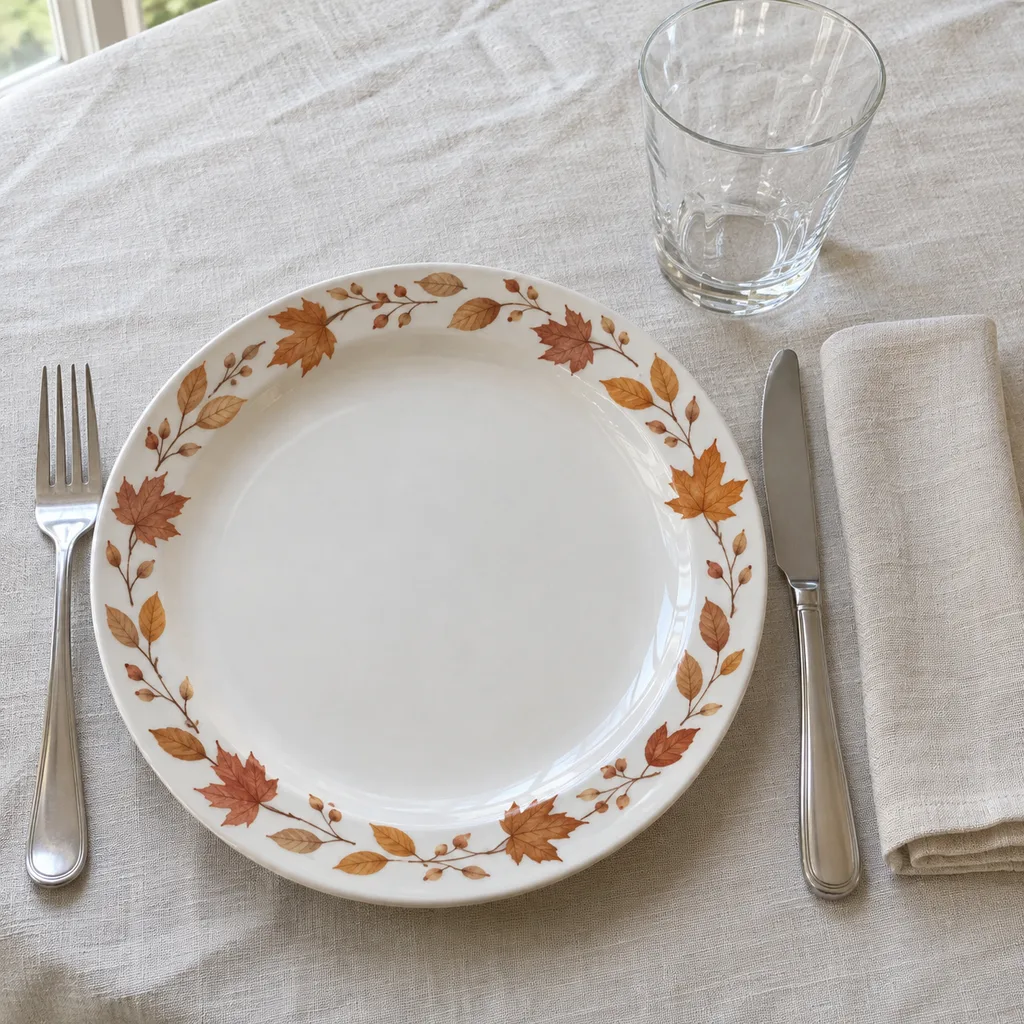
If you already own plates with a warm-colored border or autumnal pattern, let that be the decorative feature. Pair them with a plain linen-colored napkin and a simple clear glass. Leave another prominent print out until you have seen the first combination together.
Compare the plate against the actual table covering. A detailed border may be easier to see on a plain background than over a busy runner. If the pattern feels lost, remove the runner before adding a new color to try to pull everything together.
For serving pieces that do not match the plates, repeat a neutral surface nearby instead of buying replacements. A plain serving bowl can sit comfortably with patterned dinnerware. Its practical role matters more than matching every border around the table.
Use mixed white dishes with one plum accent
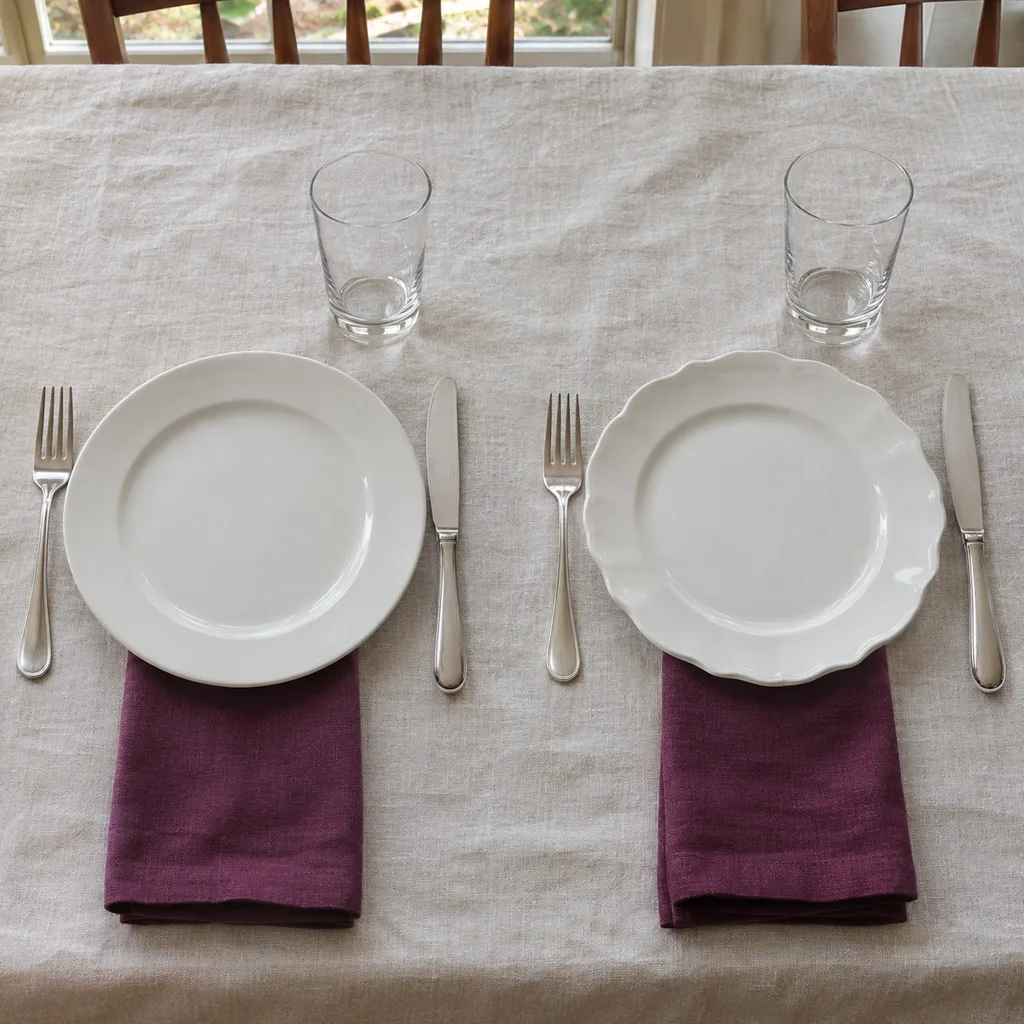
Different white plates can form a third starting point. Bring them together with the same plum napkin or a small plum paper detail at each place. Keep the rest of the setting quieter so that the repeated accent, rather than exact plate identity, gives the table its rhythm.
Choose the napkin or the paper as the main accent, not necessarily both. A folded blank card can show where a name would go during the setup trial. If you later add names, make them readable rather than obscuring them with an elaborate decoration.
Allow an individual setting to differ when a different glass, plate or arrangement is more convenient for that guest. The repeated color can still connect the table. Matching the photograph is not more important than making the place usable.
Give the middle of the table a separate job
Once the reference setting is decided, repeat it before arranging the center. Choose whether the middle needs to hold shared dishes or can carry a small display. Do not use a photograph of an empty table as evidence that a centerpiece will fit once dinner is served.
For a restrained autumn accent, try one low plain vessel with a small decorative pumpkin arrangement kept separate from the eating surfaces. These are decorative props, not ingredients or a statement that an unidentified gourd is edible. Leave loose glitter, shedding materials and open flames out of this simple setup.
You can also omit a centerpiece and let the napkins provide the repeated color. If the room or serving dishes already supply plenty of detail, an open middle may make the whole arrangement easier to understand. Our small-table decoration guide covers the separate problem of fitting dinner onto a compact surface.
Check the repeated setting before adding another purchase
Look down the whole table after repeating the sample. If one place feels unrelated, identify the missing connection: napkin color, plate shape or glass style. Change that specific piece if you can, rather than buying a new layer for every setting.
For a larger household gathering, keep the reference setting easy to reproduce. Put a spare napkin and any optional card in the same place as the replacements, and let anyone helping know which parts can move when the meal arrives. Decoration should not require the host to supervise every plate.
Keep the actual meal preparation on its own recipe-based plan. A finished place setting does not establish when a dish should be cooked or how it should be held. Do the decorative trial with empty tableware rather than keeping dinner waiting while you compare napkins.
Finish by removing the piece that contributes least. One repeatable setting, a clear visual link and a center that suits the meal can look deliberate without turning Thanksgiving into a search for perfectly matching possessions.
Keep good recipes close
Add The Cooking Twins to your preferred sources on Google for more easy dinners, no-bake desserts and kitchen inspiration.
Emma & Ella Frost
A practical resource from The Cooking Twins.
More from Emma & Ella Frost
Comments
Leave a commentShare your question or planning tip below.