
Coffee Grinder Types for a Home Coffee Bar: Mechanism, Power and Fit
Understand burr versus blade, manual versus electric and conical versus flat grinder descriptions, then compare documented brewing support and practical fit.

By Emma & Ella FrostUpdated November 16, 2026

5-Ingredient Dump & Go Crockpot Meals
101 effortless slow cooker recipes for busy families.
View on AmazonAvailable on AmazonCoffee grinder descriptions mix several different choices. Burr or blade tells you about the grinding mechanism. Manual or electric tells you how it is powered. Conical or flat describes a burr arrangement. A single grinder can belong to more than one of those categories, so compare the features separately rather than treating them as competing names for the same thing.
Start with the brewer you actually use and the routine you want beside it. This guide explains the categories and the questions to check in a specific grinder's documentation. It is not a ranked product test or a set of universal grind settings.
Separate the mechanism from the power source
A useful comparison note has two first lines: how the beans are broken down, and what drives the mechanism. That prevents a confusing choice such as "burr versus manual" when a hand-cranked model may itself use burrs.
Breville's grinder explanation distinguishes abrasive burr surfaces from rotating blades that chop the beans. Its home-grinding guide also distinguishes hand-cranked and electric burr options. Those are different attributes, not a four-step quality ranking.
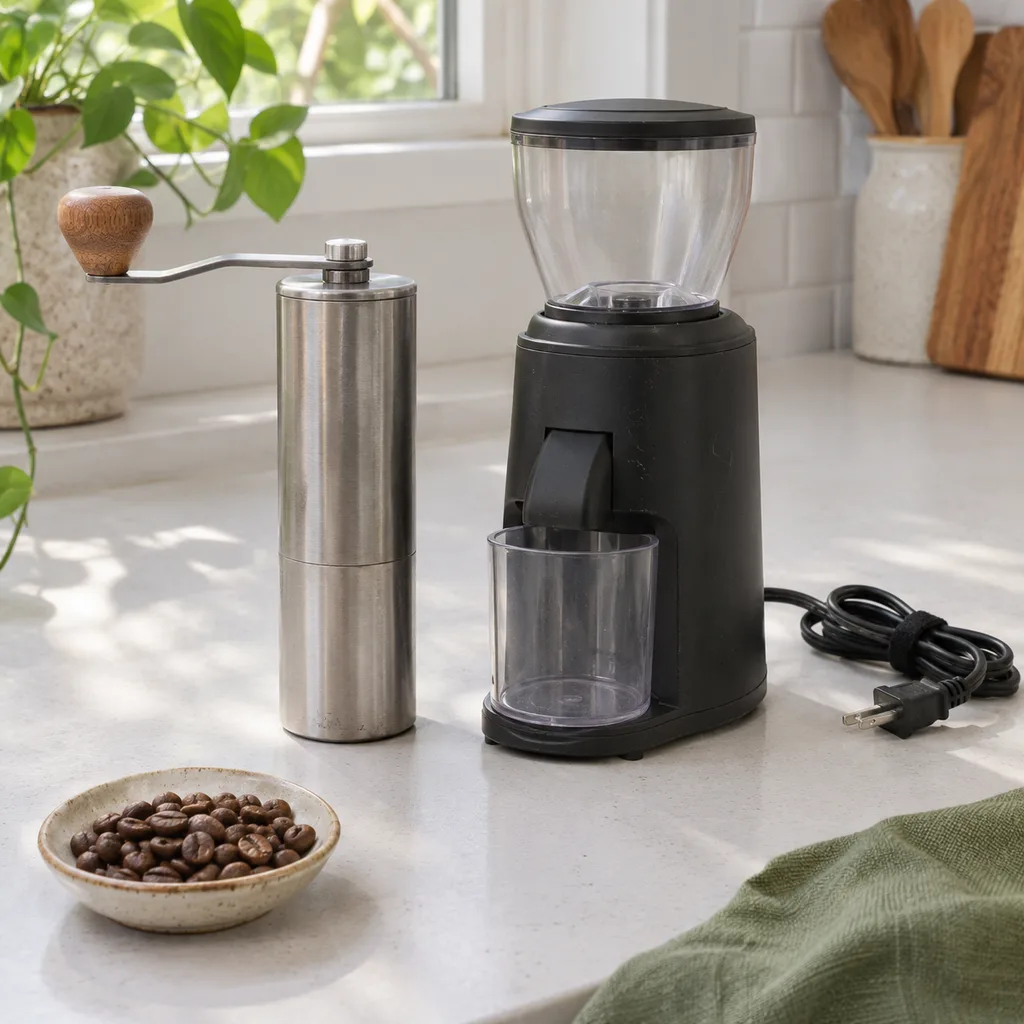
Write down the actual model's mechanism instead of guessing from its outer shape. A metal cylinder does not tell you what is inside, and a hopper does not establish its usable grind range. Use the manufacturer's description and instructions for the exact model.
Understand what a blade grinder changes
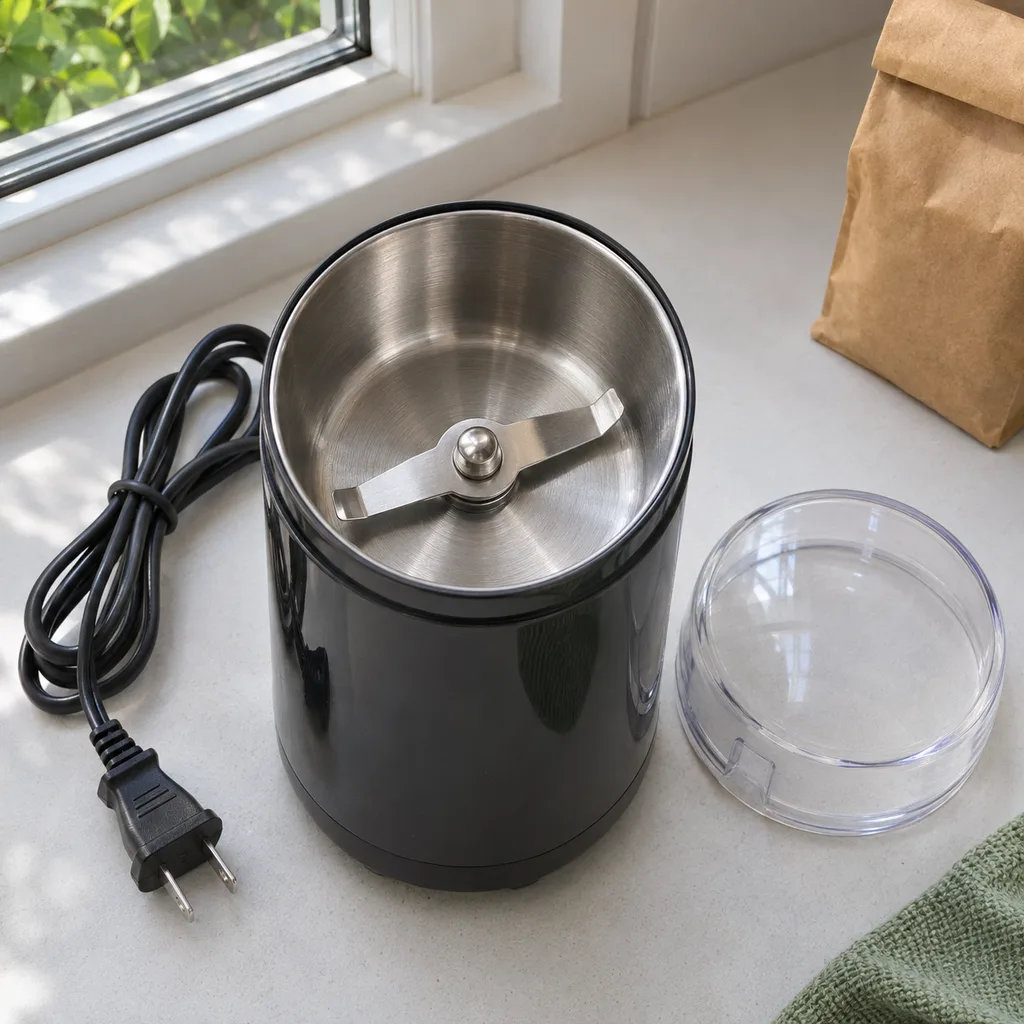
A blade grinder uses a spinning blade to break up the beans. Breville describes the resulting pieces as less uniform than those from a burr grinder. That distinction concerns the mechanism; it does not provide a reliable grinding time for every bean quantity or appliance.
If you already own one, identify what is missing from your routine before replacing it. Are you looking for a documented adjustment range, a different workflow, or a way to repeat a setting? Keep that question specific rather than assuming every unfamiliar grinder will solve it.
Check the permitted ingredients and capacity. A product marketed for coffee should not automatically be treated as a spice grinder, and a separate spice-use claim should come from that model's instructions. Do not infer cleaning methods from the appearance of a removable-looking cup.
Compare burr grinders by their actual adjustment system
Burr grinders move beans between abrasive grinding surfaces, with adjustment used to change the intended grind. Read how the particular model is adjusted and which brewing methods its manufacturer supports. The word "burr" alone does not promise that every available brewer will be served equally well.
Check whether a setting is identified by numbered positions, another marked scale or a different adjustment arrangement. Do not copy a number from a different grinder as though it represents a universal particle size. Keep any future brewing notes attached to the exact model and the instructions for your brewer.
Look at the route after grinding as well. Does coffee collect in a supplied container, or can the model dispense into another supported accessory? Verify fit and permitted use rather than balancing an unrelated cup or tool under the outlet.
Treat manual operation as a separate workflow choice
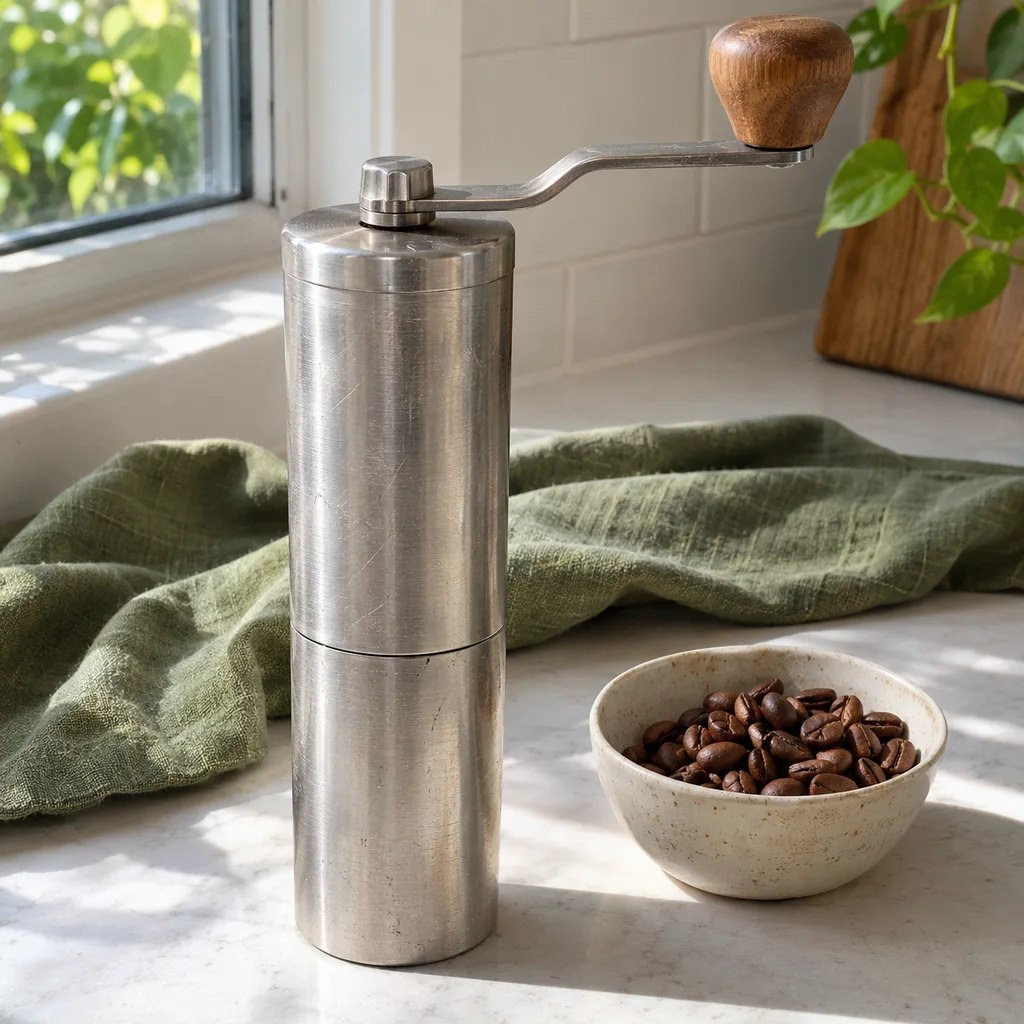
With a hand-cranked grinder, operating the handle is part of preparing the coffee. Consider the actual motion, how the device is held, and the amount you normally prepare. Do not assume that "manual" means effortless, suitable for every hand or appropriate for every person.
Check the complete stored shape, including its handle and grounds container, and how it comes apart according to the instructions. A compact body can still need room to operate. A drawer location that stores the pieces neatly is not necessarily a convenient place to use them.
An electric option has a different set of practical questions: power requirements, placement, access to its controls and the instructions for filling and cleaning. Neither category tells you a universal noise level, speed, lifespan or maintenance burden. Compare actual specifications if those are deciding factors.
Read conical and flat as burr descriptions, not flavor guarantees
Baratza's burr-type guide describes conical and flat arrangements. Its conical explanation discusses the relationship between an inner cone and outer ring, while its flat explanation describes two circular grinding surfaces. These labels describe the grinding components rather than whether the device is hand-cranked or electric.
For a home setup, begin with supported brewing methods, adjustment and day-to-day use before comparing geometry in isolation. Do not turn a manufacturer's flavor description into a guaranteed result for your beans or brewer. This guide does not establish a winning burr material or a taste ranking.
Likewise, do not assume that parts from two grinders are interchangeable because their burrs share a category name. Replacement compatibility, installation and servicing belong to the exact model's support information.
Make a short specification checklist for your coffee bar
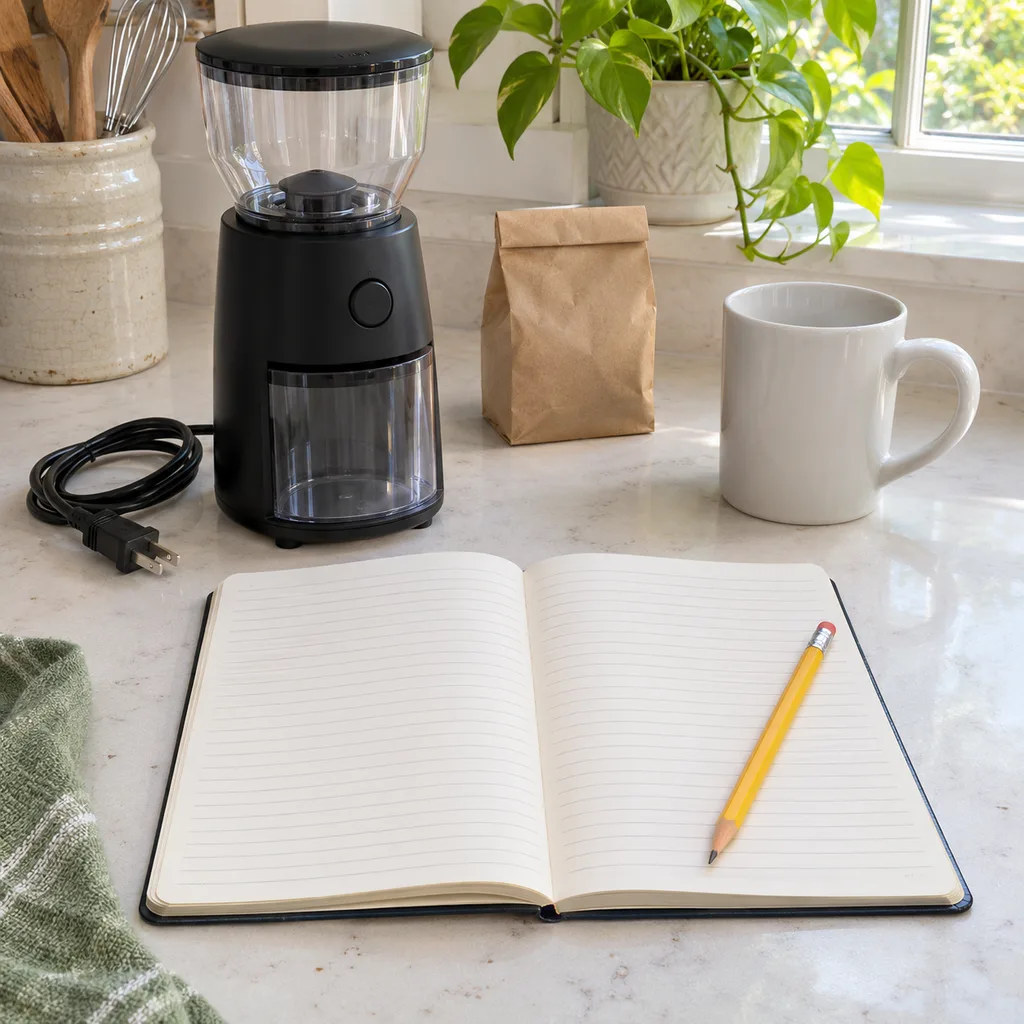
For each serious candidate, record the mechanism, power source, manufacturer-supported brewing methods, adjustment arrangement, supplied collection method, usable dimensions and care instructions. Mark an unanswered item as "verify" rather than filling it from a similar-looking model.
Keep brewing recipes separate from that equipment comparison. Coffee dose, water, grind adjustment and preparation steps need the appropriate recipe and equipment guidance; a type label is not enough to set them. There is no universal espresso setting or grinding duration supplied here.
Once the equipment choice is clear, use our coffee station organization guide to plan the surrounding cups, supplies and landing space. Choose the grinder for the work it supports, then give that work room to happen.
Keep good recipes close
Add The Cooking Twins to your preferred sources on Google for more easy dinners, no-bake desserts and kitchen inspiration.
Emma & Ella Frost
A practical resource from The Cooking Twins.
More from Emma & Ella Frost
Comments
Leave a commentShare your question or planning tip below.