
Freezer Organization Ideas for Small Spaces: Plan the Opening and the Reach
Organize a small freezer around actual package shapes, usable openings and retrieval paths, with modest grouping and appliance-specific loading checks.

By Emma & Ella FrostUpdated November 16, 2026

5-Ingredient Dump & Go Crockpot Meals
101 effortless slow cooker recipes for busy families.
View on AmazonAvailable on AmazonFor a small freezer, start with the package you struggle to retrieve, not a matching set of bins. If one container is buried beneath an unstable pile or a drawer cannot open fully, identify that specific problem before buying anything. The best arrangement leaves the appliance working as intended and lets you find and return your actual food.
Think in three parts: the opening a package must pass through, the place it rests, and the movement needed to remove it. This guide focuses on that physical layout. It does not supply freezing methods, storage durations or a way to decide whether unknown food is safe.
Check the appliance limits before adding an organizer
Find the manual for your actual freezer and identify the vents, controls, drawers, shelf supports and any marked loading limits. Do not treat an unoccupied gap as usable storage if the appliance needs it clear. A bin that fits the shelf outline can still obstruct something important.
The FDA's food-storage guidance warns against crowding a refrigerator or freezer so tightly that air cannot circulate. Keep that principle separate from appearance: a perfectly filled shelf is not the goal. Follow your appliance's specific loading and airflow instructions rather than a photograph of someone else's freezer.
Do the planning outside the freezer as much as possible. Sketch the shelf or drawer and note the awkward packages during ordinary use. Do not unload everything onto the counter for a decorating session; keep the food's actual handling requirements in control of the project.
Measure the opening and the removal path
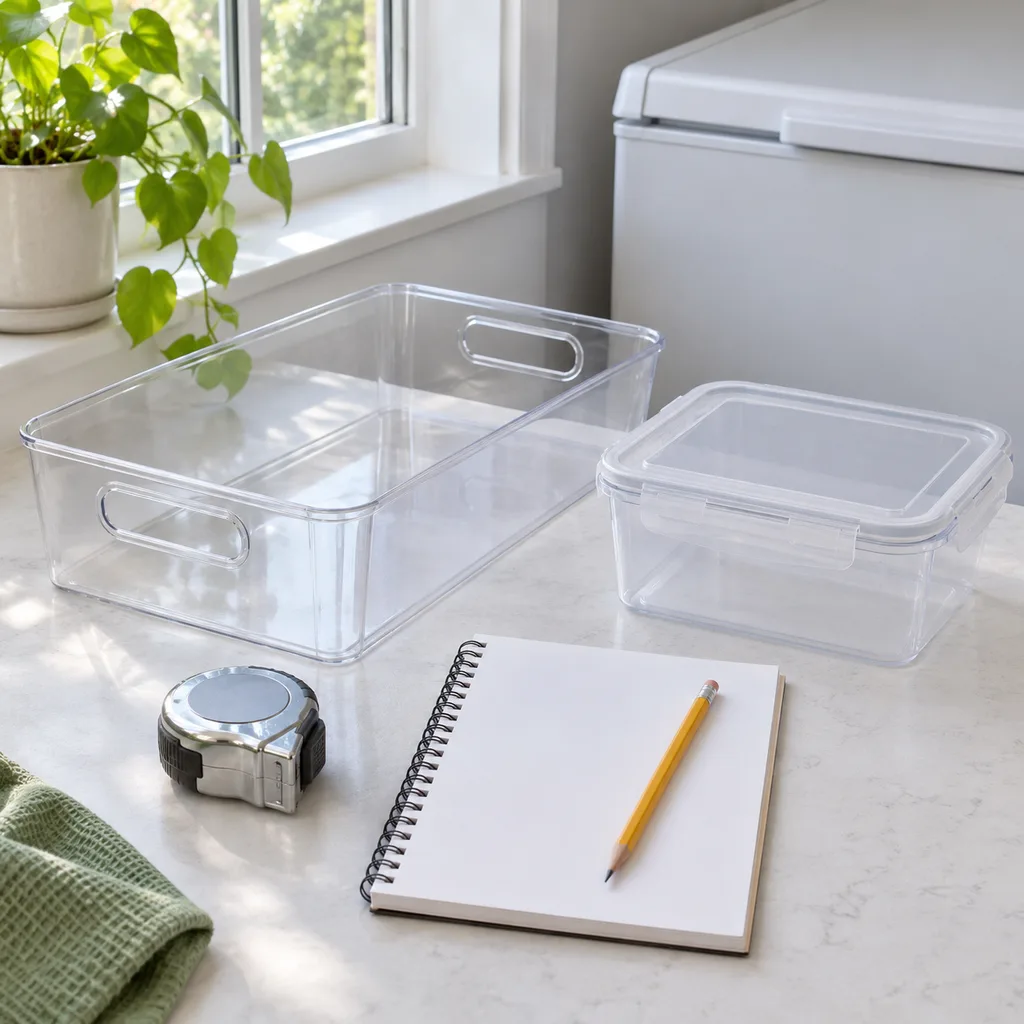
Record the usable width, depth and height of the intended area, then check its opening separately. Door bins, drawer sides and the shelf above can limit the route even when the interior looks spacious. Use the dimensions available with the door or drawer in its normal permitted position.
Check the largest package you need to retrieve from that spot. A rectangular container may fit on the shelf but need extra space to tilt or lift. If it can come out only after several unrelated items move, a different location may be more useful than a taller stack.
Compare organizer measurements outside the appliance before committing. Include handles, rims and any taper, not just the advertised base size. Do not force a drawer or door closed around a poor fit, and do not alter the appliance to accommodate a basket.
Use a small bin for packages that actually get lost
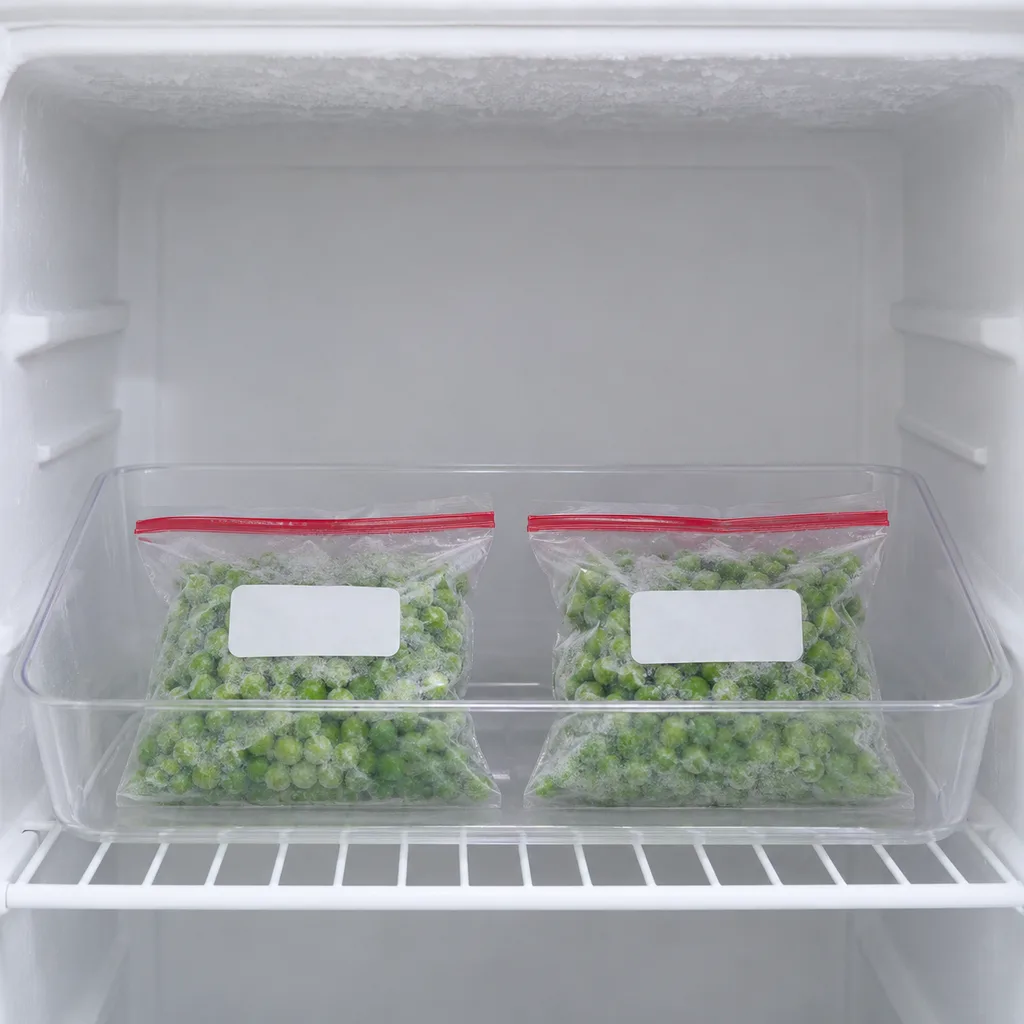
A shallow bin can group loose packaged items, but it does not need to hold an entire shelf's contents. Choose one troublesome group and check whether containing it makes individual packages easier to find. Keep the food in packaging suitable for its storage; an outer organizer is not a replacement food container.
Verify that the organizer is intended for freezer conditions and follow its instructions. A leftover household basket is not automatically suitable because it happens to fit. Consider the weight of the actual contents and how you will support them when lifting the bin.
Leave the arrangement simple enough that another person can return one package without rebuilding it. If the bin becomes a hidden pile, try a smaller group or a different position. Do not add dividers simply to make every package stand at the same angle.
Choose a layout for your freezer's shape
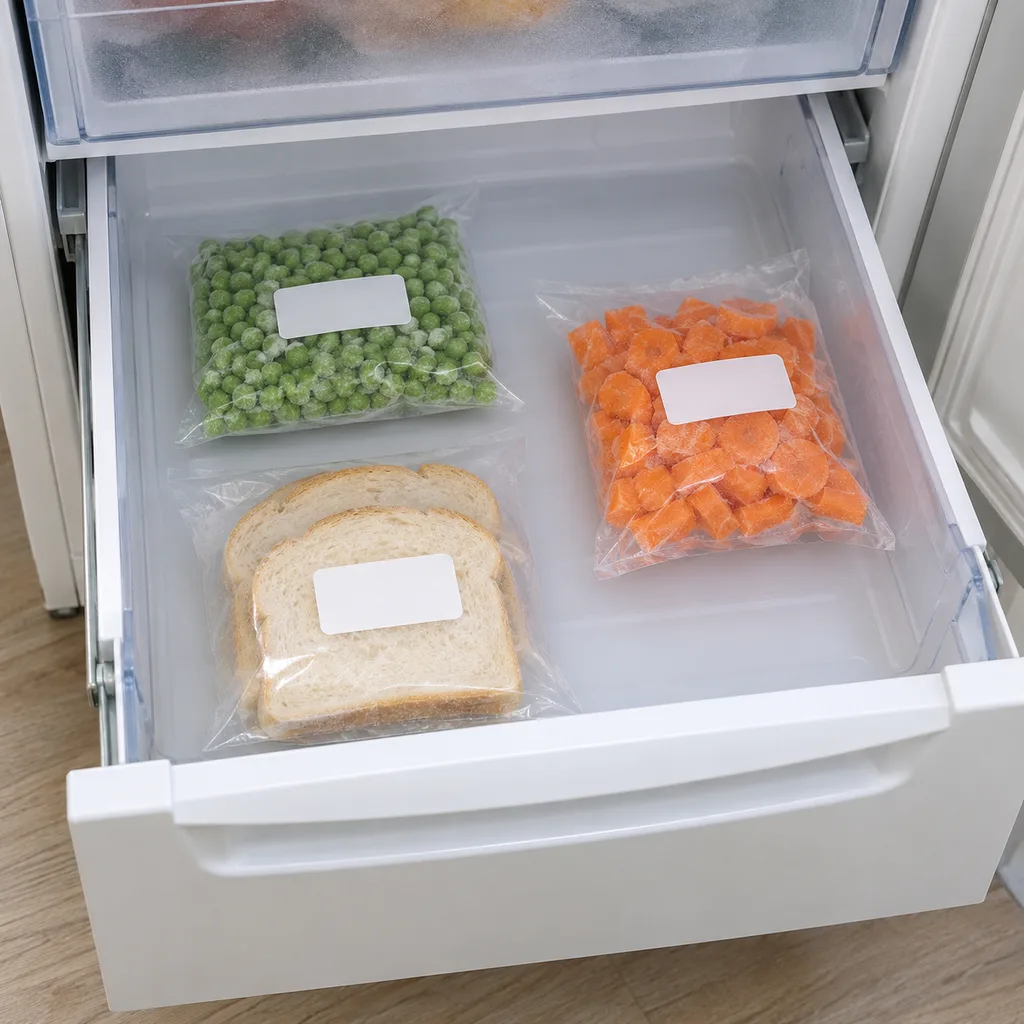
For a shallow shelf, compare a single accessible row with a small grouped section. Avoid placing the package you regularly need behind something large that must be lifted out each time. Let the existing shelf and package shapes guide the arrangement instead of assuming vertical storage is always better.
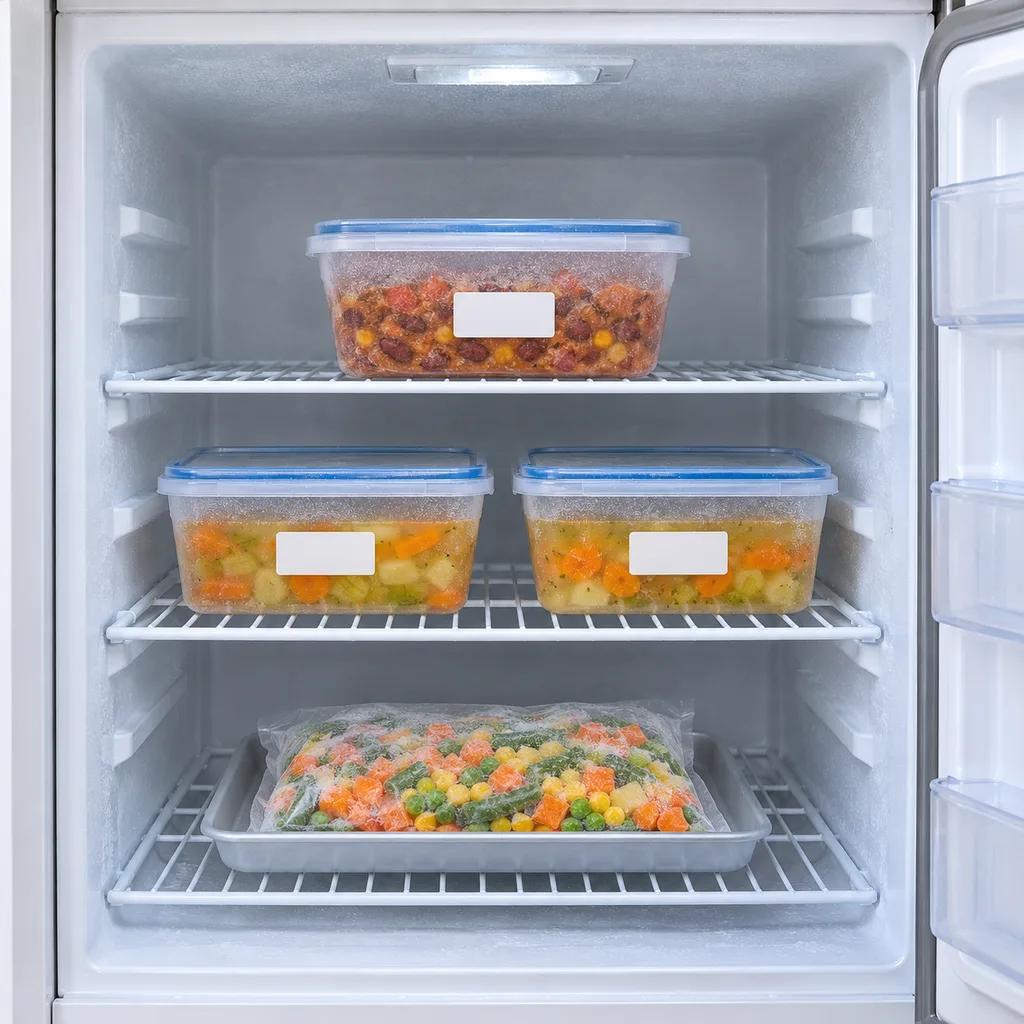
For a drawer, look at what is visible from above. Group compatible packages so their identifying information can be found without opening them, and check that the drawer moves normally. Do not press food against a mechanism or load above a limit to make one more layer fit.
For a top-opening compartment, use the appliance's supplied baskets as intended. If you are considering an additional organizer, verify its suitability and the lifting route rather than building an improvised hanging support. A deep location that you cannot comfortably reach may need a different use, not a more elaborate storage gadget.
Keep identification attached to the package
A category on a bin can help you navigate, but it should not be the only identifying information. A package moved to another section still needs its own name and relevant record. Keep raw and cooked status clear rather than relying only on a color or location.
Use our freezer meal labeling guide for the separate task of naming packages and recording actual dates. Do not replace a missing frozen date with the day you rearranged the shelf. An organizing reset does not reset a food's handling history.
Keep an inventory location short enough to update: for example, an actual shelf or basket name that everyone uses. If you move a package, change the record too. A beautifully arranged freezer is still frustrating when the list points to its previous layout.
Review the next real retrieval before buying more
During ordinary meal preparation, notice which package is difficult to remove and whether its neighbors stay in place. Ask whether you can return an unused package easily and close the appliance normally. Change the specific obstruction instead of starting the whole freezer again.
Before shopping, write the unresolved problem in plain language: the drawer catches, small bags disappear, or a large container blocks the next one. Buy only when an appropriate, verified-fit solution addresses that problem. Sometimes moving two existing packages is enough.
Success is a workable loading and retrieval routine, not the most tightly packed shelf. Keep the appliance instructions, package information and food-handling requirements intact, and let the layout serve the meals you actually make.
Keep good recipes close
Add The Cooking Twins to your preferred sources on Google for more easy dinners, no-bake desserts and kitchen inspiration.
Emma & Ella Frost
A practical resource from The Cooking Twins.
More from Emma & Ella Frost
Comments
Leave a commentShare your question or planning tip below.