
How to Label and Date Freezer Meals
Label freezer meals with clear names, raw or cooked status, dates, amounts, and instructions while separating safety from quality targets.

By Emma & Ella FrostUpdated November 16, 2026
5-Ingredient Dump & Go Crockpot Meals
101 effortless slow cooker recipes for busy families.
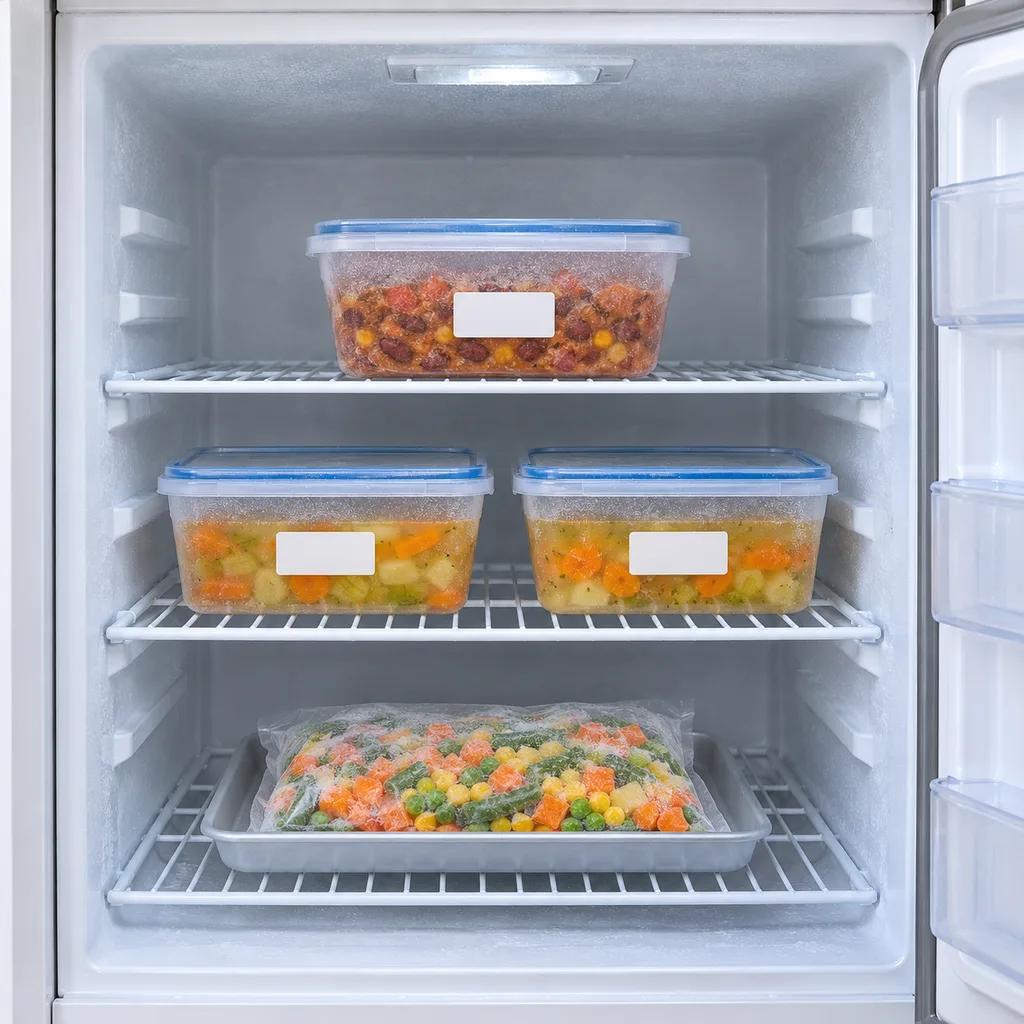
View on AmazonAvailable on AmazonA useful freezer label answers three questions before you open the package: what is it, is it raw or cooked, and when did it go into the freezer? Add the amount and a pointer to preparation instructions, and a mystery container becomes something you can plan dinner around.
Keep the system simple enough to use while putting food away. A freezer-suitable label and a readable marker are enough to begin. The label is a record of handling, not proof that a meal was cooled, stored, or cooked safely.
Choose a small set of label fields
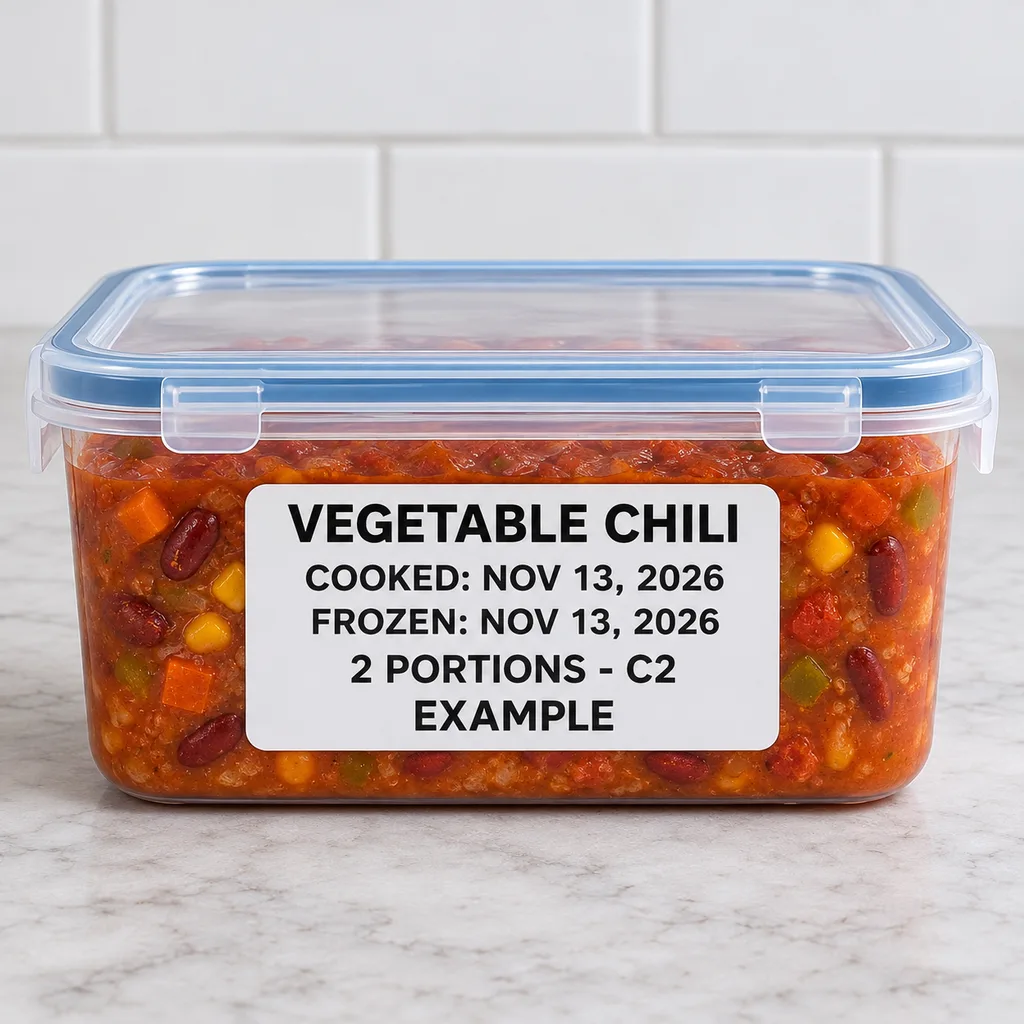
Write the full dish name, raw or cooked status, preparation date, frozen date, and package amount. If a meal has several components, name them: chicken filling is more useful than tacos, and tomato sauce without pasta is clearer than dinner sauce.
Use an unambiguous date format that includes the year, such as Nov 13, 2026. Label the date's meaning. A lone 11/13 does not tell someone whether the food was cooked, purchased, or frozen that day.
An example for a fictional cooked batch might read: Vegetable chili; cooked Nov 13, 2026; frozen Nov 13, 2026; two portions; recipe card C2. This is a labeling example, not a tested recipe or a storage-duration recommendation. Use your actual dates and amounts.
If you freeze an uncooked assembled meal, write RAW or UNCOOKED prominently and keep its verified cooking instructions attached or easy to find. Do not apply leftover reheating instructions to a raw meal.
Prepare the label before the package gets frosty
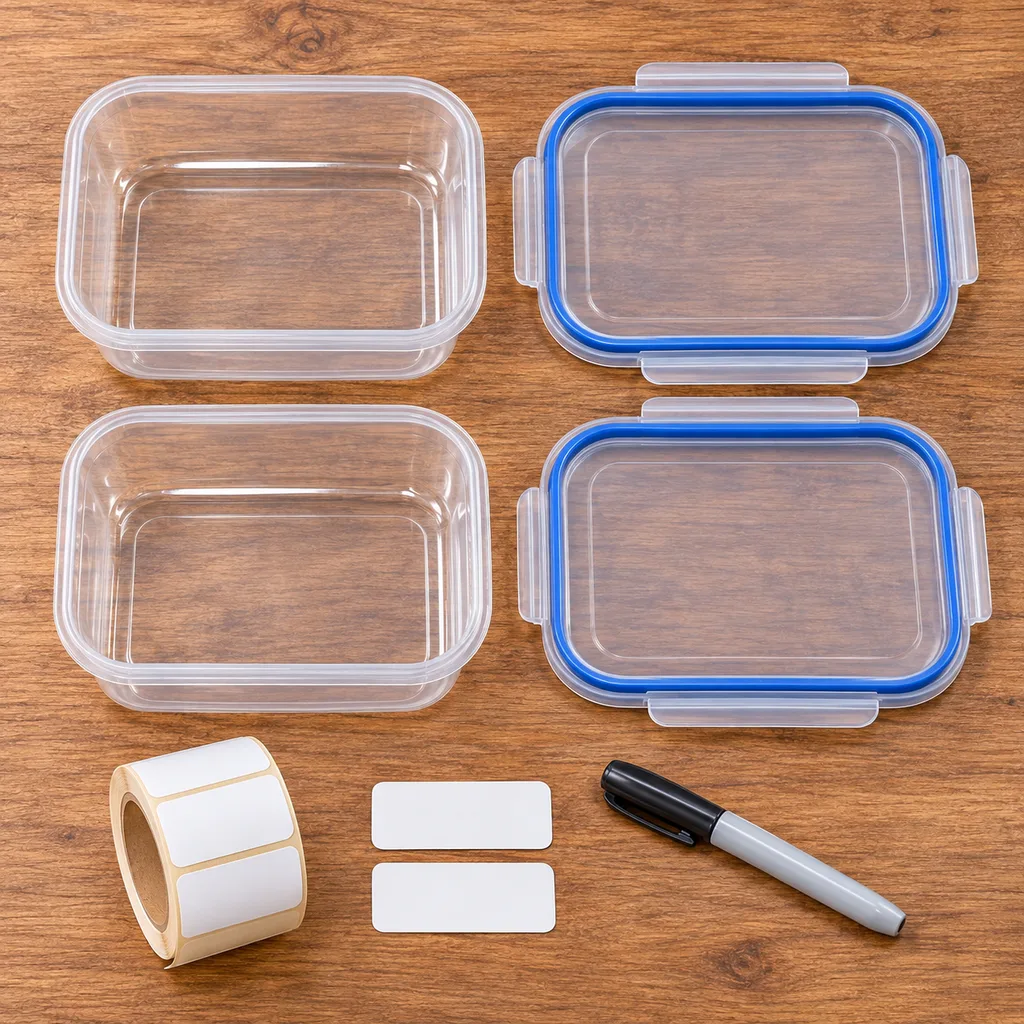
Choose labels intended for freezer temperatures and compatible with the package material. Write on a clean, dry exterior surface before freezing. For flexible bags, it may be easier to write on the designated panel before filling them.
Keep adhesive, ink, and paper outside the food-contact area unless the product is specifically intended for that use. On reusable containers, remove old labels before adding a new one so two sets of dates cannot be confused.
Label the face you will see in storage. A lid label works for a shallow drawer; a front label helps with stacked containers on shelves. If lids are interchangeable, add the identifying batch code to the container itself so a swapped lid does not change the record.
Cool and store the food safely before organizing it
FDA guidance recommends shallow containers, refrigeration at 40 F or below, and a freezer at 0 F or below. Refrigerate perishables within two hours, or one hour above 90 F. The FDA refrigerator and freezer storage chart lists three to four refrigerated days for vegetable or meat soups and stews and cooked meat or poultry leftovers. Check the specific food rather than applying that duration to every meal.
Do not leave a meal on the counter while making decorative labels. Put the food away first if necessary and complete a simple identifying label promptly. FDA explains that hot food can go into the refrigerator; divide a large pot into small portions in shallow containers rather than waiting for the whole pot to cool on the counter.
Use packaging intended for freezing and follow its instructions for filling, headspace, and temperature changes. Do not assume an ordinary glass jar can go from a hot fill to the freezer or from the freezer into a hot oven.
Separate a frozen date from a quality target
The frozen date records an event. A household meal-plan target records when you hope to use the meal. Neither should be presented as a universal safety expiration date.
The FDA distinguishes frozen-food quality from safety: properly handled food kept continuously frozen at 0 F remains safe, while quality can decline. Freezing does not kill most bacteria or correct unsafe handling before freezing.
If you add a quality target, use guidance for the specific food and identify it as a quality target, not a guarantee. For a mixed dish without a verified recommendation, leave that field out instead of inventing a number of months. The preparation and frozen dates are still useful.
Make instructions retrievable without crowding the label
Use a short recipe code that points to a paper recipe card or a reliably accessible saved recipe. Record whether the meal needs an added ingredient, such as pasta cooked separately. Keep cooking directions with the food when giving it to another household.
For cooked leftovers, FDA lists 165 F for reheating leftovers measured with a food thermometer. A generic instruction such as microwave three minutes cannot establish that temperature for every portion, container, or appliance.
List ingredients or retain the recipe when someone needs that information. A homemade sticker that says no nuts is not evidence that ingredients or preparation avoided allergen cross-contact. If an ingredient or handling detail is unknown, say so rather than filling the gap with a reassuring label.
Connect each package to a short inventory
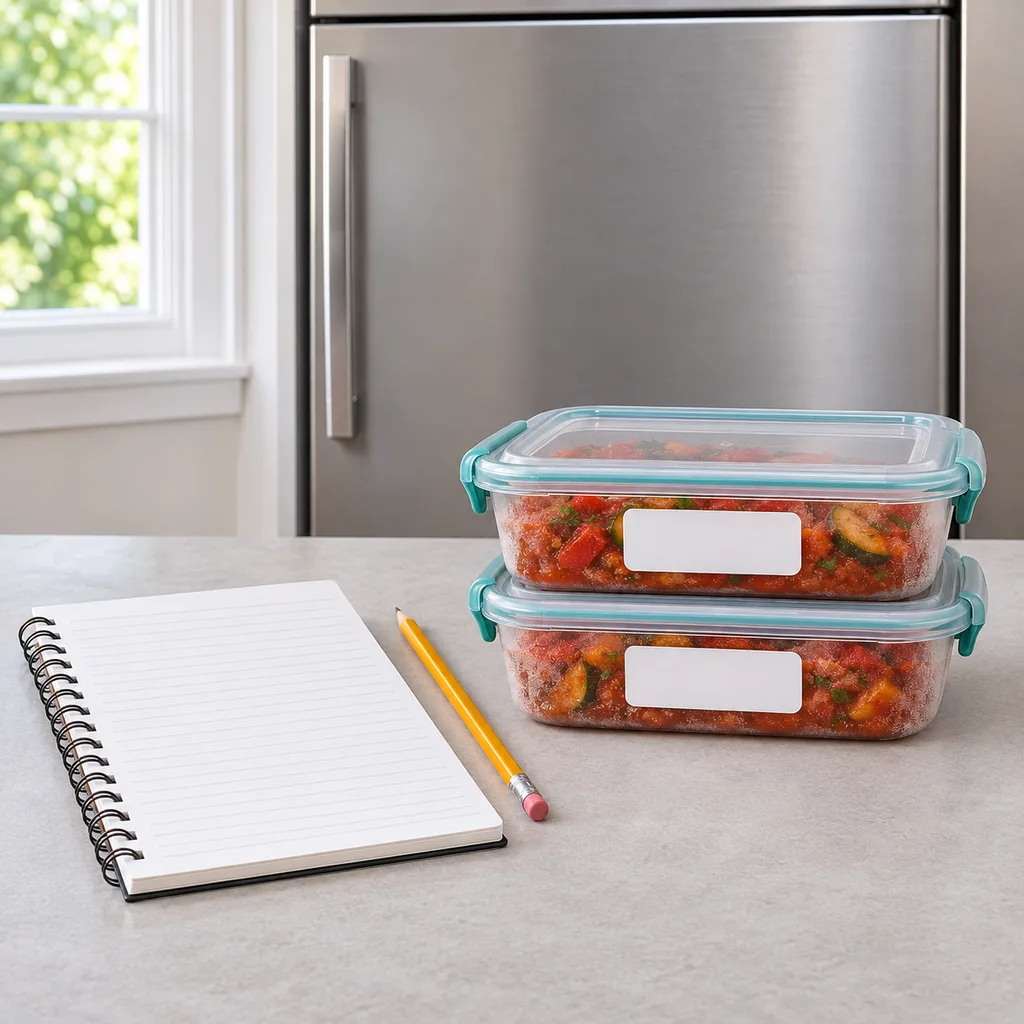
Keep a paper list near the freezer or a shared note on your phone. Use columns for dish, batch code, frozen date, packages remaining, and location. For example: Vegetable chili, C2, Nov 13, 2026, two packages, upper basket.
Count packages rather than vaguely recording some chili. When you remove one, change two to one. Put newly frozen packages behind older comparable packages when practical, while preserving the appliance's required airflow and access.
Keep raw and cooked foods clearly distinguished in both the list and the freezer. Color can be a secondary cue, but write the words too. A label should remain understandable to someone who did not choose the color scheme.
Handle missing information honestly
If a label falls off, do not assign today's date as if it were the frozen date. Check your inventory or meal record. If you cannot identify the food or its handling history, do not taste it to decide whether it is safe.
For the next batch, shorten the label rather than abandoning it: dish, status, dates, amount, instructions. Consistent plain information is more useful than an elaborate system that gets skipped on a busy evening.
Keep good recipes close
Add The Cooking Twins to your preferred sources on Google for more easy dinners, no-bake desserts and kitchen inspiration.
Emma & Ella Frost
A practical resource from The Cooking Twins.
More from Emma & Ella Frost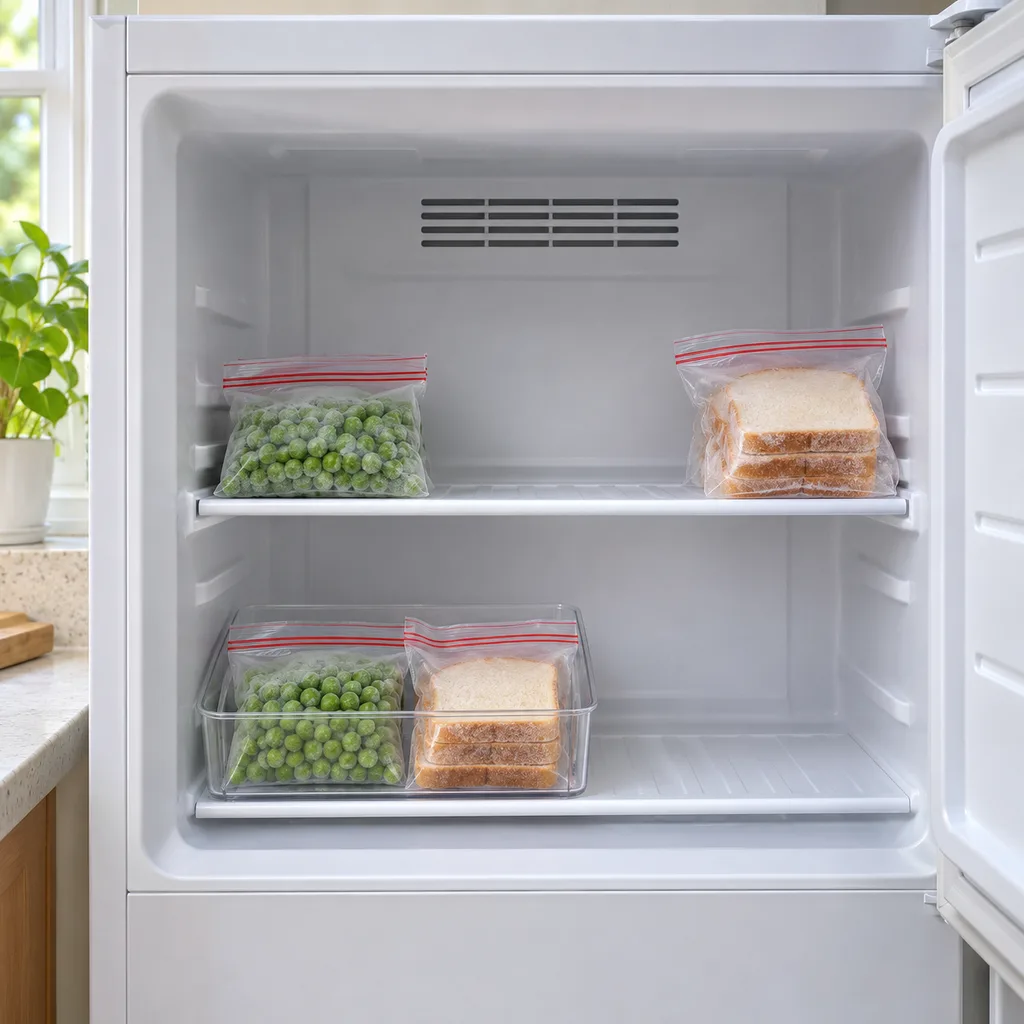
Comments
Leave a commentShare your question or planning tip below.