
Reusable Produce Bag Storage Ideas: Ready for the Next Shopping Trip
Give reusable produce bags a ready-to-shop home, separate unfinished care from storage, and connect the bags to your grocery routine.

By Emma & Ella FrostUpdated November 16, 2026

5-Ingredient Dump & Go Crockpot Meals
101 effortless slow cooker recipes for busy families.
View on AmazonAvailable on AmazonReusable produce bags are easier to remember when the clean, dry ones have a clear route back to the shopping tote. Give bags that are ready for use a different destination from bags waiting for cleaning, drying or a decision about continued use.
This is an organization plan for empty bags. It is not a claim that every mesh or fabric bag suits every food, that a bag is washable in a particular way or that it extends produce freshness. Check the actual product's intended use and care instructions before building the routine around it.
Sort by the job the bag is intended to do
Set out the bags you own and identify their intended uses from the product information. Keep produce bags separate from unrelated household pouches. Similar fabric or a drawstring does not establish that an item was made for food use.
Group useful bags by the differences that matter when shopping: for example, size, closure or the product's stated purpose. You do not need a different bin for every color. A small active group is easier to understand than a large mixed collection with no remembered uses.
Set aside anything with unclear identity, damage or unresolved care requirements. Follow the maker's guidance about continued use rather than assuming that an organizer makes the item suitable again. This guide does not provide a repair, sanitizing or food-contact test.
Choose a home for the ready-to-shop group
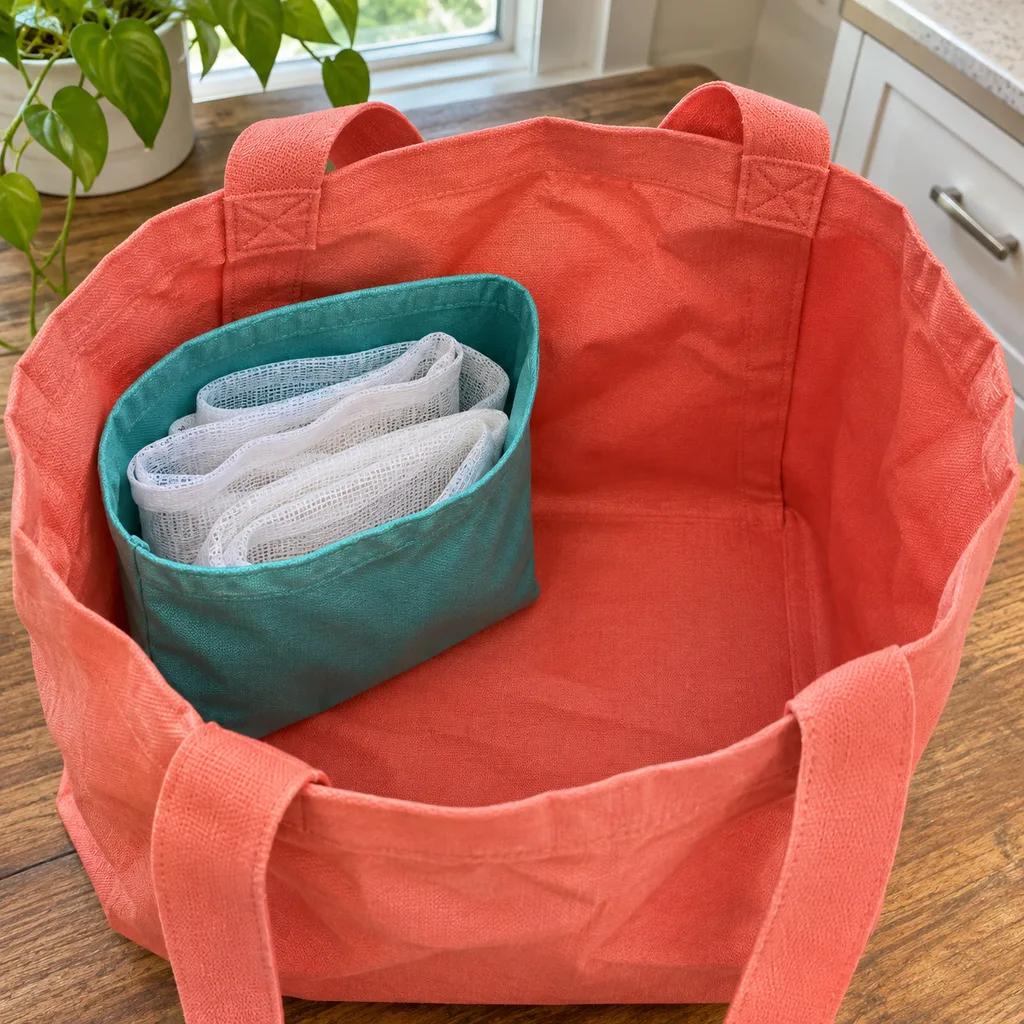
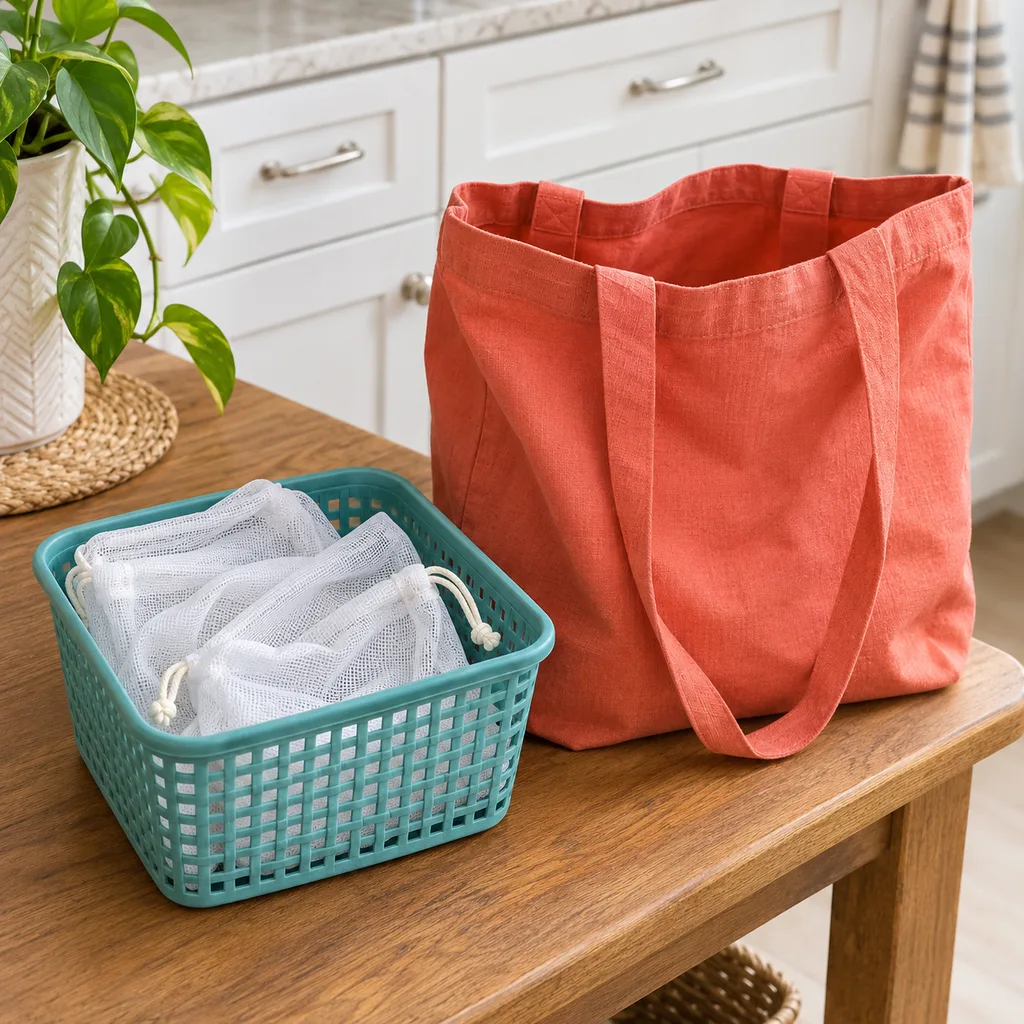
Try a small open basket, a drawer section or a removable pouch inside the main shopping tote. Choose the location that matches how you actually leave for the store. A basket in a remote cupboard may look tidy but fail to reach the shopping trip.
If the tote is the regular departure point, a separate inner pouch can keep empty ready bags together without scattering them among other belongings. Use only pieces ready for storage under their care directions. Do not conceal damp or used bags in the ready pouch.
For a shared household, make the destination understandable without a complicated code. A plain label on the basket or storage section can be enough. Keep care information available separately if it would otherwise be lost when packaging is discarded.
Fold or gather bags so one can be removed
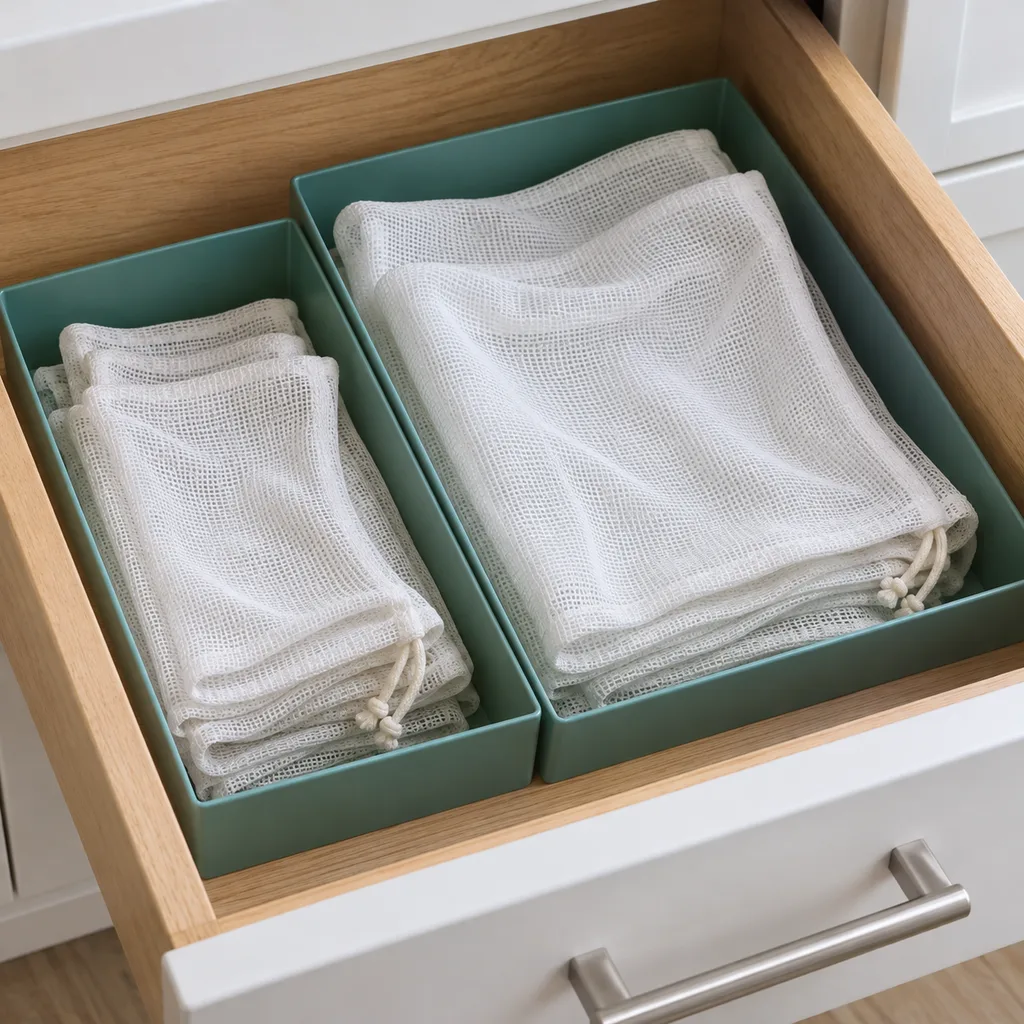
Fold flexible bags loosely enough to fit their assigned space without forcing the closure or tangling cords. If folding does not suit the material, group them in another practical way consistent with the product directions. There is no universal folding pattern for every bag.
Test retrieval with one bag, not just the completed display. If the whole group comes out together, use a smaller section or separate the sizes. Leave the often-used group visible instead of burying it beneath occasional shopping accessories.
Keep cords and small removable parts contained appropriately for the household. This organization idea is not a child-safety assessment; consider who can access the storage area and the actual product's warnings.
Make used and drying bags a separate handoff
Agree where a returning bag goes when it needs attention. Keep that destination visibly different from ready storage. A used bag should not become indistinguishable from a ready one simply because both fit the same basket.
Use the product's own cleaning and drying directions. This guide does not prescribe machine settings, detergent, heat or a sanitizing process. Materials and closures differ, and a general reusable label does not settle those questions.
Return bags to the ready group only after the required care is complete. If the household regularly forgets that final step, make the handoff easier to see rather than moving the ready basket into the unfinished-care area.
Connect the bags to a real shopping plan
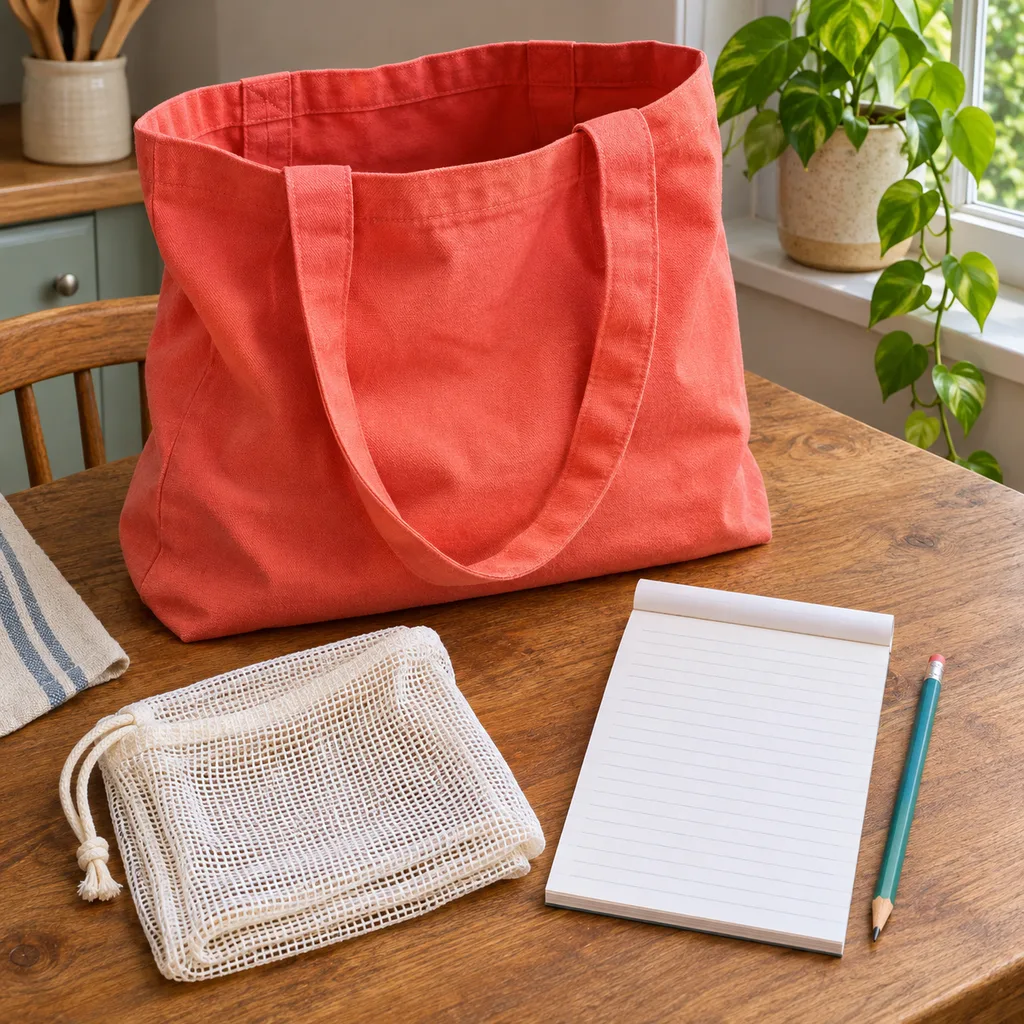
Before leaving, choose the intended bags for the confirmed purchases rather than carrying every spare by default. Keep the store's actual policies and the product's permitted use in mind; do not assume that all stores handle customer containers identically.
The store-section grocery list can place a check-the-bags reminder beside the shopping routine. The list still needs actual purchases, while the bag check concerns the equipment taken along.
After unloading, decide which bags return through the care route and which are already ready for their next permitted use. Avoid leaving the whole collection mixed with receipts and other shopping leftovers without reviewing it.
Keep the useful collection rather than an expanding pile
Notice which bags are repeatedly selected and which remain unresolved or unnecessary. Keep genuinely useful alternatives, but do not buy another set to solve a missing return step. Organization alone does not establish a financial or environmental saving.
When a product reaches the end of its usable life, check the applicable product and local disposal guidance rather than assuming a recycling route from its appearance. Do not transfer a worn bag to another food use without confirming suitability.
A workable system has three understandable destinations: ready to shop, needs care and needs a decision. Keep those destinations distinct, and the bags are more likely to reach the shopping trip without turning a kitchen drawer into a mixed holding area.
Keep good recipes close
Add The Cooking Twins to your preferred sources on Google for more easy dinners, no-bake desserts and kitchen inspiration.
Emma & Ella Frost
A practical resource from The Cooking Twins.
More from Emma & Ella Frost
Comments
Leave a commentShare your question or planning tip below.