
Printable Monthly Grocery Budget Planner: Track Purchases, Credits and the Difference
Use a blank monthly grocery ledger to record purchases and completed credits, define your categories and compare actual spending with your own plan.

By Emma & Ella FrostUpdated November 16, 2026


5-Ingredient Dump & Go Crockpot Meals
101 effortless slow cooker recipes for busy families.
View on AmazonAvailable on AmazonA monthly grocery budget planner needs two different numbers: what you planned to spend and what you actually paid. Keep them separate. A shopping list describes intended purchases; this record follows completed grocery transactions, refunds and the amount left against your chosen monthly figure.
Start with your own receipts rather than a suggested dollar amount for an imaginary household. There is no universal grocery allowance supplied here. Your food needs, other commitments and available money determine the plan; a blank tracker cannot decide those for you.
Define the month and what counts as groceries
Write the start and end dates of the period you are tracking. A calendar month and a pay-cycle period are not interchangeable, so choose one and name it. Give the sheet a grocery category definition that the people using it understand.
For example, decide whether household cleaning supplies, toiletries, pet food and restaurant meals belong elsewhere in your records. A supermarket receipt can contain several categories. Do not call the whole receipt "groceries" one week and remove the nonfood items the next without noting the change.
The Consumer Financial Protection Bureau's spending worksheet uses receipt amounts, matching dates and separate spending categories, including groceries and household supplies. The grocery-only ledger below is an original simpler record for this particular task, not a copy of the bureau's full household worksheet.
Keep the starting plan separate from later changes
At the top of your page, write the period, category definition and starting grocery figure you have chosen. If you have not set a realistic amount yet, track actual spending first rather than inventing a target to fill the space.
If the plan changes during the month, keep a short dated note of the change and the reason. Do not silently replace the original number: that makes it harder to distinguish a changed plan from a calculation error. A changed plan is information, not a failed worksheet.
Keep this record separate from the meal shopping list. Our two-week grocery list guide connects meals, existing supplies and purchase decisions. This page instead tracks the money attached to completed transactions.
Use a blank ledger for completed purchases and credits
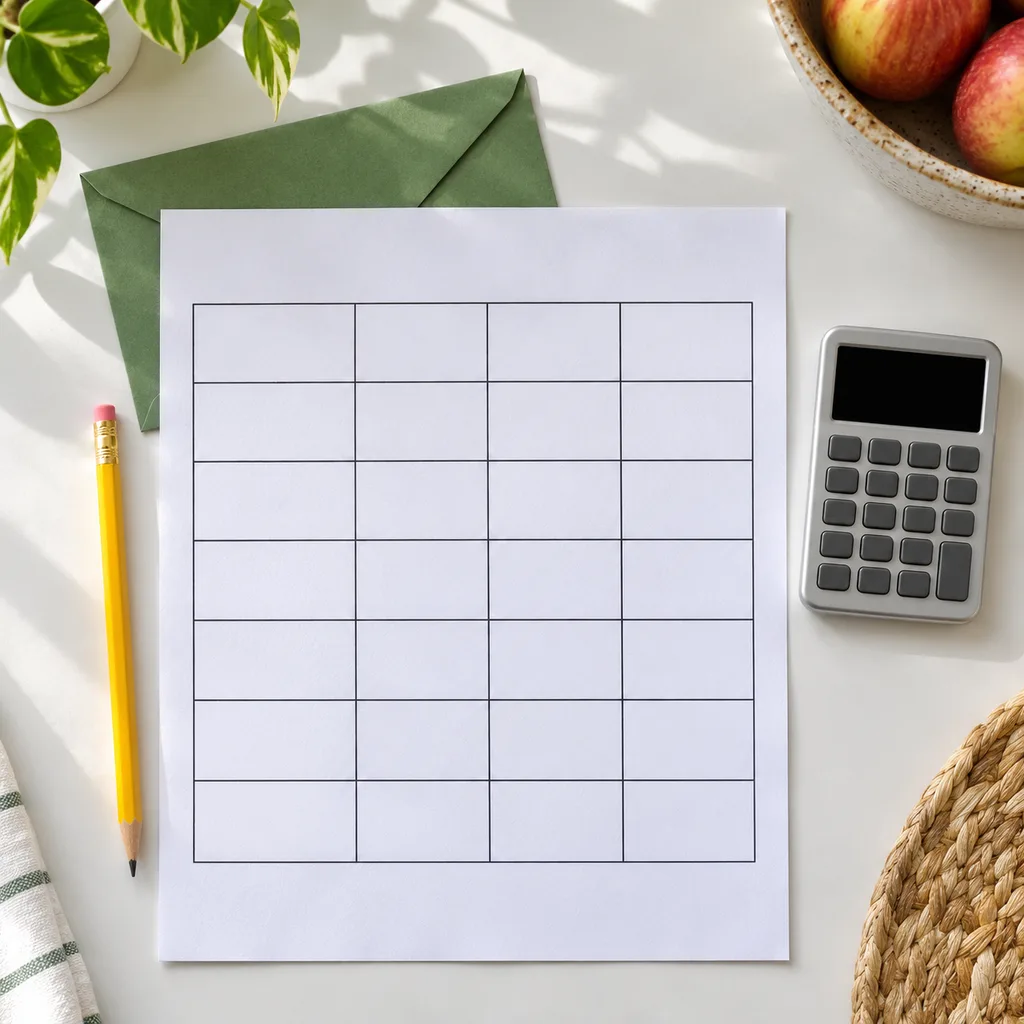
Record the date, a receipt reference you can find again, and the grocery amount. Use a plus sign for grocery spending and a minus sign for a completed grocery refund or credit being counted in this period. Keep any explanatory note next to that entry.
| Date | Receipt or reference | Grocery amount (+ or -) | Note |
|---|---|---|---|
| ________ | ________________ | ________________ | ________________ |
| ________ | ________________ | ________________ | ________________ |
| ________ | ________________ | ________________ | ________________ |
| ________ | ________________ | ________________ | ________________ |
| ________ | ________________ | ________________ | ________________ |
| ________ | ________________ | ________________ | ________________ |
Continue with another copy when needed and total the sheets together. Keep the ledger and receipts private: an order number, payment detail or shared account screenshot does not belong in a public planning photo.
Reconcile a mixed receipt before adding it
Identify which items fit your stated grocery definition. Use the final receipt and keep a note of how you treated discounts and charges that do not belong to a single item. Apply a consistent rule in your own tracker instead of assuming the store's department headings match your household categories.
For delivery orders, distinguish the original estimate from the completed purchase. Substitutions, unavailable items and final charges can change what was actually paid. Keep pending or unresolved amounts in a separate note until you can verify them; do not count both an estimate and its replacement as two grocery purchases.
Future rewards are not the same as a completed refund. Record only the amount you are actually treating as spent or credited, and note that choice. This is a household record, not tax or accounting guidance for a business.
Calculate spending and the remaining amount
Add the purchase entries, then subtract the completed credits recorded for the same tracking period. That gives the grocery spending total under the definition you chose. Subtract that total from your current documented plan to see the remaining amount.
For a fictional arithmetic example only, suppose two grocery purchases were $20 and $8 and a completed grocery refund was $3. Recorded spending would be $25: 20 plus 8 minus 3. Against an invented $100 starting figure, the remaining amount would be $75. These numbers are not observed prices, a household allowance recommendation or a promise about what food costs.
If the remaining figure is negative, keep the result visible. Do not delete a real transaction to make the page balance. Check the entries and review the plan in the context of your household's actual needs.
Close the period before starting a new sheet

Compare the ledger with the receipts you collected and resolve duplicate entries or missing credits. Make a note of any amount still awaiting confirmation rather than pretending the total is complete. Keep returns in the period where you record the actual credit, with a reference to the original purchase where useful.
Look for an explanation you can use next time: a larger restock, an extra shopping trip, changed household needs or mixed receipts that were hard to separate. Do not assume one unusual month establishes what every later month should cost.
Keep item-value comparisons separate. Our grocery unit-price guide helps compare suitable packages; this ledger shows their place in the month's actual spending. A low unit price and an affordable checkout total answer different questions.
Finish with three figures you can trace: the documented plan, recorded grocery spending and the difference. A useful planner makes the transactions understandable without disguising uncertainty or telling every household to spend the same amount.
Keep good recipes close
Add The Cooking Twins to your preferred sources on Google for more easy dinners, no-bake desserts and kitchen inspiration.
Emma & Ella Frost
A practical resource from The Cooking Twins.
More from Emma & Ella Frost

Comments
Leave a commentShare your question or planning tip below.