
How to Compare Grocery Unit Prices
Compare grocery unit prices with matching units, clear calculations, sale checks, and a realistic look at the quantity you will use.

By Emma & Ella FrostUpdated November 16, 2026
5-Ingredient Dump & Go Crockpot Meals
101 effortless slow cooker recipes for busy families.
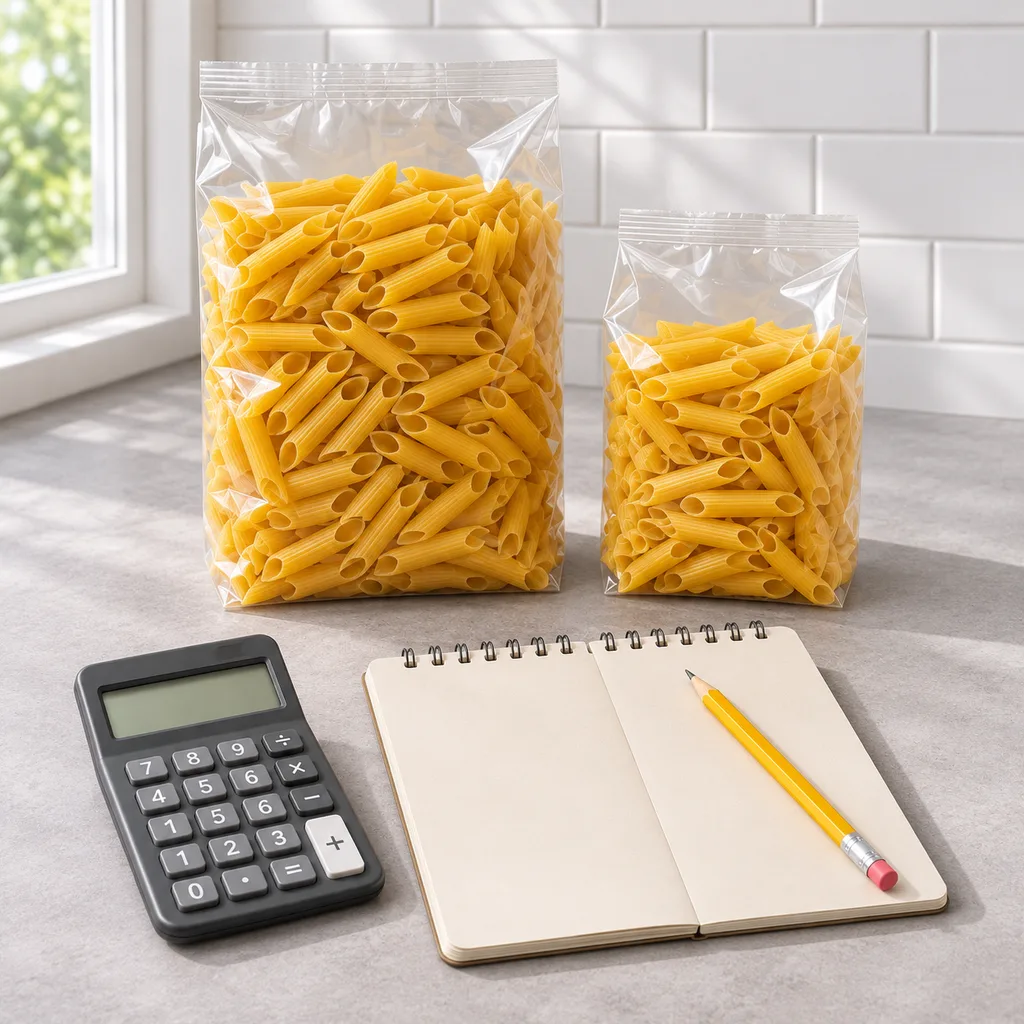
View on AmazonAvailable on AmazonThe package with the lowest shelf price is not always the least expensive for the amount of food inside. A unit price puts different package sizes on the same basis, such as dollars per ounce or dollars per pound. Compare that number only after checking that the products and measurement units are comparable.
A useful aisle routine is: match the product, match the unit, compare the cost, then check whether you will use the quantity. The lowest unit price is information for your decision, not an instruction to buy the largest package.
Find the item price and the unit price
The item price is what one package costs under the stated offer. The unit price is the cost for a standard amount. Shelf labels may display both, but layouts vary, so read the words beside the numbers instead of assuming that the smaller type is always the unit price.
The NIST Unit Pricing Guide recommends consistent measurement units when comparing package sizes. Check package amounts rather than assuming a familiar container still holds the same quantity. Then consider how much your household will use.
Match the shelf label to the package name and size. A package may have been put back above the wrong tag, or a different size may sit beside it. If the item and tag do not agree, confirm the price before relying on the comparison.
Calculate it when the label is missing
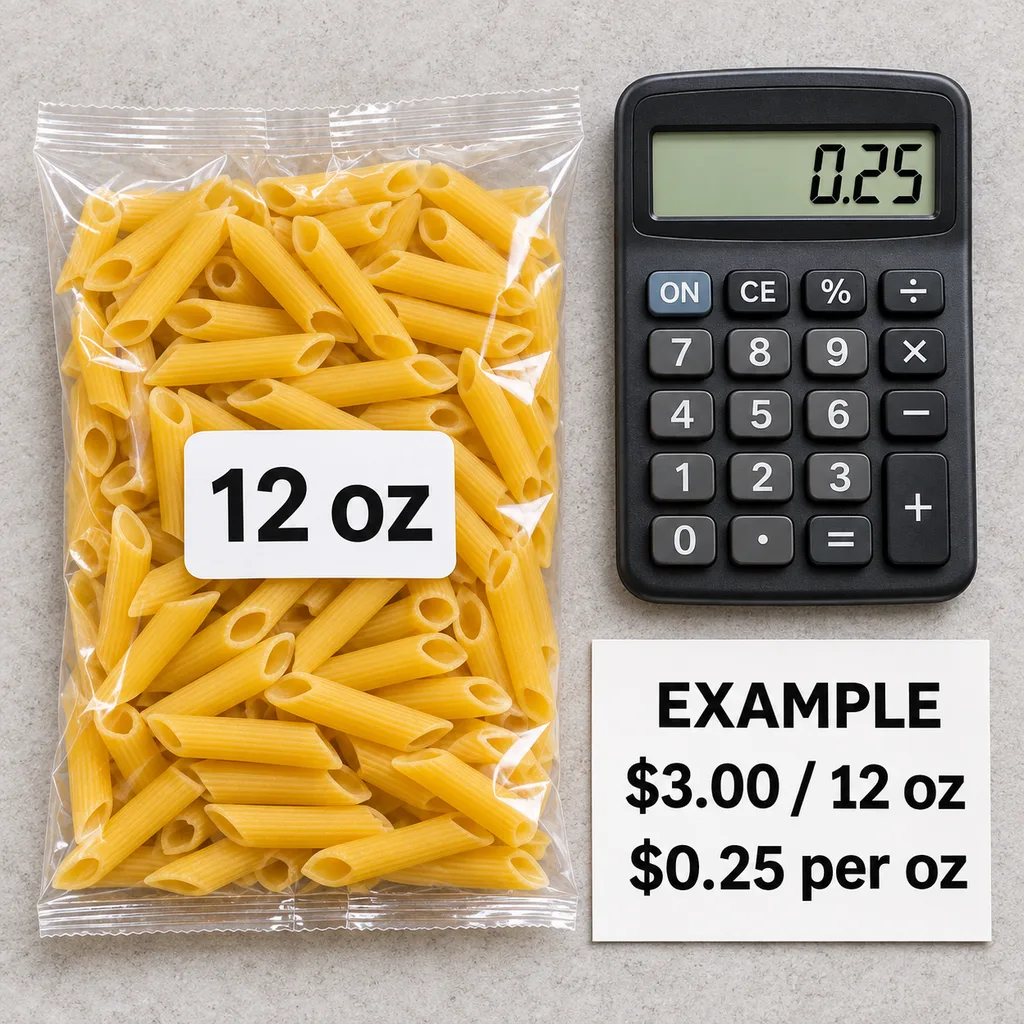
The basic calculation is package price divided by package quantity. Keep both quantities in the same unit. A phone calculator is enough; you do not need a separate shopping app.
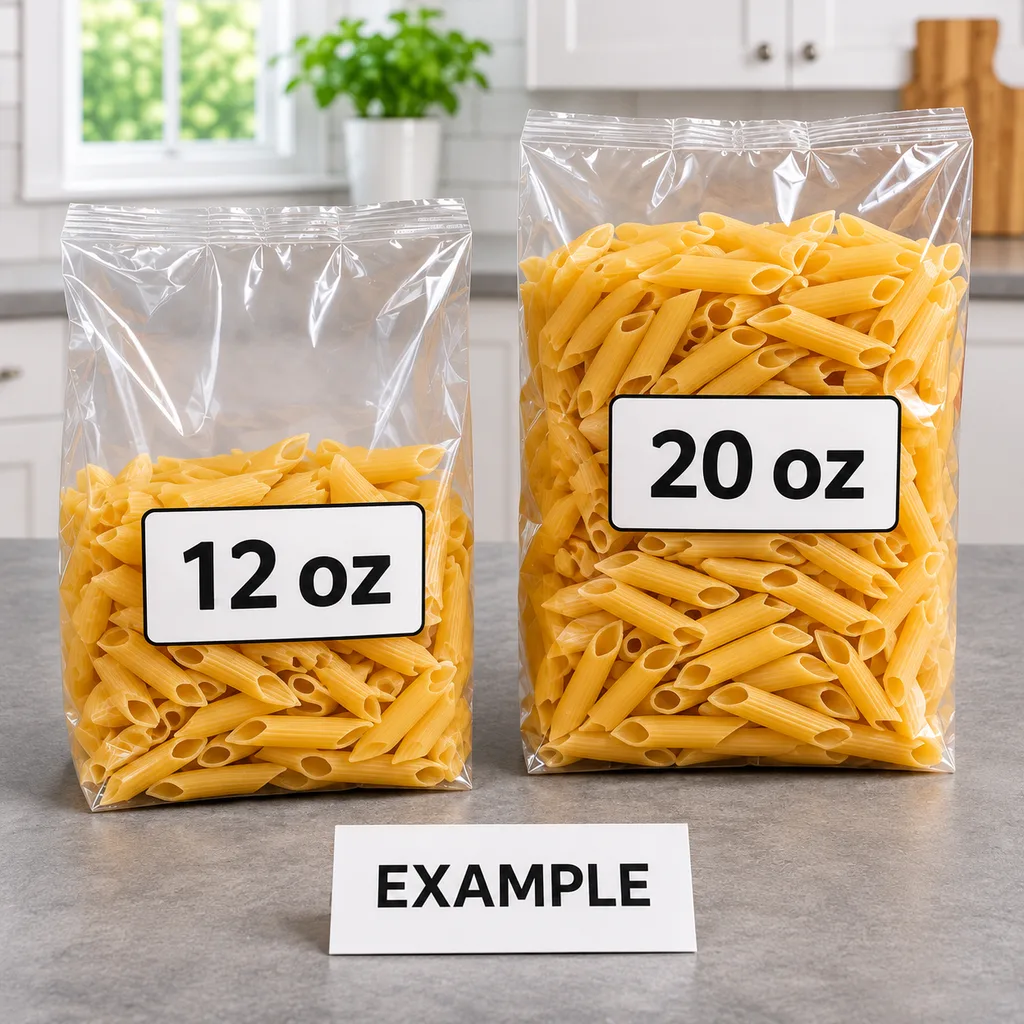
For a hypothetical arithmetic exercise, suppose a 12-ounce package costs $3.00 and a 20-ounce package costs $4.40. These are invented teaching numbers, not observed grocery prices or current offers.
- Package A: $3.00 divided by 12 ounces equals $0.25 per ounce.
- Package B: $4.40 divided by 20 ounces equals $0.22 per ounce.
- Package B costs less per ounce but requires $1.40 more at checkout.
Keep a few decimal places while calculating and round at the end. A rounded shelf figure can make two close options appear identical. If the difference is tiny, suitability and the amount needed may matter more than carrying out extra arithmetic in the aisle.
Make the units match before comparing numbers
Do not compare a dollars-per-pound figure directly with dollars per ounce. There are 16 ounces by weight in a pound. In a second hypothetical example, $4.00 per pound equals $0.25 per ounce because 4 divided by 16 is 0.25.
For weight-based packages labeled in grams, compare both per gram or both per 100 grams. If a 400-gram package has a price of P, its price per 100 grams is P divided by 4. Use the same method for the other package.
Ounces by weight and fluid ounces are not interchangeable. Compare two liquid products using the same volume unit, or two weight-labeled products using the same weight unit. Do not use a volume-to-weight conversion without ingredient-specific information.
For eggs or other count-based goods, check that size and product type suit the same use. For multipacks, multiply the number of individual packages by the amount in each package before dividing the total price.
Compare products that do the same job
Whole fruit and prepared fruit may have different amounts of usable food and different preparation requirements. Dry beans and canned beans are not directly equivalent by package ounce. Concentrated and ready-to-use products also need a different comparison.
For concentrate, calculate cost per prepared amount using the package's stated yield and directions. This is a personal cost comparison, not a replacement for the labeled net quantity. Include required additional ingredients when they affect the comparison. Do not assume that a larger package makes more prepared servings without reading the label.
Check the ingredient form in your recipe. A whole block of cheese and pre-shredded cheese may both work, but convenience, the recipe's needs, and the amount you will use can change the better choice. A low unit price for the wrong ingredient does not solve the meal you are shopping for.
Recalculate for the offer you can actually use
If a sale or coupon changes the price, divide your eligible final item cost by the quantity. Check membership requirements, purchase limits, coupon eligibility, and whether a stated multi-item price requires buying the full quantity.
Do not treat a future reward as an immediate reduction unless you deliberately account for it that way in your own budget. Keep deposits, delivery fees, and order-level charges separate so you understand what the item comparison does and does not include.
For online shopping, compare the selected sizes, not just the first search result. Substitutions can change both the package cost and unit price. Review the final quantity and charge when the order is filled.
Check the cost of food you will actually use
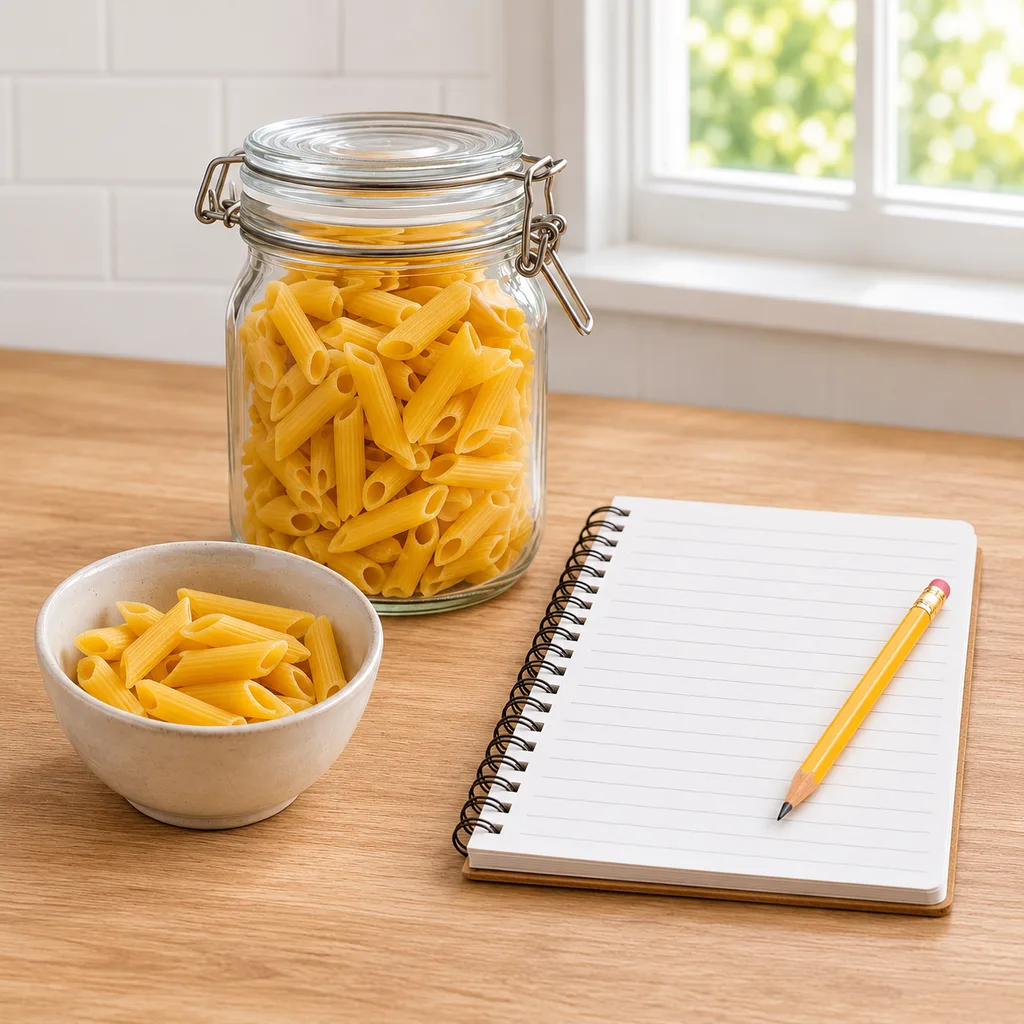
Return to the fictional 20-ounce package at $4.40. If you use only 10 ounces and discard the rest, the purchase effectively cost $0.44 for each ounce used. The lower shelf unit price did not turn into a lower cost for usable food.
Before choosing a larger size, name where the extra will go and which meal will use it. Check the storage instructions on the package and your available space. Do not buy extra simply because you hope to invent a plan later.
A smaller package may also be the practical choice when the checkout total must stay within a fixed budget. Rutgers Cooperative Extension's unit-pricing guide considers the purchase cost, whether the food will be used, and available storage. Compare both numbers: the unit price helps explain value, while the package price determines what you must pay today.
Keep a short comparison note
For regularly purchased items, record the date, store, exact product, size, unit, and any conditions on the offer. A past note is a reference point, not evidence of today's price. Update it when you shop rather than treating an old promotion as a permanent benchmark.
Keep the shopping list separate from the comparison note. The existing recipe-by-recipe Thanksgiving grocery checklist addresses what to buy; unit pricing helps choose between suitable options once that need is clear.
Use the method first on two or three familiar staples. Match the item, normalize the unit, compare the eligible price, and decide whether the quantity fits your meals. That is enough to make the shelf numbers useful without turning every grocery trip into a spreadsheet project.
Keep good recipes close
Add The Cooking Twins to your preferred sources on Google for more easy dinners, no-bake desserts and kitchen inspiration.
Emma & Ella Frost
A practical resource from The Cooking Twins.
More from Emma & Ella Frost

Comments
Leave a commentShare your question or planning tip below.