
Digital Kitchen Scale Uses for Beginners
Use a digital kitchen scale for recipe weights, one-bowl measuring, and dividing dough, with beginner troubleshooting.

By Emma & Ella FrostUpdated November 16, 2026

5-Ingredient Dump & Go Crockpot Meals
101 effortless slow cooker recipes for busy families.
View on AmazonAvailable on AmazonA digital kitchen scale measures an ingredient's weight instead of the space it occupies in a cup. It can help you follow recipes written in grams, divide a batch into similar portions, and measure several ingredients into one bowl. You do not need to convert every recipe to start using one.
The easiest first project is a recipe that already lists ingredient weights. Set the scale on a firm, level surface, select the recipe's unit, and use the zero or tare button to subtract the bowl. Then add the ingredient until the display reaches the stated amount.
Understand tare, units, and capacity first
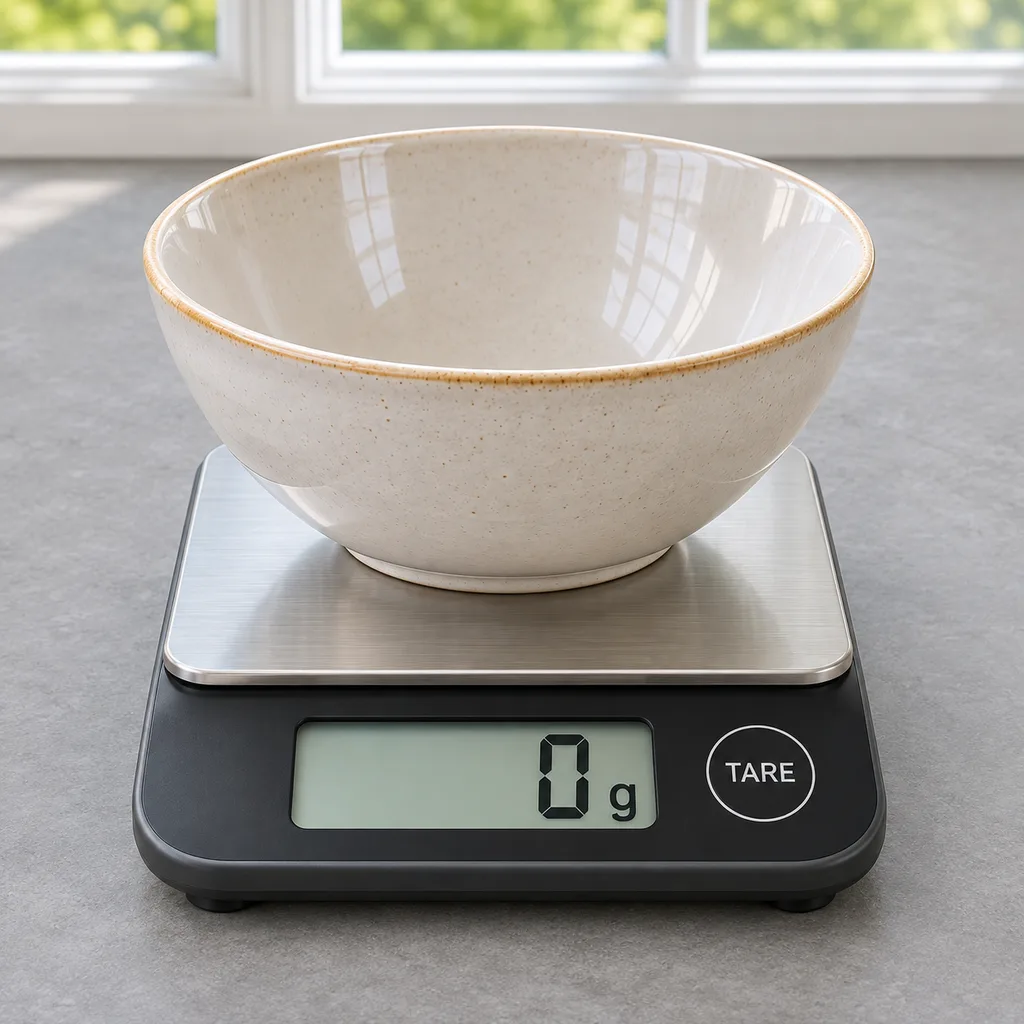
Tare resets the displayed weight after you place something on the scale. With an empty bowl on the platform, press tare and wait for zero. The next reading represents what you add, not the combined weight of bowl and ingredient.
Taring does not remove the bowl's physical load. A heavy mixing bowl still counts toward the scale's maximum capacity. Read the model's instructions for total load, minimum measurable amount, measurement increments, and automatic shutoff behavior.
Features differ. For example, Escali's Primo operating manual describes a tare function and 1-gram increments. That is a specification for that model, not a claim that every scale detects every 1-gram addition accurately. Display resolution and measurement accuracy are different things.
Use grams when a recipe gives grams and ounces when it gives ounces by weight. A fluid ounce is a volume measure, not the same thing as an ounce of weight. A liquid-volume mode should be used only as your model's instructions specify.
Use ingredient weights already supplied by the recipe
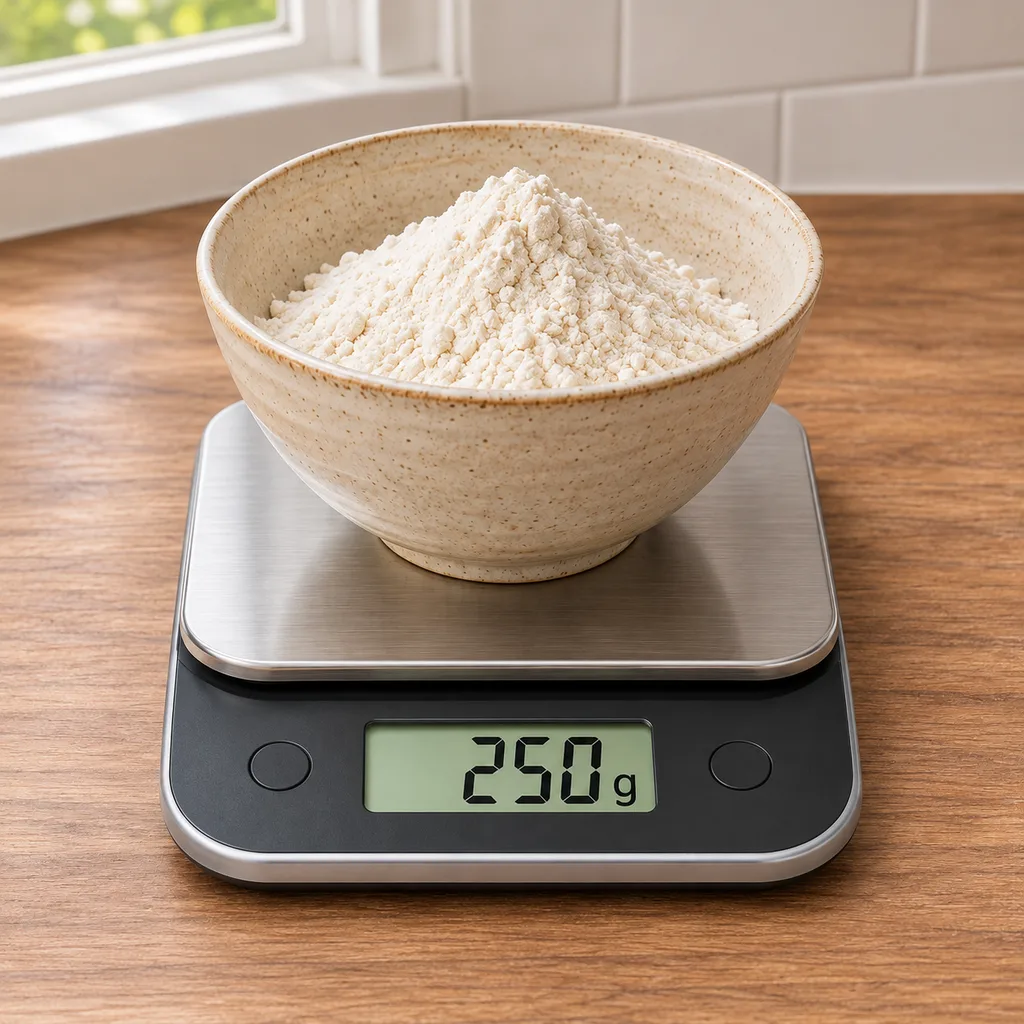
If a recipe calls for 250 grams of flour, tare the bowl, spoon in flour, and slow down as you approach 250. Add the last few grams with a small spoon. Do not press the bowl downward while measuring or let it touch a nearby appliance.
A cup of flour does not have the same weight as a cup of sugar. Even flour can pack differently depending on how it is scooped. Use the recipe developer's weight for the ingredient rather than a universal cups-to-grams rule.
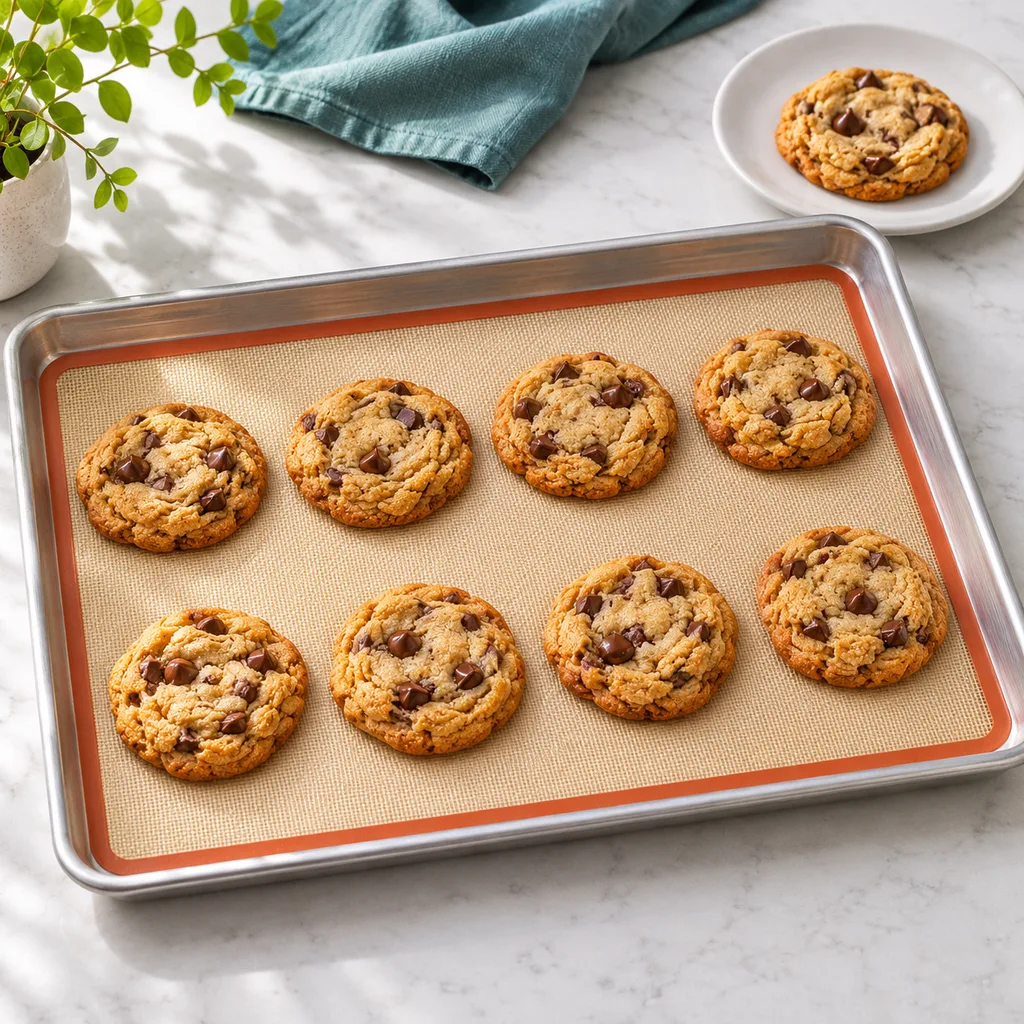
For a recipe such as a single chocolate chip cookie, check which ingredients have supplied weights before choosing your scale. Very small quantities may be below a general kitchen scale's useful range. Keep the specified measuring spoons for those amounts instead of trusting a display that barely changes.
Add several ingredients to one bowl
Weigh the first ingredient, write down the amount if needed, then tare before adding the next. This can reduce the number of measuring containers, but only when the recipe actually asks you to combine those ingredients at that stage.
- Place a bowl on the scale and tare it.
- Add the first ingredient to its stated weight.
- Confirm the reading before pressing tare again.
- Add the next ingredient slowly, repeating only for ingredients that belong together.
Do not combine flour, melted butter, and eggs simply because one-bowl weighing is convenient. Mixing order still matters. For an ingredient that is easy to overpour, weigh it in a separate small cup first. You can remove extra from the cup without trying to separate it from the rest of the batter.
Divide dough, batter, and fillings more evenly
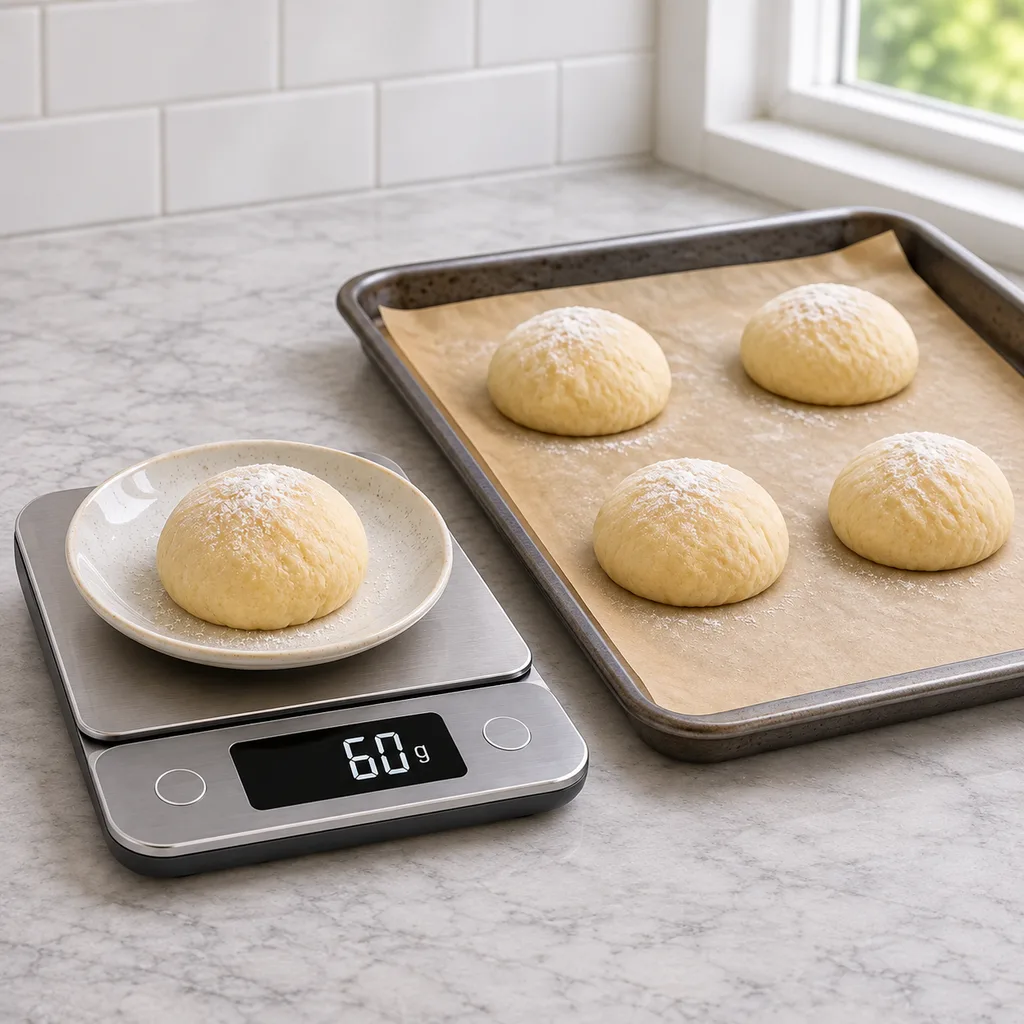
A scale is useful when a recipe says to divide something into equal pieces. As an arithmetic example, a 720-gram batch divided into 12 portions gives a target of 60 grams each. Those numbers describe a hypothetical batch, not a tested recipe or a required serving size.
Set a small plate on the scale, tare it, and weigh one portion at a time. For sticky dough, use a recipe-appropriate scraper rather than handling the scale buttons with coated hands. Keep the scale outside the messiest part of your work area.
For cake layers, weigh batter into the pans separately and compare the amounts. Equal batter weights help you divide the batch, but they do not guarantee identical baking results. Pan material, oven position, and the recipe's instructions still matter. Do not put a hot pan on a scale unless its manufacturer explicitly allows it.
Scale a recipe with arithmetic, not guesswork
For a recipe with ingredient weights, multiplying every ingredient by the same factor gives a starting ingredient list. Half of 300 grams is 150 grams; one and a half times 300 grams is 450 grams. Write out the revised list before starting so you do not halve only some ingredients.
That calculation does not validate a new pan size or cooking time. A half batch spread in the original pan may be much shallower. Eggs, leavening, cooking vessels, and technique can complicate scaling, so use the recipe's own smaller-batch guidance when available.
Weighing can also help divide a filling between tortillas or portion grated cheese between two dishes. Treat these as kitchen organization tasks, not dietary prescriptions. Choose portions that fit the recipe and the people eating it.
Know when another tool is better
A measuring spoon may be more appropriate for a tiny amount of yeast or spice than a scale with coarse increments. A liquid measuring cup remains useful for recipes written by volume. A food thermometer answers a temperature question that a scale cannot answer.
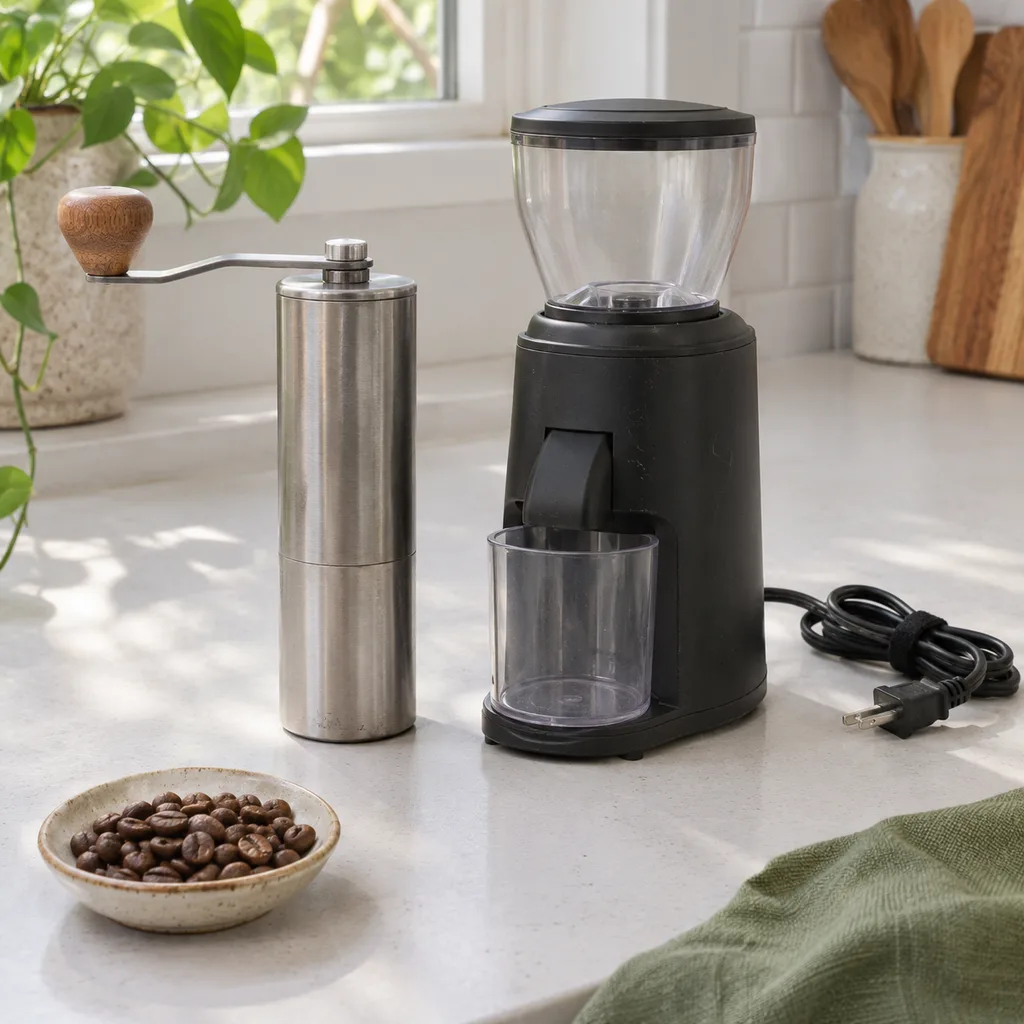
For coffee, weighing beans can help you repeat the amount you prefer. Follow your brewer's directions for water amounts and operating steps. A general kitchen scale may lack the speed, small-quantity sensitivity, or timer features you want for some brewing methods.
Troubleshoot the reading before changing the recipe
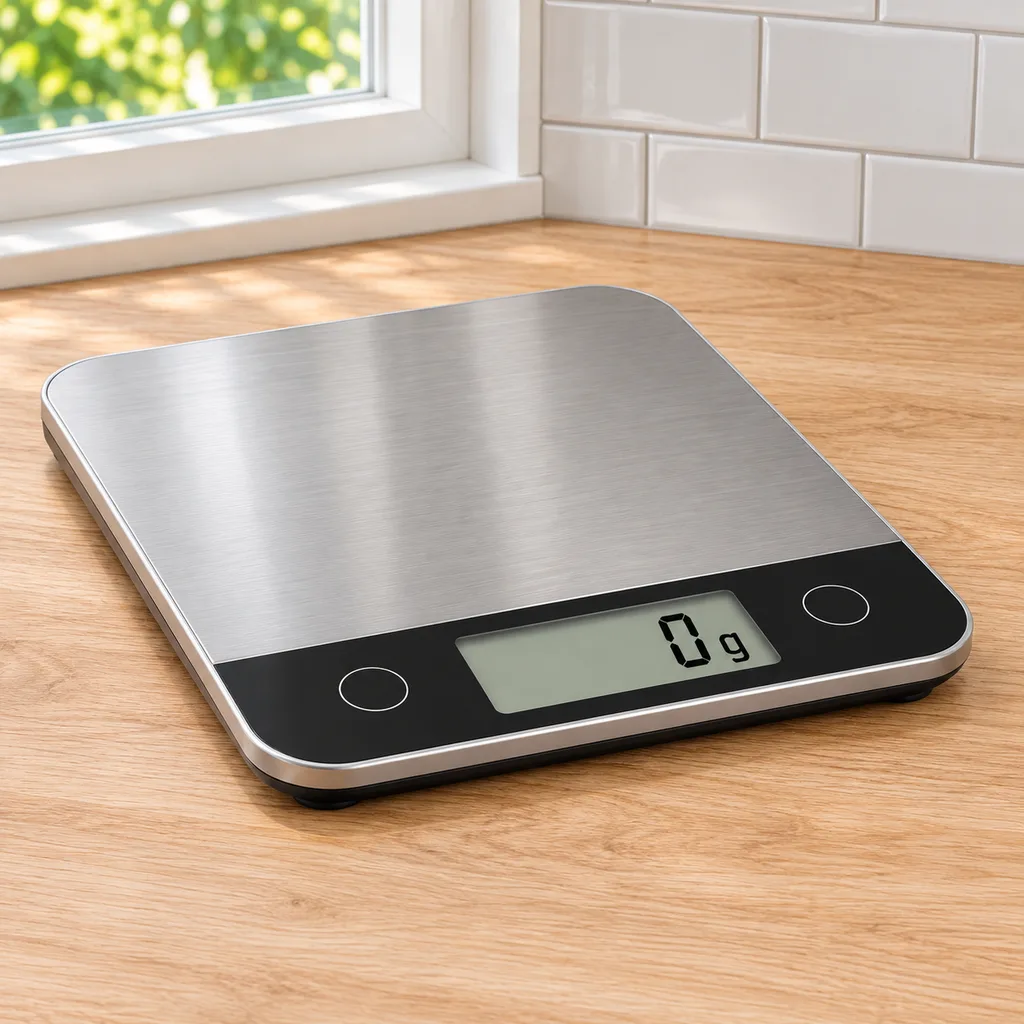
If numbers drift, move the scale to a firm surface and check that nothing touches the bowl. Confirm the unit, battery condition, and the model's setup instructions. Never use an arbitrary coin or pantry package as a certified calibration weight.
If the scale shuts off midway, do not guess the lost total. Use notes from the completed ingredients where possible and consult the manual about its timeout. For longer pauses, weighing ingredients separately can be easier to recover from.
Clean according to the manufacturer's instructions; do not assume the electronic base can be submerged or placed in a dishwasher. Start with one familiar task, learn how the buttons behave, and keep the recipe's original measurements visible beside you.
Keep good recipes close
Add The Cooking Twins to your preferred sources on Google for more easy dinners, no-bake desserts and kitchen inspiration.
Emma & Ella Frost
A practical resource from The Cooking Twins.
More from Emma & Ella Frost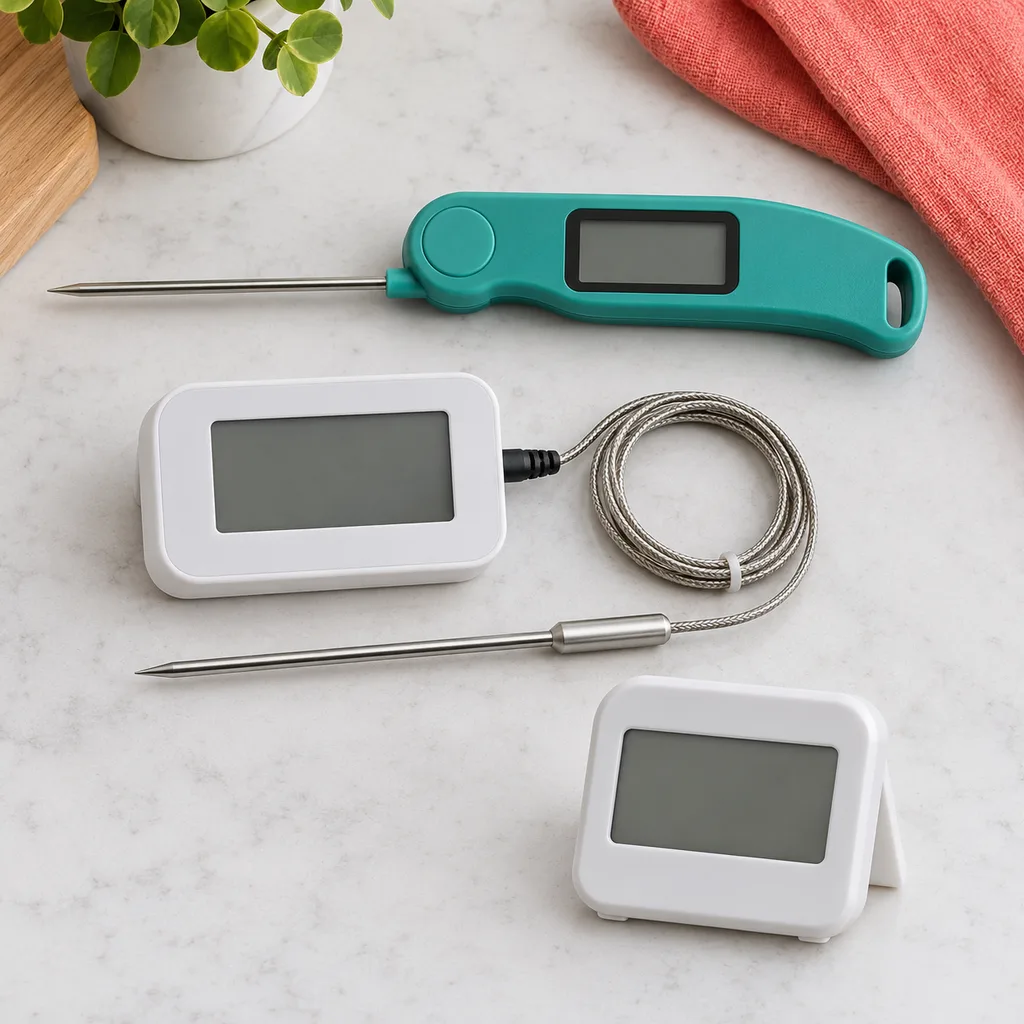
Comments
Leave a commentShare your question or planning tip below.