
Kitchen Thermometer Types and Uses: Food, Oven or Fridge?
Choose the right kitchen thermometer category: instant-read food probes, permitted leave-in tools, oven thermometers and refrigerator or freezer monitors.

By Emma & Ella FrostUpdated November 16, 2026

5-Ingredient Dump & Go Crockpot Meals
101 effortless slow cooker recipes for busy families.
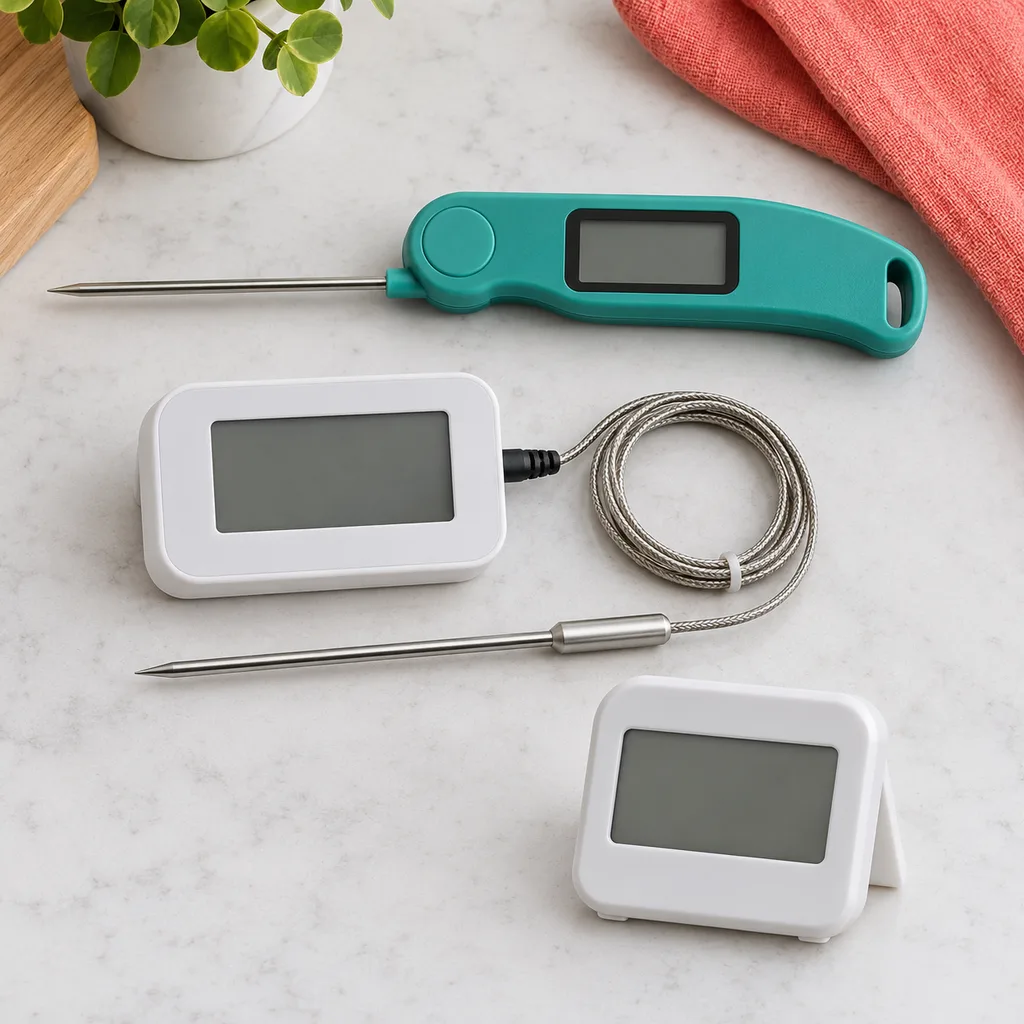
View on AmazonAvailable on AmazonKitchen thermometers measure different things. A food probe checks the food at its sensing area; an oven thermometer monitors the oven environment; a refrigerator or freezer thermometer monitors its intended storage environment. Start with the measurement you need, then choose a product documented for that job.
Even food probes differ. An instant-read check and a thermometer designed to remain in food during cooking are not interchangeable uses. This guide helps identify the categories and the questions to check in a manual. It does not provide a cooking-temperature chart, insertion procedure or calibration instructions.
Instant-read food thermometers are for a check
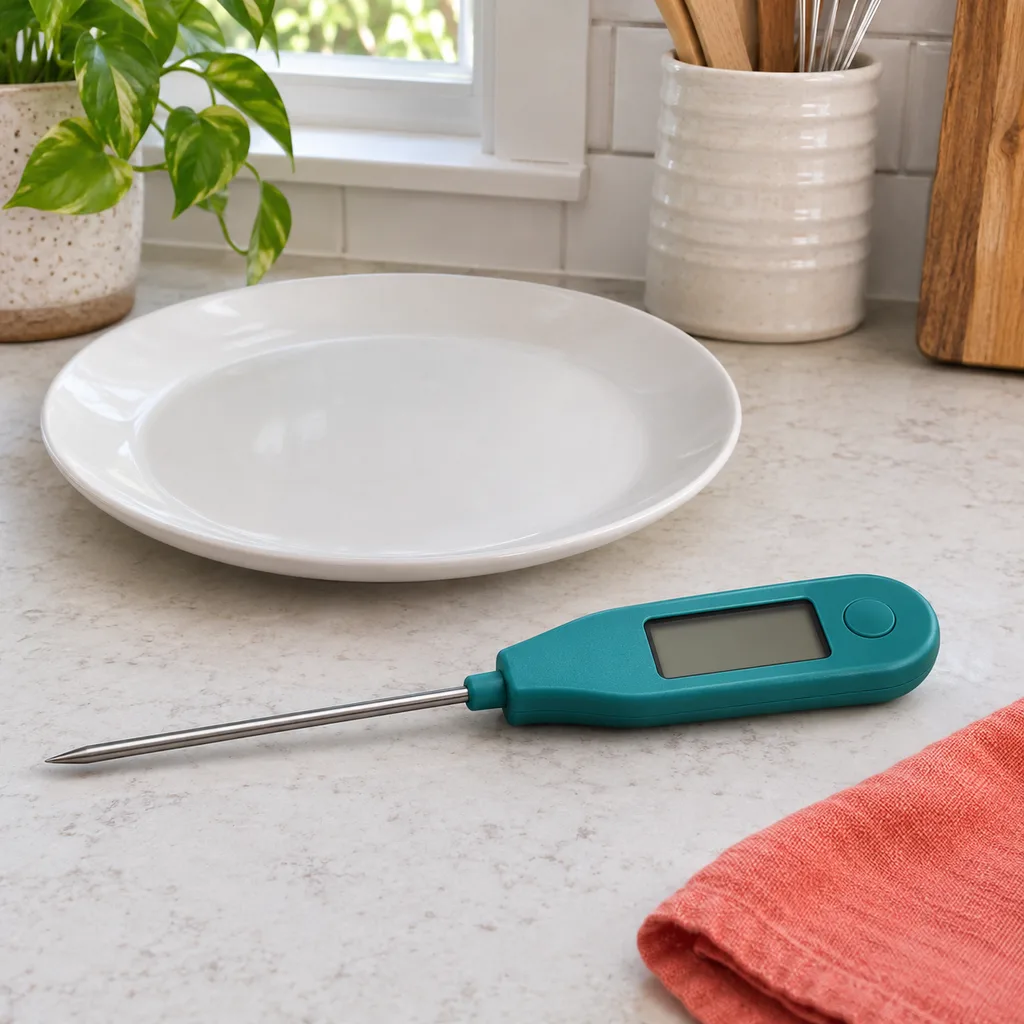
Instant-read food thermometers may have a digital display or a dial. Their job is to check food temperature rather than stay in the oven throughout cooking. NC State Extension's selection guide distinguishes thermistor, thermocouple and bimetal instant-read types from oven-cord thermometers.
The sensor technology and the display style are different pieces of information. A digital screen alone does not tell you the required insertion depth, response time or whether the instrument can remain in an oven. Find those requirements for the actual model before using it.
For your own cooking, list the foods you expect to check and compare them with the product's documented intended use. A probe that suits one situation is not automatically suitable for every thin food, deep vessel or cooking environment.
Leave-in food thermometers need explicit permission
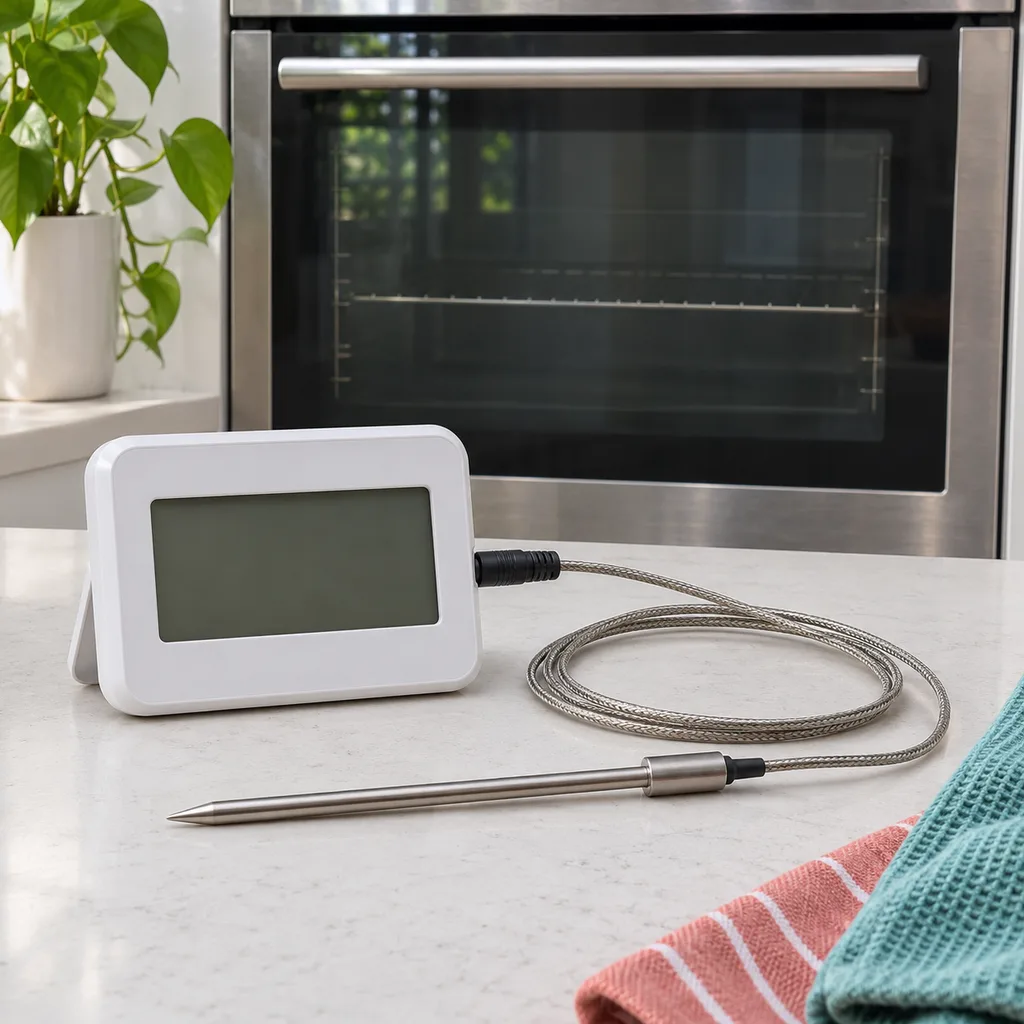
A leave-in food thermometer is intended for monitoring during cooking when used as specified. In an oven-cord arrangement, a probe connects by a cable to a reader that stays outside the oven. That is a different setup from putting an entire handheld instant-read thermometer into the oven.
Check which parts can enter the cooking environment, the permitted conditions and the instructions for the cable or connection. Do not infer oven permission from a stainless appearance or the presence of a digital display.
An alert setting also needs the correct food-specific target. The fact that a device can sound an alarm does not establish that a chosen temperature is appropriate. Use current food-safety guidance and the actual food's instructions, not an unverified preset name.
An oven thermometer measures the oven, not the meal
A standalone oven thermometer monitors temperature inside the oven environment. It does not replace a food probe when the question is the food's internal temperature. KitchenAid's thermometer care guidance makes that distinction and separately describes quick-read and leave-in uses for its products.
Identify the purpose before buying a similar-looking dial. A dial on a metal food stem and a dial designed to stand or hang in an oven may answer different questions. Confirm the product description and manual rather than treating every round display as the same tool.
Follow the actual appliance and thermometer placement directions. A comparison of categories cannot establish a universal position, a heating-cycle interpretation or a method for adjusting an oven.
Refrigerator and freezer thermometers monitor storage
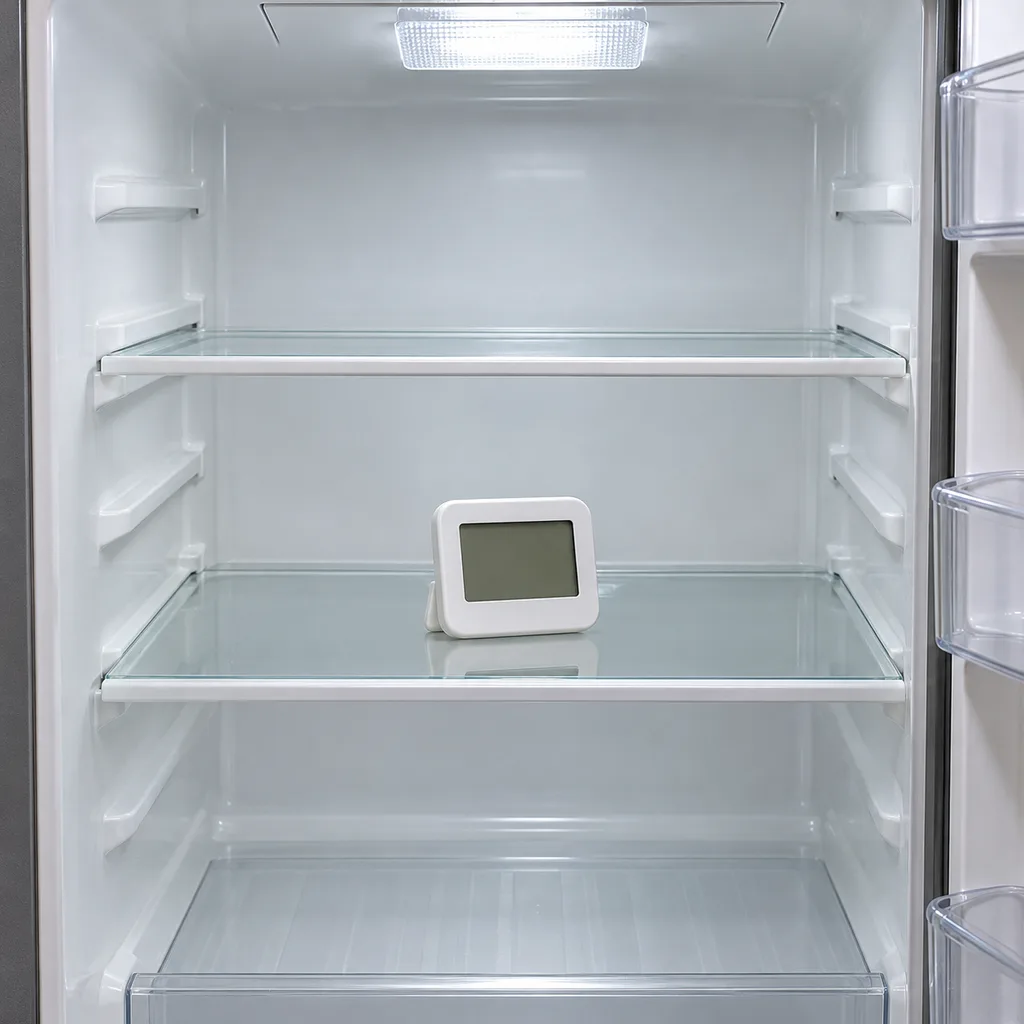
Use an appliance thermometer intended for the refrigerator or freezer when you need to check that environment. The FDA's food-storage guidance recommends appliance thermometers and regular temperature checks. Its full guidance supplies the applicable storage recommendations.
Keep an environmental reading separate from a food-probe reading. Measuring one item's temperature answers a different question from monitoring the appliance environment. Likewise, a control setting and an independent thermometer reading are not the same kind of information.
Record what was measured and when if you keep a household check log. A current reading alone is not a complete history of what happened to food during an outage or equipment problem. Use the appropriate complete food-safety guidance for those situations rather than guessing from the present display.
Compare specifications that answer your actual question
For each candidate, write the intended measurement first: food check, permitted leave-in monitoring, oven environment or cold-storage environment. Then find its documented measuring range, sensing area, accuracy information and operating conditions.
Do not confuse the smallest display increment with the stated accuracy. Keep the manufacturer's accuracy specification attached to the exact model rather than copying a tolerance from a similar-looking instrument.
Check whether the controls, display and instructions work for the person using them. A readable screen is useful, but it does not compensate for selecting the wrong measurement category. There is no universally best thermometer based only on the number of advertised features.
Keep identification and care information with the tool
Save the model name and instructions where you can retrieve them before cooking. Check the maker's cleaning, storage, battery and adjustment directions; do not assume that all probes, screens or dial housings tolerate the same treatment.
If you already have a food thermometer and need to assess its reading, use the separate guide to checking a meat thermometer. It addresses a reference check and the next decision, rather than replacing this choice between tool categories.
Finish with a clear label in your equipment record: what this thermometer measures and the manual that governs its use. That small distinction helps prevent an oven reading from being mistaken for a food reading, or an instant-read device from being treated as a leave-in instrument.
Keep good recipes close
Add The Cooking Twins to your preferred sources on Google for more easy dinners, no-bake desserts and kitchen inspiration.
Emma & Ella Frost
A practical resource from The Cooking Twins.
More from Emma & Ella Frost
Comments
Leave a commentShare your question or planning tip below.