
How to Choose Fridge Organizer Bins That Fit Your Routine
Choose fridge organizer bins by usable dimensions, intended use, retrieval and care. Check the real packages and refrigerator before buying a matching set.

By Emma & Ella FrostUpdated November 16, 2026
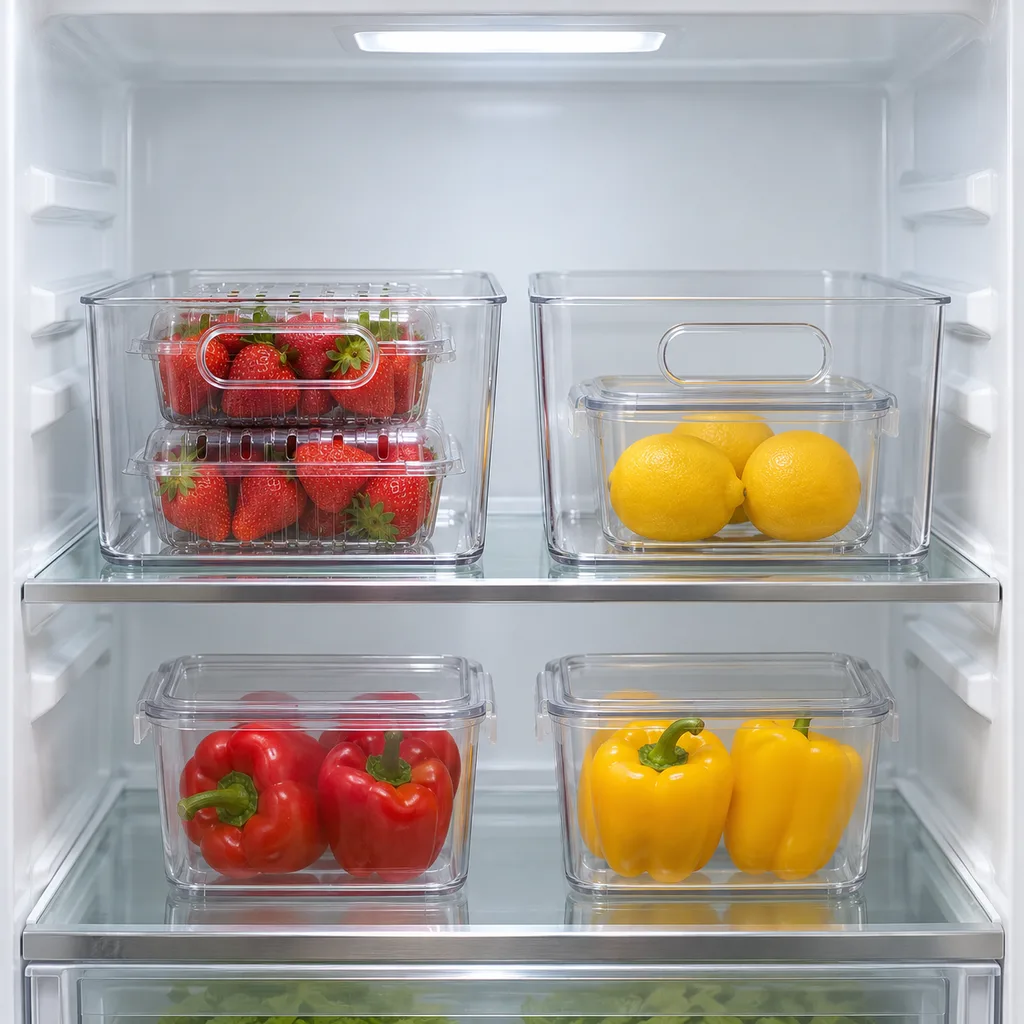

5-Ingredient Dump & Go Crockpot Meals
101 effortless slow cooker recipes for busy families.
View on AmazonAvailable on AmazonA fridge organizer bin is useful when it makes a familiar task easier: finding a package, retrieving several related items, or putting groceries away. It is less useful when it fits the shelf but blocks the drawer below, hides the food behind it, or becomes too heavy to remove comfortably. Choose the job first and the container second.
To choose fridge organizer bins, check the usable opening, the packages you actually store, the way you reach them, and the cleaning instructions. This is a compatibility guide, not a ranking of brands or a promise that a clear box will keep food fresh for longer.
Give the bin one specific job
Choose a repeated problem rather than a visual theme. You might want to retrieve several small closed packages together, keep a particular household member's supplies recognizable, or prevent a frequently used item from disappearing behind taller containers. Describe that problem before looking at sets.
An organizer holding products that are never used together may simply add a box to lift. A broad breakfast category is helpful only if its actual contents and storage requirements make sense together. Keep each product's directions in control of where and how it is stored.
Start with the original packages. Check their shapes with the lids or closures in place, not just the empty space they seem to occupy. A bin does not need to hold everything in a category, and the entire refrigerator does not need to use the same system.
Measure the opening and the movement needed to use it
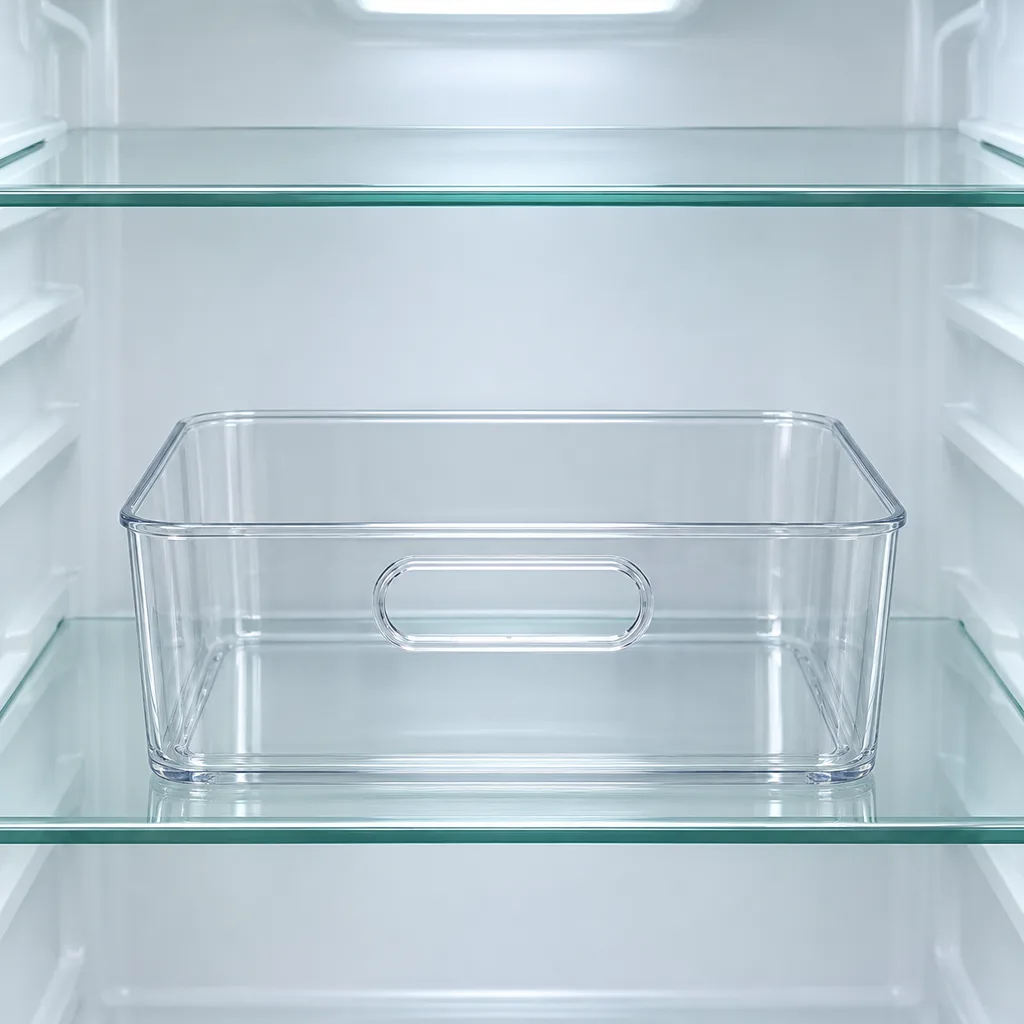
Check the shelf's usable width, depth, and space above. Account for door shelves, hinges, drawer fronts, supports, and anything that changes the path into the refrigerator. Follow the appliance instructions rather than moving a component simply because it obstructs a proposed organizer.
Compare the bin's outside dimensions, including projecting handles, with that opening. Compare its inside dimensions with the packages. A tapered bin can occupy more shelf space than its usable base suggests, and a stated capacity does not tell you whether your usual package will stand inside it.
Try a clean empty bin before putting food in it. Can you remove it without striking the door or lifting the shelf above? Does a drawer still open normally? A fit check should include those movements, not just whether the object can be placed on the shelf.
Do not empty the whole fridge for a long sorting exercise. Keep perishables appropriately refrigerated while you plan and work in a manageable area. The measurement habit is similar to the opening-and-reach checks in our small-kitchen organization guide, but refrigerator instructions and food-storage requirements add their own constraints.
Distinguish an outer organizer from a food container
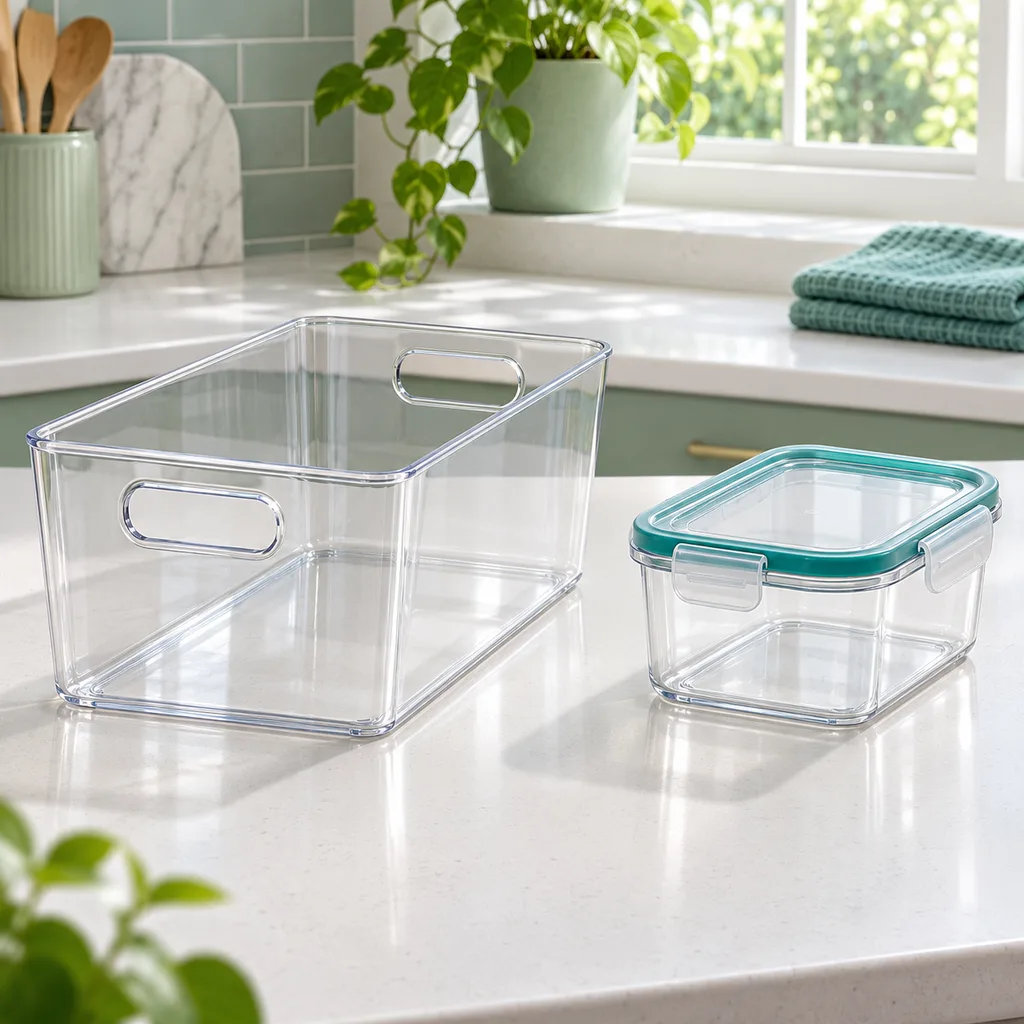
An open handled bin may be intended to group packages. That does not automatically make it a container for loose food, a sealed storage box, or a leakproof barrier. Read the manufacturer's stated use rather than judging by its transparent appearance.
If food will touch the container directly, verify that the exact product is intended for that contact and the conditions involved. Check whether it has a suitable closure and whether the food's own directions permit that storage method. A craft organizer that looks identical is not an interchangeable choice.
Keep original labels, storage instructions, and identifying information available. Do not remove packaging just to create matching rows. A clear outer bin can sometimes group closed packages while leaving their information intact; our guide to clear pantry containers explains that distinction for pantry foods. Refrigerated items still need their own appropriate conditions.
Keep raw foods and ready-to-eat foods appropriately separated. An organizer does not replace the packaging and handling measures the food requires, and a hand opening is not a seal. Do not assume that any box will contain a leak.
Check retrieval with the amount you will actually store
A bin that feels manageable when empty may become awkward when filled. Check its stated intended use and load limits, along with the refrigerator shelf's requirements. Avoid turning a convenient handle into permission to overload either item.
Think about who uses the shelf. A large deep bin may suit someone who can lift it easily but make another household member's routine harder. Several smaller groups can be an alternative, provided they do not create more crowding or unnecessary layers.
Before choosing a lidded organizer, consider whether opening it will require removing another object. Do not stack unrelated bins unless the products are intended for that arrangement and retrieval remains practical. An impressive display is not useful if reaching one package means taking out the rest.
Leave access to controls, vents, and other components as the appliance instructions require. Do not invent a universal clearance measurement. The exact refrigerator and organizer determine the relevant fit checks.
Choose a bin you can remove and clean
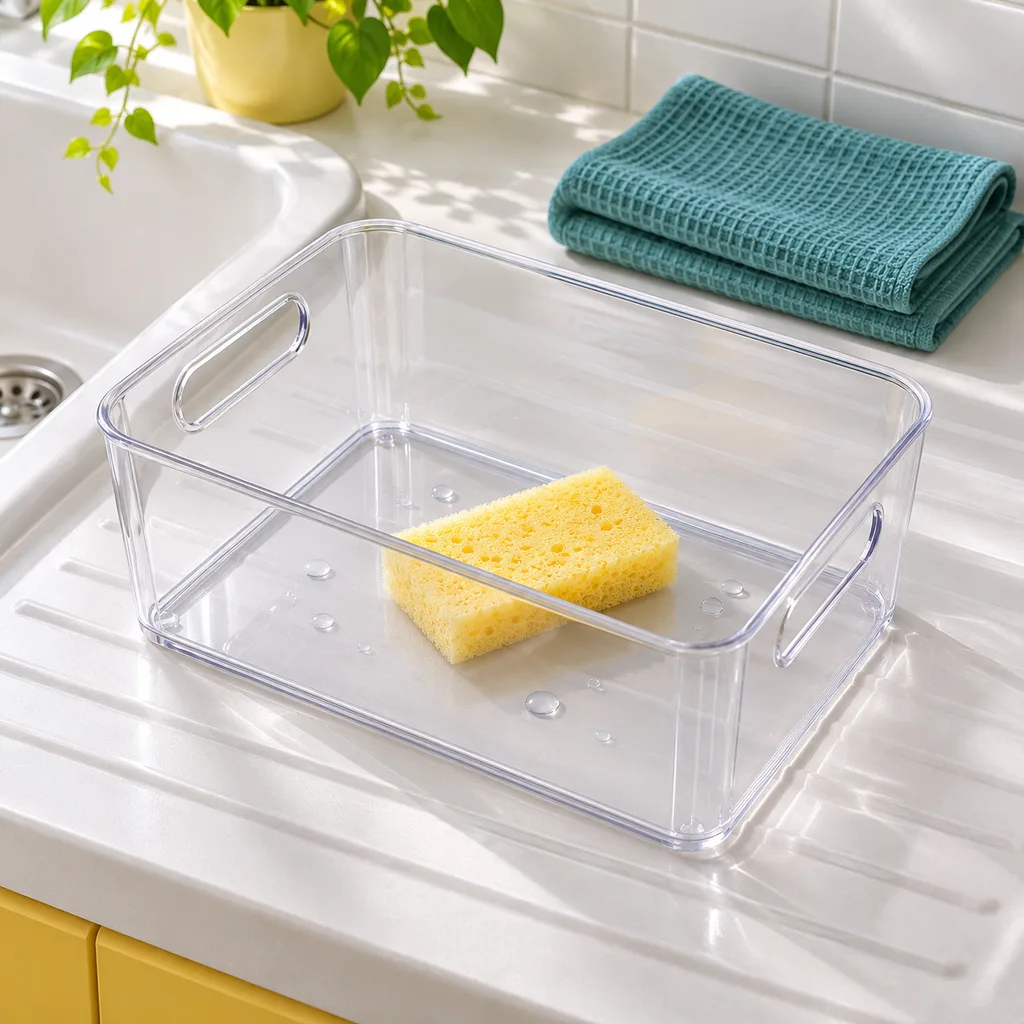
Read the care directions before buying. Check whether hand-washing is required, what cleaning products are permitted, and whether the bin can be placed in a dishwasher. The answer for one transparent container does not establish the answer for another.
Look at the actual construction: handles, corners, seams, and removable parts. Can you reach those areas using the permitted cleaning method? A simple shape may fit your routine better than a complicated organizer with parts you do not want to maintain.
Plan where the bin will be cleaned and dried, and how its contents will remain under appropriate storage conditions during that work. Follow the care instructions rather than using a very hot wash, abrasive tool, or chemical mixture based on appearance alone.
Do not use an outer bin to hide a spill or a damaged package. Remove the cause and follow appropriate food and appliance guidance. A clean-looking container is not proof that the food inside has been handled correctly.
Keep refrigeration separate from organization
The FDA's food-storage guidance advises maintaining the refrigerator at or below 40 F, checking with an appliance thermometer, and avoiding crowding that prevents air circulation. Follow product storage directions and keep foods appropriately covered and separated. A bin does not replace those measures.
Do not use the color or neatness of an arrangement to judge its temperature. A photograph cannot show the food's handling history or establish that an appliance is operating correctly. If the storage conditions are uncertain, resolve that issue before treating the shelf as a styling project.
Likewise, this guide does not assign a shelf life to produce, leftovers, or opened packages. A new lid or organizer does not extend the food's stated storage requirements. Use food-specific authoritative guidance when deciding whether an item remains suitable.
Try one bin before committing to a set
Keep the first purchase limited to the problem you identified. A suitable organizer you already own may be enough if its intended use, dimensions, condition, and care instructions fit the task. You do not need to replace a working original package to make the shelf look uniform.
After ordinary use, ask whether the right product is easier to find, whether another person can put it back, and whether the bin itself returns to the correct place. If it repeatedly sits on the counter because lifting it is awkward, reconsider the size or the grouping.
Let shopping needs determine what goes inside rather than buying extra food to fill empty space. The inventory-to-shopping decision checklist provides a separate planning method; a refrigerator record should be maintained separately and never treated as a safety inspection.
Before keeping another bin, check five things: a clear purpose, compatible dimensions, appropriate intended use, manageable retrieval, and a care routine you can follow. When those fit your household, a small number of organizers can be more useful than a fully matched refrigerator.
Keep good recipes close
Add The Cooking Twins to your preferred sources on Google for more easy dinners, no-bake desserts and kitchen inspiration.
Emma & Ella Frost
A practical resource from The Cooking Twins.
More from Emma & Ella Frost
Comments
Leave a commentShare your question or planning tip below.