
Small Kitchen Organization Ideas That Save Space
Practical measuring, cabinet storage, counter-space, and renter-friendly organization ideas for a small kitchen.

By Emma & Ella FrostUpdated November 16, 2026

5-Ingredient Dump & Go Crockpot Meals
101 effortless slow cooker recipes for busy families.
View on AmazonAvailable on AmazonA small kitchen works better when the things you use most are easy to reach and easy to put away. The goal is not to squeeze an organizer into every opening. It is to leave enough working room to prepare dinner without moving a pile of appliances first.
Start with one crowded area, measure it, and rearrange what you already own before buying storage. A clear prep surface, a cabinet that opens fully, and a drawer that closes without catching are more useful than matching containers that do not fit your routine.
Measure the space you can actually use
Gather a tape measure, scrap paper, and a box for things that belong elsewhere. Record cabinet interior width, depth, and height, then measure the opening separately. Hinges, center dividers, shelf supports, and plumbing can make the usable space smaller than the cabinet itself.
For example, a cabinet might be 24 inches wide inside but have two narrower door openings. A rigid basket that fits the interior may not pass through either opening. Cut a paper rectangle the size of a proposed organizer and move it through the opening before ordering anything.
Check motion as well as dimensions. Open the dishwasher, oven, drawers, and neighboring doors. A cart that fits an empty corner may block the dishwasher when someone is unloading it. Write down the clearance you need rather than relying on a photograph of the room.
Give your daily cooking tools the best locations
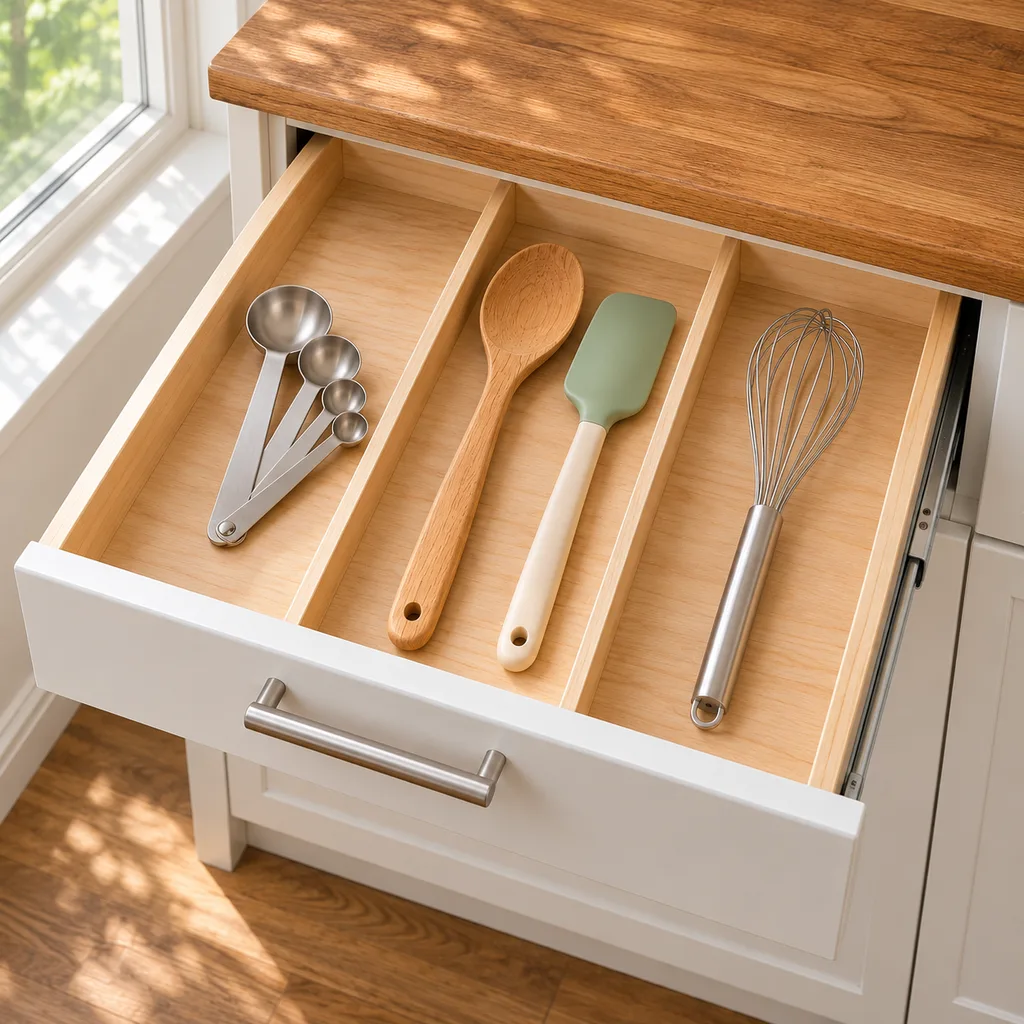
Choose a prep zone near your main work surface, a cooking zone near the range, and a cleanup zone near the sink. These do not need separate cabinets. One drawer can hold prep tools while the shelf below holds mixing bowls.
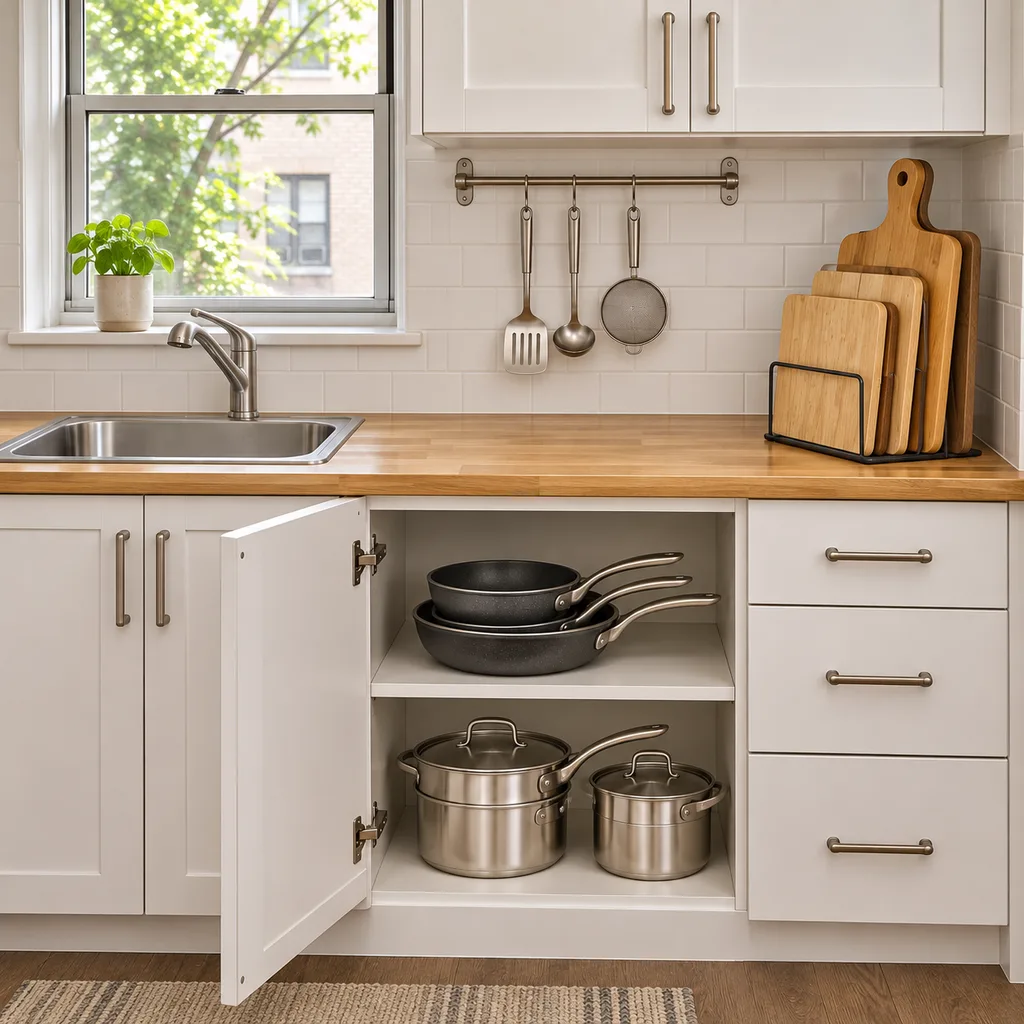
Put a cutting board, measuring tools, and the knife storage you already use within a convenient reach of prep space. Keep frequently used pans accessible without lifting several other pans first. Store infrequently used serving pieces farther away, provided their weight and your reach make that location practical.
Try a one-week exercise: place a small removable paper marker beside each tool you use. At the end of the week, the unmarked specialty tools become candidates for less convenient storage. This is a decision aid, not a reason to discard equipment needed for occasional meals.
Store flat items upright without creating a tipping hazard
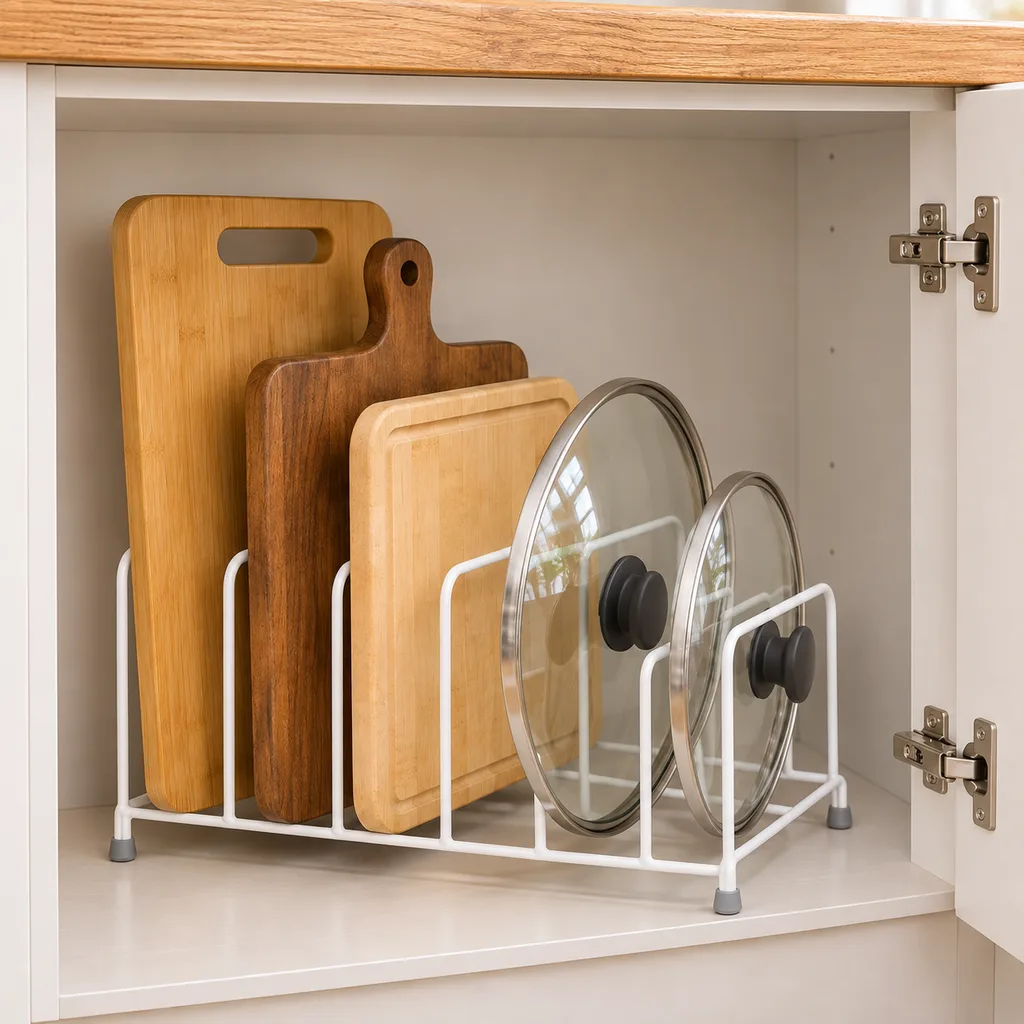
Baking sheets, cooling racks, and some cutting boards are awkward in a tall horizontal stack. A sturdy divided rack can give each item its own slot. Measure the tallest item and check that it clears the shelf above when you lift it out.
Use a rack intended for the weight and shape of those items. A lightweight desktop file sorter is not automatically suitable for heavy cookware. Place heavier pieces low and confirm that removing one tray does not pull the rack forward.
A no-purchase alternative is a shallow stack organized by size, with frequently used pieces on top. If your cabinet has an adjustable shelf, moving that shelf may solve the problem without adding another object. Keep lids paired with pans only when that arrangement makes both easier to retrieve.
Use shelf height in small, deliberate steps
A freestanding shelf riser can divide unused air above short mugs or plates. Check its load rating, depth, and stability before using it. Do not build a tower of stacked risers or put heavy dishes on an unverified support.
In a hypothetical 15-inch-high shelf opening, a short row of mugs may leave room for a second level. Test with your actual mugs: handles, tall travel cups, and the motion of lifting a mug can make a seemingly generous gap unusable.
Under-shelf baskets work best when the shelf and door can still close as intended. Check whether the mounting arms interfere with dishes above. Reserve these baskets for lightweight items within the manufacturer's stated limits; a poor fit is not improved by forcing the door shut.
Contain small things, not entire cabinets
Use one shallow tray for baking extracts and decorating supplies, another for loose container lids, and a narrow section for measuring spoons. Reuse a clean container you already own if it fits and is appropriate for the items stored.
A tray should let you see what is inside and lift it without knocking over neighboring items. Avoid a deep bin that requires emptying half the cabinet to find one small bottle. Group items by the task they serve rather than by color or package shape.
For food containers, keep a small set of compatible sizes instead of an unmatched tower. Nest only containers designed to nest and store lids upright beside them. Leave room to return a clean container without rebuilding the whole stack.
Make the counter earn its keep
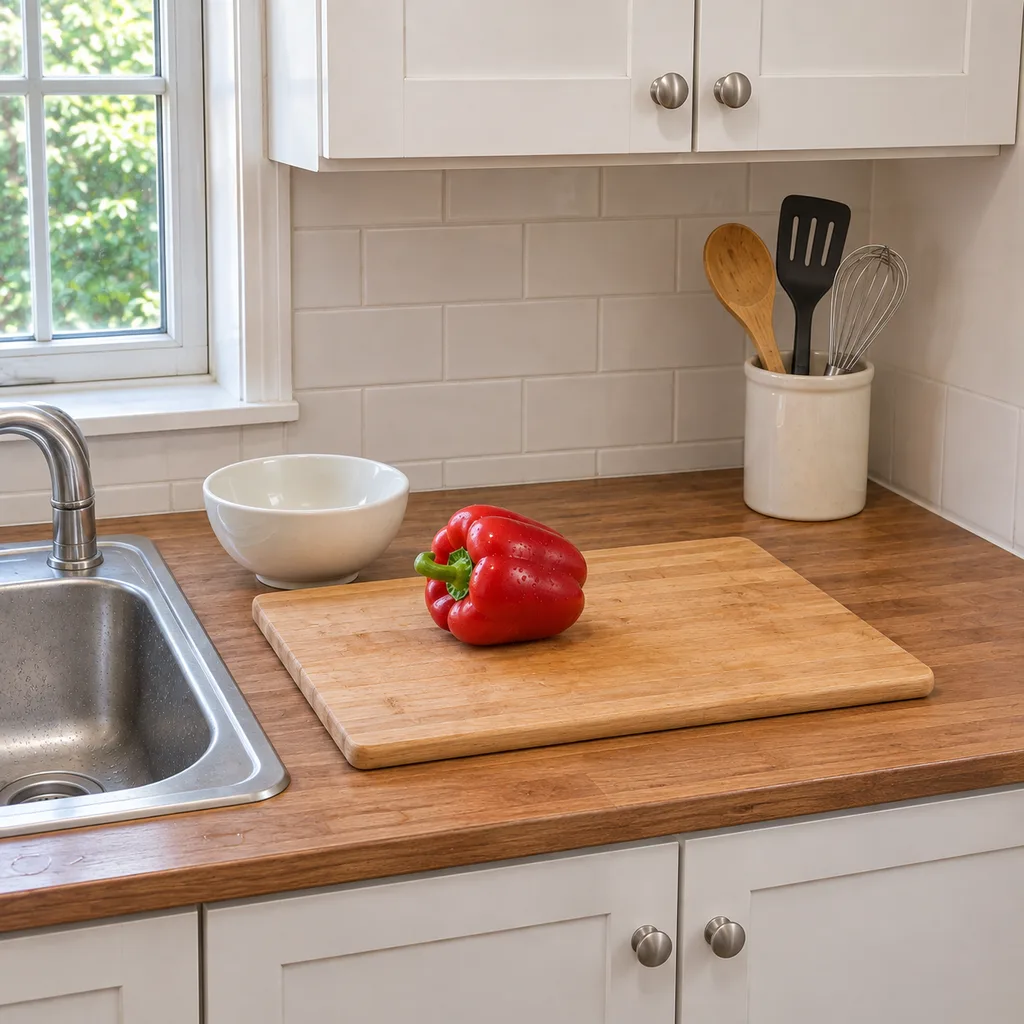
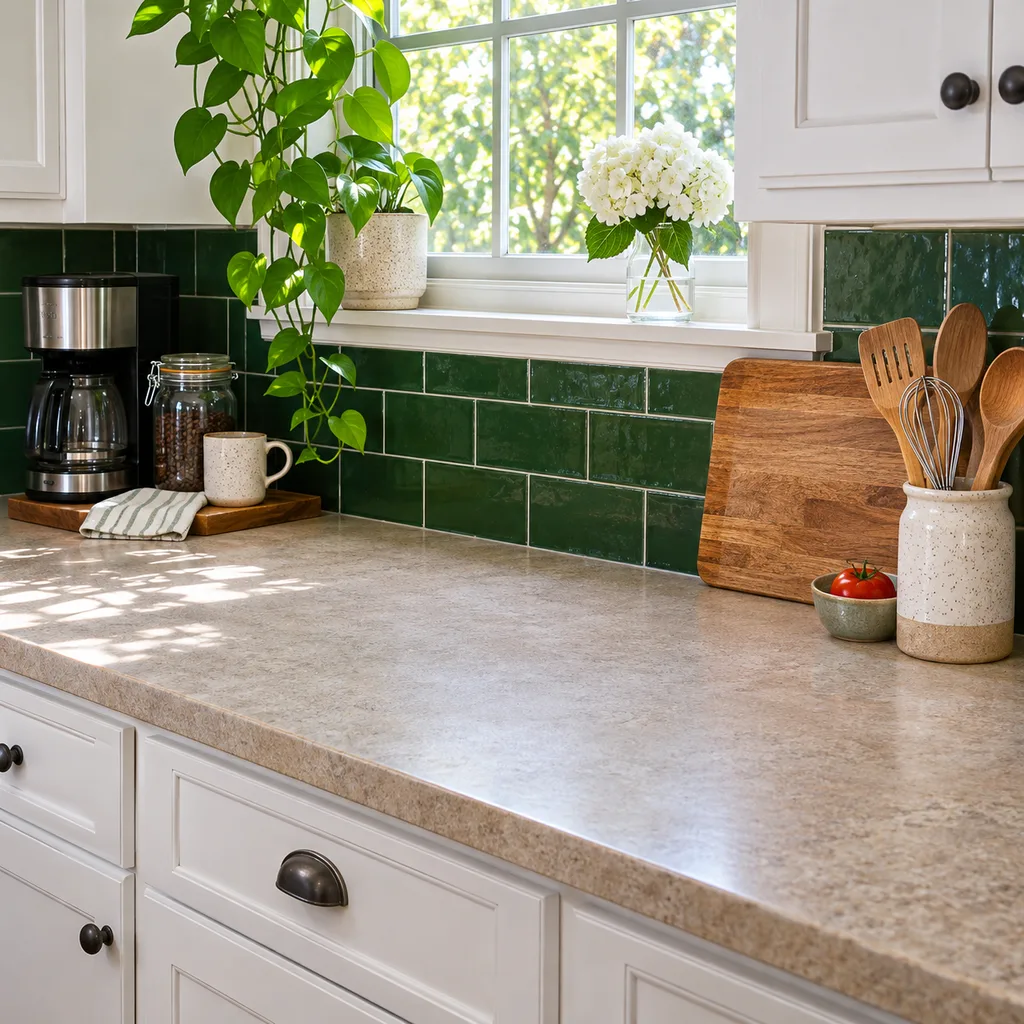
Choose one uninterrupted area for chopping and assembling meals. Move mail, decorative storage, and rarely used gadgets elsewhere first. Keep an appliance out when its frequency of use and safe operating requirements justify the space, not because every appliance needs a permanent display spot.
Follow each appliance's clearance and operating instructions. Do not assume it can run inside a cabinet, beneath a shelf, or beside a hanging towel. Storage placement and operating placement may need to be different.
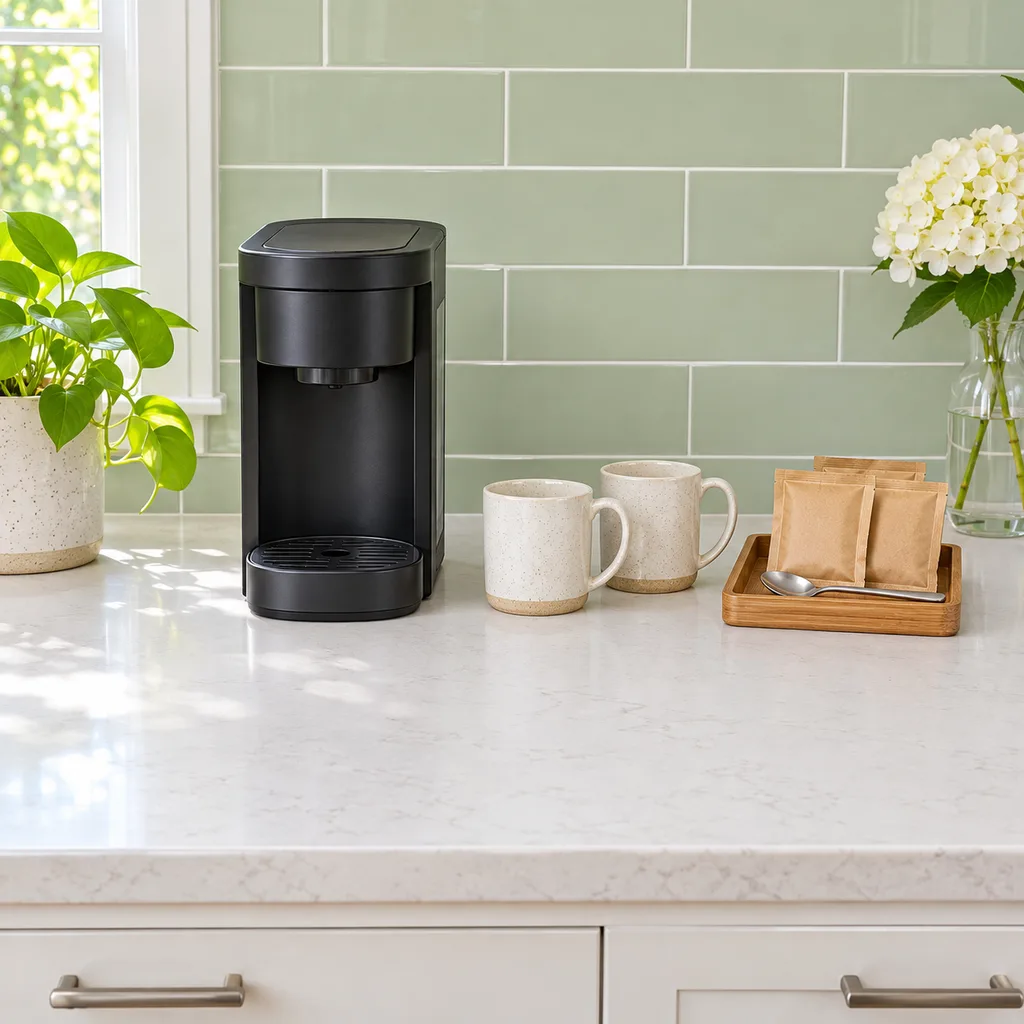
If you use a coffee maker daily but a mixer monthly, the coffee maker may deserve the accessible spot. Store the mixer where you can lift it comfortably; an overhead shelf is not a good trade for clear counters if retrieving it is difficult.
Try a renter-friendly reset before adding hardware
Adjustable dividers, freestanding racks, and rearranged shelves can change a kitchen without drilling. Door-mounted storage needs a fit check for both door thickness and interior clearance. Adhesive hooks still require surface compatibility and load checks; removable does not mean suitable for every finish.
Keep cleaning products separate from food. The FDA's food storage guidance specifically advises keeping nonperishable food away from household cleaning products and chemicals. Do not turn a convenient under-sink opening into overflow pantry space.
Keep the system easy to reset
After a week, notice what keeps landing on the counter. A frequently abandoned lid may need a closer slot; a full donation box may need to leave the kitchen. Change one problem location at a time.
Before buying another organizer, ask three questions: does it fit, can I reach everything, and can I put things back with one straightforward movement? The most useful space-saving arrangement is the one that survives an ordinary weeknight cleanup.
Keep good recipes close
Add The Cooking Twins to your preferred sources on Google for more easy dinners, no-bake desserts and kitchen inspiration.
Emma & Ella Frost
A practical resource from The Cooking Twins.
More from Emma & Ella Frost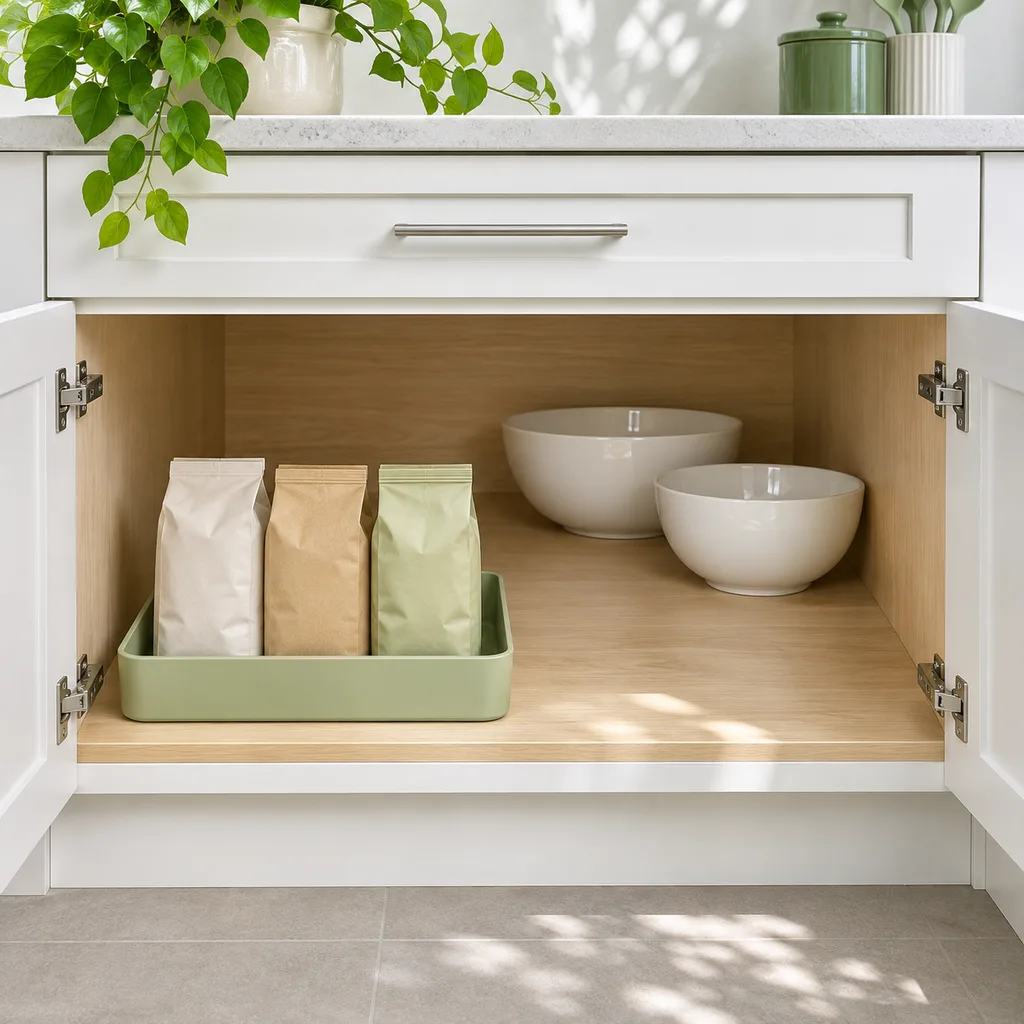
Comments
Leave a commentShare your question or planning tip below.