
Deep Kitchen Cabinet Organization Ideas: Reach the Back Without the Shuffle
Organize deep kitchen cabinets around the actual opening, front-and-back zones, removable groups and clear sightlines before buying more storage.

By Emma & Ella FrostUpdated November 16, 2026

5-Ingredient Dump & Go Crockpot Meals
101 effortless slow cooker recipes for busy families.
View on AmazonAvailable on AmazonA deep kitchen cabinet becomes difficult when the front row hides everything behind it. More containers can make that problem worse if they only create another layer to move. Start by deciding how you will reach the back, then choose what deserves to live there.
The aim is a cabinet you can use with its normal contents, not one that looks spacious only after everything has been removed. Keep the first trial small: one shelf, its actual opening and the objects that belong on it.
Measure the opening as well as the shelf
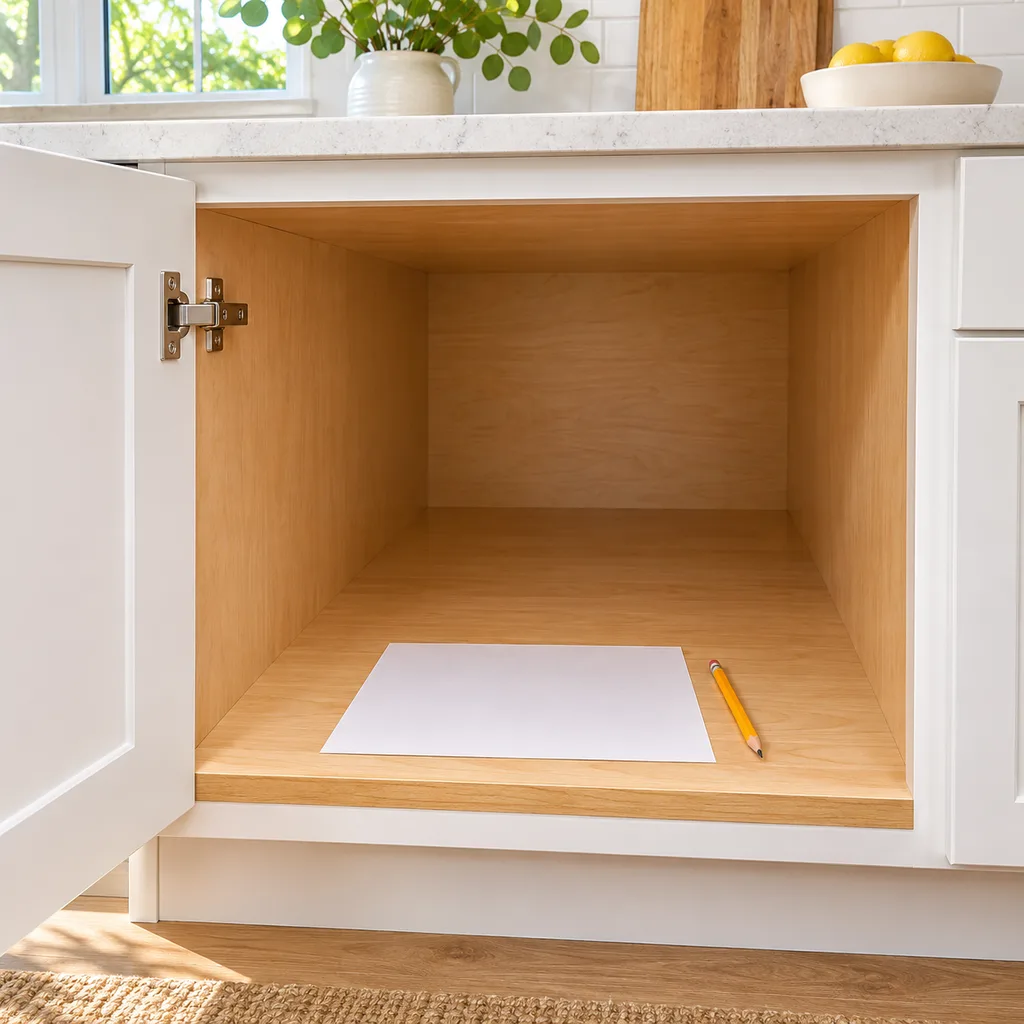
Record the usable shelf depth and width, the space above it and the clear opening through the door. Check hinges, a center divider and any projecting hardware. A bin can fit on the shelf yet fail to pass through the opening when you try to lift it out.
Put the empty container or a paper footprint in the proposed position before filling it. Allow room for your hand and for the movement needed to remove it. Do not treat a quoted product width as proof that the full retrieval motion will work.
Keep shelf and organizer load limits separate from the question of physical fit. A deep cabinet is not permission to load one large box with every heavy item. Follow the cabinet and organizer manufacturers' instructions; this layout guide supplies no universal weight limit.
Give the front and back different jobs
Use the easiest-to-reach area for items you retrieve often. Put suitable less-frequent items behind them only when you can identify and reach that second area without unstable stacking. A spare serving bowl and an unopened package require different handling, so do not make depth the only sorting rule.
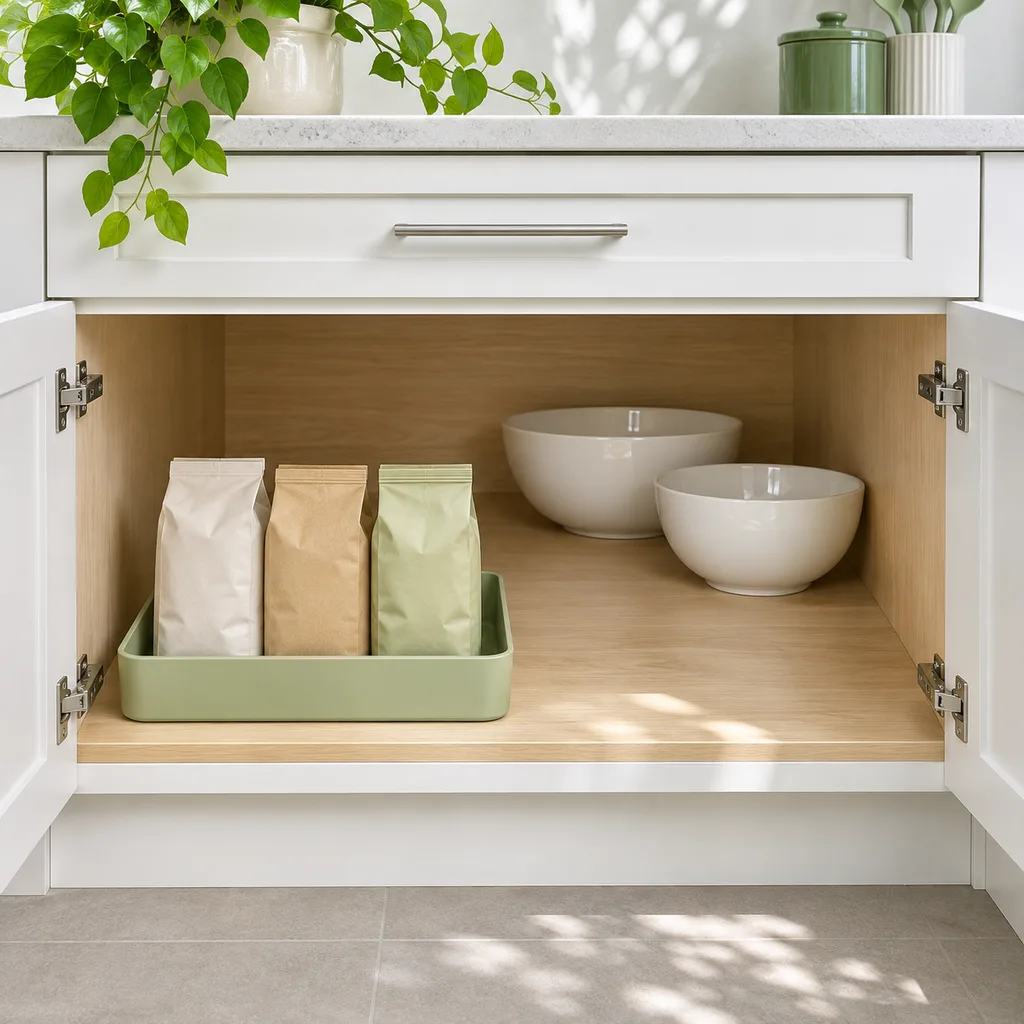
One possible arrangement is a front group of everyday baking supplies with unopened refills behind it. Another is everyday bowls at the front and an occasional serving piece farther back. These are starting points, not a prescription for what your household should own.
Keep food separate from cleaning products. FDA storage guidance advises against keeping nonperishable food near household chemicals. Moving a cleaner into a decorative basket does not make it an appropriate neighbor for flour or snacks.
Use a removable group when it solves the reach problem
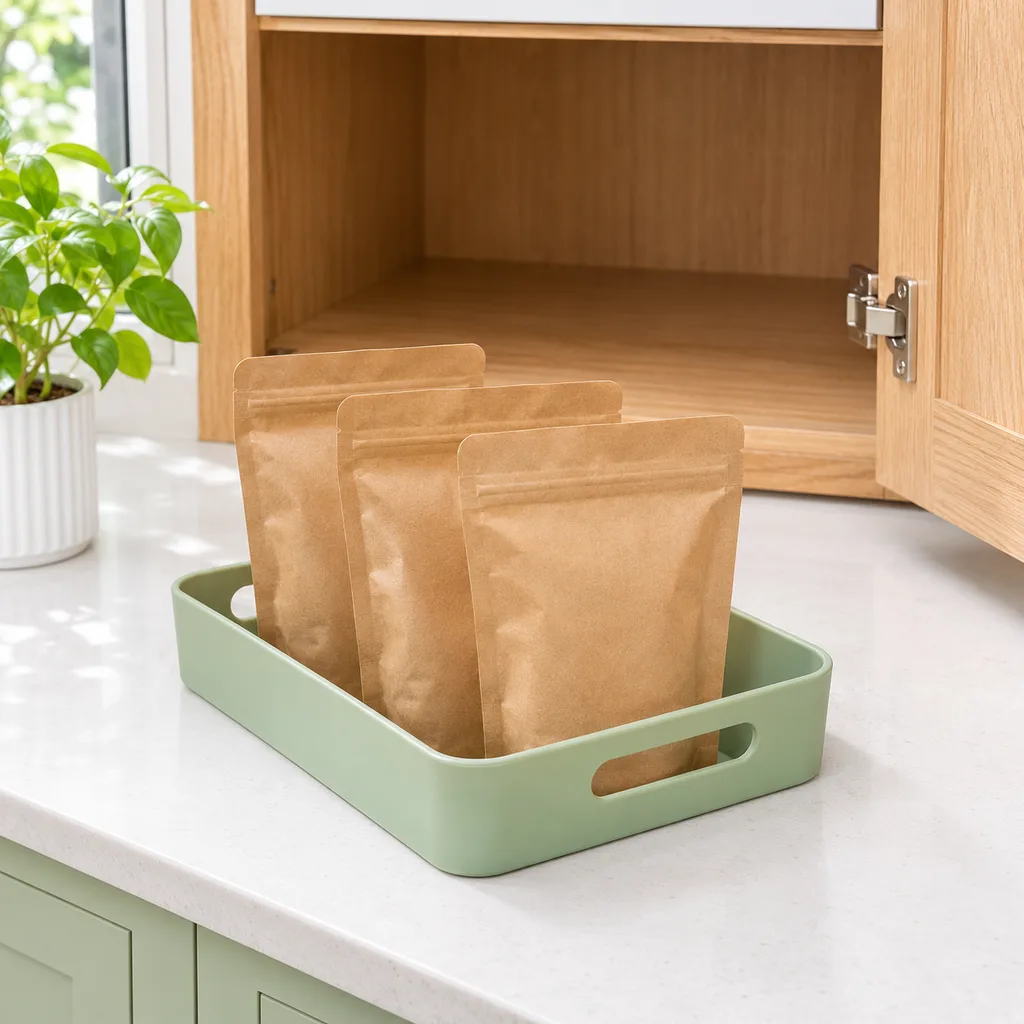
A shallow tray can bring several small packages forward together. Choose a group you actually use or inspect together, such as baking decorations, rather than filling a deep bin with unrelated objects. Keep each food in its own suitable closed package.
Test the group at an ordinary load. Can you pull it out, support it and set it down without moving a stack of dishes? If not, divide it into smaller groups or change the location. A handle alone does not make a heavy container easy to manage.
The clear-container pantry guide explains the separate decision between grouping original packages and decanting food. Here, choose a tray because it improves access to cabinet depth, not because all shelves need matching bins.
Choose a turntable or pull-out only after the movement check
A turntable needs enough clear space for its loaded contents to rotate without striking the cabinet, hinges or other objects. Try the shape of the objects you intend to store, not just the empty circular base. Tall or irregular items can create a different clearance problem.
A pull-out system must suit the actual cabinet and its installation requirements. Check door movement, obstructions, supplied hardware and the maker's load and mounting instructions. Do not drill into cabinetry or modify a mechanism on the strength of a general organization article.
If the right hardware is uncertain, a simple removable tray may be a useful reversible trial. Ask the cabinet or organizer maker about installation rather than assuming a product called universal fits every opening.
Make the back row visible without emptying the shelf
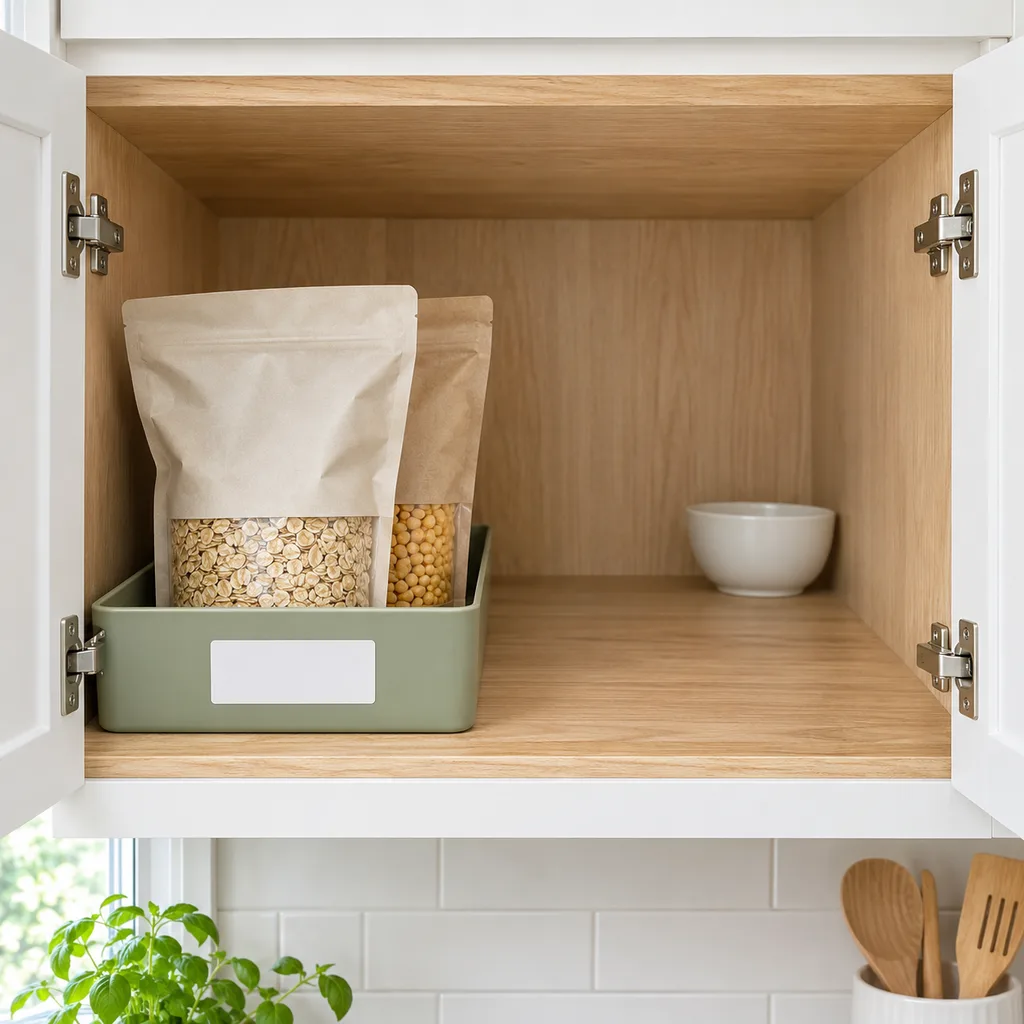
Put a readable group name on the visible front of a tray. For original packages, orient the identifying side toward the opening where practical. Avoid stacking so high that the labels disappear and another person cannot tell what belongs behind the front row.
Keep a short note of back-stock items when the depth still hides them. The pantry inventory checklist can support shopping decisions without forcing you to search the entire cabinet before every trip.
Do not fill every newly exposed space immediately. A gap may be the room needed to grasp a handle or turn a bowl. Useful access is part of the arrangement, not wasted capacity.
Check the return trip
Retrieve an item, use the normal work surface and return it. Notice whether another object must balance on the counter while the tray goes back. If putting things away is more complicated than taking them out, simplify that shelf before repeating the system elsewhere.
Keep what passes this everyday check. The best deep-cabinet arrangement is the one that lets you reach the back deliberately, see what belongs there and return the front row without rebuilding a display.
Keep good recipes close
Add The Cooking Twins to your preferred sources on Google for more easy dinners, no-bake desserts and kitchen inspiration.
Emma & Ella Frost
A practical resource from The Cooking Twins.
More from Emma & Ella Frost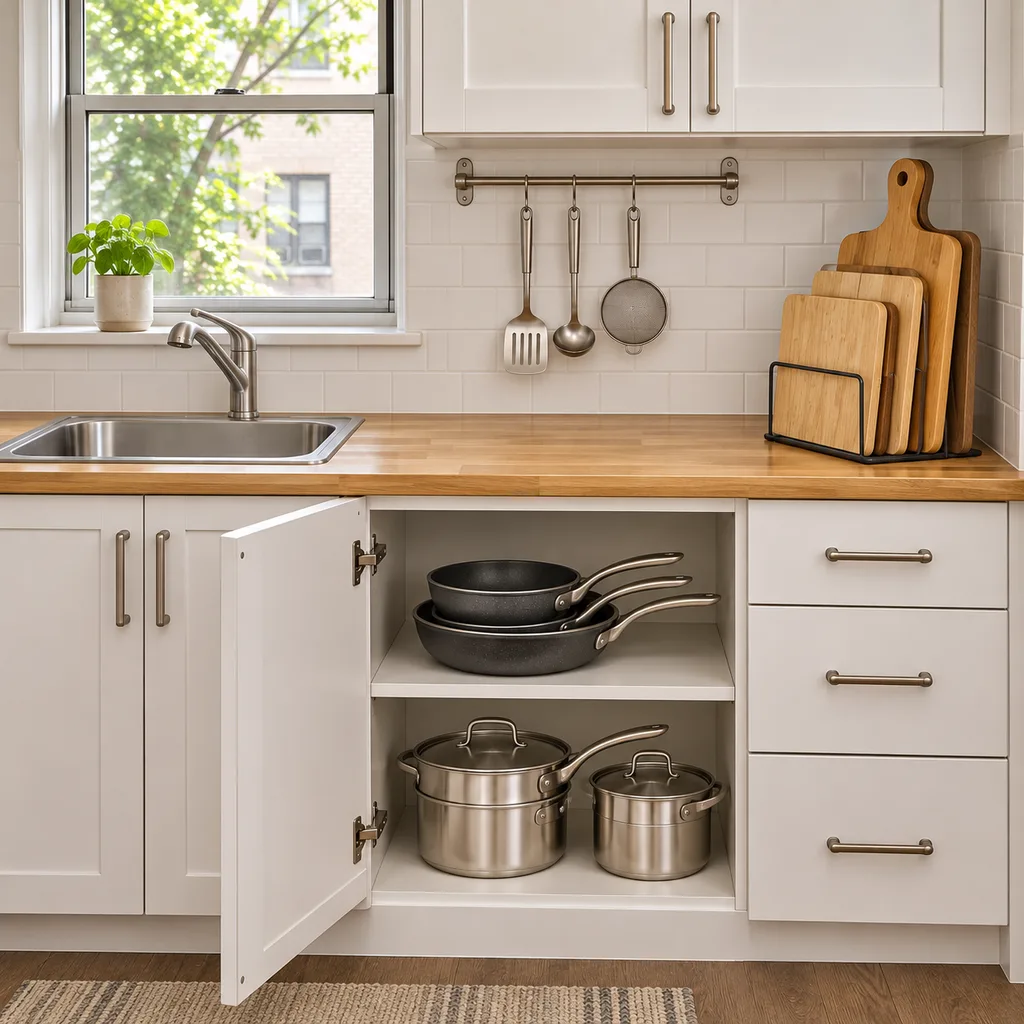
Comments
Leave a commentShare your question or planning tip below.