
Kitchen Command Center Organization: Give Household Papers a Next Step
Organize incoming household papers, calendar details and meal decisions with a small kitchen command center that gives every item a next step.

By Emma & Ella FrostUpdated November 16, 2026

5-Ingredient Dump & Go Crockpot Meals
101 effortless slow cooker recipes for busy families.
View on AmazonAvailable on AmazonA kitchen command center gives household information one place to arrive and one clear next step. Start with the papers and reminders that repeatedly interrupt the kitchen: a school notice, a meal decision, an appointment or something that needs another person's reply.
You do not need a wall of matching organizers. This plan uses a small intake spot, a visible action list and a separate home for records. Choose a freestanding setup first if you are unsure where the system belongs; mounting hardware and wall suitability need their own checks.
Choose the decisions the station will handle
Look at the information currently collecting on the counter. Divide it by what needs to happen, not by how attractive the paper looks. A permission slip needs an action; a confirmed appointment needs to appear on the household calendar; a document kept for reference does not need to stay on display.
Give the station a limited job. For example, it might handle incoming household papers and the coming week's meal decisions, while work documents stay elsewhere. Mixing unrelated records can make a small kitchen station harder to use.
The countertop organization guide covers physical destinations for objects. This station addresses the information inside those objects: who needs it, what happens next and where it goes afterward.
Create an intake spot without making a permanent pile
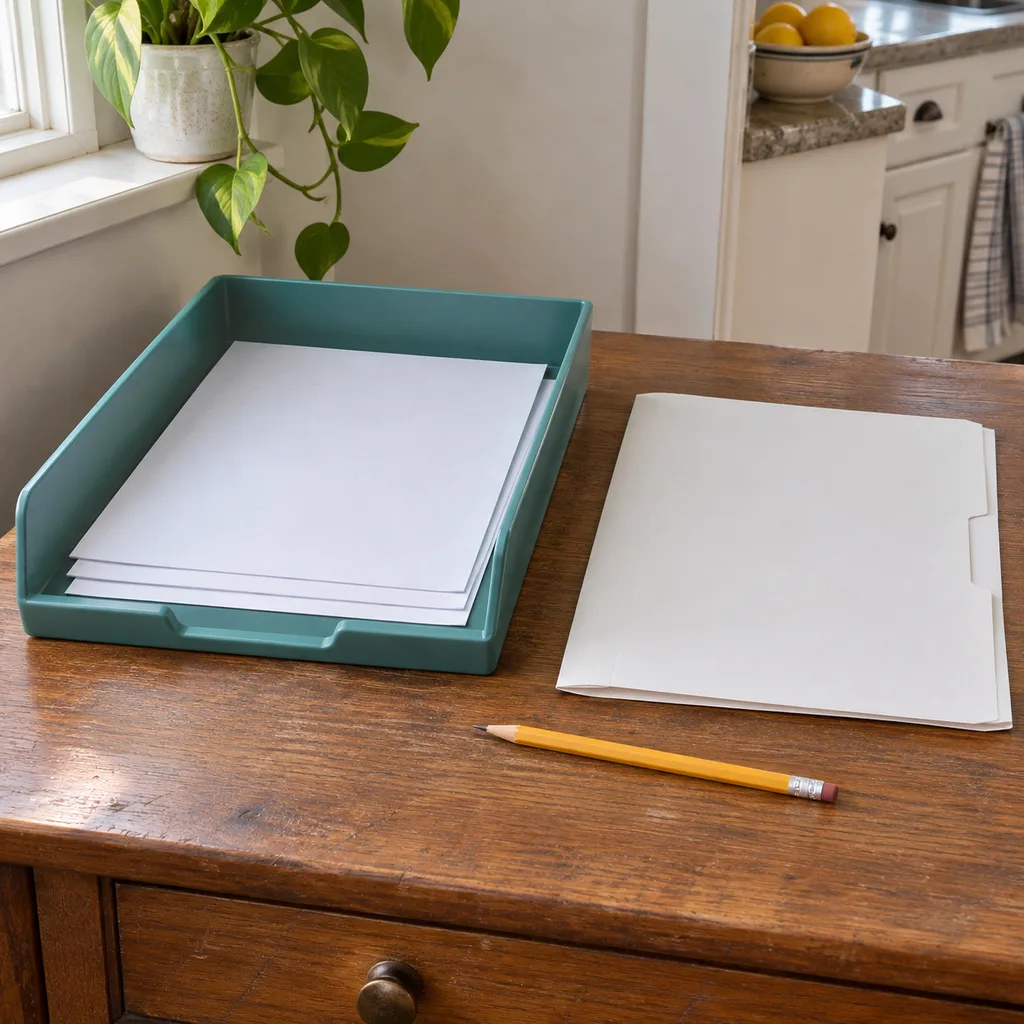
Use an existing upright file, shallow tray or folder for papers that have not yet been reviewed. Choose something that fits the actual location without covering controls, outlets or an area used for food preparation. Keep the setup separate from cooking heat and splashes.
Call this the inbox, not the archive. A paper placed there still needs a decision. When reviewing it, choose an action, record the needed information or move it to its established storage location. Follow the document's requirements rather than assuming every original can be discarded after a photograph.
Keep sensitive documents in an appropriately private place. A station visible from a doorway is not a suitable public display for account details, passwords or personal information. The visible reminder can describe an action without exposing the underlying record.
Separate the action list from the calendar
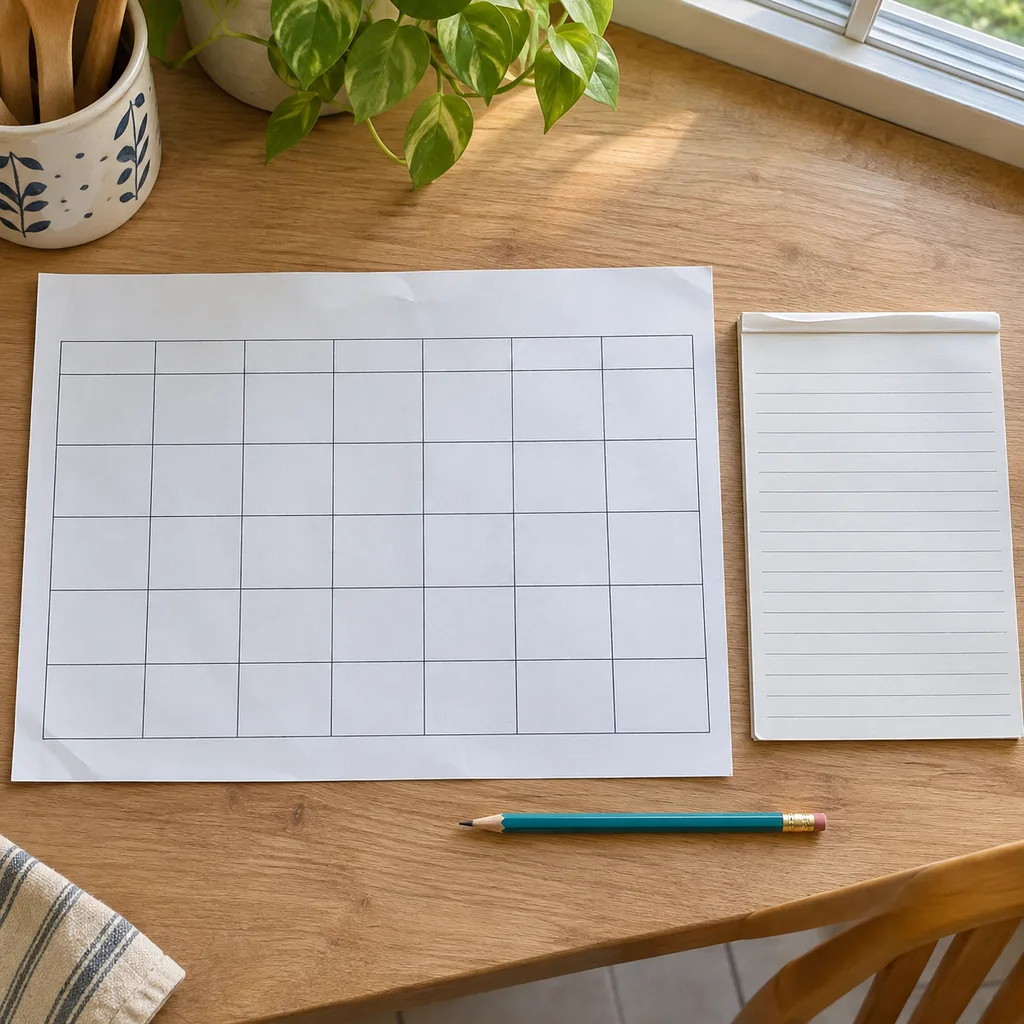
Put things that must happen at a particular time on the calendar your household actually uses. Put unfinished tasks on a short action list. A note saying call the venue is different from a confirmed appointment; showing both as calendar events can hide what is still undecided.
Give an action a clear owner and next step. Instead of groceries, write check the planned meals before making the shopping list, with the responsible person's agreement. Avoid assigning another person's responsibilities without discussing them.
If the calendar is digital, a paper station does not need a second competing calendar. It can hold incoming material until the useful details reach the shared system. Keep one agreed source of truth, whether that is paper or digital.
Keep meal planning visible but separate from purchases

A meal note answers what the household intends to cook. A shopping list answers what is missing. Leave space to check existing ingredients before turning a meal idea into a purchase.
Link the station to your normal kitchen routine. The pantry staples guide helps choose recurring ingredients around actual meals. Once purchases are confirmed, the store-section grocery list organizes the trip. Neither requires displaying the whole pantry inventory at the station.
Use a removable sheet or notebook if meal plans change often. A practical plan can contain an undecided evening; filling every space is not more useful than recording what you genuinely know.
Make the review a small household handoff
Choose a review moment connected to an existing routine, such as discussing the next shopping trip. Check the inbox, confirm upcoming commitments and agree who owns outstanding actions. There is no required review interval: choose one that suits how information arrives.
When a task is finished, clear its reminder. When an appointment changes, update the agreed calendar rather than adding a second note nearby. Move records out of the active area once they no longer support a current decision.
Test the location before buying more organizers. If papers still land somewhere else, ask whether that spot is easier to reach or whether another household member cannot see the system. Adjust the handoff before expanding the display.
Keep only the parts that earn their place
After using the station, look for an inbox nobody checks, a calendar that duplicates another one or supplies that do not belong there. Remove unnecessary parts while keeping the decisions they were meant to support.
A successful command center is not necessarily an empty counter or a matching set of folders. It is a place where incoming information becomes an agreed action, then leaves the active area when its job is done.
Keep good recipes close
Add The Cooking Twins to your preferred sources on Google for more easy dinners, no-bake desserts and kitchen inspiration.
Emma & Ella Frost
A practical resource from The Cooking Twins.
More from Emma & Ella Frost

Comments
Leave a commentShare your question or planning tip below.