
Spice Drawer Organization With Labels: A Find-and-Return System
Organize a spice drawer with readable labels, an actual fit check and a separate refill spot. Keep product information and make every bottle easier to return.

By Emma & Ella FrostUpdated November 16, 2026

5-Ingredient Dump & Go Crockpot Meals
101 effortless slow cooker recipes for busy families.
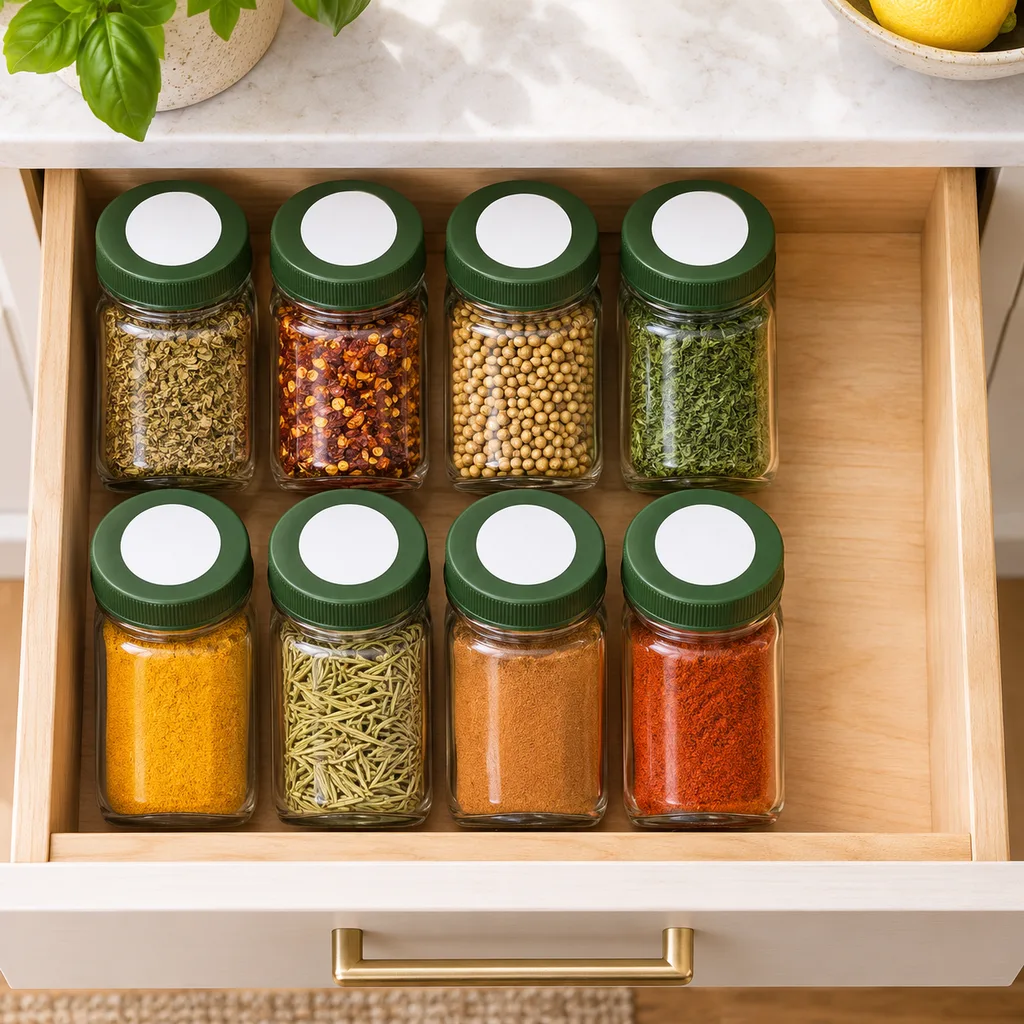
View on AmazonAvailable on AmazonA useful spice drawer lets you read a name, lift out the right container and put it back without rearranging the whole collection. Matching jars are optional. A clear label on a bottle you already own can solve more than a new set that does not fit the drawer.
Start with the containers and recipes you actually use. This approach combines a fit check, a readable naming system and one place for refills, so the arrangement remains understandable after the first tidy-up.
Choose the location before choosing an organizer
A convenient drawer is not automatically a suitable storage location. Nebraska Extension recommends keeping spices cool, dry and away from direct sunlight, rather than above the stove. Follow the storage instructions on each package. Move the collection elsewhere if the proposed drawer is exposed to heat or moisture.
Check what else lives in the drawer. Do not make seasonings share a space with cleaning products or loose household items. If the drawer is currently the kitchen's catch-all, give those objects another home before testing spice layouts. The broader small-kitchen organization guide can help you assign useful storage zones.
Keep the collection accessible without making an open drawer part of the cooking route. A closed drawer should not need a towel, box or spare jar on the counter to make the system work. Decide where the spice will return after measuring, not only where it looks good in a photograph.
Measure the drawer with the actual containers
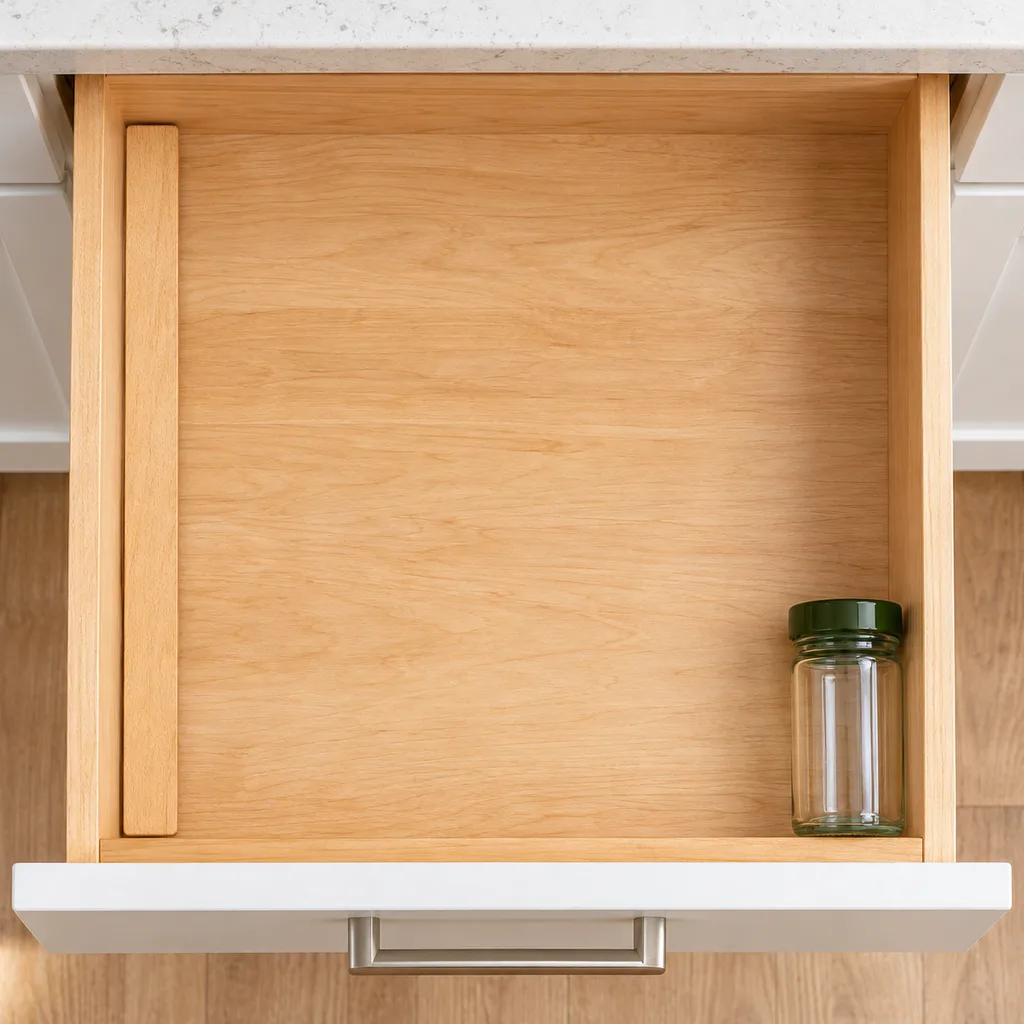
Empty the drawer and check its usable interior width, depth and closing clearance. Measure around any hardware or curved sides that reduce the available space. A cabinet's outside dimensions do not tell you what fits inside its drawer.
Test the tallest closed bottle and the widest container before ordering a rack. Include the lid, not just the glass body. For an angled insert, check the combined height of the insert and the supported bottle. Close the drawer slowly during an empty-layout check; stop if anything catches.
Decide whether you will read lids from above or front labels on supported angled rows. Neither arrangement works in every drawer. Leave enough room to grasp one container without pulling its neighbors out. Follow the drawer and organizer makers' limits rather than treating a tightly packed photograph as a capacity guide.
Sketch only the usable area and try the bottles you already have in it. A removable tray may be enough. Avoid buying a full matching set before you know whether its jar height, lid shape and footprint suit the space.
Sort the collection without losing product information
Bring duplicate names together so you can see what is already open and what is a refill. Distinguish forms that recipes treat differently: ground cumin and whole cumin seeds need different names, just as garlic powder and garlic salt do. Similar colors are not reliable identification.
Keep original bottles when they work. Nebraska Extension advises original bottles or airtight containers and retaining the manufacturer's label guidance. You do not have to decant everything to organize it. If you choose another food-storage container, keep the original ingredient, date and product-identification information retrievable.
Do not combine several old and new packages into one anonymous jar. Separate refills preserve their identity and make it easier to know which package you are using. An unknown powder should not receive a confident new name just because it resembles another spice.
Check package condition and follow the producer's instructions when information is missing or a product seems questionable. This is an organization guide, not a method for certifying the safety of an unidentified ingredient. Do not assign a new purchase or best-by date to make an old jar look complete.
Put the readable name where you will see it
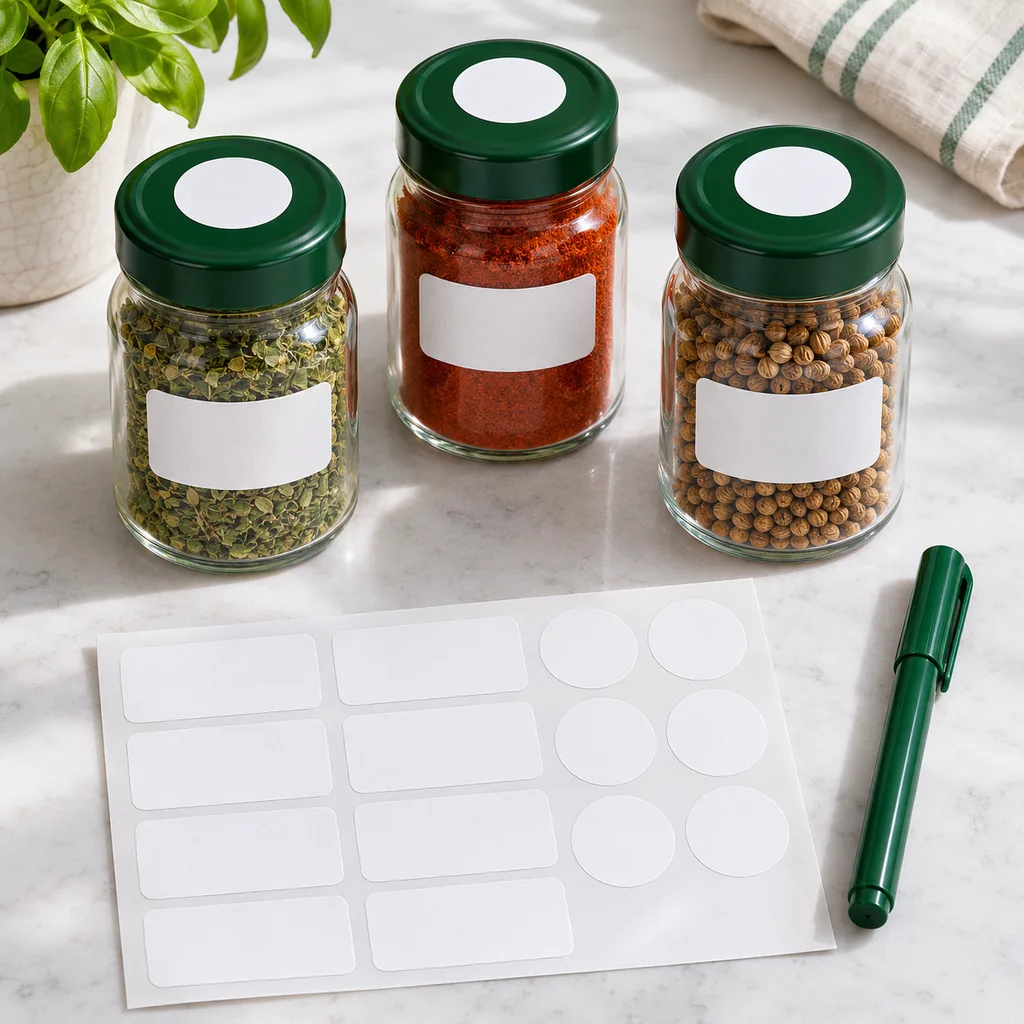
For upright containers, a lid label can make the drawer readable from above. For angled rows, a front label may be the first thing you see. Test one temporary label in the actual drawer before printing the whole set. Read it from your normal standing position and under the light you usually use.
Write the full ingredient name and any important form: smoked paprika, ground ginger or whole cloves. Keep the lettering high-contrast and large enough to read. A decorative typeface is not useful if it makes cinnamon and cumin hard to distinguish at a glance.
Use an exterior label compatible with the container and its care instructions. Do not cover the original ingredient statement, preparation directions or product code with a decorative sticker. A second label is a finding aid, not a replacement for the package record.
If you mark a purchase or opening date, name the event and use your actual date. A simple example is “Opened: Nov 16, 2026” only if that is when you opened it. Do not present an opening date as a universal expiration date. Avoid extra fields nobody will maintain.
Choose alphabetical rows or small cooking groups
Alphabetical order is a useful starting point when several people use the same drawer. Decide which word leads the name, then stay consistent. For example, keep ground cumin and cumin seeds near each other rather than hiding one under a vague label such as everyday spices.
A small household collection may work better in clearly separated groups, such as frequent savory seasonings and baking spices. Use groups only when the boundaries are understandable. Cinnamon does not need two half-filled jars merely because it appears in both sweet and savory recipes.
Keep the choice simple enough to explain in a sentence: alphabetical rows, with unopened refills separate; or daily seasonings on the left and baking spices on the right. If a helper cannot tell where something goes, simplify the categories before adding more dividers.
Give refills and awkward containers a separate place
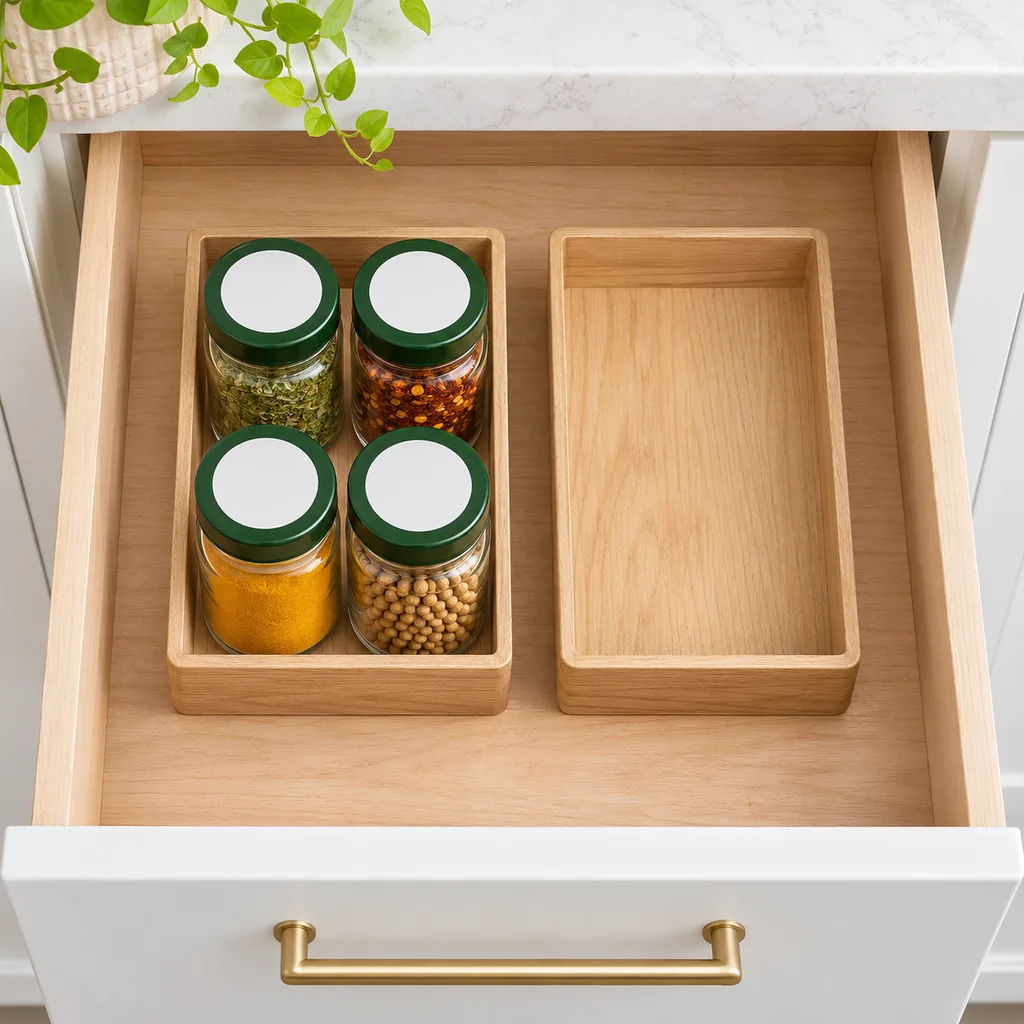
A wide tin, tall grinder or refill pouch does not have to fit a row designed for small bottles. Give it a stable nearby position or another suitable storage space. Do not force a container into an angle that makes the lid hard to close or the drawer difficult to operate.
Use one small removable tray for spare packages if it fits comfortably. Keep each package closed and identifiable, and check that space before adding another bottle to the shopping list. The pantry inventory checklist offers a separate way to track supplies without turning every jar label into a stock-control form.
Reserve some retrieval room rather than filling every gap. An organizer can hold fewer containers than its advertised maximum once you account for your actual bottle shapes. If everything only fits when perfectly aligned, the everyday layout needs fewer objects or a different arrangement.
Check the system after ordinary cooking
After using the drawer, notice which container was hard to read or replace. Move that item, adjust its label position or simplify the grouping. You do not need to rebuild the entire drawer because one tall bottle works better elsewhere.
Keep containers closed during storage. Nebraska Extension advises against shaking spices over a steaming pan because moisture can enter the bottle. Measure away from the steam, follow the recipe and return the closed container to its assigned place.
Before shopping, check the refill tray and the current jars. Add only what your planned meals require. A readable drawer supports that check, but it does not guarantee a particular amount of saved money or reduced waste.
The finished arrangement should answer three questions without a search: what is this, where does it belong, and is there already another package? Keep the original product information, make the everyday name easy to see and leave enough space to put the bottle back.
Keep good recipes close
Add The Cooking Twins to your preferred sources on Google for more easy dinners, no-bake desserts and kitchen inspiration.
Emma & Ella Frost
A practical resource from The Cooking Twins.
More from Emma & Ella Frost
Comments
Leave a commentShare your question or planning tip below.