
Small Dining Table Decor for Dinner Parties
Decorate a small dining table with a low centerpiece, simple textiles, and practical place settings that leave room for dinner.

By Emma & Ella FrostUpdated November 16, 2026

5-Ingredient Dump & Go Crockpot Meals
101 effortless slow cooker recipes for busy families.
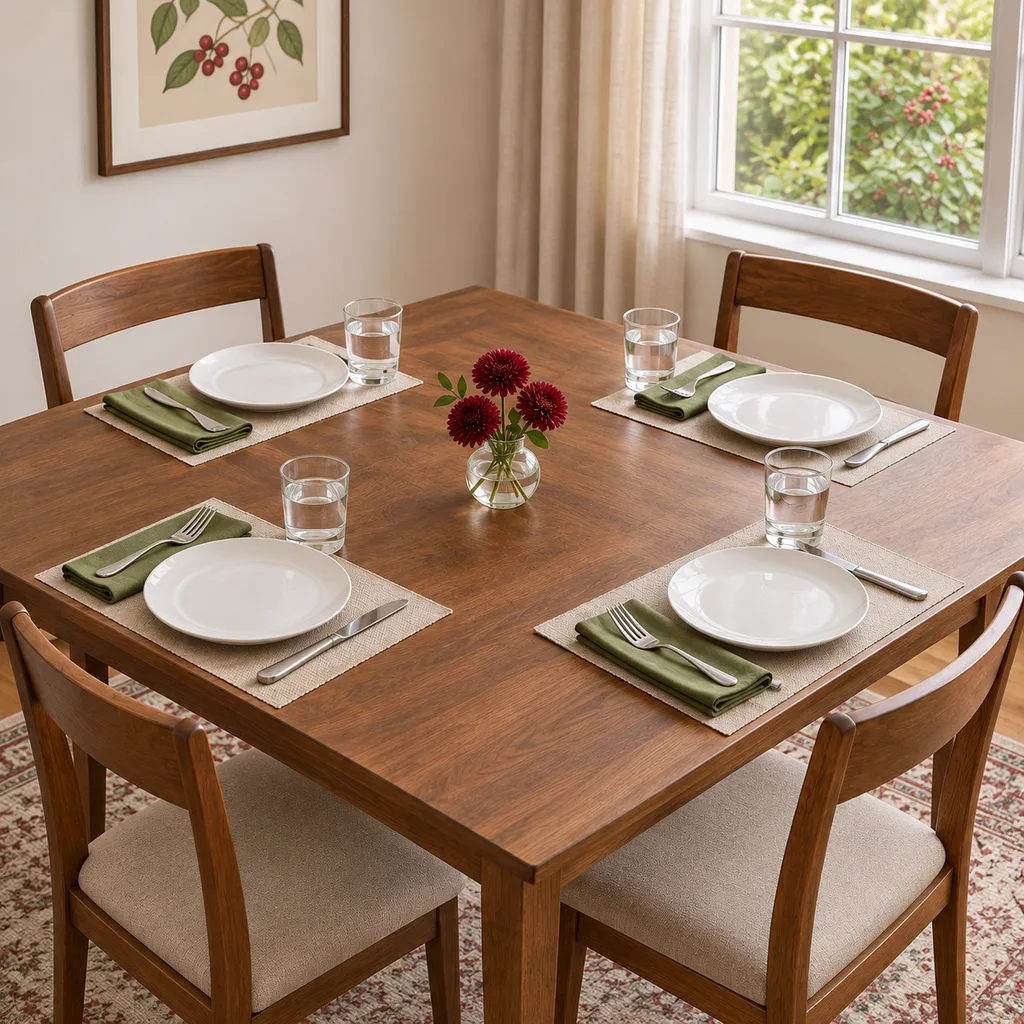
View on AmazonAvailable on AmazonSmall dining table decor works when the table still has room for dinner. Set out the plates, glasses, and serving pieces first, then decorate the space that remains. One low arrangement and a repeated napkin color can give the table a deliberate look without making guests negotiate around a centerpiece.
Think of the center as flexible space rather than a display shelf. If food will arrive family-style, some decoration may need to move. Planning that move in advance is easier than holding a hot serving dish while looking for somewhere to put a vase.
Build the layout with real place settings
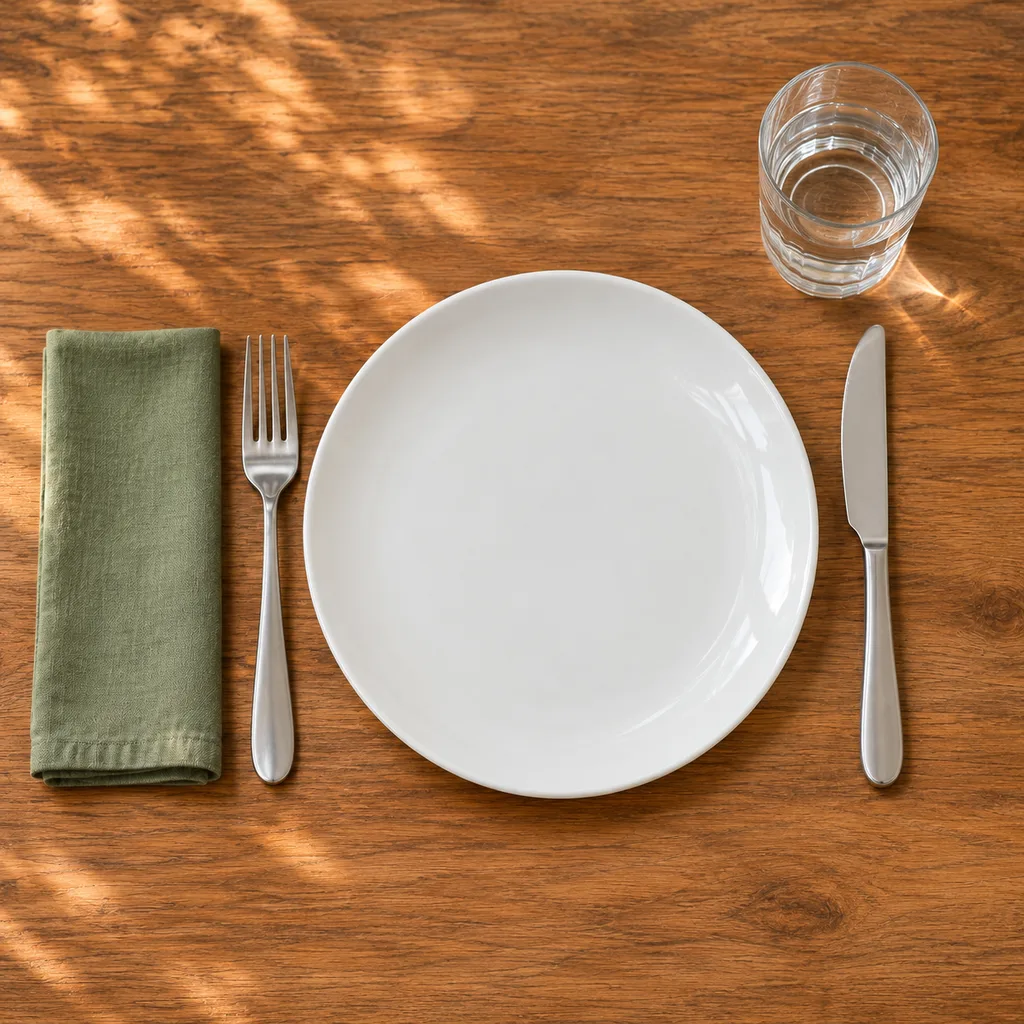
Measure your table, but use the actual dishes to decide what fits. A charger, wide dinner plate, bread plate, two glasses, and folded napkin can occupy far more space than the dinner plate alone. Remove layers that do not serve your menu.
For a hypothetical 30-by-48-inch table seating four, try four dinner plates, one glass at each place, and napkins beside or on the plates. Add the bowls and platters you expect to use. This is a starting layout to test, not a capacity standard for every table or guest.
Pull the chairs out and sit down. Can you reach the glass without brushing a stem? Can the person opposite see your face? If a place setting hangs over the edge or requires awkward movements, change the layout before adding decoration.
Pick a palette from something you already own
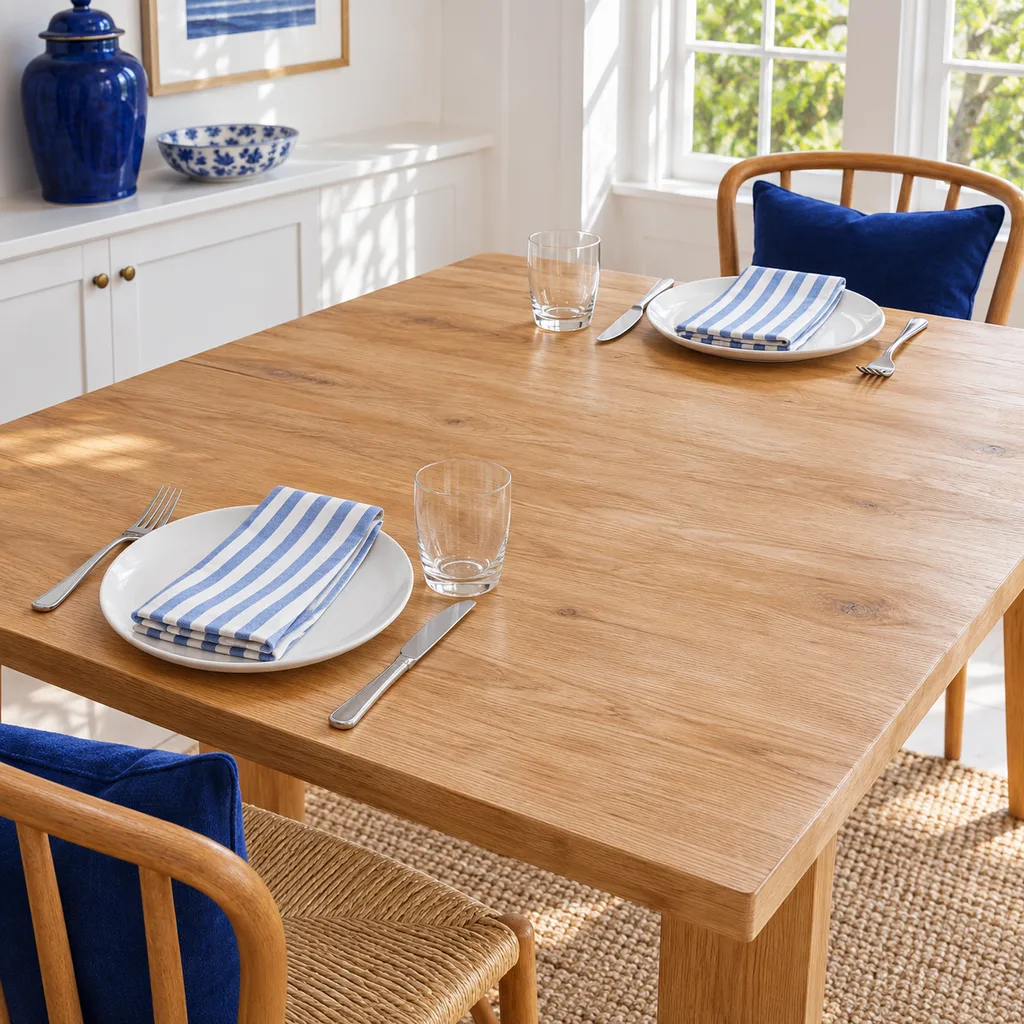
Choose one anchor item, such as a blue-striped napkin or green serving bowl. Repeat its color in one or two details rather than buying a complete coordinated set. White dishes, blue napkins, and clear glass form one option; green dishes, white napkins, and a small pink floral arrangement form another.
Keep the palette connected through repetition, not identical shades. A borrowed vase can work if it shares a material or color with another item. Mixed dishes can look intentional when napkins and glasses provide a consistent rhythm.
If you have patterned plates, use a quieter table covering. If the plates are plain, a patterned napkin can carry the decoration. This puts visual interest where it does not consume extra tabletop space.
Make one low centerpiece with a small footprint
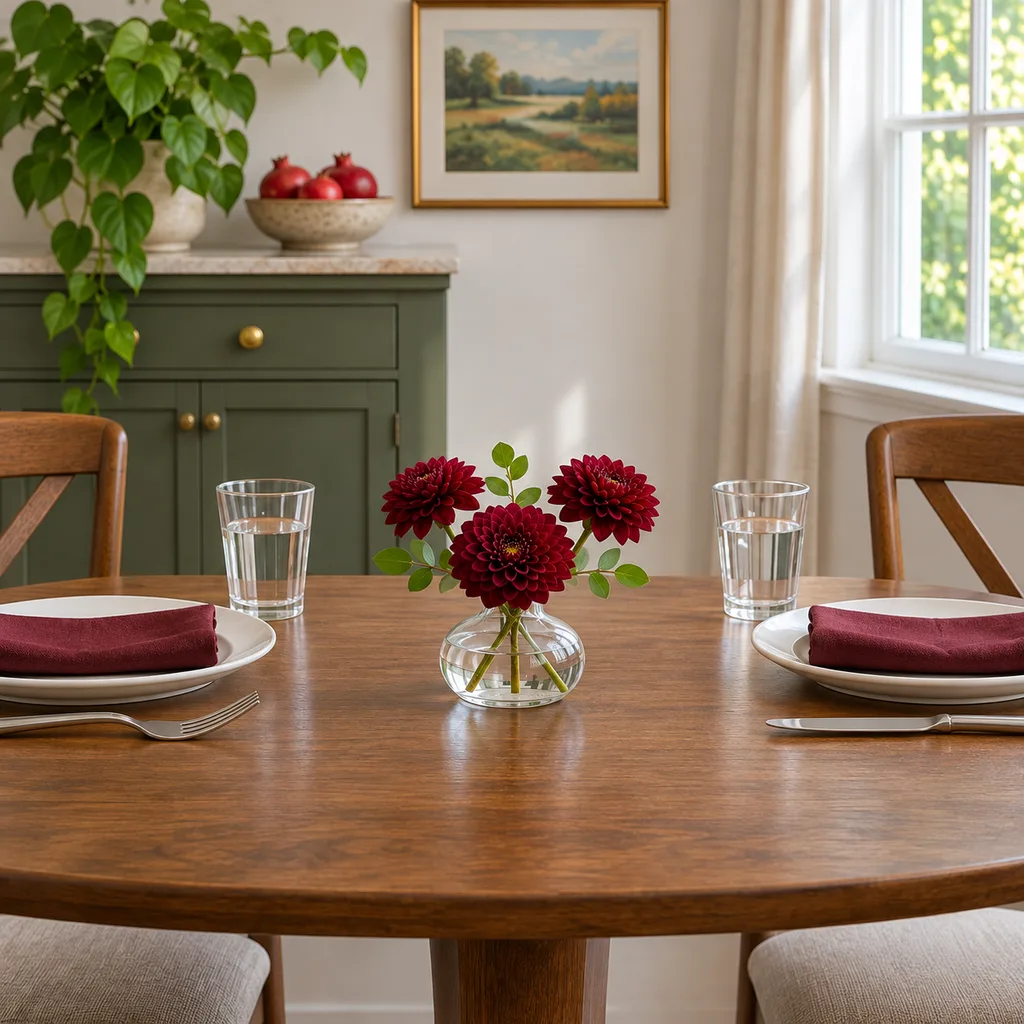
Gather a watertight low vessel, a few cut stems, floral snips, and a protective coaster or tray. Use the vessel you own as the limit for the arrangement rather than buying more stems to fill a large container.
- Place the empty vessel between the fully set places.
- Check the view from seated eye level on both sides.
- Trim stems gradually so the arrangement stays within that view.
- Add water as appropriate for the flowers and protect the tabletop.
- Set out the serving dishes again and remove stems that interfere.
Keep plant material out of food and off eating surfaces. Skip loose glitter, shedding decorations, and long trailing stems around plates. If flowers are unsuitable for your guests or household, use a small decorative object or simply let the napkins provide the color.
Choose the service style before the decorations
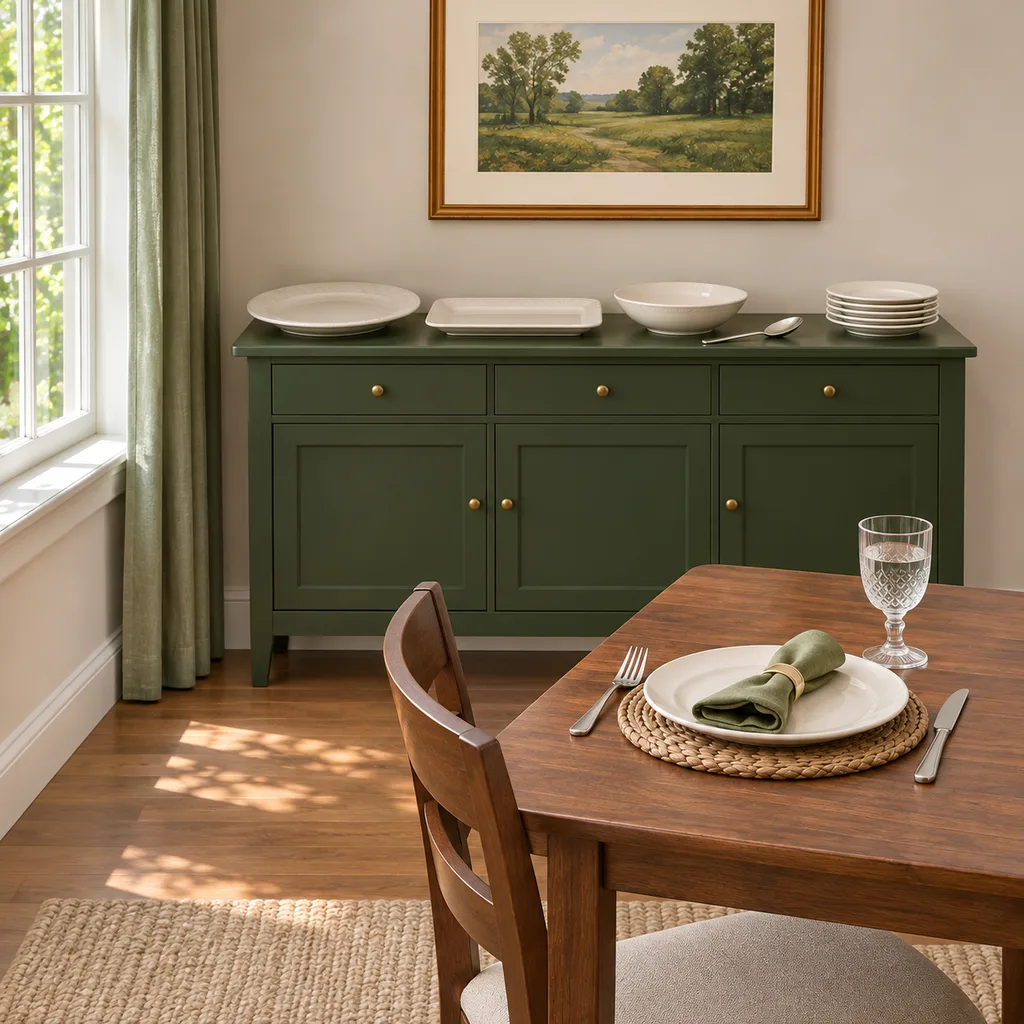
Family-style dining needs room for shared dishes and the movement of passing them. Keep the center mostly open, with one arrangement that can move to a nearby shelf. Put out only the condiments used with the current course.
Plated service leaves more continuous space in the middle, but you still need a landing area for a water pitcher or an unexpected extra dish. A side surface can hold spare cutlery and serving tools without becoming another elaborate display.
For a buffet, let guests collect food away from the dining table. Keep that route clear of pulled-out chairs. A buffet does not solve crowding if people must squeeze between seated guests to reach it.
Use textiles without adding unnecessary layers
A washable tablecloth can unify mismatched furniture and dishes. On a very small table, skip placemats if they overlap or buckle against one another. A narrow runner is optional, not a requirement.
Check the drop of the cloth with the chairs in use. Avoid excess fabric where guests may catch it while sitting down. If the table surface is attractive and suitable for use, napkins and appropriate heat protection may be enough.
Fold each napkin into a plain rectangle or place it on the plate. A large sculptural fold takes up space and may block the first course. For place cards, a small folded card can rest above the plate instead of requiring a separate holder.
Adapt the same setup for different seasons
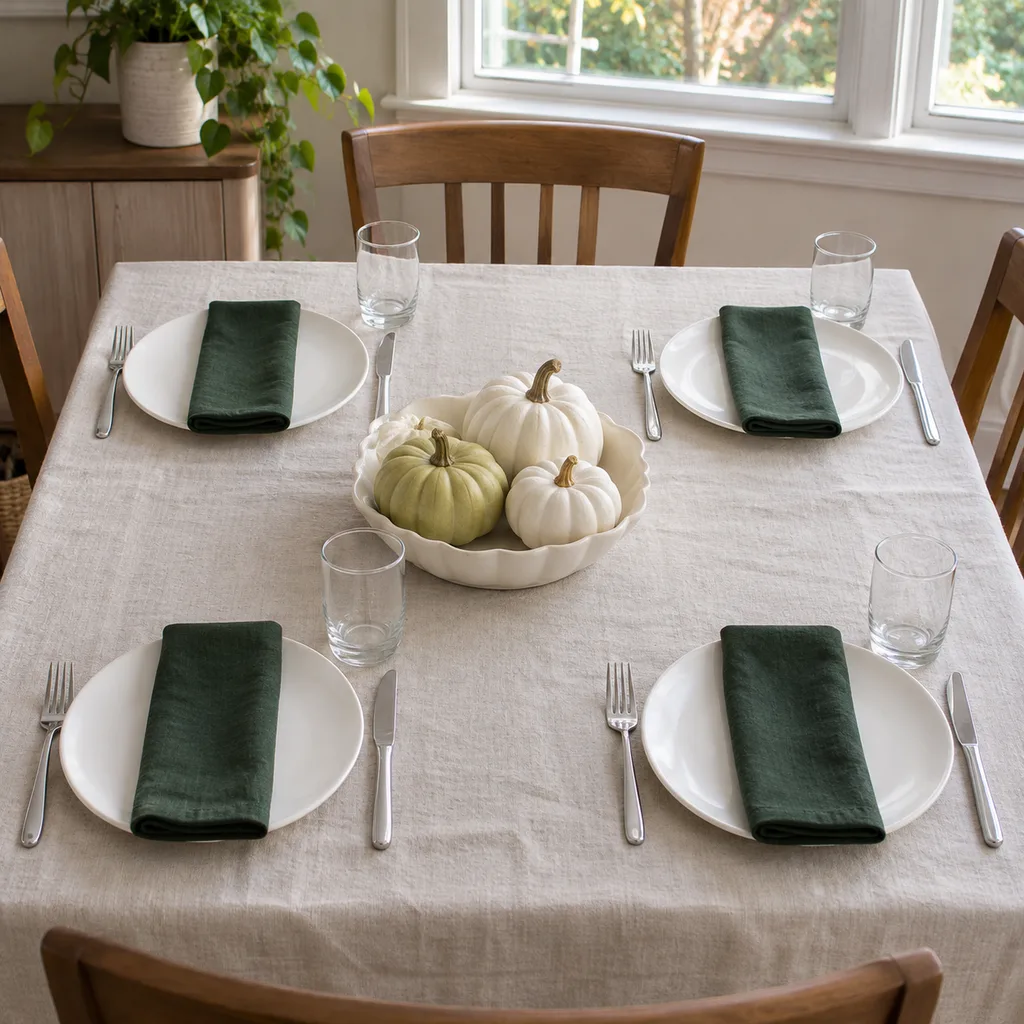
For spring, try white napkins and a few pink stems in a clear vessel. For summer, switch to blue napkins and a single compact arrangement. For fall, use a burgundy textile and a small decorative bowl placed away from serving space.
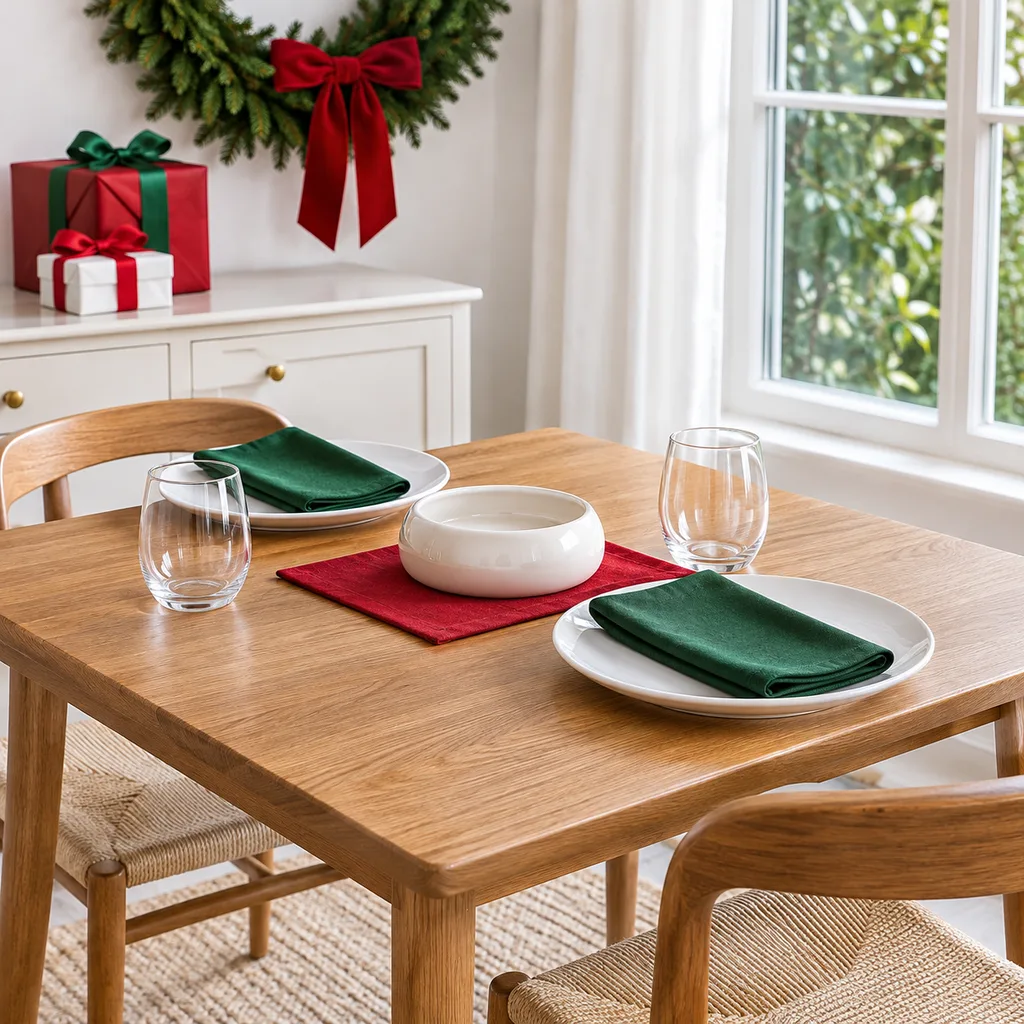
For a winter dinner, consider battery-operated flameless candles, an option suggested by the U.S. Fire Administration. Follow the product's instructions. If it uses button or coin batteries, choose a secured compartment requiring a tool or two independent, simultaneous opening actions, as explained in CPSC's battery guidance. Keep batteries inaccessible to children. Do not thread lights through food or use a product on an eating surface unless it is intended for that placement.
Seasonal changes do not require more objects. Swapping napkins or the arrangement can be enough. Store the previous season's pieces rather than layering every new idea on top.
Spend effort where guests will notice it
Use clean glasses, smooth napkins, and enough space for elbows before adding another accessory. Borrow serving dishes if you are missing a practical piece. Skip chargers, individual favors, and multiple centerpiece vessels when they compete with the meal.
A useful budget decision is to choose one decorative purchase at most and build around existing dishes. This is a planning limit, not a promise about current prices. Reusable napkins may suit your routine; paper napkins may be the simpler choice for this event.
Do a final seated check
Set the table before cooking becomes busy. Sit at every place, lift a glass, pass an empty platter, and find somewhere to put the centerpiece if it must move. Look for unstable objects and items hanging over the edge.
At dinner, clear unused pieces between courses rather than keeping the original arrangement intact. A successful small-table setting can change as the meal progresses. The decoration has done its job when people can settle in comfortably and enjoy the food.
Keep good recipes close
Add The Cooking Twins to your preferred sources on Google for more easy dinners, no-bake desserts and kitchen inspiration.
Emma & Ella Frost
A practical resource from The Cooking Twins.
More from Emma & Ella Frost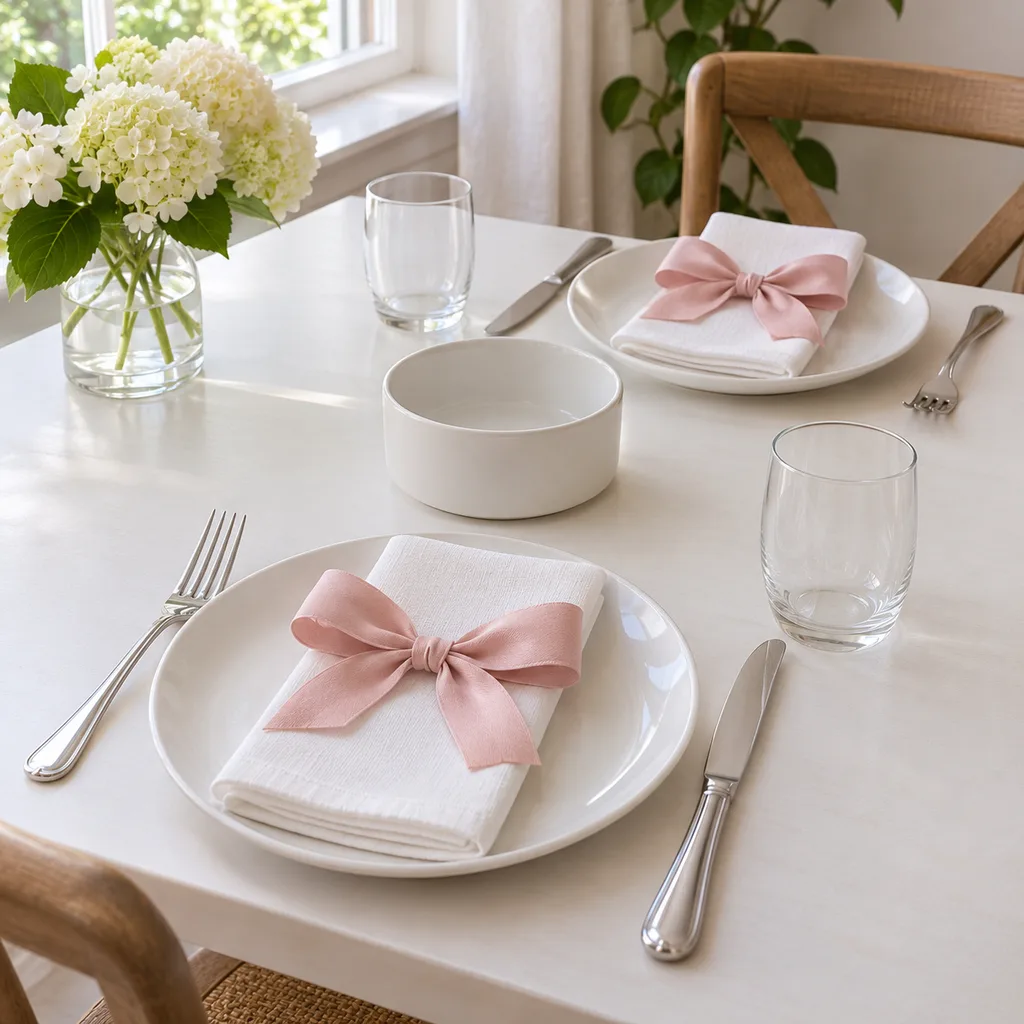
Comments
Leave a commentShare your question or planning tip below.