
Printable Freezer Inventory System: A Simple Quantity-Change Ledger
Download a one-page freezer inventory sheet with twelve rows, then track package amounts, changes and locations without guessing dates or food history.

By Emma & Ella FrostUpdated November 17, 2026

5-Ingredient Dump & Go Crockpot Meals
101 effortless slow cooker recipes for busy families.
View on AmazonAvailable on AmazonA printable freezer inventory system should tell you what remains and where to find it, without asking you to open every drawer before planning dinner. Use one working sheet for a clearly named freezer, connect each entry to the actual package information and change the amount when something goes in or comes out.
The sheet is a household stock record, not a food-safety certificate or a storage-duration chart. It cannot establish how a meal was prepared, whether the freezer stayed at the right temperature or whether unidentified food is suitable to eat. Keep those decisions separate from the arithmetic.
Download the one-page freezer inventory PDF. The US Letter sheet has twelve blank rows and five columns, plus separate freezer-name and count-date spaces. Print it for handwriting; it is not an interactive fillable form. Check the page preview and your printer settings before printing.
Give the sheet one appliance and one count date
Name the freezer in ordinary household language, such as kitchen freezer or garage freezer. Do not combine two appliances on a sheet if the locations will be confused. Write the date you last checked the quantities in the sheet's count-date field.
That count date means the list was reviewed; it is not a new preparation or freezing date for the food. Keep the actual package dates unchanged. If you copy an older list onto a clean sheet, carry over only the information you can still verify.
Make the initial record during appropriate ordinary retrieval and storage routines. Do not leave the contents on the counter while completing an elaborate inventory. Record uncertainty as a question to resolve, not as a guessed identity or date.
Use five fields with one consistent unit
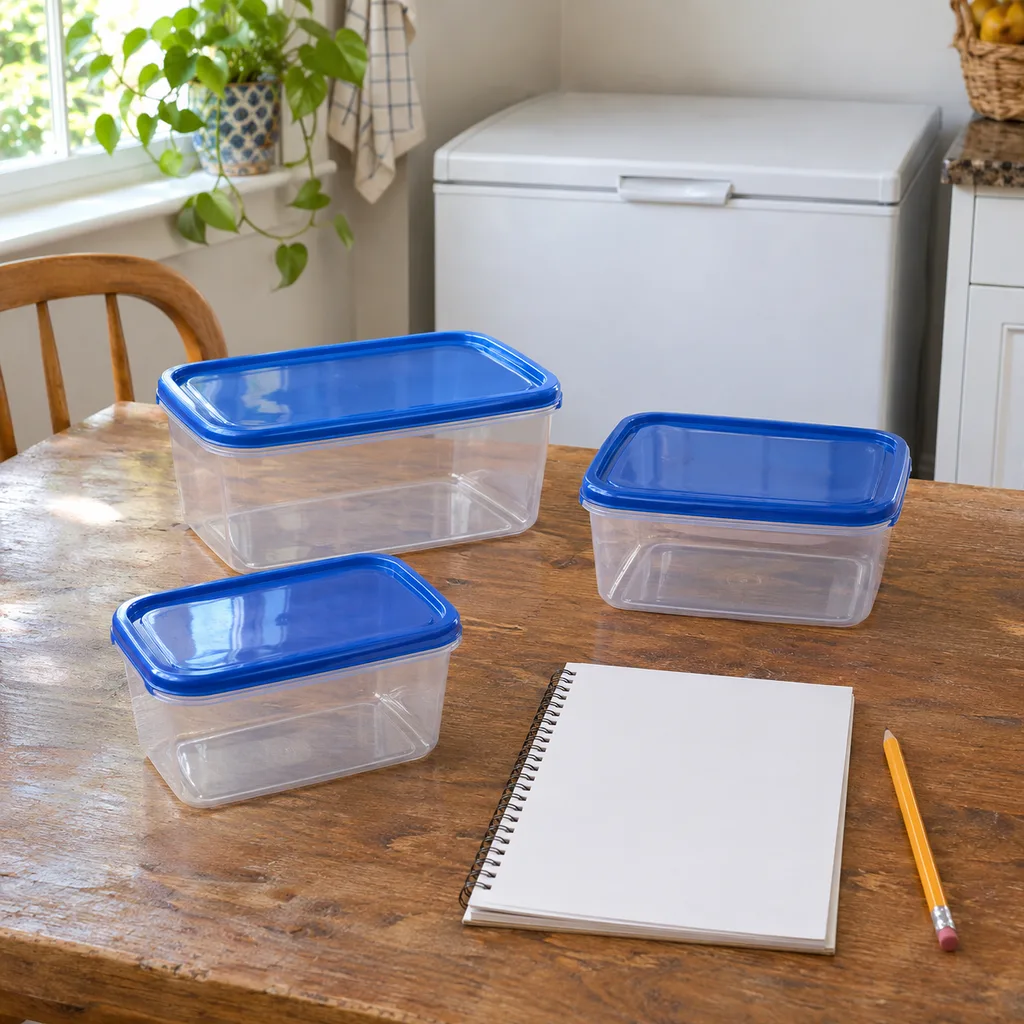
The inventory uses five fields: item and batch code, location, starting amount, changes and amount now. Keep the item identifiable, including raw or cooked status where relevant. The code should point to the actual label or preparation record rather than replace it.
Choose a unit that makes sense for that row. Two sealed bags, three containers or a verified weight are different kinds of amounts. Do not begin a row in bags and silently finish it in portions. If the amount becomes uncertain after opening a package, describe that uncertainty instead of inventing a precise fraction.
Use a short location you can recognize in the actual appliance, such as upper drawer or the supplied left basket. If the package moves, update the location. A correct count pointing to an old shelf arrangement is still difficult to use.
Record a removal without rewriting the whole list
Here is a fictional arithmetic example: a row starts with two sealed bags of a clearly identified product. Removing one bag is a change of minus one bag, leaving one bag. That example explains the ledger; it is not a storage recommendation for any particular food.
Write the change when the package is removed and update amount now. If the remaining bag is later opened, record its actual state in the item field and use an honest amount description. One partly used bag is more useful than pretending it is still one full bag.
Do not add a newly frozen homemade batch to an older row merely because the dish has the same name. Separate batch identities and actual handling dates need to remain clear. Start another row when that is what preserves the distinction.
Keep labels and preparation instructions with the food
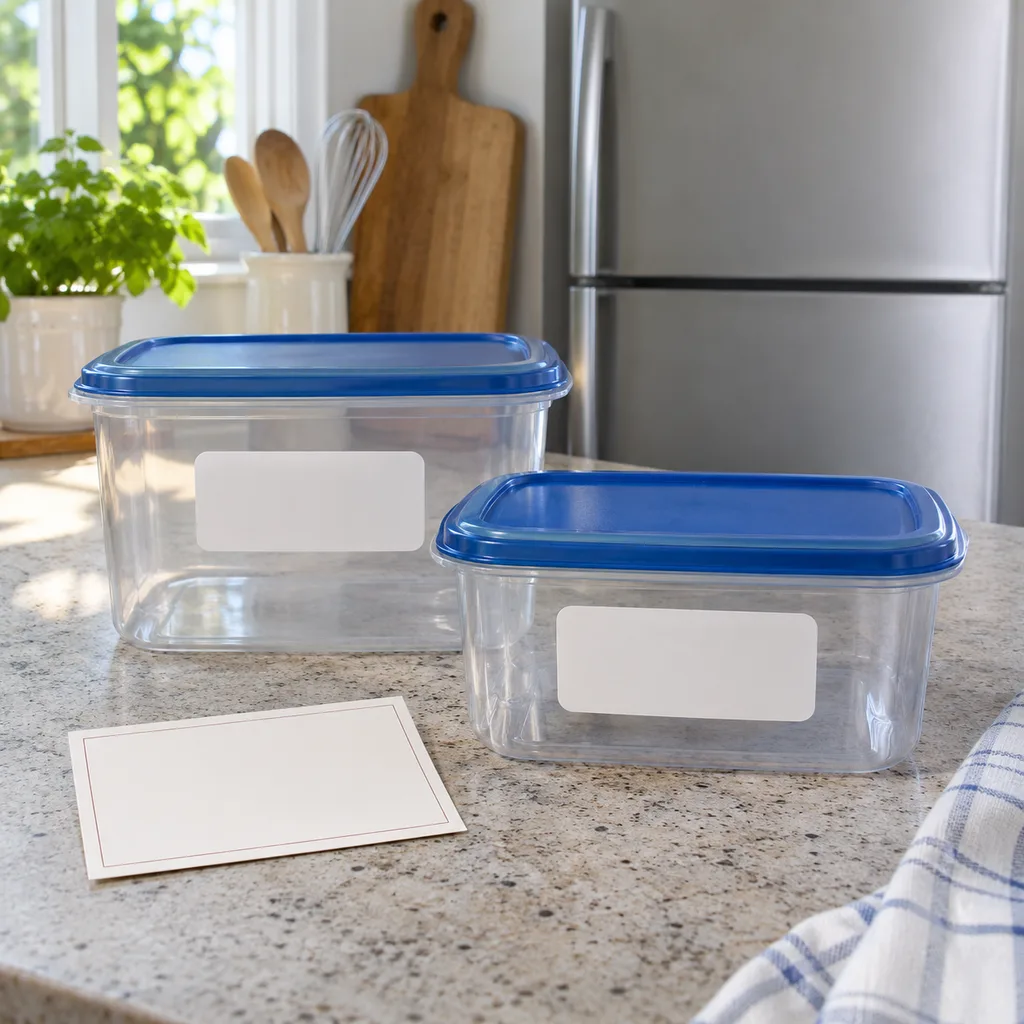
The inventory is a navigation aid, not the only source of information. A package removed by another household member still needs its own identification and relevant instructions. Our freezer meal labeling guide covers that separate package-level record.
Follow the food's actual directions. The FDA's storage guidance emphasizes label directions and notes that food can be unsafe without looking or smelling spoiled. An inventory entry cannot fill in an unknown handling history or provide a reason to taste unidentified food.
Do not use the changes column to create an automatic use-by date. The amount left and a food-specific storage recommendation are separate pieces of information. Retain the relevant original record rather than converting every entry into a generic number of freezer months.
Make the sheet convenient to update
Keep the list where the household can reach it without blocking an appliance vent, control or door. A nearby folder or a shared digital copy may suit the household better than attaching paper to the appliance. Choose one current master rather than two conflicting copies.
Cross out a finished row clearly and start a fresh one for a different batch. When the page becomes difficult to read, copy the verified current amounts and retain any information still needed with the food. The goal is a readable working record, not a perfect archive of every shopping trip.
For the appliance layout itself, our small freezer organization guide deals with openings, supported storage and retrieval. The inventory should describe the arrangement that actually exists.
Use the current amount before making the next list
Before shopping, check the relevant rows against the meals you intend to make. A confirmed package can reduce a purchase; an uncertain amount needs verification first. Do not assume that every row belongs on the next menu simply because it is written down.
Review the system after ordinary use: could someone find the package, record its removal and understand what remains? Shorten unclear locations or change an awkward unit. A useful freezer inventory is one the household can keep accurate without turning meal preparation into a bookkeeping project.
Keep good recipes close
Add The Cooking Twins to your preferred sources on Google for more easy dinners, no-bake desserts and kitchen inspiration.
Emma & Ella Frost
A practical resource from The Cooking Twins.
More from Emma & Ella Frost
Comments
Leave a commentShare your question or planning tip below.