
Refrigerator Door Organization: Put Food Requirements First
Organize refrigerator door shelves around food labels, temperature requirements, package fit and a clear return routine, rather than a universal shelf map.

By Emma & Ella FrostUpdated November 17, 2026

5-Ingredient Dump & Go Crockpot Meals
101 effortless slow cooker recipes for busy families.
View on AmazonAvailable on AmazonRefrigerator door organization starts with the food's storage requirements, not a photograph of perfectly matched bottles. Decide which items belong there before arranging them by height or color. A tidy door is useful when someone can find the right package and put it back without losing its instructions.
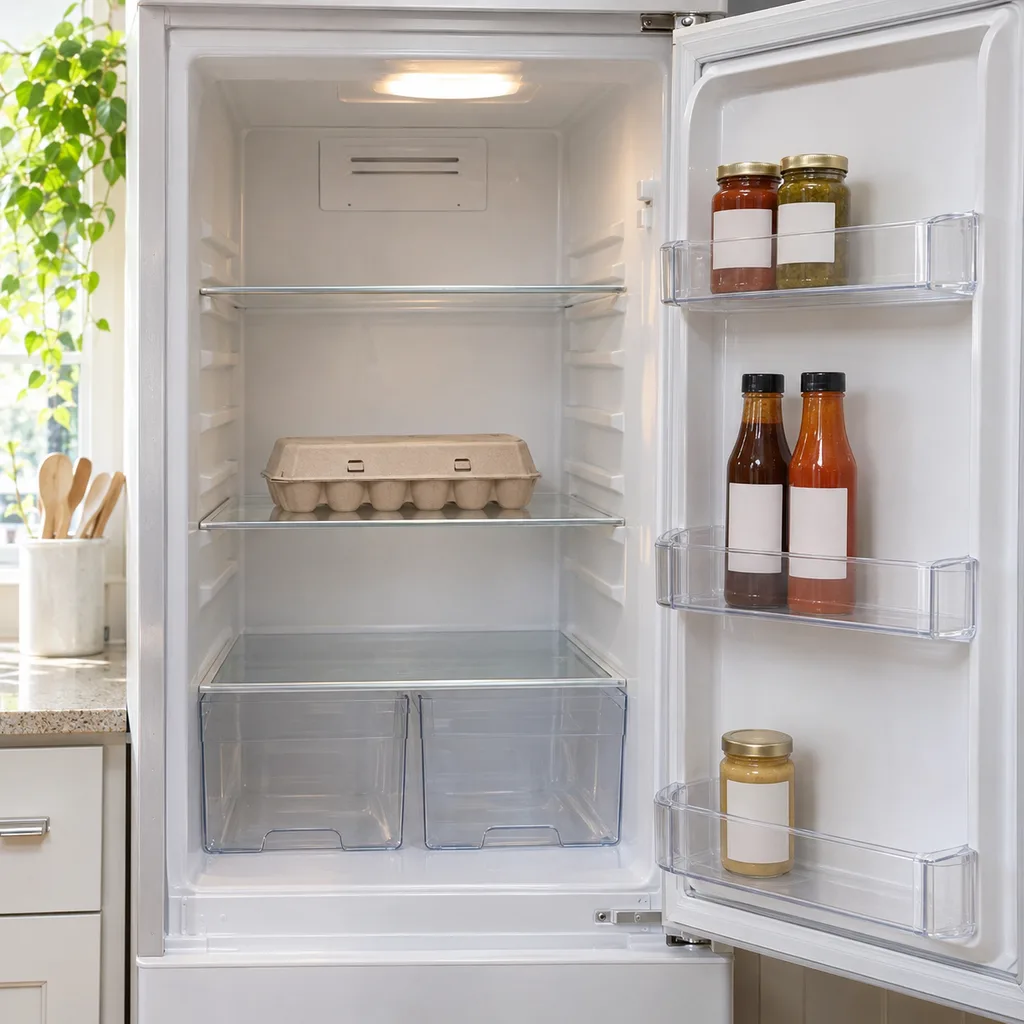
Use the door shelves supplied for your appliance, the packages already in your refrigerator and a short planning note. The aim is an understandable arrangement, not a universal shelf map or a reason to buy another set of clear containers.
Check refrigeration before planning the door
The FDA's food-storage guidance recommends keeping a refrigerator at 40 F or colder and using appliance thermometers. Follow package storage directions. For eggs, the advice is specific: retain the carton and use the refrigerator's main interior, not its warmer door.
Do not assume the number on an appliance control describes every storage position. Follow your refrigerator's and thermometer's instructions for checking conditions and arranging components. Resolve an uncertain temperature or an appliance problem before treating the door as an organizing project.
Keep product-specific directions in control. An attractive bottle that fits the shelf still needs the conditions stated on its label. This guide does not designate every condiment, milk product or opened package as suitable for every refrigerator door.
Make a short inventory without emptying the refrigerator
Work from the packages you actually use. Read a manageable section at a time while keeping foods appropriately refrigerated. You do not need all the contents on the counter to decide whether a frequently used sauce keeps getting hidden.
For each candidate, note:
- The product name and the storage directions on its original label.
- Whether it is opened, if that changes its instructions.
- The package shape, including its closed cap or lid.
- Who uses it and whether they can retrieve it comfortably.
- Any unresolved instruction or placement question.
Keep a question on the note rather than assigning a reassuring location by guesswork. If the food's previous handling is uncertain, a new shelf position does not resolve that uncertainty. Do not invent an opening date simply to complete the list.
Plan for the package, not just the available rectangle
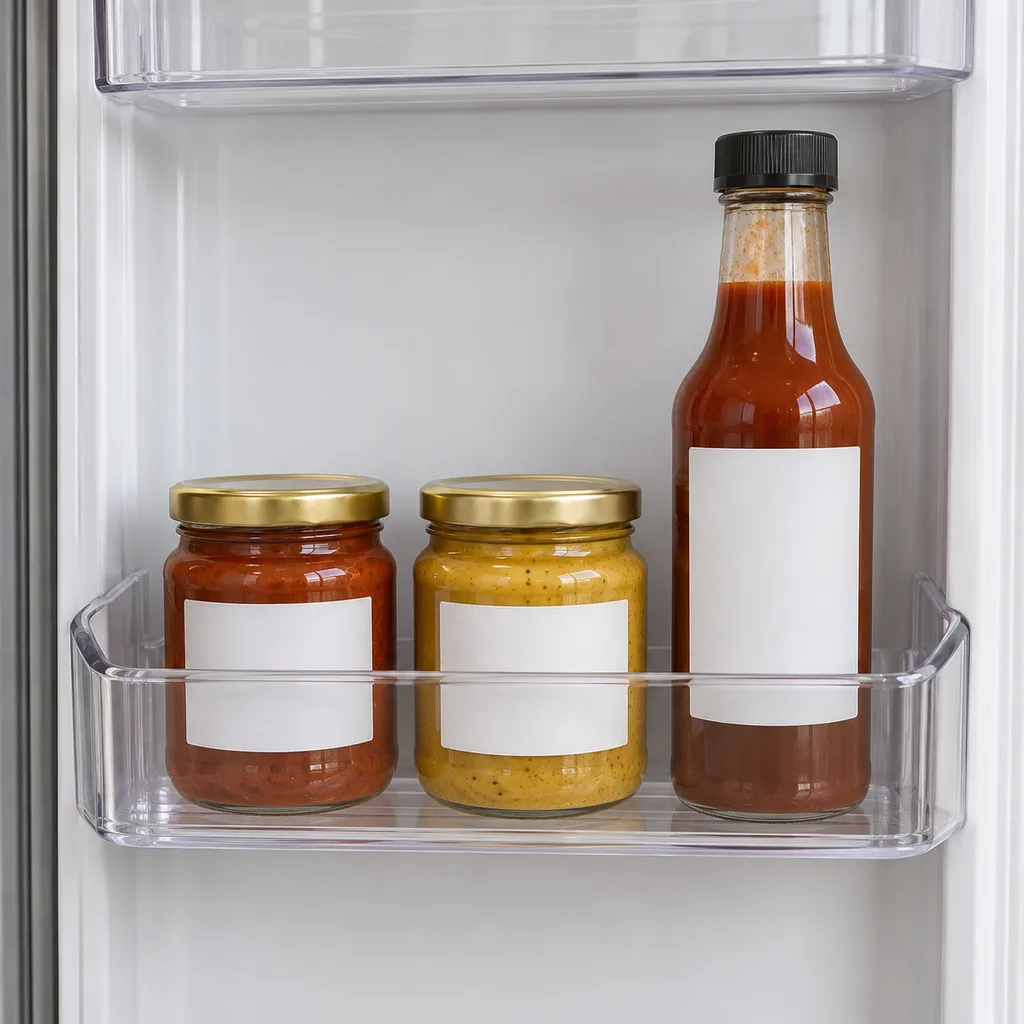
Once the food and location are appropriate, check the practical fit. A tall bottle needs room with its cap in place; a short jar needs a position where its label can still be found. A shelf's apparent width does not tell you how a group behaves when the door moves.
Follow the appliance instructions for adjustable shelves, retaining edges and stated loads. Do not remove a component or force a shelf into another position simply to fit a bottle. Leave the door, seals and nearby drawers able to operate normally.
Check retrieval with the actual closed packages rather than filling every visible gap. Someone should be able to take out one item without first holding several others. If the arrangement depends on wedging a package into place, reduce the group or choose an appropriate different location.
Keep the in-use group visible
For foods whose requirements suit the chosen location, arrange the currently used packages where their names and closures are accessible. Keep a short jar from disappearing behind a taller bottle merely because the colors look better in that order.
Separate an in-use package from a spare when that makes the routine clearer, but confirm the spare's own directions too. Unopened does not automatically mean pantry storage, and opened does not assign every product the same refrigerated period.
Keep original labels available rather than transferring several sauces into identical bottles for the display. The original package can carry identifying, ingredient and handling information that a decorative name sticker does not replace.
If you choose a small outer organizer, check its purpose and fit separately. The fridge organizer-bin guide covers selecting and cleaning those products. The door arrangement first needs a decision about the food's appropriate location; adding a bin cannot make that decision for you.
Do not let a built-in shape decide where eggs go
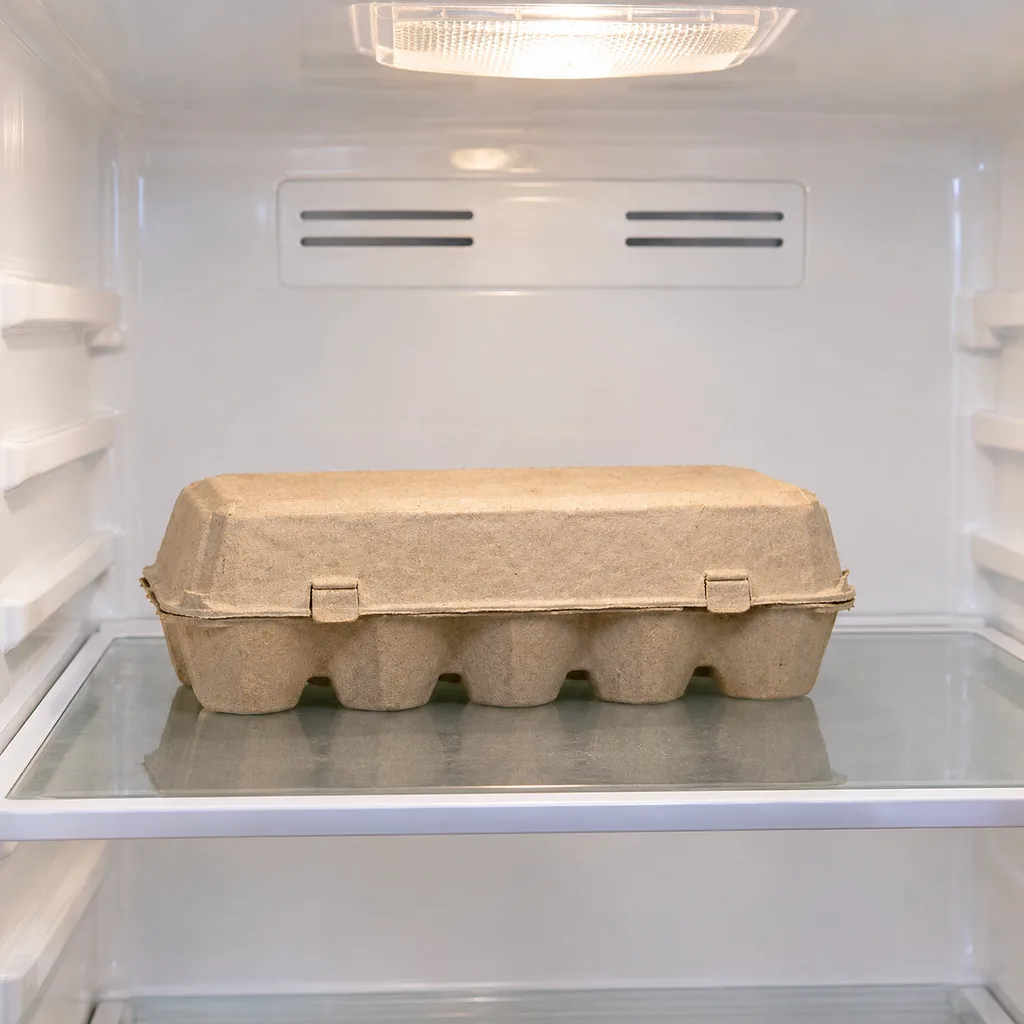
A row of egg-shaped spaces can make a door look as though it already contains a complete storage plan. FDA instead places cartoned eggs in the main refrigerator compartment. A familiar shape or an appealing organizer photo is not a reason to reverse that instruction.
Apply the same question-first habit to other specialty compartments: what does the appliance manual say, and what does the actual food require? Do not assume that a covered compartment supplies a particular temperature or gives an item a longer storage life.
Reset one section while keeping food under appropriate conditions
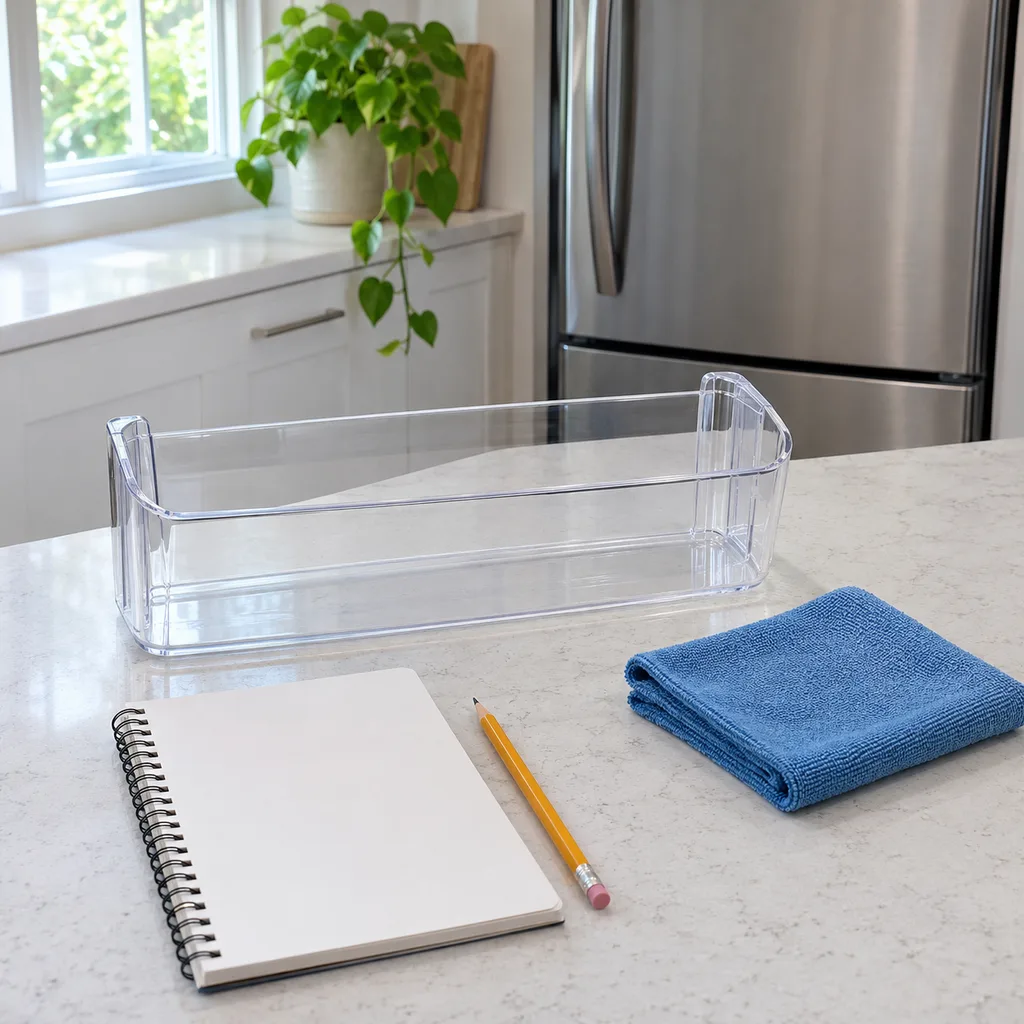
Plan how that section's food will remain appropriately refrigerated before removing a shelf or grouping. Follow the appliance and accessory care directions for the actual materials. There is no single dishwasher setting or cleaning mixture suitable for every door component.
FDA advises regular refrigerator cleaning and prompt attention to spills. Deal with the source of a leak rather than hiding it beneath an organizer. A clean-looking arrangement does not prove that a questionable package is suitable to keep.
Return each retained package to its checked location with its information visible. Keep replacement components or unresolved repairs on a separate task list instead of putting a damaged shelf back simply to restore the original appearance.
Give the next person an easy return step
A small label can describe a practical group, but avoid names that promise a temperature the shelf has not established. Explain where the commonly used items return, and keep the planning note available if another person needs to check an instruction.
After groceries arrive, compare the new packages with the working arrangement. A different bottle shape may need another fit check; a different product may have different directions. Do not buy extra items to fill an empty shelf or move suitable food simply to make the door symmetrical.
The useful result is a door that remains easy to understand during an ordinary meal: appropriate items, visible original information, manageable retrieval and no decoration-driven exceptions to storage requirements.
Keep good recipes close
Add The Cooking Twins to your preferred sources on Google for more easy dinners, no-bake desserts and kitchen inspiration.
Emma & Ella Frost
A practical resource from The Cooking Twins.
More from Emma & Ella Frost
Comments
Leave a commentShare your question or planning tip below.