
Glass vs Plastic Meal Prep Containers: Compare the Complete Product
Compare glass and plastic meal prep containers by verified uses, lids, carrying fit and care, without assuming one material suits every step.

By Emma & Ella FrostUpdated November 17, 2026

5-Ingredient Dump & Go Crockpot Meals
101 effortless slow cooker recipes for busy families.
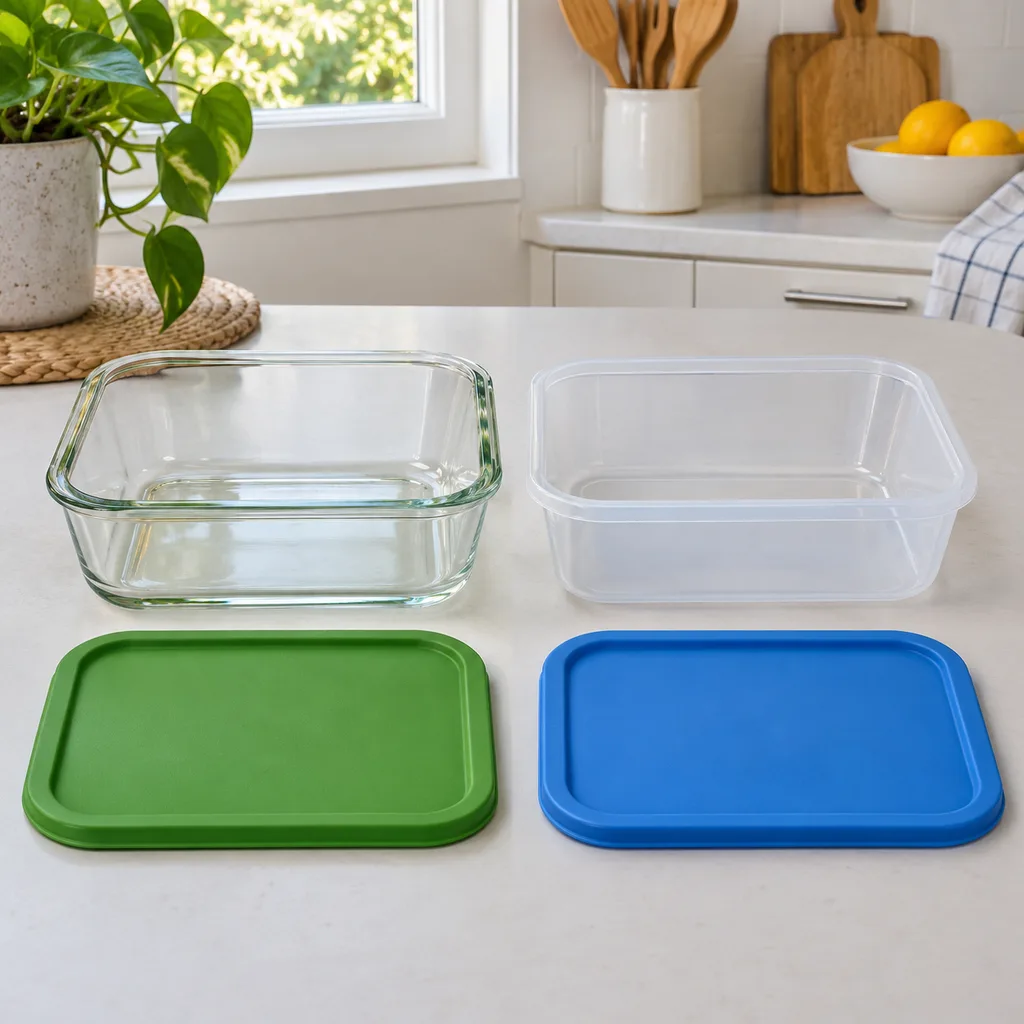
View on AmazonAvailable on AmazonChoosing glass versus plastic meal prep containers is easier when you compare the jobs the complete container must do. Refrigerated storage, a trip in a bag, freezing and reheating are different uses. One material name does not approve every step, and the base and lid may have different instructions.
Begin with two actual candidates or the containers already in your cupboard. Check their identities, intended uses, shape, closure and care requirements. You may end up keeping different containers for different roles rather than replacing a working collection with a matching set.
Write down the meal's actual journey
Choose one repeated meal-prep situation before comparing products. Does the food stay at home, travel to another location or need to be reheated in the same container? Will the container need to fit a particular refrigerator shelf, lunch bag or microwave?
List each intended step, then mark what must be verified. For example, a fictional work-lunch plan might need suitable refrigerated storage, a compatible carrying arrangement and microwave use at the destination. That is a decision checklist, not a tested food-handling or transport method.
Keep the food's preparation and handling requirements separate. A suitable container cannot establish that a meal was cooked, cooled or transported correctly, and changing material does not create a new storage period.
Compare the complete package, including the lid
Record the actual product line and identifying information for both base and lid. Look for the instructions that apply to those exact pieces rather than relying on a similar-looking listing. Keep the information available after discarding the outer packaging.
Check the permissions separately. A base intended for a particular use does not automatically give its lid the same permission. Follow the stated closure, venting or lid-removal instructions for the actual use instead of applying one rule to all containers.
Also distinguish an ordinary closure from a verified leakproof claim. A lid that rests on the rim is not evidence that a filled container can travel loose in a bag. Do not test an uncertain match by inverting food or carrying the container by its lid.
Check the carry and retrieval task with the actual pieces
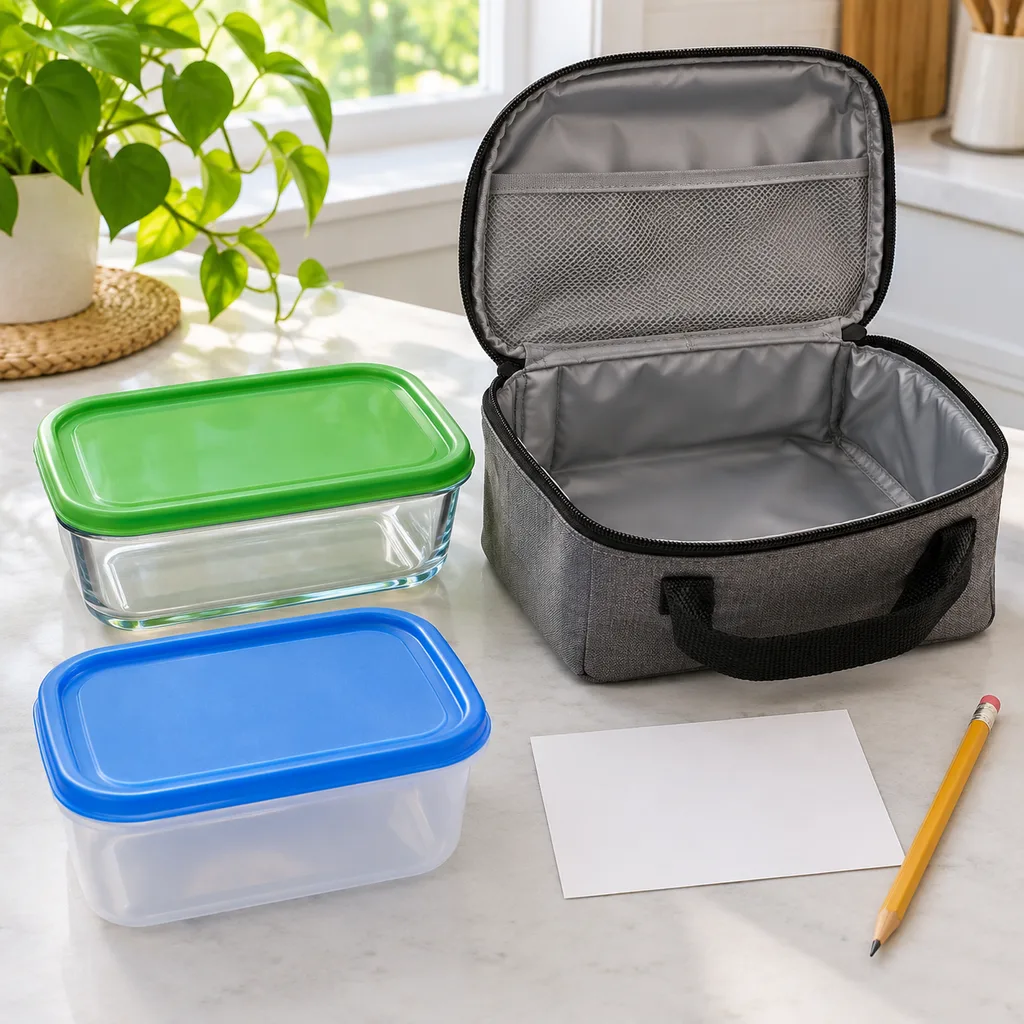
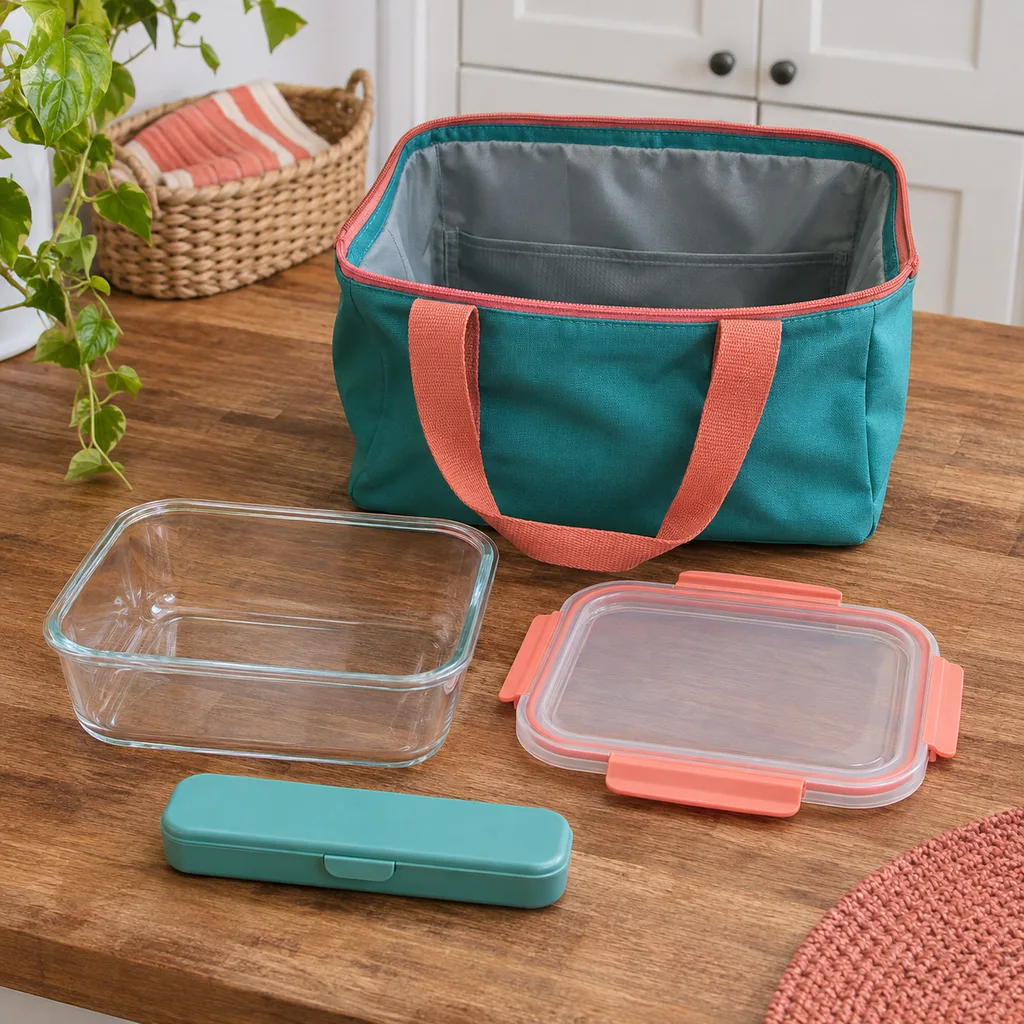
Handle each candidate empty, with its correct lid fitted, before deciding whether it suits the person using it. Then consider the added food and any surrounding bag or carrier. Do not treat the empty container's feel as the weight of the completed lunch.
Compare outside dimensions with the real shelf opening and lunch bag. Handles, projecting clips and tapered sides can affect the usable fit. The capacity printed on a package does not describe every dimension or show whether your usual meal fits comfortably.
For someone who finds a particular container awkward to lift, open or carry, reconsider that product rather than assuming a whole material category is unsuitable. Different shapes and closures can matter as much as the material named on the label.
Let the instructions decide microwave use
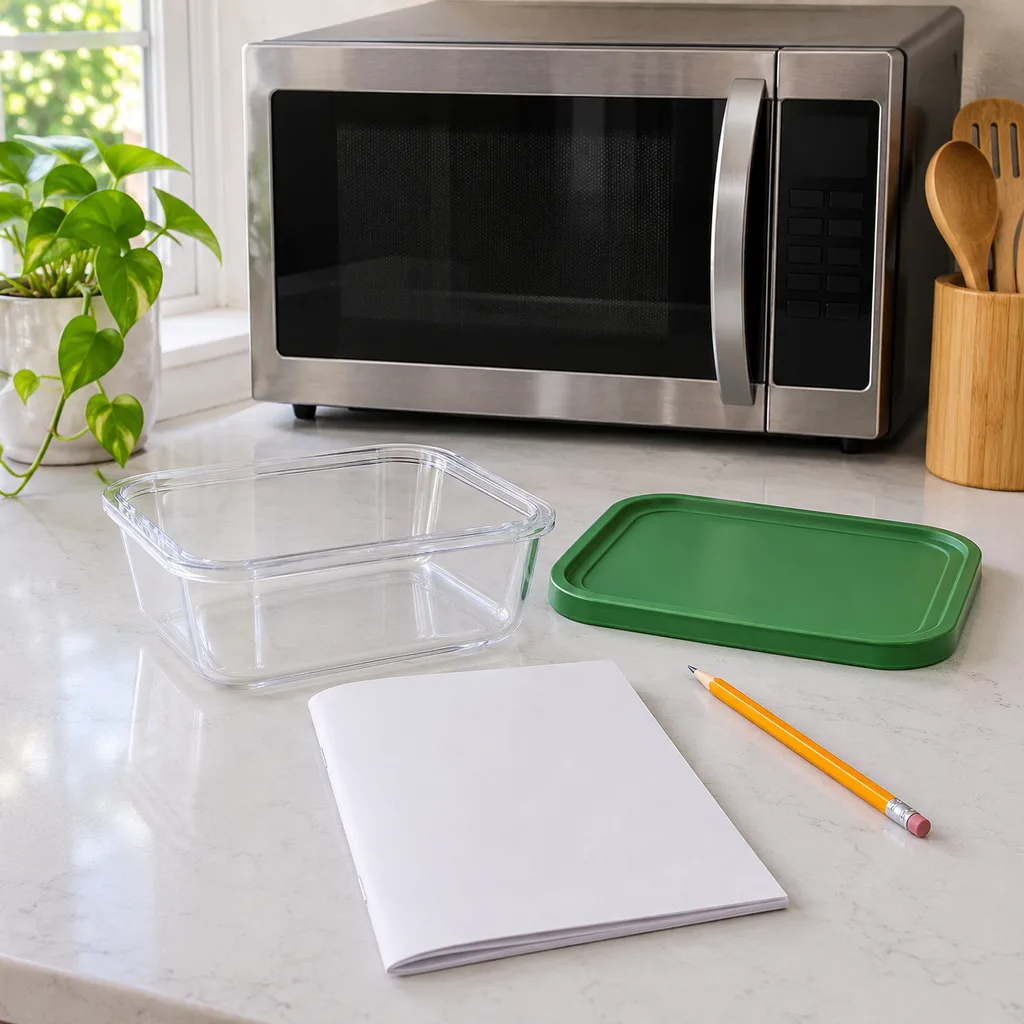
The FDA's microwave guidance explains that some plastic containers can melt from the heat of the food, and containers can become hot even when the microwaves pass through their material. It directs users to the microwave's instructions for appropriate containers. Do not use the words glass or plastic as a substitute for checking the actual product and appliance directions.
If the container is not intended for the next step, choose suitable equipment for that step instead. That may mean storing in one appropriate container and reheating in another. It does not require buying an entirely new collection.
This comparison does not supply a cooking time, reheating temperature or homemade container test. Follow the verified instructions for the food, appliance and container involved. A material choice alone cannot determine those settings.
Check freezing and temperature changes separately
If freezing is part of the plan, look for instructions covering that use. Check the permitted filling level, closure and temperature changes for the exact product. Do not improvise headspace measurements or assume that permission for refrigerated storage includes freezing.
Likewise, do not infer a hot-to-cold or cold-to-hot transfer from a photograph of a container beside an appliance. A freezer symbol, microwave statement and oven statement answer different questions. Keep them separate in your comparison.
Inspect the pieces and follow the maker's guidance about damage and continued use. Neither a familiar material nor a new replacement lid repairs a damaged base. Set an unresolved item aside from the working collection while you check its identity or condition.
Choose a shape you can clean and return
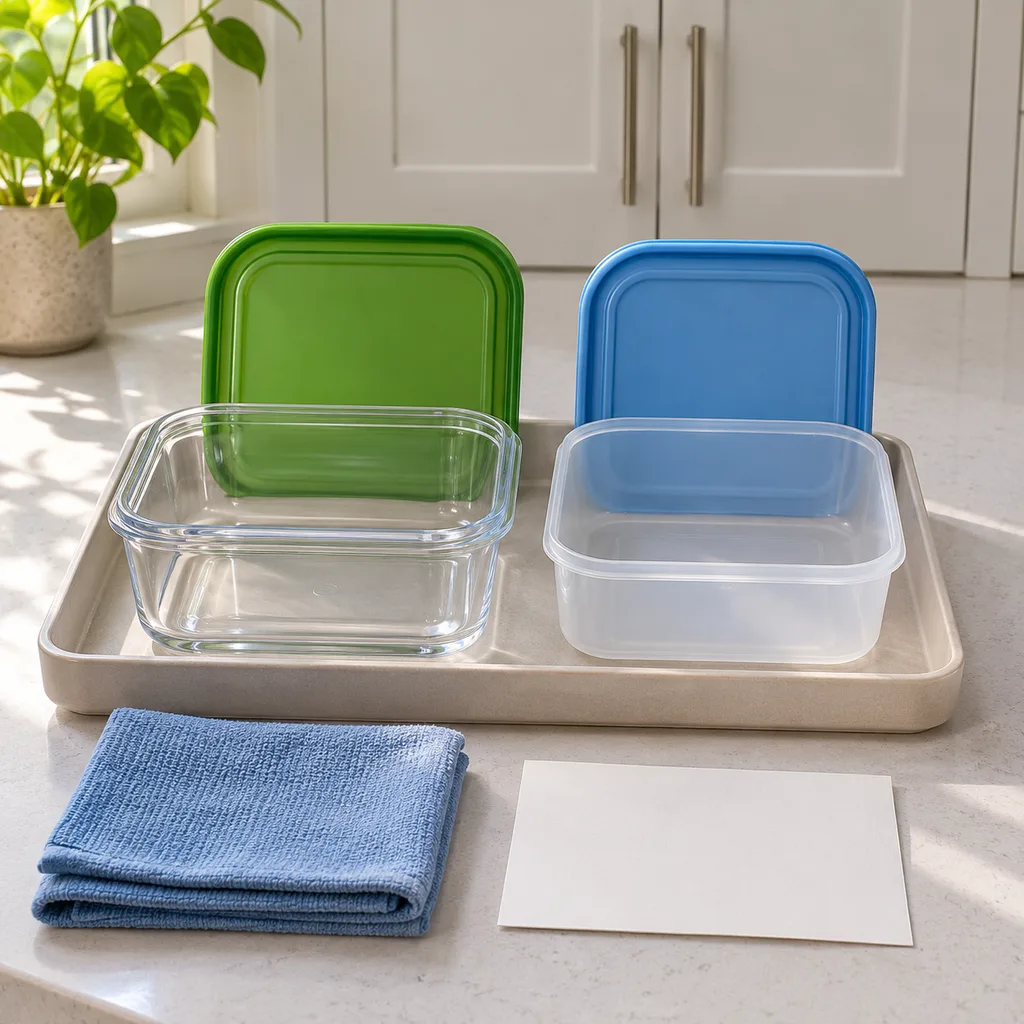
Read the care directions before planning a dishwasher routine. Check both the base and lid, including removable parts, clips or seals. Do not transfer a cleaning method from one product to another simply because both look transparent.
Look at the actual corners and parts you will need to reach using the permitted method. Decide where the pieces will dry and how the correct lid will return to its base or storage section. A design with more parts needs a return routine you are willing to maintain.
The lunchbox container-storage guide covers arranging empty, ready-to-use pieces. That physical organization is a later task: first establish which containers suit the meal and which uses their instructions actually permit.
Keep the useful roles instead of choosing a universal winner
Compare the candidates against three questions: can this complete product perform the required steps, can the person using it handle it comfortably, and can the household maintain its care routine? A product missing a necessary permission should not win because its appearance is preferred.
A mixed collection can be a reasonable result when its roles remain clear. Keep the appropriate home-storage pieces, travel pieces or reheating equipment you actually use, and preserve the instructions that distinguish them.
This guide does not rank materials for medical risk, environmental impact or lifetime cost. Those claims need different evidence. For the everyday decision, start with the real meal journey and finish with a complete container whose verified uses fit it.
Keep good recipes close
Add The Cooking Twins to your preferred sources on Google for more easy dinners, no-bake desserts and kitchen inspiration.
Emma & Ella Frost
A practical resource from The Cooking Twins.
More from Emma & Ella Frost
Comments
Leave a commentShare your question or planning tip below.