
Baking Supplies Organization Ideas: Separate Everyday Tools and Project Pieces
Organize baking supplies by everyday tools, bakeware, ingredient requirements and decorating projects, with a return routine that fits your kitchen.

By Emma & Ella FrostUpdated November 17, 2026

5-Ingredient Dump & Go Crockpot Meals
101 effortless slow cooker recipes for busy families.
View on AmazonAvailable on AmazonBaking supplies organization becomes easier when you separate the tools used for an ordinary batch from the pieces needed for an occasional decorating project. You do not need one enormous baking bin. Give measuring tools, pans, packaged ingredients and small decorating accessories different homes that still make sense together.
Start with a recipe you actually make and collect its equipment without opening any ingredients. That small set shows what needs a convenient location. A novelty cutter can stay in the collection without taking the place where you look for measuring spoons every time.
Make a short everyday baking kit
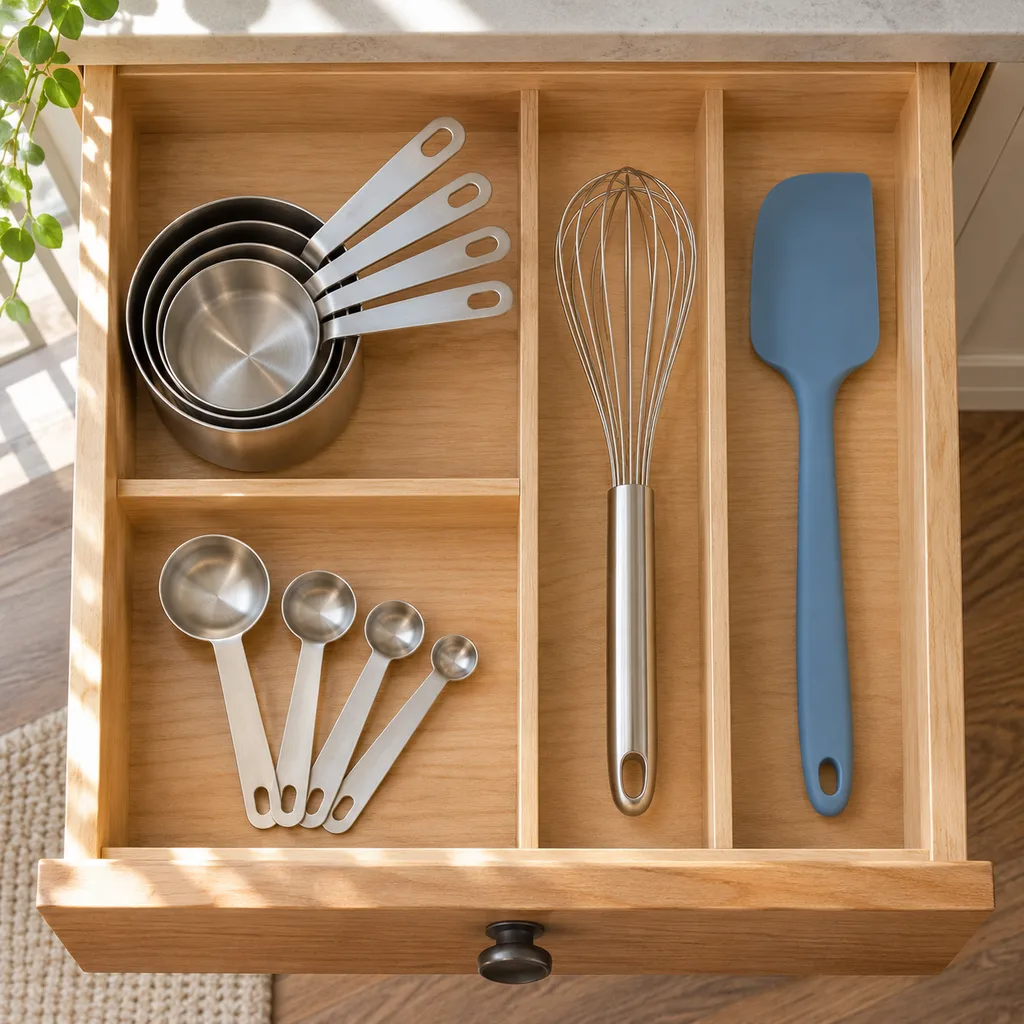
List the measuring cups and spoons, scraper, whisk and other small tools your chosen recipe uses. Keep those pieces reachable as a group, but do not put dirty or damp tools back into a stored kit. Choose storage appropriate for the actual materials and follow their care instructions.
A shallow drawer section works when the handles and tool heads fit without crossing over neighboring compartments. A removable tray can work in a cabinet when it is easy to retrieve. Check the full lift-out movement with the real tools before buying a larger organizer.
Leave mixers and other heavy equipment out of this small-tool kit. They need their own appropriate storage and operating arrangements. A tray that conveniently holds measuring spoons is not automatically a suitable support for an appliance.
Give pans and racks their own retrieval order
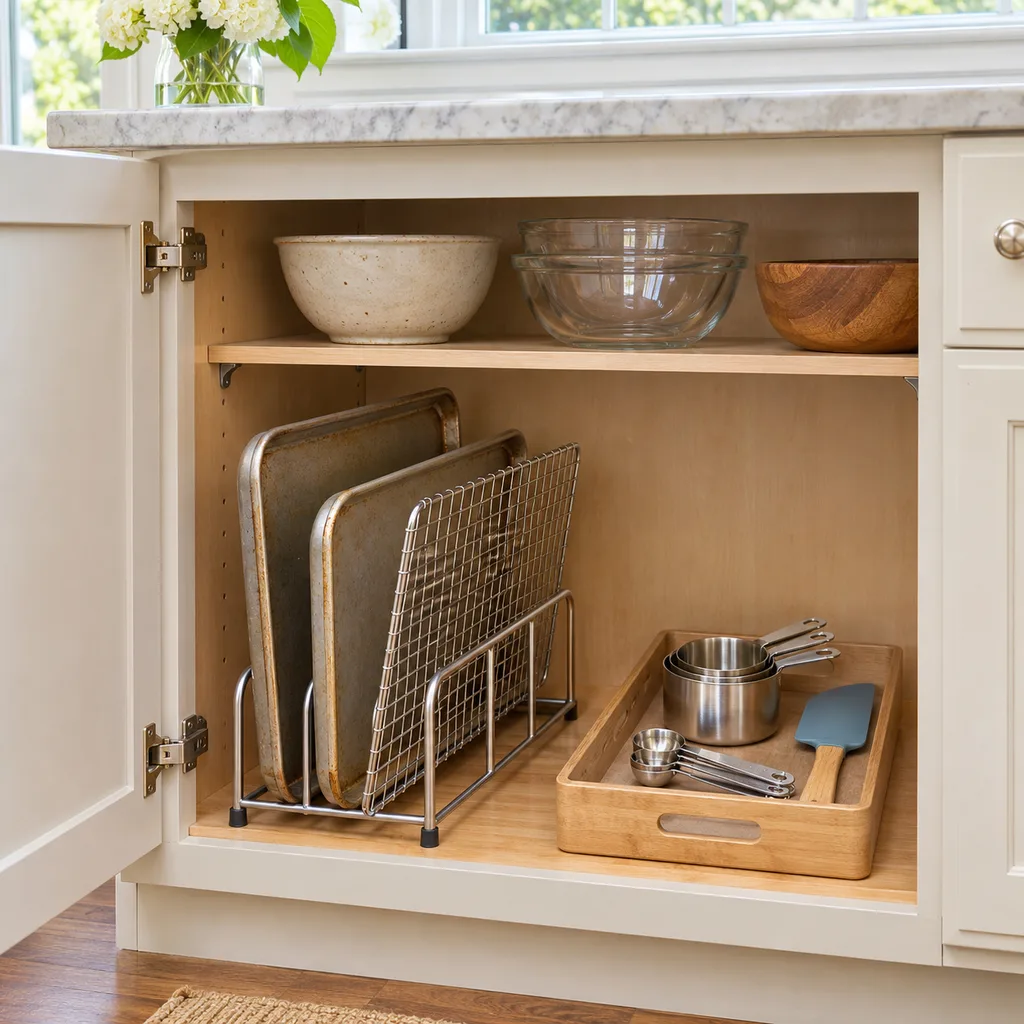
Sort baking sheets, cooling racks, muffin pans and cake pans by what you use together. Pull out the pan used most often and notice what had to move first. Change that one retrieval problem rather than trying to make every item stand vertically.
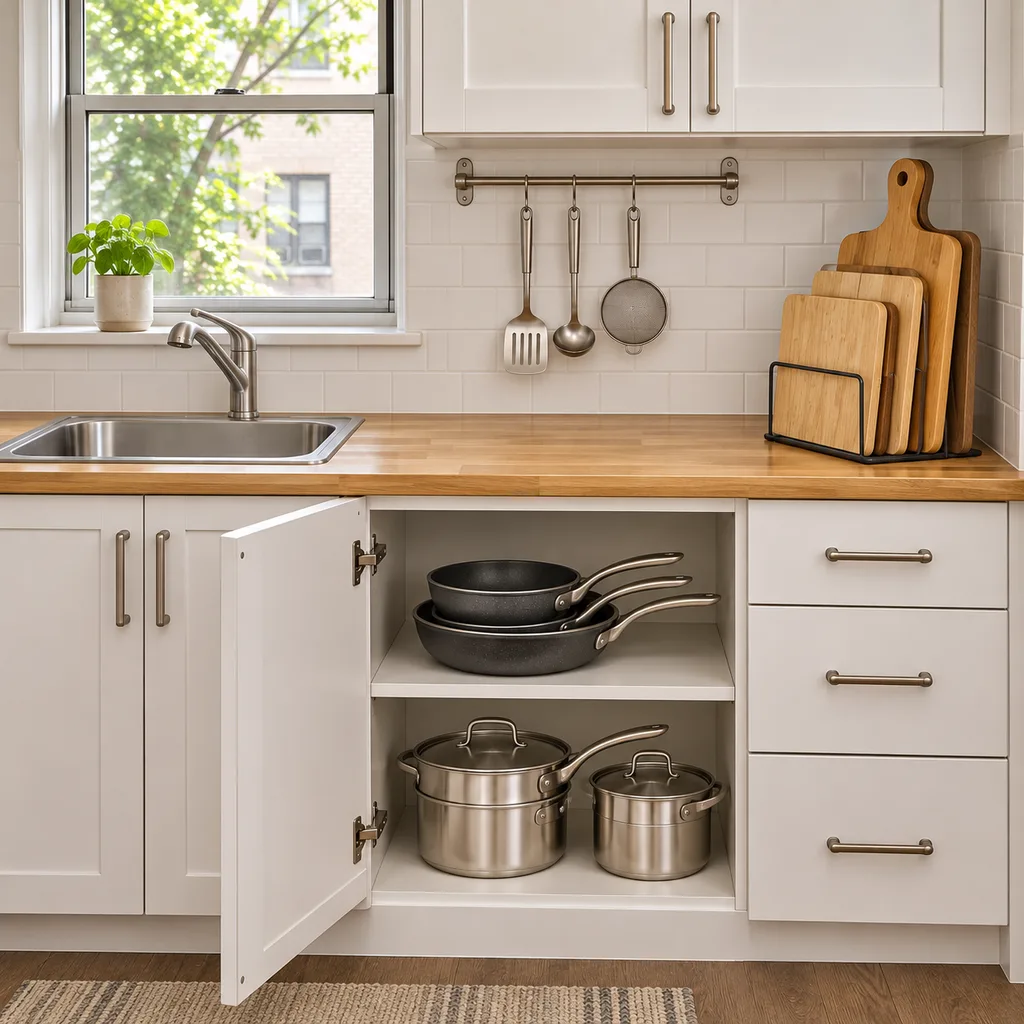
If you choose divided upright storage, use equipment intended for the particular weight and shapes. Check the cabinet opening, shelf clearance and removal movement. A muffin pan with a deep rim may need a different slot from a flat baking sheet.
Where an appropriate rack does not fit, keep a manageable stack with the frequently used pan accessible. Follow the cookware maker's guidance about nesting and surface protection. Avoid improvising an unstable tower to make the cabinet look more spacious.
Keep ingredients in suitable food storage
A baking category does not mean every ingredient belongs on the same shelf. Read the directions on each package and put foods needing refrigeration in appropriate cold storage. Make the tools convenient to the work without moving ingredients away from the conditions they require.
For shelf-stable items, keep the product information available and group packages so you can see what is already open. A simple note of the opened package can help with shopping decisions; it does not establish how long a food remains suitable.
The FDA's food-storage guidance advises following label directions and keeping nonperishable food separate from household cleaners and chemicals. Do not use an under-sink cleaning cupboard as overflow ingredient storage just because a basket fits.
Separate decorating accessories from everyday equipment
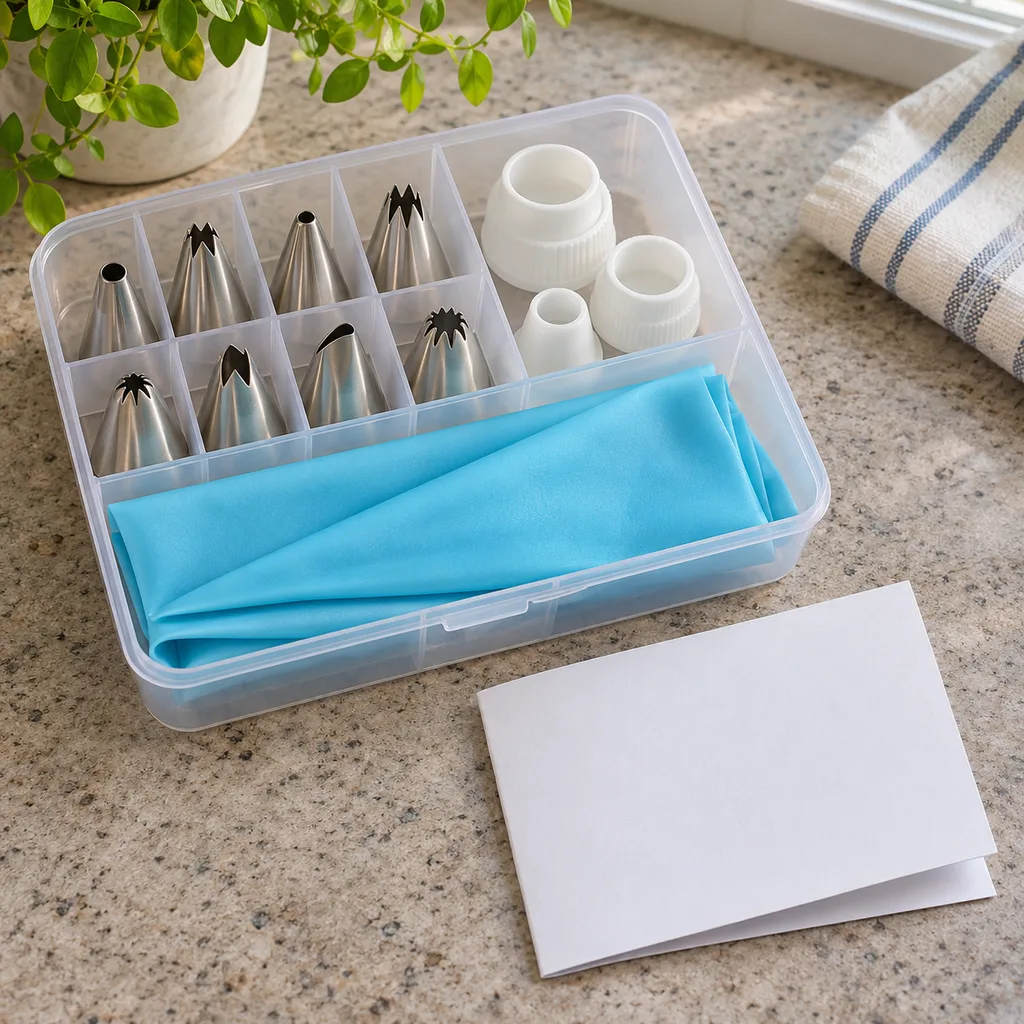
Small decorating tips, couplers, cutters and reusable bags can become difficult to identify in one deep container. Group compatible pieces according to their actual instructions and keep the information needed to match them. Looking similar is not proof that parts belong together.
Use a shallow compartment arrangement that lets you see the pieces without emptying everything. Check that the container suits the items and can close without bending them. Keep paper packaging or instructions separate from anything that has not completed its cleaning and drying routine.
Store edible decorations as food, not as permanent craft supplies. Keep them identified and follow their package directions. Nonedible decorative materials need a separate destination so they cannot be confused with something intended for a cake.
Make occasional projects easy to bring out and put away
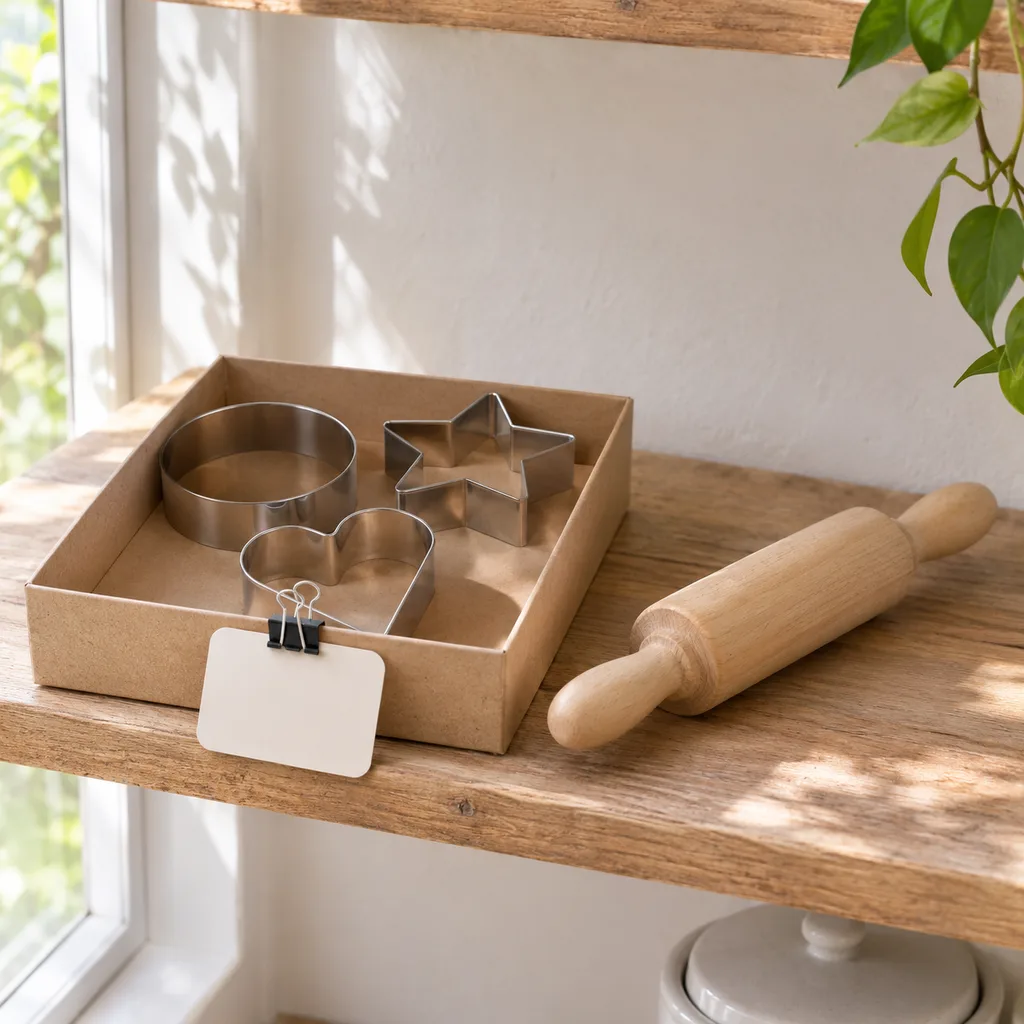
A holiday cutter collection or a specific decorating project can have its own removable group. Name the group for the task, not a vague category such as miscellaneous. Add a contents note only if it helps you find a missing piece.
Do not fill the container with every baking object left over after organizing the main drawer. A useful project group has a clear boundary. If the pieces are too heavy or awkward to retrieve together, split the storage instead of adding a larger handle.
For the surrounding cabinet and counter, our small kitchen organization guide covers the broader fit and work-space decisions. Keep this baking arrangement focused on the equipment needed for a particular task.
Check the return route after the next bake
After following the appropriate cleaning and drying routines, return each tool to its assigned group. Notice where the system asks you to lift a stack, untangle handles or remove a whole box to put away one item. That is the next place to improve.
Update the shopping list separately from the storage arrangement. Running low on an ingredient and lacking room for another container are different problems. A convenient baking setup makes the next recipe easier to start without making the whole kitchen a display of baking supplies.
Keep good recipes close
Add The Cooking Twins to your preferred sources on Google for more easy dinners, no-bake desserts and kitchen inspiration.
Emma & Ella Frost
A practical resource from The Cooking Twins.
More from Emma & Ella Frost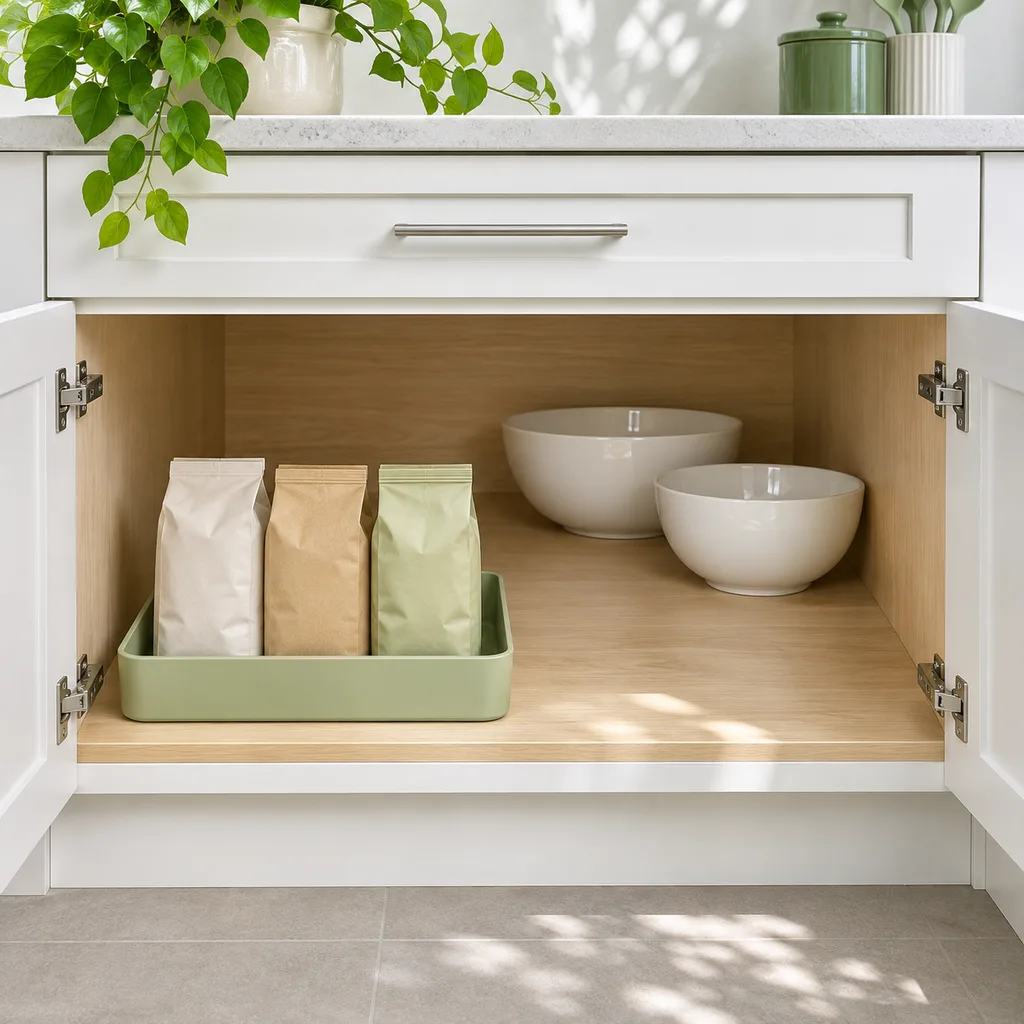
Comments
Leave a commentShare your question or planning tip below.