
Wedding Table Decor With Lace Napkins: Three Clear Styling Choices
Plan wedding table decor with lace napkins, from a simple scalloped edge to a contrasting cloth or a separate decorative accent.

By Emma & Ella FrostUpdated November 17, 2026

5-Ingredient Dump & Go Crockpot Meals
101 effortless slow cooker recipes for busy families.
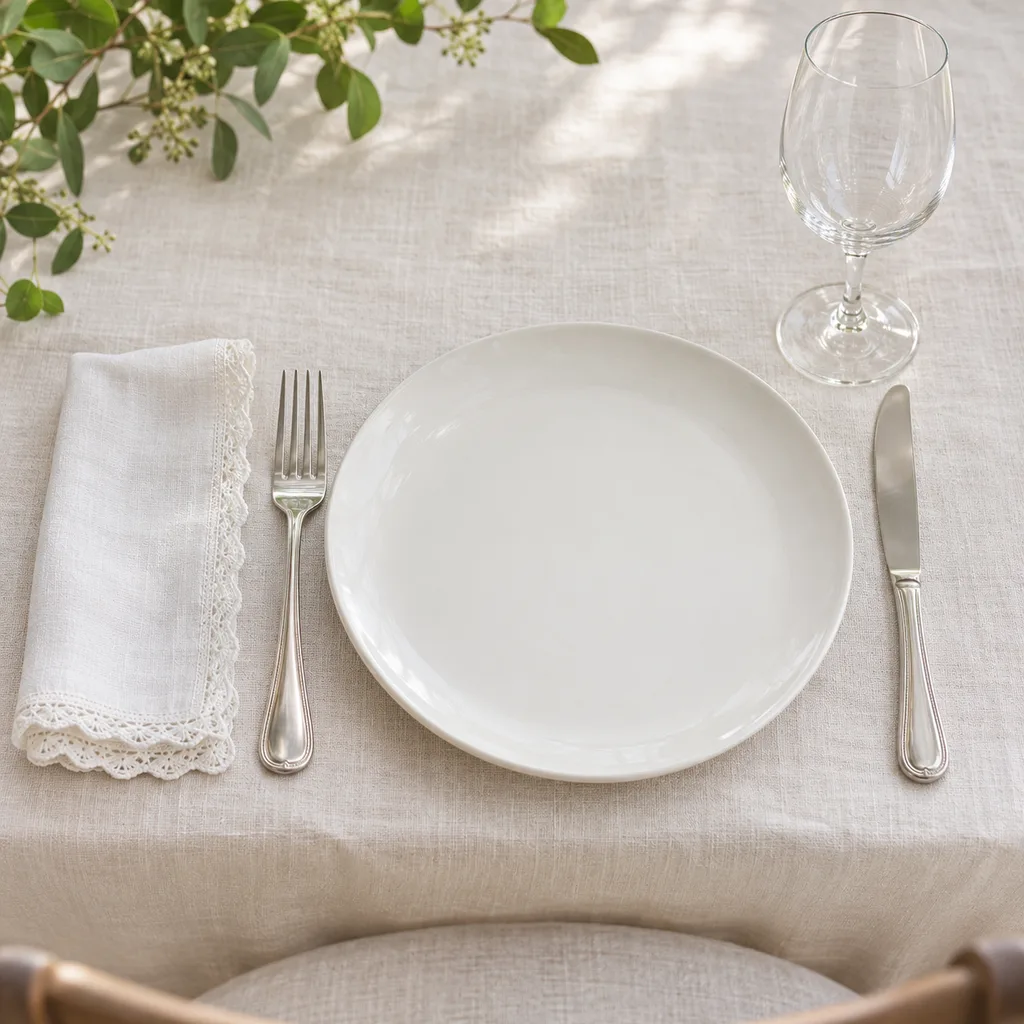
View on AmazonAvailable on AmazonLace napkins can give a wedding table a delicate focal detail without requiring lace on the tablecloth, charger and centerpiece too. Begin with one actual napkin and a plain setting. Look at how much of the pattern you want to show, then decide whether the lace belongs at every place or on a separate decorative layer.
The useful distinction is between a napkin intended for dining and a decorative textile that only resembles one. Check the supplier's intended use and care information before building the design around it. This guide offers styling choices, not a test of a particular fabric, finish or rental product.
Decide what the lace piece will do
Ask whether guests will use the piece as their meal napkin or whether it is an accent accompanied by a separate dining napkin. Make that decision visible in the sample setting. A decorative piece should not leave guests wondering what they are meant to unfold or use.
Keep unidentified vintage textiles out of direct food presentation until their suitability is established. Age, appearance or a floral pattern does not provide that information. Where the piece is decorative only, use it away from food and drinking surfaces and provide the ordinary table linens the meal needs.
Take a sample to the person responsible for the venue linens or catering setup. Discuss placement, laundering and collection before ordering the full quantity. A photograph can convey the appearance, but it cannot confirm the condition or care of the actual pieces.
Option one: show a scalloped edge beside a plain plate
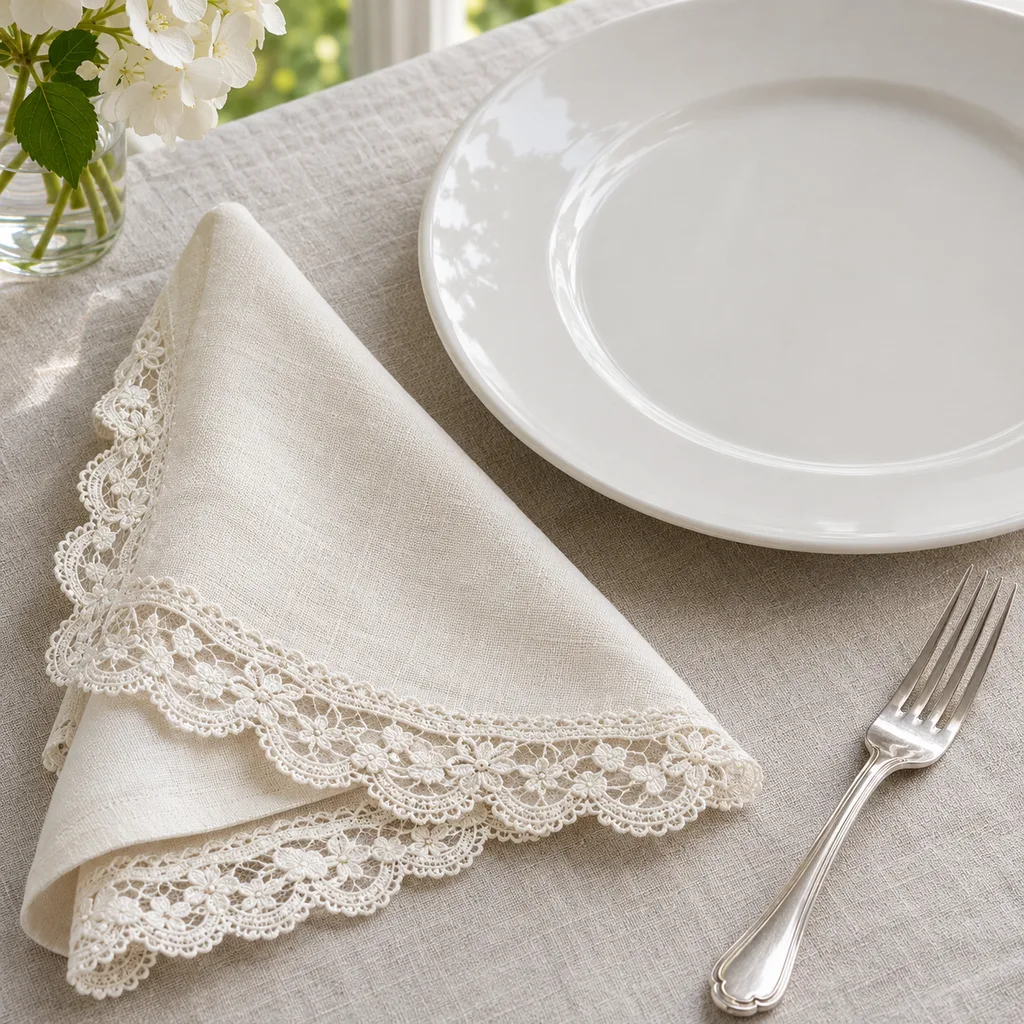
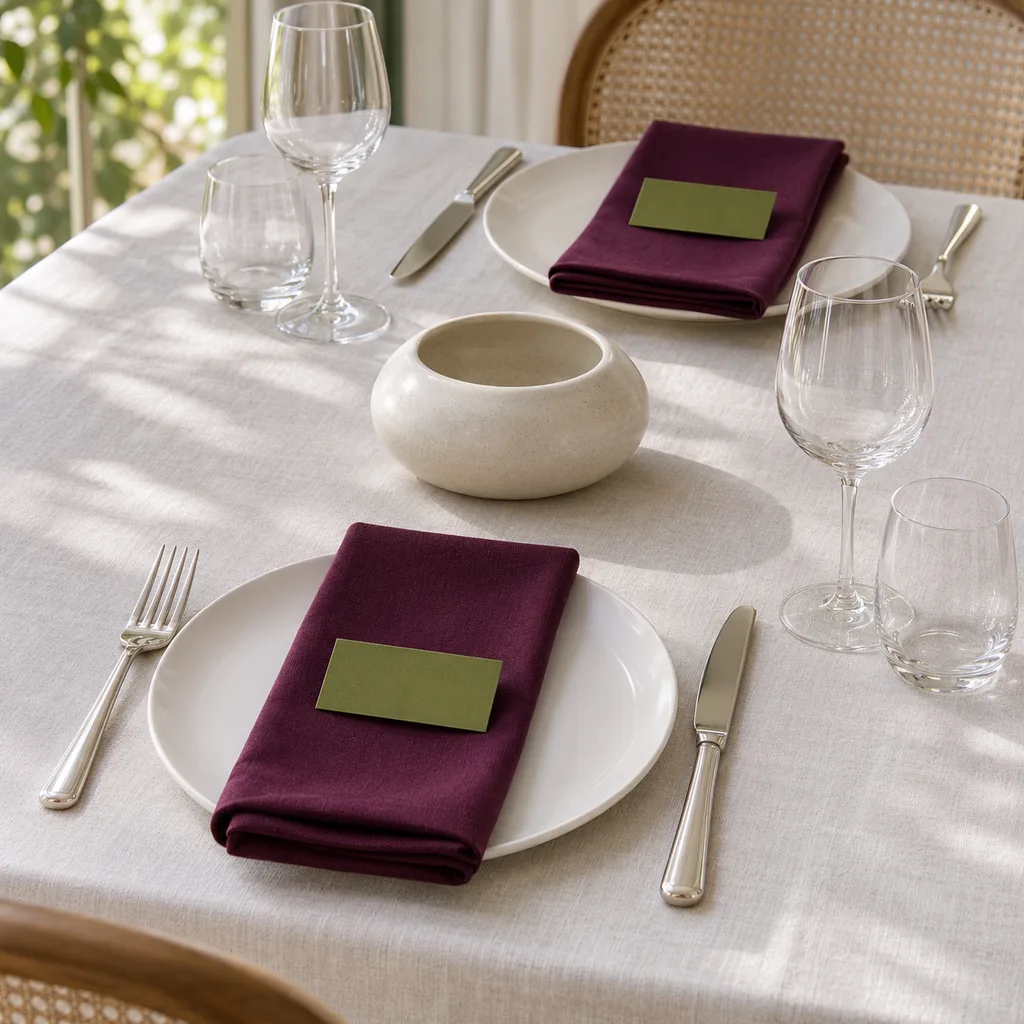
A simply folded lace-edged dining napkin beside a white plate lets the border remain visible without covering the whole place setting. Keep the lace edge facing outward and the folded body contained within that person's area. Clear glass and ordinary flatware leave the pattern easy to see.
Try the fold with the actual napkin, not a different fabric of a similar color. Thickness, softness and the shape of the border affect how it sits. If the edge curls or the folded bundle takes too much space, choose a flatter arrangement rather than adding a heavy ornament to hold it down.
This direction suits a table where the lace itself is the main detail. Leave off an elaborate napkin ring at first. Add one only if it has a useful visual role and can be removed without catching the fabric.
Option two: pair ivory lace with one deeper color
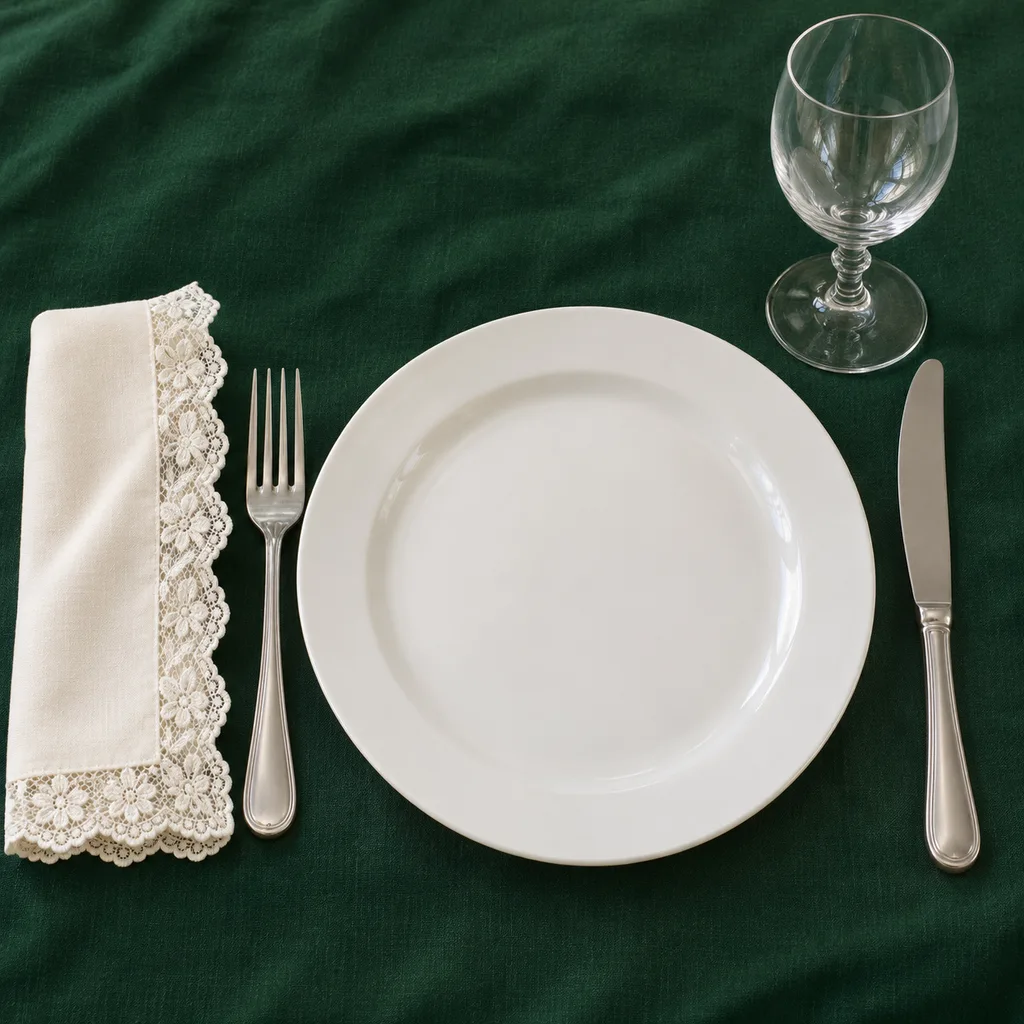
To keep pale lace from disappearing against a pale tabletop, compare it with a darker background elsewhere in the setting. A deep green table covering or a plain plum accent can make the edge more noticeable. These are palette options, not a requirement to buy colored chargers or several sets of linens.
Keep the dining napkin identifiable and avoid building a stack of textiles that guests must sort through. If a colored piece is decorative, place it separately from the actual napkin. Test the contrast under the venue's ordinary lighting before settling on it.
For a broader color direction, our plum and olive wedding palette guide compares light, darker and wood-table arrangements. Use the lace as a detail within the chosen direction rather than adding a competing theme.
Option three: leave the napkin free and move lace to a separate accent
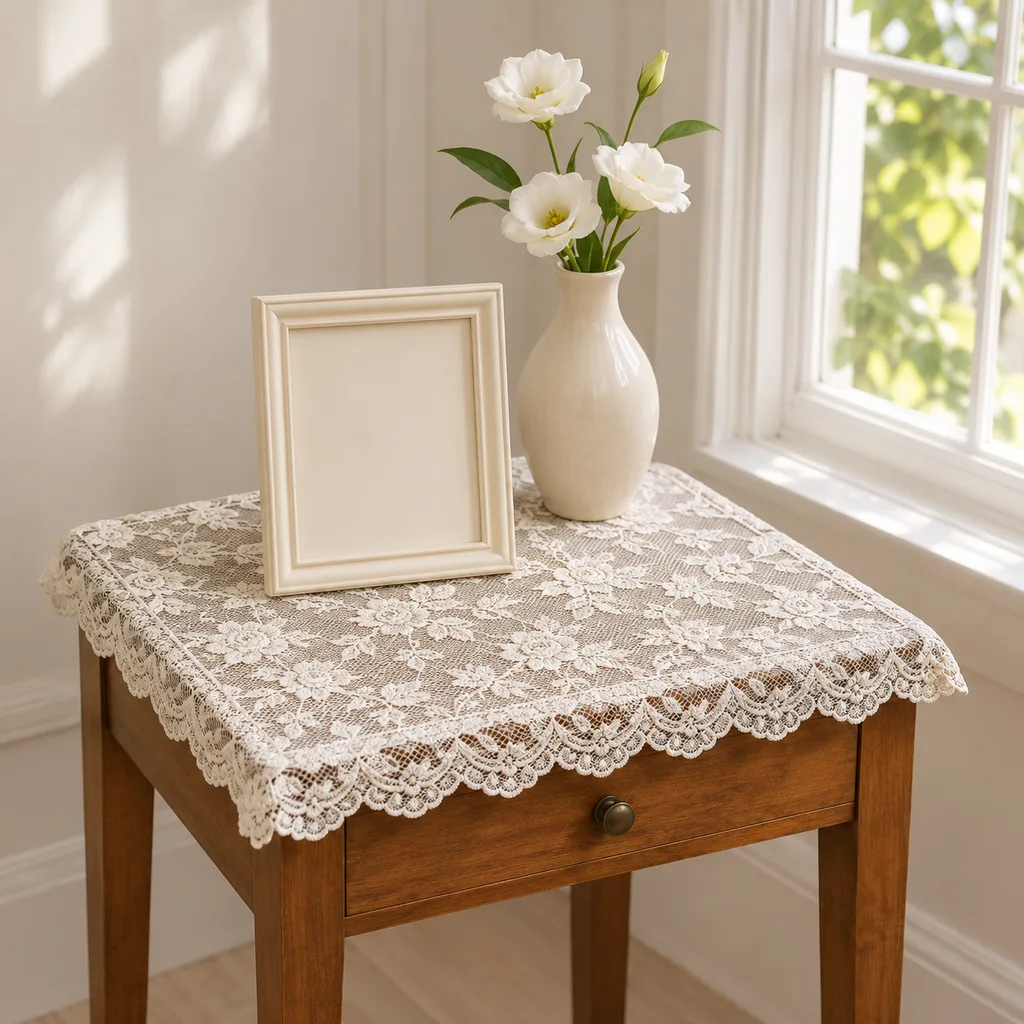
If the lace piece is not intended for dining, keep a plain dining napkin at each place and move the decorative textile to a separate, nonfood display area. A small side-table arrangement can preserve the visual idea without making the meal setting confusing.
Do not use decorative lace as an unverified liner beneath unwrapped desserts or food. Keep its purpose distinct from serving equipment. It can supply texture beside a card or another appropriate decorative object without touching the meal.
This alternative is useful when only a few suitable pieces are available. There is no need to source a complete set of matching heirloom-style items just to repeat a motif at every chair. A small, deliberate accent may be enough.
Build one usable place before repeating the design
Lay out the actual plate, glass, flatware, napkin and any place card. Sit at the setting and unfold the napkin. Check whether the decorative edge catches on the holder, whether the card occupies the space needed for the glass and where any removed ring will go.
Then ask the setup team to repeat that sample. If it needs an elaborate explanation to distinguish the serving pieces from decoration, simplify it. A short reference photo and a clear list of included pieces are more useful than several conflicting inspiration images.
Leave open flames out of the textile-focused sample. The U.S. Fire Administration suggests flameless candles as an alternative to burning candles. Any lighting still needs the venue's approval and the product's instructions; the table design does not establish permission.
Confirm quantities, care and the return plan
Count against the approved place-setting plan, including any agreed spare pieces, rather than estimating from a room photograph. Confirm who supplies, places and collects the napkins. Record which items belong to the rental company and which belong to the couple or family.
Follow the actual care instructions and rental agreement instead of assuming all lace can be washed or pressed in the same way. Keep separate pieces identified through collection. Do not use an unfamiliar cleaning method to make a stained sample look ready for the full event.
Save the final sample photo with the quantity and ownership notes. That record gives the setup team one repeatable arrangement and the clearing team a clear return task. The finished table should feel easy to use, with lace providing a thoughtful detail rather than another obstacle around the plate.
Keep good recipes close
Add The Cooking Twins to your preferred sources on Google for more easy dinners, no-bake desserts and kitchen inspiration.
Emma & Ella Frost
A practical resource from The Cooking Twins.
More from Emma & Ella Frost
Comments
Leave a commentShare your question or planning tip below.