
Wedding Welcome Table Decoration Ideas With a Clear Purpose
Plan a wedding welcome table with a readable greeting, useful program or guest-book space and coordinated decoration. Rehearse the setup before packing.

By Emma & Ella FrostUpdated November 16, 2026

5-Ingredient Dump & Go Crockpot Meals
101 effortless slow cooker recipes for busy families.
View on AmazonAvailable on AmazonA wedding welcome table works best when guests can understand its purpose without stopping to study a collection of decorations. Begin with what you want someone to do: read a greeting, pick up a program, or leave a message. Then give that action a clear place on the table.
These wedding welcome table decoration ideas focus on the arrival station, not a seating-chart installation, gift-security plan or dessert display. You can create a coordinated arrangement with a sign, a small decorative accent and useful space for the items guests will actually handle.
Choose the table's main job
Write down the most important action before choosing containers or flowers. If the station is simply a greeting, a clear sign and a restrained accent may be enough. If it also holds programs, guests need an obvious place to take one. If it includes a guest book, the writing area becomes part of the working layout.
Do not assume every wedding needs all of those functions. Zola's guest-book guidance treats a guest book as a choice rather than a mandatory detail. Include one if you want the messages, not merely because there is an empty space beside the welcome sign.
Keep the main action visible. A guest should not have to move a vase to discover the programs or lift a decorative object to reach the pen. If two activities compete for the same surface, simplify the station or discuss separate locations with the venue.
Confirm the location before designing the display
Ask the venue where a welcome table can stand and what its setup rules permit. A table that looks attractive in a photograph may be in the wrong place for the actual entrance, service route or room arrangement. Do not use decoration to narrow an entrance or conceal information supplied by the venue.
Think about the direction guests will approach and where they can pause. A guest reading a sign and another writing in a book need different amounts of time at the station. Plan the arrangement with the venue or coordinator rather than assuming one position will suit every room.
Check the actual table size and surface before ordering a fitted covering or large sign. Confirm whether you may attach anything, what supports are allowed, and when the display must be removed. This guide does not replace venue rules or establish accessibility or installation compliance.
Build the arrangement around one readable message
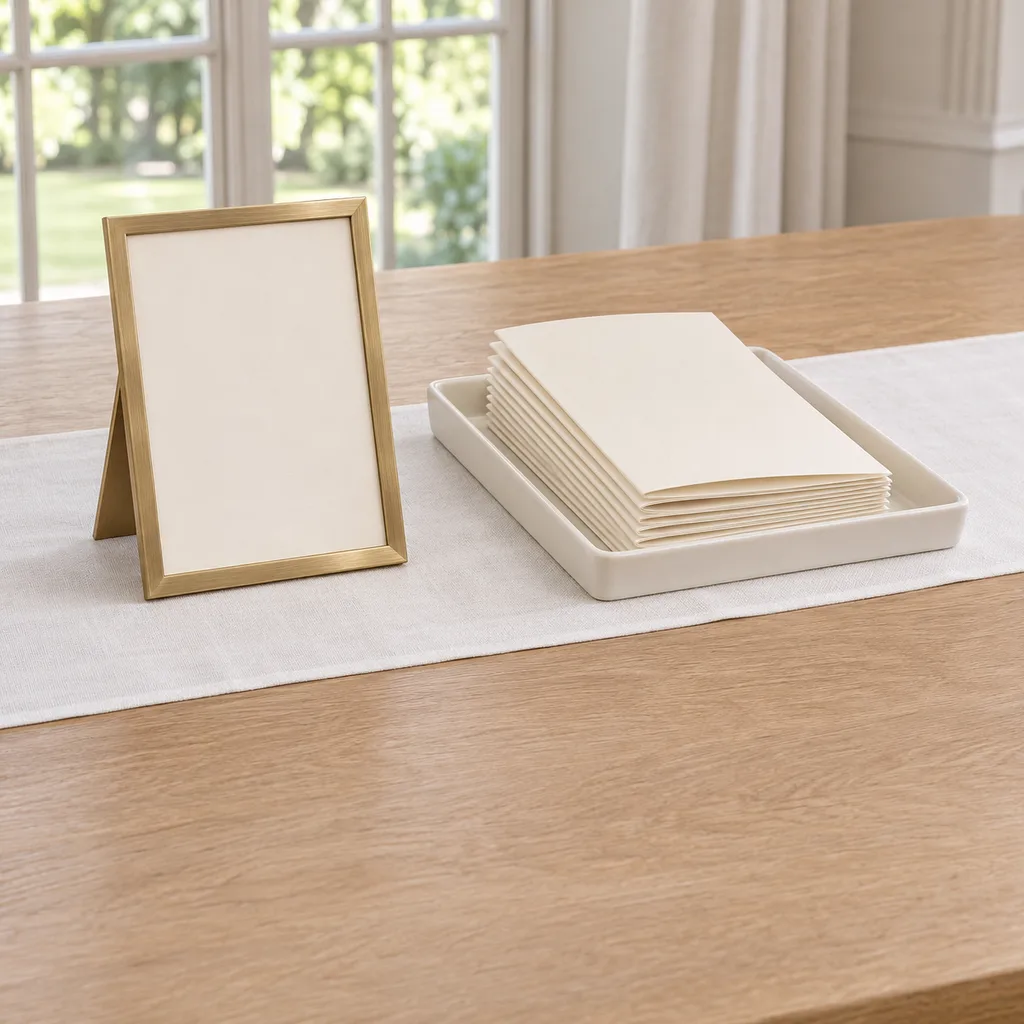
Choose one main greeting instead of surrounding it with several equally prominent signs. A short welcome can be paired with a smaller instruction for the book or programs when needed. Keep each instruction close to the object it explains.
Check a printed sample in the lighting where the sign will be used. Dark lettering on a plain light background is a straightforward starting point. Decorative scripts can become difficult to distinguish when the message is small, the surface reflects light or the wording is long.
Read the names, date and any directions from the actual proof, not from memory. Have another person check them too. A beautiful frame cannot correct a misspelled name or a reference to a room that has changed. Keep the wording consistent with the arrangements confirmed by the couple and venue.
Use a book-and-pen layout with room to write
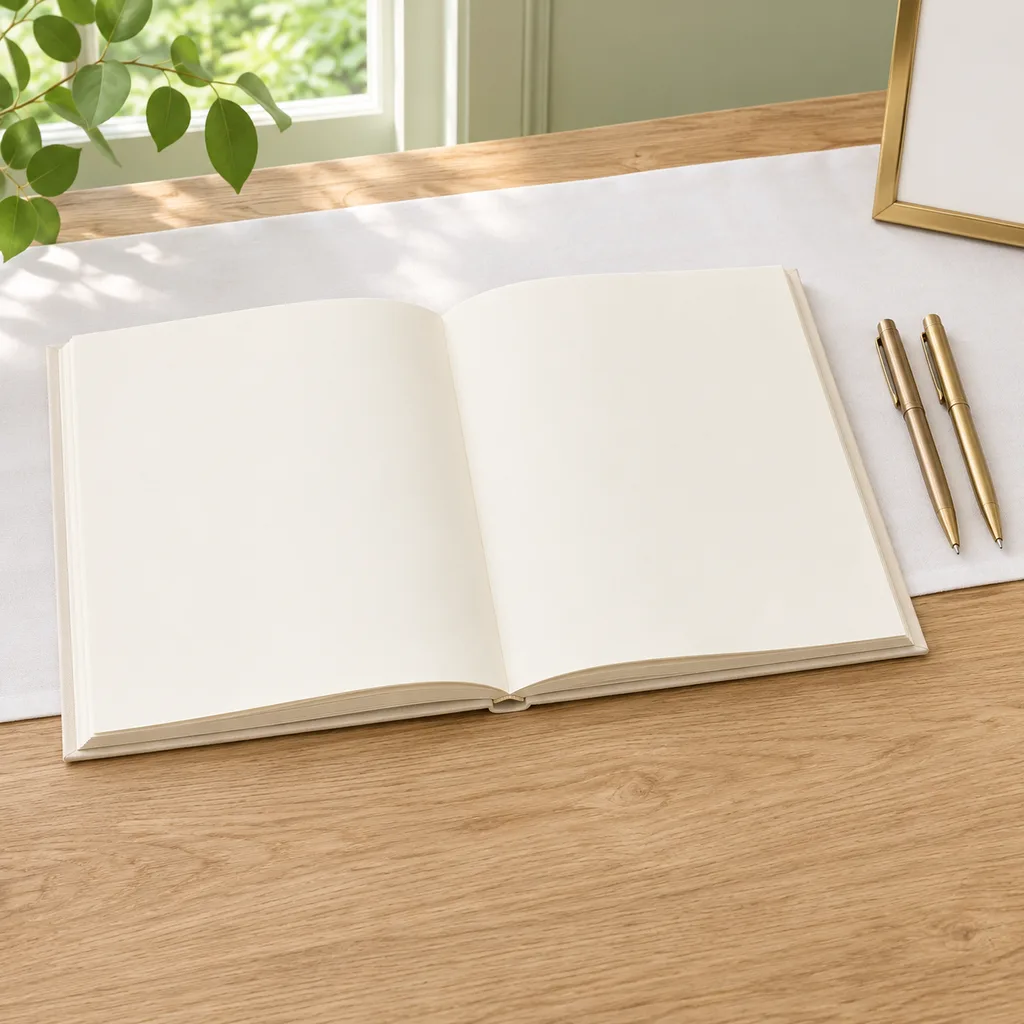
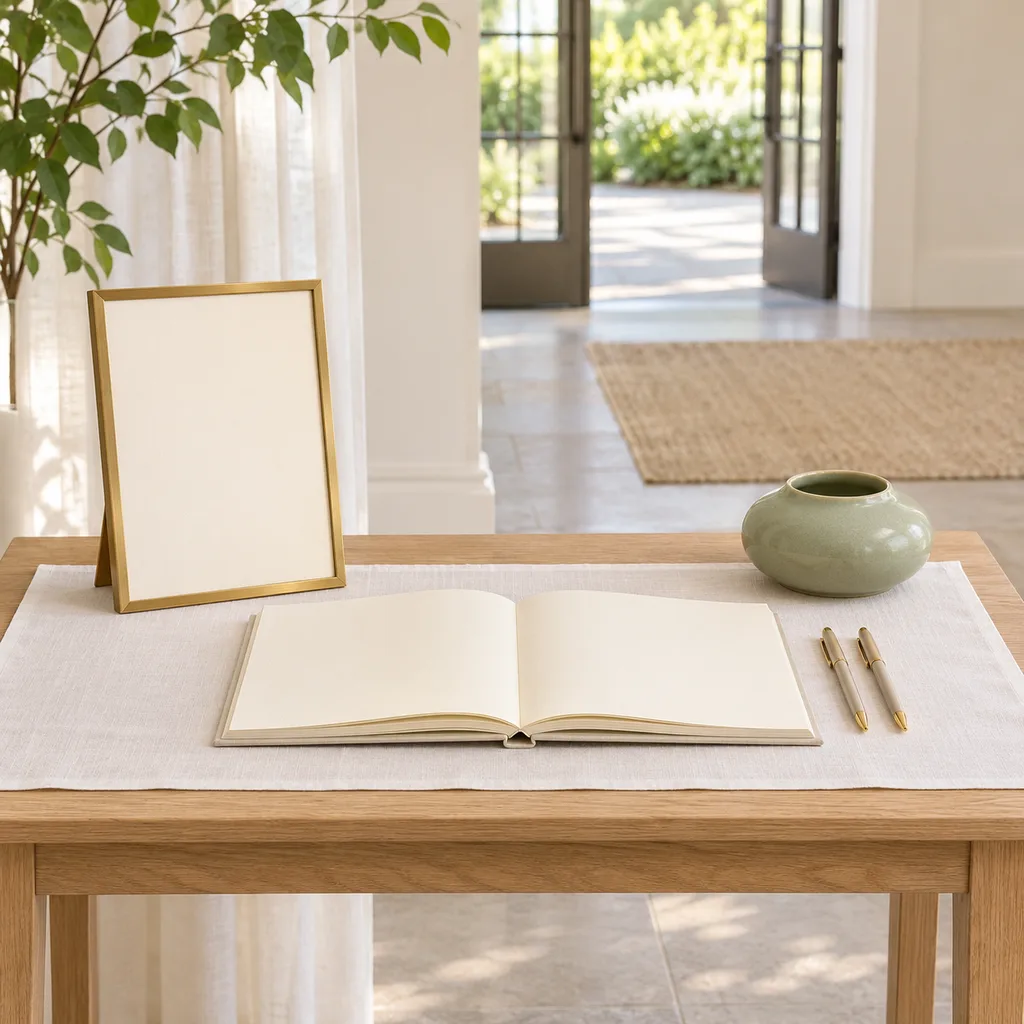
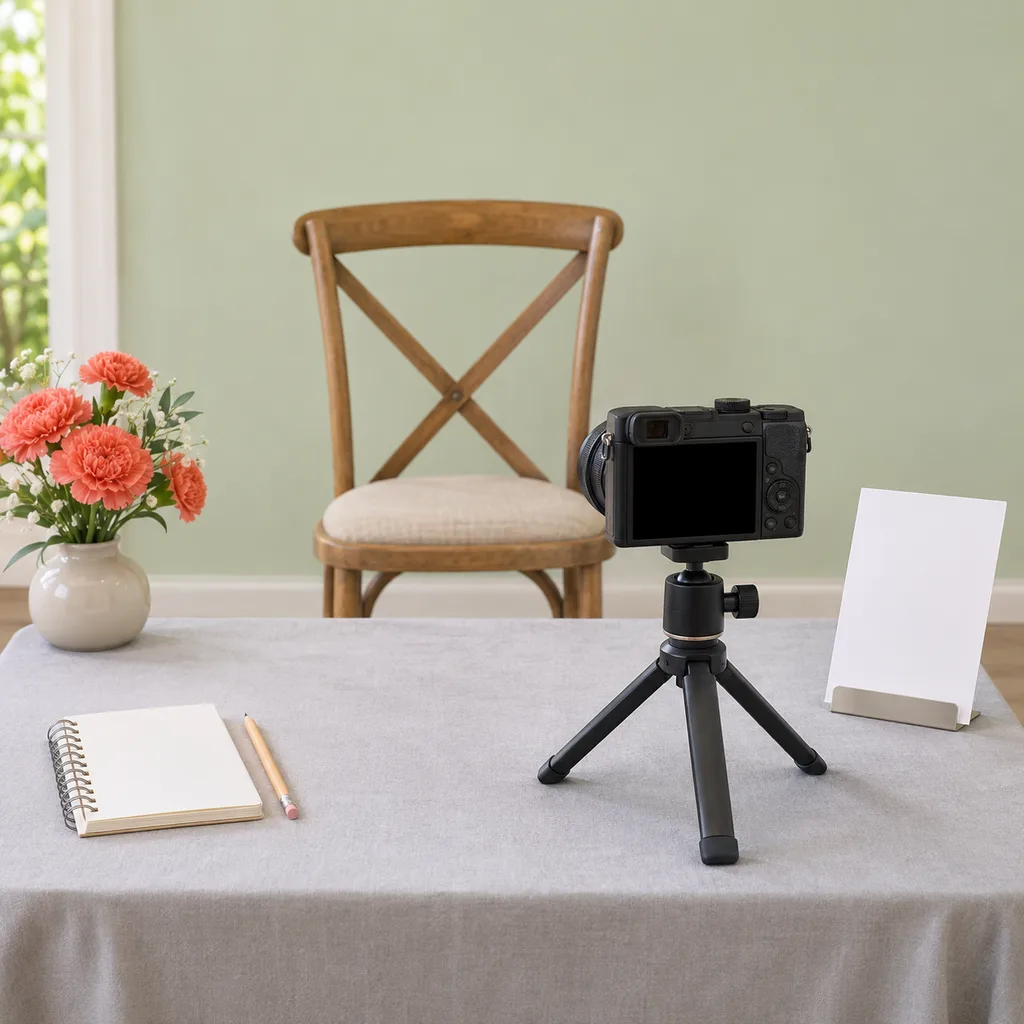
If you choose a guest book, open it on the table while arranging the display. Leave space for a hand and the part of the page being written on. A closed book may fit neatly between decorations while becoming awkward once opened.
Try the intended pen on appropriate sample paper before the event. Check whether the ink is readable and behaves as you expect with that paper; do not assume every metallic pen suits every book. Keep a spare nearby with a clear place to return it.
A small instruction can invite a message without demanding a long response. For example, “Leave us a note” communicates the action simply. Do not publish guests' messages or personal details as part of the display without their permission. The book can remain a private keepsake.
Choose a coordinated look without crowding the surface
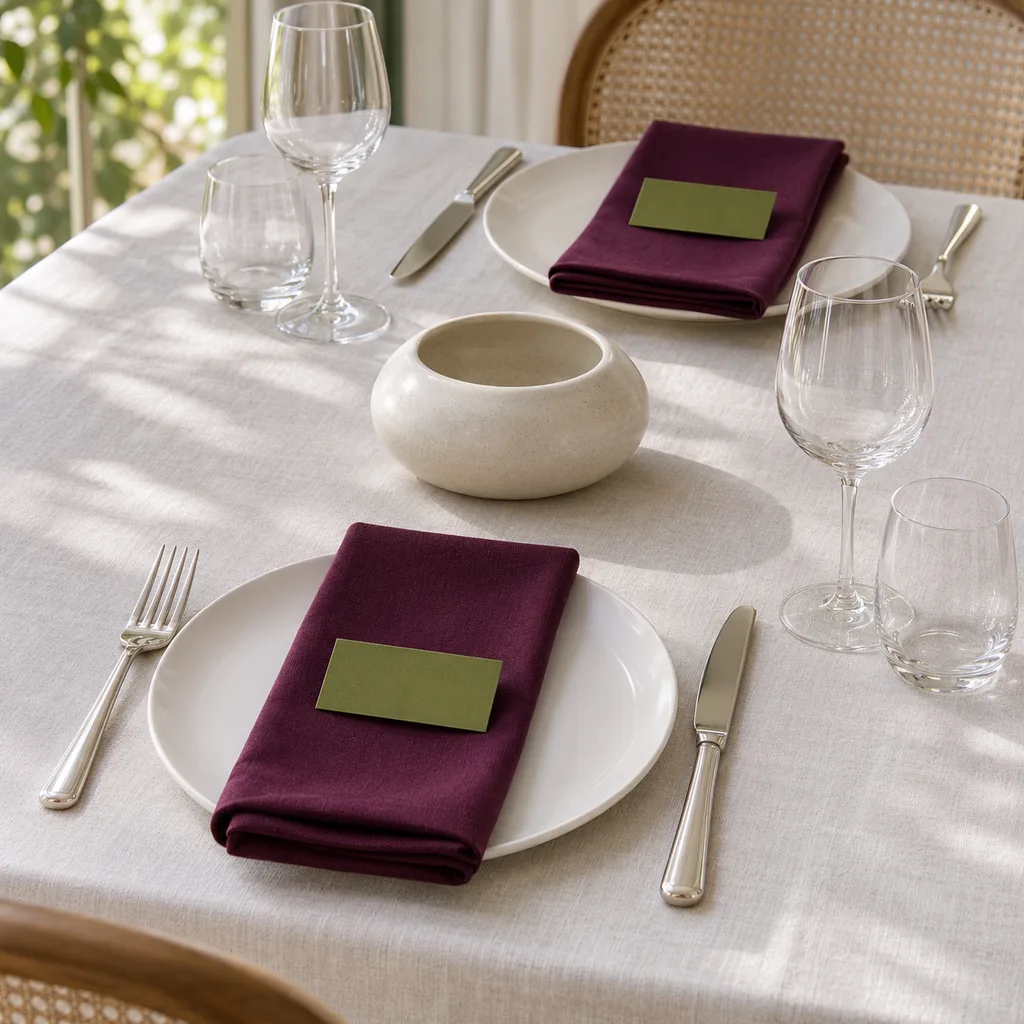
For a clean arrangement, pair a light table covering with one frame finish and a low, stable accent. Repeat a color already present elsewhere at the reception rather than adding a separate palette for this table. Leave a visible area of plain surface around the functional items.
For a more textured look, a flat runner or a simple woven tray can group the programs. Check that the tray supports the actual paper size and that the covering does not bunch beneath a stand. Useful objects should remain stable when someone removes a program.
For a colorful version, use one stronger accent in the frame, linen or small vessel, then keep the book and paper presentation simpler. Avoid stacking unrelated objects simply to fill different heights. The greeting should remain the first thing a guest understands.
Rehearse the setup with the actual objects
Arrange the sign, book, pens, program holder and decorative accent together before packing. Check that every stand is intended to support the object placed on it and follow its instructions. Do not build an improvised support from hidden loose objects.
Ask someone unfamiliar with the arrangement to approach it and describe what they would do first. If they cannot identify the programs or hesitate about where to leave a note, change the layout or shorten the instruction. This is a practical rehearsal, not a measured conversion test.
Take a reference photograph for the person setting up. Include the actual items in that photograph, then note any changes agreed with the venue. Do not assume an inspiration image supplies dimensions, load ratings or installation instructions.
Pack the table as a complete station
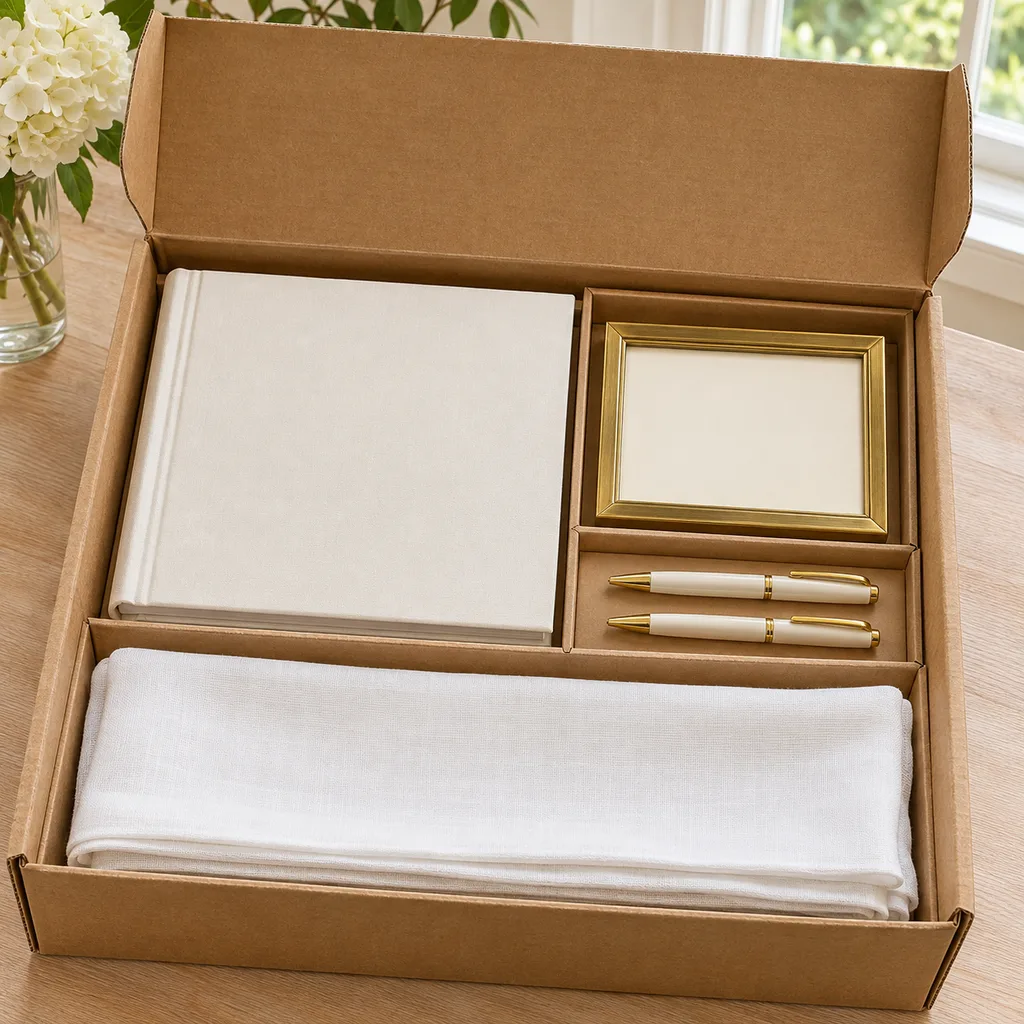
Keep the small items together: sign, suitable stand, book, pens, program holder and any approved accent. Add a short packing list and identify who will set up, check and collect the station. Avoid placing valuable or delicate pieces in an unmarked mixed-decor box.
Confirm what should happen to unused programs and the guest book at the end of the event. Gifts or envelopes need their own arrangements with the couple and venue; a decorative tray is not a security plan. Keep that responsibility separate from styling the welcome table.
The strongest welcome-table design is the one guests can use easily and the setup person can reproduce reliably. Give the station one clear purpose, keep the message readable, and let the decoration support the greeting rather than obscure it.
Keep good recipes close
Add The Cooking Twins to your preferred sources on Google for more easy dinners, no-bake desserts and kitchen inspiration.
Emma & Ella Frost
A practical resource from The Cooking Twins.
More from Emma & Ella Frost
Comments
Leave a commentShare your question or planning tip below.