
Reusable Kitchen Tools That Reduce Waste: Start With One Real Replacement
Choose reusable kitchen tools around real lunch, serving and cleaning tasks, then plan care and return without buying an unnecessary matching set.

By Emma & Ella FrostUpdated November 17, 2026

5-Ingredient Dump & Go Crockpot Meals
101 effortless slow cooker recipes for busy families.
View on AmazonAvailable on AmazonA reusable kitchen tool earns its place when it replaces something you would otherwise use and discard. Buying a matching collection is not the same as changing that routine. Start with one recurring task, find an appropriate tool you already own and decide how it will get cleaned and returned for the next use.
This guide offers three starting points: lunch utensils, serving pieces and washable cleaning cloths. It is a selection and follow-through plan, not a product ranking, a sanitation procedure or a calculation of a product's total environmental impact.
Identify the disposable item before choosing the replacement
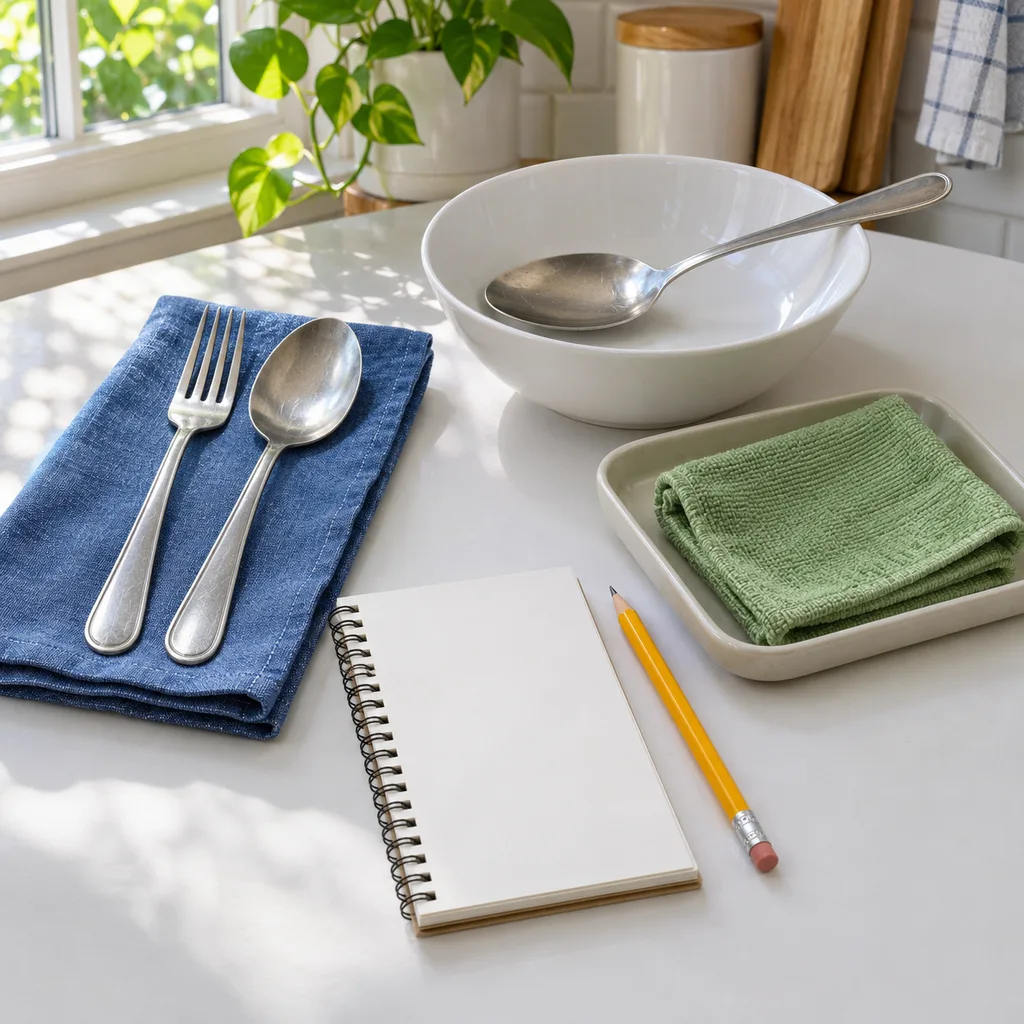
Look at a specific repeated occasion rather than the kitchen as a whole. Do you take a disposable fork with a packed lunch, put out disposable serving spoons for gatherings or reach for paper for a cleaning job that an appropriate washable cloth could handle?
Write down the task, the disposable item used and the reason it was convenient. The reason matters: portability, cleaning access, household needs or a rule at the destination may determine whether a replacement is practical. Do not treat every single-use item as interchangeable with every reusable alternative.
The EPA's shopping guidance recommends asking whether an item is needed, will be used, is already owned or could be borrowed. It gives bringing your own cups and silverware to lunch as a reuse example and suggests borrowing or sharing infrequently used items. Those questions are a useful starting point, not certification of a particular kitchen product.
Try an existing fork and spoon for packed lunches
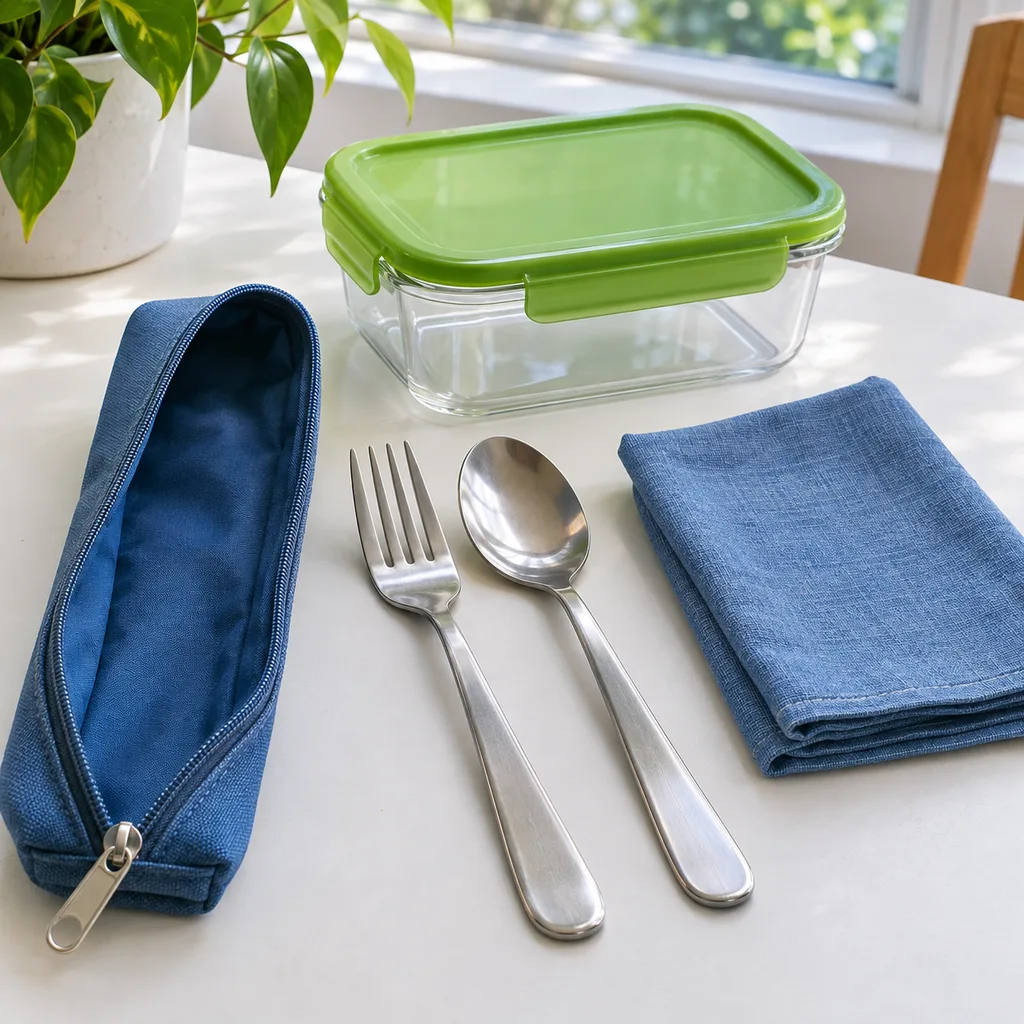
Check whether ordinary utensils you already own suit the actual meal and destination. A separate travel set is not essential simply because the task happens outside the house. Check the destination's rules before assuming any utensil is permitted.
Choose a suitable way to keep ready utensils together during the trip, and decide where used pieces will go afterward. Keep used and ready items distinguishable. Follow the utensils' and any carrying container's care instructions rather than assuming a pouch makes everything inside clean.
Make the return step part of unloading the lunch bag. If the utensil stays at work or in the bag, buying another set does not fix the missing handoff. Consider whether a reminder at the place you pack lunch would solve the problem more directly.
For a simple trial, note whether the appropriate utensil actually reached the meal and returned for care. That observation is more useful than counting how many pieces came in a new set. It is not a claim that one material has the lowest environmental impact.
Plan reusable serving pieces around a real gathering
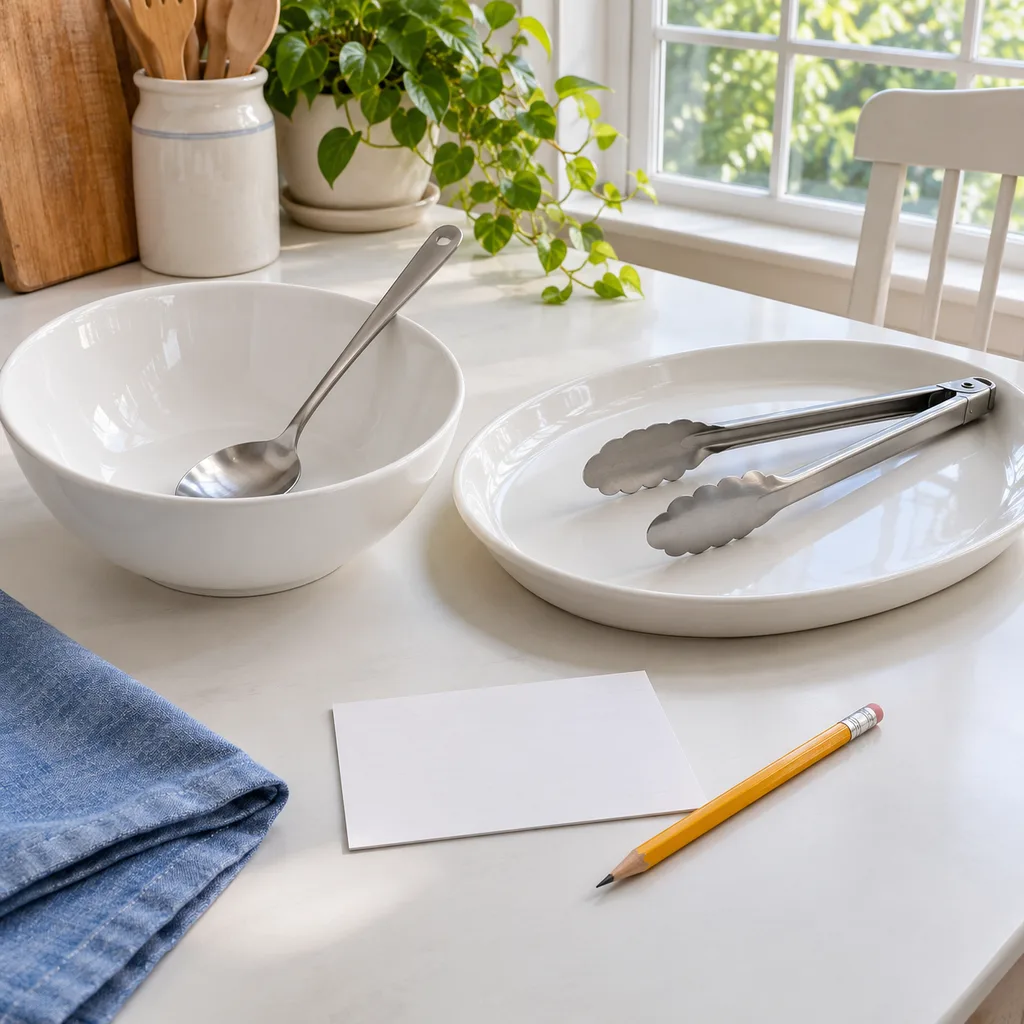
List the serving jobs your confirmed menu needs: for example, a suitable spoon for a shared bowl or tongs for an appropriate platter. Match each job to a piece you already have before deciding something is missing. An attractive assortment is less useful than the right tool at each dish.
For an occasional extra, ask whether a suitable piece can be borrowed. Agree on its use, care and return with its owner. Do not borrow an electrical appliance without the instructions or assume a decorative object is intended to touch food.
Keep a private return note for borrowed pieces and place them separately when packing up. For your own pieces, decide where they return after their required cleaning. A repeated hosting task benefits from a clear home for the tool, not necessarily a dedicated themed collection.
Reusable service ware does not change the menu's food-holding requirements. Keep the food plan separate, and use tools appropriate for the dishes and temperatures involved. This selection checklist does not establish safe serving conditions.
Choose washable cloths for an appropriate cleaning task
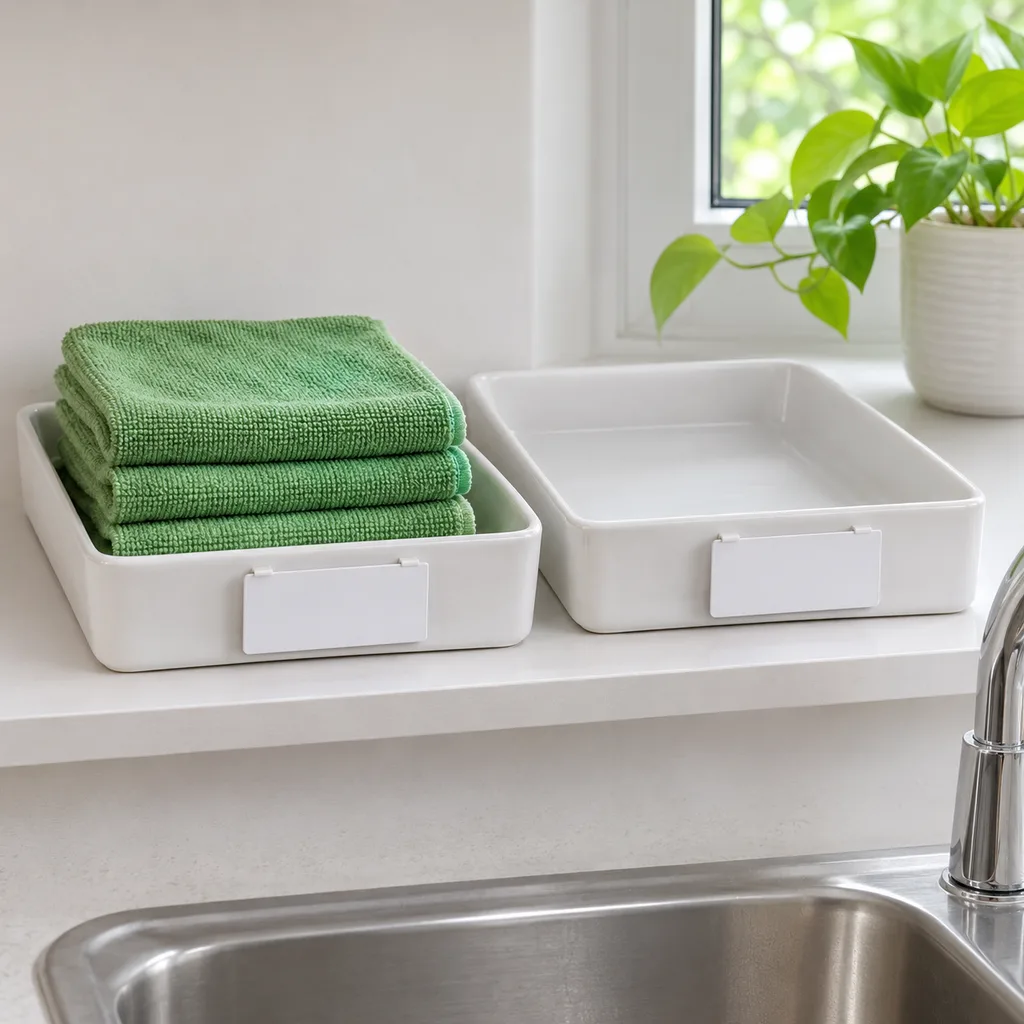
Start with one clearly defined job and suitable cloths whose care directions you can follow. Keep kitchen cleaning cloths distinct from those used for unrelated household jobs. Consider how the household will recognize their intended roles without depending only on a color everyone must remember.
Provide a different destination for cloths needing care so they do not return to the ready stack by mistake. Follow appropriate cleaning and product instructions for the actual job. This guide does not specify a laundering temperature, disinfectant, contact time or sanitizing method.
Do not extend this idea into using a cloth on food, cleaning up raw-food contamination or handling hot cookware without suitable instructions. A washable item is not automatically an oven mitt, food-contact material or a replacement for every disposable cleaning product.
Check the instructions before buying another material
A material name alone does not tell you how a finished item can be used. Check intended food contact, permitted temperatures, care, drying and any replacement parts relevant to the actual product. Keep the instructions retrievable rather than discarding them with the outer packaging.
Separate a desired feature from a verified one. Dishwasher compatibility, freezer use, leak resistance and heat resistance are different claims. If an instruction is missing, ask the manufacturer instead of assuming a familiar-looking tool has the same capabilities as another one.
If your next purchase concerns baking, the baking-mat guide addresses that specific tool and its limits. A reusable baking mat is not automatically a substitute for every use of baking paper, just as a lunch utensil does not replace every kitchen implement.
Review the replacement, not the size of the collection
After the chosen routine has occurred, record what actually happened: the task, the item used, whether a disposable was still needed and why. For a fictional example, packing an existing spoon for four lunches and using it at three means the fourth lunch still needs an explanation. It is not four avoided disposable spoons by default.
Keep this household record separate from claims about carbon, water, cost or a product's lifetime. Those require information this short observation does not provide. If the tool stayed unused, address the obstacle or reconsider the purchase rather than describing ownership as a result.
One appropriate replacement with a workable care-and-return routine is a useful first project. Expand only when another specific task calls for it, leaving room in the kitchen for the tools that already do their jobs.
Keep good recipes close
Add The Cooking Twins to your preferred sources on Google for more easy dinners, no-bake desserts and kitchen inspiration.
Emma & Ella Frost
A practical resource from The Cooking Twins.
More from Emma & Ella Frost
Comments
Leave a commentShare your question or planning tip below.