
Wedding Dessert Table Decoration Ideas
Plan a wedding dessert table with a focal point, stable stands, readable labels, useful serving space, and a realistic replenishment plan.

By Emma & Ella FrostUpdated November 16, 2026

5-Ingredient Dump & Go Crockpot Meals
101 effortless slow cooker recipes for busy families.
View on AmazonAvailable on AmazonA wedding dessert table needs more than a pretty backdrop. Guests should be able to recognize the desserts, reach them comfortably, find the serving tools, and leave without crossing the next person's path. Plan that sequence first, then add color, flowers, and height around it.
Start with the desserts and the venue's service plan rather than buying a matching collection of stands. The most useful decoration supports what is actually being served. A small display with clear labels can feel more considered than a crowded table full of props.
Confirm the table and service plan with the venue
Ask for the table dimensions, placement, load restrictions, available refrigeration, and the people responsible for setup and replenishment. Confirm whether the venue or caterer requires staff to serve particular desserts. Decoration decisions should fit those requirements.
Walk through the guest route from dinner seating to dessert and back. Keep the display away from a doorway or another station that already draws a line. Leave the surrounding route clear for guests using mobility aids and ask the venue to review access rather than assuming one layout suits everyone.
For an outdoor reception, establish a weather and relocation plan before choosing lightweight signs, delicate linens, or an elaborate backdrop. A display that only works in still air is not a complete outdoor plan.
Choose one visual anchor
The anchor might be a wedding cake, a central dessert platter, or a sign mounted behind the table with venue approval. Choose one main focal point so guests understand where to look. Let smaller desserts repeat its colors or materials without competing for equal attention.
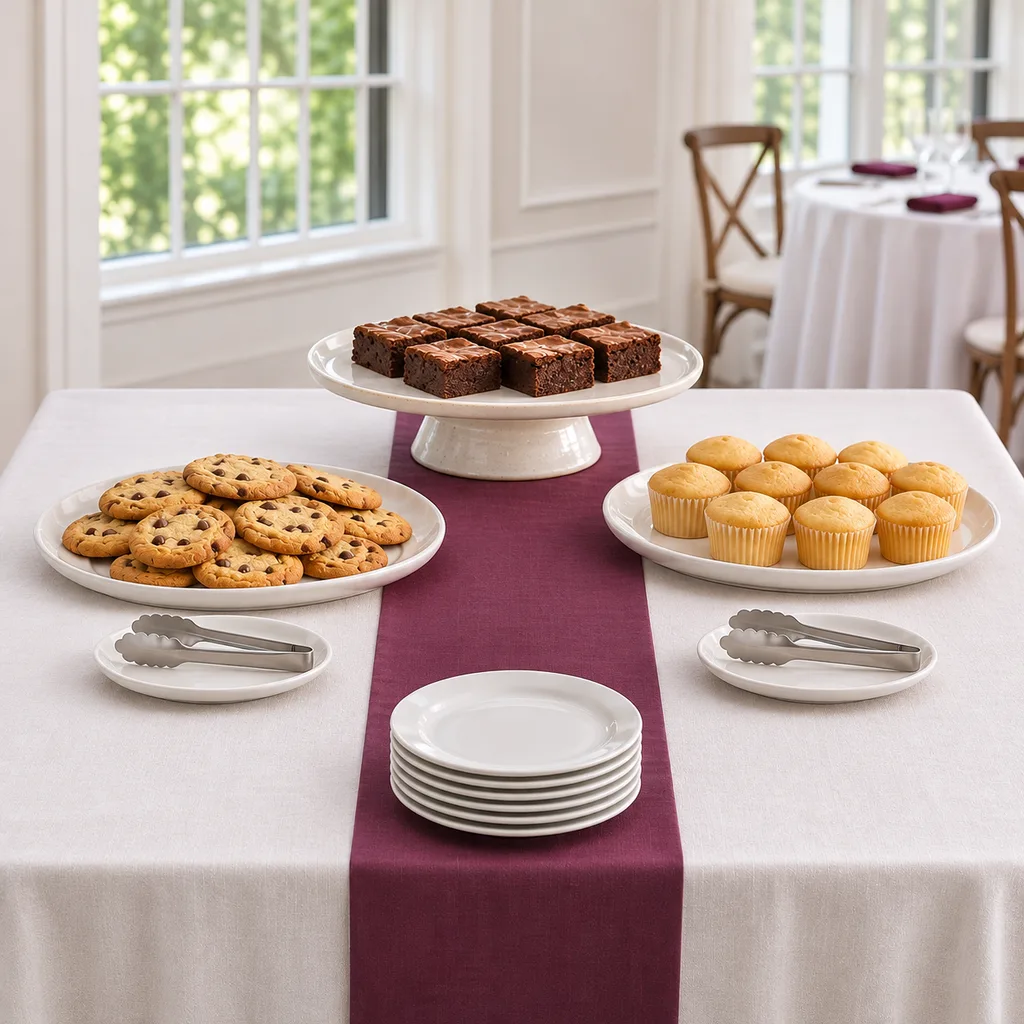
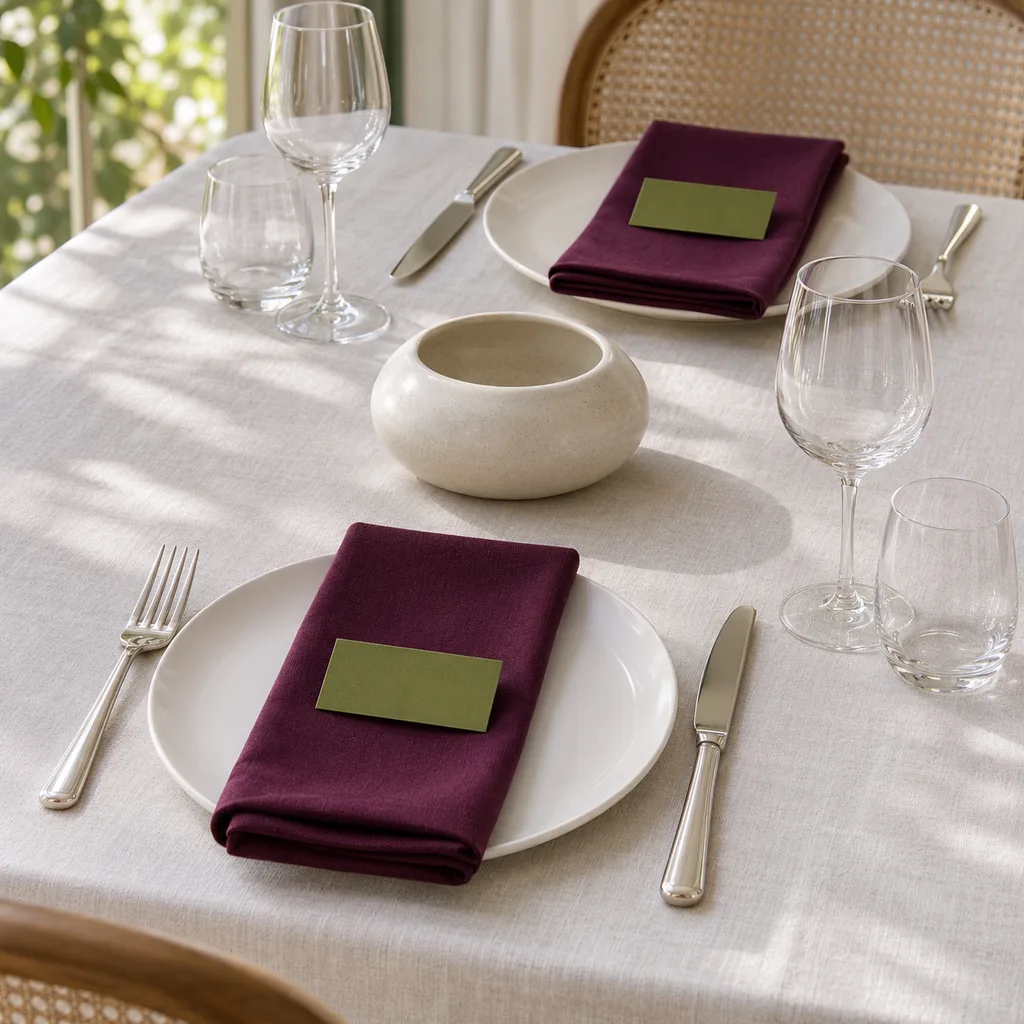
For a plum-and-white palette, try a plum cloth, white food-service platters, and simple dark lettering on white cards. For a garden-inspired palette, try pale green linens, clear glass vessels behind the service area, and pink flowers kept separate from the desserts.
Use a color already present in the reception rather than treating the dessert area as a separate theme. You do not need custom packaging for every item. A repeated label format can connect different desserts just as effectively.
Plan height without making food hard to reach
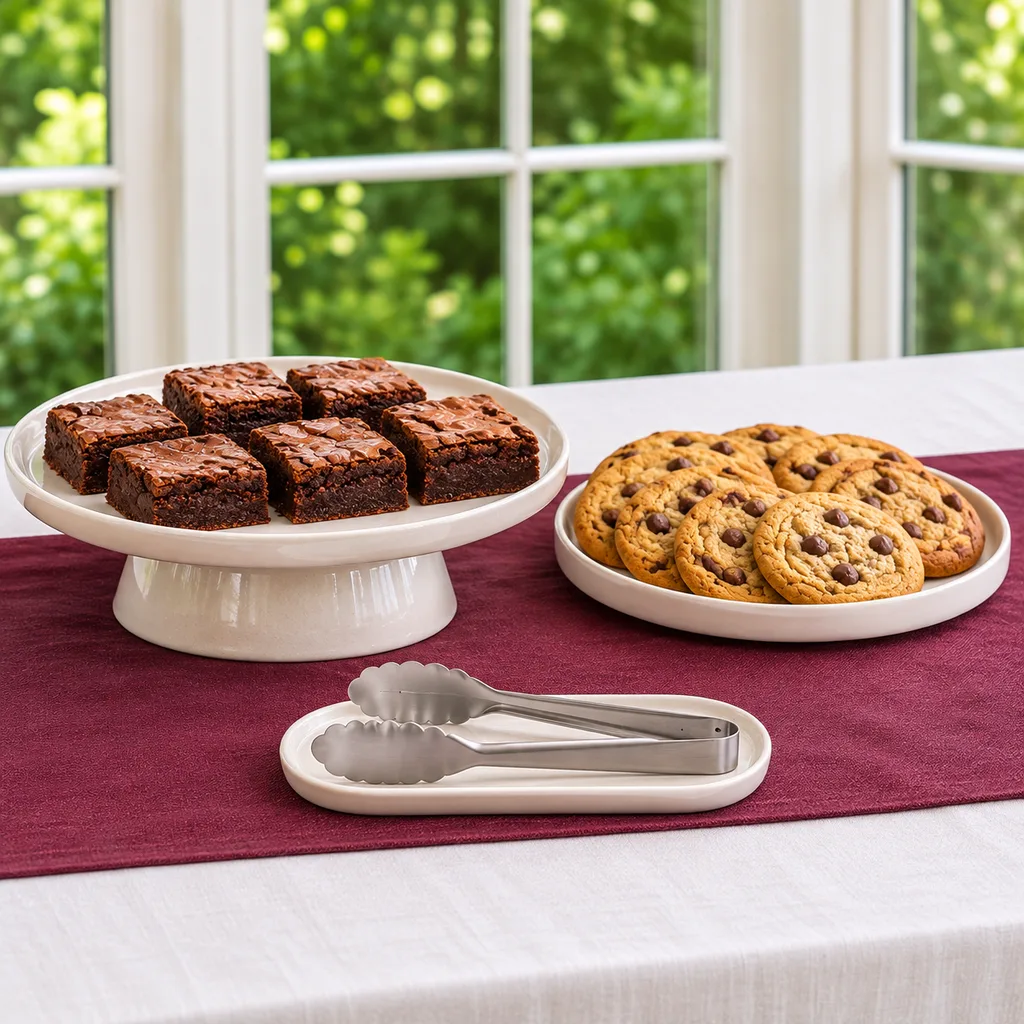
Place the tallest decorative elements behind the food and keep frequently selected desserts toward the front. Use stands intended for food service, with stable bases and stated load limits. Test the arrangement with the actual platters before the event.
Do not use unstable stacks of books, inverted glasses, or hidden boxes that cannot safely support the load. Covering an improvised support with fabric does not make it secure. Ask the rental provider or caterer about suitable risers if you need additional levels.
A hypothetical six-foot table could have a focal cake toward the back center, two lower platters nearer the front, and plates at the entry side. That is a sketch to test with the real dimensions, not a claim about how many desserts or guests the table can serve.
Give plates, labels, and utensils their own places
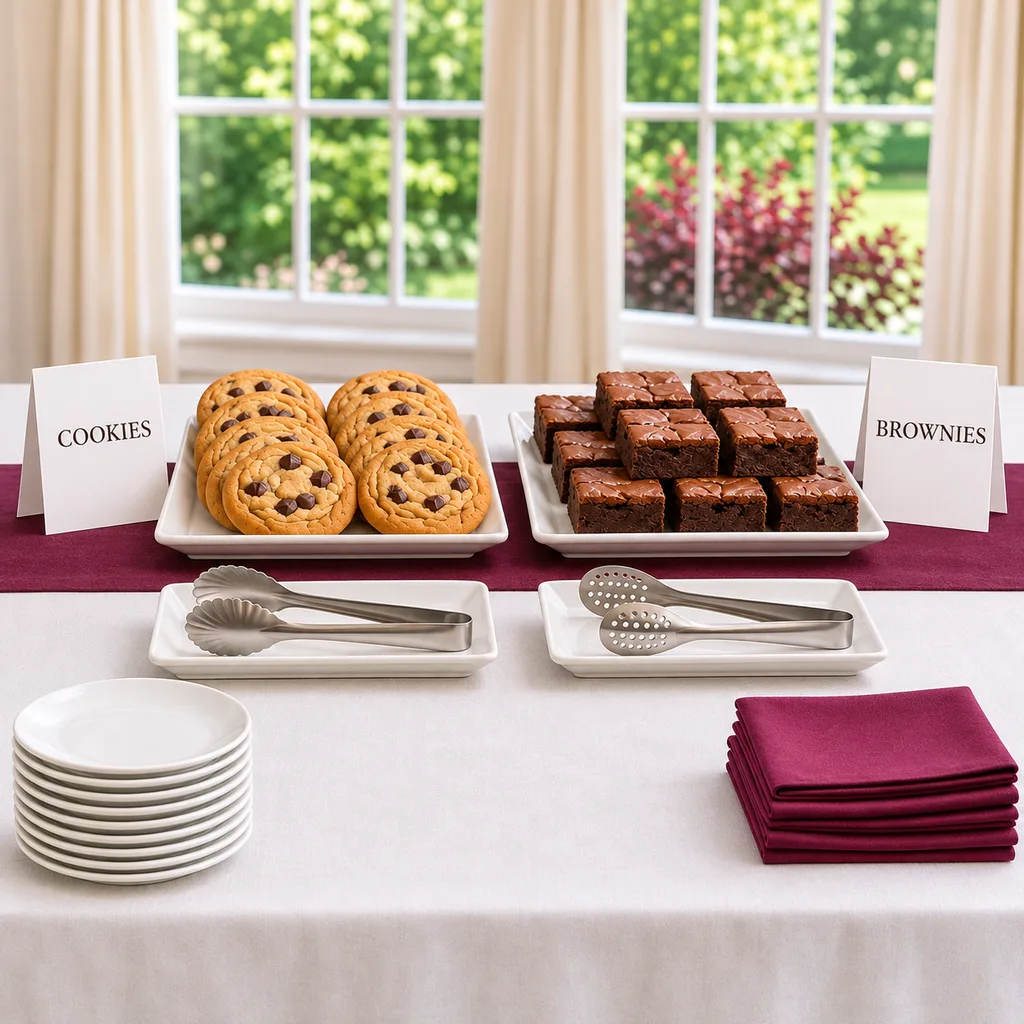
Arrange plates where guests begin and napkins where they can pick them up without reaching across food. Put a suitable serving tool with each shared dessert. Leave enough open space to set down and replace those tools.
Use cards that identify the dessert plainly: lemon bars, chocolate cupcakes, or strawberry tartlets, rather than only decorative names. Ask the baker or caterer for accurate ingredient and allergen information. Do not invent claims such as nut-free based on appearance or a short dessert name.
If one dessert needs staff assistance, make that service point clear and keep its equipment out of the self-service route. Agree with the caterer on how guests should ask ingredient questions and who can provide reliable answers.
Add flowers and textiles outside the food footprint
A short arrangement at one end or behind the table can echo reception flowers while preserving platter space. Keep stems, water, floral supplies, and decorative greenery physically separate from food and serving tools. Do not put decorative florist flowers on desserts. Nebraska Extension's edible-flower guidance cautions that a flower beside food is not automatically edible. If the baker proposes an edible garnish, confirm its identity and that it was grown specifically for culinary use; decoration alone does not establish that.
Choose a tablecloth that covers the table neatly without creating excess fabric along the guest route. Clip or secure it only as the venue permits. A runner is optional; it should not make the stands wobble or interfere with moving platters.
Skip loose confetti, shedding materials, and dangling decor near the food. If you want sparkle, use the finish of a stable stand or the lettering on a sign instead of scattering small objects across the service surface.
Make the display work in smaller spaces
For a compact reception, choose fewer platter shapes and one focal arrangement. Store backup service supplies in a designated staff area rather than displaying every plate and napkin at once. Do not put boxes under the table unless the venue permits that use and access remains clear.
A wall behind the table can provide visual structure without using tabletop depth, but confirm mounting rules. Freestanding backdrops need venue-approved stability and placement. Avoid a backdrop that forces the dessert table into a narrow circulation route.
Reuse appropriate reception pieces when the timing works. Moving a sign or decorative vessel from the ceremony area requires a named helper and a specific handoff time. Do not base the plan on objects that may still be in use elsewhere.
Plan replenishment and temperature control
Ask the caterer or baker which desserts require refrigeration and how they will be transported, displayed, and replenished. Decide who monitors the display and who removes items when needed. Decoration is not a reason to leave a perishable dessert out for the whole reception.
The FDA's storage guidance says foods requiring refrigeration should not remain at room temperature for more than two hours, or one hour above 90 F. That is a limit, not a target display duration; follow the dessert provider's product-specific directions and the venue's service requirements.
Keep the backup supply under its required storage conditions and replenish through the agreed service plan. A photograph of a full table does not establish that the display method is safe for every dessert.
Run a setup rehearsal with empty platters
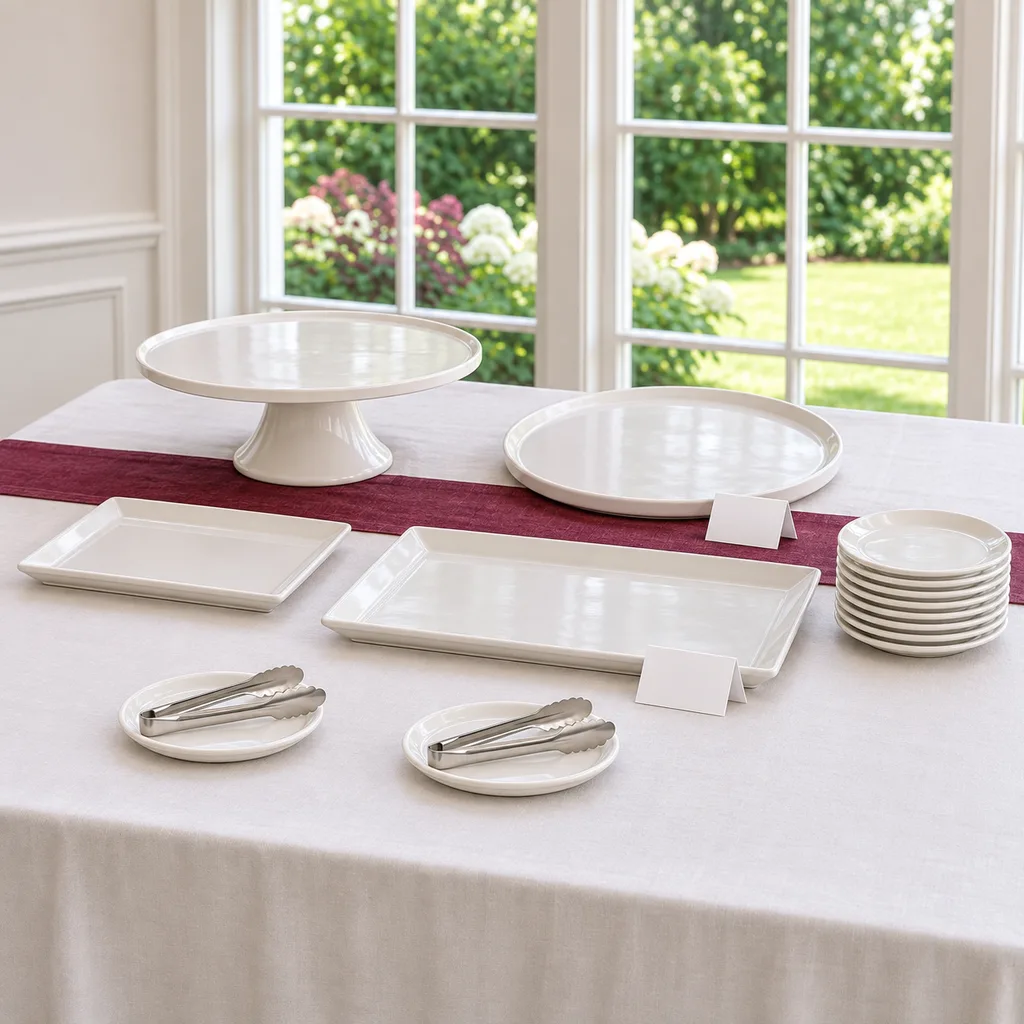
Lay out the cloth, stands, cards, plates, and utensils at the actual table size. Photograph the arrangement as a setup reference and label the packing boxes by location. Have someone approach as a guest and simulate choosing a dessert with a plate in hand.
Finally, assign setup, replenishment, leftover handling, and rental returns. A complete decoration plan includes its removal. Keep the design simple enough that the people doing those jobs can reproduce it without guessing what belongs where.
Keep good recipes close
Add The Cooking Twins to your preferred sources on Google for more easy dinners, no-bake desserts and kitchen inspiration.
Emma & Ella Frost
A practical resource from The Cooking Twins.
More from Emma & Ella Frost
Comments
Leave a commentShare your question or planning tip below.