
Outdoor Picnic Table Decoration Ideas: Pack One Adaptable Kit
Plan outdoor picnic table decor with a portable kit, three simple looks, a wind fallback and a clear return-packing routine.

By Emma & Ella FrostUpdated November 17, 2026

5-Ingredient Dump & Go Crockpot Meals
101 effortless slow cooker recipes for busy families.
View on AmazonAvailable on AmazonOutdoor picnic table decoration works best as a portable kit, not a dining-room display carried outside piece by piece. Choose a repeated color, useful tableware and one optional accent, then make sure everything can be set out, adjusted and packed away without taking over the meal.
Start with the actual picnic location. A backyard table, a reserved shelter and a public picnic bench bring different limits. The ideas below are decoration and packing proposals, not a weatherproof installation, an approved seating capacity or a food-service plan.
Check the table and location before choosing the look
Confirm that you can use the site at the intended time and check its actual rules for table coverings, decorations and cleanup. Do not assume that an attractive photograph establishes permission, a reservation or the condition of a public table.
Look at the tabletop, benches and the route people will use. If the table is damaged, unsuitable or difficult for the invited group to use, address that before decorating. A cloth does not repair a rough edge or make an unstable table suitable.
Decide where the meal equipment will go as well as where people will sit. Keep cooler lids, bags and serving supplies from competing with the route to the benches. Discuss individual access needs with the guests concerned; a layout sketch is not an accessibility assessment.
Build one carry kit around the actual meal
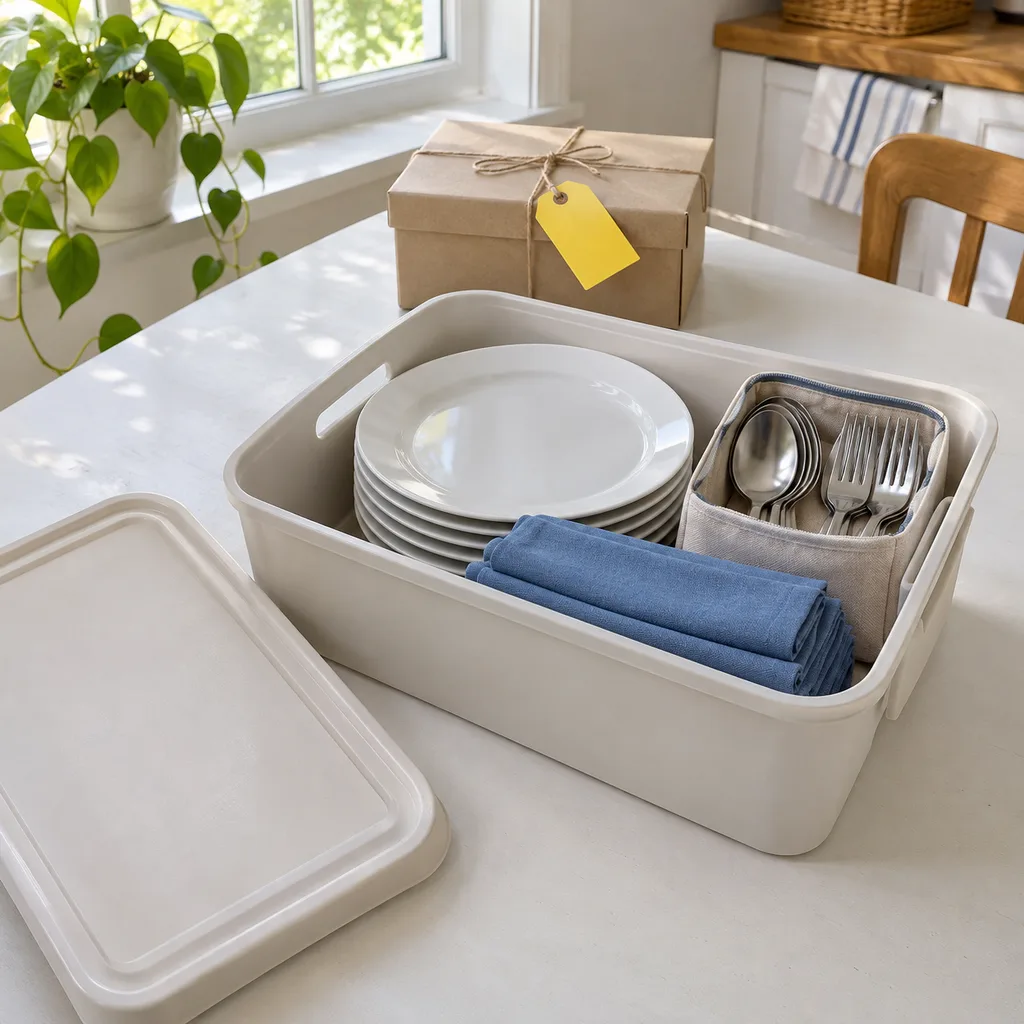
Set out the plates, cups, utensils and napkins you intend to use before adding an accent. Check the intended uses and care directions of the actual pieces. A lightweight or decorative item is not automatically suitable for food or hot drinks.
Pack the clean tableware together in a suitable covered container and keep decoration separately identifiable. At the destination, you should be able to find the useful pieces without emptying every bag onto the table. Plan a separate return destination for used pieces.
Keep the amount manageable for whoever is carrying it. There is no need to bring a large vessel or several layers of fabric just because they look coordinated at home. If the setup cannot be carried, returned and cared for realistically, simplify it before leaving.
Try one of three simple picnic looks
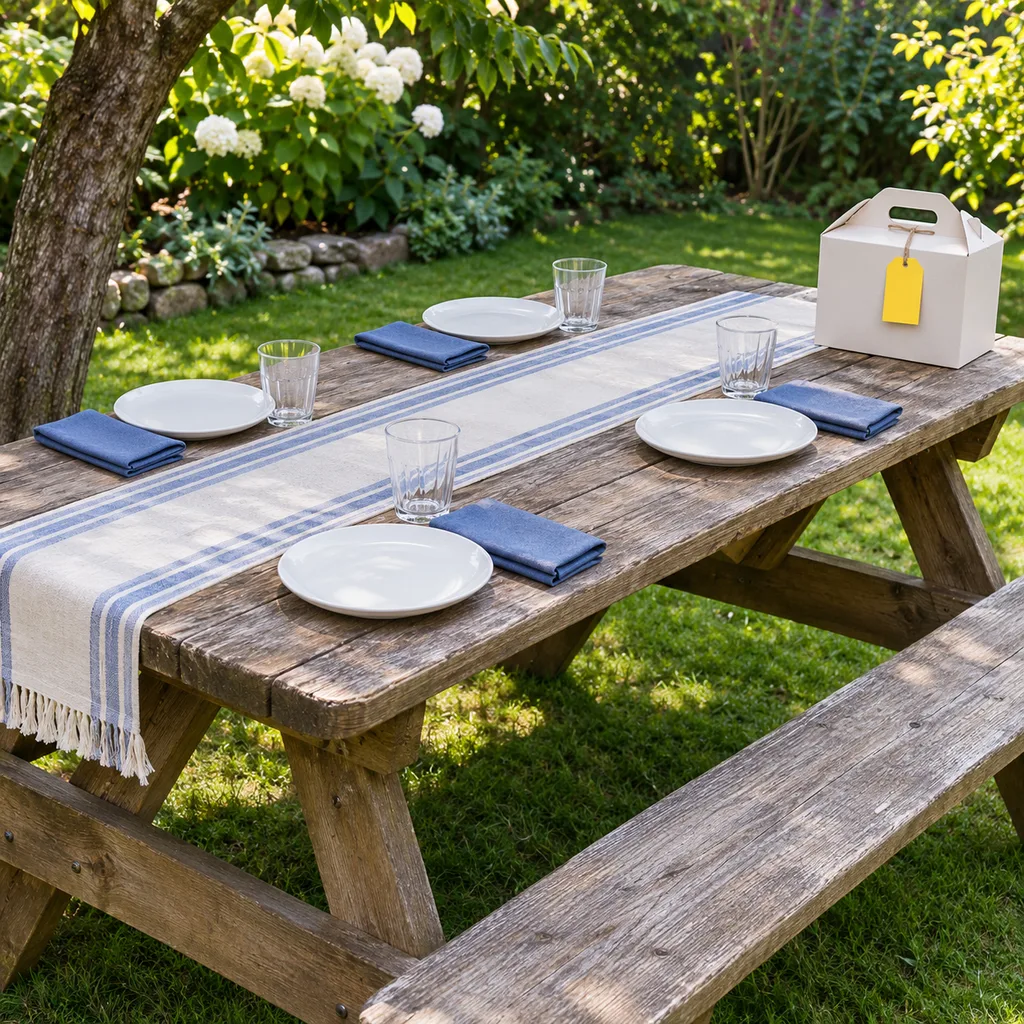
Blue, white and a small yellow accent: use plain white plates, blue napkins and a yellow paper detail on the outside of the packing kit. Let the napkins carry the table color. You do not need loose lemons among eating surfaces or a row of decorative objects to establish the palette.
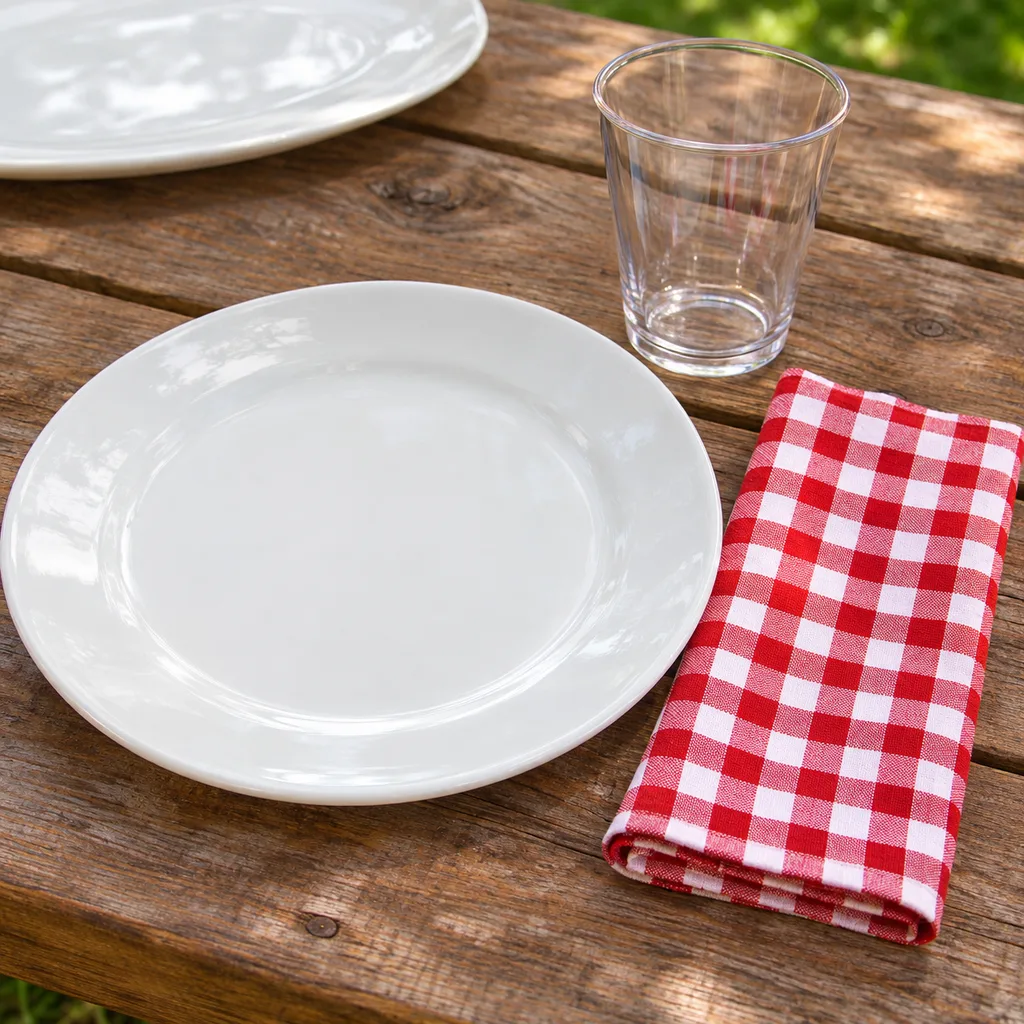
Red gingham with plain tableware: choose a suitable checked covering or checked napkins, not necessarily both. Keep plates and cups quieter so the pattern has a clear role. If the covering does not suit the table or conditions, use the patterned napkins alone.
A bare suitable table with mixed colored plates: let the plates provide the visual interest and repeat one napkin color across the places. This can accommodate pieces you already own without requiring the table itself to disappear under layers.
These combinations are starting points rather than required purchases. Make a sample with one actual setting, then repeat only what works for the meal and the people attending.
Make a wind adjustment part of the plan
If you use a cloth, choose a securing method intended for that table and fabric and follow its instructions. Check the actual assembled arrangement before bringing out food. Do not assume that a particular clip, photograph or heavy-looking object establishes wind resistance.
Keep spare napkins and paper pieces contained until needed. Avoid loose confetti, trailing ribbons and decorations that become a separate collection task when the air moves. A simple setting can still look deliberate without small objects scattered across it.
If a covering keeps shifting or an accent will not stay appropriately supported, remove it rather than adding an improvised pile of weights. If the conditions or site guidance make the gathering unsuitable, change the plan. Decoration is not a reason to persist through unsafe weather.
Leave the middle available for the way you will serve
Try the layout first with empty serving pieces. For shared dishes, leave a place to set one down without moving everyone's cup. For individually packed meals, the table may need less shared equipment. Neither style requires a decorative object at the center.
If you choose an accent, use one low, suitable freestanding piece that can return to the carry kit easily. Keep plant material and other decorative items separate from food, utensils and eating surfaces. Leave open flames out of this simple picnic setup.
The small dining-table guide covers the separate problem of fitting a meal onto a compact surface. Outdoors, the added job is making the whole setting portable and adaptable rather than maintaining a fixed display.
Keep decoration separate from food handling
FDA outdoor-food guidance calls for cold perishables at 40 F or below and hot food at 140 F or above. Food should not remain without appropriate temperature control for more than two hours, or one hour when outdoor temperatures exceed 90 F; discard food left out beyond those limits. A shaded table or attractive cover does not establish those temperatures.
FDA also emphasizes clean hands, surfaces, utensils and serving dishes. Prepare for those needs separately; a table covering is not a substitute for cleaning the surface. Follow the complete guidance for your actual menu, transport and service rather than treating this decoration plan as food-safety approval.
Keep food within its handling plan while arranging the empty tableware. Do not bring out perishables just to complete a photograph or leave them waiting while you compare napkin colors.
Pack the return trip before the last decoration comes off
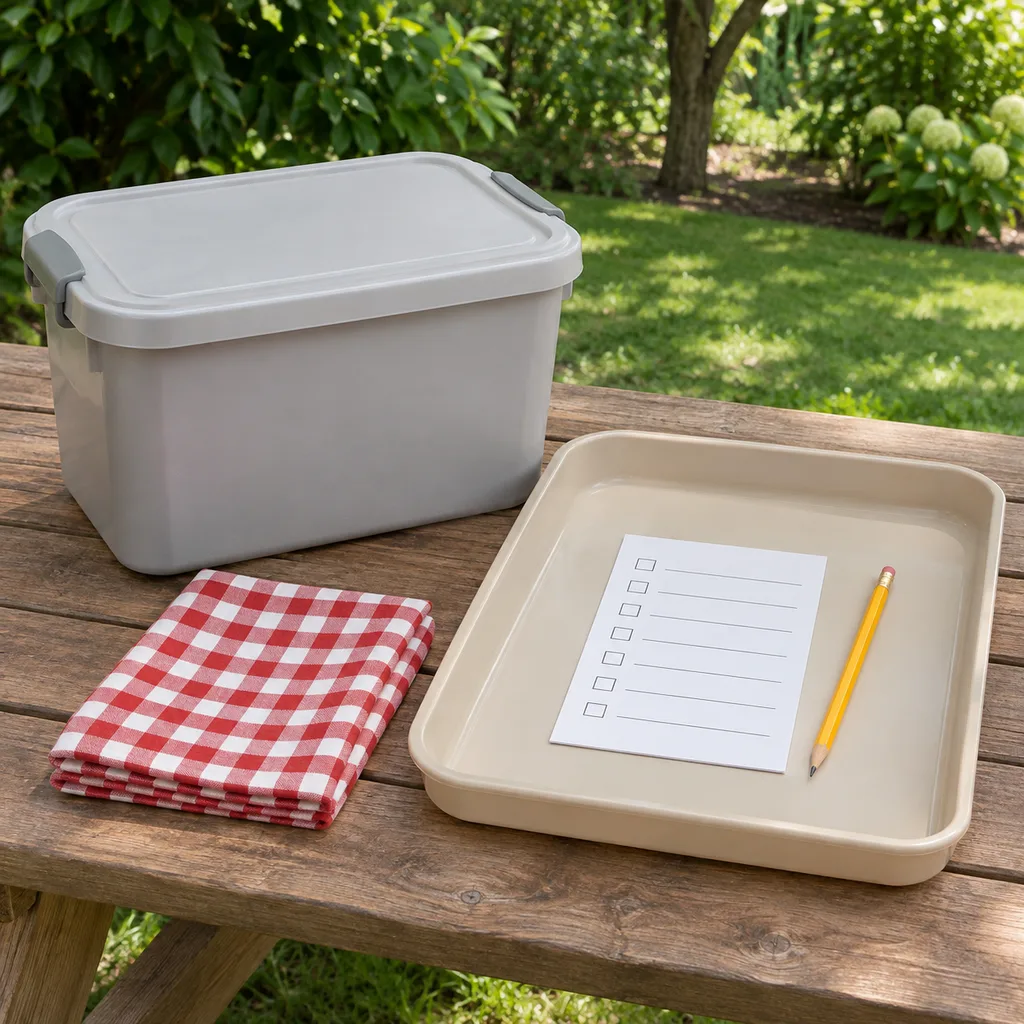
Use a short count of the pieces you brought so a borrowed serving spoon or table clip is not overlooked. Return used items through their appropriate care route, not to the ready-to-use group simply because they fit the same container.
Follow the site's actual waste and cleanup arrangements, and check beneath and around the table for small items. A portable decoration plan is finished when the location is left appropriately and the kit can be put away, not when the first table photograph is taken.
Keep good recipes close
Add The Cooking Twins to your preferred sources on Google for more easy dinners, no-bake desserts and kitchen inspiration.
Emma & Ella Frost
A practical resource from The Cooking Twins.
More from Emma & Ella Frost
Comments
Leave a commentShare your question or planning tip below.