
Bridgerton-Inspired Tea Party Table Decor: Leave Room for the Tea
Plan a romantic tea-party table with floral china, usable cup-and-saucer settings, a separate serving space and original delicate paper details.

By Emma & Ella FrostUpdated November 17, 2026

5-Ingredient Dump & Go Crockpot Meals
101 effortless slow cooker recipes for busy families.
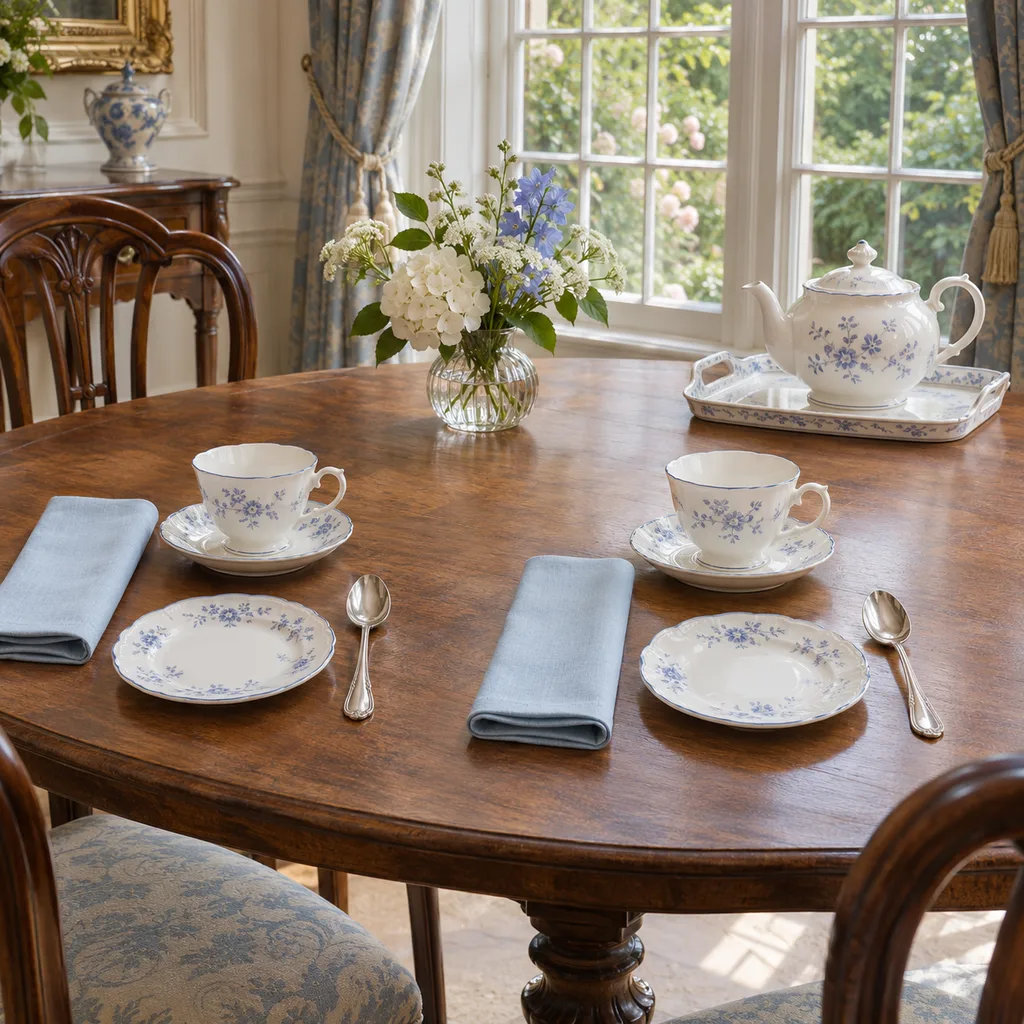
View on AmazonAvailable on AmazonBridgerton-inspired tea party table decor can suggest a romantic period-drama mood through floral china, a restrained pastel textile and one delicate paper detail. The table still needs to work as a place to pour tea and enjoy the chosen menu. Start with the cup and saucer, then give the decoration the space that remains.
This is an original styling direction, not an official production design or a historically authenticated table setting. Borrow the feeling without copying a character portrait or turning every surface into a prop. A smaller arrangement can carry the idea clearly while leaving the service manageable.
Choose how the tea will be served
Decide whether a host will pour, guests will use a separate service point or another arrangement has been agreed for the gathering. That decision affects where the teapot, cups, additions and used pieces belong. Do not style the center first and expect the pouring routine to fit around it.
Use equipment intended for the actual drinks and temperatures, following its directions. Keep the preparation and serving arrangement with the person responsible for it. A decorative pot or vintage vessel is not automatically appropriate for preparing or serving a hot drink.
Choose the actual menu before deciding which food stands and dishes are needed. Identify the storage and service requirements of the selected recipes or purchased products. A tea-party theme does not make every sandwich, pastry or filling suitable for a long room-temperature display.
Build one place around the cup and saucer
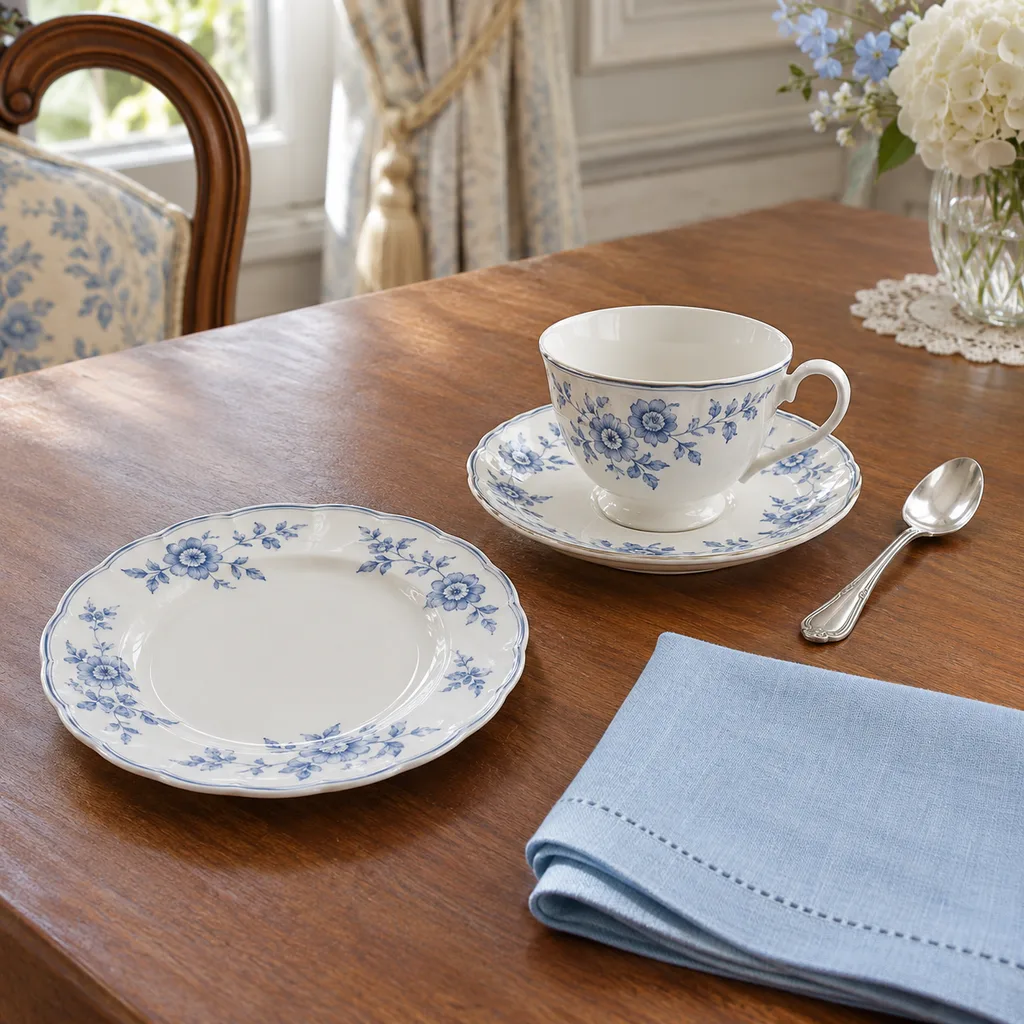
Set out the actual cup, saucer, appropriate plate, teaspoon and dining napkin. Include the glass or other piece the menu needs rather than using one assumed arrangement for every gathering. Sit at the place and check what must move when the cup is used.
Keep the saucer accessible rather than burying it beneath a favor, ribbon or paper menu. Leave a useful destination for the spoon. A decorative layer should not make a guest balance a cup while deciding where the removed objects go.
Our small-table decoration guide explains a related place-setting check. For tea, concentrate on the cup's ordinary journey, the serving pieces and the pouring arrangement rather than adding dinner-table layers automatically.
Let one floral pattern lead the palette
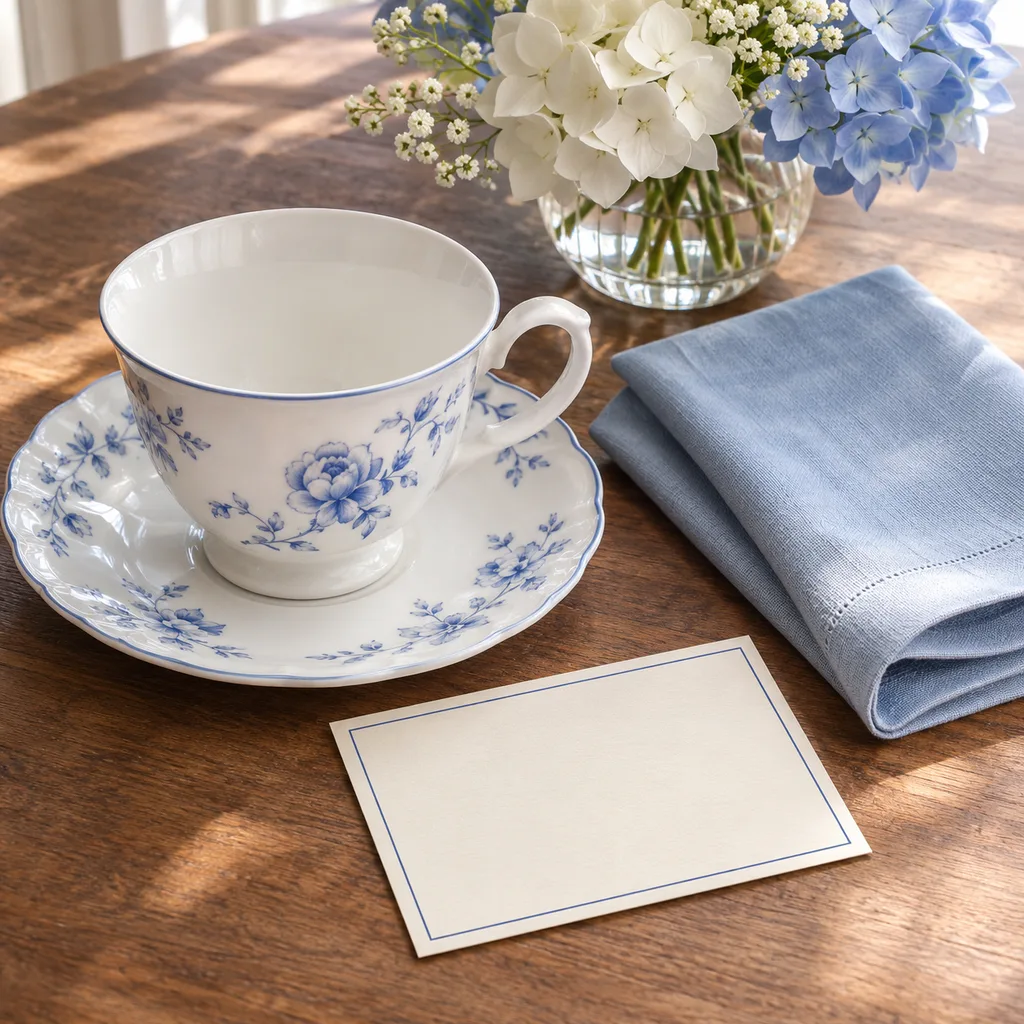
Choose one china pattern or textile you already have as the starting point. Repeat a small part of it in a plain napkin or menu border. Floral cups with a quiet blue cloth offer one direction; plain cups with a restrained floral paper detail offer another.
Mixed china can remain part of the concept without pretending the pieces are a matched set. Check the actual items' intended use and condition first. Then connect them through a repeated plain element rather than adding a new pattern to every place.
Keep any decorative lace separate from the job of a dining napkin unless the actual piece is intended for that use. The lace styling guide distinguishes dining pieces from nonfood accents. An heirloom appearance alone does not establish suitability beside the meal.
Give the food display its own working space
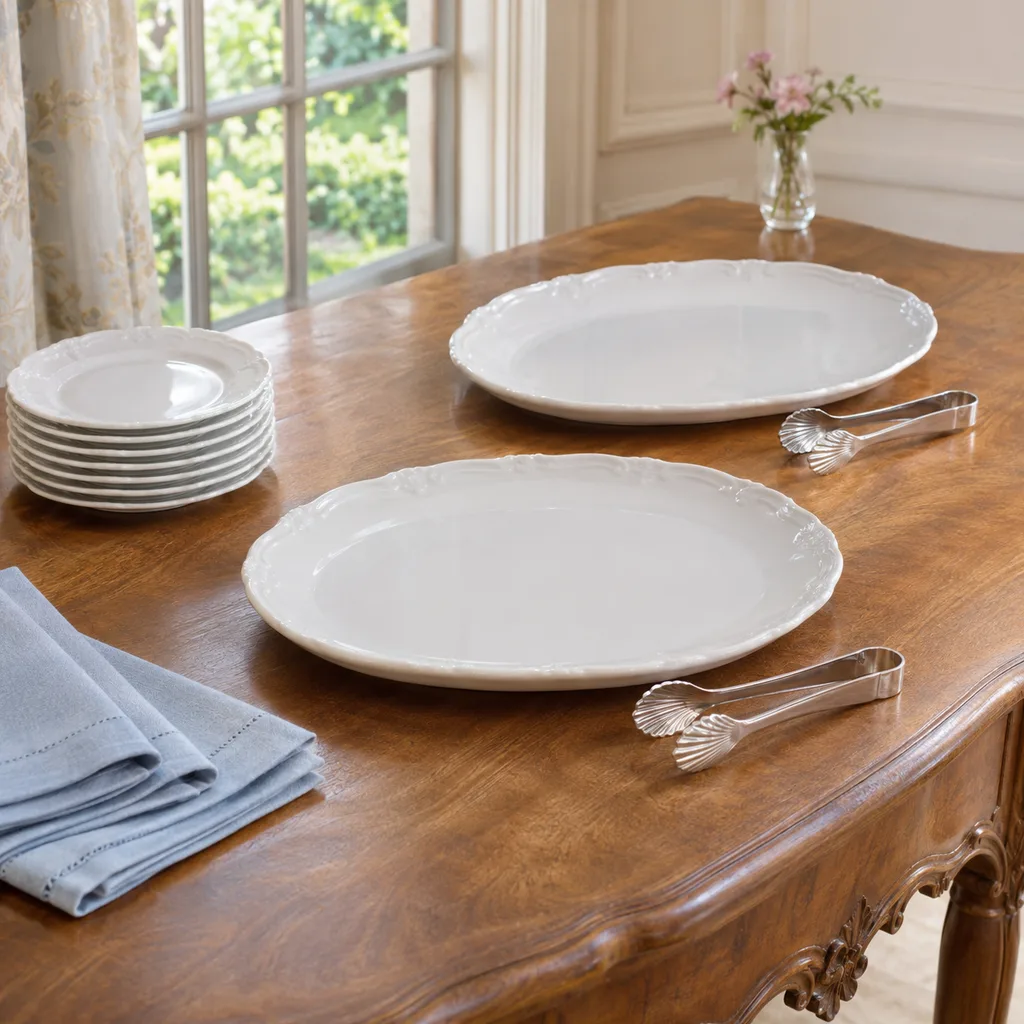
Try the actual empty serving pieces before adding the food. A tiered stand is optional, not a requirement of the theme. Use only a suitable product according to its intended assembly and limits; do not improvise a stand by stacking loose china.
Keep each dish reachable and give it an appropriate serving tool. Plain food names can stay legible beside the romantic details. Confirm ingredient information for the actual menu rather than replacing useful labels with decorative fictional names.
The FDA's buffet guidance recommends replacing nearly empty dishes with fresh ones instead of adding new food to a dish already in use. Keep any backup under its appropriate storage conditions. A fresh-looking stand does not reset the food's history.
Keep the romantic details outside the eating surfaces
Try a modest floral arrangement, a slim paper border or a separate ribbon accent rather than all three at every place. Keep plant material, loose decorative fragments and ribbons out of food and off the drinking edge of cups.
Use the actual flower selection and placement agreed with the relevant supplier or venue. A floral pattern on china is not a guide to which plants belong beside the food. If a plant arrangement is unsuitable for the gathering, let the pattern provide the floral reference instead.
Keep printed details readable: the menu, a guest's name or a short welcome line can supply the paper accent. Choose original wording and artwork you are authorized to use. The mood does not require an imitation of an official invitation or a reproduced show image.
Rehearse the service before repeating the setting
Use the approved empty pieces to check the arrangement with the person serving. Identify where a ready pot would stand, where a used piece would go and which decoration would move if more room were needed. Follow the actual equipment instructions rather than treating this layout check as a hot-drink handling test.
Keep spare tableware and returns in an agreed place away from the decorative center. Note which pieces are borrowed and how they must be cared for and collected. A clear return plan helps preserve the items without inventing a universal cleaning method for old china.
Finish with one understandable setting: a usable cup and saucer, an appropriate service plan and a small repeated decorative idea. The result can feel romantic without making the tea itself difficult to enjoy.
Keep good recipes close
Add The Cooking Twins to your preferred sources on Google for more easy dinners, no-bake desserts and kitchen inspiration.
Emma & Ella Frost
A practical resource from The Cooking Twins.
More from Emma & Ella Frost
Comments
Leave a commentShare your question or planning tip below.