
Zero-Waste Grocery Shopping Tips: Start With One Real Change
Plan a lower-waste grocery routine around a repeated problem, suitable existing bags, store policies and a review of what actually changed.

By Emma & Ella FrostUpdated November 17, 2026

5-Ingredient Dump & Go Crockpot Meals
101 effortless slow cooker recipes for busy families.
View on AmazonAvailable on AmazonZero-waste grocery shopping is a useful intention, not a result that a new tote can guarantee. Start with the waste your own shopping routine actually creates, choose one manageable change and check whether it helped. Food you did not use and packaging you did not need are related problems, but they need different decisions.
You do not need to replace every container or find a completely package-free store before starting. Work with appropriate items you already own, the products you genuinely need and the store's actual policies. Keep food suitability, care requirements and your household's practical needs ahead of a perfect-looking shopping collection.
Notice one repeated source of waste
As you unpack an ordinary trip, note one recurring issue: an extra bag you did not need, packaging from a product nobody finished or duplicates bought because the stock was unclear. Use what you can observe during normal unpacking and use; this does not require sorting through discarded food or household rubbish.
Keep the observation specific. Too much packaging is hard to act on; an unnecessary extra bag on a familiar purchase gives you a clearer next question. Likewise, a large package left unused needs a buying decision, not simply a different recycling bin.
Choose one issue for the next trip. If several people shop, share the observation and proposed change so one person's smaller purchase is not followed by somebody else's automatic restock. Keep receipts and private household records out of public planning photos.
Check what you already have before buying an accessory
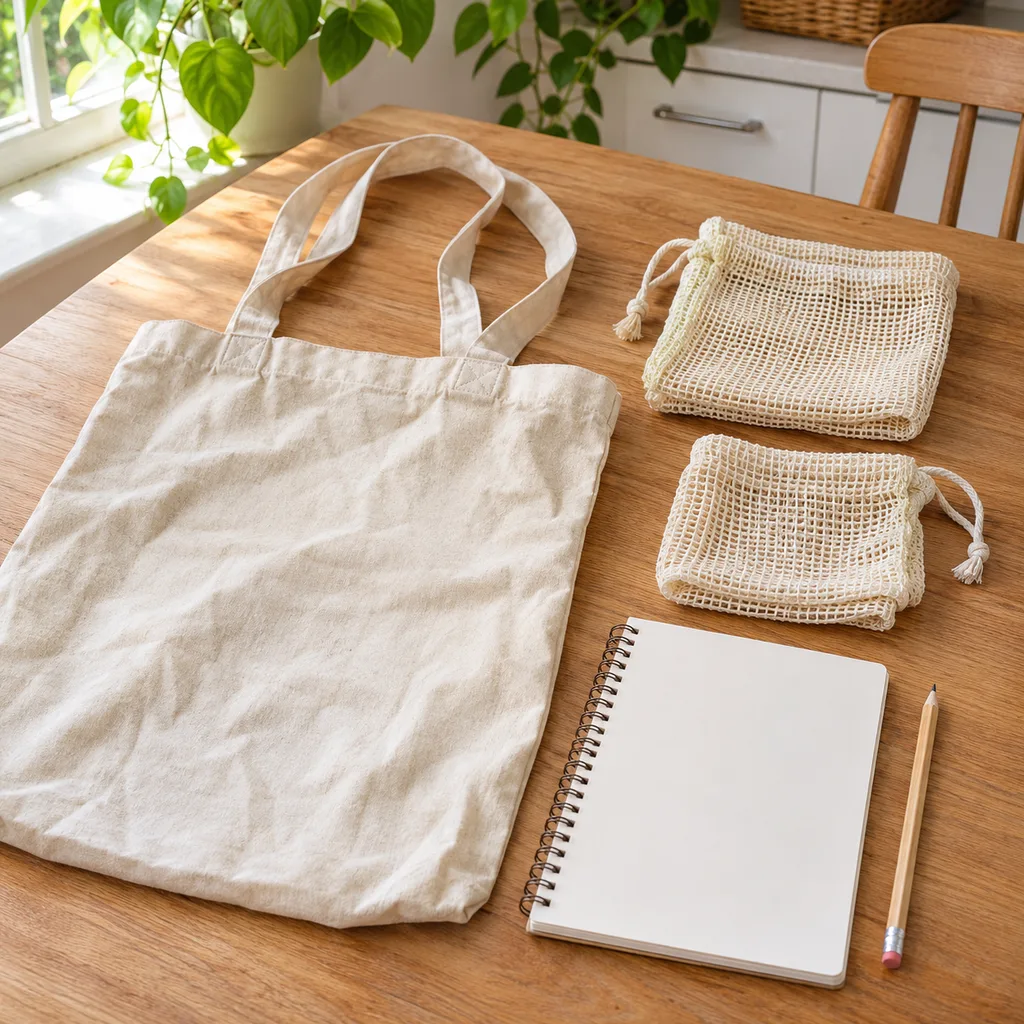
The EPA's shopping questions ask whether you need an item, will use it, already own it or can borrow it. Apply those questions to the reusable equipment as well as the groceries. A new matching set is not the starting requirement.
Identify which existing bags or containers are actually intended for the proposed use. Read their care directions and the store's policy before including them in a refill or produce-shopping plan. A reusable label does not settle food contact, permitted filling or cleaning.
For empty produce bags, our ready-to-shop bag storage guide handles the care-and-return routine. Here, the decision is whether the equipment addresses the particular waste you identified, not how many bags can fit in a drawer.
Ask about the store's process before bringing containers
Confirm what the store accepts, for which products and how the purchase is handled. Do not assume two departments or two shops follow the same process. If the answer is unclear, leave the container plan unresolved rather than improvising at a food counter.
Keep the product's identifying and storage information available after purchase. Ask how you will receive the information needed for the actual food when it is not supplied in its usual package. An attractive handwritten category label is not a replacement for details you still need to verify.
If the store does not support the proposed arrangement, choose another practical change. You might decline an optional extra bag when appropriate or buy a suitable quantity in the packaging available. A limitation at one shop does not mean the whole project has failed.
Keep package reduction separate from buying too much
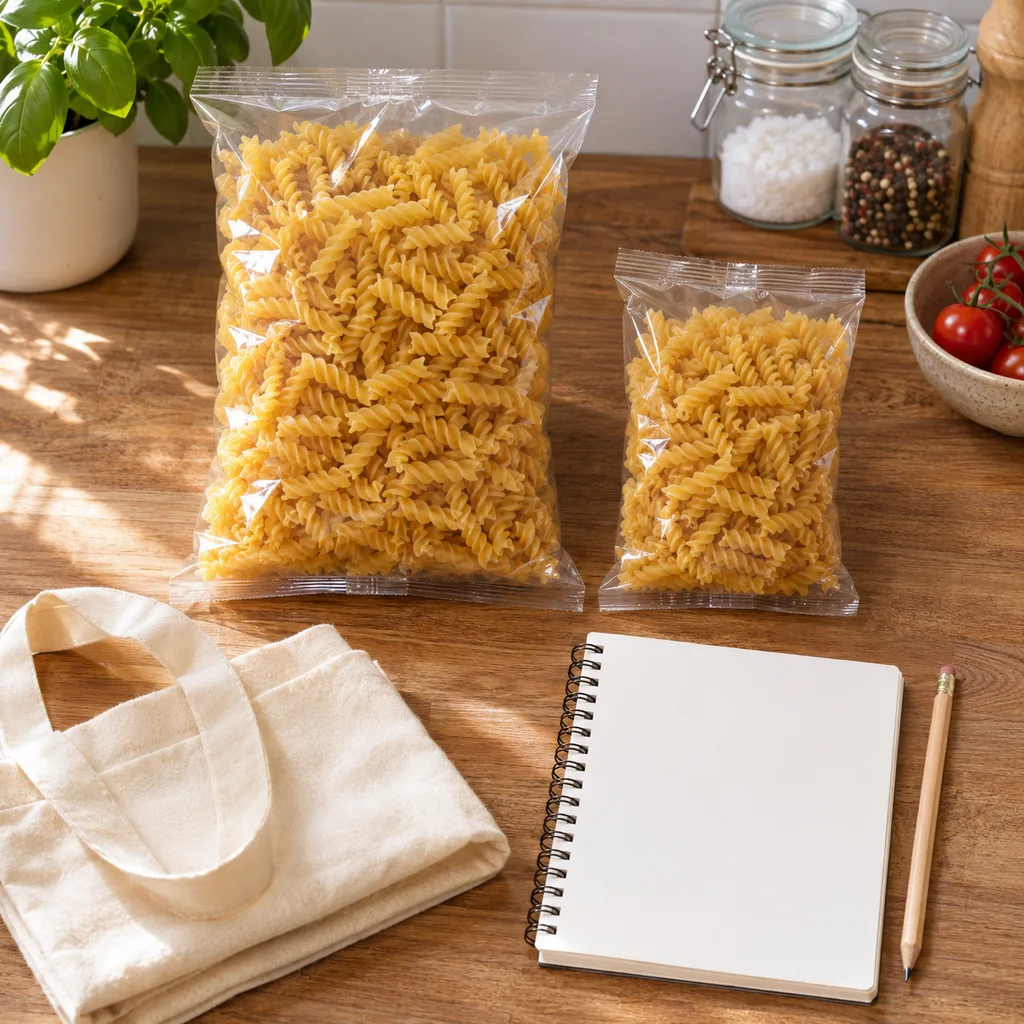
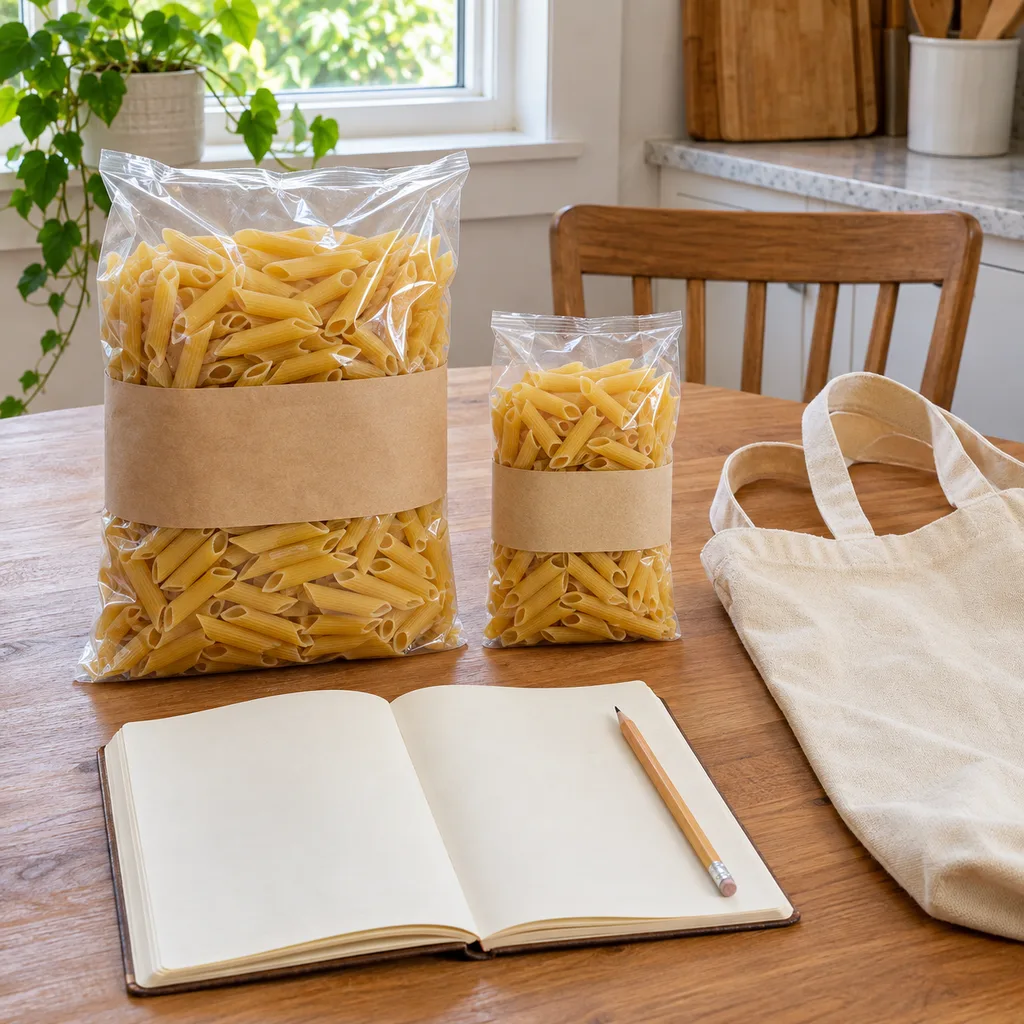
Compare the amount you expect to use and the suitable stock already at home before choosing a larger size. A bigger package may reduce one kind of wrapper while creating an unsuitable food commitment. Do not describe the purchase as an improvement solely because the packaging count went down.
The bulk grocery decision checklist addresses the separate buy, downsize, defer or skip choice. Use it when the proposed change depends on a larger pack. It does not assign food a longer storage life because the purchase covers a longer review period.
Check the complete checkout commitment too. A change should fit the household's actual needs and available money. This planning method supplies no universal budget, observed price or promise that a package-free option costs less.
Plan what happens after the groceries come home
Identify the destination for the food and the appropriate care route for any returning equipment. Do not transfer a product merely to remove packaging from sight. Keep its required storage conditions and identifying information in control of the decision.
For packaging that remains, check the actual local collection instructions and the item's relevant information. Do not infer a recycling route from a green color, a familiar material or the fact that something was used for food. Follow the applicable preparation and disposal directions rather than inventing a universal rule.
Keep unfinished tasks visible: an item awaiting a policy answer, a bag needing care or a packaging question needing a local check. An unresolved task should not quietly become another ready-to-use item.
Review the change without turning it into a claim
After the next ordinary trip, record what changed and what did not. Did the optional bag actually stay unused? Was the food used as planned? Did the reusable equipment return through its required care routine?
These observations describe your routine. They do not calculate carbon, water, lifetime environmental impact or a guaranteed saving. Keep the limits clear rather than treating one avoided wrapper as proof of a completely waste-free shop.
Continue the change that worked, revise the obstacle you can identify and choose another small issue when useful. A practical lower-waste grocery routine can improve without becoming a new collection of accessories or an all-or-nothing standard.
Keep good recipes close
Add The Cooking Twins to your preferred sources on Google for more easy dinners, no-bake desserts and kitchen inspiration.
Emma & Ella Frost
A practical resource from The Cooking Twins.
More from Emma & Ella Frost

Comments
Leave a commentShare your question or planning tip below.