
Monthly Bulk Grocery Shopping Checklist: Buy, Downsize, Defer or Skip
Use this monthly bulk grocery checklist to check real demand, existing stock, storage space and checkout cost before choosing a larger pack.

By Emma & Ella FrostUpdated November 17, 2026

5-Ingredient Dump & Go Crockpot Meals
101 effortless slow cooker recipes for busy families.
View on AmazonAvailable on AmazonA monthly bulk grocery checklist should help you reject an unsuitable large pack as easily as it helps you choose one. Begin with a specific food you already use, the amount you expect to need and a real storage destination. A bigger package is not automatically the right monthly purchase.
Use the month as a review period, not a promise that every food will last that long or that you will never need another shopping trip. This checklist follows the decision about each bulk purchase. It is separate from a meal calendar or a record of money already spent.
Name the exact product and why you want more
Write the food's name and form rather than a broad category such as breakfast or pantry supplies. Note whether you are replacing a familiar product, trying something new or considering a different package size. Those are different buying decisions.
Start with items your household already chooses to eat. A large quantity of an unfamiliar product creates a different commitment from a larger pack of a regularly used ingredient. If the reason is only that the shelf label says value, leave the item on the review list until there is a use plan.
Check ingredients, relevant product information and household requirements on the actual package. Similar names do not establish that two foods are interchangeable in your meals. A change of product should be a deliberate choice, not a hidden result of choosing the larger size.
Count confirmed demand and stock before choosing a pack
Identify the meals or ordinary uses that would draw from this purchase. Use actual recipe requirements where a recipe supplies the quantity. Keep uncertain occasions separate rather than counting every possible future meal as confirmed demand.
Check existing suitable stock before adding another package. Record what can actually cover those uses, including an opened package that can be identified and measured appropriately. Do not count the same supply again on somebody else's shopping list.
The EPA's planning guidance recommends checking existing food and buying for expected meals. It also cautions that large-quantity offers save money only when the food is used before it spoils. A monthly label on your checklist does not change that condition.
Confirm the storage destination before checkout
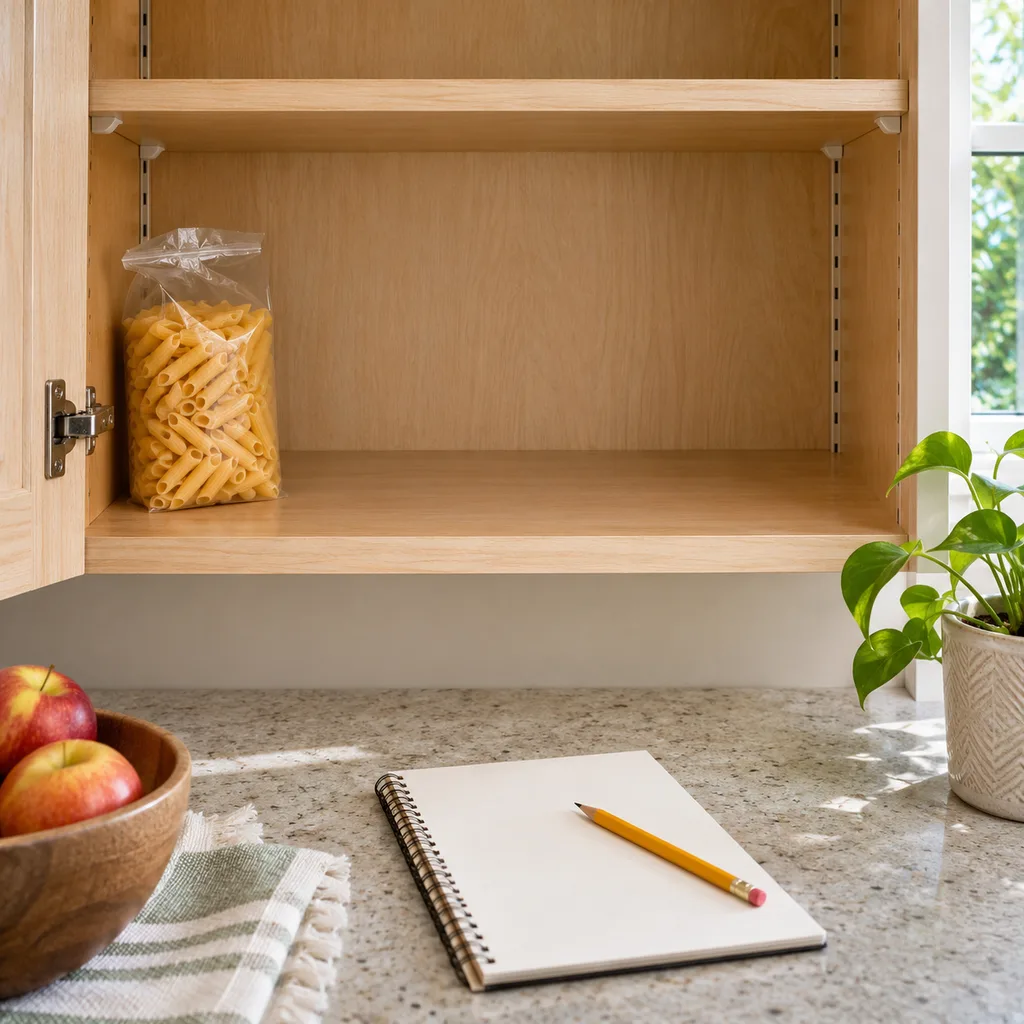
Give the proposed purchase an actual appropriate destination at home. Check the complete package dimensions, the usable space and access to other supplies. Do not reserve the same empty shelf for several large packs that cannot all fit.
Read the product's storage directions, including any change after opening. An unopened pack fitting in a cupboard does not answer where the remaining food will go after you use part of it. Resolve that question before buying rather than making room during unpacking.
If the plan depends on dividing, freezing or transferring food, verify an appropriate food-specific method and suitable containers first. Do not improvise a preservation procedure to justify a bargain. Keep those unresolved tasks marked verify first; this checklist does not assign a storage duration or a freezing method.
Compare the usable choice, not just the largest size
Compare suitable versions in compatible units. Include the real checkout amount in the decision: a lower price per unit can still require more money than you intended to spend on this trip. Our unit-price guide explains the package comparison separately.
Keep the use and storage checks beside that comparison. A low unit price does not establish that you will use the full package, that the product suits the planned meals or that its remaining contents have an appropriate destination.
Do not invent a precise waste allowance for food you have never purchased. If the larger pack depends on uncertain use, the smaller appropriate purchase may be the clearer decision. Record why you chose it so a later review does not treat the same uncertainty as new information.
Give every candidate one decision
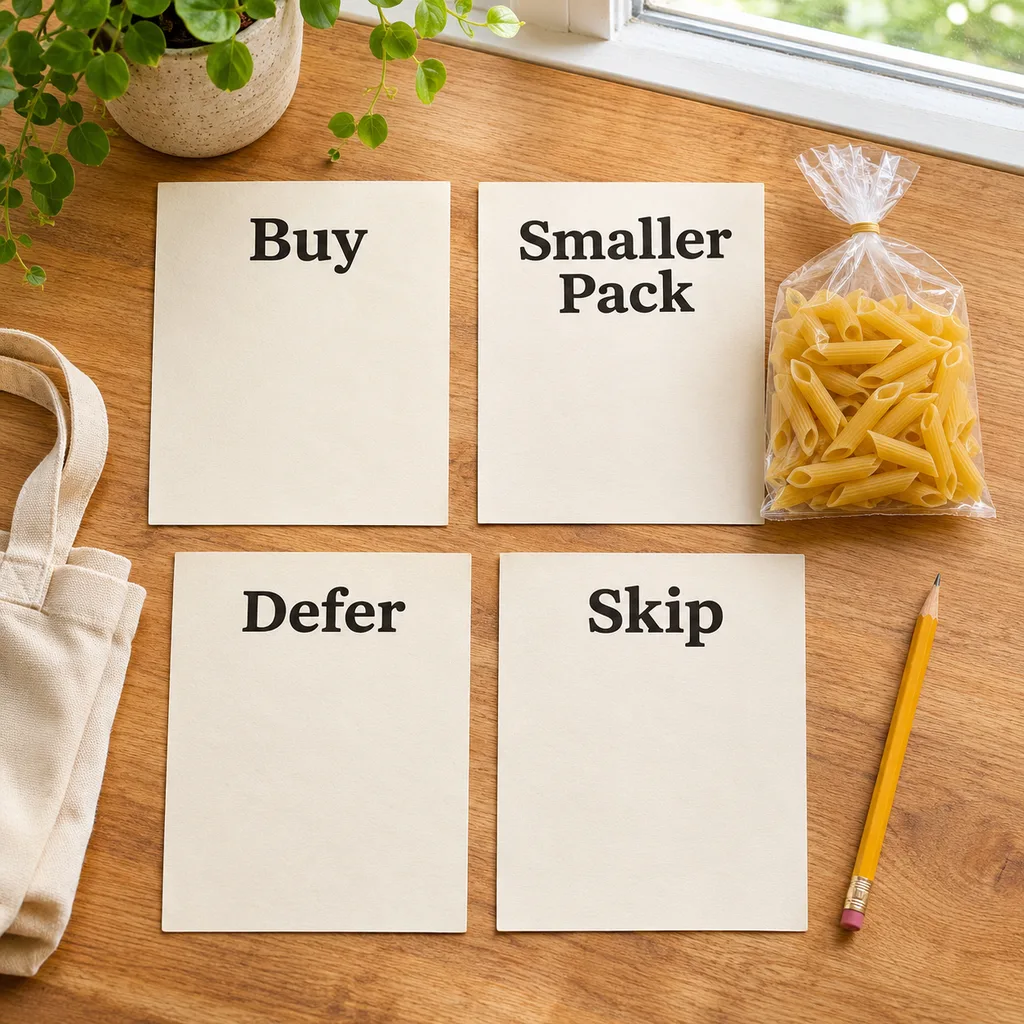
Review these questions for each item before transferring it to the trip list:
- What exact product and package are being considered?
- Which confirmed uses need it, and what suitable stock is already available?
- Where will the full package go, and what changes after opening?
- Are any storage or handling questions still unresolved?
- Does the actual checkout amount fit this purchase decision?
- Is the result buy, choose a smaller pack, defer or skip?
Keep deferred candidates off the confirmed shopping list. Write the missing information next to them: a package measurement, a product direction or an unconfirmed meal. That gives the next review a clear task instead of another vague reminder to buy more.
Review what happened before repeating the purchase
After ordinary use, note whether the pack was manageable, whether the contents were used as expected and whether the storage plan worked. Distinguish an unusual occasion from a repeat household pattern. One party purchase does not establish next month's normal demand.
Keep actual spending in the monthly grocery transaction planner, not in the candidate checklist. Here, preserve the buying decision and its reason. Together, those records can show whether the same bulk choice deserves another place on the list without assuming that every large pack was a saving.
Keep good recipes close
Add The Cooking Twins to your preferred sources on Google for more easy dinners, no-bake desserts and kitchen inspiration.
Emma & Ella Frost
A practical resource from The Cooking Twins.
More from Emma & Ella Frost

Comments
Leave a commentShare your question or planning tip below.