
Under-the-Kitchen-Sink Organization Hacks That Keep Access Clear
Plan under-sink organization around plumbing access, product directions and removable supply groups, with fit checks before adding bins or door storage.

By Emma & Ella FrostUpdated November 17, 2026

5-Ingredient Dump & Go Crockpot Meals
101 effortless slow cooker recipes for busy families.
View on AmazonAvailable on AmazonUnder-the-kitchen-sink organization starts with the cabinet's obstructions, not a matching set of bottles. Keep access to the plumbing, identify the storage requirements of anything you want to put there and choose small groups you can remove without catching a pipe or crowding the doors.
A tidy cabinet is not automatically suitable storage for every cleaning product. If the space cannot meet the product directions or the household's access requirements, choose another appropriate location. This is an organization plan, not a plumbing repair, installation guide or childproofing certification.
Check the condition before planning the layout
Look for an active leak, visible damage or another condition that needs attention before placing a new organizer inside. Pause the storage project if there is a problem. A decorative liner or a taller basket should not hide something that needs an appropriate assessment or repair.
Do not loosen a connection, move a pipe or attach a support to plumbing to make more space. Keep the cabinet's service areas accessible. If you do not know what a component needs, resolve that question with the relevant qualified person or instructions before assigning the space around it.
Plan the reset in manageable sections. Keep household products secured and under their appropriate storage conditions while you work rather than spreading them around the kitchen where they are easier for someone else to reach.
Let product directions decide what belongs there
Read the actual use and storage instructions before grouping products by height or color. The U.S. Fire Administration's household-chemical guidance advises retaining original containers, following label directions and keeping these materials away from children and pets. Do not decant cleaners into matching decorative bottles or treat an open caddy as secure storage.
Keep any required access protection separate from the choice of organizer. A drawer insert or an attractive basket does not establish that a cabinet is appropriately secured. If the actual arrangement cannot meet the products' requirements, do not store them there.
Do not turn this cupboard into overflow food storage. FDA storage guidance advises keeping nonperishable food away from household cleaners and chemicals. A separate shelf inside the same crowded display is not a reason to ignore that separation.
Map the usable openings around the obstructions
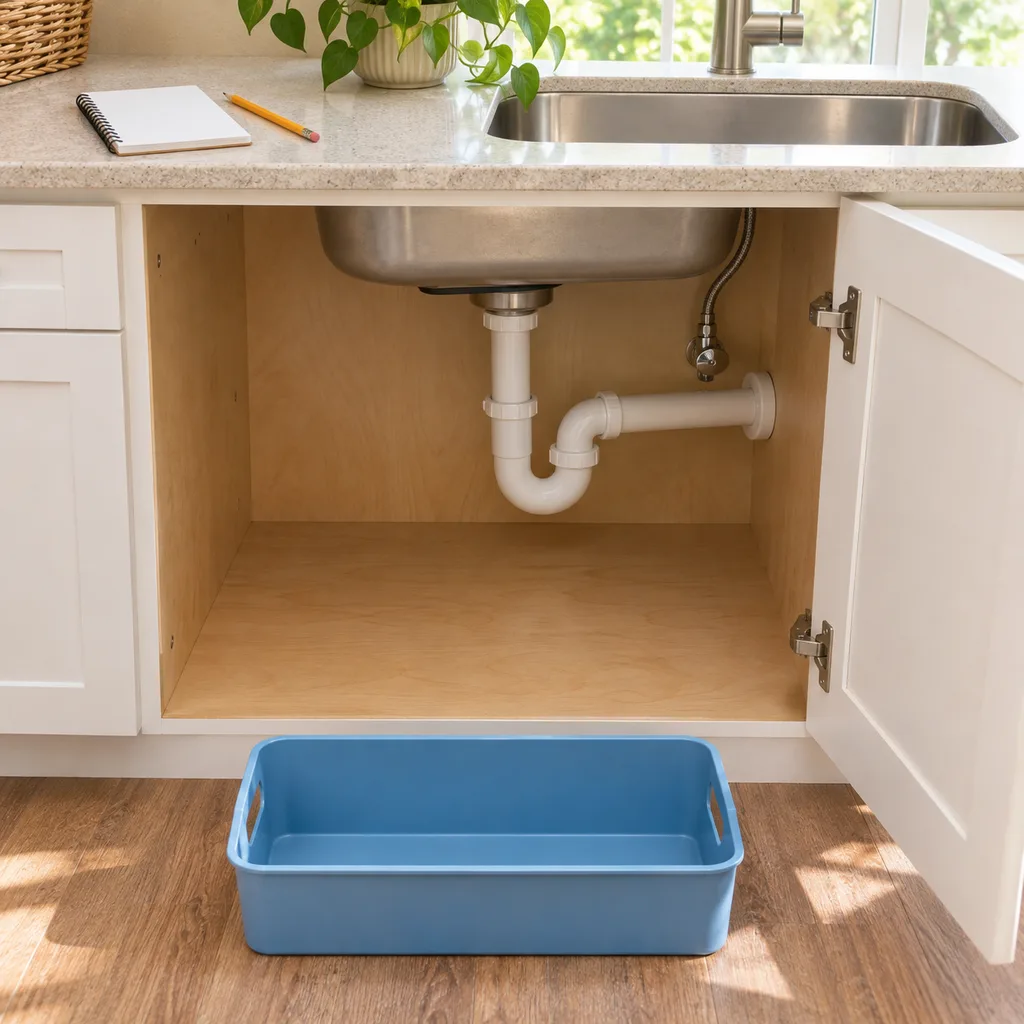
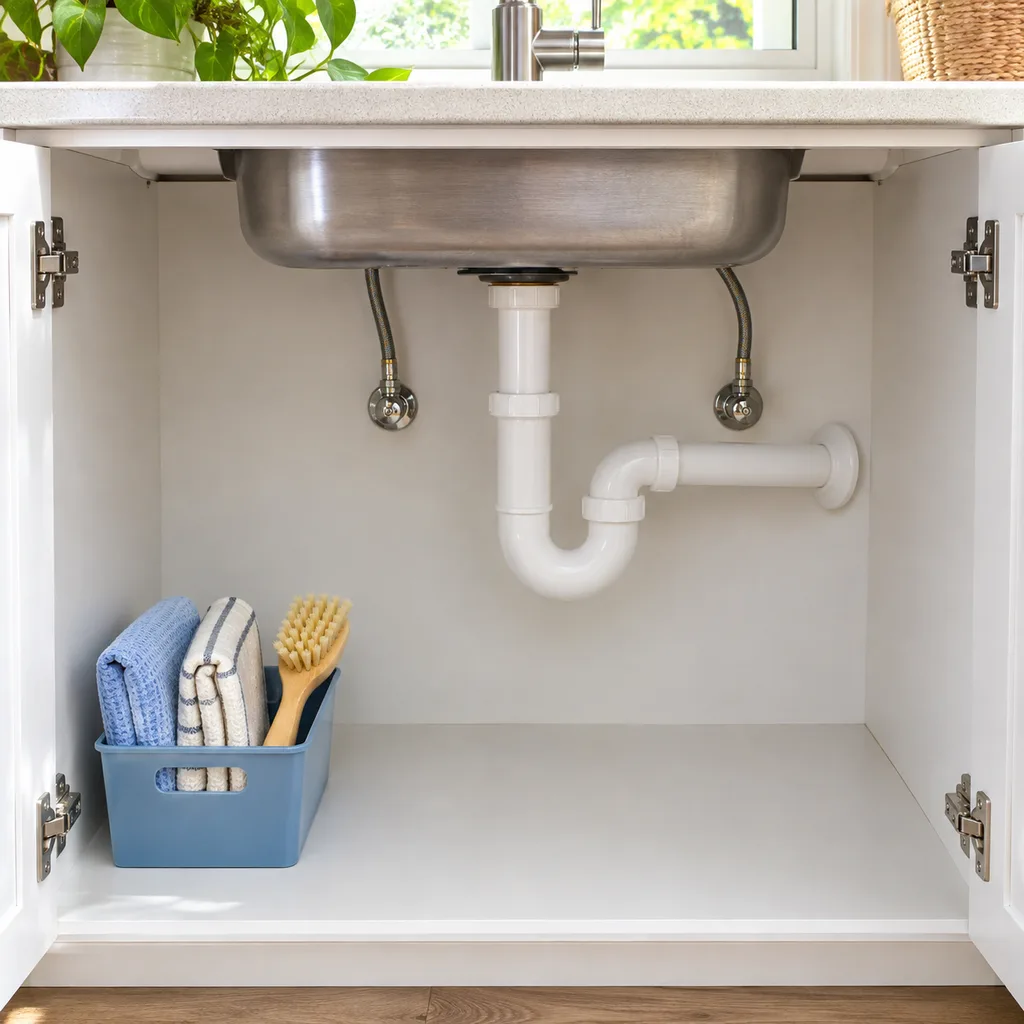
Measure the intended area and the route an organizer must take through the door. Include hinges, a center divider, the underside of the sink and plumbing components. Check height at the actual position, not only at the cabinet's tallest empty corner.
Try an empty suitable organizer before loading it. Can you lift it clear without tilting it into a pipe or scraping the door? A container that fits on the cabinet floor can still be awkward to remove through a narrower opening.
Keep product and cabinet limits separate from physical fit. Do not assume a bin, shelf or door attachment can support the contents merely because they fit within its outline. Follow the actual equipment's intended use and limits.
Start with a small removable group
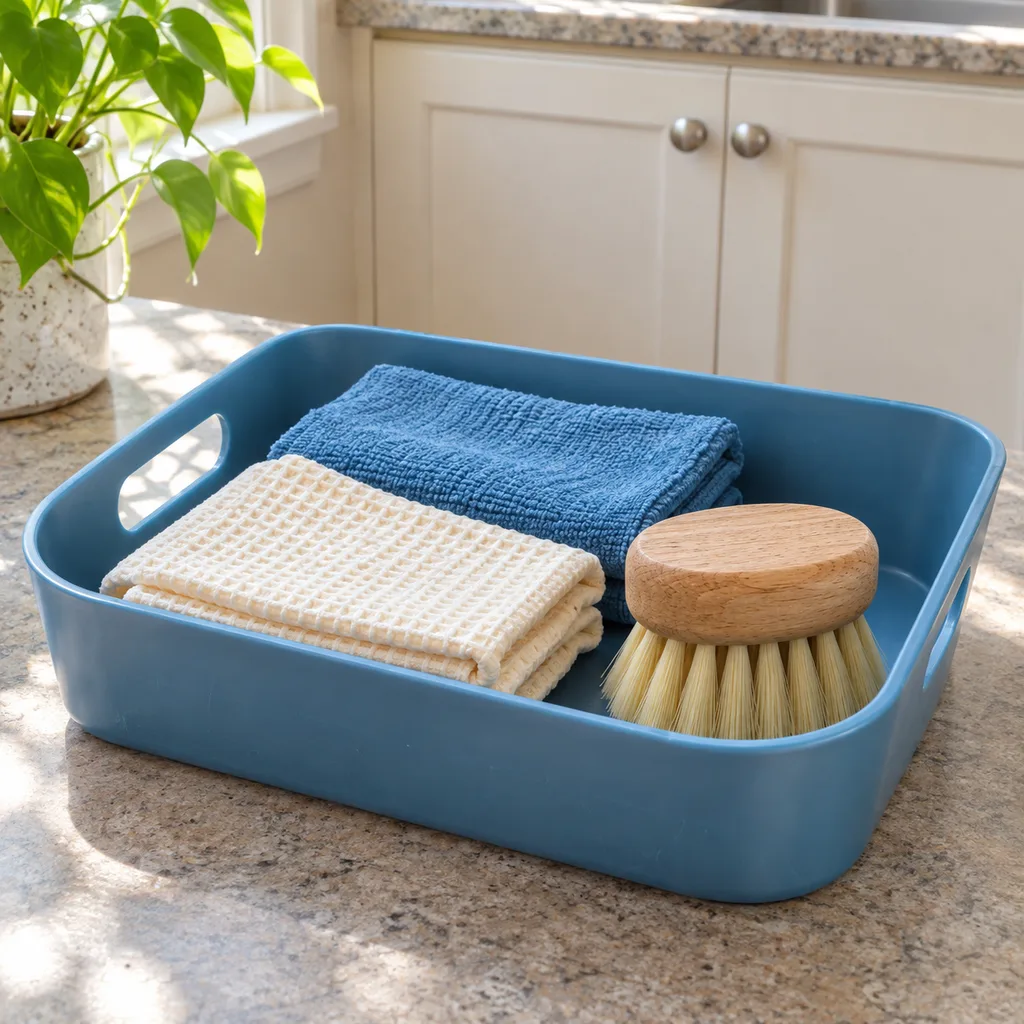
For appropriate nonchemical supplies, one shallow group can be easier to manage than a large box holding everything. A few suitable brushes or dry spare cloths might form one group when the cabinet conditions and their care requirements allow it. Keep different tasks distinguishable.
Choose a group that can be retrieved and returned as a whole without exposing unrelated products or dismantling the cabinet. If the group becomes too heavy or deep to inspect, divide it instead of adding a bigger handle.
Do not combine, mix or transfer household chemicals as part of the reset. The organizing task is to choose suitable storage, not to create a new cleaning mixture. Keep the original product information available to anyone who uses the cupboard.
Check door-mounted storage as a separate decision
A door attachment needs to suit the door, hinge movement, available depth and its intended contents. Check whether it strikes the sink, plumbing or anything already inside when the door closes. Do not force a poor fit.
Follow the organizer and cabinet instructions for mounting and load. A product described as removable or universal is not automatically suitable for every finish or cabinet. Leave the attachment out until those questions are resolved.
For a broader look at access behind the front row, our deep kitchen cabinet organization guide addresses retrieval. Under the sink, the obstructions and product requirements remain the first constraints.
Make the return routine easy to recognize
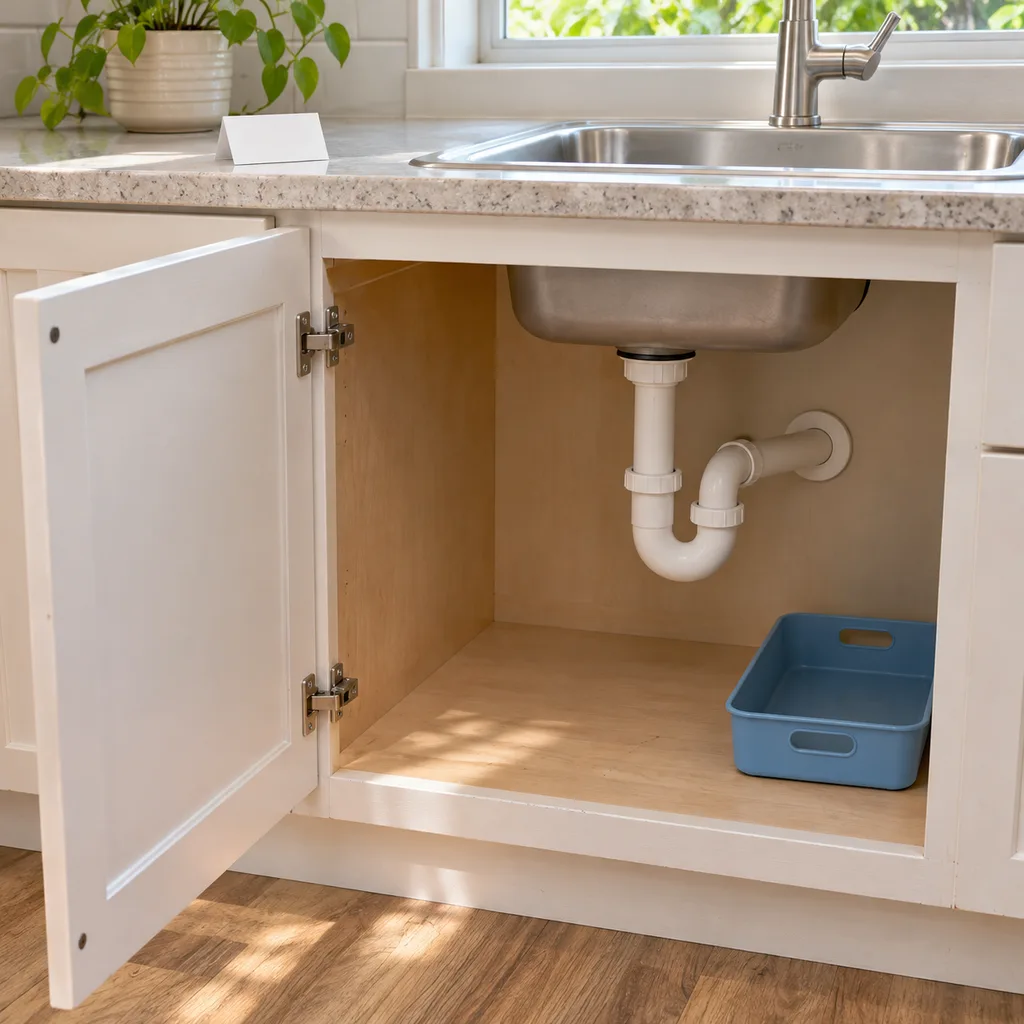
Return appropriate items to their assigned group after their actual use and care routine. Notice whether one object repeatedly ends up balanced near a pipe or squeezed against the door. Change that destination before buying another container.
Keep the arrangement simple enough that service access and product information remain available. Recheck it when the contents or household needs change. The useful result is an appropriate, accessible storage routine, not the fullest possible under-sink photograph.
Keep good recipes close
Add The Cooking Twins to your preferred sources on Google for more easy dinners, no-bake desserts and kitchen inspiration.
Emma & Ella Frost
A practical resource from The Cooking Twins.
More from Emma & Ella Frost
Comments
Leave a commentShare your question or planning tip below.