
Jazz-Club Wedding Reception Theme Ideas: Plan the Music and the Evening
Plan a jazz-club-inspired wedding reception with clear music moments, conversation space, readable set cards and a coordinated venue brief.

By Emma & Ella FrostUpdated November 17, 2026

5-Ingredient Dump & Go Crockpot Meals
101 effortless slow cooker recipes for busy families.
View on AmazonAvailable on AmazonA jazz-club wedding reception theme works best when it begins with the evening's rhythm. Think about when guests will listen, talk, eat and dance before choosing a dark cloth or a gold sign. The music and the way the room operates should carry the idea; the decorations can stay selective.
Use this as a creative brief to develop with your venue, musicians and coordinator. It is not a technical sound, lighting or room-capacity plan. An intimate club mood does not require a crowded room, unreadable menus or a stage built from improvised furniture.
Choose the moments when music will lead
Decide which parts of the reception should feel like listening moments and which should allow easier conversation. Arrival, dinner, speeches and dancing have different purposes. Write those purposes into the brief rather than asking one playlist or performance style to do every job.
Ask your musicians or music provider what they offer and how the proposed sets fit the actual schedule. Agree on introductions, breaks and the person who handles changes. If a speech moves, somebody should know who gives the cue rather than relying on a decorative schedule card.
Describe the feeling you want in ordinary words: an easy welcome, a more focused performance moment or an energetic finish. The providers can translate that into an appropriate plan for the space and their equipment. Do not assume that a small ensemble automatically supplies every part of the evening.
Give guests clear places to listen and reconnect
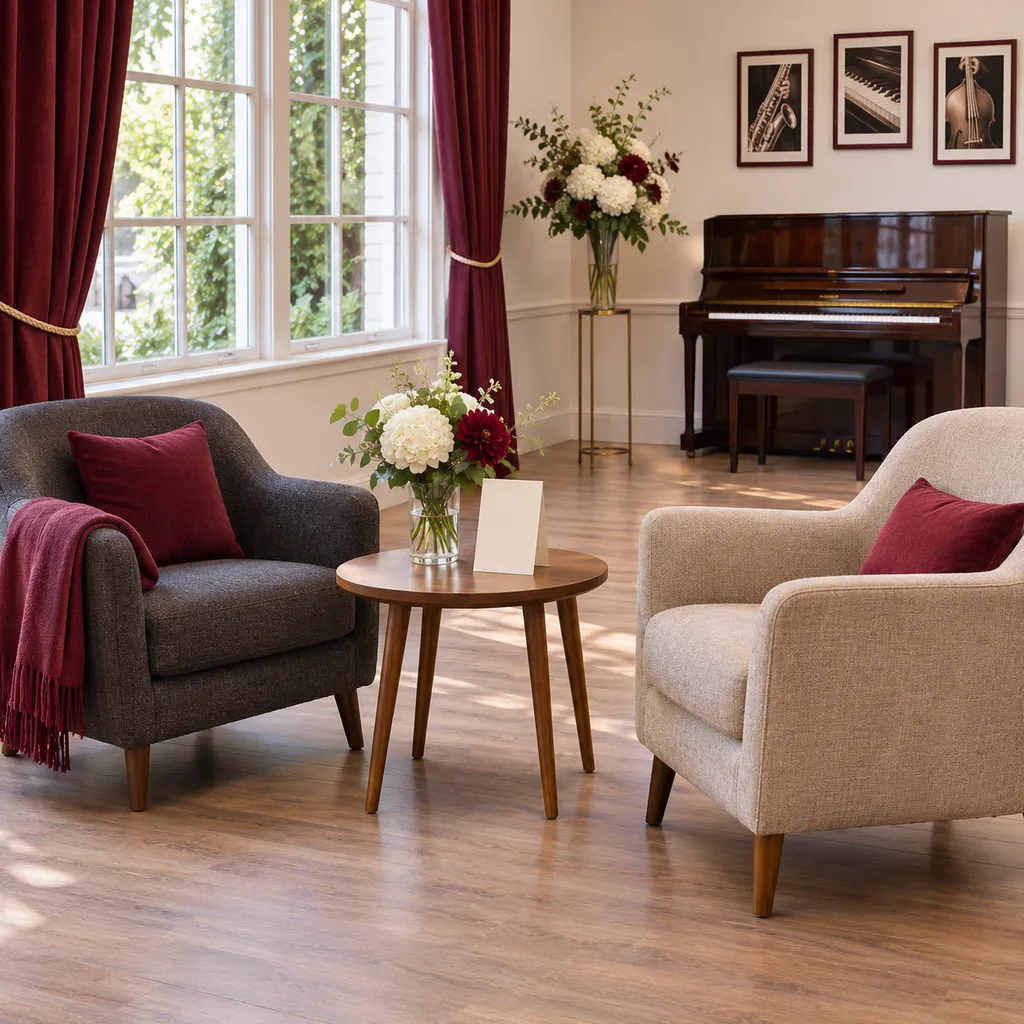
Review the real room plan with the venue and service team. Identify the performance location, dining area, intended dancing space and an appropriate place for guests who want a conversation break. Keep these functions recognizable without turning every area into a separate decorated station.
Use the venue's approved layout rather than copying chair counts or aisle spacing from an inspiration picture. Discuss guest access needs directly with the people responsible for the event. Decorative lounge furniture does not by itself establish a usable route or a suitable seat for every guest.
Keep instruments, speakers, cables and other equipment within the providers' plan. Do not conceal a cable under loose fabric or turn a guest table into an equipment support. Leave those arrangements to the responsible team and keep the decorative brief separate from installation decisions.
Suggest the club atmosphere with a few repeated materials
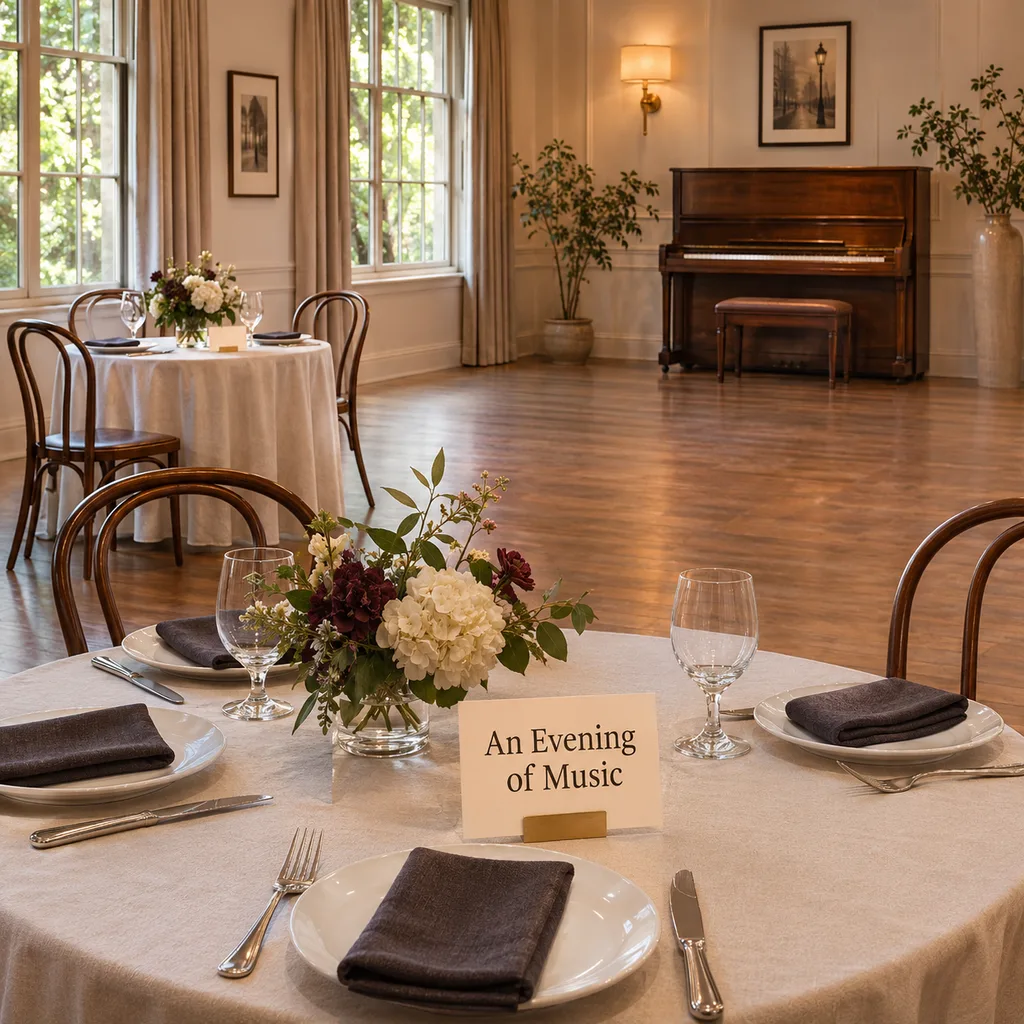
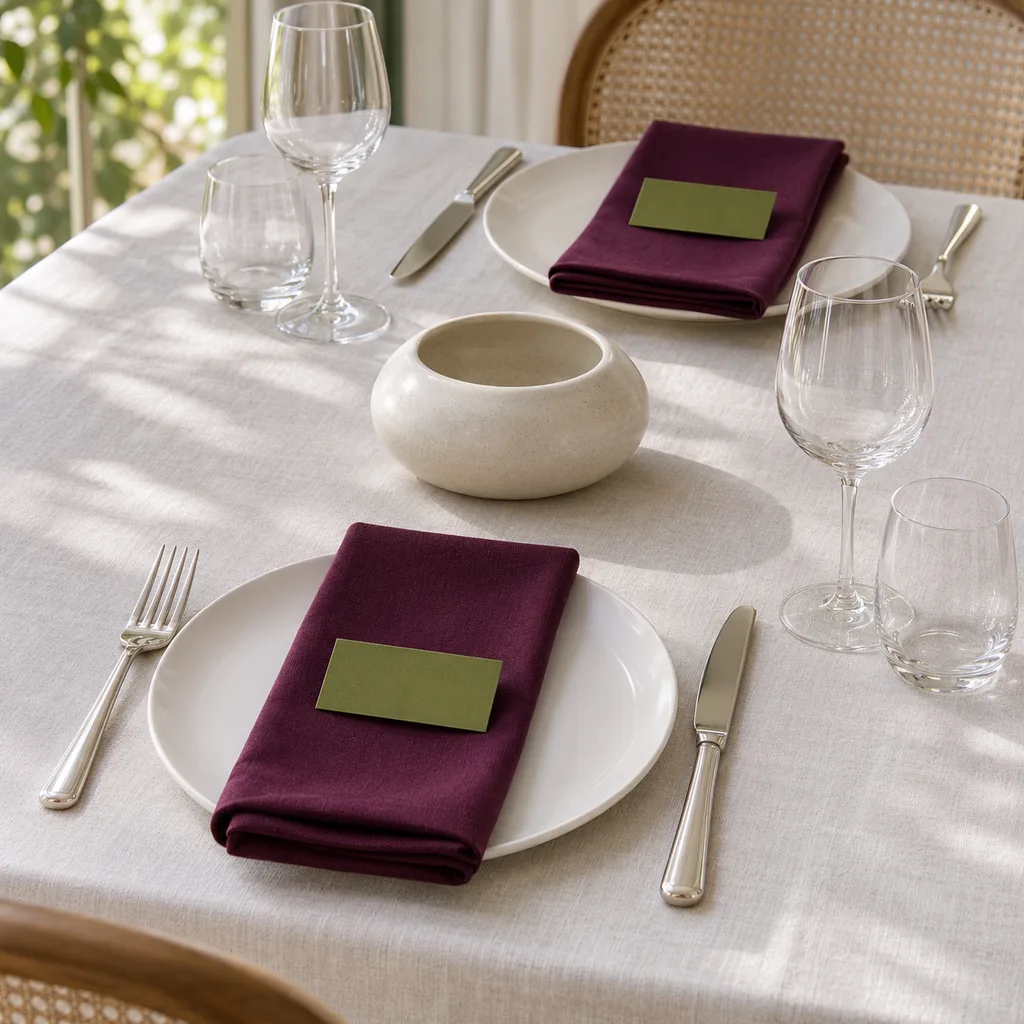
Choose one darker textile, one quieter tableware finish and a restrained warm accent. For example, charcoal napkins with plain white plates and a small brass-colored card holder offer one direction. That is a styling proposal, not a requirement to replace the venue's existing furniture.
Let the room's wood, chairs or wall color contribute before adding more coverings. A coherent material repeated at the entrance and on the tables can connect the spaces without buying a themed object for every place.
Keep the table's service needs visible in the sample. If a centerpiece blocks a guest's view or must be moved for every dish, simplify it. Our small-table decoration guide explains the underlying place-setting and service-space check; its household examples are not a reception capacity standard.
Use readable set cards instead of decorative clutter
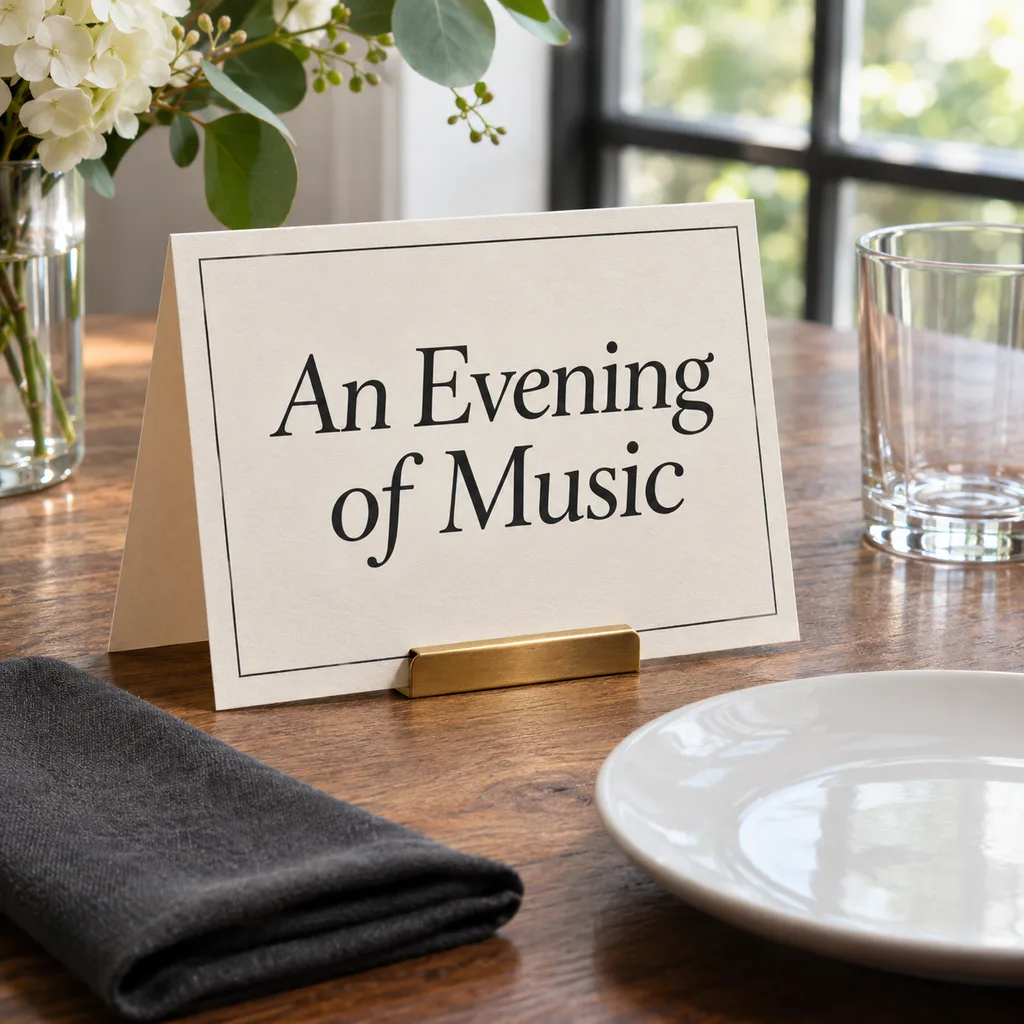
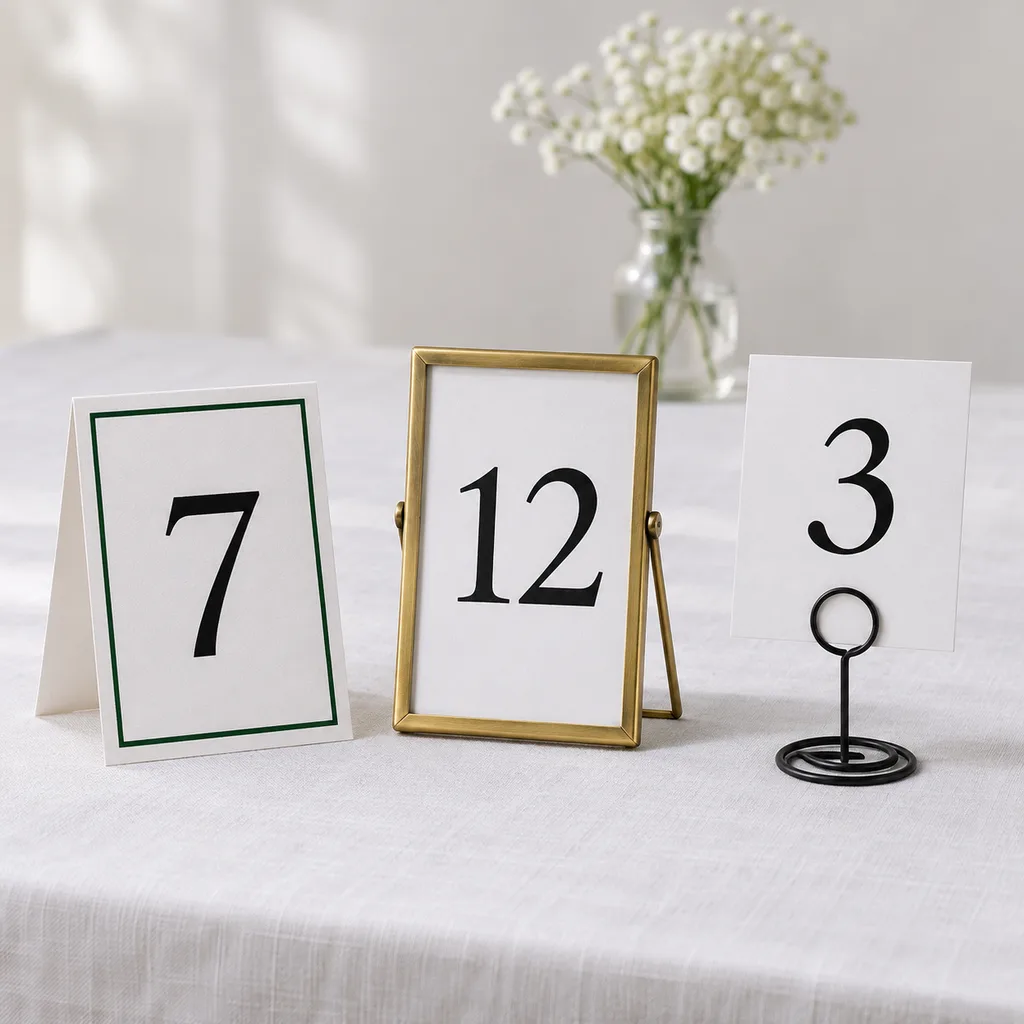
A short card can make the music part of the design. Use the actual confirmed performance heading or a simple phrase such as An Evening of Music. Put guest information first and keep names, table labels and the menu easy to recognize.
If you print a running order, confirm the wording and sequence with the coordinator before producing copies. Avoid promising an exact performance time that has not been agreed. A general welcome card may be more useful when the detailed schedule remains flexible.
Do not imitate a real club's logo, event poster or performer endorsement. Develop your own paper design and use only material you are authorized to include. A simple border and clear typography can suggest the theme without pretending the reception is an established venue or a ticketed concert.
Plan the mood lighting with the venue
Show the venue a sample of the stationery and table materials under the lighting you are considering. Check whether guests can read the menu and identify their places. Preserve the lighting needed for the room's actual operation rather than treating darkness as the main design feature.
Keep decorative lighting within the venue's and providers' approved arrangements. If candle-like accents are wanted, the U.S. Fire Administration suggests considering battery-operated flameless candles. Follow the actual product instructions and venue requirements; do not treat a candle-shaped object as permission for an open flame.
Lighting equipment, power and any overhead elements need their own responsible providers. A reception mood board is not an electrical or hanging-installation guide. You can carry the theme through the linens and paper details even when additional lighting is not appropriate.
Put the setup and handovers in one short brief
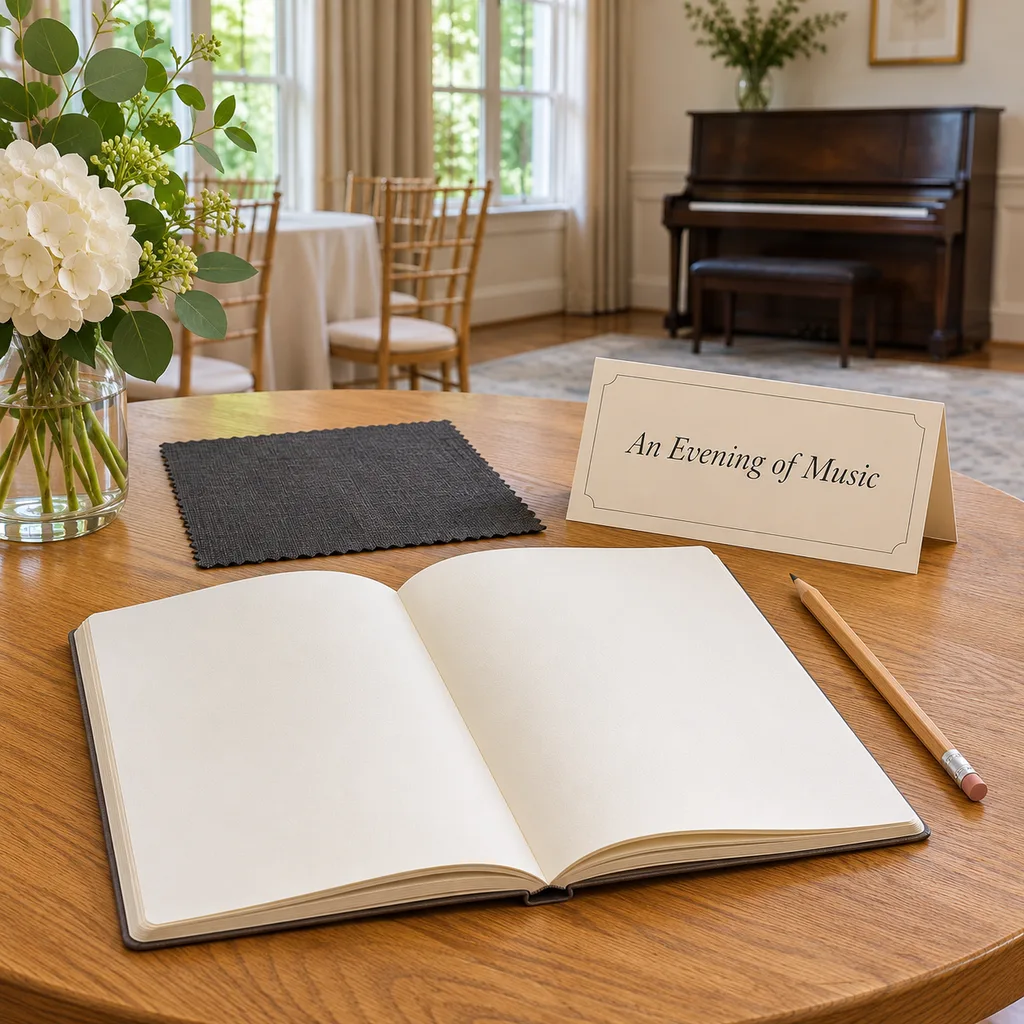
Finish with a record naming the agreed room layout, music provider, cue contact, decorative pieces and any required returns. Include the approved sample and current wording for the cards. Keep private contact details out of public planning photos.
Review the handovers: who welcomes guests, who announces a performance, who coordinates a schedule change and who collects borrowed pieces afterward? A themed reception feels more coherent when these jobs are understood than when every surface repeats a musical motif.
Keep the final design connected to the evening you actually want to host: a welcoming arrival, room to enjoy the music, readable information and time to reconnect. The strongest jazz-club reference can be the experience of the reception, not the number of decorative instruments on the tables.
Keep good recipes close
Add The Cooking Twins to your preferred sources on Google for more easy dinners, no-bake desserts and kitchen inspiration.
Emma & Ella Frost
A practical resource from The Cooking Twins.
More from Emma & Ella Frost
Comments
Leave a commentShare your question or planning tip below.