
Fridge Produce Drawer Organization: Match the Food to the Space
Organize a fridge produce drawer around food requirements, appliance controls, visible packaging and a simple check before buying more.

By Emma & Ella FrostUpdated November 17, 2026

5-Ingredient Dump & Go Crockpot Meals
101 effortless slow cooker recipes for busy families.
View on AmazonAvailable on AmazonA useful produce drawer lets you see what belongs there, reach it without crushing another package and return new groceries to the right place. Start with the produce you actually buy and the instructions for your refrigerator. A matching collection of boxes is optional.
Think of the drawer as a storage environment, not simply the refrigerator's vegetable-colored section. The food's requirements, its packaging and the appliance's controls come first. Once those are settled, a small grouping and a quick shopping check can make the space easier to use.
Check what the drawer controls actually do
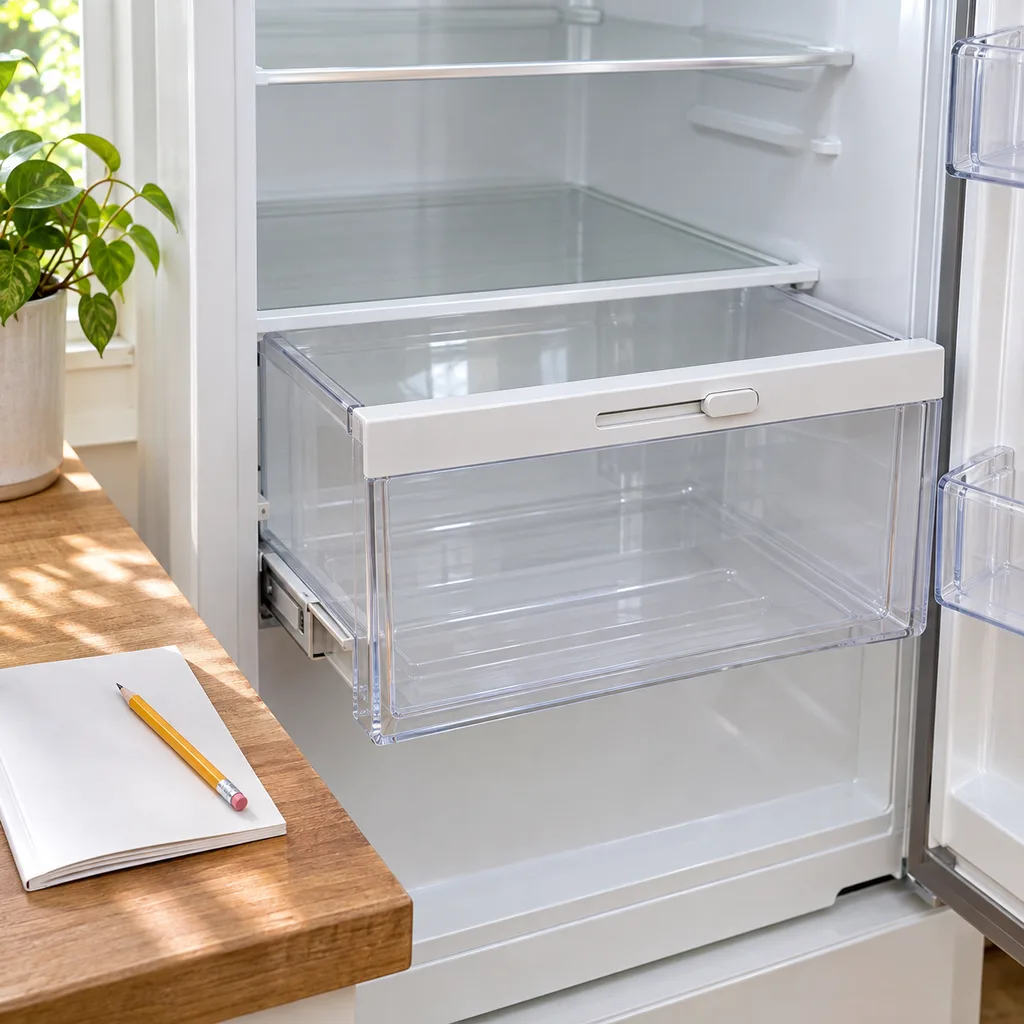
Find the instructions for your exact refrigerator before changing a slider or removing a divider. Identify whether the drawer has an adjustable humidity control, a different temperature setting or no user adjustment. Do not copy the position shown on a different appliance.
A humidity label and a temperature reading answer different questions. The FDA's produce guidance calls for perishable produce such as lettuce, strawberries, herbs and mushrooms to be kept in a clean refrigerator at 40 F or below, checked with a refrigerator thermometer. A closed drawer or neat arrangement does not verify that temperature.
Keep vents, controls and the drawer's movement clear as the appliance instructions require. If it is sticking, damaged or not operating as expected, address that issue before adding an organizer. Do not force the drawer around an oversized container.
Sort by storage needs before sorting by color
Use the actual food and its package directions to decide its destination. The EPA's home food-storage advice generally places wilting vegetables, including leafy greens and carrots, in higher humidity and most fruit, mushrooms and peppers in lower humidity. Treat these as broad categories, not exact settings for every appliance or every product.
Keep the separation between groups recognizable. A simple note on the drawer front can identify the intended group without covering the control. If your refrigerator offers only one suitable drawer, do not pretend it provides two independently controlled environments. Resolve the individual foods' requirements rather than adding a decorative divider and calling it a second climate.
Do not assume everything sold in the produce department belongs in this drawer. Check the particular item when unsure. FDA advises refrigerating purchased pre-cut or packaged produce; a convenient counter basket is not a substitute for that requirement.
Keep original information with packaged produce
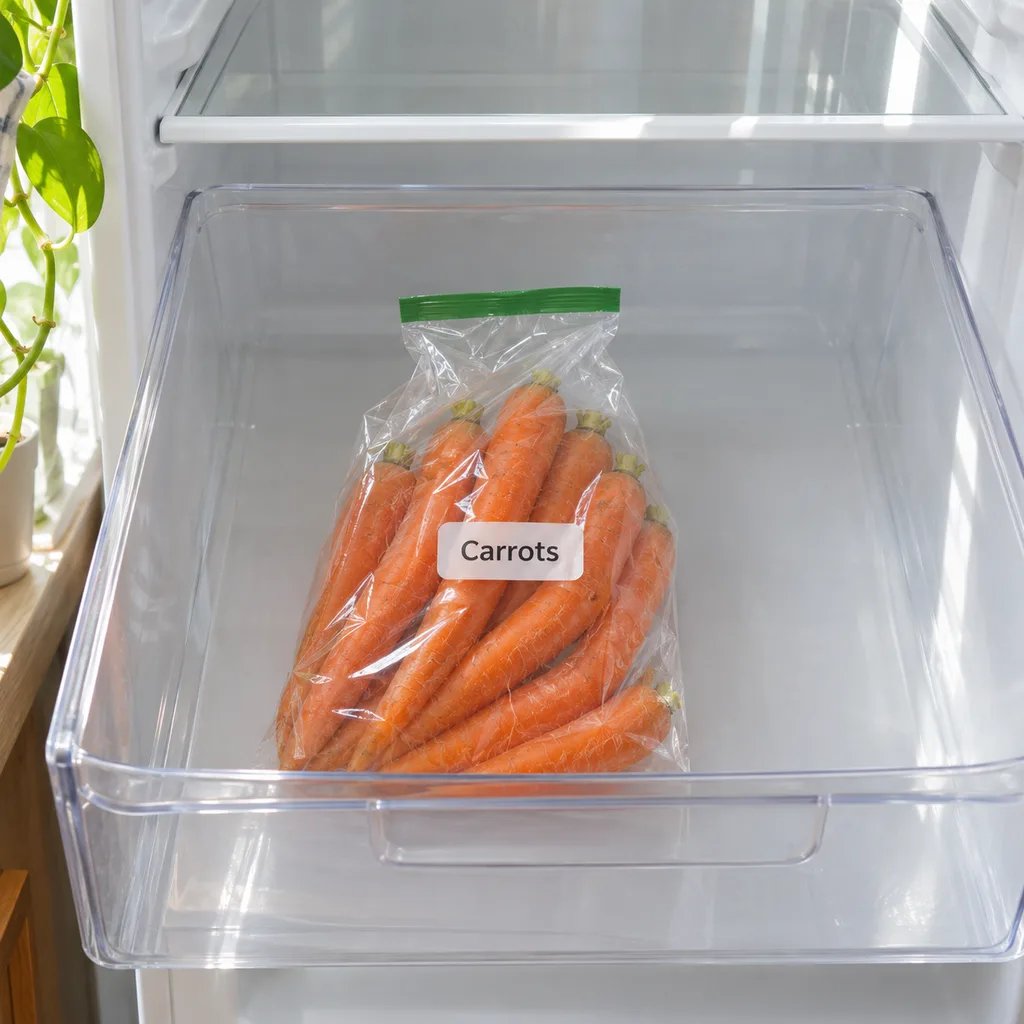
Leave identifying information and storage directions available. Before taking a package apart, ask what useful information would disappear: the product name, an instruction, a date or a lot identifier. A label reading vegetables is not a replacement for those details.
Make packaged items easy to recognize without packing them into a tight upright row. If a product's instructions require a particular closure or storage arrangement, keep that requirement in control. An outer bin can help retrieval, but it does not automatically replace the original food container.
Keep produce intended to be eaten raw separate from raw meat, poultry and seafood, as FDA advises. Do not use a shared open bin as a substitute for that separation. Resolve the storage arrangement before treating the drawer as a visual reset.
Make the next item visible without crowding the rest
Place an appropriate item you plan to use next where it is easy to identify, while keeping its required storage conditions. Avoid burying it under a new package simply because the new one looks better at the front. The position is a reminder, not a judgment that the food remains suitable.
Leave enough room to retrieve the actual packages without forcing them through a narrow gap. If one item must be removed every time another is reached, try a smaller group or a different suitable destination. Empty space can be useful working space.
Choose any additional container for one demonstrated problem. Our fridge organizer bin guide covers fit, intended use and cleaning. Here, the important question is whether the extra layer helps the produce routine without defeating the drawer's intended operation.
Use the drawer check to change the shopping list
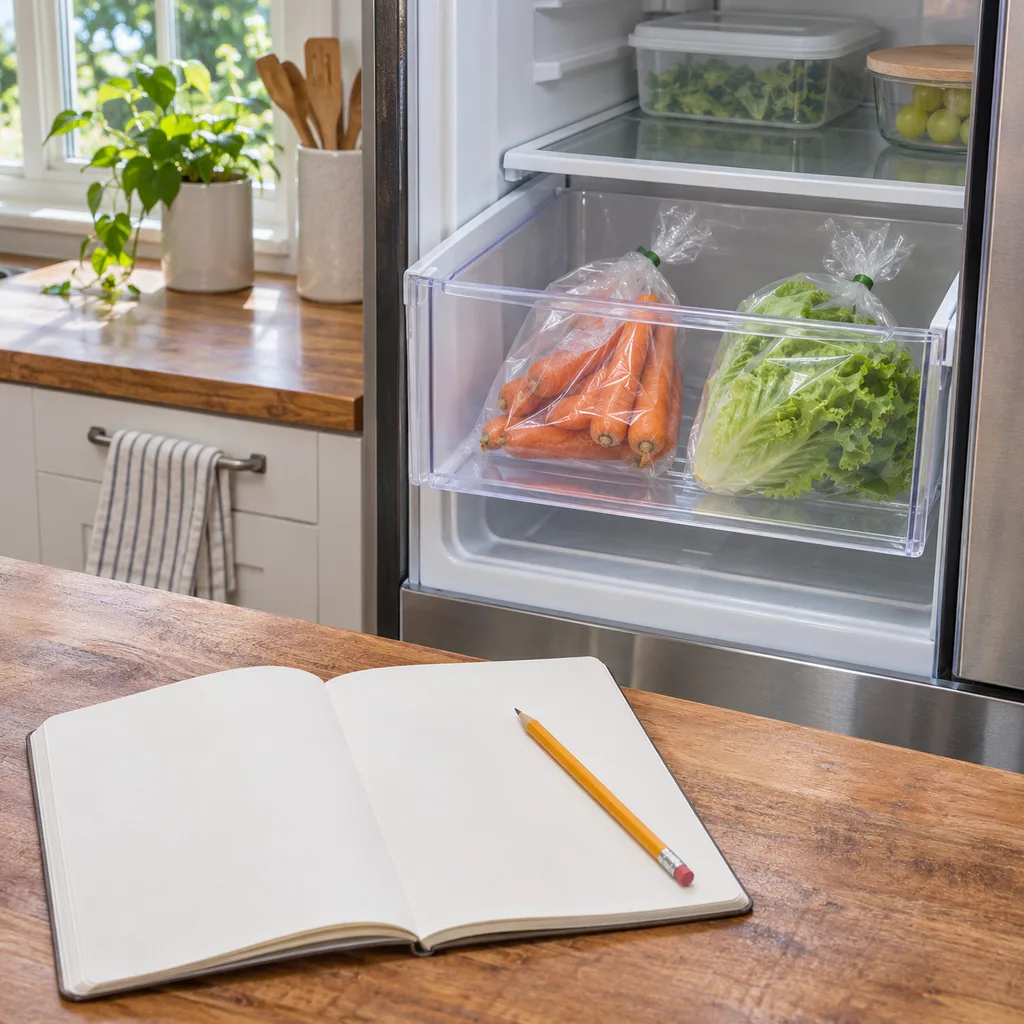
Before shopping, look at what is actually present and connect it with a planned meal. Record an uncertain quantity as something to verify instead of buying a duplicate automatically. Do not fill the drawer simply because there is space after a reset.
Keep a short note of a repeated problem: bags hidden behind each other, an unsuitable package size or a drawer that cannot close after the usual trip. Change the purchase or grouping that causes the problem. Another set of boxes may not be the answer.
Recheck the arrangement when the household's groceries change. A helpful produce drawer has understandable destinations, visible product information and a return routine that people can follow. It does not need to stay arranged like a photograph, and organization alone does not establish a storage life.
Keep good recipes close
Add The Cooking Twins to your preferred sources on Google for more easy dinners, no-bake desserts and kitchen inspiration.
Emma & Ella Frost
A practical resource from The Cooking Twins.
More from Emma & Ella Frost
Comments
Leave a commentShare your question or planning tip below.