
Useful Gadgets for One-Pot Cooking: Match Each Tool to a Real Step
Choose one-pot cooking tools for stirring, lifting, measuring, checking and serving, with a clear role for each piece and fewer unnecessary purchases.

By Emma & Ella FrostUpdated November 17, 2026

5-Ingredient Dump & Go Crockpot Meals
101 effortless slow cooker recipes for busy families.
View on AmazonAvailable on AmazonThe useful gadgets for one-pot cooking are the ones that handle the jobs in your chosen recipe without crowding the counter. A soup, a skillet meal and a pasta dish may use one main vessel, but they do not necessarily need the same utensils. Read the complete method before deciding which tools deserve a place beside the pot.
Start with suitable equipment you already own. Build a small task-based selection for stirring, lifting, measuring, checking and serving, then add a specialist tool only when a real step calls for it. One-pot cooking describes the meal's method; it is not a promise that every job can share one utensil.
Read the method before gathering the tools
Make a short list of the actions in the recipe, in their actual order. Does it call for stirring a thick mixture, turning separate pieces, whisking a sauce or ladling a finished soup? Those actions tell you more than a generic set labeled essential.
Keep the vessel's instructions beside that list. Check which utensil materials and shapes it permits, including any restrictions related to a coating. A tool's color or familiar appearance does not establish that it suits every cooking surface.
Also identify handoffs between preparation and finished food. A utensil used with raw ingredients is not automatically ready for serving. Plan appropriate care or a separate ready utensil rather than making the one-pot label a reason to skip that distinction.
Choose a stirring tool that reaches the working surface
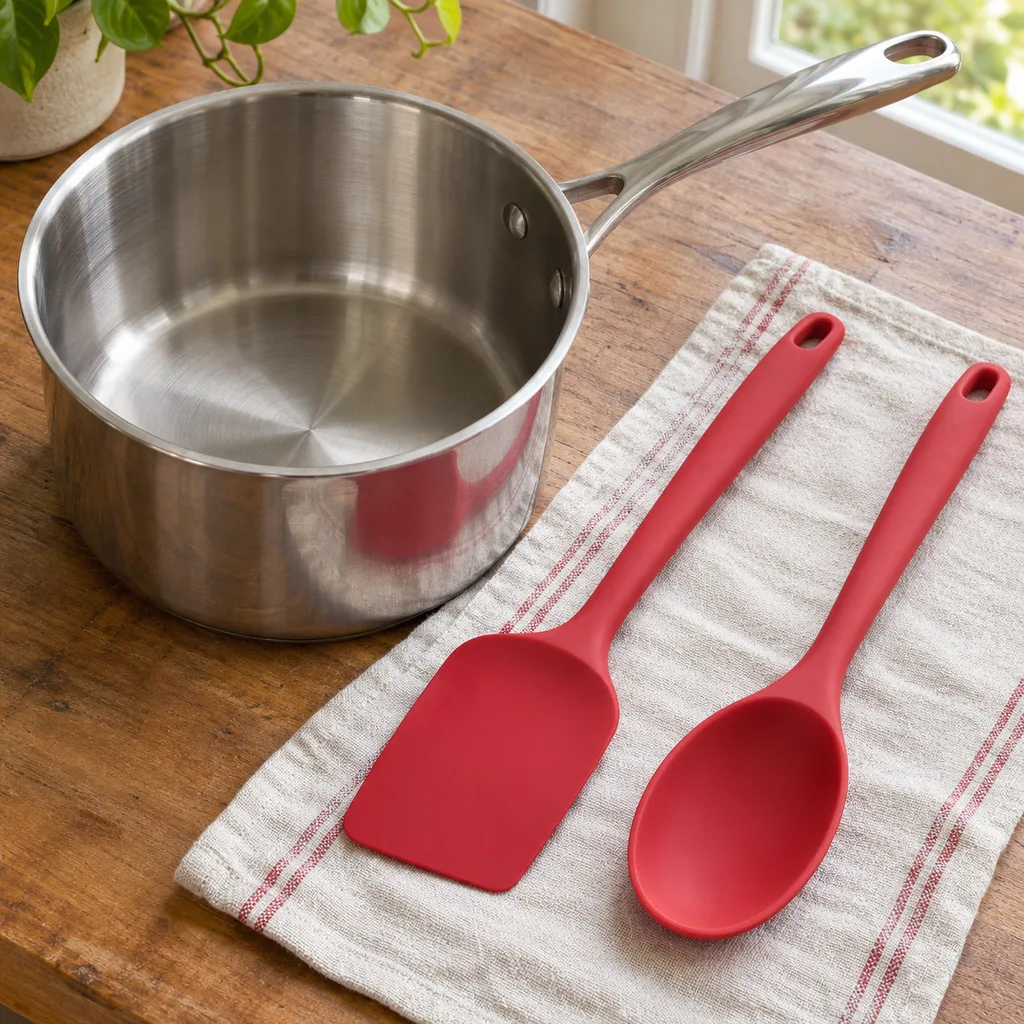
A suitable cooking spoon or spatula is a starting point when the recipe calls for stirring. Compare the head with the vessel's shape: can it reach the relevant area without an awkward angle or a handle that is difficult to control?
A broad head and a deep spoon bowl do different jobs. The broad tool may suit moving a thicker mixture when permitted; a deeper spoon may be more useful for a mixture you need to scoop. Choose for the action instead of assuming both need to be purchased.
Check the exact tool's intended use, heat restrictions and care directions. Do not leave it resting in hot cookware unless its instructions permit that use. A suitable place for a used tool beside the cooking area can be more helpful than another matching utensil.
Add tongs or a whisk only for a named step
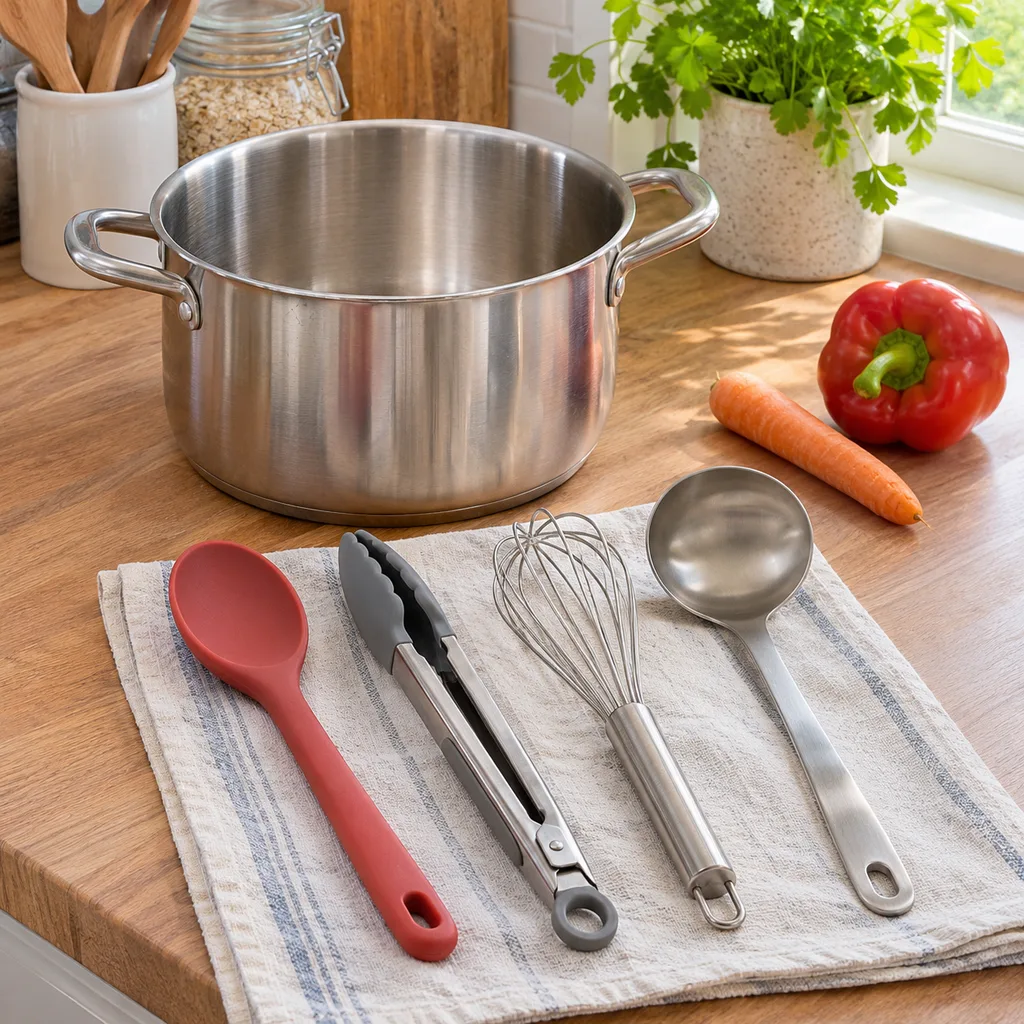
Tongs can serve a lifting or turning task when the food, vessel and tool are suitable. Compare the opening, tip shape and handle movement with the actual job. Very long tongs may be inconvenient in a small vessel, while a bulky head may make a delicate task harder.
A whisk belongs in the selection when the method actually calls for whisking. Check whether its head can move within the vessel and whether its material is permitted for the cooking surface. Do not force a large balloon whisk into a narrow pot simply because it came in the set.
Leave out a tool that has no role in the chosen method. Neither a whisk nor tongs turns an unsuitable recipe into a one-pot version. Follow the original ingredient order and method rather than changing them to match new equipment.
Keep measuring and temperature checks separate
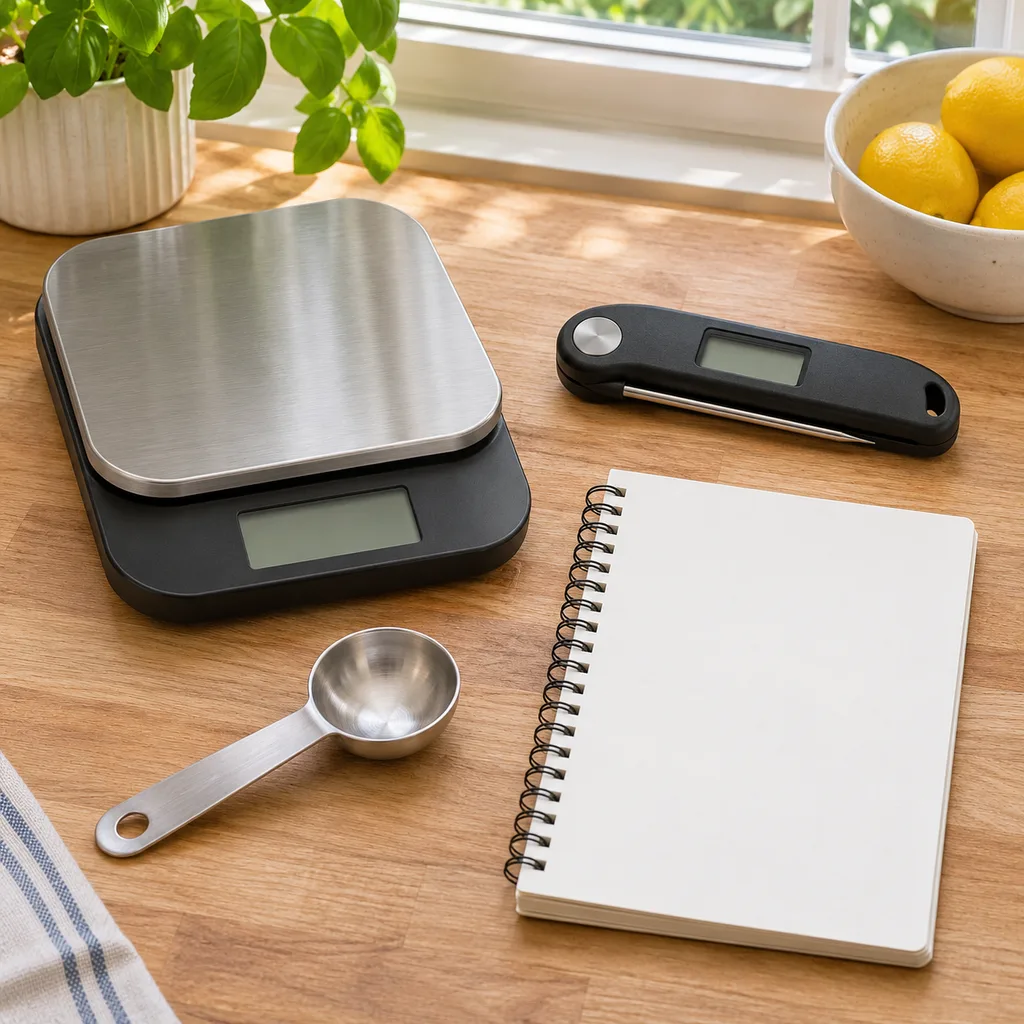
Use the recipe's stated measurement method. Gather the required suitable measuring tools before cooking so a missing measure does not turn into an improvised conversion halfway through. Our digital kitchen scale guide discusses where weighing fits; owning a scale does not make a guessed cup-to-gram conversion reliable.
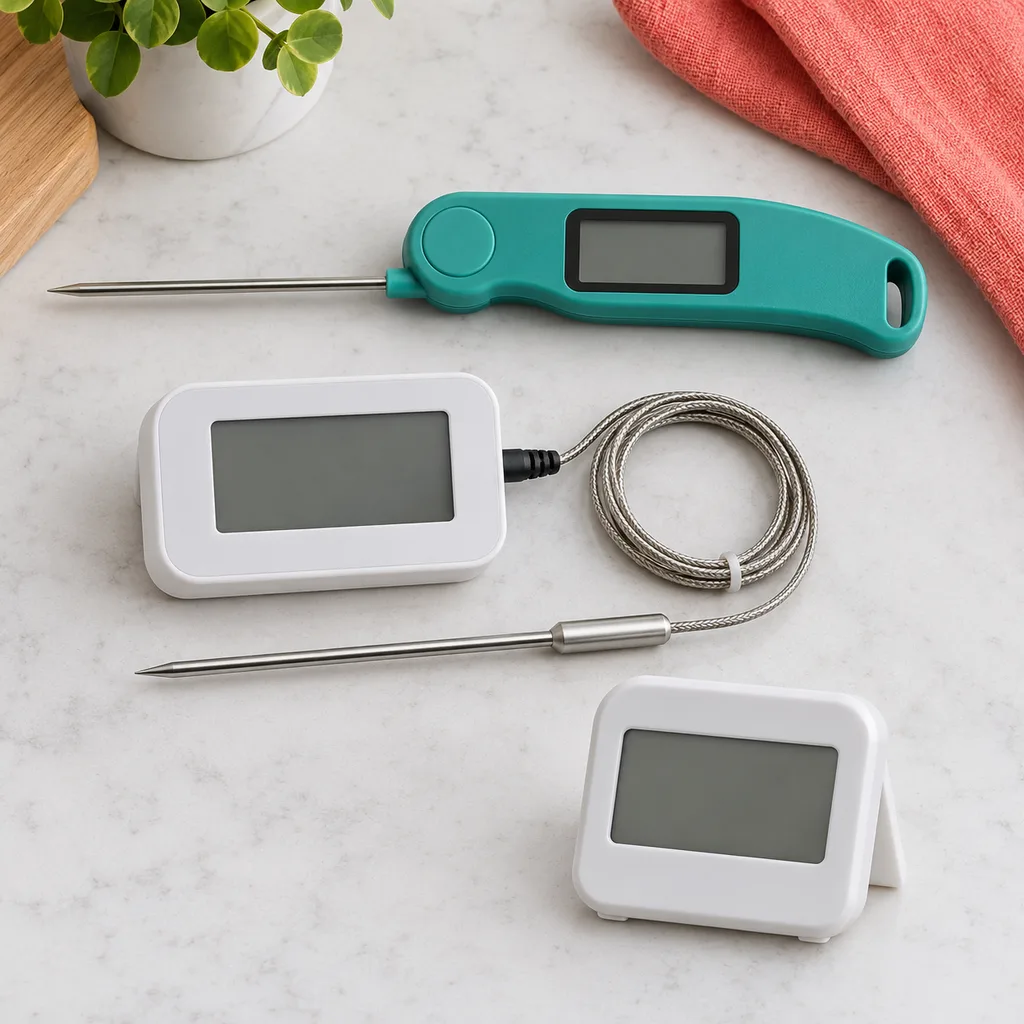
A timer and a food thermometer answer different questions. NIST's culinary-temperature guidance identifies thermometers as kitchen measurement tools and bases appropriate internal-temperature checks on the food. A recipe time, a bubbling surface or the pot's appearance is not a substitute for the required food-temperature check.
Choose and use the thermometer according to its own instructions and the actual food's current guidance. The thermometer types guide separates food checks from appliance measurements. This equipment selection does not supply a new cooking target or an insertion procedure.
Choose the serving piece before the meal is ready
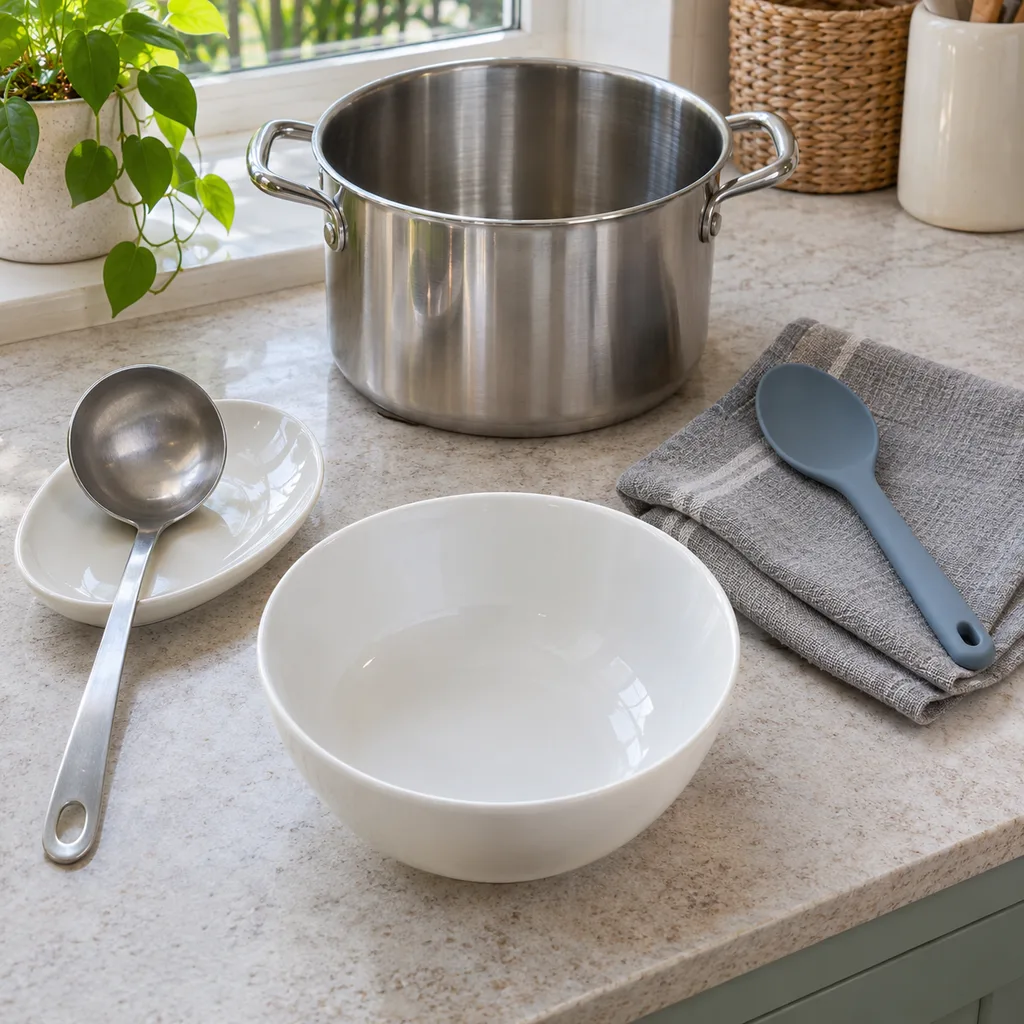
A ladle can make sense for a soup, while a suitable spoon or turner may fit a different finished dish. Check the food's form and the serving vessel rather than defaulting to the tool used during preparation.
Give ready serving pieces a recognizable destination separate from used preparation tools. Include the relevant care step in the workflow. Fewer tools are useful only when the remaining selection can do the jobs appropriately.
Keep lifting the cookware separate from serving the food. Use suitable equipment for handling the actual vessel and follow its instructions; a cloth, utensil handle or attractive trivet is not automatically appropriate for every hot-pan task.
Keep the next purchase tied to a repeated problem
After cooking, note which action was difficult and why. Was the spoon head too broad, the whisk awkward to retrieve or the serving tool missing? Name that problem before buying a full bundle.
A useful small selection has a reason for every piece and a care routine you can follow. Keep what works, replace a mismatched choice deliberately and leave room for the recipe to determine the equipment. The result should be a clearer cooking workflow, not simply a shorter count of objects in a photograph.
Keep good recipes close
Add The Cooking Twins to your preferred sources on Google for more easy dinners, no-bake desserts and kitchen inspiration.
Emma & Ella Frost
A practical resource from The Cooking Twins.
More from Emma & Ella Frost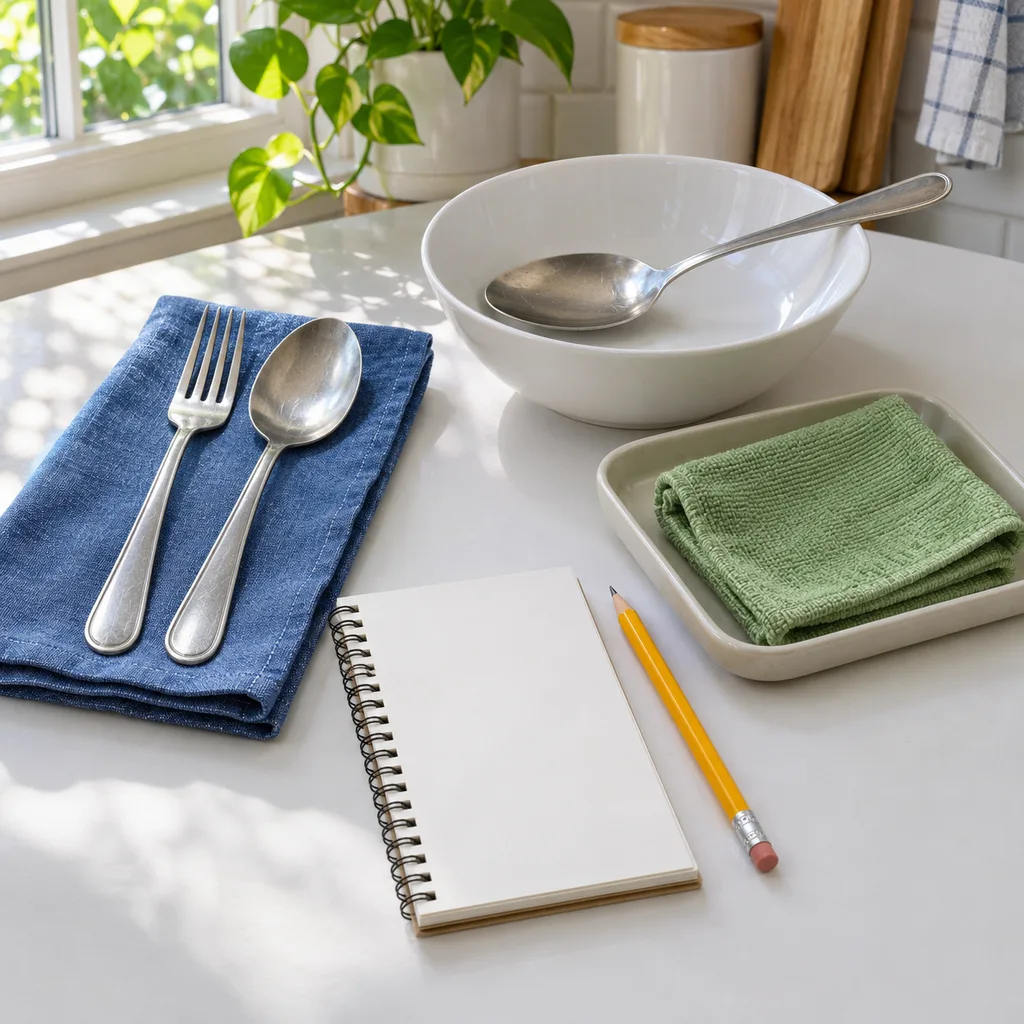
Comments
Leave a commentShare your question or planning tip below.