
New Year's Eve Dessert Bar Setup Ideas With a Clear Serving Plan
Plan a New Year's Eve dessert bar with a clear serving window, readable labels, a separate backup plan and a practical closing routine.

By Emma & Ella FrostUpdated November 17, 2026

5-Ingredient Dump & Go Crockpot Meals
101 effortless slow cooker recipes for busy families.
View on AmazonAvailable on AmazonA New Year's Eve dessert bar needs a serving window, not just a display ready for midnight. Decide whether sweets will be offered before the countdown, afterward or during a shorter agreed interval. Then choose a menu and setup that can be managed under the actual food's requirements.
A smaller, clearly planned service can be easier to host than a full table expected to stay untouched all evening. These setup ideas concern the occasion and serving workflow. They do not supply a new dessert recipe, a portion formula or permission to leave every sweet at room temperature.
Choose when the dessert bar will open
Start with the gathering's actual schedule. Will guests have eaten dinner, arrive at different times or expect dessert only after the countdown? Pick the service window with the hosts rather than assuming a New Year's party always needs an all-night buffet.
Write down who will set out the food, monitor it, replace dishes and clear it away. If the people doing those jobs want to join the countdown, give them a realistic handoff or choose a window that does not compete with it.
Keep a later serving decision separate from the first display. Food already out does not become a fresh batch when the clock passes midnight. Any later offering still needs its own appropriate storage and service plan.
Build the menu around the service you can support
Choose actual recipes or identified purchased products, then record the preparation, storage and serving directions for each. Do not classify a dessert as shelf-stable simply because it looks like a cookie, cake or small cup. The particular ingredients and product directions matter.
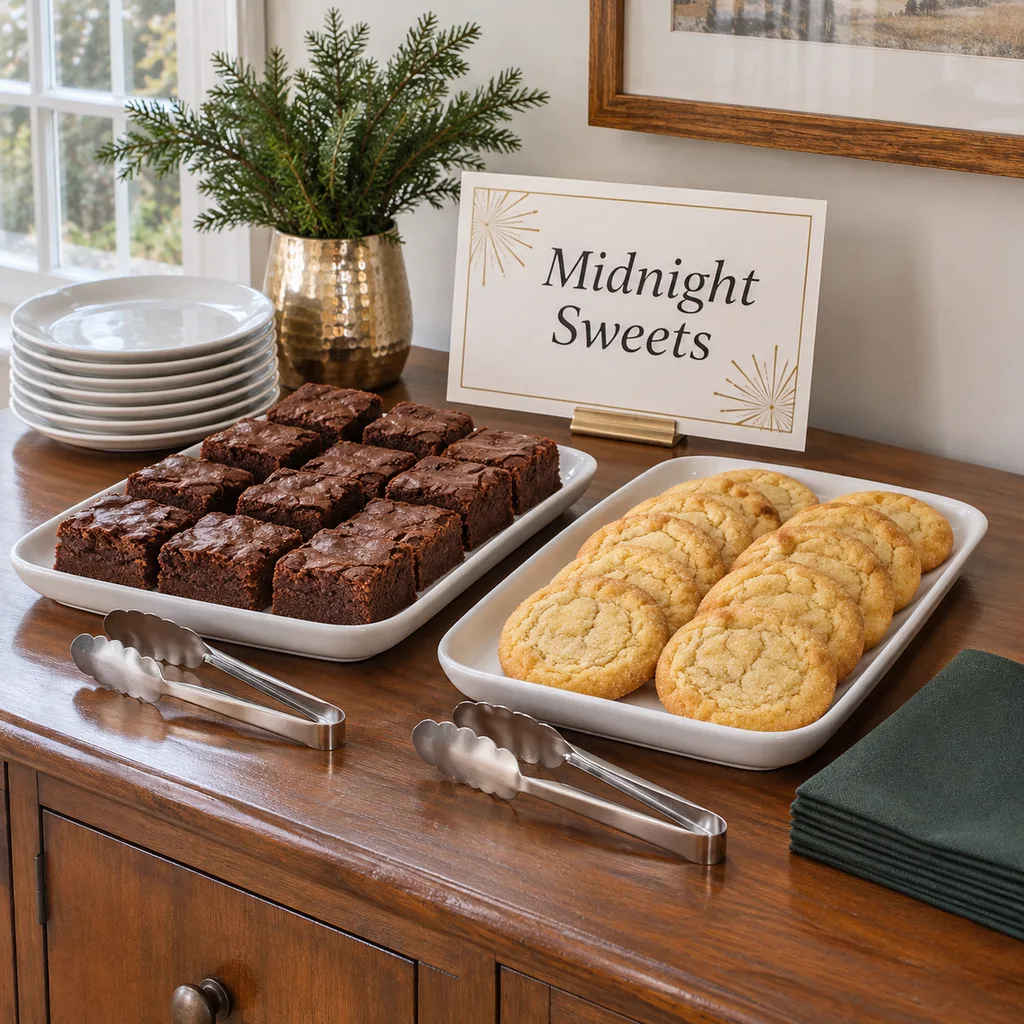
Use a short menu with distinct roles rather than several desserts competing for the same platter. One item might provide the focal presentation while another offers an easy-to-recognize alternative. Confirm the real requirements before treating either as a self-service choice.
Keep ingredient information with the menu and identify who can answer guest questions. Do not infer an allergen-free claim from a dessert's name or decoration. A separate label can communicate confirmed information without turning the display into a promise the host cannot support.
Use one main display and a separate backup plan
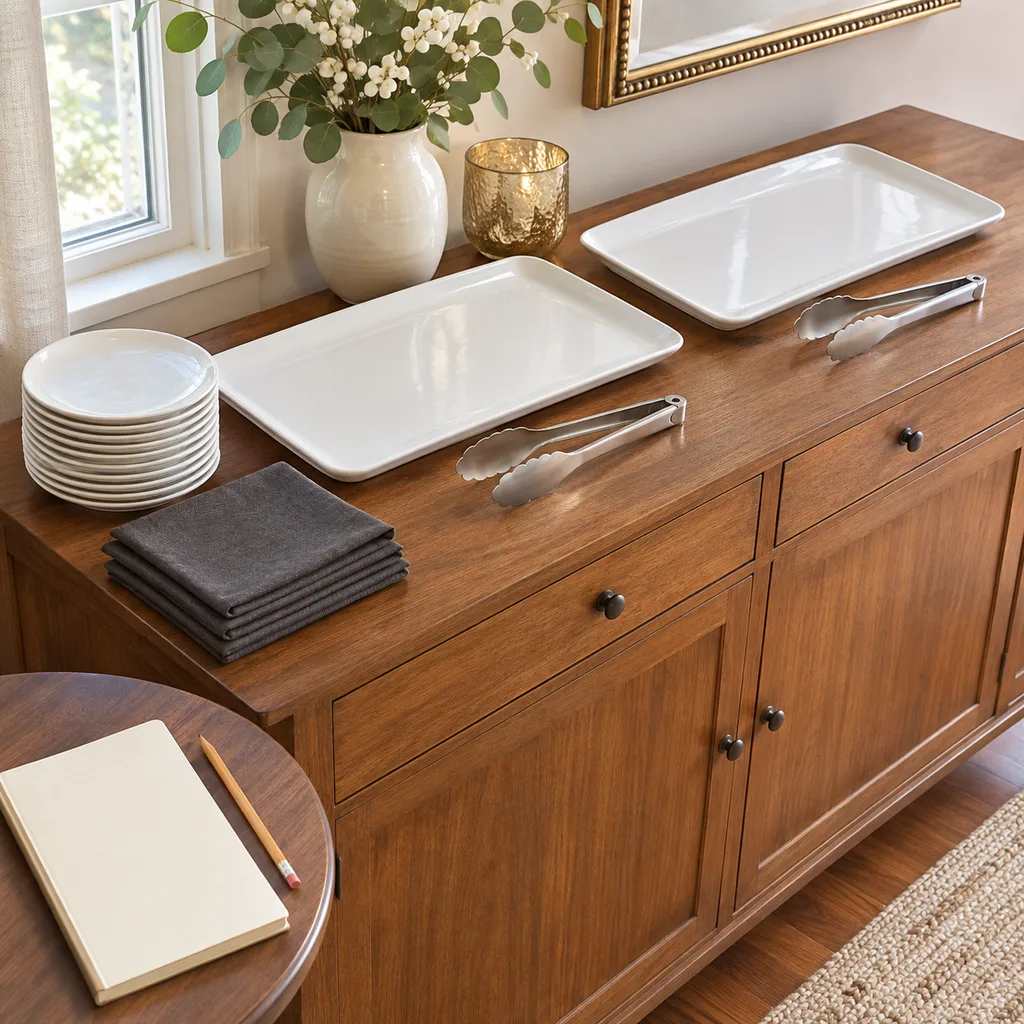
Lay out the actual empty serving pieces before decorating. Give plates a starting point, each dessert an appropriate serving utensil and guests a clear way to leave the table. Keep the replenishment route separate from the place where people are choosing food when the room allows it.
Choose suitable food-service supports rather than improvised stacks hidden under a cloth. Keep spare supplies in an agreed location rather than squeezing every plate and napkin between platters. A larger display is not useful if nobody can replace a serving dish comfortably.
For the physical display questions, our dessert table layout guide discusses access, labels and supported serving pieces. Its wedding examples are not a capacity calculation for your home or a food-holding schedule.
Give the countdown detail a place outside the food
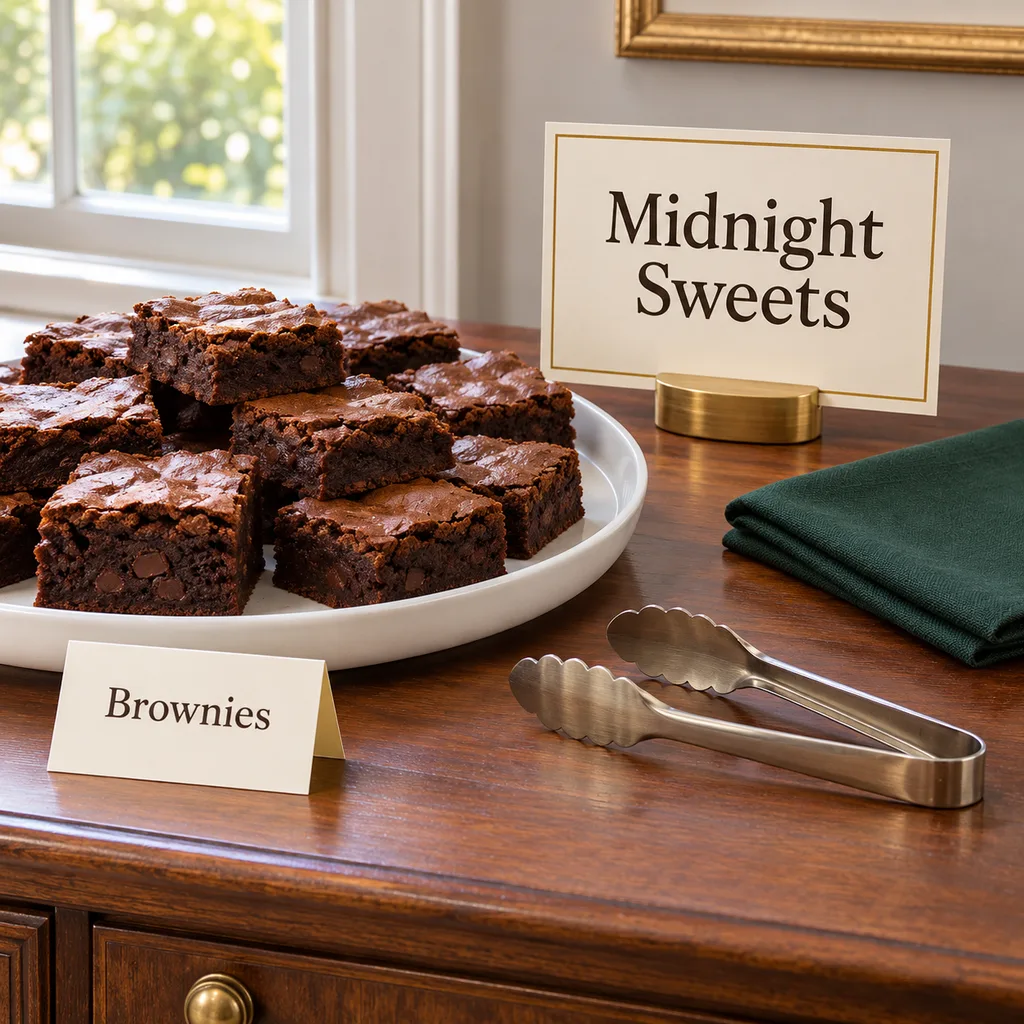
A small clock-themed card, one repeated metallic accent or a simple color on the linens can suggest the occasion. Keep the dessert labels plain and readable rather than replacing useful names with midnight-themed nicknames.
Leave loose confetti, glitter and decorative fragments off the serving surface. Put a paper accent beside the display instead of among unwrapped desserts or on serving utensils. Choose one detail that can remain separate from the food as dishes are changed.
Do not make an unsupported backdrop or hanging installation part of a last-minute dessert setup. The table can carry the occasion through its coordinated service pieces and a small removable sign.
Monitor the actual food, not the decorative clock
FDA buffet guidance calls for cold foods to stay at 40 F or colder and remain refrigerated until serving. Perishables left at room temperature for more than two hours must be discarded unless kept appropriately hot or cold; above 90 F, that limit becomes one hour. Those are limits, not a target display duration or an extension of product-specific instructions.
Use an appropriate thermometer and a suitable actual holding arrangement where needed. Do not assume a pretty bowl or an unverified chilled stand maintains the required conditions. Keep backup food under its applicable storage requirements and make the monitoring responsibility explicit.
Replace a nearly empty dish with a freshly filled one rather than topping up the existing food, as the FDA advises. Keep track of the existing food's actual history. New garnish, a clean-looking platter or a calendar change does not reset it.
Plan the closing step before guests arrive
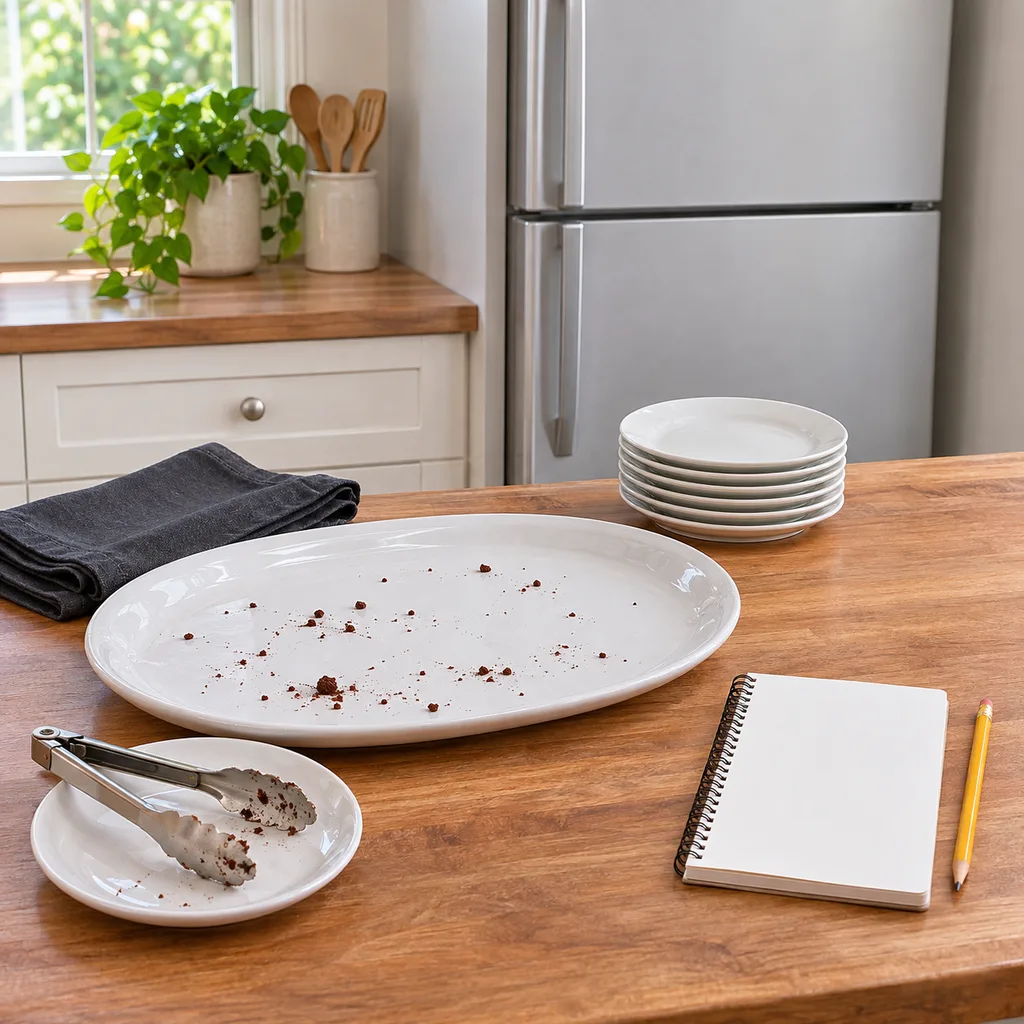
Choose where used serving pieces will go and who will clear the table after the agreed window. Follow the food's actual requirements when deciding what can be retained; discard food that has exceeded the applicable limits rather than packing it as a favor.
Do not promise take-home desserts without an appropriate plan for the particular food. A gift box is presentation, not refrigeration or safe transport. Keep any needed product information with food that is appropriately handed over.
Finish with a service plan you can actually carry out: a clear opening time, identifiable desserts, suitable holding, a named person watching the display and a definite closing step. Then the countdown can remain part of the celebration instead of becoming the reason food is forgotten.
Keep good recipes close
Add The Cooking Twins to your preferred sources on Google for more easy dinners, no-bake desserts and kitchen inspiration.
Emma & Ella Frost
A practical resource from The Cooking Twins.
More from Emma & Ella Frost
Comments
Leave a commentShare your question or planning tip below.