
Organized Snack Bins for Kids: Keep the Adult-Managed Routine Clear
Organize snack supplies around adult decisions, actual package directions, separate storage needs and a clear caregiver review and restock routine.

By Emma & Ella FrostUpdated November 17, 2026

5-Ingredient Dump & Go Crockpot Meals
101 effortless slow cooker recipes for busy families.
View on AmazonAvailable on AmazonOrganized snack bins for kids begin with adult decisions about the food and the routine, not a row of matching baskets. Decide which items belong in the household's snack plan, which require an adult's help and where each product must be stored. Then choose a grouping that makes those decisions easier to recognize.
This is a storage and handoff guide, not a recommendation for particular foods, portion sizes or ages for independent access. A bin does not establish that its contents suit every child or that a child can use it without supervision. Keep the household's actual requirements and product directions in control.
Give the bin one clear household role
Choose the situation the group supports: an adult preparing an agreed snack, supplies for a particular outing or items a caregiver has explicitly approved for an appropriate routine. Do not combine these different jobs under a label that appears to give blanket permission.
Agree who chooses the food, who checks its information and who replenishes the group. If several adults help, keep the current decision easy to find. A recognizable destination is useful only when the people maintaining it understand the same rule.
Do not let an older label overrule a changed need. When a product, caregiver or routine changes, review the contents and access arrangement rather than assuming yesterday's setup remains appropriate.
Separate pantry storage from refrigeration
Read the directions for the actual products before grouping them. The FDA's food-storage guidance emphasizes checking label directions; some foods need refrigeration even when their appearance does not make that obvious. A category called snacks is not a storage instruction.
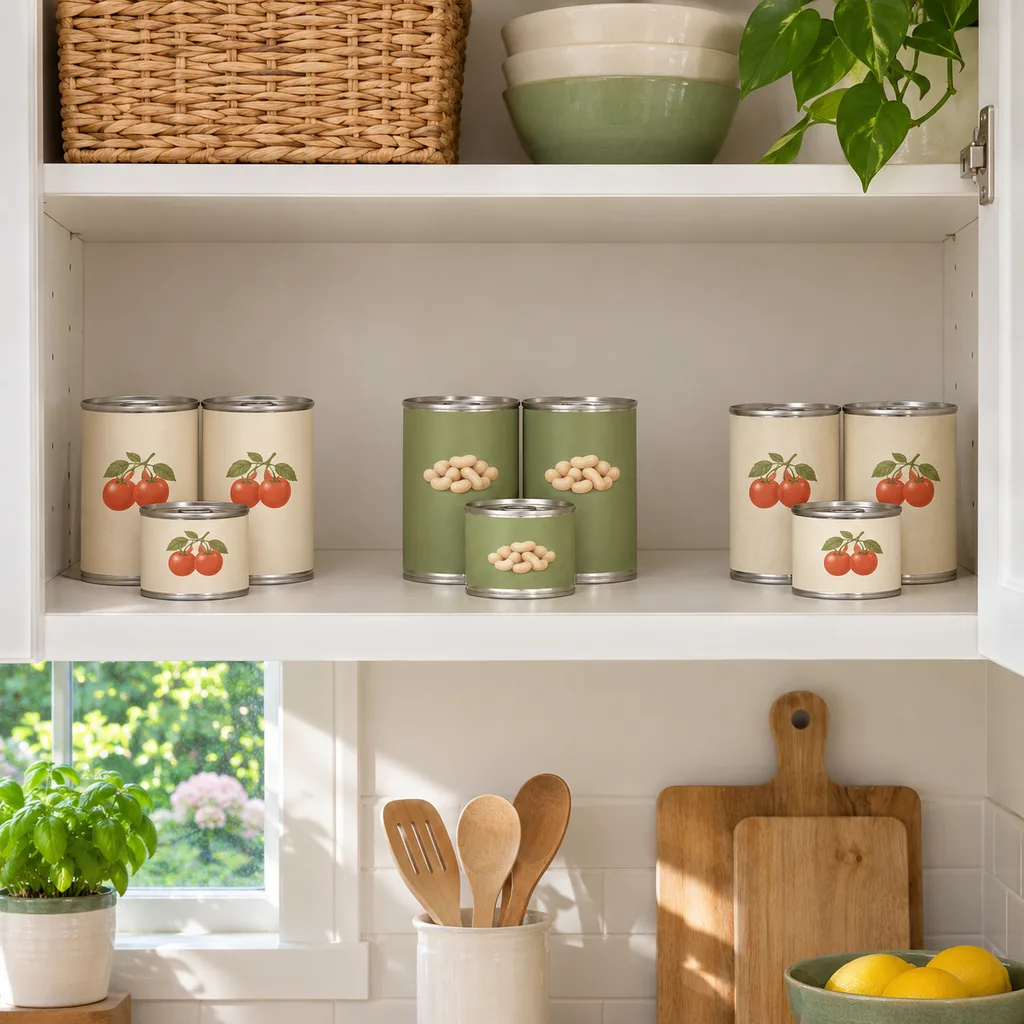
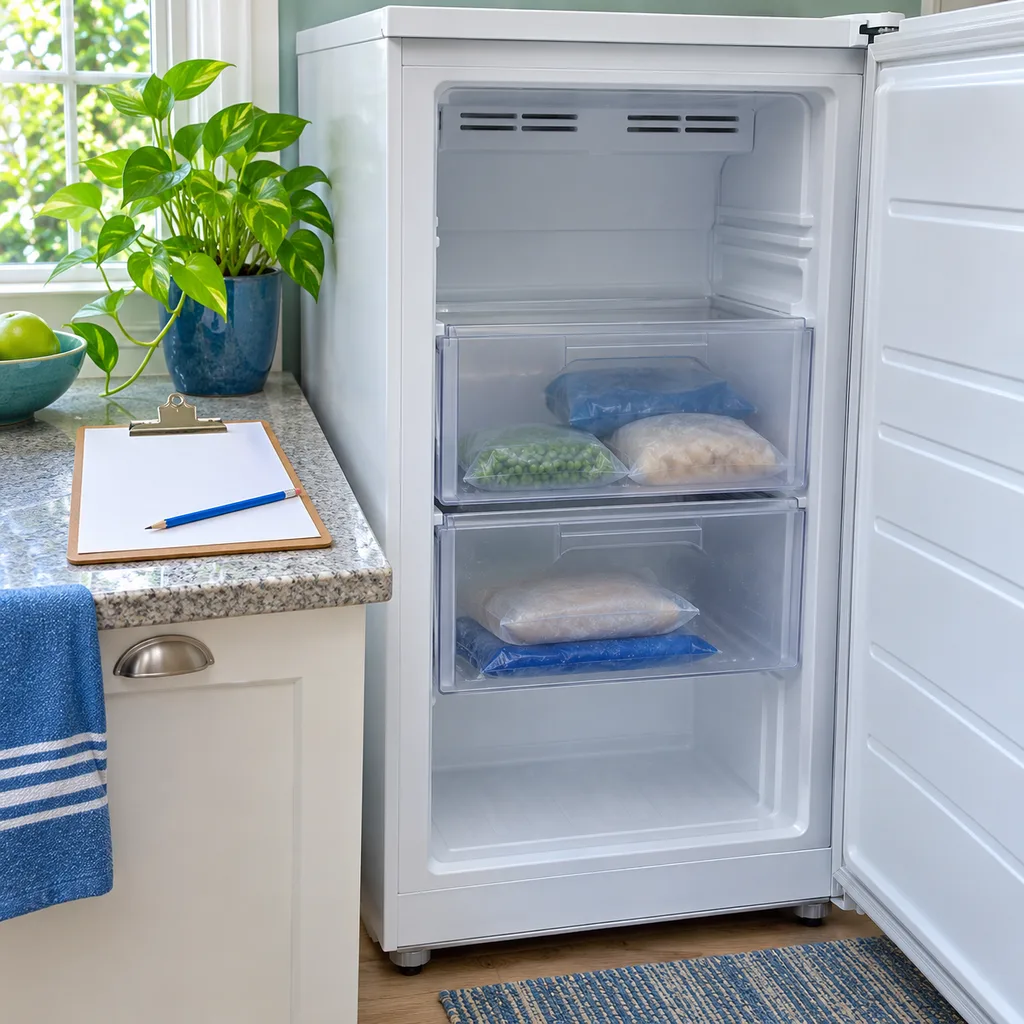
Keep foods requiring different conditions in their appropriate locations. A matching pair of organizers can connect the routine visually without putting every item into the same cupboard. Do not leave a refrigerated product in a pantry bin to complete the display.
Keep nonperishable food away from household cleaners and chemicals, as FDA advises. Choose an appropriate food-storage area rather than using whichever open basket happens to fit beside unrelated supplies.
Keep the package information visible
Start with the original closed packages where that suits the products' directions. Retain identifying information, ingredients and relevant instructions rather than discarding them to create matching rows. A general label on the outer bin cannot replace the information on its different contents.
Do not treat a shared organizer as an allergen-free guarantee. FDA's food-allergy guidance advises always reading food labels and avoiding foods you are allergic to. Keep the child's actual individual requirements with the responsible adult's review. A color or a child's name on a basket does not establish that every item inside is suitable.
Keep a product needing verification out of the ready group. If the information is unclear, resolve the question before it becomes part of the routine. The organizer should make uncertainty visible, not hide it behind a tidy front row.
Choose the outer organizer for retrieval and return
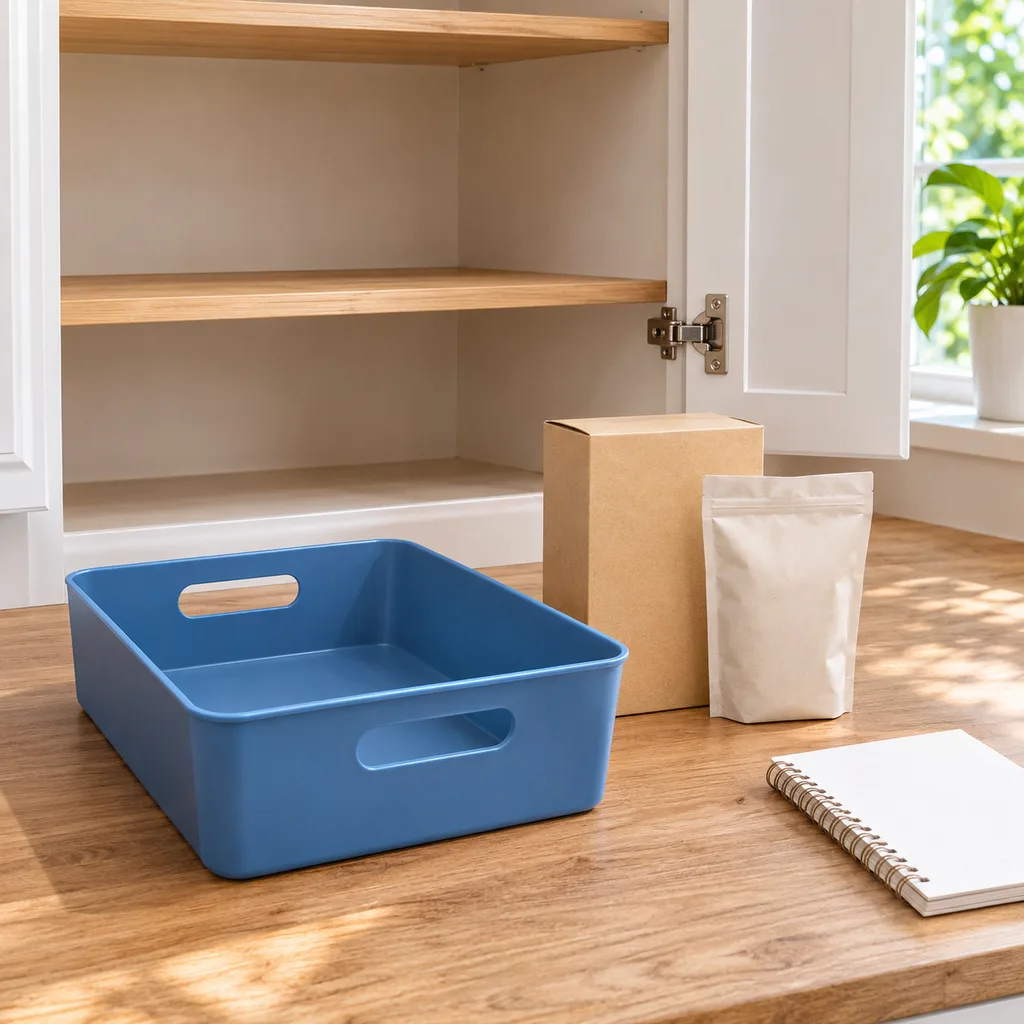
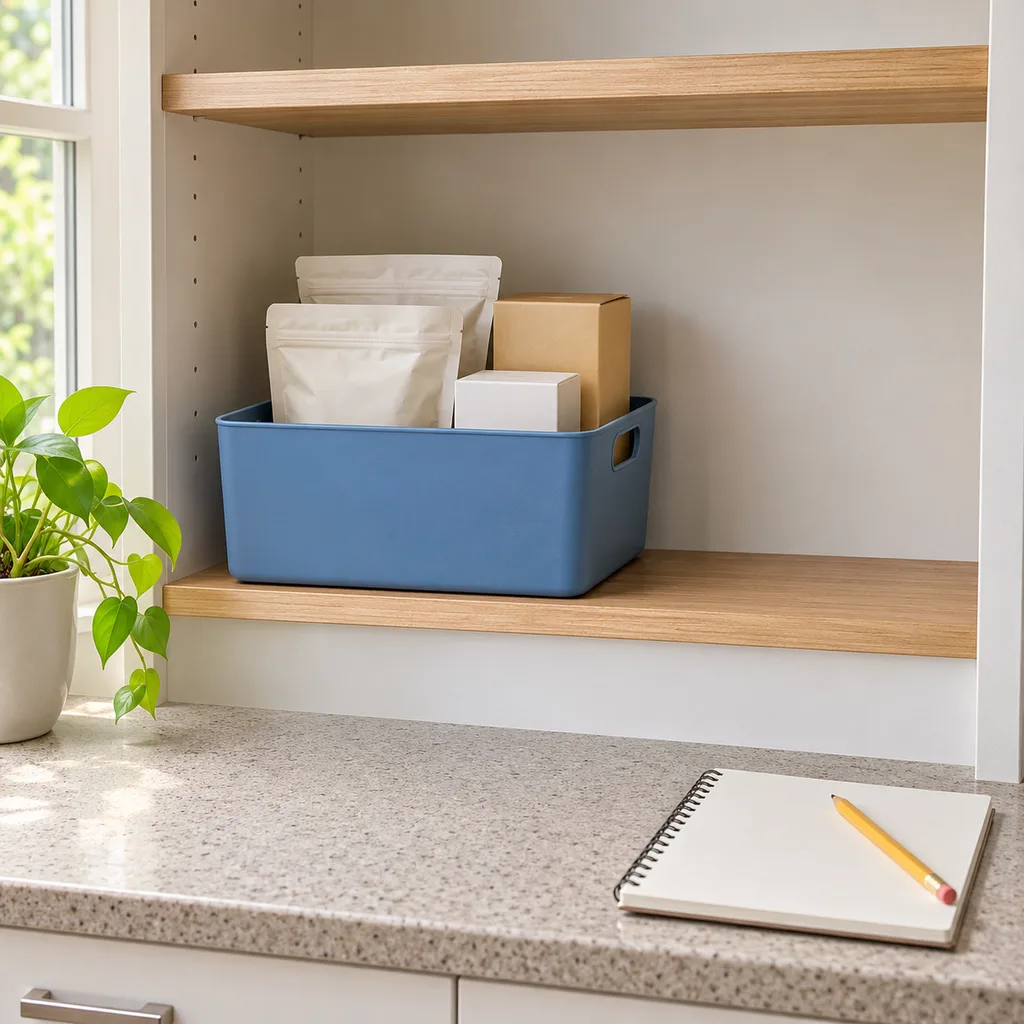
Try the actual closed packages in an appropriate organizer you already own. Check whether the contents remain identifiable and whether one item can be removed without emptying the rest. A shallow group may be easier to review than a deep box that hides smaller packages.
Choose the location with the household's access decisions in mind. Do not install a reachable snack area by default for every child. Consider the actual person, supervision arrangement and product warnings before deciding who retrieves the contents.
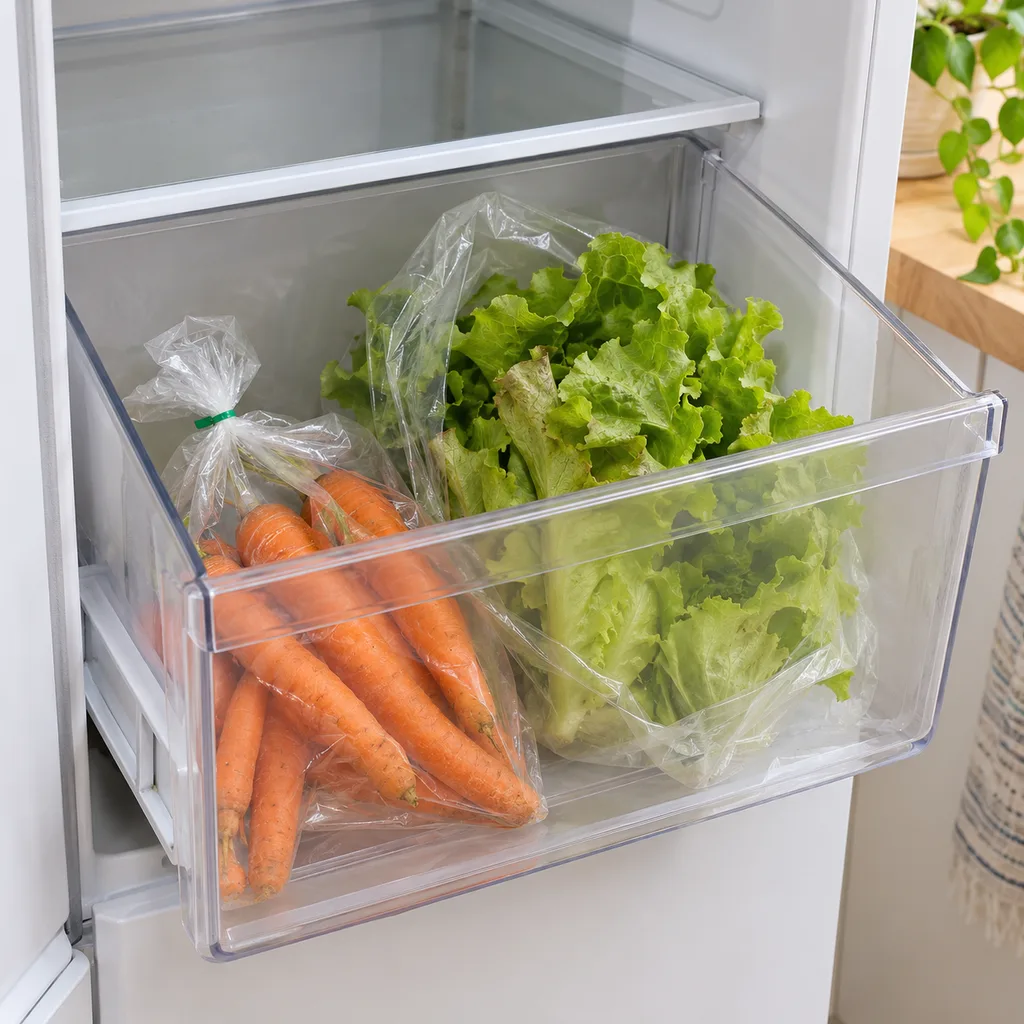
For a refrigerated group, our fridge organizer guide addresses fit, movement and care. An outer bin still does not provide refrigeration, a leakproof seal or permission to crowd the appliance.
Distinguish food stock from empty lunch equipment
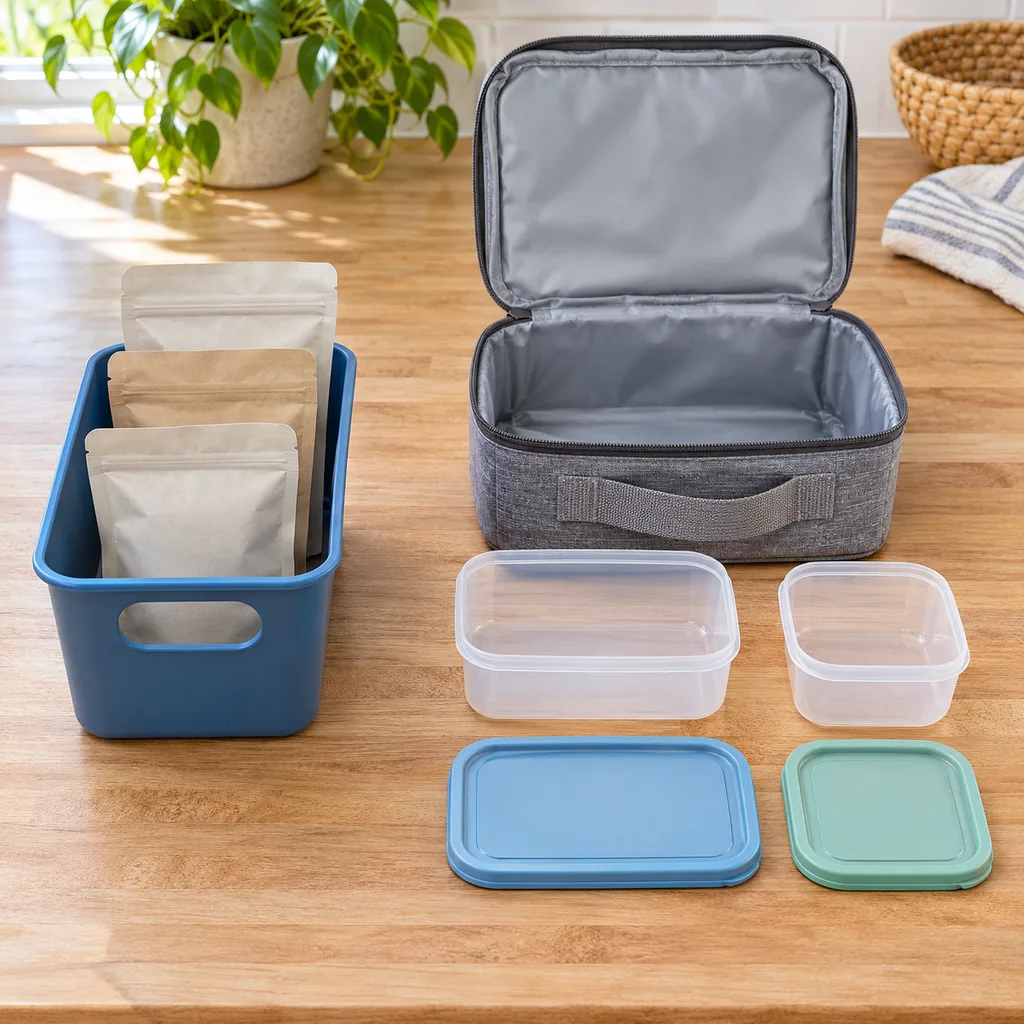
Keep the snack supplies and the ready packing equipment understandable as different groups. A complete empty lunch kit does not mean the selected food is present, and a full snack organizer does not mean the correct container or bag is ready.
The lunchbox container storage guide covers clean empty kits and their return route. Bring the groups together only for the actual packing task, following the particular food and equipment requirements.
Do not use the snack bin as a holding place for used containers, returned uneaten food or unidentified leftovers. Those need an appropriate separate review and care route rather than an automatic return to the ready group.
Replenish from a check, not an empty-looking front
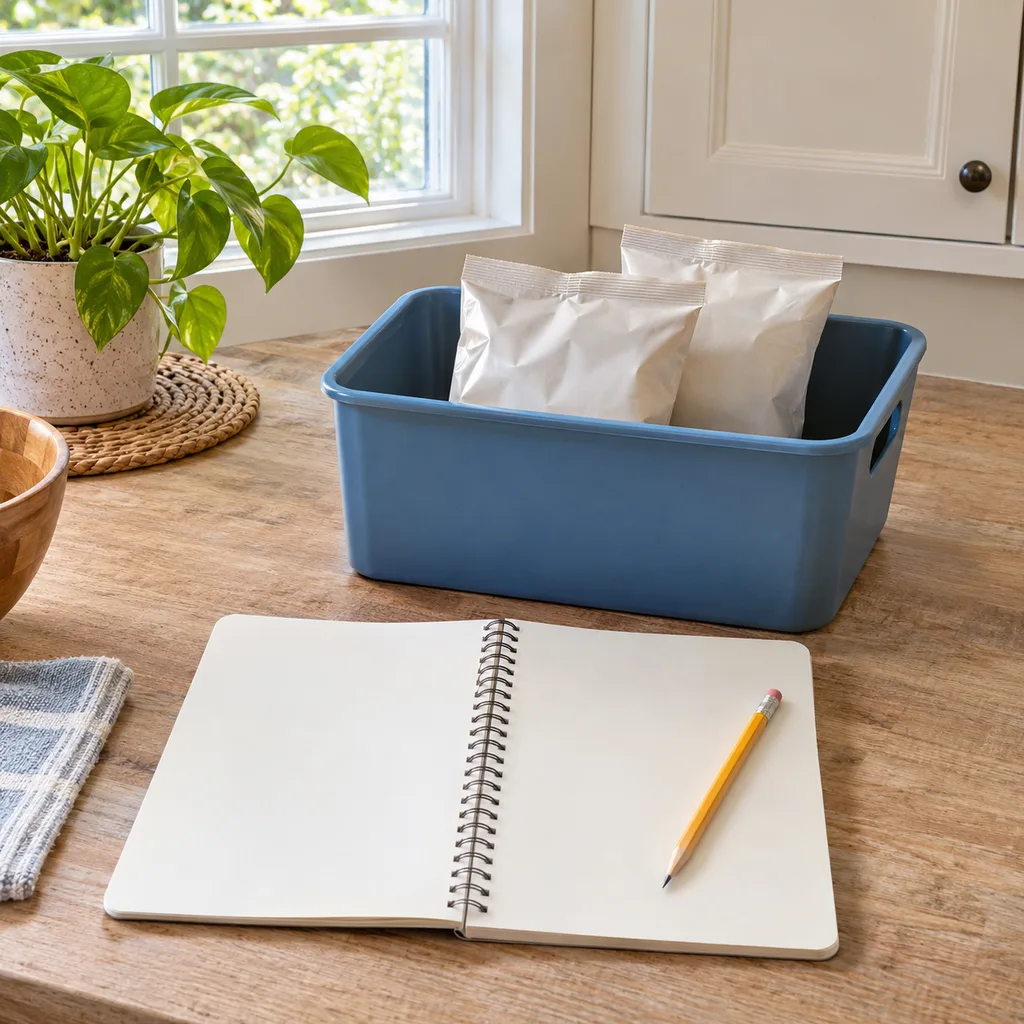
Before restocking, review what is actually present, its identifying information and whether it still belongs in the current plan. Keep back stock recognizable rather than mixing several products into a loose pile. Follow the actual food's directions when deciding what remains suitable.
Move only confirmed missing purchases into the household shopping list. Do not buy extra food simply to keep every basket visually full. An organizer can have useful free space when the contents are still sufficient for the agreed routine.
Review what people found confusing: an ambiguous label, a package hidden at the back or a missing caregiver handoff. Change that specific part before buying another set of bins. The useful result is a clear adult-managed system, not a claim that the same arrangement works for every child.
Keep good recipes close
Add The Cooking Twins to your preferred sources on Google for more easy dinners, no-bake desserts and kitchen inspiration.
Emma & Ella Frost
A practical resource from The Cooking Twins.
More from Emma & Ella Frost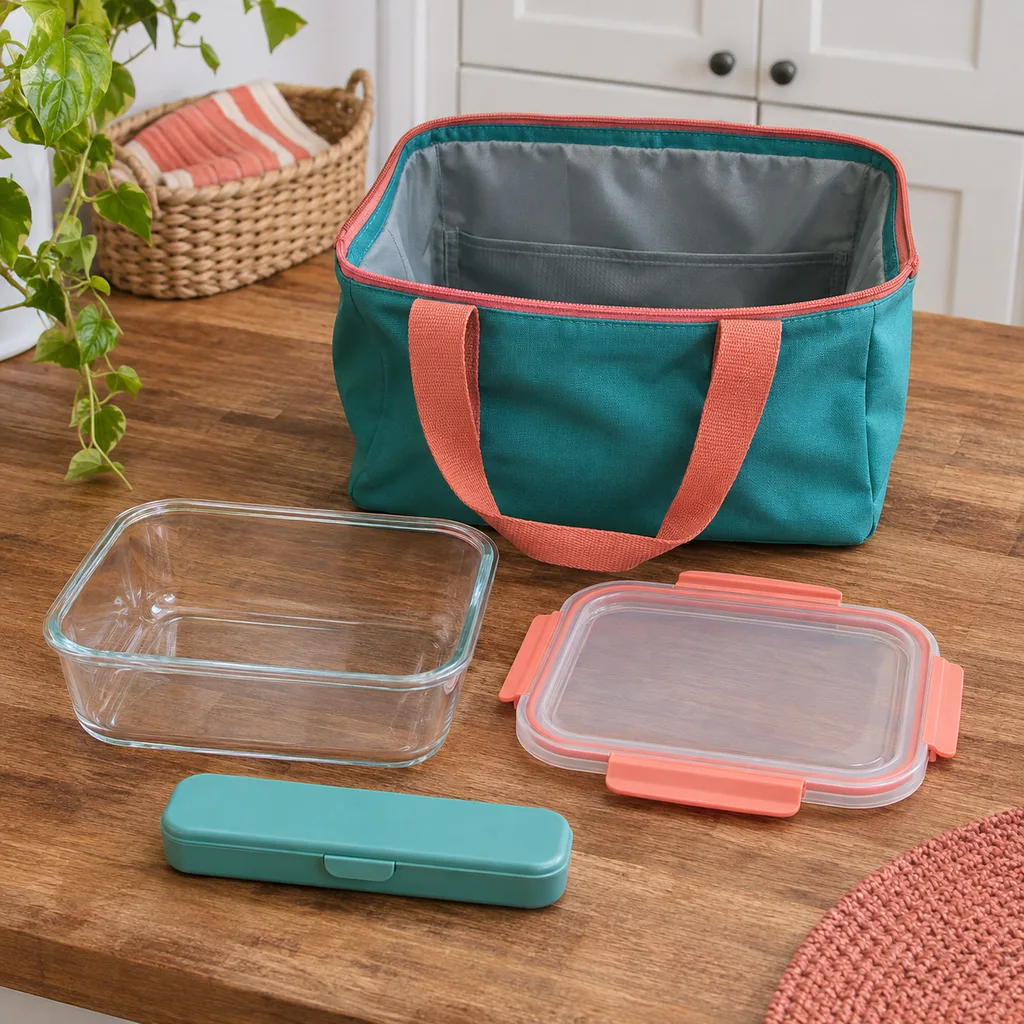
Comments
Leave a commentShare your question or planning tip below.