
Silicone vs Stainless Steel Kitchen Utensils: Choose for the Pan and the Job
Compare silicone and stainless steel utensils by cookware compatibility, head shape, construction, permitted heat use and the care routine you can follow.

By Emma & Ella FrostUpdated November 17, 2026

5-Ingredient Dump & Go Crockpot Meals
101 effortless slow cooker recipes for busy families.
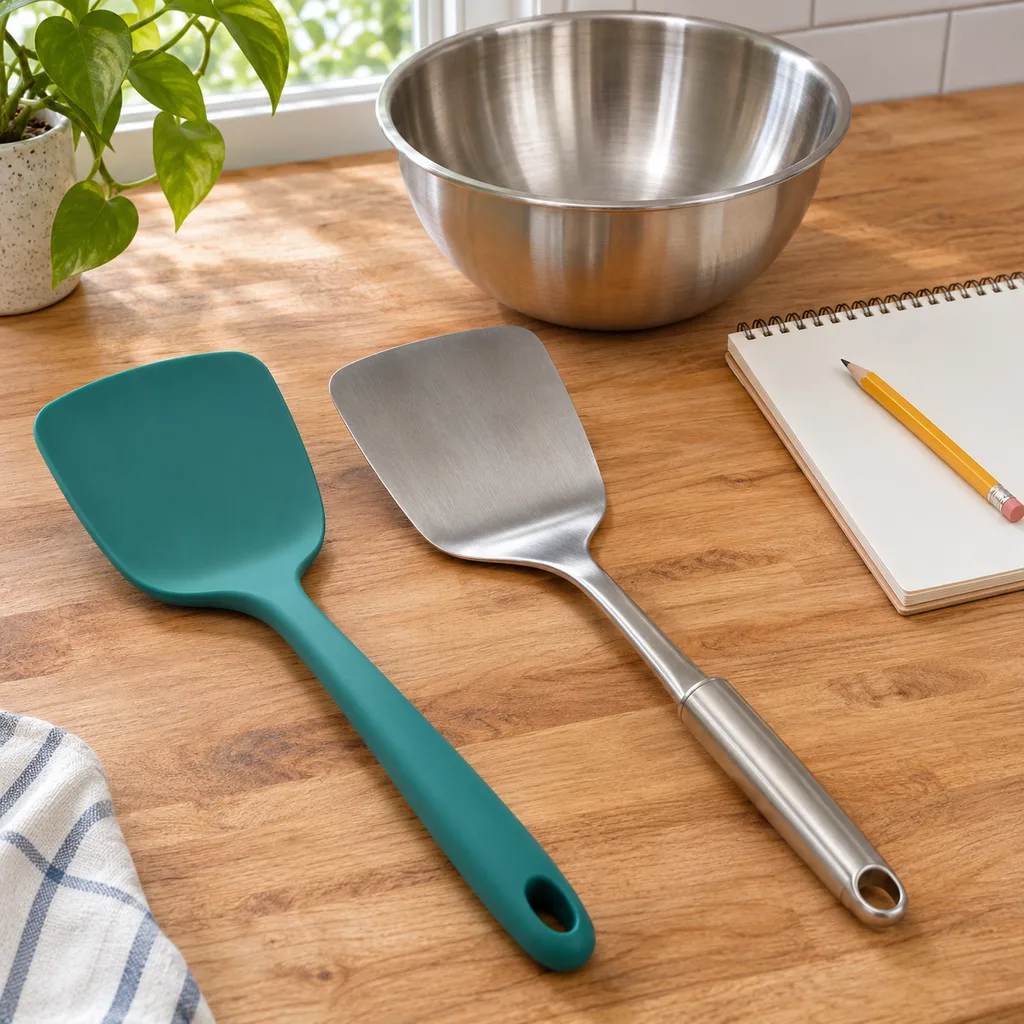
View on AmazonAvailable on AmazonChoosing between silicone and stainless steel kitchen utensils starts with the cookware, not a matching handle color. Identify the surface the tool will touch, the job it needs to do and the instructions for both products. Then compare the actual head, construction and care requirements.
There is no need to make every utensil in the drawer from one material. A flexible scraper, a turner and a deep ladle have different jobs. A small mixed selection can make more sense than replacing a useful tool just to complete a coordinated set.
Identify the cooking surface before choosing the material
Read the care information for the exact pan or bowl, including its coating. A dark interior does not tell you everything about the surface. Look up the actual product instead of borrowing a rule from cookware with a similar appearance.
The distinction is visible within one manufacturer's guidance. Lodge permits metal utensils on its ordinary cast iron, while its enameled cast iron guidance recommends wooden, silicone or nylon utensils because metal can scratch the enamel. These are product-family examples, not permission for every pan described as cast iron.
Keep the permitted material separate from the tool's condition and use. Permission for a metal utensil does not turn any sharp edge into an appropriate scraper. Likewise, a silicone-looking head does not establish the finished product's intended food contact or allowed operating conditions.
Compare the head needed for the actual action
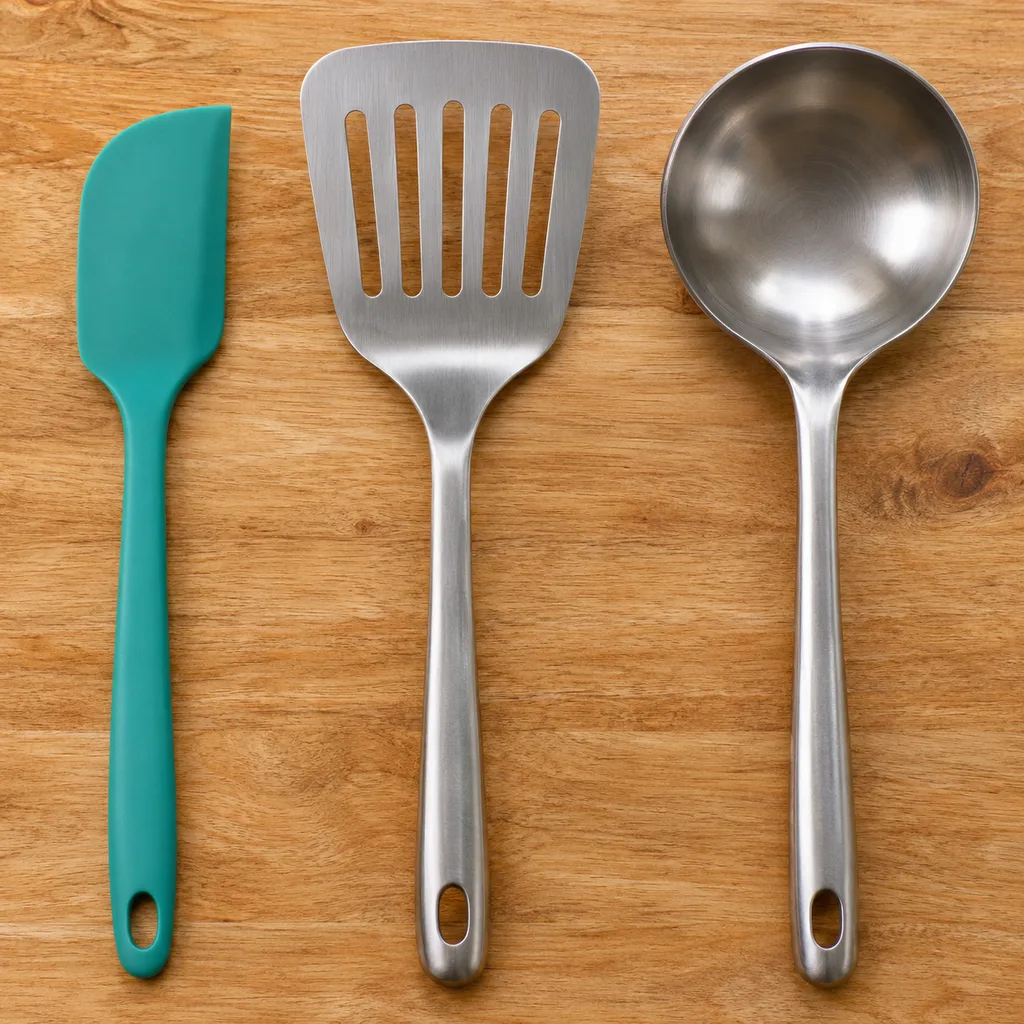
For a scraping task, compare how the actual edge reaches the bowl or vessel. Some silicone tools have flexible edges and firmer centers; others are shaped differently. Look at the particular tool rather than assuming the material name describes its entire construction.
For turning food, compare the head's width, edge and support. A broad flexible scraper is not automatically a substitute for a turner meant to lift a particular food. Check the vessel's permitted tools before trying either one against its surface.
A ladle's bowl and handle shape matter for serving, whether the product includes silicone or stainless steel. Check whether it can reach the intended dish and move comfortably to the serving bowl. The right shape for the job is more useful than an extra material claim.
Separate the head, core, handle and joints
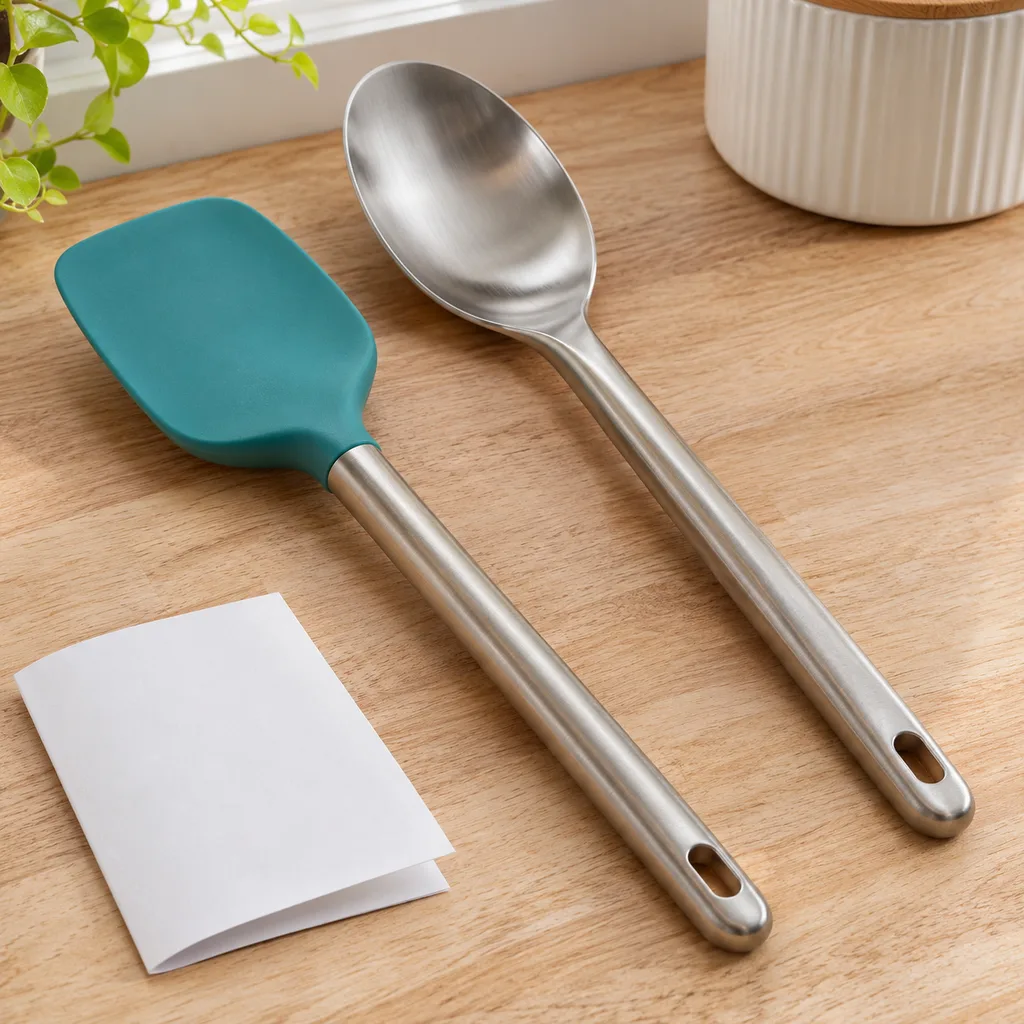
Read the complete product description. A silicone head may include a different core or handle material; a stainless steel head may be attached to a separate grip. A description of one component does not establish the capabilities of every part.
Look at the connection between the parts and the places that need cleaning. Can the permitted care method reach those areas? If the head is removable, follow its instructions for removal and reassembly instead of pulling it apart because another tool worked that way.
Compare the handle with your ordinary movement and storage. A thick grip might be useful for one person and awkward for another. Avoid treating a soft handle, a heavier tool or a particular metal as a universal comfort solution.
Check heat restrictions for the complete utensil
Find the stated intended uses and temperature restrictions for the exact model. Do not copy a heat limit from a different silicone product or assume an all-metal appearance provides unlimited permission. Oven use, contact with hot food and resting against cookware are separate questions.
Keep a suitable destination for a used utensil beside the cooking area, within your equipment's instructions. A tool that can stir hot food is not necessarily intended to remain in the pan during the whole cooking process.
If the instructions are missing, resolve the product identity and permitted use before adding heat. Material comparison is not a test of an unidentified old utensil. Our silicone baking-mat guide makes the same distinction for liners: a shared material name does not make two finished products interchangeable.
Choose a care routine you can actually follow
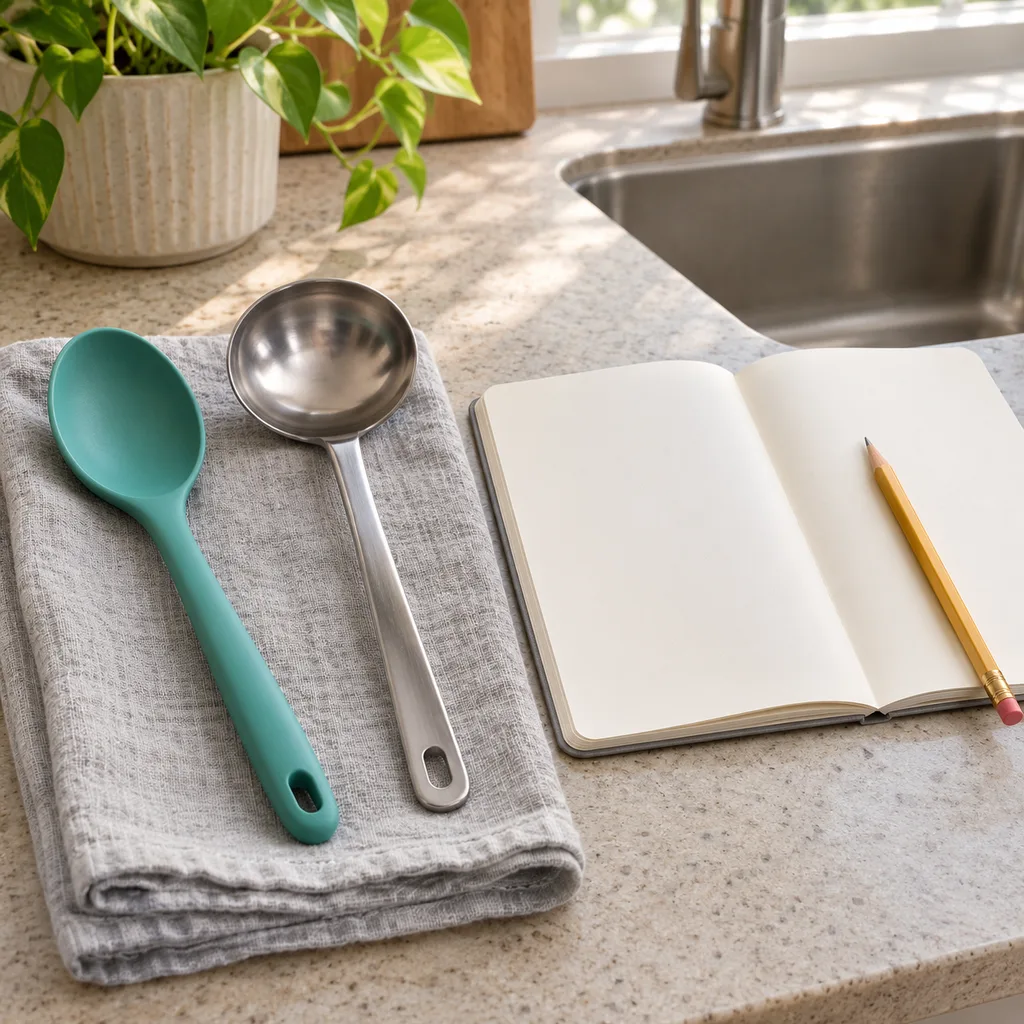
Check dishwasher permission, permitted cleaning methods and drying instructions on the actual tool. Keep the cookware's directions separate. A cleaning method allowed for a utensil may not be suitable for the pan it was used with.
Look at what you will need to maintain: seams, removable parts, handles and the working edge. Follow the manufacturer's advice for damage or uncertain condition rather than trying an abrasive treatment to restore a matching appearance.
Do not describe either material as automatically hygienic or permanent. The condition of the finished product and its appropriate care matter. Replace or stop using a questionable item according to relevant product guidance, not merely because it is one material rather than the other.
Keep the choice tied to one useful job
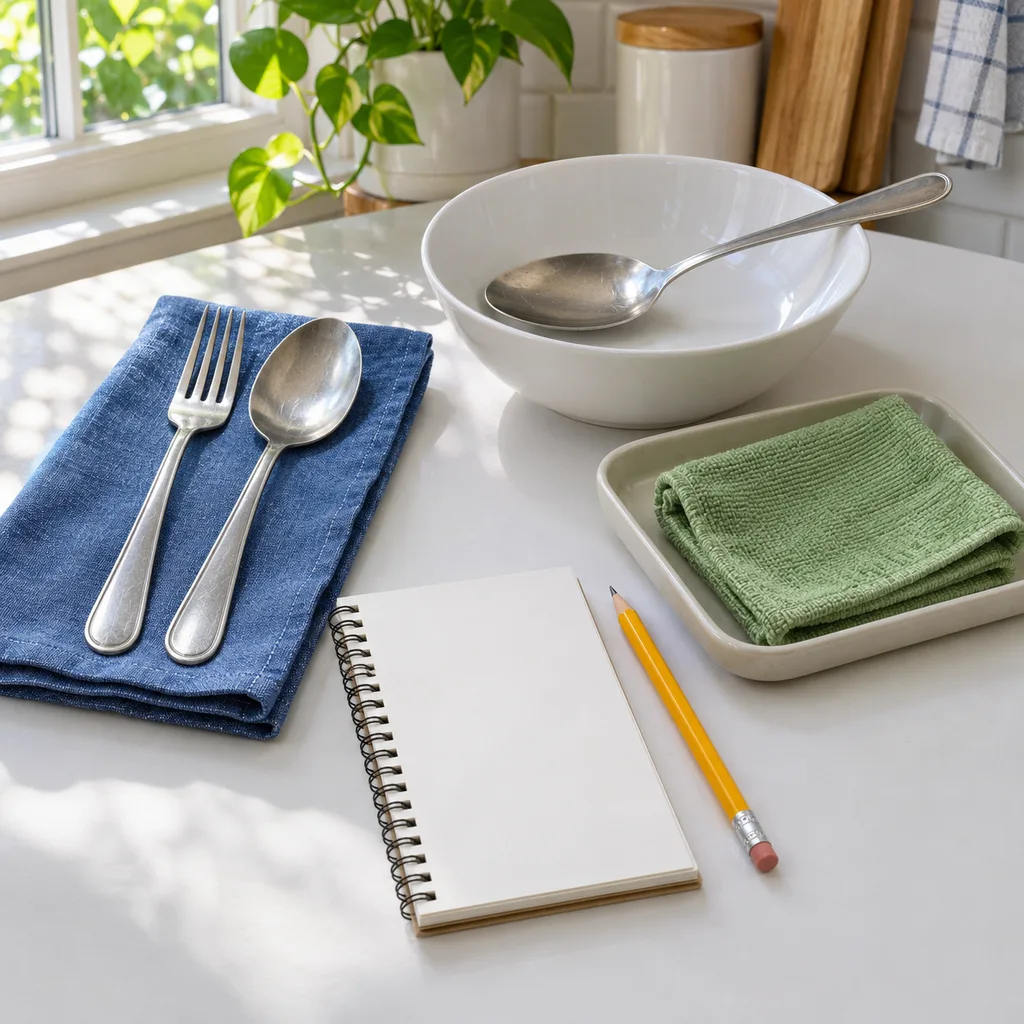
Before buying, write a short comparison: permitted cookware, required action, suitable head, complete construction, intended heat use and care routine. Keep unanswered points visible. A large set does not answer them for its individual pieces.
Start with the gap in your current selection. If an existing appropriate spoon already does the job, a material change needs a reason. If the difficulty is a turner that is too wide or a handle that will not fit the drawer, address that shape or storage problem directly.
Our utensil storage guide helps assign different heads a practical destination. Let the finished selection stay mixed when that suits the tasks: compatible tools with clear roles are more useful than a drawer that matches but is awkward to cook with.
Keep good recipes close
Add The Cooking Twins to your preferred sources on Google for more easy dinners, no-bake desserts and kitchen inspiration.
Emma & Ella Frost
A practical resource from The Cooking Twins.
More from Emma & Ella Frost
Comments
Leave a commentShare your question or planning tip below.