
Holiday Leftover Storage Checklist: From Serving to the Guest Handoff
Plan holiday leftover storage with a checklist for containers, handling notes, food-specific storage guidance and the guest handoff.

By Emma & Ella FrostUpdated November 17, 2026

5-Ingredient Dump & Go Crockpot Meals
101 effortless slow cooker recipes for busy families.
View on AmazonAvailable on AmazonA holiday leftover storage checklist is most useful before the serving dishes reach the sink. Decide who will put food away, which containers are available and what information needs to travel with each dish. That turns an uncertain end-of-evening scramble into a clear handoff.
This checklist focuses on the transition from a shared meal to household storage or a guest's trip home. It is not a recipe, a cooling experiment or permission to save food with an uncertain handling history. Keep the actual menu and its food-specific instructions alongside the checklist.
Before the meal: reserve space and assign the handoff
Choose one person to coordinate putting food away and another to help if needed. They do not need to manage every serving dish throughout dinner, but they should know where the containers, labels and meal information are kept. Do not leave the task dependent on the last person still cleaning.
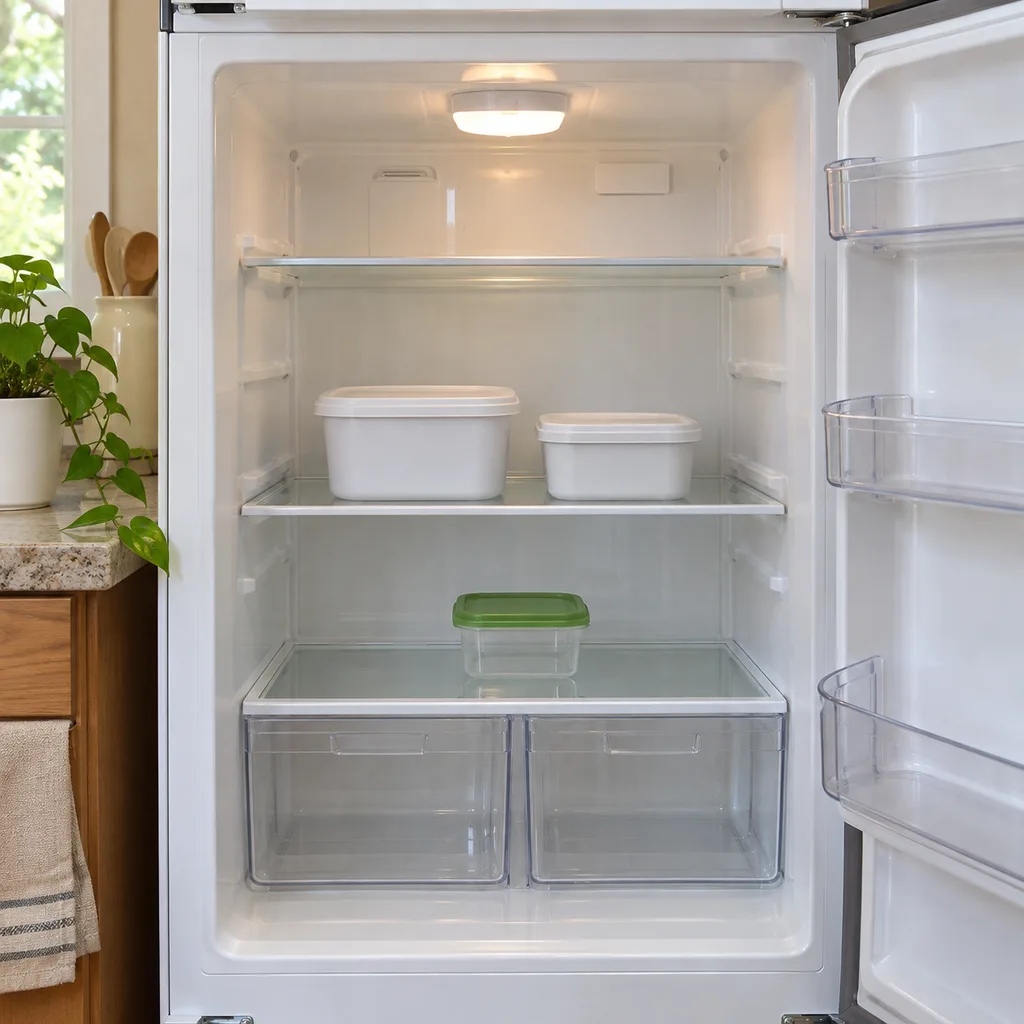
Check the actual refrigerator space rather than counting empty containers. A container that fits on the counter may not fit beneath a shelf. Move unrelated nonfood clutter out of the preparation area, and keep the packing space separate from dirty dishes.
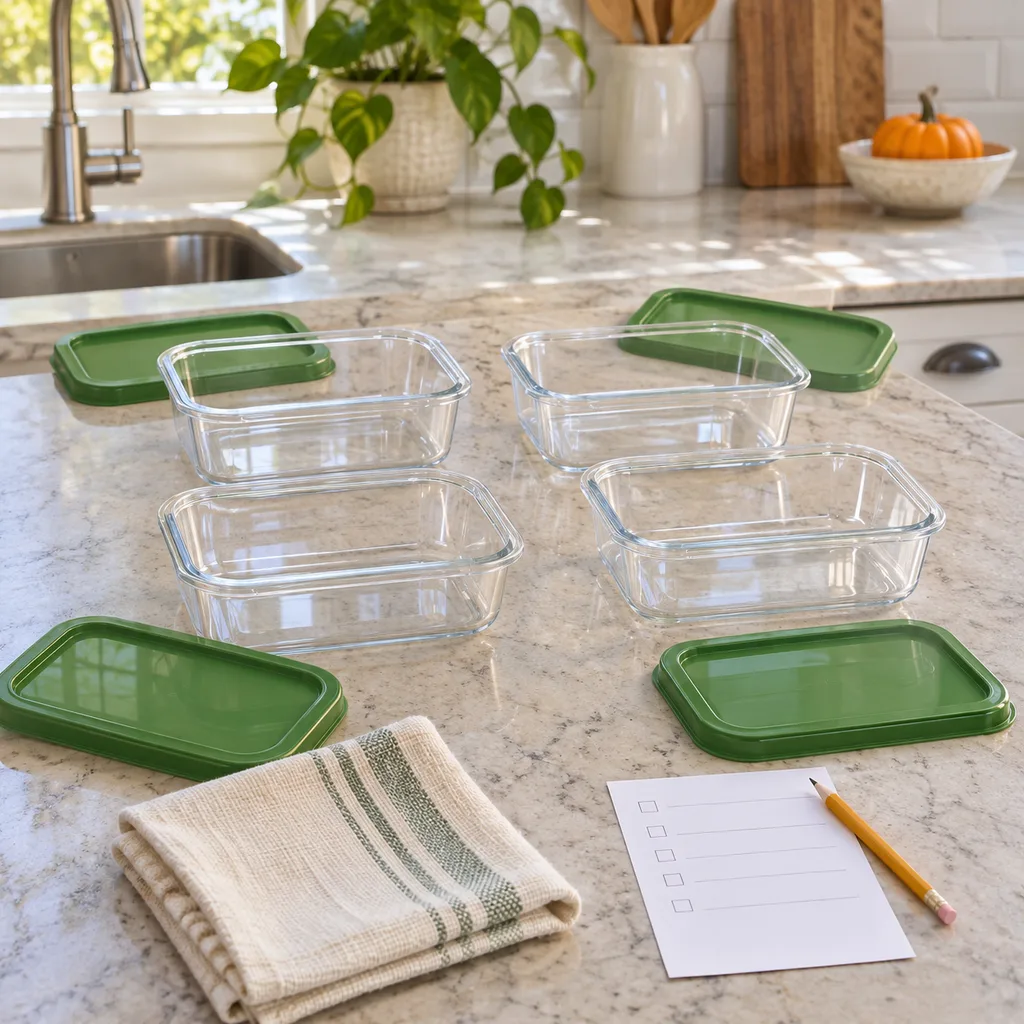
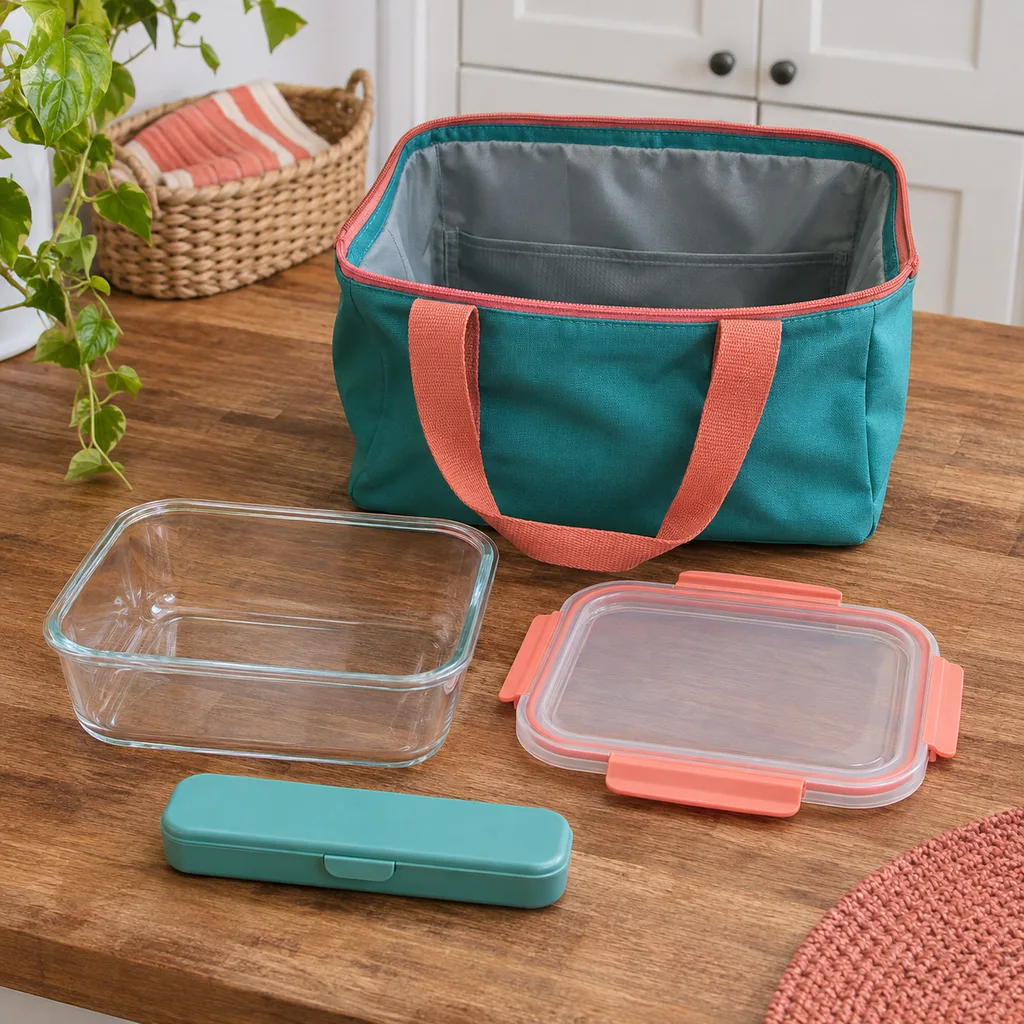
Set out clean containers intended for the food and temperatures involved, together with their matching lids. Follow the manufacturer's instructions instead of assuming that any glass container tolerates a hot fill, freezing or reheating. Set aside containers whose suitability you cannot establish.
- Identify the person responsible for storage and the person helping with guest portions.
- Locate suitable containers, matching lids, clean utensils and labels.
- Check refrigerator space and the appliance thermometer.
- Keep recipes and original ingredient information available.
- Ask guests whether they can maintain appropriate conditions during the trip.
During service: record the food's handling, not just dinner time
Keep a simple note for each perishable dish: when it left temperature control, whether it was being held hot or cold, and who knows that history. The time guests arrived is not automatically the time every dish was served. A replaced platter should not become indistinguishable from the one it replaced.
FDA buffet guidance calls for hot holding at 140 F or above and cold holding at 40 F or below. Discard perishables left at room temperature for more than two hours; the limit is one hour when the surrounding temperature exceeds 90 F. Replace serving dishes instead of topping them up. Refrigerate promptly and divide large amounts into shallow containers. These are handling limits, not a target for leaving food out.
Do not restart the record when food moves to another dish. If no one can establish how a platter was handled, mark that information as unknown rather than giving it today's date and treating the uncertainty as resolved. A neat label cannot establish safe handling.
After serving: keep each dish identifiable
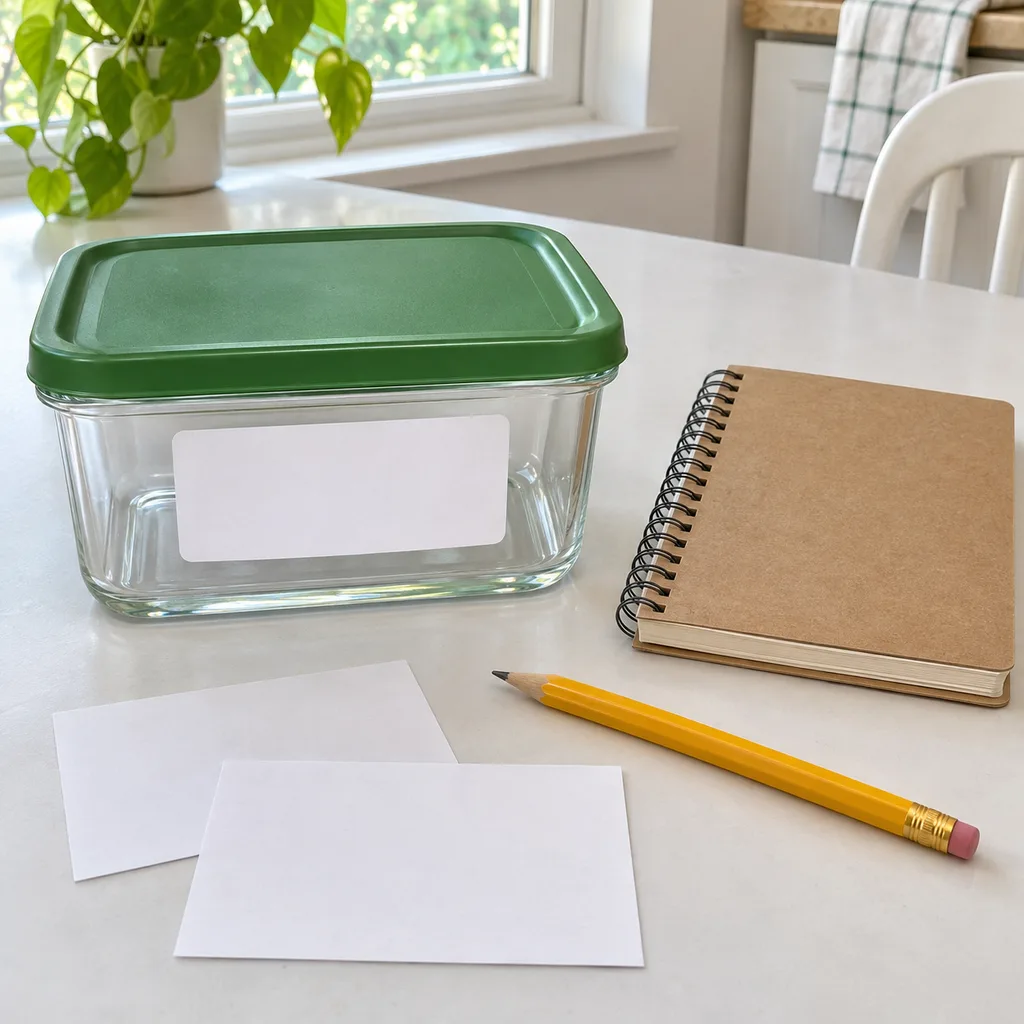
Pack in a way that preserves what the food actually is. A container marked turkey and gravy is more informative than one marked holiday dinner. Keep components identifiable when they have different instructions, and do not combine unrelated remnants simply to use fewer containers.
Use a short written record for each package: dish name, preparation date, relevant handling notes and the recipe or ingredient information needed later. Write the meaning of the date, not a number without context. Use the real preparation date rather than the date someone happens to finish cleaning.
For a fictional example, a note could say: Cooked turkey; prepared Nov 26, 2026; recipe card T1; storage guidance checked separately. That example demonstrates record fields only. It does not establish that a real turkey was cooked, served or stored correctly.
Choose a food-specific use plan
The FDA refrigerator and freezer storage chart (PDF) lists three to four refrigerated days for cooked meat or poultry leftovers and for vegetable or meat soups and stews, at 40 F or below. Those entries do not provide one universal deadline for an entire holiday menu. Match the food to the appropriate guidance and retain its handling history.
Write the intended next meal beside the package record, separately from the preparation date and storage guidance. A plan to eat something on Friday is a household intention, not evidence that Friday is suitable. If the two do not agree, change the meal plan rather than changing the recorded date.
If freezing is part of the plan, consult guidance for that particular food and suitable packaging. Do not invent a freezing period for a mixed dish. Our freezer meal labeling guide covers the separate task of identifying packages and keeping preparation and frozen dates distinct.
For guests: complete the handoff before packing a bag
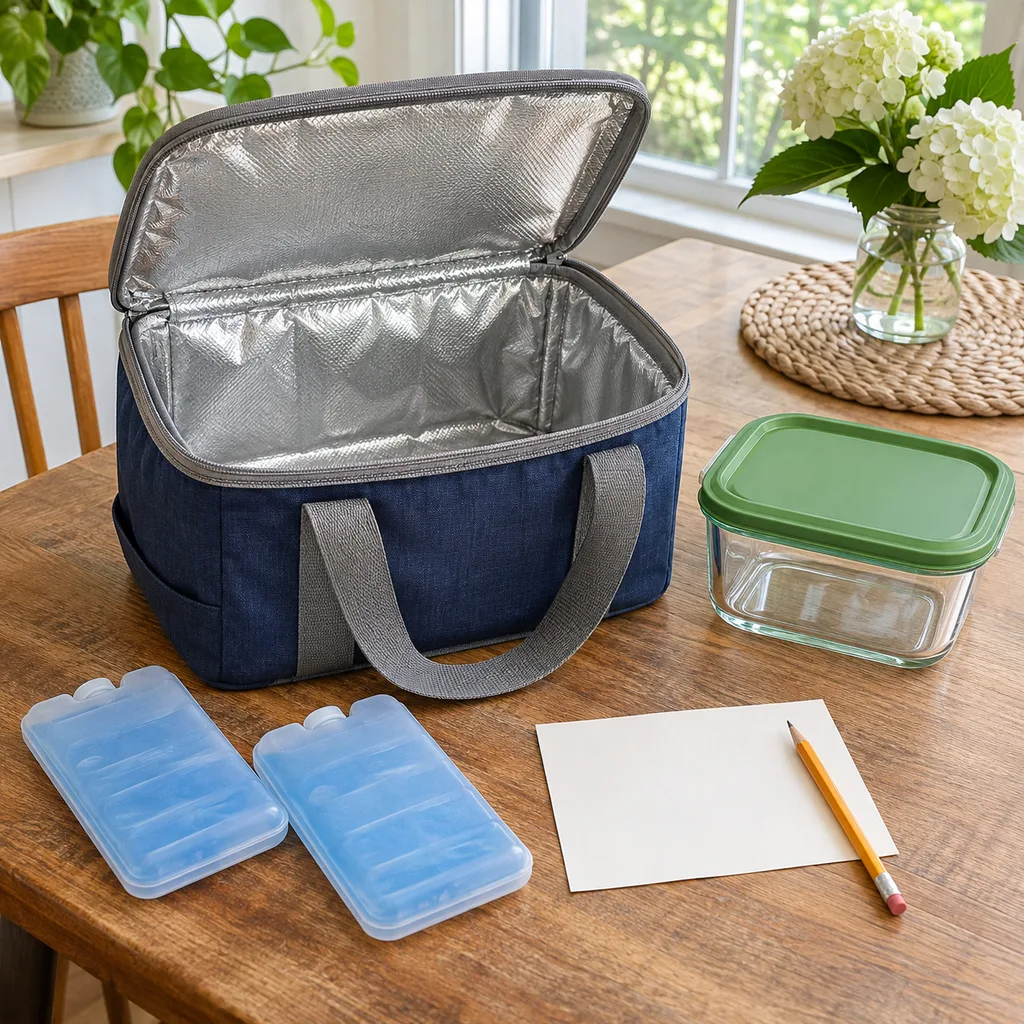
Ask about the actual journey before offering a portion. A guest going directly home has a different plan from someone making several stops. Do not assume that a decorative bag, an ordinary tote or a closed lid provides temperature control.
FDA specifically includes take-home leftovers in its prompt-refrigeration advice. Travel belongs in the handling plan; arriving at another house does not create a new room-temperature allowance. If appropriate conditions cannot be maintained, do not send the food as though the trip were irrelevant.
Give the recipient the dish name, preparation date and relevant ingredient and handling information. Do not describe a dish as allergen-free simply because no one recalls a particular ingredient. Keep unanswered questions visible, and let the guest decline without pressure.
A final storage check before the kitchen closes
- Every retained dish has an identifiable preparation and handling record.
- Food has been put away promptly; decorating labels has not delayed storage.
- Containers and their instructions match the intended use.
- The next-meal plan has been checked against food-specific guidance.
- Guest portions have a real transport and refrigeration plan.
- Unknown details have not been replaced with reassuring guesses.
Keep the finished record short enough to use tomorrow. The useful result is not a refrigerator full of matching boxes: it is a set of identifiable dishes with clear responsibilities, accurate information and a sensible next step.
Keep good recipes close
Add The Cooking Twins to your preferred sources on Google for more easy dinners, no-bake desserts and kitchen inspiration.
Emma & Ella Frost
A practical resource from The Cooking Twins.
More from Emma & Ella Frost

Comments
Leave a commentShare your question or planning tip below.