
Winter Woodland Table Setting Ideas: Three Looks Beyond the Centerpiece
Style a winter woodland table with forest-green linen, visible wood or muted blue accents, simple tree motifs and practical room for dinner.

By Emma & Ella FrostUpdated November 17, 2026

5-Ingredient Dump & Go Crockpot Meals
101 effortless slow cooker recipes for busy families.
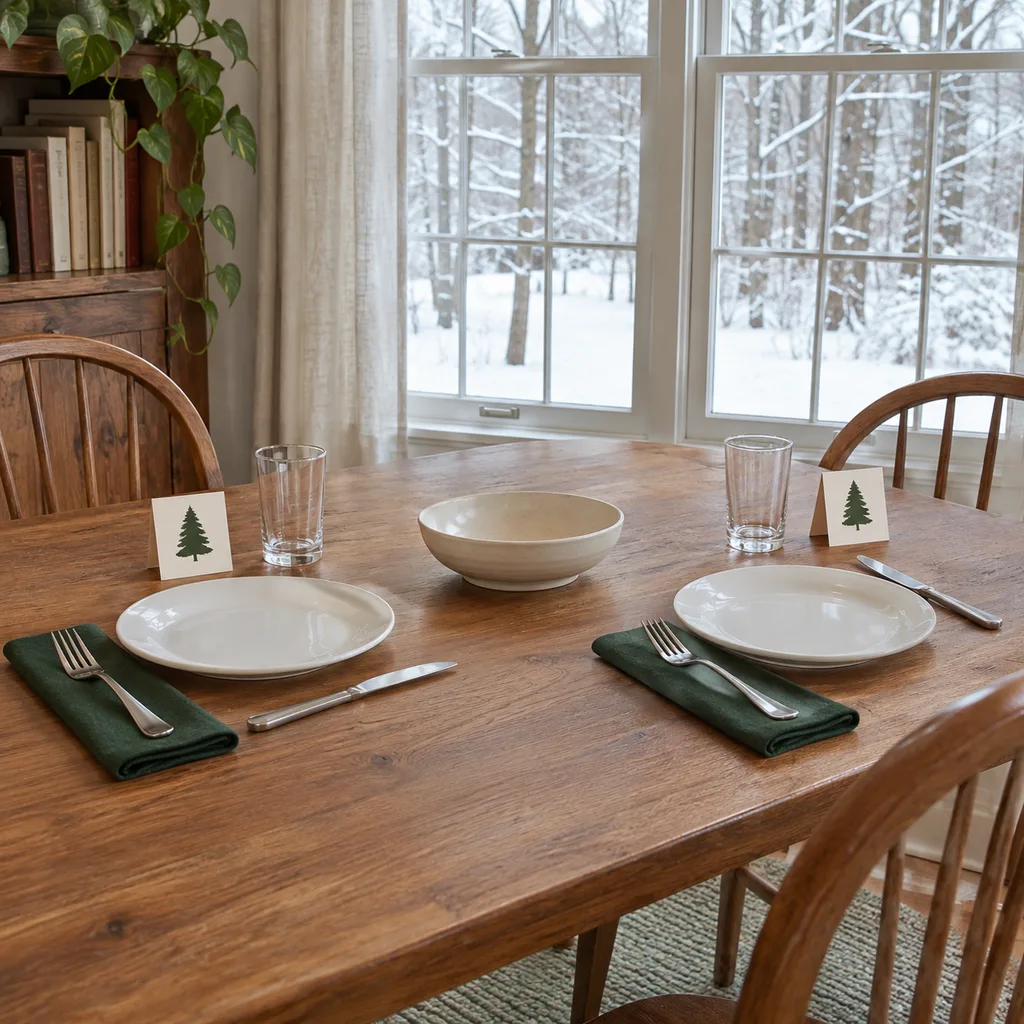
View on AmazonAvailable on AmazonA winter woodland table setting can suggest a forest through wood grain, deep green linen and a simple tree motif without covering the table in branches. Begin with the plates, glasses and serving space you need, then choose one of the three looks below. Each uses a different balance of texture and color rather than a larger collection of decorations.
These styling ideas are for an indoor meal. Use tableware and decorations suited to their actual purpose, and keep decorative materials separate from the food and eating surfaces. Choose existing suitable pieces before adding another purchase.
Choose which woodland detail will lead
Decide whether the main cue will be a dark green napkin, an existing wood tabletop or a small printed forest motif. Let that detail lead before adding another pattern. A table can read as woodland without representing every part of a forest.
Check what is already available: plain dishes, a tablecloth, everyday glasses and the actual serving pieces. Keep those as the working base rather than replacing usable dishes to match a photograph. A new theme does not require a new complete set.
Separate the woodland idea from a strictly Christmas setting. Leaving out holiday wording and red accents can make the look suitable for another winter dinner. That is a styling choice, not a claim about a historical tradition or a particular region's winter customs.
Look one: forest green against plain white dishes
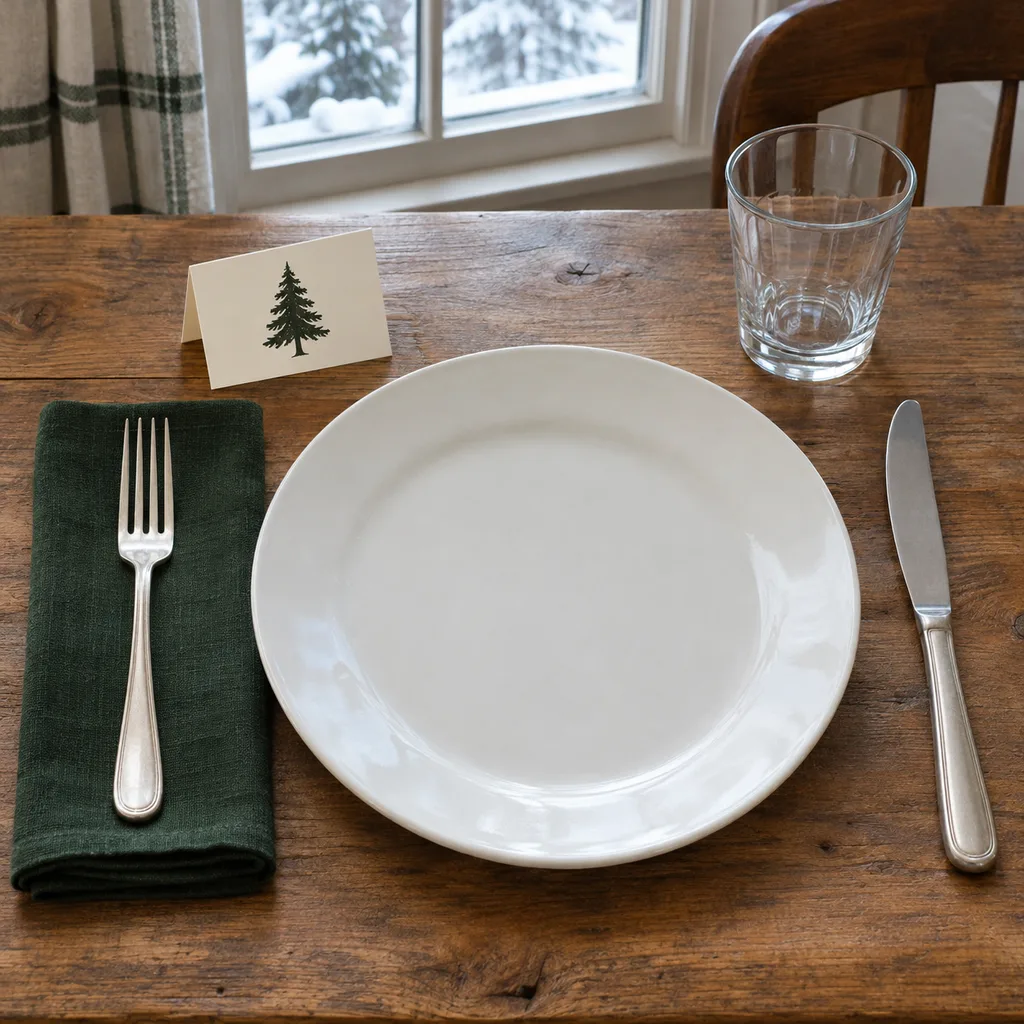
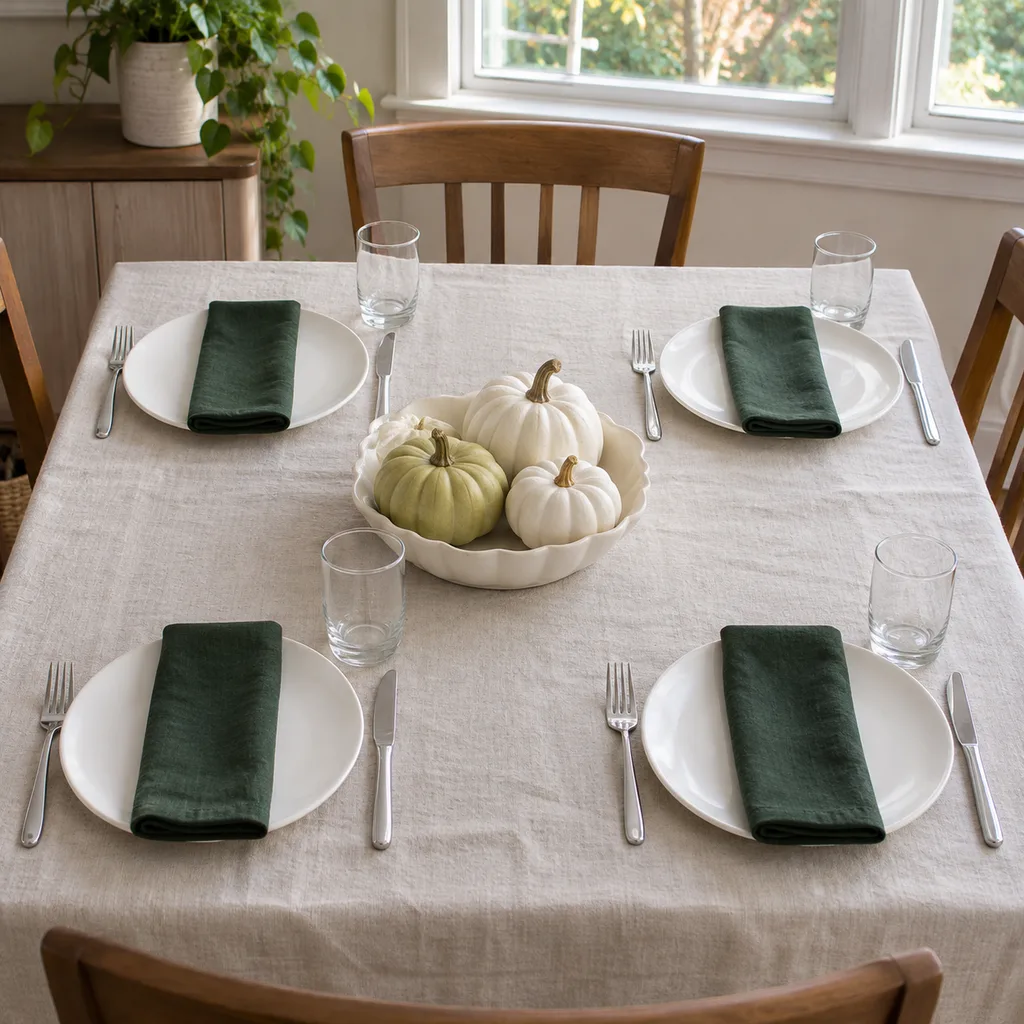
Use a plain white dinner plate and a deep green napkin folded simply beside it. Keep the glassware clear and the utensils familiar. The contrast gives the setting its main visual cue without requiring foliage on the plate.
Add a small tree-outline motif on a separate paper card or menu if you want a more literal woodland reference. Keep the printed detail restrained and the useful words readable. Place decorative paper beside the setting, not between food and the plate.
If your dishes already have a pattern, try the green napkin with one actual plate first. Check the combination under the room's dinner lighting rather than assuming two online photographs share the same white or green. Leave out the motif when the plate already supplies enough detail.
For a shared meal, leave the middle available for its real serving task. The small-table decor guide can help with the separate question of usable space; woodland styling should not make a compact dinner table harder to serve.
Look two: visible wood with a lighter linen setting
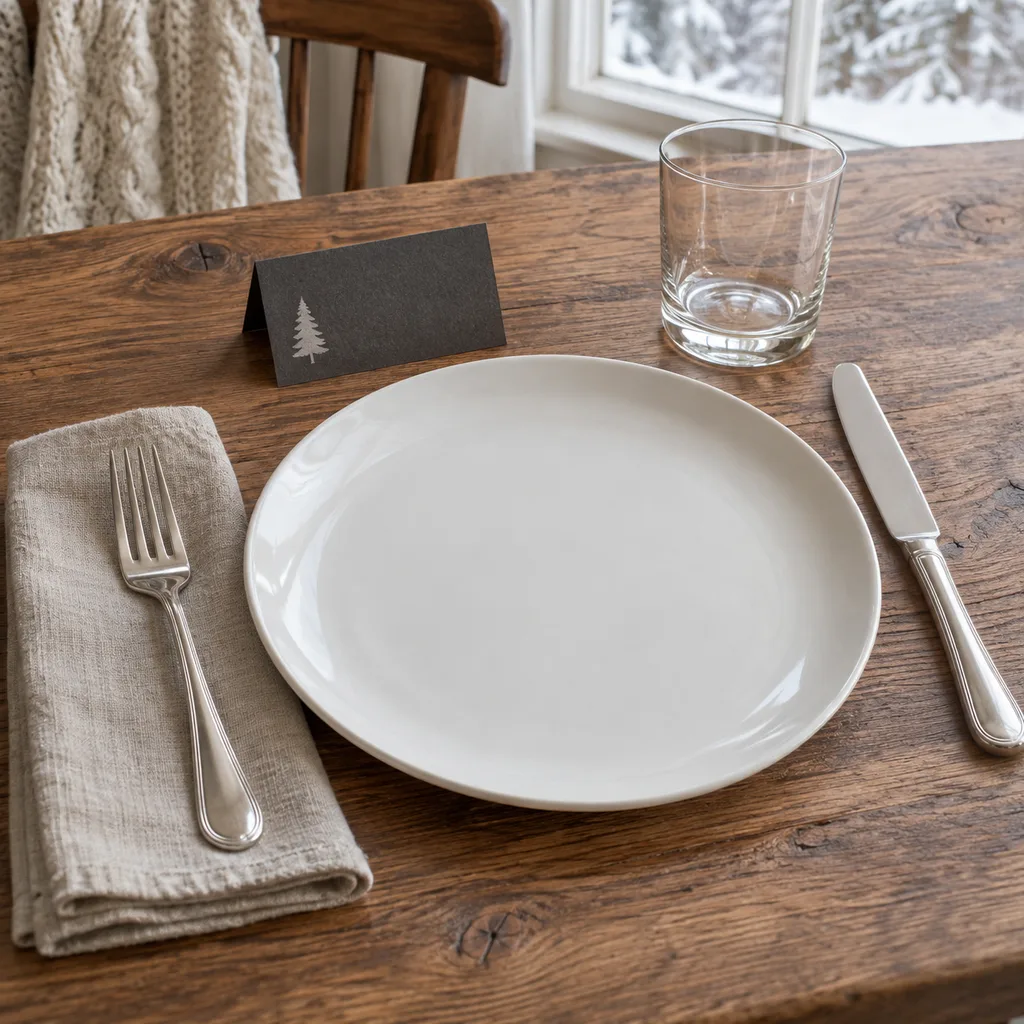
When the tabletop itself has attractive wood grain, let that surface provide the woodland texture. Pair it with simple light linen and plain dishes. Keep surface protection appropriate to the actual table and service pieces rather than treating exposed wood as universally suitable for every hot or wet object.
Use one darker accent, such as a green napkin or a charcoal printed card, instead of adding several shades of brown. That keeps the wood from disappearing into a collection of similar-toned objects.
Do not use rough bark, a decorative wood slice or an unidentified craft piece as a food-contact surface. A rustic appearance does not establish its purpose or finish. The wood tabletop can carry the texture while ordinary dishes continue to do the food-service work.
If the table needs a full covering, keep it covered and use the first or third look instead. The styling idea should adapt to the table, not require removing protection the actual surface needs.
Look three: winter blue with a small forest motif
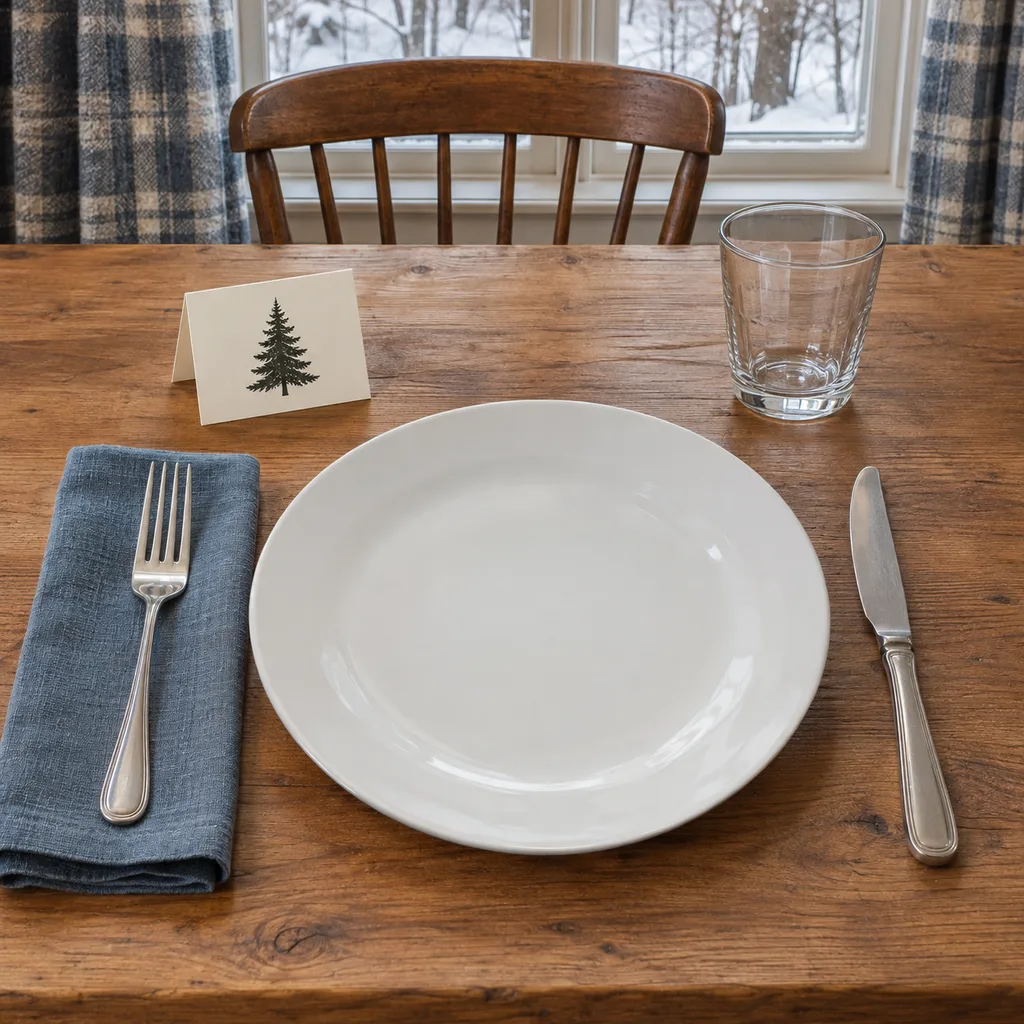
Choose muted blue napkins with white dishes and a single dark tree-outline detail on separate paper. The blue gives the setting a cooler winter direction, while the small motif supplies the woodland connection.
Keep the forest detail in one place: the menu, the name card or a modest freestanding tabletop decoration intended for that use. Repeating it on every surface can make useful seating or meal information harder to read.
A simple flat or folded name card can remain mostly plain. Our place-card guide covers proofing, readability and replaceable inserts separately. For this non-holiday version, use the same practical considerations without adding Christmas wording.
Keep shiny accents optional. Clear glass and plain white ceramics can supply enough contrast against the blue. There is no need to add artificial snow or loose glitter to make the setting feel wintry.
Give the middle a different job from each place setting
Once one place is ready, set out the actual shared dishes or allow the space needed for service from elsewhere. A woodland motif at the individual settings may be enough; the middle does not need to repeat it at a larger scale.
If you want a low decorative focus, choose one stable object intended for tabletop use and check it with the full arrangement. Keep loose natural fragments, decorative berries and craft materials out of the food-service area. Do not infer plant identity or food suitability from an attractive branch.
For a candle-like accent, the U.S. Fire Administration suggests considering battery-operated flameless candles. Follow the actual product instructions and guest-specific needs; choosing a flameless product does not certify every decoration or placement around it. These table ideas do not add an open-flame arrangement or a powered-light installation.
Repeat the chosen look without multiplying the clutter
Build one complete place with its chair, glass and useful paper details, then sit down and check the view across the table. Notice whether a card blocks a dish or a decorative piece needs moving before anyone can eat. Remove the problem detail before repeating it at every seat.
Keep a short component list for the chosen version: white and green, visible wood with light linen, or winter blue with a forest motif. Record which pieces belong to everyday use and which are seasonal extras.
The finished table should make its woodland idea clear at a glance while leaving the meal straightforward. One leading texture, one controlled accent and the ordinary service pieces can do more than a table full of competing forest decorations.
Keep good recipes close
Add The Cooking Twins to your preferred sources on Google for more easy dinners, no-bake desserts and kitchen inspiration.
Emma & Ella Frost
A practical resource from The Cooking Twins.
More from Emma & Ella Frost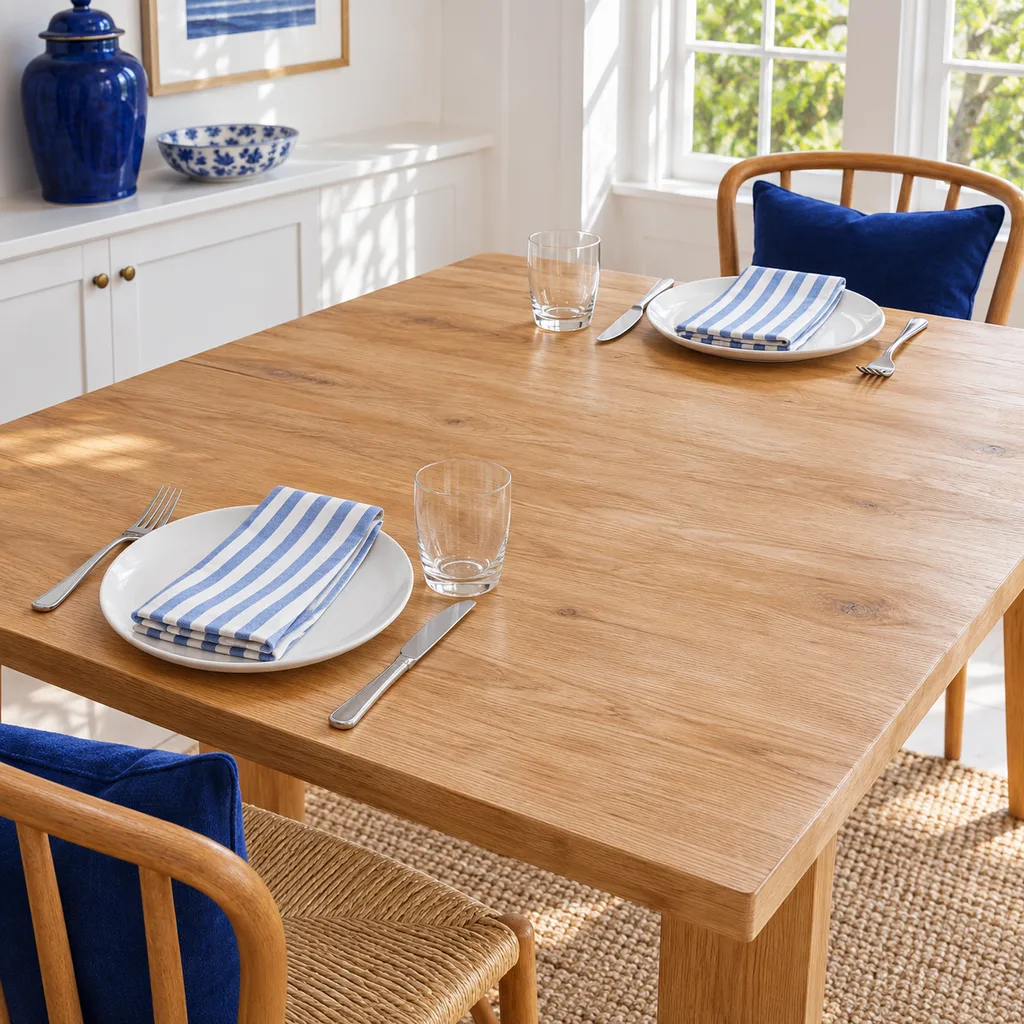
Comments
Leave a commentShare your question or planning tip below.