
Luxury New Year's Eve Table Settings: Make the Midnight Reset Easy
Plan luxury New Year's Eve table settings that move from dinner to a toast, with a clear keep, clear and bring-later reset instead of extra clutter.

By Emma & Ella FrostUpdated November 17, 2026

5-Ingredient Dump & Go Crockpot Meals
101 effortless slow cooker recipes for busy families.
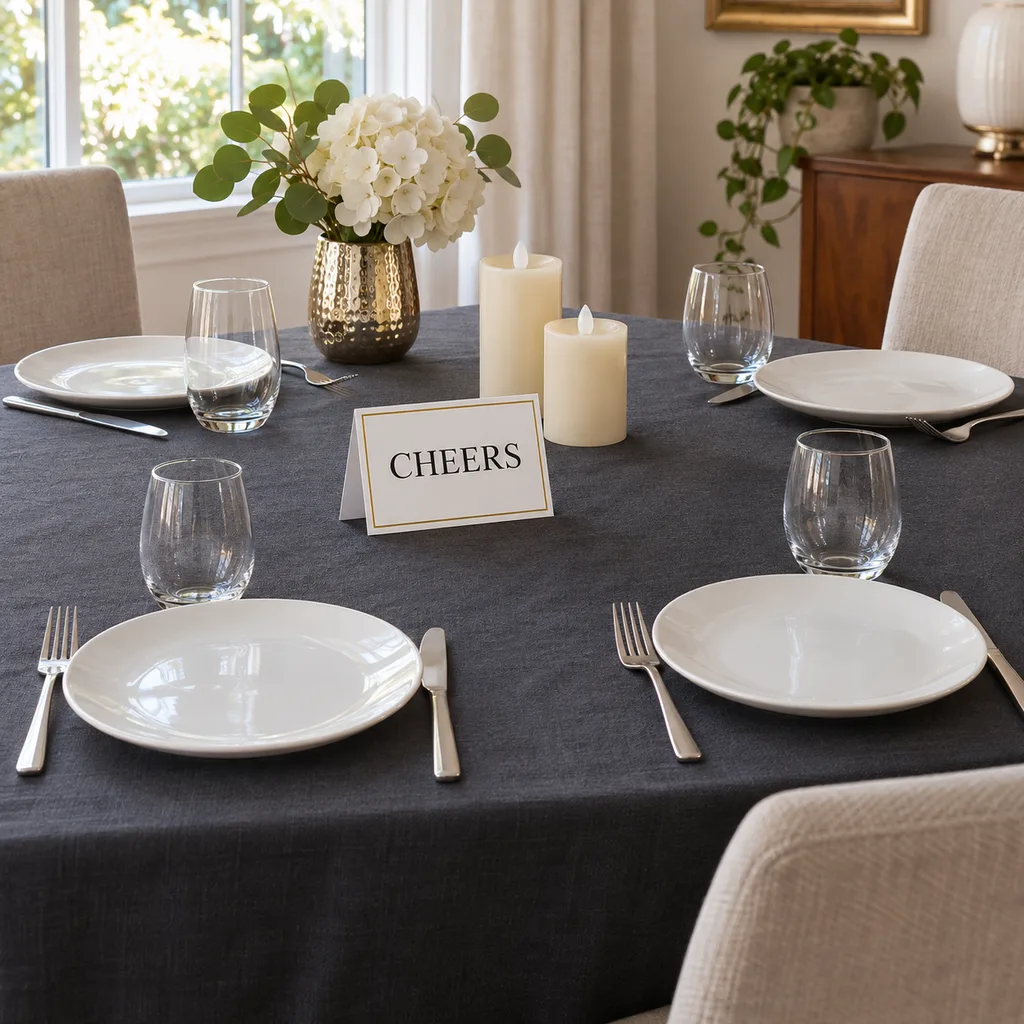
View on AmazonAvailable on AmazonLuxury New Year's Eve table settings can feel special without staying frozen in a dinner photograph all evening. Plan two versions of the same table: the setting guests use for the meal and the simpler arrangement they return to for a toast. Keep the visual thread, then remove the pieces whose jobs have finished.
Here, luxury means a deliberate finish: clear glass, considered linen, a repeated accent and a calm transition. It does not mean a required shopping list, a price promise or putting a decorative object at every place. Build the plan around your actual dinner and the way your guests will spend the countdown.
Decide where the toast will happen
Start with the moment after dinner. Will guests remain seated, move to a living-room gathering or use another agreed spot? A dining table that becomes a toast table needs a different reset from one that will be cleared and left behind.
If everyone stays seated, identify which dining pieces should leave before the toast and which glasses remain in use. If guests move elsewhere, decide where the appropriate drinks and glasses will be served. Avoid setting out duplicate rows of glassware simply because an inspiration photograph includes them.
Check the plan with the people helping. A host who is still clearing dishes at the countdown may not enjoy an elaborate second setup. Choose a transition someone can actually carry out rather than assuming the room will rearrange itself between dinner and midnight.
Build the dinner setting with a quiet metallic accent
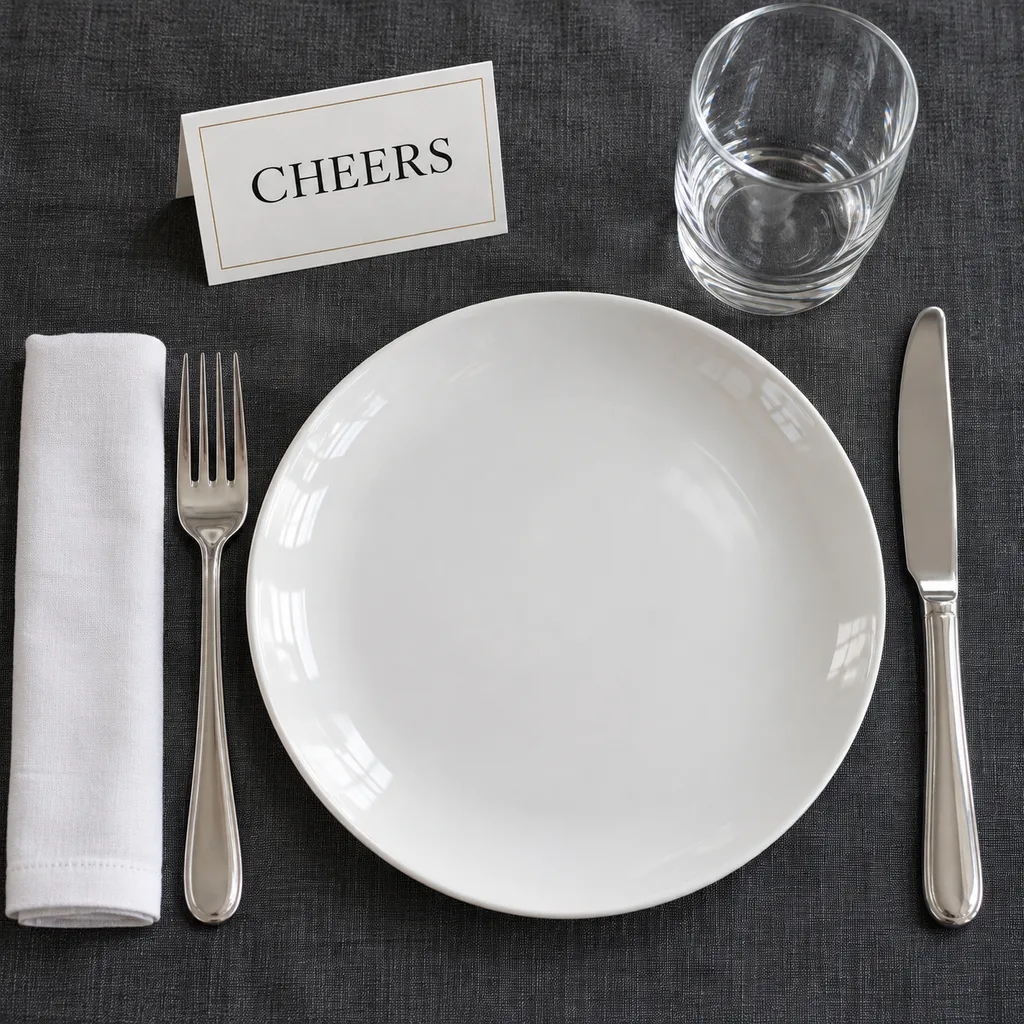
Try white dishes and dark linen with one gold-tone detail in the paper border or another nonfood decorative piece. Keep the finish consistent enough to look intentional without treating every shiny object as part of a matching set.
For a lighter alternative, use white linen, plain white dishes and a restrained silver-tone accent. A black-and-white printed card can carry the occasion while the tableware stays familiar. Choose the direction that works with pieces you already have rather than buying both palettes.
Use actual dining pieces intended for the meal and their stated care. A metallic decorative plate is not automatically food-service tableware, and an attractive finish does not establish suitability. Keep nonfood accents separate from the plate, glass rim and utensils.
Lay out the menu's practical pieces before adding optional layers. Our small dining table guide covers the place-setting and serving-space check. The additional New Year's decision is what happens to each piece after dinner, not simply how many accessories fit before guests arrive.
Choose one detail that survives the reset
Pick a visual anchor that can remain useful in both versions of the table. It might be the linen color, a restrained paper detail or one small removable accent outside the serving area. The second setting should feel related to the first without requiring a second box of decorations.
A plain card saying "Cheers" can work more clearly than a long countdown message surrounded by several type styles. If you print a year or a personalized detail, check the final proof against the actual celebration. Keep the card away from the job of identifying food, ingredients or a guest's place.
For candlelike light without an open flame, consider battery-operated flameless candles, an alternative suggested by the U.S. Fire Administration. Follow the actual product's instructions, including battery access and placement. Do not use the appearance of a light in a photograph as an installation guide.
Skip loose glitter and confetti on eating and serving surfaces. A printed border or the finish of a separate stable accent can suggest sparkle without leaving fragments among the dishes. Keep the anchor easy to remove if the table needs more practical space.
Write a keep, clear and bring-later note
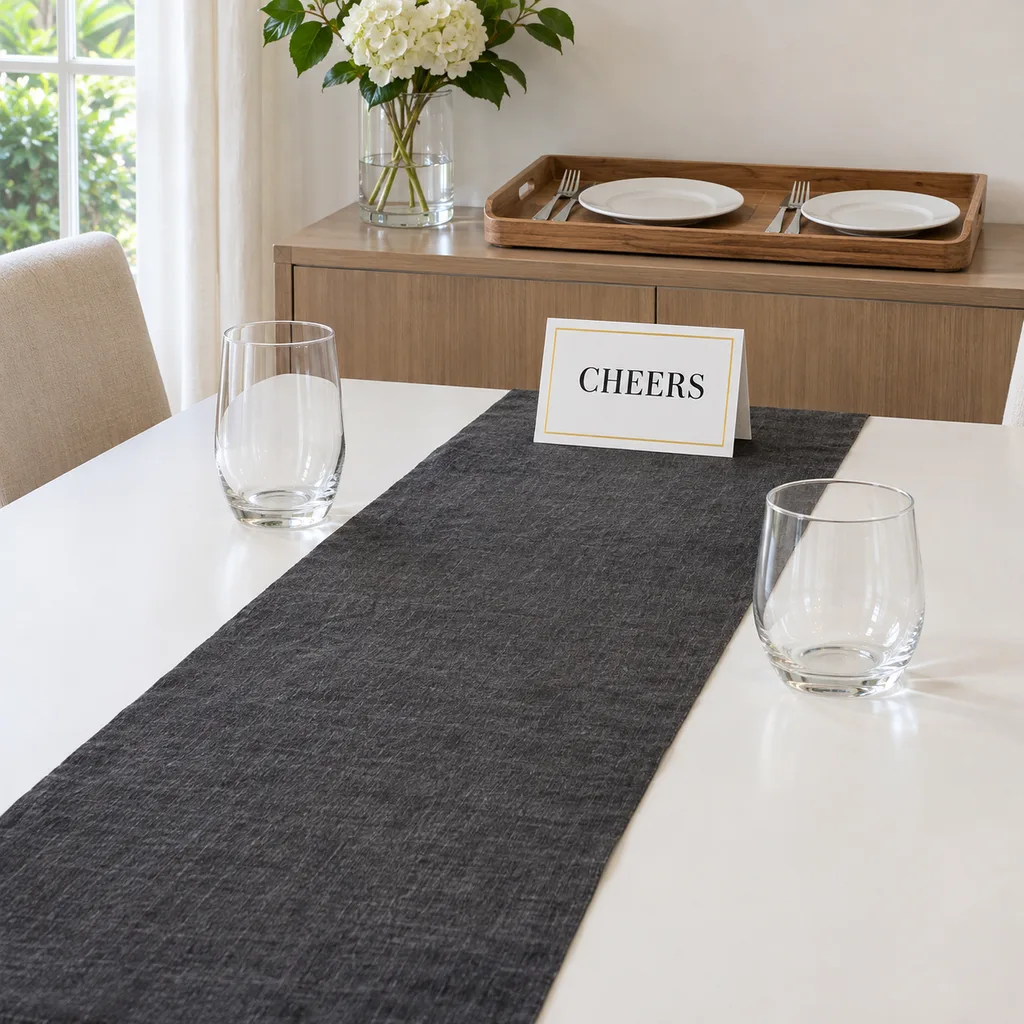
Sort the actual objects into three groups. Keep means the items still needed for the next part of the evening. Clear means pieces whose dining job is finished. Bring later means the appropriate items that should wait until there is a useful place for them.
A fictional example might keep the linen and small sign, clear used dinner plates and bring out clean toast glasses when the host is ready. That is a planning example, not a rule about reusing a guest's drink or a formula for how many glasses your gathering requires.
Give each cleared item a destination before adding anything new. A separate appropriate tray can help organize empty pieces during rehearsal, but use only equipment suited to the actual load and task. Do not plan to balance used dishes between decorations because there is no return area.
Record who does the reset and what can be skipped if dinner runs later than expected. The minimum version might simply clear finished dining pieces and keep the existing decoration. A midnight deadline is not a reason to rush an awkward furniture or equipment change.
Keep dessert service separate from the toast styling
Decide whether dessert happens at the table, at a separate service point or at another time. That choice controls the pieces that belong in the dinner setting and whether the reset must make room for another course before any toast.
Our New Year's Eve dessert bar guide covers the separate menu, service window and food-monitoring decisions. Do not turn a full dessert display into a permanent centerpiece merely to keep the room looking festive.
Use the actual recipes, purchased-product directions and service arrangements for food and drinks. A decorative clock does not establish food storage or holding conditions. Keep this table plan about the movement of dining pieces, not an invented recipe or an all-evening serving permission.
Rehearse both versions with empty pieces
Arrange the dinner setting, then walk through the agreed reset using empty dishes and glasses. Check what has to leave first, where the cleared pieces go and whether the next items can be placed without reaching over someone else's setting.
Look at the table from seated positions in each version. The small paper detail should remain understandable, and a decoration should not become an obstacle once the dishes change. Remove an unnecessary layer rather than moving the whole arrangement repeatedly.
Photograph both approved versions as a private setup reference. Keep that reference with the short keep, clear and bring-later note, and explain any changes to the helper. An inspiration picture alone cannot communicate which glasses are in use or which objects must return to a rental supplier.
Pack the accent pieces for an easy next gathering
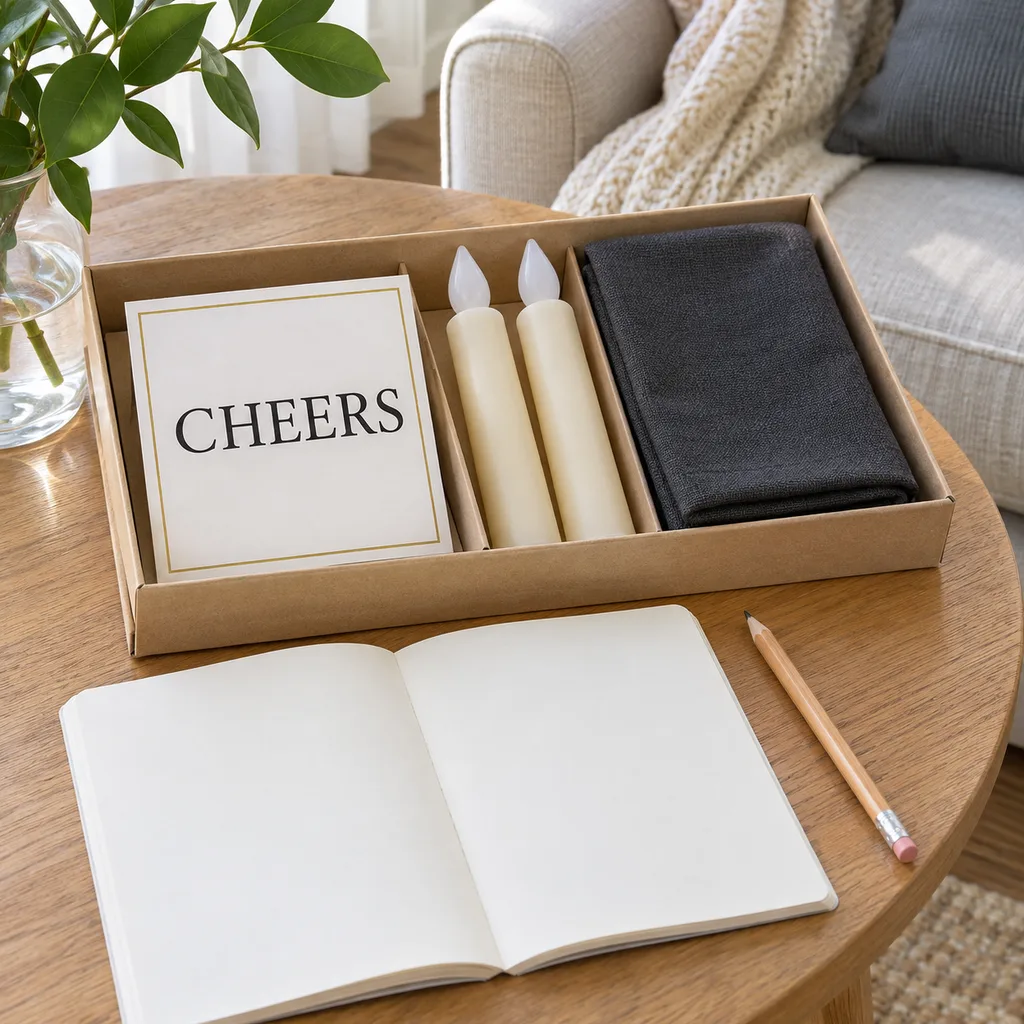
Keep reusable paper holders, suitable decorative accents and their product instructions together after the celebration. Separate borrowed pieces for the agreed return. Follow the actual tableware and linen care directions instead of assuming every metallic finish or dark textile can be treated alike.
Note what genuinely carried through both settings and what was never needed. Keep that observation with your own reference photograph rather than using a full display image as the next shopping list.
The most convincing luxury New Year's Eve table has a clear progression: a dinner guests can use, a reset that respects the host's time and a simple shared moment afterward. Let one visual idea connect the evening, and let finished dining pieces leave when their job is done.
Keep good recipes close
Add The Cooking Twins to your preferred sources on Google for more easy dinners, no-bake desserts and kitchen inspiration.
Emma & Ella Frost
A practical resource from The Cooking Twins.
More from Emma & Ella Frost
Comments
Leave a commentShare your question or planning tip below.