
First-In, First-Out Pantry Organization: Make the Next Package Easy to Find
Build a practical FIFO pantry routine for current packages, unopened backup, new groceries and shopping checks without confusing rotation with food safety.

By Emma & Ella FrostUpdated November 17, 2026

5-Ingredient Dump & Go Crockpot Meals
101 effortless slow cooker recipes for busy families.
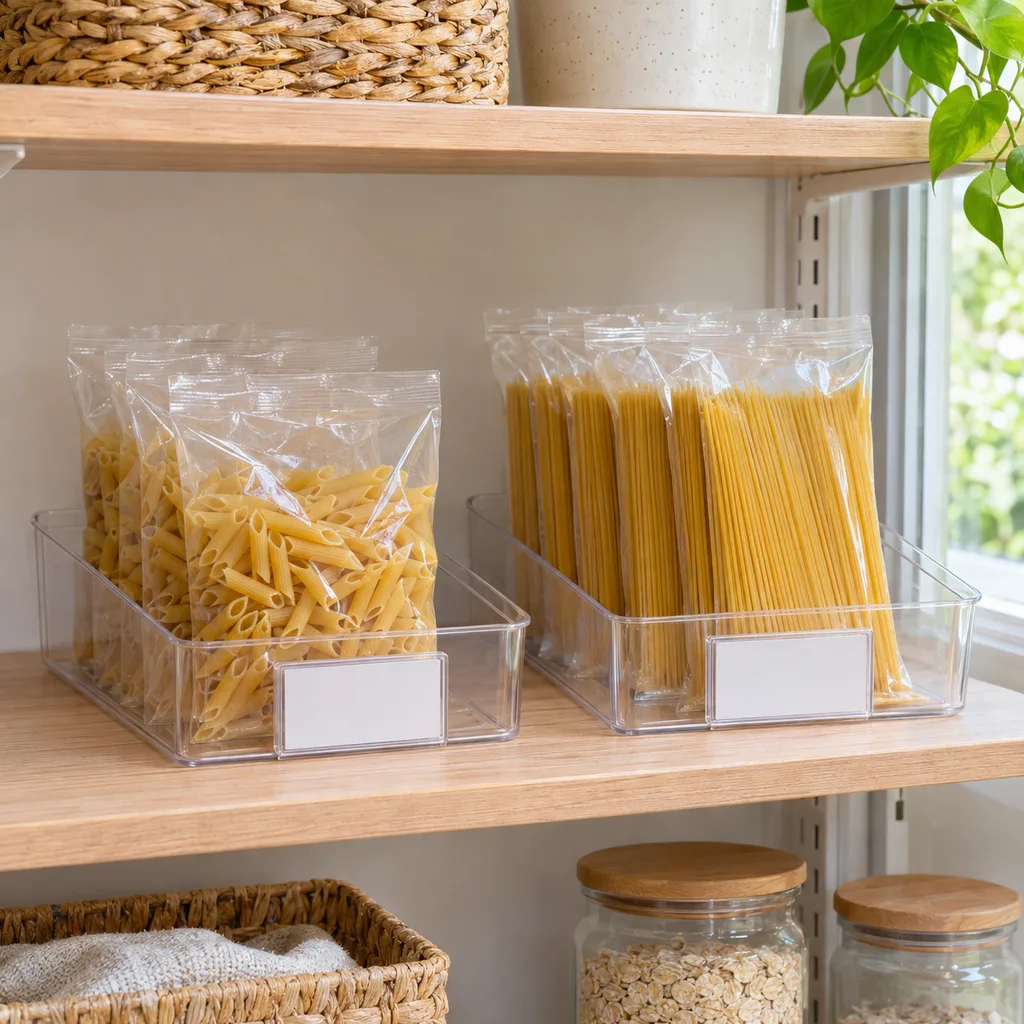
View on AmazonAvailable on AmazonFirst-in, first-out pantry organization makes the next suitable package easy to find before you open a newer one. Start with one product you regularly replace, give the current package a visible place and put comparable incoming stock behind it. Then repeat the same put-away routine after shopping.
FIFO is a rotation habit, not a food-safety inspection or a new expiry date. Check the actual product, package condition and directions before deciding it is suitable to use. A package does not become appropriate simply because it arrived first.
Choose one repeated purchase for the first trial
Pick a product the household actually uses and replaces, such as one particular dry pasta or breakfast product. Keep its exact identity visible. A shelf labeled pasta may contain different shapes, ingredients and preparation requirements that do not belong in one interchangeable queue.
Check what is already there before rearranging. Identify an opened package, comparable unopened stock and any item needing a separate decision. Do not make a large rotation project out of every item in the kitchen before the first small group works.
Illinois Extension recommends first-in, first-out rotation for pantry foods to support quality and reduce waste. It also notes that some shelf-stable foods require refrigeration after opening. Read the actual package instead of assuming the original pantry location remains appropriate once it is open.
Separate the current package from unopened backup
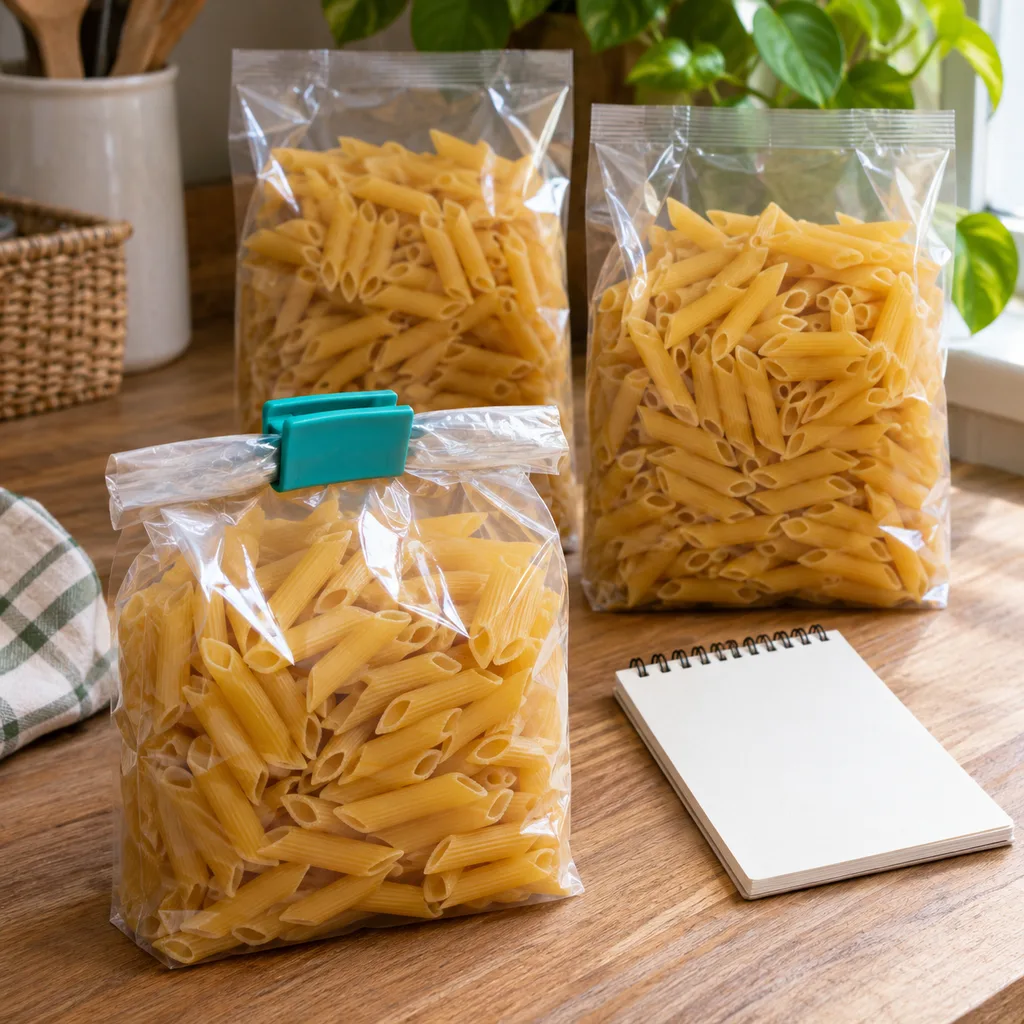
Give the package currently in use a clear place when its directions permit pantry storage. Keep the unopened replacement identifiable nearby rather than opening it because it happens to be easier to reach. The arrangement should make the household's current choice apparent without a complicated color code.
For a fictional example, imagine an opened package of a particular pasta and an unopened replacement of the same product. The shelf can make the opened package visible for a suitable planned meal while keeping the replacement closed. This illustrates organization only; it does not establish the opened food's storage life or say its remaining quantity covers the recipe.
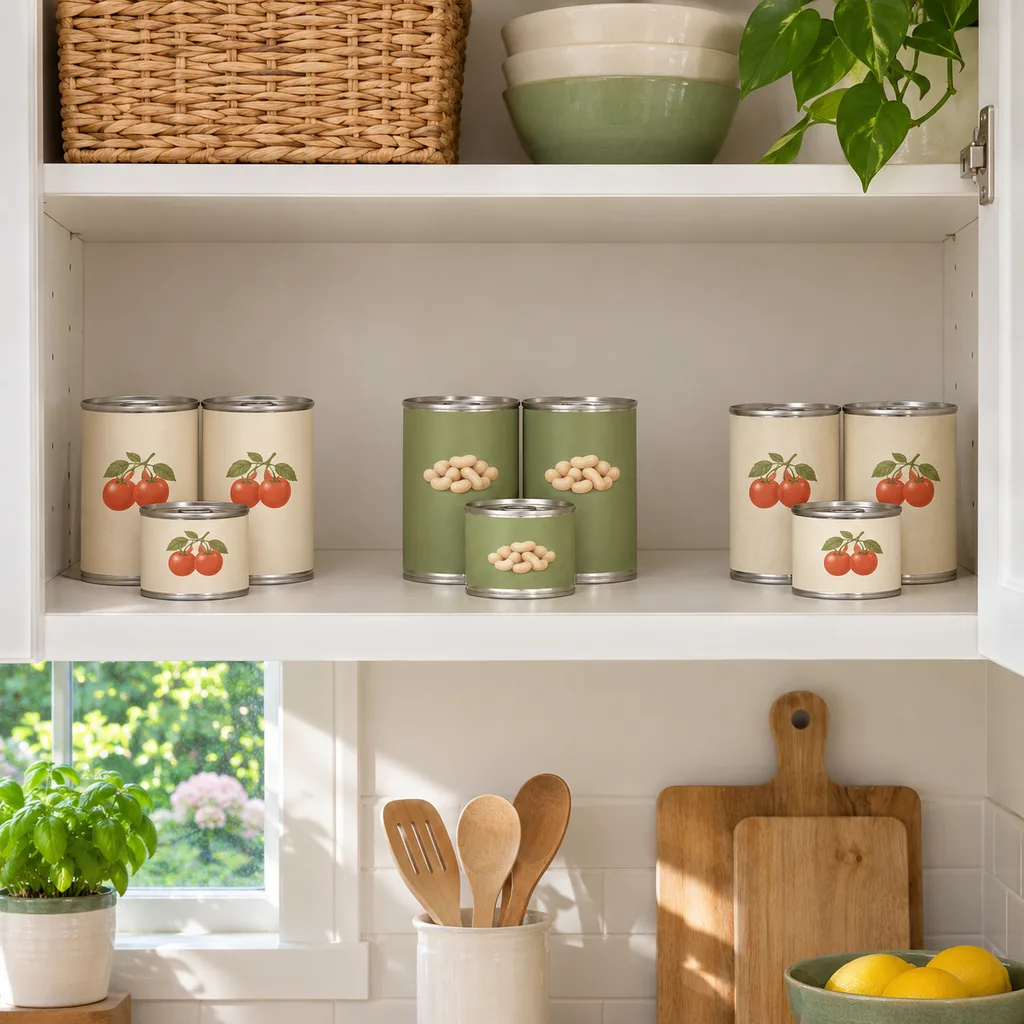
Keep different products in different groups even when their boxes look alike. Whole-grain pasta and another pasta are not automatically interchangeable, and a familiar brand color does not replace reading the product information.
Give incoming stock a deliberate place
When putting groceries away, compare each new package with what is already on the shelf. Place an appropriate comparable replacement behind the stock intended for earlier use. Do not simply put every new purchase at the front because that is the easiest empty gap.
Use a shallow row, a modest outer bin or another suitable arrangement that lets you see the packages and return them. Follow shelf and organizer limits rather than building an unstable stack to create a perfect line. A dispenser is optional; it cannot establish whether its contents are suitable.
If there is no room to place the new stock without hiding the current package, pause and check the quantity you bought. Moving the older package into a forgotten back corner defeats the rotation. An open space can be useful access, not a problem that needs another purchase.
Keep purchase order distinct from product directions
First in describes the household's order of receiving or storing comparable packages. It does not mean all products carry the same date wording or that the order always decides what should be eaten next. Keep the manufacturer's information readable and resolve any conflicting instruction before using the food.
Do not replace package dates with a guessed deadline or add time because a product has moved into a new container. If you keep an arrival or opened-on note, label what it records. The note documents an event; it does not certify the food.
Put an unidentified, damaged or otherwise questionable item outside the use-next decision while you resolve the concern through appropriate guidance. Do not promote it to the front as a way to make the problem disappear.
Keep batches identifiable when using canisters
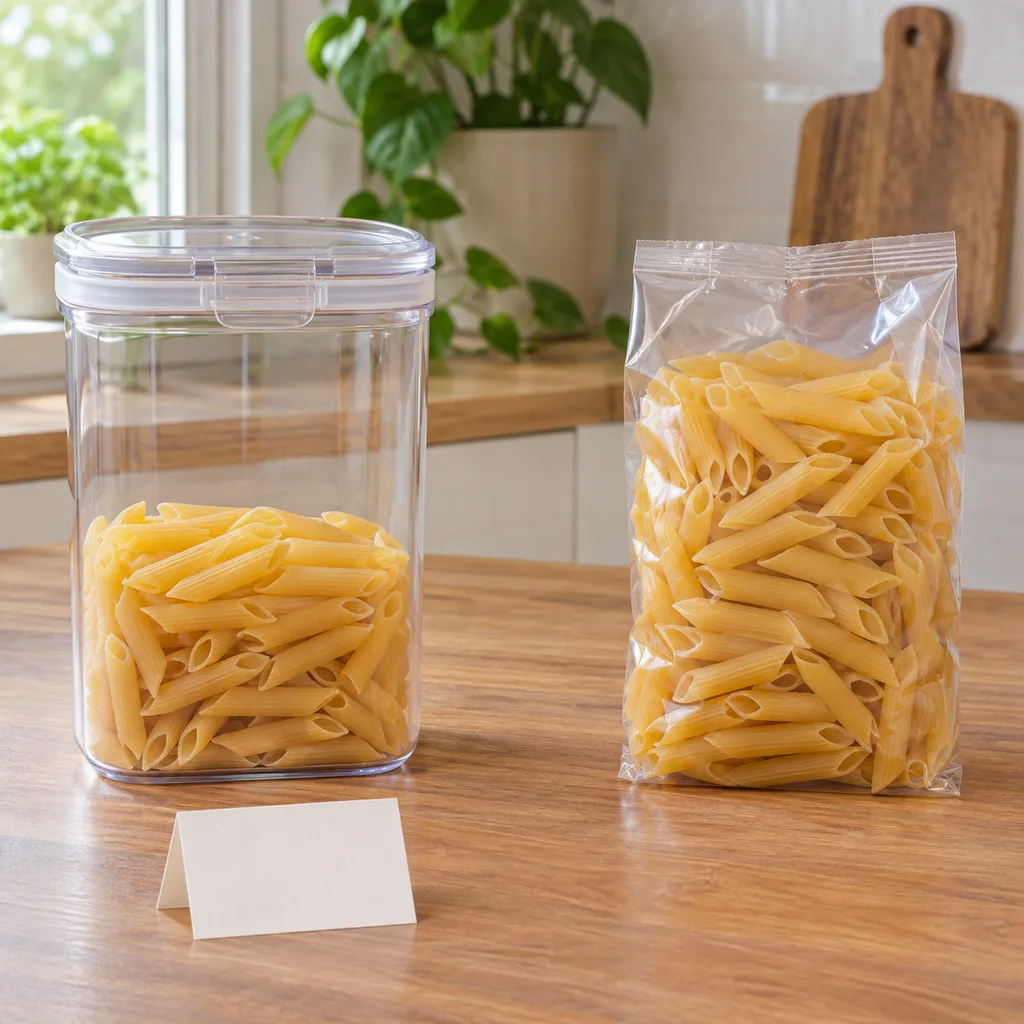
A rotation routine is harder to follow when each refill is poured over what remains. Keep incoming packages separate from a partly used container so their identities do not quietly merge. Use the actual product and container instructions for the next fill.
Our clear-container pantry guide covers the distinct choice between grouping original packages and decanting. Use that guidance rather than assuming FIFO requires matching canisters or discarding packaging.
Retain the information needed to distinguish the food and its batch. A broad label such as flour is not enough to reconstruct a mixed refill later. A neat row cannot recover details already lost.
Make the shopping note reflect a real shortage
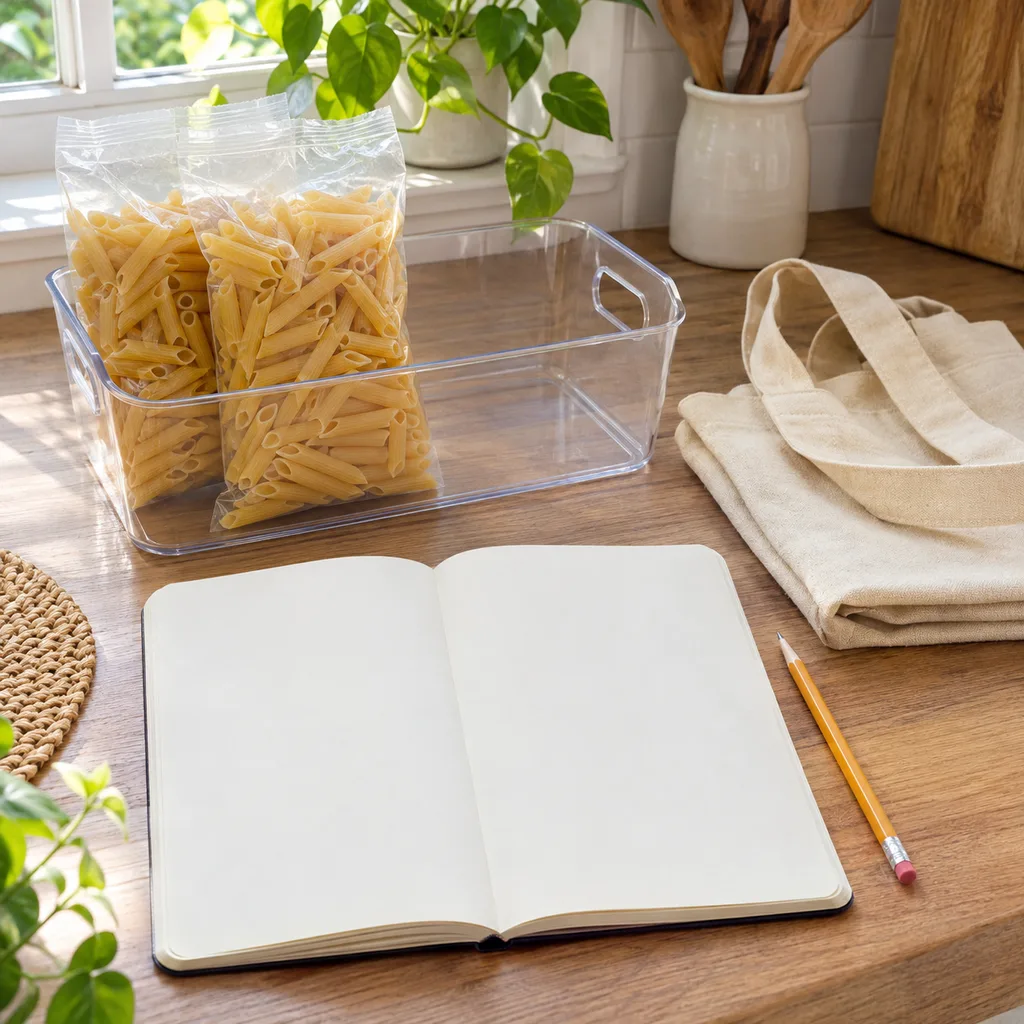
Check the current amount against meals you actually plan before ordering another package. Being partly empty is not itself a shortage. Keep the purchase decision separate from the desire to make every shelf look full.
The pantry inventory checklist helps record what is actually available. Use confirmed product and quantity information, not the assumption that every visible box is full or that the same package can cover several meals at once.
If a product repeatedly stays untouched while replacements keep arriving, reconsider the purchase rather than expanding its storage lane. A canceled meal or changed household preference should change the shopping plan. Rotation does not create a reason to buy something nobody intends to use.
Explain the return routine to the people using it
Show household members where the current package belongs and where unopened replacements go. Keep the distinction understandable to someone who did not arrange the shelf. A plain group name can help, but individual package information must remain available.
If someone takes a newer package, check what happened without treating the shelf as a puzzle they solved incorrectly. The older package may have been hidden, the products may differ or the intended meal may have changed. Correct the actual issue rather than adding more decorative labels.
Keep the arrangement that survives ordinary shopping, cooking and putting things back. A useful FIFO pantry makes suitable earlier stock visible and incoming stock deliberate while leaving product instructions and food condition in control.
Keep good recipes close
Add The Cooking Twins to your preferred sources on Google for more easy dinners, no-bake desserts and kitchen inspiration.
Emma & Ella Frost
A practical resource from The Cooking Twins.
More from Emma & Ella Frost
Comments
Leave a commentShare your question or planning tip below.