
Manual Citrus Juicers: Match the Tool to the Juice You Need
Understand manual citrus juicer designs, collection bowls, seed handling and measuring. Choose a useful setup for your recipe without assuming a fixed fruit yield.

By Emma & Ella FrostUpdated November 17, 2026

5-Ingredient Dump & Go Crockpot Meals
101 effortless slow cooker recipes for busy families.
View on AmazonAvailable on AmazonA manual citrus juicer is most useful when it fits the amount of juice you need and the way you want to collect it. A handheld reamer, a reamer over a collection cup, and a hinged squeezer solve related but different problems. Look at where the juice goes, how seeds are handled, and how the tool comes apart before choosing a place for it in the kitchen.
This guide explains those design differences and everyday uses. It is not a tested product ranking, a promise of juice yield, or a recommendation that every household needs a dedicated juicer.
Start with the recipe's juice requirement
Read whether the recipe asks for a measured amount of juice, the juice of a particular fruit, or a small finishing squeeze. Those instructions are not interchangeable. If an amount is specified, collect the juice in a suitable vessel and measure it rather than assuming every lemon produces the same quantity.
For a small finishing addition, a simple tool held over a separate bowl may be sufficient. For repeated measured additions, a collection cup can keep the liquid together while you work. The useful distinction is the task, not how many accessories the tool includes.
Set out the receiving vessel before starting. A small dish can separate the juicing task from a batter, dressing or drink so you can check for unwanted seeds before the juice joins the recipe. Follow the recipe's actual directions; this guide does not supply new ingredient quantities.
Recognize the different manual designs
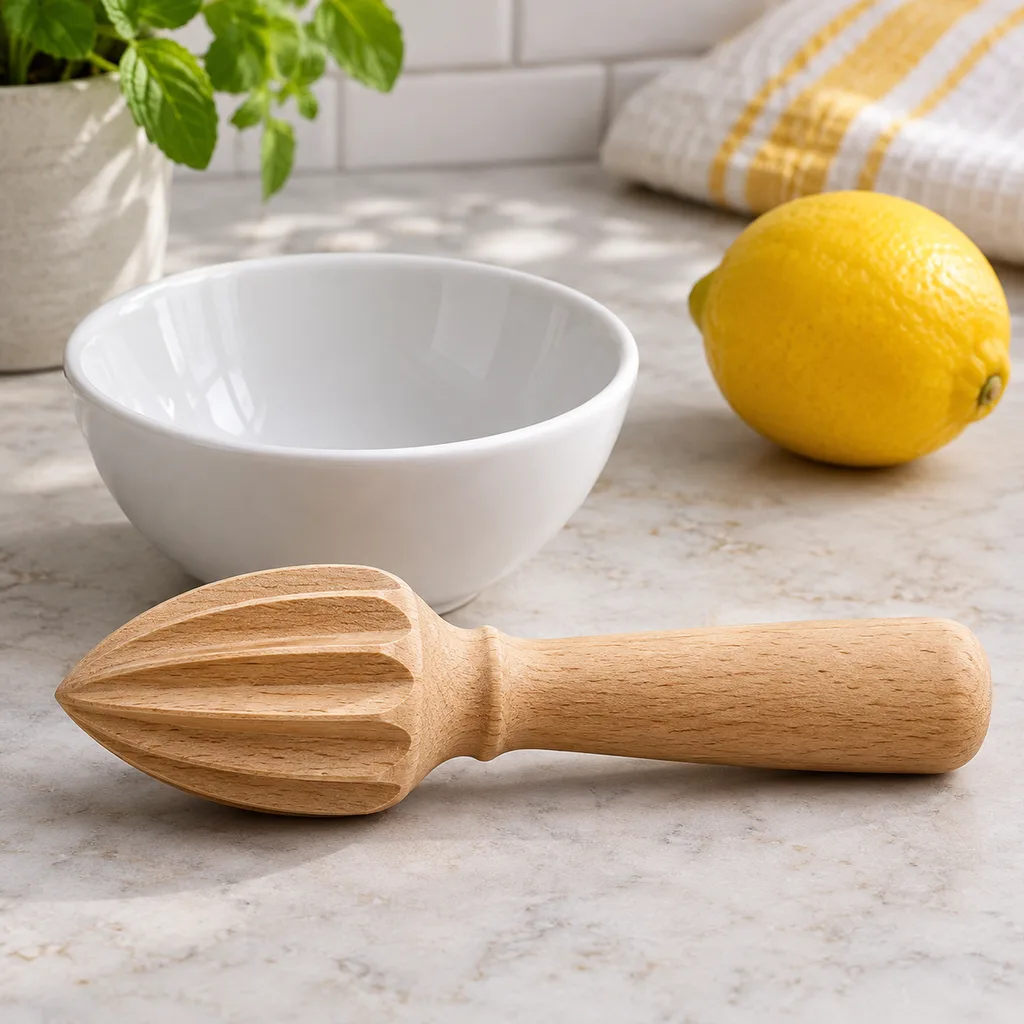
A handheld reamer has a ridged head and a handle. It does not necessarily include a strainer or a container, so you need somewhere to collect the juice. Check the product's instructions for how to support the fruit and tool instead of assuming a photographed grip is suitable for everyone.
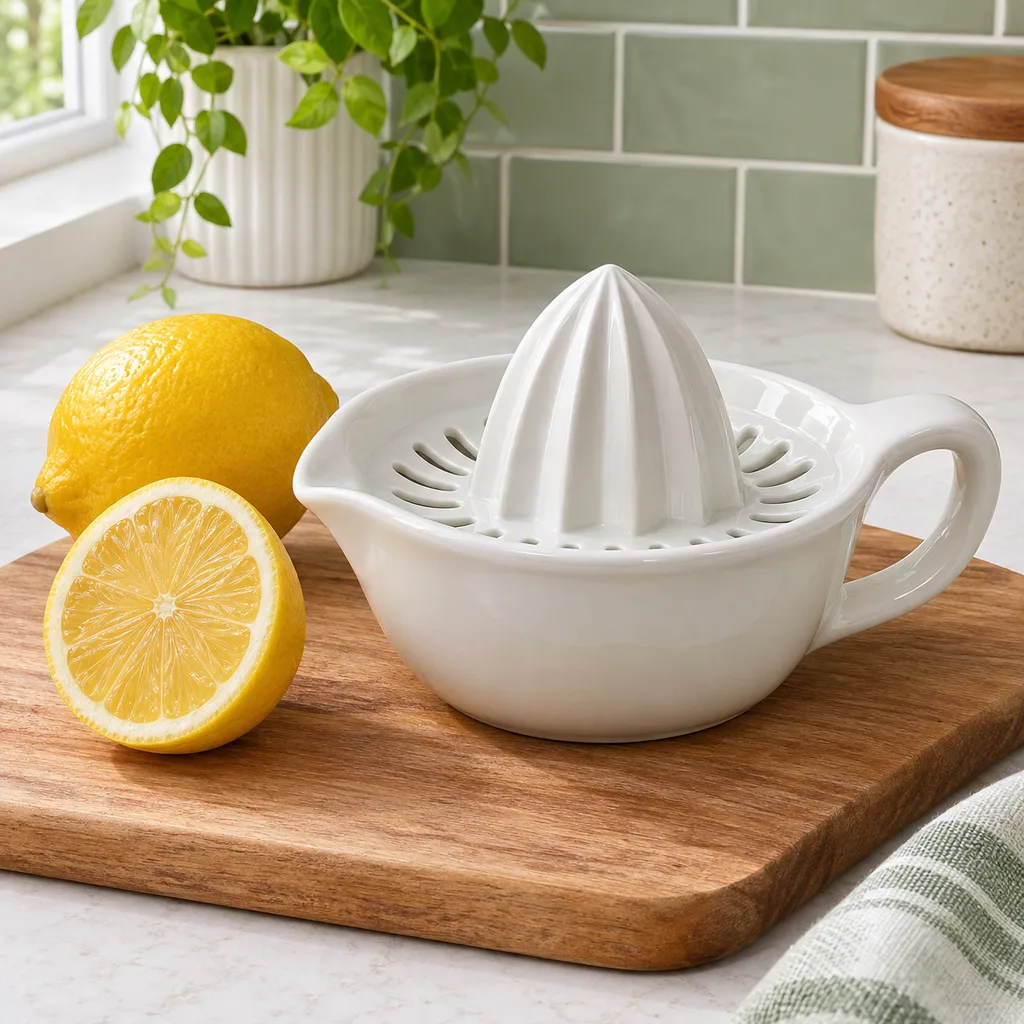
A countertop reamer sits over a receiving container or bowl. Some versions include a screen, pouring spout or removable parts. Check which collection and filtering parts the actual model supplies rather than assuming a cup, screen or spout is included.
A hinged squeezer closes around a fruit portion using two handles. As one mechanism example, Dreamfarm describes its Fluicer as pressing fruit from the sides and folding flat for storage. Other squeezers may close differently. Shape, fruit capacity and loading direction depend on the model. Check the intended fruit and instructions for the exact product rather than transferring a collection-cup design's information to a press. Do not infer that a similarly shaped tool accommodates a large orange or grapefruit, or that all squeezers load in the same direction.
Match the tool to your fruit and your grip
Check the manufacturer's intended fruit sizes and uses. A bowl that is too small for the fruit does not become a better fit by adding force. Choose a suitable tool or follow the product's documented preparation directions rather than improvising around a poor fit.
Consider the motions the design requires: holding and turning, pressing downward on a supported reamer, or bringing handles together. Handle length alone does not establish comfort or accessibility. If a motion is uncomfortable, stop rather than assuming a different amount of force will solve it.
Look at the whole setup, including the receiving bowl and the work surface. A compact tool may need more working room than expected once you add the vessel, fruit and a place for the used pieces. Keep the arrangement supported and follow the tool's use instructions.
Decide how you want to manage seeds and pulp
A strainer and a juice collector are separate functions. A reamer may sit over an open bowl without catching seeds, while another design may include a removable screen. Inspect the actual parts instead of treating every citrus tool as a complete filtering system.
Check the collected juice before using it. If the recipe calls for a strained liquid, use an appropriate clean strainer as needed. Do not promise a completely seedless result merely because a product has holes or a screen; the food and the specific design still matter.
Choose the pulp level required by the recipe rather than deciding all pulp is a defect. A drinking preference and a baking instruction may differ. Keep the juice separate long enough to make that decision without having to remove seeds from the finished mixture.
Measure collected juice instead of estimating from fruit count
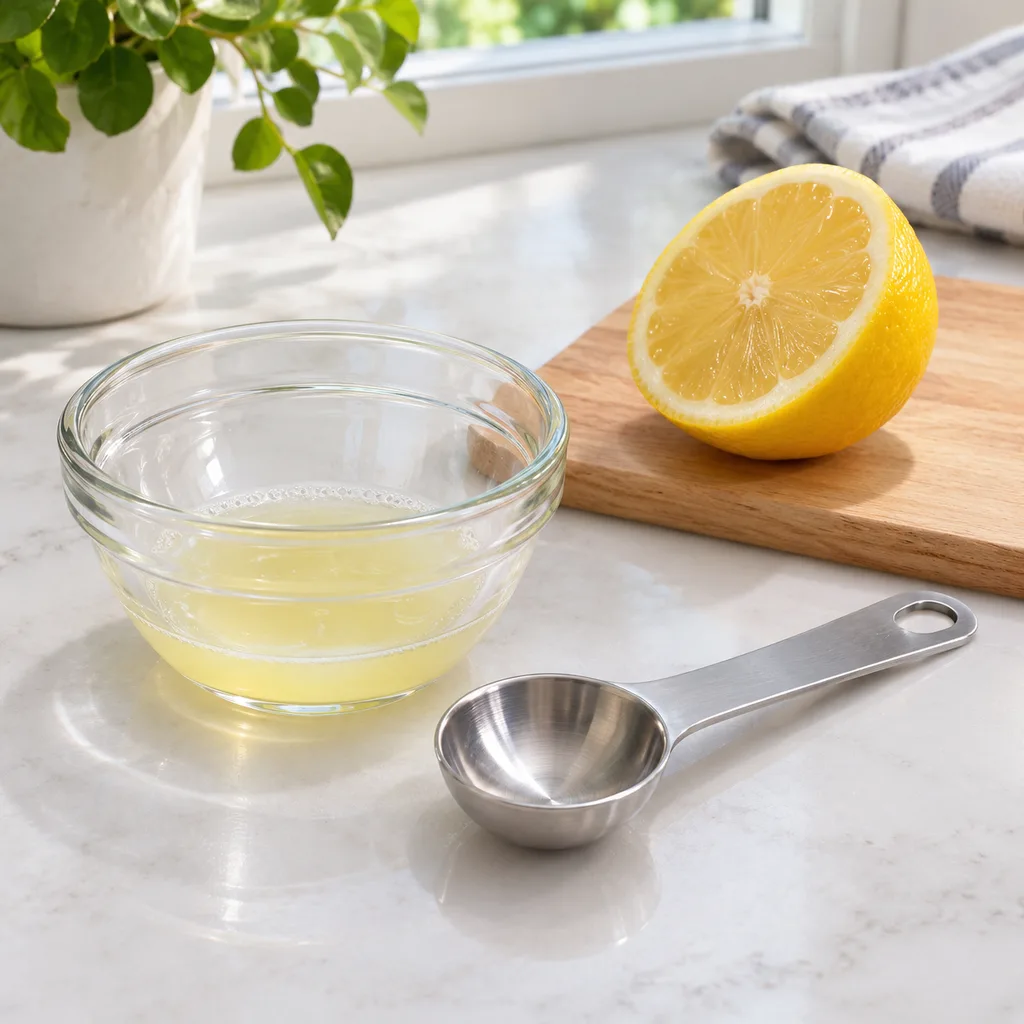
Use the unit requested by the recipe and a suitable measuring tool. A marked juicer container can be convenient, but check which units its markings represent and whether the scale is readable for the amount you need. A large interval between marks may not answer a small-quantity question.
For a small amount, transferring collected juice to a measuring spoon may be more appropriate than estimating between widely spaced container markings. Do not convert a spoon measure to a weight unless the recipe provides the relevant instruction.
Keep zest and juice tasks distinct. If your recipe also requires zest, follow its preparation sequence and use the tool intended for that task. A citrus juicer is not automatically a zester, and a ridged reamer is not a substitute for every citrus preparation tool.
Check cleanup and storage before adding another gadget
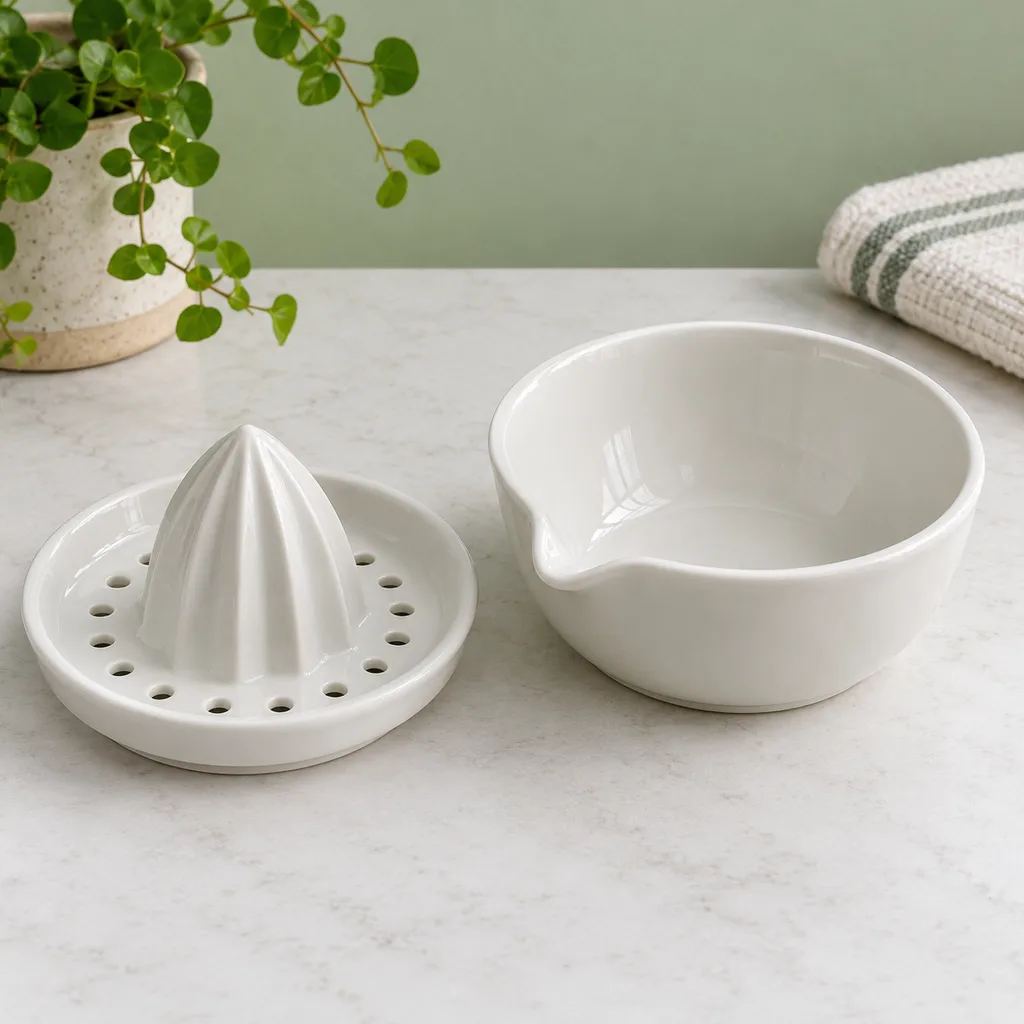
Look for the parts that actually separate and the care instructions for each material. A dishwasher-safe claim for one named product does not establish that a wooden reamer, coated metal press or another model belongs in the dishwasher. Follow the instructions supplied with your tool.
Inspect ridges, holes and removable screens during cleaning, then dry and store the tool as directed. Avoid leaving parts hidden inside a crowded drawer where you cannot tell whether the set is complete. If the tool requires a separate collector, give that vessel an accessible home too.
Compare this cleanup with the task you perform most often. A design that collects juice neatly may have more parts to put away. A one-piece tool may still require a bowl and strainer. Count the whole working setup rather than only the item sold as the juicer.
Choose a useful job rather than a larger collection
Manual juicers can support measured citrus additions for dressings, drinks or baking when used according to the chosen recipe. They do not supply a recipe by themselves, establish storage conditions for leftover juice, or prove a nutrition claim.
Before buying another tool, identify what the current setup fails to do: collect without spilling, fit the fruit, handle seeds, measure the needed amount, or clean up conveniently. That specific problem is a better guide than a display of several tools with overlapping jobs.
The right manual citrus setup may be a single reamer with a bowl, a collection-cup design, or a suitable hinged squeezer. Keep the one that fits your fruit, recipe and handling needs, and judge its usefulness by the complete task from collection to cleanup.
Keep good recipes close
Add The Cooking Twins to your preferred sources on Google for more easy dinners, no-bake desserts and kitchen inspiration.
Emma & Ella Frost
A practical resource from The Cooking Twins.
More from Emma & Ella Frost
Comments
Leave a commentShare your question or planning tip below.