
Vegetable Centerpiece Table Decor Ideas: Three Whole-Produce Looks
Try a pepper bowl, an onion grouping or a whole cabbage centerpiece, with clear separation between table decoration and food being served.

By Emma & Ella FrostUpdated November 17, 2026

5-Ingredient Dump & Go Crockpot Meals
101 effortless slow cooker recipes for busy families.
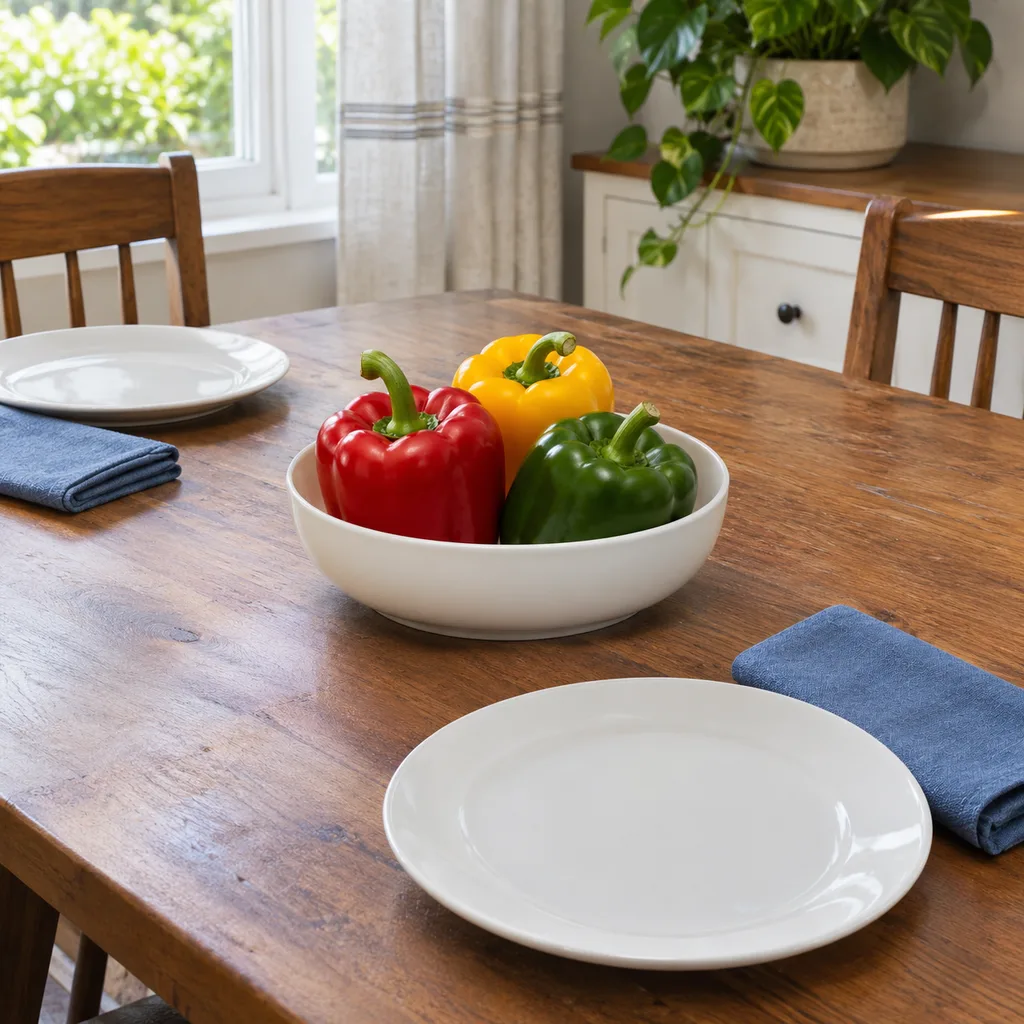
View on AmazonAvailable on AmazonA vegetable centerpiece can make a dinner table colorful without a flower arrangement. Start with a shallow bowl of whole bell peppers, a compact group of whole onions in a dish, or a single whole cabbage in its own bowl. Choose one visual idea and keep the vegetables separate from the food being served.
These are styling proposals, not a recipe, a food-preservation method or a promise that displayed produce can later be eaten. Decide whether your arrangement uses real produce or decorative replicas before choosing the container and planning cleanup.
Decide whether the vegetables are decoration or food
A centerpiece is not automatically a serving platter. If guests should not take pieces from it, make that distinction clear through its location and the host's explanation. Avoid surrounding an edible snack with decorative objects that make the intended use ambiguous.
For a display that needs to remain in place without a food-handling plan, consider replicas intended for tabletop decoration. Keep them out of serving dishes and away from anything guests might mistake for food. Follow the actual product instructions and consider the people using the table.
If using real produce, choose it with its actual storage needs in mind. The FDA's produce guidance distinguishes perishable produce needing refrigeration from other purchases. Ask your grocer when you are unsure about an item's storage requirements. An attractive arrangement is not a reason to ignore them.
Try a pepper bowl for a strong color contrast
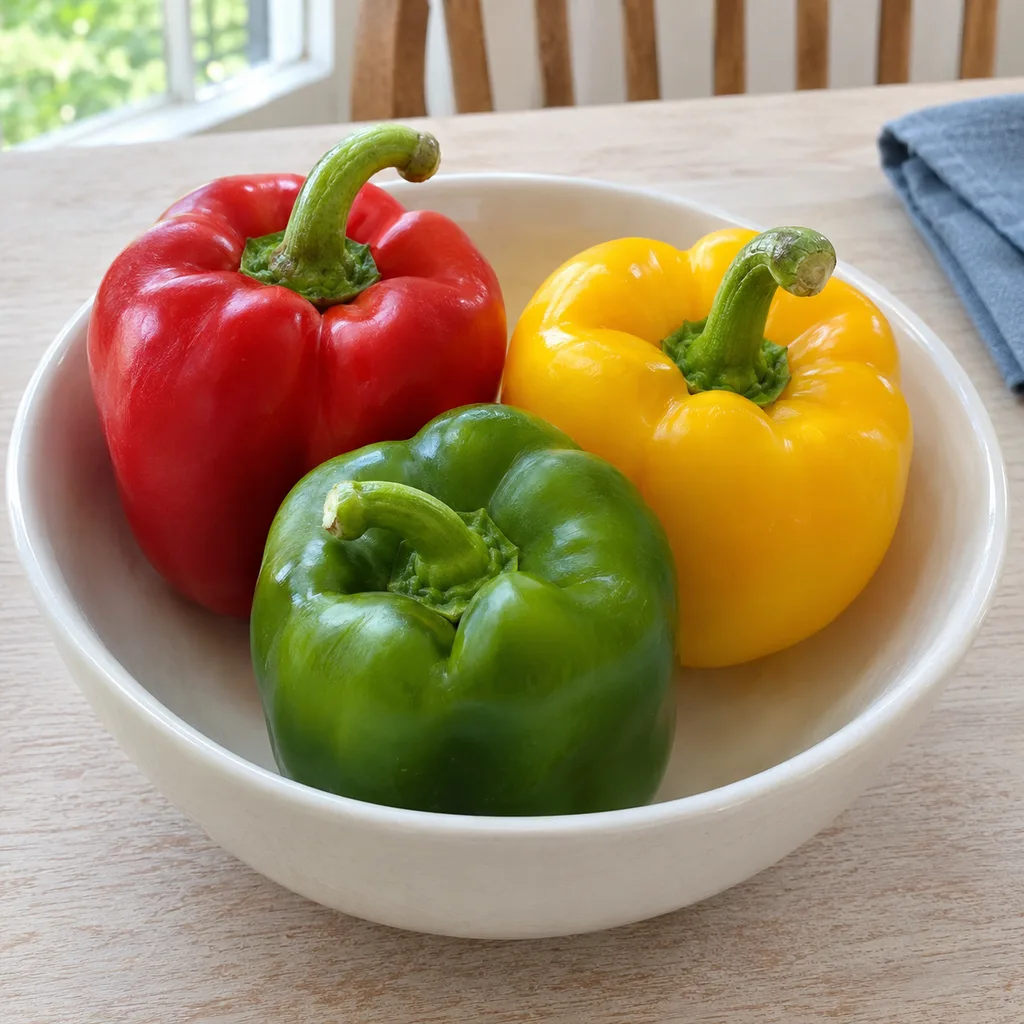
Use a shallow, stable bowl with a small group of whole bell peppers. Red, yellow and green can supply the visual variety while the tableware stays simple. Turn the bowl to find a composition that sits naturally rather than forcing every pepper upright.
Keep the pieces within the bowl instead of balancing one on its rim. Use fewer peppers if the composition depends on another object stopping them from moving. There is no required count: the size of the actual bowl and the available table space determine the group.
Keep craft finishes, paint, glitter, floral foam and adhesive out of the arrangement. A colorful pepper already supplies a strong surface; it does not need to be pierced, coated or attached to a decorative structure for this idea.
Use whole onions for a restrained sculptural group
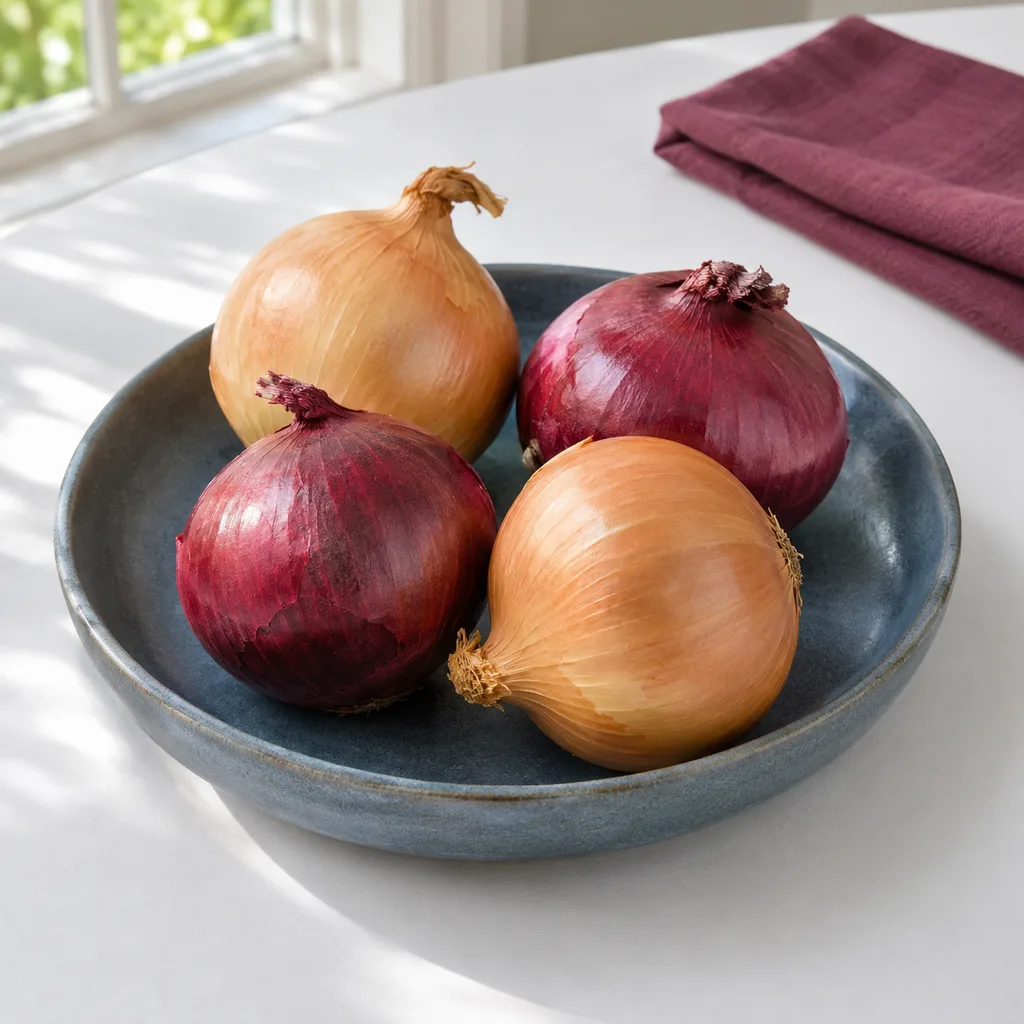
Whole red and yellow onions offer a different look from bright peppers. Set a modest group inside one low dish, with the loose outer skins and natural shapes visible. Repeat a related shade in a napkin rather than adding more produce down the whole table.
Keep the arrangement contained. A scattering of round vegetables between plates is harder to manage than a single dish that can be moved. Leave loose skins out of place settings and serving areas; the styling is about the shapes, not a trail of debris.
Do not describe onions used for display as ready to cook afterward merely because they still look intact. Any later food use depends on their condition, handling and appropriate guidance, not on a decorative photograph.
Let one cabbage be the focal point
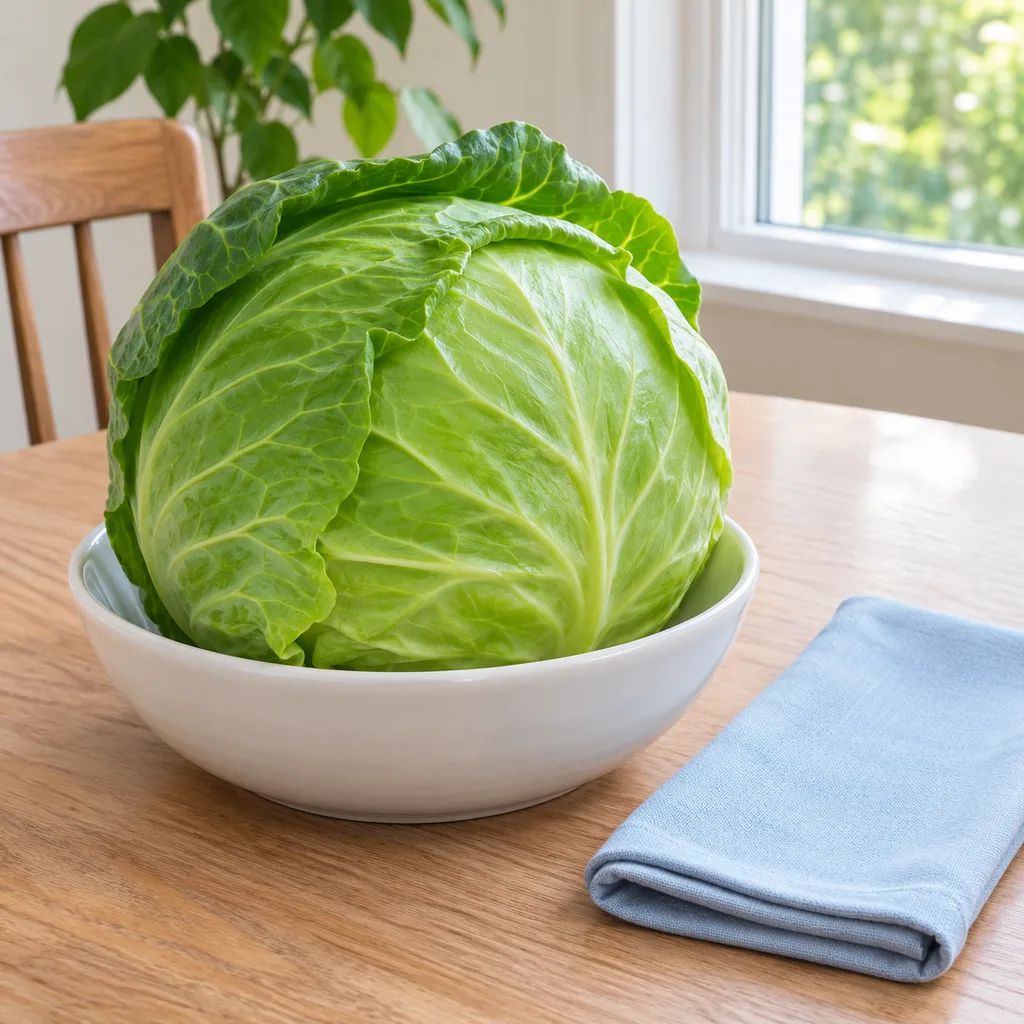
A whole cabbage in a plain bowl can provide a leafy focal point without a mixed arrangement. Compare the cabbage's outline with the bowl before setting the table. Choose a bowl in which the actual piece rests securely instead of cutting it to make a decorative base.
This proposal keeps the cabbage whole. It is not a tutorial for hollowing vegetables into vases, inserting stems or arranging flowers against edible leaves. Those are different projects with different material and food-contact questions.
A white bowl gives the leaf pattern emphasis; a dark bowl can make the outline more prominent. Try the available dishes in the actual room light before purchasing something purely for this one arrangement.
Keep the meal's working space separate
Place the intended glasses and serving pieces before deciding where the centerpiece belongs. If the middle is needed for shared dishes, choose a separate display surface or a planned removal point. Our small dining table decoration guide covers that broader space decision.
Keep the vegetable display distinct from edible platters and use containers appropriate for their actual purpose. Do not assume that a decorative vessel is food-contact suitable because it resembles a kitchen bowl.
Plan the end of the display before starting it
Assign responsibility for removing real produce and returning reusable pieces to their appropriate places. Do not automatically put displayed vegetables into a meal plan. Their handling history matters, and this guide supplies no universal display duration or reuse guarantee.
When preparing produce to eat, follow the FDA guidance rather than a craft-cleaning shortcut. It recommends washing produce under running water, not soap or detergent, and explains that washing does not eliminate all bacteria. Keep food preparation separate from decorating.
Choose the version that suits the actual gathering: peppers for color, onions for a contained sculptural group, or one cabbage for a leafy outline. A small, clearly decorative arrangement can be more effective than a larger display whose purpose and cleanup are uncertain.
Keep good recipes close
Add The Cooking Twins to your preferred sources on Google for more easy dinners, no-bake desserts and kitchen inspiration.
Emma & Ella Frost
A practical resource from The Cooking Twins.
More from Emma & Ella Frost
Comments
Leave a commentShare your question or planning tip below.